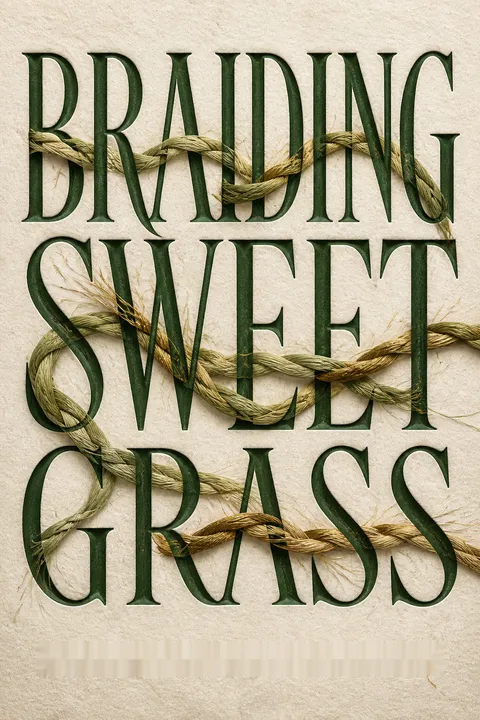


Key Takeaways
Choose stories that make humans responsible members of the living world
Stories set our bearings. In the Skywoman story, animals rescue a woman falling from the sky, a turtle offers land on its back, and Skywoman helps the earth grow by dancing in gratitude. The creation story presents humans as participants in a generous world, not exiles from it. Kimmerer contrasts it with a familiar story of humanity’s expulsion from a garden and command to subdue the wilderness. These narratives shape what people believe is possible. In one of Kimmerer’s ecology classes, almost all 200 students could name harmful human effects on nature; the median answer to whether people and land could benefit each other was none.
A compass, not a map. The Original Instructions are teachings that orient people toward care and reciprocity, not a fixed rulebook for every place and era. Stories can help people imagine positive human roles, but they cannot replace attention to local histories, ecological limits, and Indigenous sovereignty.
What's striking is that the creation story does practical work: it expands the range of futures students can picture. Environmental education often catalogues damage with great precision, yet an exclusively catastrophic account can make care seem futile or humans inherently destructive. A story of shared creation offers a different starting assumption, that people can contribute to ecological flourishing. The useful test is not whether one cosmology should replace another, but whether a story teaches responsibility toward the actual place and its inhabitants. Stories orient action, while the consequences of action remain answerable to history and evidence.
Receive nature as a gift, then keep its generosity moving
A gift creates ties. A gift economy is an exchange in which receiving something creates an ongoing relationship and responsibility to give in return. Kimmerer recalls eating wild strawberries as a child, then helping new strawberry runners take root. The berries were not hers to own; they connected her to the field. By contrast, berries picked for sale belonged to the grower, and paying for them ended the exchange.
Free is not costless. A purchased item can conceal the lives and work behind it, while a gift asks the recipient to care, share, and respond. Kimmerer extends this logic to sweetgrass: it should circulate as a gift, not be sold as a commodity. This is not a claim that markets must disappear. It is a demand that exchange include obligations to the people and living systems that make abundance possible.
The distinction between gift and commodity is less about an object’s physical properties than the relationship its exchange produces. A strawberry can be food, merchandise, or a reason to tend a field. This perspective makes hidden dependencies morally visible and challenges the assumption that a paid transaction settles every debt. Yet gift language alone cannot guarantee fairness: gifts can carry pressure, unequal obligations, or exclusion. The idea is strongest when reciprocity is understood broadly, through care, stewardship, and fair exchange, rather than as a romantic alternative to all markets.
Speak of other beings as neighbors, not disposable objects
Grammar shapes attention. Grammar of animacy is Kimmerer’s name for the Potawatomi language’s distinction between animate beings and inanimate objects. Plants, animals, water, mountains, and even stories can be spoken of as animate; a table is not. English often reduces nonhuman life to “it,” making it easier to think of a maple as a resource rather than a relation.
A verb changes the view. Potawatomi has many verbs, including a way to describe a bay as “being a bay.” The phrase conveys water actively taking a form, rather than a fixed object bounded by shores. Kimmerer notes that about 70 percent of Potawatomi words are verbs, compared with about 30 percent of English words. Learning such grammar can make kinship easier to perceive, even for someone speaking English.
The argument is compelling as a claim about attention: language repeatedly sorts the world into categories, and those categories can make some relationships easier to notice than others. Calling a tree “someone” unsettles the assumption that human beings alone deserve moral regard. Still, grammar does not dictate behavior. Speakers of relational languages can exploit land, and English speakers can practice care. The deeper invitation is to examine which everyday words hide dependencies, then build habits and institutions that make respect more than a change in vocabulary.
Use science and Indigenous knowledge together to see more of the living world
Different lenses reveal different truths. As a young student, Kimmerer asked why asters and goldenrod looked beautiful together. A professor dismissed the question as outside science. Later, she learned that the contrasting flowers attract pollinators and receive more visits when growing together. Scientific observation can investigate how a relationship works; Indigenous knowledge can also ask what a being teaches, how people belong to it, and what responsibilities follow.
More than measurement. Kimmerer argues for bringing analytic, emotional, bodily, and spiritual ways of knowing into conversation. Neither scientific precision nor inherited knowledge should be treated as a complete account on its own. Their combination can make the living world both more intelligible and more worthy of care.
The flowers make a useful case for complementarity: a question about beauty need not be unscientific simply because it begins in feeling. Observation can test whether their arrangement affects pollination, while cultural knowledge can locate that observation within relationships and responsibility. The challenge is to avoid treating Indigenous knowledge as a storehouse of hypotheses awaiting scientific approval. The methods have different histories and standards of authority. Genuine collaboration requires respect for who holds knowledge, what questions matter to them, and how findings will be used.
Harvest with limits that let people and plants thrive together
Taking can renew. The Honorable Harvest is a set of ethical practices for receiving life from other beings while sustaining them. It includes asking permission, taking only what is offered, leaving enough for others, avoiding waste, giving thanks, and returning care. Its rules vary by species and place.
The grass answered. In a two-year study, Kimmerer’s student compared sweetgrass plots that were unharvested with plots where half the stems were gathered, either individually or in clumps. The unharvested plots weakened, while harvested plots produced new shoots and became more vigorous. Grass can respond to disturbance with compensatory growth, so respectful harvesting can help maintain a relationship on which the plant also benefits. This result applies to sweetgrass, not every plant: responsible harvest depends on knowing the species and its condition.
The sweetgrass study is powerful because it turns an ethical teaching into a testable ecological question without reducing the teaching to a laboratory result. It also exposes a bias in the assumption that human presence is always harmful: some species thrive under particular forms of care and disturbance. The boundary matters. One plant’s response cannot justify harvesting another, and a healthy population does not excuse taking more than a community needs. Good stewardship combines local knowledge, monitoring, restraint, and willingness to revise practice when the living system responds differently than expected.
Make gratitude a daily civic practice, not a passing feeling
Thanks can organize a community. The Haudenosaunee Thanksgiving Address begins gatherings by acknowledging the beings and forces that sustain life: people, water, fish, plants, medicines, trees, animals, winds, sun, moon, and more. It is also a practical inventory of ecological relationships and responsibilities, not merely a prayer or pledge.
Attention changes the agenda. At an Onondaga school, children take turns sharing the Address. Its repeated invitation to bring minds together encourages agreement on shared needs before political disagreement. Kimmerer argues that daily gratitude can nurture a sense of sufficiency and service: leaders are measured by what they give to the community, as a maple gives sap when people need it. Gratitude matters most when it leads to action that protects what is named.
A repeated public practice can do more than express an existing value; it can make a community rehearse what deserves attention. Here, naming water and plants alongside people challenges political habits that treat the environment as background. The Address also provides a shared starting point for deliberation, which can soften conflict without pretending that disagreement vanishes. Gratitude should not be used to demand contentment from people denied basic needs. Its political force depends on pairing appreciation with accountability for unequal access and damaged ecosystems.
Repair ecological damage by rebuilding relationships, not merely appearances
Restoration takes participation. Kimmerer spent years removing algae and excess nutrients from her farm pond, while learning that each intervention affected tadpoles, insects, and nesting birds. The pond improved, but not through a quick fix; the work demanded repeated attention and difficult choices. Her experience makes restoration a relationship with a place, not just a project to make it look tidy.
Healing has more than one measure. Onondaga Lake, sacred to the Haudenosaunee, was polluted by industrial waste and remains a difficult restoration challenge. Kimmerer argues that cleaning water and rebuilding habitat are inseparable from restoring people’s ability to care for the land and renew cultural ties to it. Despair can paralyze; practical restoration gives people a way to take responsibility for harm while recognizing that nature cannot be fully controlled.
Restoration is presented here as both ecological work and a re-entry into responsibility. The pond story is especially valuable because it refuses the fantasy of clean intervention: removing algae also risks harming other life, and the desired result may not arrive on a human timetable. That realism distinguishes repair from cosmetic improvement. At larger scales, however, personal care cannot substitute for institutional accountability. Industrial damage requires policy, resources, and those responsible for pollution to bear its costs, alongside the local work of healing relationships.
Design human communities around complementary gifts, not competition alone
Three plants make a system. The Three Sisters are corn, beans, and squash grown together. Corn provides a structure for beans to climb. Beans host nitrogen-fixing bacteria that enrich the soil. Squash spreads over the ground, shading soil and suppressing weeds. Their different growth patterns let them share light, water, and nutrients, and the combined garden produces more food than growing each alone.
Interdependence includes people. The harvest also complements the diet: corn supplies energy, beans add protein, and squash contributes vitamins. Kimmerer calls the planter an essential fourth partner, because these domesticated crops rely on people to plant, tend, and save seeds. The lesson is not that every member must be identical or interchangeable, but that distinct strengths can support a productive whole.
The Three Sisters show cooperation without requiring self-sacrifice as the only motive: each plant grows in ways that serve its own needs, while their different niches also benefit the group. This is a useful corrective to the idea that competition explains every successful system. The human analogy should be handled carefully, since societies involve power and conflict that plants do not share in the same way. Still, the garden offers a practical question for institutions: which arrangements let diverse participants contribute without exhausting one another?
Treat endless consumption as a hunger that grows when fed
The monster is a system. Windigo is an Anishinaabe figure of a human transformed by hunger into a cannibal monster whose appetite grows with every meal. Kimmerer uses Windigo to describe consumption without limits: taking more can intensify the desire for still more, while damaging the shared world on which everyone depends.
Abundance is shared, not hoarded. The alternative she draws from the teaching of One Bowl and One Spoon is a commons: essential resources are held and cared for together. Kimmerer links this to a problem of distribution as well as total supply; goods can exist while people go without them. Personal gratitude can weaken the lure of manufactured wants, but lasting change also requires economic arrangements that make sharing and regeneration possible.
The Windigo story makes a feedback loop memorable: consumption can feed appetite rather than settle it. That image is especially sharp when applied to economies that reward growth while externalizing ecological costs. Yet the problem cannot be solved by individual restraint alone. Rules, ownership, and the distribution of resources shape what choices are available and who bears the damage. Gratitude is a cultural counterweight, not an economic design by itself. The strongest reading joins inner discipline to shared institutions that protect the conditions of life.
Walk the Seventh Fire's green path by turning memory into repair
The past can guide a choice. The Seventh Fire Prophecy describes a people who must choose between a destructive path and one guided by wisdom and respect. Its people gather fragments of land, language, stories, and teachings, not to recreate an untouched past, but to carry useful knowledge into the future. Kimmerer connects this image to the work of restoring relationships with the living world.
Belonging requires care. At Kanatsiohareke, Mohawk community members and scientists planted sweetgrass in an ancestral place where it had disappeared, linking plants, basket-making, language, and cultural renewal. Kimmerer distinguishes becoming a responsible neighbor to a place from claiming Indigenous identity or erasing the history of displacement. The practical question is how to care for the land that sustains people, and what responsibility that care creates.
The prophecy’s two paths turn a vast environmental crisis into a moral choice without presenting the future as predetermined. Its strongest contribution is the image of inherited knowledge as material to carry forward, not an invitation to romanticize an imagined past. Kimmerer’s distinction between responsible belonging and Indigenous identity is essential: care cannot undo dispossession or confer another people’s history. The idea remains demanding because good intentions are insufficient. Being a neighbor to place means accepting obligations shaped by local sovereignty, ecological limits, and the consequences of earlier harm.
Analysis
Braiding Sweetgrass is built around a consequential claim: ecological crisis is not only a failure of technique, but a failure of relationship. Kimmerer does not reject scientific explanation. She uses it to show how trees communicate, how plants respond to harvesting, and how ecological systems function. Her challenge is to the assumption that description alone is sufficient. Knowing what a species does does not automatically establish what people owe it.
The book’s form enacts its argument. Memoir, Indigenous teaching, and botanical explanation recur as interdependent strands. A family ritual can make gratitude concrete; a field experiment can test received knowledge; a traditional story can shape what a community regards as possible. The strands do not collapse into one another. Their combination is strongest when each retains its own authority and methods, rather than when Indigenous knowledge is treated as valuable only after scientific validation.
The gift model also sharpens the book’s economic critique. A commodity transaction can make material origins disappear from view, while reciprocity insists that taking creates continuing obligations. This is ethically powerful, but it risks becoming an individual virtue test if separated from institutional questions. Consumers do not control every supply chain, and communities do not share equal power to refuse harmful development. The book’s own stories of forced removal, industrial pollution, and legal exclusion make clear that repair needs collective authority as well as personal care.
Its enduring insight is that gratitude is not a mood of passive thankfulness. It is a practice of attention that can lead to limits, restoration, political action, and shared responsibility. The book asks readers to become more perceptive before becoming more certain: to learn the particular place, notice what sustains life, and judge human benefit by whether the relationships that support it can continue.
Review Summary
Braiding Sweetgrass receives mostly glowing reviews for its poetic blend of indigenous wisdom, scientific knowledge, and environmental philosophy. Readers praise Kimmerer's lyrical writing and deep insights into humanity's relationship with nature. Many find the book transformative, highlighting themes of gratitude, reciprocity, and interconnectedness. Some criticize its length and repetitiveness, while a few question the author's cultural authenticity. Overall, reviewers commend the book for its unique perspective on ecology and indigenous traditions, though opinions vary on its effectiveness in addressing environmental issues.
People Also Read








Glossary
Grammar of animacy
Language that recognizes living presenceKimmerer’s term for grammatical patterns, especially in Potawatomi, that distinguish animate beings from inanimate objects. The category of animate can include plants, animals, water, mountains, and places, not only human beings. The grammar makes relationships of personhood and kinship present in ordinary speech, in contrast to English’s frequent use of “it” for nonhuman life.
Honorable Harvest
Ethical rules for taking lifeA body of Indigenous teachings that governs how people gather food and materials from other beings. Its practices include asking permission, taking only what is given, leaving enough for others, minimizing harm, using what is taken well, giving thanks, and reciprocating through care. The precise rules depend on the species, community, and ecosystem.
Mishkos kenomagwen
Grass teaches through its responseA Potawatomi phrase Kimmerer uses for the lessons offered by sweetgrass. In her research, careful observation showed that harvesting stimulated sweetgrass growth, while plots left untouched declined. The lesson is not that all harvesting is beneficial, but that plants reveal their needs through their responses and must be known well enough to be treated respectfully.
Original Instructions
Ethical orientation for livingTeachings that guide human conduct toward the land and other beings. Kimmerer describes them as an orientation rather than a universal set of detailed rules: people must interpret them in relation to their place, time, and responsibilities. The Skywoman story is one source of these teachings, emphasizing gratitude, care, and reciprocity.
Gift economy
Exchange that sustains relationshipsAn economic and ethical way of understanding exchange in which gifts create continuing relationships and obligations. Unlike a commodity transaction, whose account is treated as settled after payment, a gift remains in motion through gratitude, care, sharing, or another form of return. Kimmerer uses this model to frame human relationships with plants, land, and one another.
One Bowl and One Spoon
Shared, cared-for abundanceA teaching that the earth’s essential gifts are held in common and shared among all who depend on them. The bowl has limits, so sharing does not justify taking everything. The teaching offers an alternative to treating land, water, and forests as private commodities, and requires care for the shared sources of well-being.
Three Sisters
Complementary companion cropsThe Indigenous agricultural partnership of corn, beans, and squash grown together. Corn offers a climbing support, beans work with soil bacteria to make nitrogen available, and squash shades the ground and limits weeds. Their complementary growth supports food production and soil fertility. The relationship also depends on human planting, tending, and seed keeping.
Windigo
Insatiable, destructive hungerA figure in Anishinaabe stories, a human transformed into a monster by cannibalism and uncontrolled appetite. The Windigo’s hunger never resolves; taking more makes the need more consuming. Kimmerer uses the figure to interpret greed, compulsive consumption, and economic systems that deplete shared resources without returning care.
Seventh Fire Prophecy
A choice between futuresAn Anishinaabe prophecy describing a time when people must choose between a destructive path and one guided by spiritual teachings and respect. Kimmerer interprets its Seventh Fire as a call to recover scattered fragments of land, language, stories, and knowledge, then use them to build a life-sustaining future rather than attempting to restore an unchanged past.
Biocultural restoration
Repairing land and relationshipAn approach to ecological restoration that joins the recovery of ecosystem structure and function with the renewal of cultural relationships between people and place. It aims not only to improve habitat or water quality, but also to restore responsibilities, practices, and connections that allow communities and other beings to flourish together.
Species loneliness
Estrangement from other lifeA term used in the book for sadness arising from disconnection from the nonhuman world. Kimmerer links this estrangement to losing knowledge of other species, their names, and their lives. Learning to notice and know other beings can restore a sense of relationship, though such recognition also entails responsibility for how people affect them.
FAQ
What's Braiding Sweetgrass about?
- Intertwining Knowledge Systems: Braiding Sweetgrass by Robin Wall Kimmerer explores the integration of Indigenous wisdom and scientific knowledge, focusing on plants and nature. Kimmerer, a Potawatomi Nation member and botanist, shares insights on how these knowledge systems can coexist.
- Healing Relationships: The book emphasizes healing the rift between humans and nature, advocating for a reciprocal relationship where both benefit. Kimmerer uses personal anecdotes and traditional stories to illustrate reconnection with the land.
- Cultural Significance: The narrative is rich with cultural teachings, particularly from the Anishinaabe people, highlighting gratitude and respect in environmental interactions.
Why should I read Braiding Sweetgrass?
- Unique Perspective: The book offers a blend of scientific inquiry and Indigenous philosophy, valuable for those interested in ecology, botany, or cultural studies. Kimmerer’s dual identity enriches the narrative.
- Practical Wisdom: Readers gain practical wisdom on sustainable living, such as the Honorable Harvest concept, which encourages respectful resource gathering.
- Emotional Connection: Kimmerer’s poetic writing fosters a deep emotional connection to nature, encouraging appreciation of ecosystems' beauty and complexity.
What are the key takeaways of Braiding Sweetgrass?
- Reciprocity with Nature: A central theme is reciprocity, where humans must give back to the earth what they take. Kimmerer emphasizes respectful use of plants for their continued flourishing.
- Cultural Practices: The book highlights sustainable cultural practices like the Honorable Harvest, rooted in respect for life that sustains us.
- Interconnectedness of Life: Kimmerer illustrates the interconnectedness of all beings, encouraging a holistic ecological view where every action affects the broader community.
What is the Honorable Harvest in Braiding Sweetgrass?
- Definition: The Honorable Harvest is a guideline for gathering plants and animals respectfully and sustainably. Principles include “never take the first” and “never take the last.”
- Cultural Significance: Rooted in Indigenous traditions, it reflects a worldview seeing humans as part of a larger community, encouraging mindfulness and gratitude.
- Practical Application: Kimmerer advises on implementing the Honorable Harvest in daily life, urging respectful land relationships through offerings and permission.
What are the best quotes from Braiding Sweetgrass and what do they mean?
- “The more I give, the more I have.”: This quote encapsulates reciprocity, suggesting that sharing enriches both giver and receiver, reflecting life's interconnectedness.
- “We are all the product of our worldviews.”: Kimmerer highlights how perspectives shape our understanding of nature, encouraging reflection on beliefs influencing environmental actions.
- “If we ignore it, it will go away.”: A reminder of neglecting nature's consequences, emphasizing active stewardship for earth's health and vitality.
How does Braiding Sweetgrass address the relationship between humans and plants?
- Mutual Dependence: Kimmerer illustrates mutual dependence between humans and plants, emphasizing that “all flourishing is mutual.”
- Cultural Teachings: The book is rich with teachings that emphasize respect for plants as living beings with rights and ecosystem roles.
- Practical Examples: Kimmerer provides examples of respectful, sustainable plant engagement, encouraging learning from plants and recognizing their contributions.
How does Kimmerer blend science and spirituality in Braiding Sweetgrass?
- Dual Perspectives: Kimmerer blends her scientific background with Indigenous spirituality, honoring both ways of knowing and enriching understanding.
- Nature as Teacher: Nature is presented as a teacher offering scientific and spiritual lessons, encouraging readers to learn from the land.
- Holistic Understanding: By integrating science with spirituality, Kimmerer promotes a holistic ecological understanding, fostering responsibility and stewardship.
How does Braiding Sweetgrass address environmental issues?
- Critique of Consumerism: Kimmerer critiques consumerism leading to environmental degradation, advocating for valuing relationships over possessions.
- Call for Restoration: The book advocates ecological restoration for healing land and people, illustrating revitalized communities through ecosystem restoration.
- Indigenous Wisdom: Kimmerer draws on Indigenous knowledge for sustainable practices and harmony with nature, offering lessons for contemporary challenges.
What role do stories play in Braiding Sweetgrass?
- Cultural Transmission: Stories transmit cultural knowledge and values across generations, connecting readers with Indigenous wisdom and teachings.
- Emotional Resonance: Stories evoke emotional responses, helping readers connect deeply with nature through personal anecdotes and traditional tales.
- Teaching Tools: Stories convey lessons on sustainability, reciprocity, and respect for nature, making complex ecological concepts accessible.
What is the significance of sweetgrass in Braiding Sweetgrass?
- Symbol of Reciprocity: Sweetgrass symbolizes reciprocity and gratitude, illustrating the importance of nurturing earth relationships.
- Cultural Practices: Sweetgrass is used in Indigenous ceremonies, highlighting its spiritual role and community bonding significance.
- Restoration Efforts: Kimmerer’s sweetgrass restoration efforts illustrate active stewardship, serving as a metaphor for healing land and people.
How can I apply the teachings of Braiding Sweetgrass in my life?
- Practice Gratitude: Cultivate gratitude for nature’s gifts, acknowledging the food we eat and air we breathe.
- Engage in Stewardship: Participate in environmental stewardship through gardening, restoration projects, or advocating for sustainability.
- Learn from Nature: Spend time in nature, observing and learning from its lessons to understand our ecosystem place.
What is the overarching message of Braiding Sweetgrass?
- Interconnectedness of All Life: The book conveys that all life is interconnected, with actions affecting the entire ecosystem.
- Importance of Reciprocity: Kimmerer advocates for reciprocal nature relationships, essential for sustainability and healing.
- Call to Action: Braiding Sweetgrass inspires readers to engage with nature, practice gratitude, and take environmental responsibility.
About the Author
Other books by Robin Wall Kimmerer
Download PDF
Download EPUB
.epub digital book format is ideal for reading ebooks on phones, tablets, and e-readers.








