

Plot Summary
A Command Shadowed
Marcus Flavius Aquila takes command of a newly arrived auxiliary cohort at Isca Dumnoniorum, a Roman fort set amid a British town. His father vanished years earlier with the Ninth Legion, which marched north and never returned, and Marcus has chosen Britain hoping to learn what happened.
He remembers his father as a soldier who believed the disgraced Legion could regain its honour. On his first night, fellow centurion Hilarion warns that British holy men can turn hunger and resentment into a deadly uprising. Marcus takes over the fort the next morning, proud of his command but alert to the uneasy frontier around him.
Marcus begins with two loyalties that seem perfectly aligned: affection for his father and faith in the Roman army. His posting is not simply a career choice. It places him near the absence that has shaped his childhood, giving professional ambition the private charge of a son’s unfinished promise. Hilarion’s warning complicates Marcus’s orderly military worldview before any threat appears. The fort stands between Roman institutions and British communities, but its authority does not mean understanding or consent. Marcus’s first task is therefore double: to command soldiers and learn to read a country whose danger may arrive through beliefs and privations rather than open battle.
Feathers Before Storm
As Marcus learns the fort’s routines, he notices a rose bush left by earlier commanders and tries to lead older officers fairly. He also hunts with Cradoc, a British horse trader, whose four black ponies stir Marcus’s love of charioteering. Marcus wins a wager by driving the team well, but Cradoc’s wife, Guinhumara, remains guarded, and Cradoc’s ancestral war-spear bears freshly renewed heron feathers.
With harvests failing for a third year, Marcus suspects the spear and the frightened faces in town are signs of trouble. Two nights later, when sentries hear movement, he orders the cohort to action stations despite fearing ridicule. His caution proves right: tribesmen attack under cover of darkness.
Small observations become military intelligence because Marcus has learned that the frontier cannot be understood from the ramparts alone. The rose bush represents continuity within Roman command, while Cradoc’s maintained spear belongs to a different inheritance, one made urgent by hunger. Marcus does not yet know what the feathers mean, but he refuses to dismiss them simply because the evidence is incomplete. His decision to mobilize is a modest but important act of judgment: he accepts the risk of looking foolish rather than making his men pay for his pride. The story locates leadership in attention, not certainty.
The Fort Holds
Roman auxiliaries repel the first assault, then endure a second attack against the gates while fog delays their smoke signal to the nearest garrison. When the weather clears, Marcus’s signal reaches Durinum. A returning patrol is trapped outside, so Marcus leads a half-century in a shield formation to bring it back.
The rescue succeeds, but British chariots charge the retreating Romans. Marcus recognizes Cradoc driving the lead team and throws himself beneath the chariot to disrupt its reins.
The wreck breaks the charge, saving others, but crushes Marcus’s thigh. Reinforcements arrive, the attackers are defeated, and the relief commander orders punitive destruction of British homes and fields. Marcus wakes days later to learn both the cost of the victory and his own uncertain future.
Marcus’s courage is not presented as appetite for death. He calculates that sacrificing himself may buy his soldiers the seconds they need, then acts when the calculation leaves no safer option. The chariot turns personal trust into battlefield recognition: Cradoc is not a faceless enemy, but a man Marcus admired, and their opposing duties make friendship impossible to preserve. The relief force’s reprisals also prevent a clean triumph. Roman order returns through the burning of homes and crops, so military rescue carries a civilian cost that Marcus cannot ignore. His physical wound makes that moral unease last beyond the battle.
A Life Reassigned
Marcus learns that his smashed thigh will keep him from service with the Eagles, ending the future he had imagined as a career soldier. He is sent to recuperate with his uncle, Aquila, at Calleva. There, still grieving the loss of his command, Marcus attends the Saturnalia Games and sees a frightened British gladiator caught in a net.
He urges the crowd to spare the young man, then discovers the fighter is to be sold. With his remaining money, Marcus buys him as a body-slave, though he barely understands why the stranger’s fear has moved him so deeply. The man gives his name as Esca, son of Cunoval, and says he had chosen to come to Marcus rather than attempt escape.
The injury does more than interrupt Marcus’s career. It strips away the institution that has organized his identity, leaving him without a clear language for his worth. His intervention for Esca begins as an instinctive refusal to let a crowd decide that a captive’s life is disposable. Yet buying Esca also exposes the limits of that compassion: Marcus rescues him by acquiring ownership of him. The uncomfortable contradiction is productive. Their relationship cannot become equal merely because Marcus means well; it must be tested through choices that acknowledge Esca’s agency and history.
A Wolf Cub Given
As Marcus’s leg slowly improves, he allows Esca to join a wolf hunt. Esca returns with a cub he rescued from a lair, despite risking his life to do it. When a Roman tribune has mocked Esca for being a slave, Marcus realizes that kindness alone has not erased the status dividing them.
In the bathhouse, Esca explains that he was born to a Brigantian chieftain, fought beside his father, and was enslaved after Rome crushed their revolt. He also remembers seeing the Ninth Legion march north through the mist when he was a boy. Marcus recognizes that the lost Legion belongs to Esca’s memories too, though from the other side of the frontier.
Esca’s history changes the meaning of his silence. What Marcus might have mistaken for a servant’s reserve is the self-control of someone whose family, political world, and freedom were violently taken. The cub becomes a gift that exposes a second contradiction: Marcus cherishes the animal and Esca’s courage, yet still occupies the position of master. The tribune’s contempt makes that imbalance explicit. Esca and Marcus share an interest in the Ninth’s disappearance, but their memories of Rome are not interchangeable. One recalls a beloved father’s Legion; the other remembers an invading force.
Cottia Names Herself
Cottia, a neighbour’s niece raised by her Romanizing aunt Valaria, first enters Marcus’s garden to meet the wolf cub. She tells him that her real name is Cottia, not the Roman name her guardians prefer, and that she longs for the horses and open country of her Iceni family.
Marcus recognizes a fellow exile: he misses his Etruscan home, while Cottia resents being taught to forget hers. Their friendship grows after Uncle Aquila quietly eases Valaria’s objections. Esca explains why Roman roads and laws can feel like a price paid in freedom and cultural memory. Marcus begins to see that the empire’s order may be useful without being neutral.
Cottia gives Marcus a way to understand displacement outside the language of military loss. He has treated his own exile as temporary because Rome still offers him a place and a recognizable identity. Cottia’s imposed Roman name shows how assimilation can work inside a household, not only through conquest. Esca’s explanation of the two artistic patterns sharpens the distinction: ordered Roman design and flowing British forms embody different ways of recognizing meaning. The scene does not ask Marcus to abandon his culture; it asks him to see that another culture is not a defective version of his own.
The Knife Healer
Marcus’s old thigh wound becomes inflamed, and his uncle summons Rufrius Galarius, a former army surgeon. Galarius finds that the first treatment left bone fragments in the wound and insists on operating again. Marcus fears the pain, but Esca stays beside him, and Cottia forces her way in to learn how the procedure goes.
The operation succeeds; the surgeon expects Marcus to recover the use of his leg, though the lasting damage will bar him from military service. In the months that follow, Marcus grows stronger with help from his friends. When he releases the now-grown wolf to choose the wild, Cub later returns to him, having made his own choice.
The operation reverses Marcus’s physical decline without restoring the life he had before. That distinction matters: recovery is not a magical return to the old self, but the creation of new possibilities within permanent limits. Esca and Cottia support Marcus in different ways, one through practical care and one through fierce emotional presence. Releasing Cub extends the same ethical question to an animal: affection cannot prove itself by confinement. Cub’s return matters because it is voluntary. The scene quietly offers Marcus a model of attachment based on freedom, one he has not yet fully applied to Esca.
Orders Beyond Rome
The wolf’s return coincides with a visit from Legate Claudius Hieronimianus, who reports a rumour that the Ninth’s Eagle is worshipped in a northern tribal sanctuary. Marcus volunteers to investigate, arguing that a travelling eye healer could cross territory a Roman force could not. Esca agrees to accompany him.
Before departure, Marcus grants Esca his freedom, making clear that the dangerous journey must be a friend’s choice, not a slave’s obligation. He tells Cottia the truth about the Eagle and leaves his military bracelet in her keeping. She fears his departure but accepts that his father’s Legion gives him a reason she understands, even if Rome’s larger claims do not.
The mission binds private grief to public responsibility. Marcus wants to recover his father’s Eagle, but the Legate explains that a captured Roman standard could also become a weapon against the frontier. The plan is therefore neither purely filial nor merely imperial. Marcus’s manumission of Esca is the crucial ethical preparation: he recognizes that loyalty under ownership is compromised, even when freely given in spirit. Cottia’s acceptance is less a blessing than a painful recognition of how strongly Marcus is pulled by the past. His departure begins only after he makes space for another person to refuse him.
Demetrius Crosses North
Marcus and Esca disguise themselves as a wandering oculist and his assistant, using salves supplied by Galarius and an engraved healer’s stamp. Marcus adopts the name Demetrius of Alexandria, while Esca wears the dress of his own people. At the Wall, Marcus’s mare nearly gives away their military past by trying to follow a cavalry squadron, but he turns the incident into a joke about defective eyesight.
Beyond the frontier, they travel from village to village treating eye sickness and earning shelter. Marcus builds a small altar to Mithras at their first halt and burns his childhood carving of an olive-wood bird, marking his separation from the life he had expected to reclaim.
The disguise works because Marcus turns Roman knowledge into a service the tribes need, rather than relying on Roman authority. His medical skill is limited but sincere, and that distinction earns more trust than a military escort could. The mare’s instinctive response to the cavalry briefly exposes the old identity he is trying to conceal. The small altar and sacrificed carving make the inward cost of the journey visible: Marcus is not simply travelling north to recover an object, but relinquishing the assumption that success will restore his former life. His faith becomes portable, practiced without demanding that Esca share it.
Guern Remembers the Ninth
At the ruined fort of Trinomontium, Marcus and Esca meet Guern, a tattooed hunter who knows an old Roman marching song and bears the faint mark of Mithras. At Guern’s isolated home, Marcus recognizes signs of a former soldier and asks about the Ninth. Guern reveals that the Legion had weakened for years under a curse associated with its brutal treatment of Queen Boudicca.
During the northern revolt, poor leadership, losses, and fear bred mutiny. The Legate was killed, many soldiers deserted, and the remaining loyal men escaped with the Eagle. Guern himself had left the forced march wounded and been taken in by a British family. He cannot say where the Eagle now lies.
Guern’s account breaks the heroic story Marcus has protected since childhood. The Ninth did not vanish as an intact, noble body; institutional failure and fear corroded it, while some soldiers chose desertion and others maintained their oath. Guern’s own survival refuses simple categories of betrayal and loyalty. He left the march, but not because he had ceased to care; his body and the relentless pursuit made staying impossible. Marcus must now separate love for his father from idealization of the Legion. The distinction is painful, yet it makes his search more honest: the Eagle matters even if the institution it represented was deeply flawed.
The Seal People's Dun
Following Guern’s directions, Marcus and Esca enter the lands of the Epidaii, where they are welcomed by Dergdian, a local chieftain. Marcus treats Dergdian’s young son, whose infected eyes are threatened by an ineffective folk remedy, and stays until the child’s sight is safe. This earns the travellers a place at the dun during the Feast of New Spears, a coming-of-age rite.
Dergdian explains that his clan guards the tribe’s holy place. At the ceremony, warriors travel to an ancient barrow, where masked animal priests dance before the Horned One. A final priest appears wearing golden eagle feathers, carrying a battered Roman standard. Marcus recognizes the object as the Ninth’s lost Eagle.
The healing episode lets Marcus enter the community through care rather than force, but it also creates a moral complication. The child’s grandfather trusts an inherited remedy despite its failure, while Marcus’s treatment succeeds; neither fact makes Roman medicine a license to dominate. Dergdian’s hospitality gives Marcus access to a sacred ceremony, not ownership of it. The Eagle’s appearance within a living religious practice overturns Marcus’s assumption that recovering it is a straightforward act of retrieval. To the Epidaii, the standard is not a relic of Roman administration. It has been absorbed into their own account of power and protection.
The Eagle Taken
During the feast, Marcus learns from the elderly warrior Tradui that the Epidaii captured the Eagle after killing the last survivors of the Ninth. Tradui also shows Marcus his father’s emerald signet ring, taken from the fallen Roman commander. Marcus and Esca wait until the priests leave the barrow for the nightly offering, then enter under cover of darkness.
Inside, they find the Eagle in a burial chamber beside ritual objects. Marcus removes the bird from its staff, working carefully while the lamp nearly fails and the confined dark overwhelms him. They leave the staff, bolts, and pins behind, carry the Eagle away, and hide it beneath the loch’s bank. They return to the dun before dawn without discovery.
Tradui supplies the missing end of the Ninth, but his account does not reduce the battle to Roman victimhood. The tribesmen remember their victory as a founding achievement, and the Eagle’s ritual place expresses that memory. Marcus’s decision to take it is shaped by the danger that the standard could be used against Rome, yet he cannot pretend that the act is harmless. In the barrow, his fear becomes physical, and the returned light is as much disciplined self-command as divine intervention. The Eagle is recovered through stealth, not conquest, leaving both the object and the people who venerate it morally present.
The Brooch Betrays Them
Marcus and Esca leave the dun, but Dergdian’s warriors catch them and search their belongings. They find no Eagle, because it remains hidden underwater, and the two travellers are allowed to go. Then Esca remembers that Marcus’s bronze ring-brooch caught on an alder root when he retrieved the standard. If the tribesmen find it, they will know someone returned for the hidden object.
Marcus pretends Esca is dangerously ill, securing a separate hut while villagers keep away. Esca slips back to the loch, retrieves the Eagle, and returns after three nights. The friends flee through a violent storm. Two days later, the tribal hunt catches sight of them, and they abandon their ponies in a stream to escape on foot.
The brooch is a small object with disproportionate force because it converts suspicion into evidence. The escape depends on the same forms of attention that helped Marcus survive at Isca: reading what others expect to see and exploiting the gap between appearance and truth. Esca’s return to the loch is a deliberate risk, now taken as a free man who has chosen the shared mission. The storm and exhausted horses strip away the comforts of their travelling disguise. Their friendship is no longer tested by Roman and British abstractions, but by bodily exposure, hunger, and the practical question of whether they can keep moving together.
Guern Opens the Bog
After Marcus and Esca evade the first wave of riders, Guern unexpectedly finds them while driving a cow through the hills. He knows the Epidaii are searching for the stolen Eagle and offers food, a hiding place, and a route south that is too dangerous to travel without a guide.
He shelters them in an abandoned quarry, then leads them across a bog by a concealed path as mist rises around them. Once they reach firm ground, Guern shows Marcus the Eagle and admits that he wishes he could return with them. He refuses because his wife, children, and life belong to the Selgovae now. Marcus and Esca continue alone, carrying gratitude for a man whose past cannot be restored.
Guern’s help is not a return to Roman allegiance. He risks himself because Marcus and Esca have treated him as a person rather than a convenient source of information, while his loyalty to his present family remains intact. His refusal to leave echoes the novel’s central challenge to nostalgic homecoming: the past can be honoured without being re-entered. The treacherous bog gives that idea a literal landscape. A route through it exists, but only through knowledge accumulated in a life Guern has made beyond Rome. His guidance saves the travellers without requiring him to abandon the people who now depend on him.
Tradui's Gift Reaches Marcus
Mist slows Marcus and Esca until hunters spot them and drive them into an abandoned Roman signal tower. They overpower three young pursuers, including Liathan, Dergdian’s brother, but a larger hunt closes in. Marcus threatens to throw the Eagle into a tarn unless Liathan misdirects the others. Liathan obeys, then attempts to attack; Esca subdues him.
The young warrior explains that his grandfather, Tradui, had recognized Marcus as his father’s son and ordered Liathan to return the emerald signet ring taken from the Roman commander. Marcus accepts the ring and leaves Liathan bound but alive. The pair steal two ponies and reach the Wall, where Marcus’s former second-in-command, Drusillus, recognizes him as he collapses with the Eagle.
The final escape depends on negotiation as much as force. Marcus uses the Eagle’s value to the tribesmen to secure a chance, then chooses not to kill Liathan when the trap reverses. Tradui’s ring turns a battlefield trophy into a deliberate act of recognition across generations. It does not erase the deaths surrounding its passage, but it lets the young warrior return something personal that Roman victory could never claim by right. Reaching the Wall restores Marcus to a familiar military world, though he arrives exhausted and injured. His collapse underscores that success is not a clean return to command; he has crossed the frontier carrying a complicated history.
The Ninth Is Buried
Marcus and Esca return to Calleva, where Cub greets them and Uncle Aquila and Legate Claudius hear their full account. Claudius confirms that the Eagle is home, but the Senate will not reform the Ninth: its surviving soldiers have been absorbed into other units, and its name carries too much disgrace.
The men place the battered, wingless standard in a hidden chamber beneath Aquila’s household shrine and perform a formal farewell. Marcus understands that he has not restored his father’s Legion, yet the Eagle can no longer be used against Rome. His sense of failure lifts as he recognizes that bringing the object home mattered, even without the resurrection he had imagined.
The resolution refuses the reward Marcus originally sought. The recovered Eagle cannot make the Ninth innocent, reunite its scattered soldiers, or return his father. The Senate’s refusal is harsh but historically and institutionally intelligible: a symbol cannot repair the conduct of the organization that carried it. Burial gives the Eagle a different kind of honour, preserving memory without reviving the Legion as a political claim. The private ceremony also gathers Roman and British participants into a shared act of mourning. Marcus’s achievement is therefore not restoration, but a responsible limit on what the past can be asked to provide.
Britain Becomes Home
After the journey, Marcus’s damaged leg again troubles him, and winter brings fresh uncertainty about work. Cottia returns from Aquae Sulis and gives back the military bracelet she has kept for him. Marcus tells her the Eagle is recovered and the Ninth will not return. When she asks what he will do, she offers to go wherever he chooses, even if that means Rome.
A letter from Claudius grants Esca Roman citizenship and awards Marcus the land and money due to a time-expired centurion. Marcus could exchange the British land for an estate in Etruria, but chooses to remain in Britain, where he plans to farm with Esca and Cottia. His uncle tells him Isca Dumnoniorum is being rebuilt.
Marcus’s final decision answers the opening desire to go home without pretending that home is a fixed point on a map. Etruria remains vivid and beloved, but Britain has become the place of his friendships, obligations, and possible future. The land grant converts the army’s recognition into a civilian life rather than a return to military service. Esca’s citizenship acknowledges his contribution, though it cannot erase the history of enslavement that preceded it. Cottia’s willingness to leave her Romanizing household for Marcus is not a surrender of her identity; their future can be built around distinct inheritances. The rebuilt frontier town hints that life continues beyond the old imperial wound.
Analysis
The Eagle of the Ninth makes its central mystery more demanding than a search for a lost military object. Marcus begins by treating the Ninth as an extension of his father: if the Eagle can be recovered, perhaps the Legion's honour and his father's unfinished hope can also be restored. The journey repeatedly separates these wishes. Guern reveals that the Legion decayed, mutinied, and fractured before its final battle. Tradui remembers the same defeat as a triumph of his people. Neither account cancels the other, and the Eagle itself has acquired a second meaning as a sacred object among the Epidaii.
The novel's strongest ethical question concerns the difference between loyalty and possession. Marcus first buys Esca after saving him from death in the arena, a compassionate act still structured by ownership. Granting Esca freedom before asking him to undertake the northern journey changes the terms of their bond. Esca's decision to stay and travel becomes meaningful because refusal is possible. Cub's release makes the same principle visible in another form: love is not proven by keeping what one loves close. Cottia's resistance to the Roman name Camilla extends the question from individuals to culture. A conquered people may use Roman roads and medicine while still refusing Rome's claim to define them.
Roman order is presented as genuinely useful, but never as innocent. Marcus values discipline, law, and the security of the Wall, yet sees their costs in burned villages, coerced identities, and the empire's habit of mistaking control for consent. The Roman and British worlds are not reduced to virtue and brutality; both contain loyalty, failure, care, and violence. What matters is whether characters can recognize another person's claim to memory and choice.
The resolution is deliberately smaller than Marcus's original ambition. The Senate will not reform the Ninth, and the Eagle is buried rather than raised again. That burial is not defeat without remainder. Marcus returns the standard from a possible future battlefield and gives the dead a truthful farewell. He then chooses to make a life in Britain, where friendship and responsibility have become more binding than nostalgia for Etruria. The story's mature victory is not recovering an untouched past, but carrying its truths forward without turning them into excuses for conquest.
Review Summary
The Eagle of the Ninth is widely praised as an engaging historical fiction novel set in Roman Britain. Readers appreciate Sutcliff's vivid descriptions, well-developed characters, and themes of friendship, loyalty, and honor. Many found the story of Marcus's quest for the lost eagle standard captivating and moving. While some felt the pacing was slow at times, most considered it a classic of young adult literature with appeal for all ages. The depiction of Roman and Celtic cultures was highlighted as historically accurate and nuanced.
People Also Read

Characters
Marcus Flavius Aquila
wounded Roman centurionMarcus is a disciplined young officer whose ambition is shaped by his missing father and the vanished Ninth Legion. He admires Roman order, values competence, and initially expects loyalty to family and loyalty to empire to point in the same direction. His wound forces him to question an identity built almost entirely around military service. He is observant and practical, with a craftsman's care for weapons and a soldier's instinct for risk, yet he can mistake his own motives for universal truths. His relationships with Esca and Cottia teach him to recognize forms of belonging that Rome cannot define for other people. He is not made less Roman by that recognition, but more capable of choosing what his loyalties require.
Esca
Brigantian warrior and friendEsca is the son of a Brigantian chieftain, captured after Rome defeats his people and forced into gladiatorial combat. He carries pride in his family and culture beneath a watchful reserve, and distrusts gestures that leave power entirely in another person's hands. His skill as a hunter, his knowledge of northern Britain, and his ability to read people make him indispensable, but his importance is not merely practical. Esca sees clearly the difference between Roman order and freedom, and his friendship with Marcus tests whether the two can meet without pretending their histories are equal. He is courageous without being reckless and loyal without being naturally submissive.
Cottia
Iceni girl resisting assimilationCottia is an Iceni girl living with her Romanized aunt and uncle after the death of her father. Her guardians call her Camilla and expect her to adopt Roman manners, but she keeps her own name and memories of her family's horse-breeding life. Quick-tempered, perceptive, and emotionally direct, she resists being treated as a symbol of either Roman civilization or British resistance. Her friendship with Marcus grows from shared homesickness, though their experiences of displacement differ sharply. Cottia's attachment to Cub and her fierce concern for Marcus reveal a capacity for care that does not make her compliant. She wants a life with room for her own identity.
Uncle Aquila
retired soldier and guardianMarcus's uncle is a retired Roman commander who has settled in Calleva and devotes himself to writing a history of siege warfare. Huge, blunt, and outwardly irascible, he offers support through practical acts more readily than through tenderness. His long service in Britain has made the province a home, despite his affection for Roman traditions. He understands grief and the cost of military life, but refuses to indulge Marcus's self-pity or rescue him from every consequence. Their relationship develops through dry humour, shared games, and difficult decisions. Aquila serves as a model of an older soldier who has made a life after the Eagles without pretending that leaving them was easy.
Cub
wolf raised among peopleCub is a wolf pup rescued by Esca during a hunt and raised in Marcus's household. His wildness never entirely disappears, even as he learns the habits of the dogs around him and becomes attached to Marcus, Esca, and Cottia. His presence makes affection tangible: he can be cared for, but cannot be owned in any meaningful emotional sense. The choice to release him allows the people who love him to test whether their bond can survive freedom.
Centurion Drusillus
veteran second-in-commandDrusillus is an experienced centurion who advises Marcus during his first command at Isca Dumnoniorum. Promoted from the ranks, he combines hard-earned judgment with a loyalty that does not depend on flattery. He helps Marcus trust his instincts during the fort's crisis and remains a steady presence while Marcus recovers. His practical respect for the young officer contrasts with the rigid hierarchy Marcus encounters elsewhere.
Cradoc
British hunter and charioteerCradoc is a skilled British hunter and charioteer whose four black ponies reveal his pride in his craft and tribal heritage. He enjoys testing Marcus's ability and allows the Roman to drive his team, creating a brief connection built on shared expertise. His home and family are part of a community under Roman rule, and his loyalties are shaped by more than personal friendship.
Guinhumara
Cradoc's guarded wifeGuinhumara is Cradoc's wife, a British woman whose guarded expression makes Marcus sense the strain beneath the apparent calm of Isca. She is a mother and part of a household rooted in its own customs, not an extension of her husband's dealings with Rome.
Quintus Hilarion
Roman centurion and adviserHilarion is the outgoing commander at Isca and a friendly Roman officer born in Britain. His fluency in local politics and his warning about Druid influence help Marcus understand that unrest has spiritual and material causes. He offers practical guidance without encouraging suspicion of every British neighbour.
Rufrius Galarius
experienced army surgeonGalarius is a former field surgeon and an old friend of Uncle Aquila. Direct, confident, and unexpectedly gentle, he recognizes that Marcus's wound was treated incompletely and performs the necessary second operation. His medical competence gives Marcus a future beyond pain, though not a return to the military career he had planned.
Claudius Hieronimianus
Legate who authorizes the questClaudius is an Egyptian-born legate and an old friend of Uncle Aquila. He treats the rumour about the Ninth's Eagle as a serious strategic question but refuses to risk a military force on uncertain information. His respect for Marcus's plan is balanced by clear-eyed limits on what Rome can promise. He understands that a standard can matter both as a military object and as a symbol.
Servius Placidus
aristocratic young tribunePlacidus is a polished young officer from an elite Roman family, serving briefly in Britain before returning to Rome. His easy confidence comes with class assumptions about professional soldiers and enslaved people. His pointed remarks expose how Roman status can persist even among men who share a military setting. He is capable of brief admiration, but his reflexive condescension repeatedly narrows his understanding of others.
Guern
enigmatic northern hunterGuern is a solitary hunter with a family, a deep knowledge of the moors, and a wary familiarity with Roman customs. He is generous to travellers who share his fire, yet careful about what he reveals. His songs, habits, and marks suggest a life that crosses cultural boundaries. Guern's first loyalty is to the household and community he has made, and his knowledge of the north gives him a distinctive authority.
Dergdian
Epidaii chieftain and hostDergdian is a chieftain of the Epidaii who welcomes Marcus and Esca after Marcus offers to treat his young son. He takes his responsibility for the tribe's sacred customs seriously and values the bond between clan, land, and ritual. His hospitality is genuine, though it does not erase the conflict surrounding the Eagle.
Tradui
elder warrior and storytellerTradui is Dergdian's elderly maternal grandfather, a former warrior proud of his past and certain of his own judgment. He tells stories of the Epidaii's battles and sacred traditions with the confidence of someone who believes memory is a form of authority. His recollections preserve the tribal view of events that Roman records would describe differently.
Liathan
young Epidaii warriorLiathan is Dergdian's younger brother, a young warrior eager to prove himself among the hunters. He is shaped by his grandfather's stories and by the responsibilities of defending his people's sacred inheritance. His courage can become impulsive, but he is not blind to honour or family obligation.
Cassius
Marcus's Roman replacementCassius is a Roman officer who takes over Marcus's cohort after the siege. He is polished and self-amused, but respects the soldiers Marcus trained and reports their bravery to higher command.
Valaria
Cottia's Romanizing auntValaria is Cottia's aunt and the wife of the magistrate Kaeso. She values Roman manners and social expectations, and tries to raise Cottia according to them. Her preference for respectability is not simple malice, but it leaves little room for the girl's British identity.
Kaeso
Calleva magistrate and hostKaeso is a genial magistrate and Valaria's husband. More easygoing than his wife, he maintains cordial relations with Uncle Aquila and gives Cottia a comparatively gentle household, even when he does not fully grasp her discontent.
Plot Devices
The Ninth's Eagle
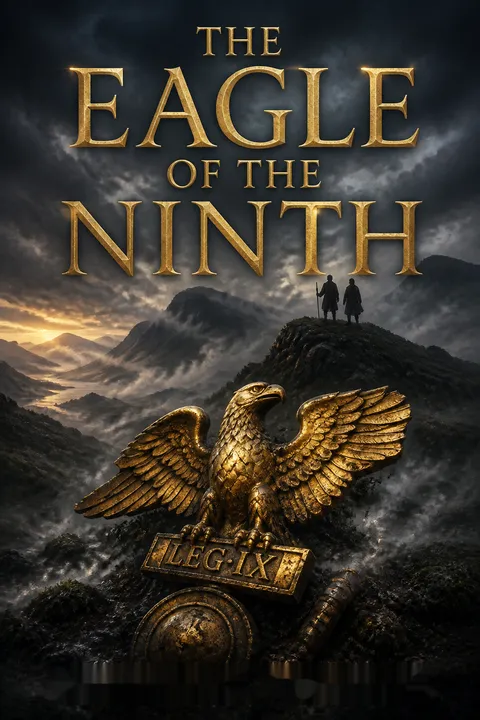
A standard carrying two historiesThe lost Roman Eagle begins as the object binding Marcus to his father and the Legion Marcus hopes to restore. In the north, it has become a sacred trophy for the Epidaii, who remember defeating the Ninth. Its recovery therefore puts personal loyalty, military security, and cultural ownership in conflict. The Eagle's damaged wings and missing honours make it a compromised emblem rather than an uncomplicated prize. Its eventual burial preserves the memory of the Legion while refusing to pretend the Legion can be renewed.
The Oculist's Disguise
A medical skill opens tribal roadsMarcus adopts the identity of Demetrius of Alexandria, a wandering eye healer, and carries useful salves and a healer's stamp provided by Galarius. People across the former province suffer from eye sickness, so his work earns food, shelter, and guides without the threat of Roman force. The disguise is credible because Marcus does more than perform a role: he treats patients conscientiously. It creates access while requiring him to live by service rather than rank.
Mithras and the Light
Faith steadies Marcus under pressureMarcus's devotion to Mithras gives him a language for courage, renewal, and the movement from darkness toward light. The faith matters most when he faces fear, especially in the barrow where the failing lamp and enclosed chamber threaten to overwhelm him. His beliefs do not guarantee safety or require Esca to share them. Instead, ritual and memory help Marcus master panic and act with care. Guern's old Mithraic mark also signals a life crossing the Roman and British worlds.
The Lost Brooch
A tiny clue renews the pursuitMarcus's bronze ring-brooch catches on an alder root when Esca retrieves the Eagle from its hiding place beneath the loch. The brooch is too small to matter as treasure, but its unusual appearance and the torn cloth attached to it can prove that someone returned after the tribal search. Its discovery turns a successful escape into a fresh pursuit and forces Esca to risk the return journey. The episode makes an ordinary fastening carry the weight of a military signal.
The Olive-Wood Bird
A childhood token marks changeMarcus carved the small bird from a growth on the olive tree at his childhood home in Etruria. It carries memories of his parents, farm life, and the future he imagined before joining the Eagles. At the first halt beyond the Wall, he burns it in a small ritual, accepting that the quest cannot simply return him to the past. The token's meaning is not erased by the act. It marks the point at which memory becomes something he can carry without treating it as a destination.
FAQ
Synopsis & Basic Details
What is The Eagle of the Ninth about?
- Quest for Honor: The Eagle of the Ninth follows Marcus Flavius Aquila, a young Roman centurion in 2nd century Britain, as he embarks on a perilous quest to uncover the fate of the Ninth Legion, which vanished years ago in the northern mists. His personal mission is to recover the lost Eagle standard of his father's legion, hoping to restore its honor and his family's legacy.
- Journey of Self-Discovery: After a severe injury ends his military career, Marcus finds a new purpose and identity beyond the Eagles. He forms an unlikely bond with Esca, a British slave, and together they venture beyond Hadrian's Wall, disguised as a traveling oculist and his assistant, into the untamed lands of Caledonia.
- Cultural Clash & Friendship: The narrative explores the complex relationship between Roman conquerors and native British tribes, highlighting themes of loyalty, freedom, and the search for belonging. Marcus and Esca's deep friendship, transcending their cultural and social divides, forms the emotional core of this historical adventure.
Why should I read The Eagle of the Ninth?
- Immersive Historical Detail: Rosemary Sutcliff's meticulous research brings Roman Britain and the wild Caledonian north vividly to life, offering readers a deeply atmospheric and authentic experience. The novel is renowned for its accurate portrayal of military life, tribal customs, and the harsh realities of the frontier.
- Profound Themes Explored: Beyond the thrilling adventure, the book delves into universal themes of identity, loss, redemption, and the meaning of home. Readers will find rich layers of psychological depth in Marcus's struggle to adapt to a life beyond his military calling and Esca's journey from slavery to true companionship.
- Enduring Human Connection: At its heart, The Eagle of the Ninth is a powerful story of an unbreakable friendship. The evolving bond between Marcus and Esca, built on mutual respect and shared adversity, offers a moving testament to loyalty and the ability of human connection to bridge vast cultural divides.
What is the background of The Eagle of the Ninth?
- Historical Mystery: The novel is rooted in a real historical enigma: the disappearance of the Roman Ninth Legion (Legio IX Hispana) from the historical record around 117 AD. Sutcliff uses this unsolved mystery as the foundation for Marcus's quest, blending known historical facts with imaginative fiction to create a compelling narrative.
- Roman Britain Frontier: The setting is the volatile frontier of Roman Britain, particularly the area around Hadrian's Wall and the lands beyond it, known as Caledonia. This geographical and political context emphasizes the constant tension between Roman order and the independent, often hostile, native tribes.
- Author's Personal Connection: Rosemary Sutcliff, who suffered from Still's disease and spent much of her life in a wheelchair, often explored themes of physical limitation and resilience in her work. Her meticulous attention to sensory detail and internal experience, perhaps stemming from her own condition, enriches the narrative and allows readers to deeply connect with Marcus's physical and emotional struggles.
What are the most memorable quotes in The Eagle of the Ninth?
- "There is no way back through the Waters of Lethe." (Chapter XVIII): This powerful quote, first spoken by Guern and later echoed by the Legate, encapsulates the novel's central theme of irreversible change and the impossibility of returning to a lost past. It signifies the acceptance of new identities and futures, even if the old ones are mourned.
- "I have not served the Centurion because I was his slave... I have served Marcus, and it was not slave-service." (Chapter IX): Esca's declaration profoundly defines the unique bond between him and Marcus, elevating their relationship beyond the societal norms of master and slave. It highlights the theme of loyalty born of genuine friendship and mutual respect, rather than obligation.
- "The Eagle is the very life of a Legion; while it is in Roman hands, even if not six men of the Legion are left alive, the Legion itself is still in being. Only if the Eagle is lost, the Legion dies." (Chapter X): Marcus explains the profound symbolic significance of the Eagle, revealing why its recovery is not merely a personal quest for honor but a matter of the Legion's very existence and Rome's military pride. This quote underscores the driving force behind the entire adventure.
What writing style, narrative choices, and literary techniques does Rosemary Sutcliff use?
- Evocative Sensory Detail: Sutcliff's prose is rich with sensory descriptions, immersing the reader in the sights, sounds, and smells of Roman Britain and the wild north. She uses vivid imagery, such as "the shivering silver of the olive-woods" or "the blue peat-smoke caught him by the throat," to create a tangible and atmospheric world.
- Deep Internal Monologue: The narrative frequently delves into Marcus's thoughts and feelings, providing profound psychological insight into his struggles with identity, loss, and purpose. This allows readers to experience his emotional journey intimately, from his initial despair to his eventual acceptance and new beginning.
- Symbolism and Motif: Sutcliff masterfully employs symbolism, with recurring motifs like the Eagle itself, the mist, the "Waters of Lethe," and the contrast between Roman "straight lines" and Celtic "free curves." These elements add layers of meaning, enriching the thematic exploration of cultural clash, fate, and personal transformation.
Hidden Details & Subtle Connections
What are some minor details that add significant meaning?
- The Pot-Bound Rose-Bush: The rose-bush in the wine-jar at Isca Dumnoniorum (Chapter II) is a subtle symbol of Marcus's first command. Its "pot-bound" state and the eventual falling of its "last crimson petals" (Chapter IV) mirror the brief, constrained, and ultimately ending nature of his military career, linking his personal fate to the fort's transient beauty.
- Cub's Onion Breath: When Marcus first receives the wolf-cub, he notes its breath "smelled of onions, like a puppy" (Chapter VI). This seemingly throwaway detail humanizes the wild animal, immediately integrating it into the domestic sphere and foreshadowing its eventual acceptance into the household, blurring the lines between wild and tame, and highlighting Marcus's gentle nature.
- The Olive-Wood Bird: Marcus's childhood carving of an "olive-wood bird" (Chapter I), found on his family farm, becomes a deeply personal talisman. Its sacrifice on the altar in Chapter XI symbolizes Marcus's letting go of his old life and Roman identity, embracing the unknown and the personal quest over his past aspirations.
What are some subtle foreshadowing and callbacks?
- Hilarion's "Toadstools" Prophecy: Centurion Hilarion's jocular warning that Marcus will get "toadstools sprouting out of your ears" from the damp and "lack of company" (Chapter I) subtly foreshadows Marcus's later injury and prolonged confinement, where he indeed experiences isolation and physical discomfort, making the lighthearted comment a grim premonition.
- Cradoc's Regretful Note: When Marcus skillfully drives Cradoc's chariot team, Cradoc remarks, "These four are the jewels of my heart. They are descended out of the Royal Stables of the Iceni, and there are few could handle them better than the Commander." (Chapter II) and there is a "queer note of regret in his voice." This regret subtly hints at Cradoc's deep tribal loyalty and the internal conflict he feels, foreshadowing his later role in the attack on Marcus, where his personal admiration clashes with his duty to his people.
- The New Moon as a Signal: Drusillus's quiet observation, "there was a new moon last night" (Chapter III), serves as a callback to Hilarion's earlier warning about Druids and holy war. The new moon, a significant time for tribal rituals, subtly signals the impending attack, reinforcing the idea that the natural world and ancient beliefs are deeply intertwined with the unfolding events.
What are some unexpected character connections?
- Cradoc, the Charioteer, and the Attack: The friendly British hunter, Cradoc, who shares hunting trips and chariot driving with Marcus, is revealed to be the charioteer who gravely wounds Marcus during the fort's attack (Chapter III). This connection is unexpected because of their earlier camaraderie, highlighting the profound and often tragic divisions of loyalty between Romans and Britons.
- Guern, the Hunter, and Marcus's Father: The tattooed hunter, Guern, who aids Marcus and Esca beyond the Wall, is revealed to be a former centurion of the Ninth Legion who served under Marcus's father (Chapter XIII). This deeply personal connection provides Marcus with the first eyewitness account of his father's fate and the Legion's destruction, transforming the abstract quest into a tangible, emotional encounter.
- Tradui's Gift of the Ring: Tradui, the old Epidaii warrior who recounts the Ninth Legion's final stand from the British perspective, gives Marcus his father's signet-ring (Chapter XV). This act, from an enemy who killed Marcus's father's comrades, is a profound and unexpected gesture of respect and recognition of shared warrior spirit, bridging the chasm between their warring cultures.
Who are the most significant supporting characters?
- Centurion Drusillus: Marcus's loyal second-in-command at Isca Dumnoniorum, Drusillus embodies the steadfast, pragmatic Roman soldier. His gruff wisdom and unwavering support, particularly during Marcus's injury and recovery ("Better to be a laughing-stock than lose the fort for fear of being one," Chapter III), provide a crucial anchor for Marcus and represent the enduring strength of military camaraderie.
- Rufrius Galarius: The Spanish field surgeon who re-operates on Marcus's leg (Chapter VIII) is pivotal not only for Marcus's physical recovery but also for the plot. He introduces the idea of the oculist's disguise and provides the necessary medical knowledge, directly enabling Marcus and Esca's journey north and their ability to navigate tribal lands.
- Tradui: Cottia's aged grandfather, Tradui, is a powerful figure who offers Marcus the British perspective on the Ninth Legion's demise (Chapter XV). His detailed, unvarnished account of the battle and the capture of the Eagle provides the missing pieces of Marcus's quest, while his unexpected gift of Marcus's father's ring symbolizes the complex, often respectful, relationship between adversaries.
Psychological, Emotional, & Relational Analysis
What are some unspoken motivations of the characters?
- Marcus's Need for Purpose: Beyond the stated goal of restoring his father's honor, Marcus is driven by an unspoken, desperate need to find a new purpose after his military career is abruptly ended. His initial "wretchedly ill" (Chapter V) state and fear of kindness reveal a deep vulnerability, and the quest becomes a means to reclaim his identity and self-worth.
- Esca's Search for Belonging: While Esca explicitly chooses to stay with Marcus out of friendship, an unspoken motivation is his search for a place where he is truly valued and free, not just physically but emotionally. His past as a "freeborn son of a free chieftain" (Chapter IX) and subsequent enslavement makes Marcus's acceptance and the shared quest a profound form of belonging.
- Guern's Desire for Absolution: Guern's willingness to reveal his past and guide Marcus through the bog (Chapter XVIII) stems from an unspoken desire for a form of absolution or closure for his own desertion and the shame of the Ninth Legion's fall. By helping Marcus, he indirectly honors his former comrades and confronts his own history.
What psychological complexities do the characters exhibit?
- Marcus's Identity Crisis: Marcus grapples with a profound identity crisis after his injury, feeling "rootless" (Chapter IX) without his military career or his ancestral farm. His initial "aching in his throat" (Chapter IV) when Cassius speaks of his cohort's honors, and his later realization that "Britain was his home" (Chapter XXI), illustrate his complex journey from Roman soldier to a man finding a new sense of belonging.
- Esca's Internalized Slavery: Despite being granted freedom, Esca initially struggles with the psychological residue of slavery, stating, "I have been a slave in his house." (Chapter XX). His "sullenness" (Chapter VI) and the hurt caused by Placidus's casual dismissal ("slaves are all—slaves") reveal the deep scars of his past, which Marcus helps him overcome by affirming their equal friendship.
- Guern's Dual Existence: Guern lives a life of profound psychological complexity, having been a Roman centurion and now a Painted Hunter. His ability to switch between Latin and Celtic, and his "sullen defiance and a long-forgotten pride" (Chapter XIII) when revealing his past, show the constant tension of his dual identity and the deep-seated memories he carries.
What are the major emotional turning points?
- The Saturnalia Games Intervention: Marcus's impulsive decision to save Esca from death in the arena (Chapter V) is a pivotal emotional turning point. It marks his first act of agency outside his military role, shifting his focus from self-pity to a compassionate connection with another, laying the foundation for their profound friendship.
- Marcus Granting Esca Freedom: The moment Marcus gives Esca his manumission papers (Chapter IX) is a powerful emotional climax for their relationship. It solidifies Marcus's commitment to justice and equality, and Esca's choice to stay ("I have served Marcus, and it was not slave-service") reveals the depth of his loyalty, transforming their dynamic into one of true brotherhood.
- Guern's Revelation of the Ninth's Fall: Guern's detailed account of the Ninth Legion's destruction (Chapter XIII) is a devastating emotional turning point for Marcus. It shatters his idealized image of his father's legion, forcing him to confront a painful truth and accept the "rotten" reality of its demise, leading to a more mature understanding of honor and loss.
How do relationship dynamics evolve?
- Marcus and Esca: From Master to Brother: Their relationship begins as master and slave, but quickly evolves into a deep, unspoken friendship. Marcus's respect for Esca's skills and heritage, culminating in granting him freedom, transforms their dynamic into one of mutual reliance and brotherhood, as Esca declares, "I go where
Download PDF
Download EPUB
.epub digital book format is ideal for reading ebooks on phones, tablets, and e-readers.








