

Key Takeaways
Read racism as a changing instrument of crisis, not a timeless prejudice
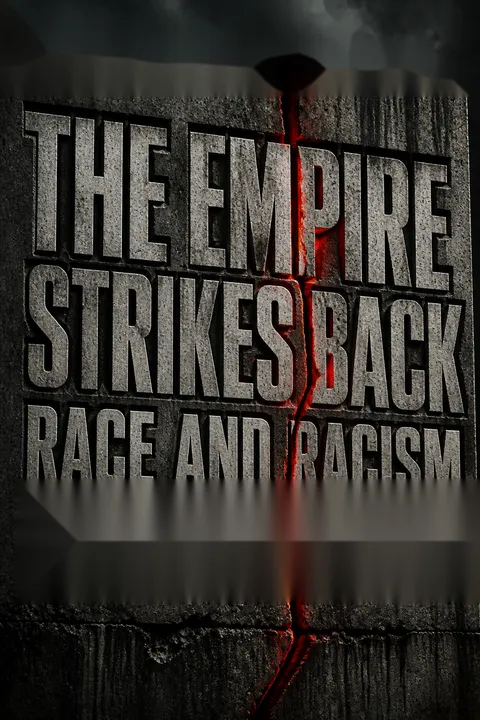
Crisis reshapes racism. The book argues that racism in 1970s Britain cannot be explained as fixed prejudice or as a simple reflection of economic conditions. An organic crisis means a convergence of economic decline, political conflict, and cultural uncertainty. In such moments, racial ideas change shape and help explain who supposedly threatens the nation.
A changing state response. The authors sketch three postwar phases: immigration control, policies aimed at managing the supposed problems of black settlement, and, from the early 1970s, greater emphasis on containing black resistance. The 1981 uprisings made visible how race, unemployment, policing, and inner-city decline had become entangled. The book warns that this connection is real without reducing racism to an economic side effect.
The argument is powerful because it treats racism as historically adaptable, not as a leftover that modern institutions will naturally outgrow. This resembles crisis analysis in political economy, where governing ideas shift as established arrangements lose legitimacy. It also offers a useful test: ask who is being made responsible when a society describes itself as in decline. The caution is that crisis can become too broad an explanation. Economic distress does not automatically produce racism, and racial domination has histories that precede the 1970s. The book is strongest when it holds both points together: crisis changes racism, but does not invent it from nothing.
Challenge the common sense that makes Britishness sound naturally white
Everyday ideas have histories. Drawing on Gramsci, the book uses common sense to mean a loose, contradictory store of ideas that people experience as obvious. It can contain practical insight as well as inherited prejudice. The familiar ideal of a father earning wages while a mother stays home, for example, is presented as natural, though it reflects a particular history and social order.
Difference becomes blame. In 1970s political language, explicit claims of biological superiority increasingly gave way to claims that black cultures were incompatible with British life. Black presence was cast as an alien cause of disorder, making repatriation appear like a solution. These arguments drew strength from an imperial history that official debate often treated as if it had vanished.
The chapter shows how an ideology becomes durable when it stops sounding like ideology. Family ideals, national belonging, and judgments about respectable behaviour can seem neutral while quietly setting the boundaries of who counts as British. This connects to research on social norms: people often reproduce a rule without consciously endorsing its history. Yet common sense is not simply a machine for domination. Its contradictions can also preserve practical knowledge and support resistance. That makes careful analysis more useful than dismissing ordinary people as dupes. The central question is who benefits when a historically specific norm is presented as universal.
Treat black culture as evidence of resistance, not cultural damage
Agency survived enslavement. The book challenges sociological accounts claiming that slavery stripped African people of culture and left their descendants culturally deficient. Its counterevidence includes maroon communities formed by people who escaped slavery, the creation of religious and social institutions, and everyday practices that helped sustain life beyond the plantation's rules. These histories make it impossible to describe black culture as a failed copy of European culture.
History matters in Britain. The authors also criticize studies of Asian communities that discuss customs while neglecting colonialism and economic change. In both cases, treating culture as static or pathological hides how people adapt traditions, make new meanings, and resist unequal power. The point is not that oppression leaves culture untouched, but that oppressed people participate in shaping the cultures they live by.
This correction matters because descriptions of cultural absence can become a second act of dispossession: first people are deprived of power, then their capacity to make meaning is denied. The chapter's examples invite comparison with diaspora studies, which examine how cultural practices are remade across migration rather than simply preserved or lost. That perspective also avoids treating authenticity as a purity test. Still, resistance should not be romanticized. Cultural practices can carry internal hierarchies as well as resources for opposition. The strongest reading keeps both questions open: what does a tradition enable people to do, and whose authority does it also sustain?
When policing defines blackness as suspicion, control becomes self-justifying
Suspicion becomes a system. The police chapter argues that racialized policing cannot be reduced to individual officers using slurs. Police writing and training helped connect black identity with criminality, portraying West Indian youth as unruly and Asian people as potential illegal immigrants. John Brown's 1977 report, Shades of Grey, described a criminalized dreadlock subculture in Handsworth, turning a contested image of black youth into an apparently expert diagnosis.
Prevention can extend surveillance. Community policing was presented as a gentler alternative to confrontation, but the book warns that it can also gather intelligence and expand police influence into schools and local services. Southall's mass arrests in 1979 and repeated allegations of police abuse show why black residents often experienced police as part of the danger, not simply protection from it.
The chapter anticipates a problem now familiar in debates about predictive policing: institutions can turn their own categories into apparent evidence. If officers focus surveillance on a group, they are more likely to record its behaviour as a problem, reinforcing the assumption that prompted the surveillance. The book usefully shifts attention from prejudice alone to routines, training, and authority. Its broad account of state control can, however, blur differences among police forces and local situations. That is a reason for more precise evidence, not a reason to ignore the institutional pattern the authors document.
Ask whose interests school reforms serve before praising inclusion
The child becomes the problem. Early education policy treated black pupils as obstacles to assimilation, focusing on numbers, language, and test performance. Later approaches spoke of cultural difference and multicultural education, but often left racism in schools unexamined. Bernard Coard's 1971 study exposed the over-placement of black children in schools for the educationally subnormal, challenging the claim that the system simply rewarded ability.
Support can mean monitoring. From assessment initiatives to schemes preparing young people for work, the book tracks a growing state interest in measuring and managing black pupils. In Birmingham's Lozells project, police worked with schools in the name of community safety and law-abiding behaviour. The authors argue that apparently helpful reforms could discipline black youth while leaving the unequal conditions shaping their prospects intact.
The chapter's most durable insight is that inclusion and control can operate through the same institution. A school may offer support while also sorting, measuring, and limiting students according to assumptions about their future. This connects with scholarship on institutional classification, where labels influence the opportunities that people receive and can make unequal outcomes look deserved. The book sometimes treats educational initiatives chiefly through their controlling effects. Individual teachers, local programmes, and student experiences can differ substantially. Still, the account demands a better question than whether a policy sounds compassionate: does it change the power relations producing the disadvantage it names?
Build feminism from black women's histories, not borrowed universal templates
Oppression is simultaneous. The chapter argues that black women's lives cannot be understood by treating race, class, and gender as separate burdens that take turns. Racism shapes gender roles, while class and patriarchal power shape the conditions in which women work and organize. The usual ideal of the nuclear family, and concepts such as dependence or reproduction, cannot simply be applied to black women whose histories include slavery, colonialism, and work in other people's homes.
Herstories change the theory. Asian women's struggles against immigration restrictions and workplace exploitation, alongside the history of African women's political organization, challenge the picture of black women as passive or newly awakened by life in Britain. The authors call for feminist analysis that recognizes both shared struggles and unequal power between white and black women.
This is an argument about method as much as representation: a theory built from one group's experience may mistake its own limits for universal truths. Contemporary intersectional analysis offers a useful vocabulary for examining how social positions combine, while the chapter's historical examples stress that those combinations vary across time and place. The constructive challenge is to avoid making black women's experience appear singular or internally uniform. Differences of class, generation, sexuality, and community matter too. A stronger feminism does not replace one universal story with another; it builds explanations that remain answerable to the specific lives and political claims they describe.
Explain Asian women's work through power and labour, not custom alone
Migration was regulated by gender. The book shows how immigration law shaped who could enter Britain and on what terms. Many Asian women came as dependants of male workers, while later legislation narrowed family members' rights to join them. Reports of invasive questioning and bodily examinations at British entry offices reveal how state control reached into women's private lives.
Work was never simply absent. Asian women were concentrated in low-paid jobs such as textiles, light engineering, laundries, and homeworking. The chapter cites 1971 rates of economic activity of 40.8 percent for Indian women and 20.7 percent for Pakistani women. These figures challenge claims that Asian women did not work because of culture. Family income, local job opportunities, childcare, and the structure of the labour market all shaped whether and where women could earn wages.
The chapter corrects a common error in migration research: counting only formal employment can make women's labour disappear, especially when unpaid work and homeworking are involved. It also shows that laws governing family reunion are labour policies in another form, because they shape the households that reproduce workers. The figures are revealing, but categories such as economic activity can still miss substantial work outside official definitions. The broader lesson is to examine both measurement and material conditions. A cultural explanation may describe a practice, but it cannot explain the distribution of opportunity unless it also accounts for law, wages, and access to care.
Recognize community solidarity as a political resource, not a cultural relic
Strikes drew on relationships beyond work. In the 1974 Imperial Typewriters strike in Leicester, women workers relied on support from relatives, local businesses, and the wider Asian community when union backing was limited. At Grunwick in 1977, Asian women challenged harsh conditions and management, while the public debate often treated their struggle chiefly as a test of trade-union recognition. The Chix factory strike in 1980 again exposed unequal pay and poor working conditions.
Solidarity has limits and power. Shared language, family ties, and community networks helped workers organize and endure conflict. The authors insist that these are not evidence of backwardness. They are practical resources shaped by history. At the same time, the strikes reveal how union institutions could fail to represent the specific concerns of black women workers.
These cases broaden the idea of workplace power. Workers do not arrive at the factory as isolated individuals; networks built in homes and neighbourhoods can sustain action when formal institutions are reluctant or hostile. This connects to research on social movements, where trust and repeated contact help groups coordinate under risk. But community should not be treated as automatically harmonious. Gender hierarchies and disagreements over strategy can exist within it, just as unions can contain both support and exclusion. The useful principle is to assess solidarity by what people can organize together, while remaining attentive to who gets to speak and decide.
Link autonomous black struggle to class politics without dissolving its difference
Class is made through struggle. The book rejects the idea that class politics begins only after workers share a single identity or join established institutions. Black people organized against racism in schools, workplaces, neighbourhoods, and encounters with police, often through forms the traditional labour movement did not recognize. These struggles challenged racial divisions that weakened working-class solidarity while insisting that black oppression could not be postponed until after class unity was achieved.
Culture carries politics. Rastafarian ideas and reggae helped develop a shared language of resistance. Dub, a reggae production practice that reworks a song by foregrounding instruments, effects, and fragments of its vocal, offers one example of cultural experimentation that invites listeners to hear familiar material differently. The authors present such forms as politically meaningful without claiming every listener belongs to a single movement.
The book's account of autonomy avoids two easy mistakes: treating black politics as a side issue for class organizations to absorb, or treating race as wholly separate from class relations. This is valuable for current debates about coalition, where unity can become a demand that marginalized groups mute their own priorities. Cultural forms also help movements create shared attention and identity, not merely deliver messages. A necessary qualification is that music and symbols do not guarantee political agreement or durable organization. Their force depends on the relationships and collective practices that grow around them.
Analysis
The book's central achievement is to make race indispensable to the analysis of 1970s Britain without reducing racism to a direct consequence of economic decline. Its collective, interdisciplinary structure moves from political economy to common sense, sociology, policing, education, feminism, and cultural politics. That breadth lets the chapters illuminate one another: the black child marked as educationally deficient, the young person treated as a criminal, and the migrant family cast as alien are not isolated images. They are connected ways of defining who belongs, who is governable, and who bears the costs of crisis.
Its strongest methodological intervention is historical specificity. Racism changes form, drawing on older imperial ideas while responding to present conflicts. The book also insists that black people are makers of culture and political analysis, not merely objects of policy. Its account of community, women-led workplace struggle, and reggae's political dimensions expands class analysis beyond the factory without abandoning material power relations.
The argument has limits that the collective partly acknowledges. Its authors note uneven coverage of black women and Asian communities, and their theoretical language can sometimes make varied institutions appear more coordinated than the evidence warrants. The emphasis on state racism is illuminating, but a state-centered account can underplay local differences, conflicting interests, and the contingent choices of individual actors. The book also offers more diagnosis than a developed program for building alliances across racial divisions.
Those limitations do not diminish its main value. The text asks readers to inspect how ordinary institutions produce racial categories and how resistance creates new political capacities. Its account is most useful when read as a historically grounded intervention rather than a universal model of every later period. The key question it leaves alive is practical: how can movements build common power without requiring those most exposed to racism to surrender their distinct analysis and demands?
Glossary
organic crisis
interlocking social crisisA deep crisis in which economic decline converges with political conflict, ideological uncertainty, and cultural change. The book uses the term to distinguish 1970s Britain from a simple recession: the state and established political arrangements struggled to manage conflicts across several areas of social life. Racism both changed within this crisis and helped shape how people understood it.
common sense
everyday, mixed beliefsA historically accumulated, unsystematic body of practical ideas that people often experience as obvious. In the book's Gramscian usage, common sense is contradictory: it can preserve prejudice and dominant assumptions while also containing practical knowledge and judgments that challenge them. Its political importance lies in how struggles can reorganize what ordinary people take for granted.
new racism
racism framed as cultural differenceA form of racism that can avoid explicit claims of biological superiority while presenting black cultures as alien, incompatible, or threatening to national life. The book argues that this framing became influential in 1970s Britain, where cultural difference and ideas of British identity helped make exclusion and repatriation appear reasonable.
authoritarian statism
expanded state controlA tendency toward concentrated executive power, more pervasive state regulation, and restrictions on political freedoms within a formally democratic society. The book uses the concept to describe changes in 1970s Britain, where control expanded without a complete replacement of liberal-democratic institutions by fascism or an openly exceptional regime.
acculturation
alleged loss of prior cultureA sociological explanation claiming that enslaved Africans and their descendants lost their original cultural systems and adopted European ones. The book challenges this account by discussing the survival and transformation of African cultural forms, the creation of new institutions, and the resistance of enslaved people and maroon communities.
sex/gender systems
social organization of sex and genderArrangements through which societies shape biological sex and reproduction into culturally organized roles, relationships, and kinship structures. The book draws on the term to argue that gender relations vary historically and culturally. It cautions against using the Western nuclear family as a universal standard for describing or judging Asian and African family arrangements.
community policing
policing through local engagementA policing approach that seeks public cooperation through local relationships, visible officers, and links with institutions such as schools and social services. The book questions the assumption that this makes policing democratic or benign. It argues that community engagement can also extend surveillance, gather information, and strengthen police influence in black neighbourhoods.
Dub
reworked reggae recordingA reggae production practice that reshapes a recorded song through mixing, sound effects, and emphasis on individual instruments or fragments of vocal. In the book's account, Dub is more than an instrumental version: it changes how a listener hears the original, and it is developed within the social world of reggae performance and sound systems.
Download PDF
Download EPUB
.epub digital book format is ideal for reading ebooks on phones, tablets, and e-readers.








