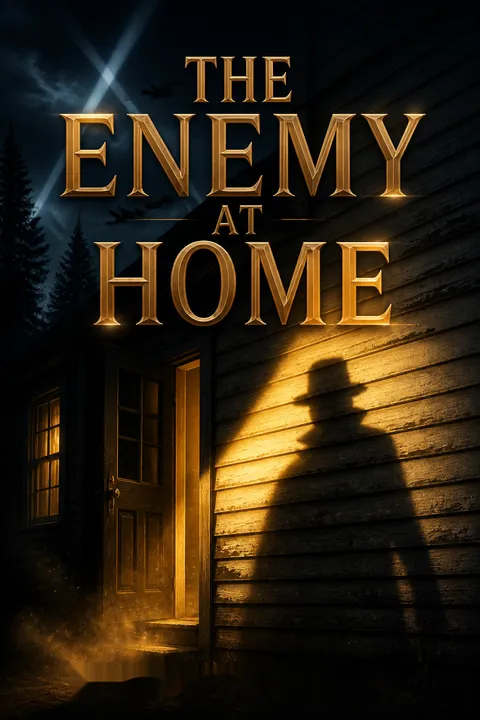


Plot Summary
Blackout at the Kinney House
On a dark April night in 1943, Nora Kinney, alone with her teenage children while her doctor husband Pete serves overseas, hears voices outside and later finds a rock through the front door and the word JAP-LOVER painted across it. The attack revives the harassment that drove her Japanese-American tenants, Tak and Miko Hara, into government custody and an Idaho internment camp.
Their flowers are gone, their apartment boarded up, and Nora is still keeping their belongings safe. Before dawn she must begin work as a Boeing riveter, anxious about the dangerous machinery and the family left behind. Then she discovers her son Chris has slipped out without telling her where he went.
The attack turns the home into a place where public fear enters through broken glass. Nora’s sympathy for the Haras has already cost her a sense of neighborhood safety, yet wartime patriotism gives the vandals a respectable disguise. Her new job sharpens that contradiction: she is expected to contribute to the war while her family is punished for compassion. Chris’s disappearance adds a private uncertainty to the public danger. Nora is not simply protecting a household; she is trying to hold together people whose choices and loyalties she cannot fully control.
A Strangler in Belltown
That same night, Boeing machinist Jo Ellen Bryant leaves a crowded bar after the handsome naval ensign she hoped to meet departs. A sailor she barely knows offers to walk her home, and she lets him inside for coffee. When she discovers her sister Loretta missing, Jo Ellen finds her upstairs, strangled with a lamp cord.
The killer has moved through the kitchen and helped himself to food before slipping out the back door. At work the next morning, Nora hears that Loretta was a fellow war worker and that police suspect she let her killer into the apartment willingly. The murderer remains free, turning an ordinary decision to trust a companion into the first warning that Seattle’s women workers are being hunted.
Loretta’s murder begins with a small, socially ordinary concession: accepting company on a dark walk home. The blackout makes the city harder to read, while wartime rules and gendered policing already treat women’s movements as suspicious. The killer exploits the gap between caution and courtesy, then leaves evidence of his appetite in the kitchen. That domestic intrusion matters because it makes the victim’s home, not a distant battlefield, the site of danger. The crime also places Nora near the investigation through her new workplace, though she has not yet understood how close the threat will come.
Rivets and Red Flags
At Boeing, Nora’s trainer Larry Krull mocks her, crowds her at the rivet gun and treats her presence as an affront to men’s work. She manages her first rivets, then finds friendship at lunch with Connie Wiedrich and Fran DeLuca, whose son Marty is recovering from a Pacific battle wound. A Black bucker, Willie, works smoothly with Nora until coworkers’ racist hostility makes their easy rapport unsafe.
Meanwhile, Sally Baumann, another Boeing worker, wakes to find a stranger has entered her apartment and watched her sleep; she escapes to a neighbor, and the prowler flees. Police question Chris among boys near the scene because he wears a similar blue jacket. Nora hears the story only through Jane, while Chris minimizes the encounter.
The factory reproduces the era’s hierarchies even as it depends on women and Black workers to build aircraft. Larry’s harassment is not incidental workplace friction: it tests whether Nora can claim authority over the tool in her hands. Her moment of solidarity with Willie exposes how quickly friendliness becomes dangerous when racial boundaries are enforced by coworkers. Sally’s escape extends the threat beyond Loretta’s murder, but police attention falls on a convenient visual clue, Chris’s jacket. Nora’s access to fragments rather than facts becomes a recurring condition of her investigation.
Ray Returns to Capitol Hill
Nora’s younger brother Ray arrives unexpectedly from a San Diego naval hospital, where he has been recovering from an injury. His charm delights Chris and Jane, though Nora remembers the trouble his past visits have caused.
He helps the family through another nighttime attack, chasing teenagers away from the garage before they can finish painting an anti-Japanese slur. At a dinner Nora hosts for her new work friends, Ray entertains the table while Connie brings Roger Tallant, a courteous Boeing engineer, and Fran brings her scarred son Marty.
Talk of Loretta’s murder unsettles Marty, whose battle trauma surfaces when he drops a glass and begins shaking. Ray responds with kindness, then resumes his late-night outings, leaving Nora unsure whether his easy manner is reassurance or another mask.
Ray’s return offers Nora a temporary substitute for Pete and gives Chris an adult ally who does not lecture him. But Ray’s charm also blurs the difference between genuine care and irresponsibility; he can protect the family one moment and unsettle Nora the next. The dinner gathers people marked by different kinds of wartime injury: Marty’s visible wound, Roger’s concealed vulnerability, and Nora’s accumulating anxiety. Their shared table briefly makes community possible. The murder discussion shatters that ease, showing how the war’s violence travels home in bodies, silences, and the fear of being seen as weak.
A Favor Too Far
Chris’s bullying worsens until Ray sees Earl McAllister strike his nephew and urges Chris to stand up for himself. Chris finally knocks Earl down, breaking his nose; Nora takes the injured boy to hospital, while Ray privately warns him to leave Chris alone.
Later Ray confides that he fears returning to his new naval unit and asks Nora to help stage an accident that would cripple his hand and keep him out of combat. Nora refuses, warning that the scheme could maim him and bring criminal charges. Ray accuses her of abandoning him as she did when he was a boy. He leaves for San Diego the next day, and Nora reaches the bus terminal only in time for a bitter goodbye.
The confrontation between Chris and Earl gives Chris a first, messy act of self-defense, but it also reveals how easily resistance can become uncontrolled violence. Ray interprets survival through a different logic: he wants Nora to injure him so that fear can be converted into a medical excuse. Her refusal is principled, yet it reopens their childhood wound, when Nora left Ray with their grandparents. The scene places courage and cowardice under pressure rather than treating them as simple opposites. Nora recognizes Ray’s terror, but cannot accept the harm and deception he proposes as the price of protecting him.
Connie's Last Evening
After a late meal with Connie, Roger walks her home through Queen Anne. Their argument ends at her door, and he returns to his apartment. When Connie calls in fear, Roger hears a disturbance and races back, but arrives after she has been strangled with a stocking and stabbed. Her killer has dressed her in an apron and marked her mouth with lipstick.
Roger reaches toward his wallet when police enter; a responding officer mistakes the movement for a weapon and shoots him. Nora learns that both her friend and the man she believed was her friend have died. The newspapers blame Roger, citing private sexual material found in his apartment, though the public story leaves Nora uneasy.
Connie’s murder converts private trust into a crime scene, while Roger’s death shows how quickly the police can turn ambiguity into certainty. His attempt to identify himself is read through suspicion, and his sexuality becomes a ready-made explanation for violence. Nora’s grief is therefore doubled: she loses a friend and watches an innocent account of that friend’s final hours harden into public fact. The apron and painted smile suggest a killer staging gender roles as humiliation. The official narrative does not merely conceal what happened; it gives the community permission to stop asking.
A Memorial in Fairyville
At Roger’s informal memorial in the Double Header, Nora meets his friend Richard and Phil, a detective who risks his job by speaking quietly with her. They explain that Roger had been at his parents’ home in Colfax when Loretta was killed, and that witnesses place him away from Connie’s apartment until after the attack began.
The police ignored those facts and treated his harmless collection of male images as proof of depravity. Nora sees why Roger’s friends fear being exposed, yet their silence leaves Connie’s killer free.
Before long, a telegram announces that Ray has died in a San Diego munitions explosion. Nora withholds her suspicion that he may have tried to cause an accident himself, adding another painful secret to the one she carries for Roger.
The memorial offers Nora knowledge but no clean path to justice. Richard and Phil can identify the police’s errors, yet they cannot challenge the department without risking their livelihoods and safety. Their caution is not indifference; it is a survival strategy produced by institutional persecution. Nora’s promise of discretion protects them, but it also leaves the public lie intact. Ray’s telegram then mirrors the same problem in her family: she has reason to doubt the official account, but disclosure could stain someone she loves. The story repeatedly makes truth costly, especially for people already vulnerable to social judgment.
A Telegram and a Tenant
Nora receives Ray’s personal effects and a report that he died in the explosion, but the scorched dog tag and his earlier plan to fake an injury make her suspect the blast was not accidental. She says nothing to the Navy, protecting Ray’s reputation and her children from shame. To fill the vacant garage apartment, she posts a rental sign.
Joe Strauss arrives with a woman he claims is his wife, offers references, and wins Nora’s trust by sharing the loss of a younger brother. When the woman later admits Joe paid her to pose as his spouse, Nora feels foolish for her attraction and wonders what else he has concealed. Still, she lets him move in, partly because the house feels safer with another adult nearby.
Grief does not arrive as a single event for Nora; it becomes an administrative burden of letters, belongings, and decisions about what to tell the children. Her silence about Ray’s possible sabotage is an act of protection, but also a refusal to test the truth. Joe’s arrival exploits a similar need: Nora wants company and security, so his shared bereavement feels persuasive. The fake wife punctures that comfort and reminds Nora how easily personal intimacy can be manufactured. Yet her decision to keep him as a tenant shows that distrust cannot erase the practical need for connection.
The Scarf in Chris's Closet
A new attack kills Gloria Dunbar, a shipyard welder, while her roommate hides in a locked bathroom. Nora finds Connie’s pink-and-black scarf in Chris’s closet, along with Arlene’s hair clip and a handkerchief from his grandmother. She fears the objects are trophies and remembers Chris’s unexplained nights out and the police questioning him near Sally’s apartment.
Chris admits he followed Connie after Nora’s dinner party and watched her outside the café on the night she died, but insists he never approached her. He burns the scarf, hair clip, and handkerchief in anger after Nora’s accusation. His explanation makes sense, yet his secrecy leaves Nora uncertain whether she has uncovered innocence or watched him destroy evidence.
The keepsakes create a powerful but misleading pattern because Nora reads them through the crimes she already fears. Each object belongs to a different relationship, but their shared presence in Chris’s room turns affection into apparent evidence. His confession that he followed Connie confirms the behavior Nora feared while stopping short of implicating him in her death. Burning the objects makes the ambiguity worse: it can look like concealment, even as it arises from wounded trust. The scene captures a parent’s epistemic crisis. Nora knows her son intimately, but she cannot treat familiarity as proof when his actions and omissions point elsewhere.
Two Lies, One Hidden Cabin
After discovering that Joe hired his supposed wife, Nora begins to suspect he is a detective watching Chris. She follows her son in Mrs. Landauer’s car and finds him at a secluded cabin, where the elderly widow has hidden Sono Nakai and her daughter Ruth, Japanese-American neighbors presumed relocated.
Chris has secretly delivered supplies for months. When Sono falls gravely ill, Nora recognizes likely food poisoning rather than appendicitis and helps care for her.
She refuses to let Chris continue risking arrest, and Sono decides to leave hiding and join the internees in Idaho. That night, a burglar enters the Kinney home and escapes through the ravine. Joe gives Nora a loaded revolver, increasing her suspicion even as he offers protection.
Nora’s discovery reverses her judgment of Chris: the night journeys she interpreted as possible predation were acts of aid to people the state had made vulnerable. Yet her response is not simply admiration. She ends the arrangement because a minor should not bear the legal and physical danger of keeping the refuge alive. Sono’s choice to leave is constrained, not freely made, and the scene refuses to confuse protection with justice. Joe’s gun further complicates security. The person Nora suspects may be watching her is also the one prepared to help her defend the house.
The Brother Behind the Alias
Nora checks Joe’s references and learns that he is actually Joe Slattery, an illustrator, and that his brother Jackson disappeared from the San Diego naval base during the explosion that supposedly killed Ray. She searches Joe’s apartment while Chris distracts him with a false medical emergency.
There she finds photographs, Navy papers, and letters from Jackson describing his friendship with Ray and a night when the two men exchanged identities and dog tags. Joe has also collected reports of the San Diego murders and Seattle’s stranglings.
His camera contains pictures of Nora and her home, proving he watched them before renting the apartment. The evidence ties Joe’s private search to Ray’s suspicious death, but Nora still does not know whether Ray survived.
The apartment search changes Joe from an intimate mystery into a person with a specific, painful history. His lies about his name, marriage, and past are not harmless, but the documents show that he has been pursuing a missing brother rather than merely spying on Nora’s family. The exchanged dog tags offer a mechanism by which an official death could conceal a living person. Yet the evidence remains circumstantial, and Nora has reason to resist the conclusion it implies. The chapter makes investigation an ethically compromised act: she violates Joe’s privacy to learn why he violated hers.
The Apron in the Ravine
While searching Joe’s file, Nora spots a pink patch in the ravine and finds one of her stolen aprons snagged among the branches. Joe catches her there and finally explains his theory: Ray had persuaded Jackson to take his place guarding the munitions dump, using their earlier identity swap to escape after the explosion.
Joe believes Ray survived and became the strangler targeting women workers. Nora resists the accusation until Joe says he has seen Ray near the house.
She is still trying to understand when Chris rushes down the slope, mistakes Joe’s grip on his mother for an attack, and tackles him. Both men tumble into the ravine. Chris breaks his leg, Joe is badly bruised, and Nora must call for help before she can decide whether Joe is right.
The apron turns suspicion into physical evidence: the killer has entered Nora’s home and taken something that belongs to her. Joe’s account connects the naval explosion to the murders, but it also demands that Nora reinterpret her brother as both alive and dangerous. Her resistance is not mere denial; the claim threatens her entire family history. Chris’s tackle emerges from his own protective instinct and the incomplete information adults have kept from him. The fall literalizes the cost of secrecy: everyone is acting on partial truths, and even love can produce injury when no one knows the whole situation.
The Wrong Man's Last Attack
At the hospital, Nora hears that Dolores Oberlin, a young Boeing riveter, defended herself with an ice pick and killed Ronald Lapp, a drifter wanted for another murder. Police announce that Lapp was the Rosie killer, but Joe believes he copied the real murderer’s methods. The doubt becomes urgent when Fran reports that someone entered her house, left her work pants and one of Nora’s aprons, then fled when Fran’s neighbor arrived.
Marty’s slashed tires had kept him away at the crucial moment, but Fran survived. Nora now recognizes that the intruder is selecting women connected to her. The killings are no longer an abstract threat at the plant; the killer has come close to the people she loves and is preparing to return.
Lapp’s death offers the city a satisfying ending at precisely the moment the pattern remains active. The police can close a frightening case by naming a known criminal, while the surviving evidence points elsewhere. Nora’s connection to the attacks becomes personal through the stolen apron and Fran’s near-murder. Her earlier reluctance to disclose the missing stockings and lipstick now looks less like caution than a risk she has imposed on others. Yet she still protects Ray from exposure. The moral pressure shifts: silence once shielded family reputation, but now it may allow another attack.
Ray Comes Through the Door
Nora leaves a note for Ray and waits alone in the house, with Joe’s revolver concealed nearby. Ray arrives wearing blond hair and a stolen identity, pleased that Nora has recognized him.
He admits targeting women at the Boeing plant, including Connie and Fran, because the murders would wound his sister and punish women for taking men’s jobs. He had stolen Nora’s stockings, lipstick, and aprons to stage the crimes. Ray demands Joe’s location and promises to disappear, but Nora refuses to help him harm anyone else.
He wraps a stocking around her throat. As she struggles to breathe, Nora brings the hidden revolver to his chest and fires. Ray dies on her living-room floor, ending his threat but leaving her responsible for a truth that could destroy her family.
Ray’s motive turns the home-front labor debate into intimate revenge. He does not merely resent women’s work; he uses Nora’s belongings to make her complicit in the symbolic staging of each murder. His demand that she protect him repeats their childhood bond as coercion: he expects her to remain his keeper even after he has harmed her friends. Nora’s refusal is decisive because she stops treating loyalty as obedience. The shot is self-defense, but it cannot restore the dead or erase the years in which she misread her brother. The emotional climax is therefore both liberation and bereavement.
A Grave Without a Name
Nora and Joe decide not to call the police, fearing that Ray’s crimes will devastate Nora’s children and expose the truth about Jackson’s death. They bury Ray on Mrs. Landauer’s wooded property, search his motel room, and find the car and burglary tools he used under another man’s identity.
Nora destroys her stolen stockings, lipstick, and aprons. The Navy’s remains, officially attributed to Ray, are later cremated and scattered at sea by Joe, giving Jackson the burial he wanted.
Nora marks Roger’s grave with a stone honoring his friendship. She keeps working, Chris recovers, and his letters to Ruth connect the families again. Joe eventually leaves because he and Nora have grown too attached, though she continues to recognize him in his illustrations.
The resolution chooses containment over public justice. Nora and Joe protect their families and preserve Jackson’s dignity, but they also deprive the victims’ relatives of the truth and prevent the authorities from understanding the full pattern. Their burial is not presented as a clean moral victory; it is a choice made among harms, shaped by wartime secrecy and the police’s earlier willingness to sacrifice an innocent man. Nora’s marker for Roger repairs one small public falsehood, while the sea burial honors Jackson privately. Her growing independence does not make her unburdened. It makes her capable of carrying the consequences of her own decision.
Epilogue
In the following weeks, Chris heals from his broken leg, gains confidence, and begins corresponding with Ruth at the Idaho camp. Nora returns to Boeing and continues writing cheerful letters to Pete, leaving out Ray’s crimes and her role in hiding them.
Joe stays long enough to become part of the family, then moves away when he and Nora admit their attachment threatens the life she has built with Pete. He sends postcards, but no return address. Years later, Nora recognizes herself in the background of his magazine illustrations, always rendered with care.
The epilogue refuses a neat return to normal. Chris’s recovery and correspondence with Ruth create a modest bridge across the confinement that separated their families, while Nora’s letters to Pete preserve a carefully edited domestic world. Joe’s departure is a form of restraint rather than a rejection: intimacy has mattered, but Nora chooses not to let it become another secret that governs her life. His later images give their connection a quiet afterlife. She remains unseen by the public as a person, yet remembered by someone who has learned to look closely.
Analysis
The novel places its mystery inside a home-front society that treats some forms of violence as urgent and others as acceptable. Women build bombers but are mocked for using the tools; Japanese-American neighbors are removed in the name of security; gay men conceal friendships to keep their jobs; and a police department can convert prejudice into an apparently solved case. These pressures are not background decoration. They shape what characters can say, whom they can trust, and which evidence authorities choose to recognize.
Nora’s investigation is driven less by professional detection than by the collision of care and suspicion. She is responsible for children, tenants, coworkers, and a brother she has partly raised. That sense of duty makes her attentive, but it also makes her vulnerable to protecting people before she knows what they have done. Her mistaken suspicion of Chris is painful because the evidence is real, even though its meaning is wrong. The novel treats parental knowledge as intimate but incomplete: love cannot substitute for asking, and fear can make ordinary secrets look monstrous.
The serial killer’s staged aprons and painted smiles reduce working women to a domestic role, but the story complicates the impulse to make one culprit stand for every social cruelty. Larry’s misogyny, the vandals’ racism, and the police’s homophobia are not identical to Ray’s murders, yet each helps establish a world where some people’s dignity is negotiable. The false conviction of Roger makes that distinction especially sharp. Institutional prejudice does not create every crime, but it can hide the criminal and punish the wrong person.
The ending refuses full public justice. Nora and Joe bury Ray and conceal his crimes, protecting their families while denying victims’ relatives the truth. That choice is ethically compromised, not triumphant. Nora has become more independent, but independence does not free her from loyalty, grief, or consequence. The final image of her appearing in Joe’s art offers a private form of recognition, intimate and beautiful, while the public record remains incomplete.
Review Summary
The Enemy at Home by Kevin O'Brien is a historical thriller set in 1943 Seattle. Readers praise its compelling blend of mystery and WWII-era details, following Nora Kinney as she balances family life and factory work while a serial killer targets female workers. The book explores themes of misogyny, racism, and societal changes during wartime. Most reviewers found it suspenseful and well-researched, appreciating the twists and character development. While some felt it was predictable or overly detailed in parts, the majority highly recommend it for its unique perspective on the home front during WWII.
Characters
Nora Kinney
Wartime mother and riveterNora is a thirty-seven-year-old mother whose husband is serving overseas and whose two children depend on her judgment. She has spent much of her life caring for others, first her younger brother and later her own family, so responsibility is both her strength and her habitual refuge. Taking a Boeing job challenges the gendered limits she has accepted, while workplace harassment and neighborhood hostility force her to decide what kind of risks she will tolerate. Nora is observant but not infallible: grief, loneliness, and fear sometimes distort what she sees. Her loyalty can become silence, yet her practical courage lets her act when uncertainty becomes dangerous.
Chris Kinney
Lonely, gifted teenagerChris is Nora and Pete’s seventeen-year-old son, an excellent artist and storyteller who prefers drawing and reading to the sports and status games favored by his classmates. He has endured bullying, heartbreak, and the strain of having his father overseas, but he rarely explains what is happening inside him. That silence makes him seem evasive to Nora and leaves him vulnerable to manipulation by Earl. Chris wants to be treated as capable, not managed as a child, and his secretive choices arise partly from that need. His compassion is real, though he often acts without understanding how frightening his secrecy appears to his mother.
Jane Kinney
Curious younger sisterJane is Nora and Pete’s twelve-year-old daughter, social, energetic, and eager to join school drives, church activities, and conversations that adults might prefer to avoid. She is fascinated by movie stars and dramatic news, but beneath her exuberance is a child trying to make sense of wartime danger. Jane admires Chris and Uncle Ray, and her concern for her mother occasionally surfaces through practical gestures. Her impulsive curiosity can create extra work for Nora, yet it also brings warmth and movement into a household strained by absence and fear.
Pete Kinney
Absent army surgeonPete is Nora’s husband, a conscientious orthopedic surgeon who joined the Army Medical Corps despite having a family deferment. He believes professional duty and service to the wounded outweigh his fear, though Nora knows his calm manner hides vulnerability and self-doubt. His absence leaves Nora to manage work, parenting, and danger alone, while his letters offer a connection to the marriage they built before the war. Pete’s steadiness comforts the family, but it can also make Nora feel that his convictions leave little room for disagreement.
Ray Shannon
Charming younger brotherRay is Nora’s younger brother, handsome, quick-witted, and practiced at winning people over. Their shared childhood makes Nora feel responsible for him, even when his choices exasperate her. Ray has drifted through jobs and relationships, relying on charm and improvisation rather than sustained responsibility. His military service confronts him with a fear he struggles to admit, and he resents reminders that Nora built a life beyond caring for him. He can be affectionate and generous, especially with Chris and Jane, but his need to be protected strains the family bond.
Joe Slattery
Guarded artist neighborJoe is a commercial illustrator who rents the Kinneys’ garage apartment and becomes a thoughtful presence in their household. He is attentive to details, protective of family, and practiced at keeping private matters private. His grief over his younger brother shapes his decisions, while his concern for Nora’s family grows through ordinary acts of help and companionship. Joe’s guardedness reflects a world in which exposure can cost people their livelihood and safety. He is neither a simple rescuer nor an uncomplicated romantic possibility; his affection for Nora exists alongside deception, grief, and the limits imposed by her marriage.
Connie Wiedrich
Nora's factory confidanteConnie is a Boeing worker with a lively manner, a pink-and-black bandana, and a talent for drawing Nora into friendship during an isolating first week. She likes Roger and understands more about him than most people at the plant, while also longing for affection in a city crowded with absent servicemen. Her humor can turn a grim lunch break into a moment of relief. Connie’s warmth makes her important not because she is idealized, but because she gives Nora a glimpse of adult companionship outside marriage and family.
Roger Tallant
Gentle engineer and friendRoger is a Boeing engineer and Connie’s close friend, a courteous man whose kindness toward Marty reveals a capacity for careful attention. He belongs to a discreet circle of gay men who must guard their private lives against employers, police, and public scandal. His friendship with Connie offers her companionship without pretending to be a conventional romance. Roger’s restraint is not coldness; it is a survival skill in a society that can turn identity into evidence. Nora sees his decency before she understands the risks surrounding him.
Fran DeLuca
Practical factory friendFran is a widowed Boeing worker and mother who meets Nora through lunchroom conversation and homemade food. Her son’s wartime injury has made her protective, though she tries to maintain humor and practical composure. Fran is generous without being sentimental and initially trusts official explanations more than Nora’s suspicions. Her friendship gives Nora a rare adult ally at work, someone who understands the strain of parenting while a loved one serves overseas.
Marty DeLuca
Wounded sailor and sonMarty is Fran’s twenty-three-year-old son, home from the Pacific after losing an eye and suffering severe emotional distress. He is self-conscious about his appearance and avoids gatherings where people might watch him. A sudden shaking spell at Nora’s dinner party exposes how incompletely he has recovered. Marty wants independence but remains closely tied to his mother, whose worry he both needs and resents. His injuries connect the home front to the violence of combat without reducing him to them.
Mrs. Landauer
Secretive humanitarian widowMrs. Landauer is an elderly German Jewish widow who lives behind a gate on Nora’s block. Having fled persecution in Europe and lost contact with relatives who remained there, she recognizes patterns of scapegoating that other neighbors dismiss. Her fear for Japanese-American friends drives her to hide them, though her plan places them in isolation and puts Chris at risk. She is generous and resolute, but trauma can make her see American policy through the memories of a different catastrophe.
Sono Nakai
Hidden nurse and motherSono is a Japanese-American nurse and mother who has been forced to live in hiding with her daughter after wartime relocation policies tear her from ordinary life. Skilled and self-possessed, she knows when her own symptoms require help, yet fears that seeking care could expose her family. Her decision-making balances maternal protection with the exhausting reality of isolation. Sono’s experience shows that safety offered in secret can still become another form of confinement.
Ruth Nakai
Daughter in hidingRuth is Sono’s teenage daughter, a quiet and resourceful girl whose world has narrowed to the cabin where they hide. She depends on Chris for supplies and on Mrs. Landauer for protection, while missing the ordinary company of people her age. Ruth’s vulnerability does not erase her ability to make choices or help her mother. Her friendship with Jane and later correspondence with Chris provide a small connection across a system designed to separate families.
Tak Hara
Interned tenant and gardenerTak is Miko’s Japanese-American husband and Nora’s former tenant. A produce supplier who travels widely for work, he and his wife had made a home in the Kinney garage apartment. His arrest and forced relocation turn a friendly tenancy into a source of neighborhood suspicion, while his absence lingers in the garden and belongings Nora keeps safe.
Miko Hara
Gardener and displaced friendMiko is Tak’s wife, a Japanese-American office manager whose gardening transformed the Kinney yard. Nora remembers her through the flowers destroyed by vandals and the possessions entrusted to her before relocation. Miko’s care for a shared home makes her displacement tangible: the empty apartment and bare garden record what prejudice has removed.
Loretta Bryant
Arkansas-born machinistLoretta is Jo Ellen’s younger sister and a Boeing machinist who left their Arkansas home to earn better wages in Seattle. She is sociable and trusting, sharing an apartment and a new life with her sister. Her story shows the vulnerability of women who pursue independence in a city where wartime labor has not made them safe.
Jo Ellen Bryant
Protective older sisterJo Ellen is Loretta’s older sister, a confident machinist who moved with her from Arkansas and tries to protect her from predatory men. She has romantic hopes of her own and can mistake charm for safety, but her practical concern for Loretta shapes her choices. Jo Ellen’s experience exposes the unfair burden placed on women to anticipate violence while navigating ordinary social life.
Dolores Oberlin
Resourceful Boeing riveterDolores, called Dolly, is a young Boeing riveter whose husband serves with the Marines. After losing a child and returning to her parents’ home, she finds purpose in factory work but remains frightened by the murders. Her quick thinking and willingness to defend herself make her a vivid example of the resourcefulness required of women treated as targets rather than workers.
Earl McAllister
Cruel teenage companionEarl is Chris’s handsome, well-dressed classmate and the son of a prosperous family. He draws Chris into a friendship that mixes attention with humiliation, using insults and reckless stories to dominate him. His influence reveals how loneliness can make a young person tolerate mistreatment simply to avoid being alone.
Larry Krull
Misogynist factory trainerLarry is Nora’s first Boeing trainer, a petty supervisor who uses the machinery lesson to belittle and physically crowd her. He resents women entering factory work and treats their presence as a threat to male authority. His behavior gives Nora an immediate, concrete form of the prejudice she will encounter throughout the plant.
Plot Devices
The blackout
Darkness hides the threatSeattle’s blackout rules extinguish streetlights and cover windows, making the city difficult to navigate and easy to misread. The restrictions create real safety concerns, but they also give vandals and the killer cover for approaching homes without being seen. For Nora, blackout curtains make the family feel isolated even when neighbors are nearby. The device ties wartime defense to domestic vulnerability: the same darkness meant to shield the city also conceals violence inside it.
The killer's signature
Turns murder into a messageThe killer strangles women war workers, removes their work slacks, and stages their bodies with aprons and lipstick. The details evolve across attacks, giving the police grounds to doubt that every murder has the same author. They also express the killer’s resentment of women taking factory jobs, forcing victims back into a caricature of domestic femininity. Nora’s missing stockings, lipstick, and aprons link the crimes to her own home and make the pattern both physical evidence and personal threat.
Switched dog tags
Makes a death uncertainRay and Jackson Slattery have previously exchanged identities and dog tags as a prank. That episode gives Ray a way to exploit the chaos of the munitions explosion: the tag on the body identifies the dead sailor as Ray, while the Navy searches for Jackson. Joe’s letters establish the brothers’ resemblance and describe the exchange before the later revelation. The device connects the official death notice, Jackson’s disappearance, and Ray’s apparent return, showing how a small act of deception can become a mechanism for escape.
The cabin refuge
Conceals a displaced familyMrs. Landauer’s remote cabin becomes a hiding place for Sono and Ruth after Japanese-American families are forced from their homes. Chris secretly drives supplies there in Mrs. Landauer’s car, explaining his nighttime absences and the lies that make Nora suspect him. The refuge protects Sono and Ruth from immediate discovery, but it leaves them isolated and without reliable medical care. Its eventual abandonment forces Nora to confront the difference between a humane intention and a sustainable form of safety.
The rental pretext
Brings a stranger insideJoe claims to be married and brings a paid companion to pose as his wife so Nora will rent him the garage apartment. The ruse lets him observe the Kinney household and investigate Ray’s connection to his missing brother. It also exploits Nora’s loneliness and her wish for another adult nearby. Once the false wife reveals the arrangement, Nora’s attraction becomes entangled with justified distrust, and the tenant’s apparent role in the household remains uncertain.
Download PDF
Download EPUB
.epub digital book format is ideal for reading ebooks on phones, tablets, and e-readers.








