

Key Takeaways
Treat entrepreneurship as a turbulent ride, not a promised upward escalator.
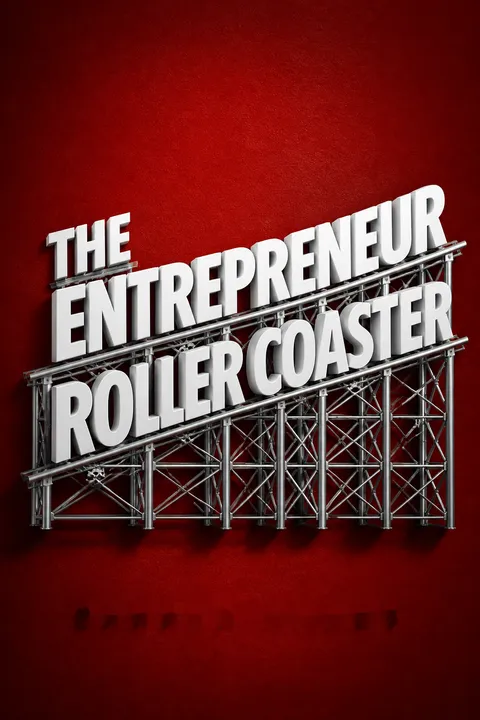
Expect sharp reversals. Hardy’s first business began with a $5,000 investment in water filters and the certainty that he would sell them. His first day brought no customers. His grandmother became his first buyer, then referrals helped him sell eighteen more units. But a backward gasket in one installation flooded her apartment, and a plumber had to check the others. The early wins and humiliating mistake arrived together, like the emotional surges and drops in the book’s roller-coaster metaphor.
Prepare, then proceed. The lesson is not that every venture turns out well, but that uncertainty, rejection, and error are part of the experience. A founder needs realistic expectations and the ability to learn without treating every setback as proof of personal incapacity.
The metaphor is useful because it makes emotional volatility part of the job description, rather than an unexpected sign that something has gone wrong. That framing can help founders separate a difficult day from a failed identity. Still, normalizing hardship should not make avoidable harm seem virtuous. A flooded home is not merely a character-building dip; it is a signal to improve competence, insurance, and quality controls before selling more.
Anchor difficult work in purpose, craft, or the people you serve.
Passion has several sources. Hardy argues that entrepreneurs need enough emotional commitment to persist through tedious work, but the daily tasks themselves need not be thrilling. A person may care about the mission behind a business, take pride in the quality of ordinary tasks, or work for the people who depend on the income. The book illustrates the last source through speaker Todd Duncan, who faced business losses, legal conflict, and his wife’s death. His sons gave him a reason to rebuild.
Make purpose practical. Hardy suggests asking not only whether the work is enjoyable, but why it matters, how well it can be done, and who benefits from it. Passion is treated as something that can be activated through attention and action, not simply discovered as a perfect calling.
This broader account of motivation avoids the trap of expecting every workday to feel like a calling. Purpose can make repetition tolerable, while craft can give dignity to tasks that are not glamorous. The important safeguard is that meaning should support sound judgment, not replace it. A person can feel devotion to a mission and still be working in a failing model, or sacrificing more than the mission can justify.
Walk away when a sale asks you to betray your judgment.
A quota can test character. Hardy recalls pitching his water-filter business to a recently widowed woman who said the $5,000 buy-in would consume her remaining savings. She trusted him enough to ask whether the opportunity was right for her. Meeting his monthly target would have rewarded him for saying yes. Instead, he told her the business was not suitable, then recognized that it was no longer suitable for him either. He handed the operation to an employee and left.
Integrity has a cost. The story reframes success as more than revenue or persistence. Selling responsibly means considering whether the offer fits the buyer, especially when the buyer is vulnerable. Hardy’s decision was not an abstract ethics exercise; it meant surrendering money, status, and an established business.
This episode gives ethical selling a concrete test: would the recommendation still make sense if the seller received no commission or credit for the outcome? The question is especially valuable when a buyer has limited resources or trusts the seller’s expertise. One caution is that personal intuition alone can be unreliable. Ethical decisions are stronger when supported by clear eligibility standards, transparent risks, and a willingness to decline unsuitable customers consistently.
Sell by uncovering what customers believe they need.
Listen before presenting. Hardy’s sales advice begins with a change of attention: stop treating prospects as targets and learn what they actually care about. A real-estate mentor made him replace a prospect list labeled as a hit list with a list of families he might help. Hardy says his approach improved when he considered each household’s situation rather than his own commission.
Fit the offer to the person. The book’s example of agent John Lennon shows the idea at work. He sold the same luxury apartments by emphasizing different features for different buyers, such as secure parking for someone with valuable cars. The practical sequence is simple: ask questions, listen closely, identify a perceived need, then explain how the offer addresses it. A need the customer does not recognize is not automatically a reason to push harder.
The emphasis on perceived need distinguishes customer understanding from the familiar but often self-serving act of inventing demand. It also makes sales a form of diagnosis: the quality of the recommendation depends on the quality of the questions. That approach builds trust, but empathy alone does not prove that a product works. The seller still needs evidence that the offer delivers the promised benefit, and customers need room to reject it.
Concentrate on valuable buyers and trusted routes into their networks.
Choose leverage over volume. Hardy claims that a small share of customers can generate a much larger share of profit. He advises finding buyers who need the offer, can be reached efficiently, purchase repeatedly or in larger amounts, and are likely to refer others. Rather than pursuing every possible customer equally, spend attention where the fit and potential return are strongest.
Reach networks through people. For the relaunch of SUCCESS magazine, Hardy’s team identified fifty influential people who could connect the magazine to larger audiences. The launch sold more than a million copies, with eight of those fifty people becoming meaningful supporters, according to Hardy. The broader tactic is to identify a short list of high-leverage relationships and earn introductions through trusted contacts instead of relying only on cold outreach.
This is a useful shift from counting leads to studying the economics and social pathways behind them. A customer who returns or introduces others can be more valuable than a larger pool of one-time buyers. Yet the 10/90 proportions are presented as a rule of thumb, not a universal law. Overfocusing on a few accounts can also create dependency, so concentration should be balanced with a healthy pipeline and attention to customers who are underserved.
Hire proven capability before enthusiasm wins your heart.
Affection is weak evidence. Hardy hired Amanda after a warm interview because she shared his interests and admired his work. On the job, she lacked the technical skills he needed. A more experienced colleague helped him assess candidates, and he hired Maggie instead. Maggie initially seemed less exciting, but her competence made her an excellent fit. The contrast captures Hardy’s rule: select demonstrated ability, not merely potential, shared enthusiasm, or personal chemistry.
Match the person to the work. The book describes an A-player as someone with strong capability and character who fits the role and environment. Hardy also warns that recruiting is a core leadership responsibility. A company’s culture is shaped by the people it hires and retains, so clear criteria and an honest account of the work matter more than a charming interview.
The Amanda and Maggie story exposes a common selection error: confusing cultural similarity with job performance. Evidence-based hiring can counter that bias through work samples, structured questions, references, and explicit role requirements. The idea of an A-player is compelling when it means excellent fit and contribution, but it can become a vague label for personal preference. Strong hiring processes define performance in observable terms rather than relying on charisma or instinct.
Lead by example, then delegate so others can grow.
The leader sets conditions. Hardy argues that an organization’s performance is limited by its leader’s ambition, conduct, and ability to make hard decisions. Leaders set expectations through their own behavior, invite people to contribute, and take responsibility when the organization fails. The book’s classroom story illustrates the developmental side: a teacher noticed a quiet student preparing to speak and made room for her contribution, helping her participate with confidence.
Give away the work. Hardy also shares advice from a billionaire who urged founders to stop doing tasks that specialists could handle. The founder’s distinctive job is to lead and set direction, not to retain every operational task. Delegation frees attention, gives employees room to use their abilities, and helps the company grow beyond the founder’s personal capacity.
The two sides of leadership reinforce each other: leaders model standards, but they also create space for others to exercise judgment. This resists both passive management and the founder-as-hero fantasy. Delegation, however, is not simply handing off tasks. Without clear outcomes, authority, and feedback, it becomes abdication. The strongest version of this advice pairs trust with explicit accountability, so growing employees does not mean leaving them to guess.
Measure the few actions that create results, not hours of motion.
Find the vital work. Hardy calls the activities that most directly produce results Vital Functions. After tracking his real-estate work with a stopwatch, he discovered that on a sixteen-hour day he had spent less than twenty minutes prospecting, pitching, or negotiating, the tasks he believed drove his business. The rest was activity, but not necessarily productive activity. He argues that founders should delegate work others can do and protect time for their most consequential contribution.
Narrow and track. His Success Vitals approach distinguishes core functions from current priorities and the measures that reveal progress. He recommends limiting major priorities, identifying a small number of key behaviors, and reviewing whether those behaviors happened. Hardy’s Massive Transformation Formula organizes this around three goals, the habits that support them, and regular tracking to catch drift.
The stopwatch example turns an abstract complaint about busyness into an observable mismatch between intention and calendar. Measurement can make invisible habits discussable and help a founder make tradeoffs. But not every valuable contribution is immediately measurable, and time tracking can reward what is easy to count. Metrics are most useful when they are paired with judgment about quality, customer outcomes, and whether the chosen goal remains worth pursuing.
Use tiny acts of courage to make fear less commanding.
Separate anticipation from the task. Hardy describes fear as a brain-generated response that can exaggerate ordinary situations, such as a sales call or presentation. He recounts a study in which novice skydivers’ heart rates rose during the plane’s ascent and declined after they jumped, suggesting that anticipation can feel worse than the action itself. His practical tool, Twenty Seconds of Courage, is to take the first small step before overthinking takes control.
Practice what you avoid. Hardy recommends repeatedly approaching feared tasks and treating rejection as part of learning. As a young real-estate agent, he deliberately sought uncomfortable sales situations, including calls and door-to-door prospecting. Repetition made rejection more familiar, while increasing the number of attempts also created more chances for a sale.
The strongest insight here is behavioral: confidence can follow action rather than precede it. A brief start can break the loop in which imagined consequences become a reason to delay. Still, fear is not always a false alarm. A prospecting call and a genuinely dangerous decision are not equivalent. The useful discipline is to distinguish discomfort from material risk, then practice exposure where the downside is limited and understood.
Define success before ambition chooses your scoreboard.
Choose the game yourself. Hardy tells of buying a spectacular home partly to impress his demanding father. When he proudly revealed the view, his father noticed a water stain on the ceiling. The disappointment helped Hardy see that another person’s approval could not define his achievement. He urges readers to write down what success means to them instead of borrowing a parent’s, peer group’s, or culture’s measures.
Protect the point of the ride. Hardy’s former coach, near the end of his life, regretted accumulating properties while neglecting relationships. The lesson is not that growth is bad, but that bigger is useful only when it serves what matters. The business is a vehicle, not the entire destination. A personal definition of success helps founders decide what to pursue, what to refuse, and how they want the journey to feel.
Personal criteria give ambition a boundary, which is important because measurable wins can quietly become substitutes for a satisfying life. Writing those criteria down makes tradeoffs easier to notice. The challenge is that priorities change, so a definition of success should be revisited rather than treated as permanent scripture. The book’s strongest closing idea is practical: judge expansion by whether it adds the life being sought, not merely the size of the enterprise.
Analysis
The book is a hybrid of entrepreneurial memoir, motivational argument, and practical operating guide. Its stories do more than decorate advice: the flooded apartment demonstrates the cost of inexperience, the missed sale demonstrates an ethical boundary, and the hiring mistake reveals how emotional affinity can distort judgment. The roller-coaster image binds these episodes into a single claim: entrepreneurship requires both operational skill and the ability to withstand emotional volatility.
Its most useful pattern is the move from identity to behavior. Instead of asking whether someone is naturally suited to business, Hardy repeatedly directs attention toward learnable actions: listening to customers, selecting people carefully, tracking high-value work, and acting despite anticipatory fear. This makes the book accessible to people who are not yet founders, while its stories give abstract advice memorable consequences.
Some claims need more qualification than the book provides. The idea that passion sustains effort is persuasive, but strong commitment can also deepen attachment to a bad market or an unsuitable business. The advice to embrace rejection is productive when failures are cheap and informative, but not when persistence exposes customers, employees, or the founder to uncontrolled losses. Similarly, the book’s reliance on heroic success stories can make outcomes look more predictable than they are. Survivors are visible; equally determined people whose ventures failed are less likely to supply the same narrative.
The productivity guidance is strongest when it asks founders to distinguish outcomes from motion. Its suggested limits on priorities and its tracking routines are tools, not universal laws. A company with compliance, safety, or care responsibilities cannot simply discard work that appears non-revenue-producing. The useful synthesis is to define the mission, identify the few activities that move it forward, and build systems that protect both performance and people. Hardy’s best question is not whether a founder can endure the ride, but whether the destination and the way of traveling are worth the cost.
Review Summary
Readers praise "The Entrepreneur Roller Coaster" as a game-changing guide for aspiring and seasoned entrepreneurs alike. Many highlight its practical advice, inspirational stories, and actionable strategies. The book is commended for its honest portrayal of entrepreneurship's challenges and rewards. Readers appreciate Hardy's engaging writing style and the included worksheets for implementing lessons. While some found certain concepts familiar, most agree the book offers valuable insights for business success.
People Also Read








Glossary
Entrepreneur Roller Coaster
Entrepreneurial volatility metaphorHardy’s metaphor for the emotional and practical uncertainty of building a business. The ride includes excitement, rejection, setbacks, fear, and occasional breakthroughs. The image emphasizes that success is not a smooth upward path and that founders need both business skills and resilience to continue through changing conditions.
F-Factor
Meaningful, enjoyable workHardy’s term for the element of fun that helps attract and retain strong employees. It does not mean constant entertainment or workplace perks. The idea is that people are more engaged when their work feels meaningful, challenging, involving, and rewarding, and when the workplace itself is a good environment for them.
A-Player
High-performing role fitHardy’s label for an employee who brings strong capability, character, and fit with the organization’s work and culture. The term is used to distinguish demonstrated performance from enthusiasm alone. The book argues that founders should recruit people with evidence of the abilities and attributes a particular role requires.
Dream 50
High-leverage prospect listA named sales strategy in which a business identifies fifty influential people or organizations whose support could connect it to a much larger audience. Rather than attempting to reach every end customer directly, the business focuses its effort on earning the belief and participation of a carefully selected group of potential connectors.
Success Vitals
Core productivity controlsHardy’s umbrella term for the few factors he believes determine effective performance: vital functions, vital priorities, vital metrics, and vital improvements. The concept directs attention away from general busyness and toward the work, priorities, measures, and skill development most closely connected to meaningful results.
Vital Functions
Highest-value contributionsThe activities in a role that make the greatest direct contribution to a business or goal and cannot easily be delegated without reducing their value. Hardy’s real-estate examples include prospecting, pitching listings, and negotiating contracts. Identifying these functions helps a founder protect time for work that most directly advances the enterprise.
Vital Priorities
Current focus areasThe limited set of near-term tasks or areas of focus that support a person’s larger goals and vital functions. Hardy distinguishes them from vital functions: functions describe a person’s highest-value contribution, while priorities specify what deserves attention in a particular week, quarter, or period.
Vital Metrics
Progress indicatorsThe small group of measurements that helps a business or individual see whether progress is being made and where correction may be needed. Hardy recommends choosing measures connected to the real objective, then tracing them toward the underlying activity that drives results. Metrics act as a navigation aid, not as the goal itself.
Massive Transformation Formula
Goals, habits, trackingHardy’s three-part method for turning an ambitious goal into repeatable behavior. First, choose three major goals. Second, identify the few habits most likely to support them. Third, track those habits consistently. The tracking step is intended to reveal small departures from the plan before they accumulate into major drift.
Twenty Seconds of Courage
Brief action before avoidanceHardy’s technique for beginning a task that provokes fear or hesitation. Instead of waiting to feel confident, a person commits to the first short burst of action, such as making an introduction or starting a difficult call. The aim is to move from imagined danger into the real task, where the fear may become more manageable.
18-40-65 rule
Perspective on others’ opinionsA rule of thumb Hardy uses to describe changing concern about social judgment: people may worry intensely about others’ opinions when young, care less by middle age, and later realize how little other people were focused on them. Its practical purpose is to reduce the power given to criticism from people whose approval is not central to one’s life.
FAQ
What's The Entrepreneur Roller Coaster about?
- Entrepreneurial Journey: The book likens entrepreneurship to a roller coaster ride, filled with emotional highs and lows. It emphasizes the importance of managing emotions and expectations alongside business strategies.
- Mindset and Resilience: Darren Hardy highlights the significance of mindset and resilience, encouraging entrepreneurs to embrace chaos and uncertainty.
- Practical Advice: It offers actionable strategies for navigating the entrepreneurial landscape, including hiring the right people and maintaining a positive culture.
- Personal Stories: Hardy shares anecdotes from his own journey, illustrating lessons learned and inspiring readers to pursue their entrepreneurial paths.
Why should I read The Entrepreneur Roller Coaster?
- Timely Insights: The book is relevant in today's fast-paced business environment, where opportunities abound for risk-takers. Hardy argues that now is the best time to become an entrepreneur.
- Comprehensive Guidance: It blends motivational content with practical advice, suitable for both new and seasoned entrepreneurs. Readers will find strategies to overcome fear and achieve their goals.
- Real-Life Experiences: Hardy's personal stories make the content relatable and engaging, illustrating the challenges and triumphs faced by entrepreneurs.
- Inspiration and Motivation: The writing is designed to inspire and motivate aspiring entrepreneurs to take action and pursue their dreams.
What are the key takeaways of The Entrepreneur Roller Coaster?
- Embrace the Ride: Understanding that the entrepreneurial journey is filled with ups and downs helps build resilience. Challenges are part of the process.
- Sales is Essential: Sales should be the top priority for any entrepreneur. Hardy emphasizes understanding customer needs over just selling a product.
- Find Your Passion: Loving what you do is crucial. Hardy asserts that passion is the first and most important factor in building a successful business.
- Hire A-Players: Surrounding yourself with high-performing individuals is essential for business success. A strong team drives results and improves performance.
What are the best quotes from The Entrepreneur Roller Coaster and what do they mean?
- “You can’t get to the end if you quit.”: This underscores the importance of perseverance in entrepreneurship, reminding readers that success requires enduring tough times.
- “Sales is filling a customer’s perceived need, not your need to sell something.”: It emphasizes focusing on the customer's perspective, encouraging empathy and understanding in sales.
- “If you’re going to get better, you have to push yourself.”: This highlights the necessity of stepping out of your comfort zone for growth, reinforcing that challenges are essential for improvement.
- “Fear is not real. It’s an illusion, a phenomenon that resides entirely within your own brain.”: Encourages readers to challenge their fears and take action, recognizing that fear often stems from perceptions rather than actual threats.
How does Darren Hardy suggest dealing with fear in entrepreneurship?
- Acknowledge Fear: Hardy encourages facing fears head-on rather than avoiding them, reframing fear as a natural part of the entrepreneurial journey.
- Brain Hacks: The book includes “six brain hacks to conquer fear,” designed to help entrepreneurs manage anxiety and build mental resilience.
- Embrace the Thrill: Hardy suggests that fear can be exhilarating and should be embraced as part of the ride, stating, “Terror is part of the thrill (no, really).”
- Courage Over Fear: Emphasizes that courage is not the absence of fear but the ability to act despite it, crucial for entrepreneurial success.
What specific methods does Darren Hardy recommend for success in The Entrepreneur Roller Coaster?
- Action Plans: Each chapter includes actionable steps and worksheets, encouraging readers to treat the book as a workbook and actively engage with the material.
- Sales Techniques: Hardy provides a nine-step process for building sales muscles, emphasizing empathy and understanding customer needs.
- Hiring A-Players: Stresses the importance of surrounding yourself with top talent, highlighting the need for careful recruitment to avoid costly mistakes.
- Focus on Vital Functions: Encourages identifying and concentrating on key activities that drive business forward, delegating low-value tasks to free up time.
What is the "A-Player" concept in The Entrepreneur Roller Coaster?
- Definition of A-Players: High-performing individuals who excel in their roles and significantly contribute to business success, characterized by skills, attitude, and teamwork.
- Importance of Hiring A-Players: Essential for building a strong team, as they drive results and improve overall business performance.
- Recruitment Strategy: Leverage existing A-Players to attract more talent, promoting a culture of excellence to recruit like-minded individuals.
- Cultural Fit: Hiring individuals who align with the desired culture is crucial for building a high-performance environment.
How does The Entrepreneur Roller Coaster address the emotional aspects of entrepreneurship?
- Emotional Roller Coaster: Describes entrepreneurship as an emotional journey filled with highs and lows, emphasizing the importance of managing these emotions for long-term success.
- Coping with Fear and Anxiety: Provides strategies for dealing with fear and anxiety, encouraging readers to confront their fears for personal growth and resilience.
- Building a Support System: Highlights the importance of surrounding oneself with supportive individuals who can provide encouragement and guidance.
- Embrace Failure: Encourages viewing failure as a necessary part of the journey, leading to valuable lessons and contributing to success.
How can I improve my sales skills according to The Entrepreneur Roller Coaster?
- Empathy is Key: Understanding customer needs and feelings is crucial. Hardy advises getting into the mindset of prospects to better connect with them.
- Ask Better Questions: Suggests that asking insightful questions is more effective than delivering a sales pitch, fostering genuine conversations and building trust.
- Practice Shock and Awe: Recommends using creative and memorable sales tactics to stand out, sharing the “Shock and Awe Blitz Campaign” as an example.
- Focus on Customer Needs: Emphasizes filling a customer’s perceived need rather than just selling a product, encouraging empathy and understanding in sales.
What are the common mistakes entrepreneurs make when hiring according to The Entrepreneur Roller Coaster?
- Hiring on Hope: Warns against hiring based solely on enthusiasm or potential, stressing the importance of proven skills and past performance.
- Ignoring Cultural Fit: Highlights that alignment with company culture is crucial for long-term success, as a mismatch can lead to dissatisfaction and turnover.
- Underestimating the Cost of Bad Hires: Explains that hiring the wrong person can be costly, both financially and in terms of team morale, advising diligence in the hiring process.
- Failing to Define Needs: Emphasizes the importance of clearly defining the attributes and skills sought in potential hires to identify A-Players.
How does The Entrepreneur Roller Coaster define success?
- Personal Definition: Encourages readers to define success on their own terms rather than conforming to societal expectations, understanding what truly matters to them.
- Focus on Impact: Success is not just about financial gain; it’s also about making a positive impact on others and contributing to their well-being.
- Continuous Growth: Suggests that success is a journey of continuous improvement and learning, embracing challenges and striving for personal growth.
- Enjoy the Ride: Reminds readers that the journey of entrepreneurship is meant to be enjoyed, finding joy in the process and embracing the ups and downs.

Download PDF
Download EPUB
.epub digital book format is ideal for reading ebooks on phones, tablets, and e-readers.








