

Key Takeaways
Use cultural fluency to expose the assumptions both sides mistake for normal.
Two homes, two lenses. Khalilzad grew up in Afghanistan, encountered American civic life as an exchange student, and later studied the politics of the Middle East. In California, volunteer host families, shared household responsibilities, and local associations showed him ways of organizing society that felt unfamiliar at home. Returning to Afghanistan, he noticed poverty and gender inequality with sharper eyes. His bicultural experience became practical diplomatic equipment: he could speak directly with Afghan leaders, understand local references, and explain their concerns in Washington.
Translation is not agreement. Khalilzad’s early exposure to Afghan history and American institutions shaped his later arguments about state-building, but he presents one person’s experience, not a complete portrait of either society. His value as an envoy came partly from recognizing that policies that look sensible in Washington may carry very different meanings locally.
What's striking is that cultural fluency here means more than knowing languages or customs. It means noticing when a policy rests on an unspoken assumption, such as expecting a society to welcome individual privacy in the same way or to trust an imposed institution. This resembles the practice of cultural anthropology, which makes familiar arrangements visible by comparing them with alternatives. Yet one bicultural official cannot stand in for a population. Good translation opens a conversation; it should not be mistaken for local consent.
Build a legitimate local handoff before dismantling the old order.
Occupation changed the bargain. Before the 2003 invasion of Iraq, Khalilzad favored organizing an Iraqi interim government quickly. Instead, the United States chose an occupation administration. The Iraqi army was dissolved, and broad de-Baathification removed many people who had not been responsible for Saddam Hussein's crimes. Experienced soldiers and civil servants lost jobs and status, while the new authorities had to build essential institutions from scratch. Khalilzad argues that these decisions enlarged the pool of angry, unemployed people available to the insurgency.
Continuity needs accountability. His preferred alternative was not to preserve Saddam's regime, but to transfer authority to Iraqis while selectively removing those implicated in its crimes. A rapid handoff would still have required security, safeguards, and a credible process for choosing leaders. The central warning is that destroying institutions faster than legitimate replacements can be built creates an opportunity for armed actors to claim power.
This is a classic state-capacity problem: institutions contain both harmful practices and practical knowledge. Removing abusive leaders can be necessary, but a sweeping purge can also erase the administrative expertise required to deliver basic services. Transitional justice faces the same tension between accountability and continuity. The difficult question is not whether to reform the old system, but how narrowly to target culpability while keeping essential functions alive. Khalilzad's account makes the costs of treating an entire political class as interchangeable especially clear.
After victory, fund a political settlement before the vacuum invites proxies.
Withdrawal was not an ending. After the Soviet Union left Afghanistan, the United States reduced its attention instead of helping form an inclusive transitional government. Rival Afghan factions fought for control, while neighboring powers backed preferred clients. Pakistan's security services favored Islamist factions, weakening more moderate nationalists. The resulting civil war devastated Kabul and helped create the conditions in which the Taliban could promise order, then impose a harsh regime and shelter al Qaeda.
The cost was national. Khalilzad cites an estimated one million Afghan deaths in the Soviet-Afghan war and says roughly one-third of the population became refugees in Pakistan and Iran. He supports aiding Afghans against Soviet occupation, but argues that the failure to plan for the aftermath was avoidable. A military victory can remove an outside force without producing a government accepted by the people who remain.
The political vacuum is not empty space. It is an invitation to actors who already have weapons, money, and networks. In political science, this resembles a commitment problem: factions fear that a future settlement will leave them exposed, so they keep fighting rather than disarm first. Outside powers can intensify that fear by backing clients selectively. The argument for postwar engagement is strong, but it also raises a hard limit: foreign sponsors may help convene a settlement, yet cannot manufacture legitimacy by decree.
Protect civilians and earn local trust, or tactical wins replenish the insurgency.
Security is experienced personally. In Afghanistan, a mistaken air strike killed children near a school. Night raids also angered families when troops hooded and detained men without clear information about their whereabouts. Khalilzad and General David Barno treated these incidents as strategic problems, not merely public-relations setbacks. They negotiated a 15 Point Agreement requiring closer consultation with Afghan leaders, Afghan forces to accompany coalition troops, and better communication with families about detainees.
Presence beats distance. Barno shifted forces toward smaller bases and Provincial Reconstruction Teams, aiming to build relationships with communities rather than focus only on enemy targets. In Iraq, Khalilzad supported an “oil spot” strategy: secure one area, build cooperation there, then expand into neighboring areas. Both approaches depend on civilians believing that the government and its partners offer more protection than the insurgents do.
The key mechanism is informational as much as moral. Residents who trust security forces are more likely to share what they know, which can improve targeting and reduce the need for indiscriminate operations. This creates a feedback loop: respectful conduct builds cooperation, and cooperation makes security more precise. The approach is not a guarantee of success, however. Local allies may be predatory, and a population-centric strategy still needs impartial institutions capable of resolving disputes rather than simply winning temporary allegiance.
Pressure the neighboring state that shelters militants, not only militants themselves.
Sanctuaries sustain campaigns. Khalilzad repeatedly warned that Pakistan's military and intelligence services were aiding Taliban-linked groups while cooperating with the United States against al Qaeda. In his account, insurgents could retreat across the border, recover, train, and return to Afghanistan. He saw the sanctuary as a threat to both Afghan security and the credibility of the new government, but senior U.S. officials were reluctant to confront Islamabad because they valued Pakistan as a partner.
The same problem crossed borders. In Iraq, Khalilzad describes Syria as a route for foreign fighters and Iran as a source of support for militias. He argues that pursuing armed groups without addressing the state networks and cross-border routes behind them left the conflict's machinery intact. He also favored diplomacy where it could influence behavior, while warning that dialogue without consequences could become cover for continued support.
This is a principal-agent problem with a geopolitical twist. A partner can cooperate on one objective while using its own proxies to pursue another, so visible cooperation does not prove aligned interests. Yet pressure has costs: a state may retaliate, withdraw cooperation, or become more committed to the proxy. The practical challenge is to make competing incentives explicit, verify behavior, and offer a credible off-ramp. Treating an ally's denials as evidence, rather than as a claim to test, leaves the sponsor with the advantage.
Shape leaders through credible incentives, while recognizing their limits.
Local power has its own logic. Khalilzad describes three kinds of Afghan actors: builders who wanted stronger national institutions, spoilers who protected narrow interests, and opportunists who followed whichever side appeared likely to prevail. He tried to move leaders by linking status and political influence to actions such as disarming militias or accepting national institutions. When Afghan commanders Dostum and Atta clashed, U.S. aircraft created a credible warning; negotiations then helped secure their agreement to demobilize.
Influence is not transformation. Khalilzad also persuaded Defense Minister Fahim that reforming the ministry could strengthen the country and his own legacy. But he cautions that outside support could shape conduct without changing a leader's basic character. Incentives work best when local figures see a future in cooperation and when the central government can make its promises credible.
The useful distinction is between changing a leader's preferences and changing the payoff for acting on them. Diplomacy often succeeds at the second even when the first is unrealistic. This is why face-saving exits, valued positions, and credible consequences can matter more than appeals to abstract principle. The danger is rewarding coercive actors simply because they are influential. A workable strategy needs a path from personal bargains toward rules that apply beyond the particular strongman at the table.
Use indigenous institutions to create legitimacy, not as decorative tradition.
A familiar forum can convene rivals. A Loya Jirga is a grand assembly used in Afghan political life to deliberate and seek consensus. Khalilzad urged its use after the Taliban's defeat, alongside a United Nations process known as the Bonn Agreement. The 2002 Emergency Loya Jirga brought together delegates from across the country to choose a transitional government. Later, a Constitutional Loya Jirga debated the country's governing structure, religious principles, language, and rights.
Tradition can be adapted. Delegates argued fiercely, and the process did not eliminate factional competition. Still, it provided an Afghan framework for bargaining and public participation. Women secured stronger representation in the future parliament, including two seats from each province in the lower house. Khalilzad's lesson is not that traditional institutions are automatically democratic, but that locally recognized procedures can make new political arrangements more intelligible and acceptable.
Institutional design works best when it connects new rules to sources of authority people already recognize. A familiar assembly can lower the psychological cost of participation and give rivals a shared procedure, even when they distrust one another. But tradition is not inherently inclusive: existing customs can also preserve hierarchy or silence groups. The test is whether an institution can be adapted to broaden participation and constrain power. Local legitimacy is not a substitute for rights protections; it is one possible foundation for them.
Advance political reconciliation and security together, because each enables the other.
Elections alone did not settle conflict. In Afghanistan, more than 8.1 million people voted in the 2004 presidential election, and violence on polling day was limited. Khalilzad regarded the vote as a major source of legitimacy, but not as the end of state-building. In Iraq, he worked to form a national unity government and to bring Sunni Arab leaders into politics while U.S. forces pursued a population-security strategy and reached out to reconcilable insurgents.
Neither track was sufficient alone. Iraq's political agreements did not stop sectarian killings after the 2006 bombing of the Golden Mosque. The later surge paired additional forces and neighborhood security with political outreach, including cooperation with Sunni tribal leaders who opposed al Qaeda in Iraq. Khalilzad's account argues that security created room for politics, while political inclusion gave security efforts local partners and a purpose.
This is a coordination problem, not a contest over which comes first. Security without a political bargain can preserve a coercive status quo; a bargain without protection can leave participants vulnerable to spoilers. Each track must therefore make the other more credible. The danger is that officials can label any favored activity a prerequisite and postpone the rest. Concrete milestones help, but they should measure lived changes, such as safer neighborhoods and fairer access to institutions, rather than paper agreements alone.
Test assumptions with competing futures before policy hardens into habit.
A forecast is not a plan. At the University of Chicago, strategist Albert Wohlstetter taught Khalilzad to question assumptions, study how adversaries understood their choices, and compare the costs of alternative actions. He also used alternative futures analysis, which describes several plausible outcomes and asks what decisions would move events toward a desired one. Later, Khalilzad's team used scenarios to test post-Cold War military capabilities, including simultaneous regional conflicts and the possibility of a hostile competitor.
The scenario was a stress test. The Defense Policy Guidance did not claim that every contingency would happen. It asked what forces would be needed if leaders chose to respond. Some scenarios that critics called far-fetched, including future Russian aggression and renewed threats involving Iraq and North Korea, later became relevant. The method's value lies in preparing for uncertainty, not pretending to predict it.
Scenario planning is most useful when it exposes dependencies: what must be true for a policy to work, and what happens if it is not? This resembles engineering stress tests, which examine how a system behaves under multiple loads rather than relying on its expected conditions. The method can still mislead if planners select only threatening futures or use worst cases to justify any budget. A disciplined analysis includes plausible alternatives, costs of inaction, and criteria for revising the plan as evidence changes.
Sustain strategic commitment without confusing leadership with unlimited control.
Engagement needs both purpose and restraint. Khalilzad's proposed “balance and reconcile” approach would maintain alliances and enough military capacity to deter regional domination, while using diplomacy to manage disputes and leave room for adversaries to cooperate. His experience at the United Nations reinforced a practical view of multilateralism: institutions can convene partners and legitimize action, but bargaining among states limits what they can accomplish.
Commitment must be credible. In Afghanistan, the 2005 U.S.-Afghanistan Strategic Partnership declaration sought to reassure Afghans that the United States would not abandon them again. In both Afghanistan and Iraq, Khalilzad argues that abrupt disengagement weakened moderates and encouraged local leaders to hedge. Yet the memoir also shows how foreign occupation and poorly designed intervention can generate resistance. Durable leadership therefore requires resources, diplomacy, and humility about what outsiders can decide.
The strategic problem is to avoid two symmetrical failures: treating every crisis as a reason for open-ended intervention, and treating the costs of intervention as a reason to abandon commitments abruptly. Credibility depends not only on staying, but on matching promises to capabilities and explaining limits clearly. Multilateral institutions can distribute burdens and create channels for negotiation, though they do not erase power politics. The strongest version of this argument is not permanent American management, but sustained support for political arrangements that local actors can maintain themselves.
Analysis
The memoir's organizing puzzle is how a person can serve two countries without mistaking familiarity for mastery. Khalilzad's Afghan childhood and American education give him access to political worlds that often misread each other. His career then tests whether translation can become statecraft: he repeatedly tries to turn local relationships into institutions, and strategic analysis into decisions that survive beyond a crisis.
The narrative's clearest distinction is between removing a threat and creating a political order. The Soviet withdrawal and the fall of Saddam each expose the danger of treating military success as a sufficient end state. In Afghanistan, neglect after withdrawal allowed factional competition and external sponsorship to grow. In Iraq, occupation, dissolution of the army, and expansive purges helped produce a vacuum and alienated people whose expertise the new administration needed. The cases are not identical, but together they show that institutional continuity, political legitimacy, and security are interdependent.
The book is also a memoir of bureaucratic failure. Competing departments, unclear presidential choices, and reluctance to plan for unwanted outcomes repeatedly weaken policy. Khalilzad's strategic ideal is active but conditional: use local partners, build coalitions, keep alternatives open, and stay engaged long enough for institutions to take root. His examples make this ideal concrete, but the account is necessarily shaped by his role and hindsight. He emphasizes policies he advocated and cannot fully establish how much their adoption would have changed outcomes. The most persuasive lesson is therefore not that his preferred plans would have guaranteed success, but that leaders must test assumptions, compare options, and take responsibility for foreseeable consequences.
The closing argument extends beyond military power. American influence, in this account, depends on competent diplomacy, economic capacity, institutional knowledge, and credibility with local partners. Yet influence is not control. The central tension remains unresolved: the United States can contribute to a political settlement, but its presence can also distort local incentives. The memoir's enduring challenge is to lead without making other societies depend indefinitely on American decisions.
Review Summary
The Envoy received mostly positive reviews, with readers praising Khalilzad's insights into US foreign policy and diplomacy in Afghanistan and Iraq. Many found his personal journey from Afghanistan to high-ranking US official compelling. The book was commended for its candid account of post-9/11 events and negotiation processes. Some critics noted a partisan bias and inconsistent depth across chapters. Overall, readers appreciated the unique perspective offered on critical geopolitical moments, though some found the writing style dry at times.
Glossary
Loya Jirga
Afghan grand assemblyA traditional Afghan assembly convened to deliberate on major political questions and seek agreement among influential groups. Khalilzad supported its use in the post-Taliban transition, first to select a transitional government and later to debate a constitution. The institution offered a locally recognizable forum, though its historical roots did not automatically guarantee equal representation or democratic outcomes.
Bonn Agreement
Afghanistan's transition frameworkThe 2001 agreement reached by Afghan opposition groups at a United Nations conference in Bonn, Germany. It established an interim authority under Hamid Karzai, laid out a sequence toward an Emergency Loya Jirga and a new constitution, and called for national elections. It also addressed security and the transfer of authority, though implementing the agreement depended on cooperation among Afghan factions.
Accelerating Success in Afghanistan
Afghan state-building planA 2003 strategy approved by President George W. Bush that called for stronger Afghan institutions, security forces, economic development, and action against warlordism and the emerging insurgency. Khalilzad designed it as a coordinated U.S.-Afghan effort intended to support the constitutional and electoral transition. The plan received additional funding, but its ambitions depended on sustained support and progress against cross-border insurgent sanctuaries.
Defense Policy Guidance (DPG)
Post-Cold War defense strategyA Pentagon planning document developed in 1991 and 1992 to guide U.S. military force planning after the Soviet Union's collapse. Khalilzad's team used possible future conflicts to assess what capabilities might be needed and argued that the United States should prevent a hostile power from dominating a critical region. The leaked draft provoked criticism for appearing to endorse American dominance and large defense budgets.
“oil spot” strategy
Expanding security outwardA counterinsurgency approach that establishes durable security in one area, builds cooperation with residents, and then expands into adjacent contested areas. Khalilzad supported this method in Iraq after seeing related population-focused efforts in Afghanistan. Its logic is that secure communities can become connected zones of government presence, but it requires enough forces, local trust, and political follow-through to hold areas after they are cleared.
“builders, spoilers, and opportunists”
Three local actor typesKhalilzad's practical classification of political actors in Afghanistan. Builders supported national development and stronger institutions. Spoilers, including some warlords, traffickers, and outside actors, pursued interests that destabilized the state. Opportunists prioritized survival and could align with either side depending on their reading of power. The categories helped frame diplomacy, but individuals could shift roles as incentives and circumstances changed.
“national compact”
Shared political agreementKhalilzad's idea for an inclusive agreement among Iraq's major communities on national identity, political rules, and power-sharing. He argued that a stable democratic order required Sunni Arabs, Shia Arabs, and Kurds to accept a common framework rather than treating political control as a winner-take-all prize. The compact was meant to support reconciliation and isolate extremists, but depended on leaders delivering meaningful inclusion.
“crisis of Islamic civilization”
Khalilzad's historical diagnosisKhalilzad's term for a prolonged crisis of political authority, social development, and identity in Muslim-majority societies, rooted in the decline of earlier Islamic powers and the failure of later governments to meet public aspirations. He describes competing responses: secular modernization, religious fundamentalism, and attempts to combine faith with modern institutions. It is an interpretive framework, not a settled or universally accepted explanation.
FAQ
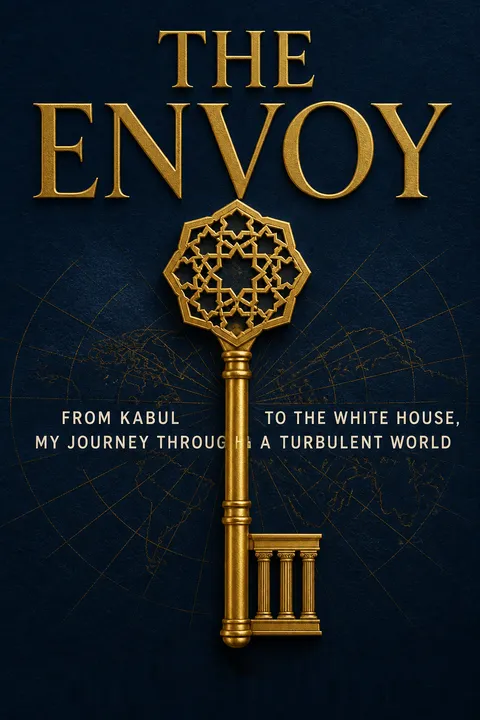
What’s The Envoy: From Kabul to the White House, My Journey Through a Turbulent World by Zalmay Khalilzad about?
- Memoir of diplomacy: The book is a memoir by Zalmay Khalilzad, tracing his journey from his Afghan childhood to his roles as a U.S. diplomat in Afghanistan, Iraq, and at the United Nations.
- Insider perspective: It provides a firsthand account of U.S. foreign policy decisions, nation-building, and counterinsurgency efforts in the post-9/11 era.
- Geopolitical analysis: Khalilzad blends personal narrative with analysis of global trends, the crisis in Islamic civilization, and the evolving role of the United States in world affairs.
Why should I read The Envoy by Zalmay Khalilzad?
- Firsthand experience: Khalilzad offers unique insights as an Afghan-American who shaped and executed U.S. policy at the highest levels.
- Understanding complex conflicts: The book helps readers grasp the ethnic, religious, and political dynamics in Afghanistan and Iraq, and the challenges of rebuilding war-torn societies.
- Lessons in diplomacy: Readers gain valuable lessons on strategy, negotiation, and the importance of cultural understanding in international relations.
What are the key takeaways from The Envoy by Zalmay Khalilzad?
- Sustained engagement is vital: Khalilzad stresses that local politics and reconciliation require ongoing U.S. support after regime change.
- Balance of ideals and pragmatism: The memoir illustrates the tension between promoting democracy and managing realpolitik in complex environments.
- Importance of planning and leadership: He highlights the need for active presidential leadership and the value of planning, even when plans must adapt to reality.
What were Zalmay Khalilzad’s early life experiences in Afghanistan, as described in The Envoy?
- Traditional Afghan upbringing: Khalilzad grew up in Mazar-i-Sharif, surrounded by Afghan culture, history, and a strong sense of national identity.
- Emphasis on education: His family prioritized education for all children, including girls, despite societal constraints.
- Early political awareness: Witnessing ethnic divisions and the brutality of power shaped his understanding of Afghanistan’s challenges and inspired his desire for reform.
How did Zalmay Khalilzad’s experience in the United States influence his worldview and career?
- Cultural adaptation: As an exchange student in California, Khalilzad encountered American openness, diversity, and work ethic, broadening his perspective.
- Appreciation for democracy: He observed social equality and civic engagement, which influenced his belief in education and political participation.
- Dual identity: His U.S. experience inspired a lifelong mission to bridge understanding between America and Afghanistan.
What insights does The Envoy provide about the Soviet invasion of Afghanistan and its aftermath?
- Soviet occupation and resistance: Khalilzad details the decade-long Soviet occupation, the rise of the mujahedeen, and Pakistan’s complex role.
- U.S. covert support: He explains the strategic dilemmas of U.S. support for Afghan fighters and the unintended consequences of empowering extremists.
- Post-Soviet instability: The failure to establish a stable government after the Soviet withdrawal led to civil war and the rise of the Taliban.
How does Zalmay Khalilzad describe the rise and nature of the Taliban regime in The Envoy?
- Promise of order: The Taliban initially attracted support by promising stability amid chaos, with backing from Pakistan’s intelligence services.
- Harsh rule: The regime imposed strict religious laws, suppressed women’s rights, and committed human rights abuses.
- Alliance with al Qaeda: The Taliban provided sanctuary to Osama bin Laden, enabling terrorist training and attacks like 9/11.
What were the main challenges Khalilzad faced in Afghanistan, according to The Envoy?
- Warlordism and militias: Powerful warlords resisted disarmament and challenged central authority, complicating stabilization efforts.
- Pakistan’s double game: Pakistan’s support for Taliban sanctuaries undermined U.S. and Afghan efforts to secure the country.
- Weak institutions: Decades of war left Afghanistan with fragile governance, poor infrastructure, and a lack of civic responsibility.
How did Zalmay Khalilzad describe the U.S. approach to nation-building in Afghanistan in The Envoy?
- Light footprint strategy: The Bush administration initially favored a limited U.S. presence, focusing on empowering local actors and counterterrorism.
- Accelerating Success plan: Khalilzad advocated for a comprehensive strategy to strengthen Afghan institutions, security forces, and economic development.
- Bureaucratic challenges: His plan faced resistance and funding battles but eventually gained presidential and congressional support.
What role did Zalmay Khalilzad play in Iraq, and what were the main challenges he faced, as described in The Envoy?
- Sectarian conflict: Khalilzad worked to prevent civil war by promoting power-sharing and national reconciliation among Sunni Arabs, Shia Arabs, and Kurds.
- Political fragmentation: He navigated the absence of unified Sunni leadership and the winner-take-all mentality of Shia leaders.
- External interference: Khalilzad sought to counter Iranian and Syrian influence while managing U.S. military and diplomatic efforts.
How did Zalmay Khalilzad approach the drafting of the Iraqi constitution in The Envoy?
- Inclusive negotiations: He facilitated talks among Iraq’s major communities, encouraging consensus on federalism and the role of Islam.
- Balancing interests: Khalilzad helped craft constitutional language that protected human rights and women’s equality while respecting religious traditions.
- Managing deadlines: He balanced urgency with the need for a durable agreement, allowing for post-ratification amendments to secure broader support.
What are the best quotes from The Envoy by Zalmay Khalilzad, and what do they mean?
- “Weakness is provocative.” Emphasizes the importance of demonstrating strength to deter adversaries, a principle Khalilzad applied in policy.
- “There is no bicycle!” Khalilzad’s retort to Secretary Rumsfeld, highlighting Afghanistan’s lack of basic infrastructure and the need for substantial support.
- “The plan is useless but planning is essential.” Quoting Eisenhower, Khalilzad underscores that while plans change, the process of planning is critical for understanding and preparation.
- “Finally, we are human again.” A voter’s remark on Afghanistan’s 2004 election, capturing the significance of democratic participation after decades of conflict.
Download PDF
Download EPUB
.epub digital book format is ideal for reading ebooks on phones, tablets, and e-readers.








