

Plot Summary
Prologue
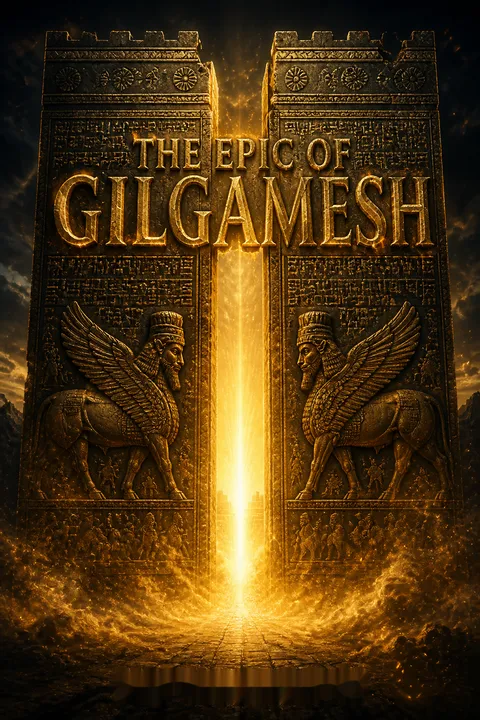
The poem presents Gilgamesh, king of Uruk, as a man made almost divine in beauty and strength, yet still bound to human life. He has raised the city’s great walls and built a temple to its gods, works that invite later generations to remember him.
The narrator frames the tale as the record of a long, exhausting journey: Gilgamesh returns from it and sets his story into stone. His monument is already visible before the adventures begin, but the poem asks what such lasting work can mean to a man who cannot last.
The opening makes the city both setting and answer. Gilgamesh’s walls promise endurance through craft, while his partly human nature makes that promise painfully incomplete. The narrator’s claim that the king knows hidden things gives the epic the shape of recovered knowledge, but the final image of the story engraved in stone also complicates fame: the hero’s survival depends on others preserving his account. Before any adventure begins, the poem places physical strength, civic achievement, and narrative memory beside one another as competing forms of permanence. The walls may outlast a life, but the story must explain what that life was for.
The King Gets His Match
Uruk’s people appeal to the gods because Gilgamesh uses his strength without restraint, taking young men from their families and claiming brides before their husbands. The goddess Aruru forms Enkidu from clay, and he grows up among gazelles and other wild animals, disrupting a trapper’s snares. A temple woman is sent to draw him away from the animals.
After they spend six days together, the herds reject him; she leads him toward human food, clothing, and the shepherds he protects from predators. When Enkidu hears that Gilgamesh will claim a bride, he goes to Uruk and blocks the king’s way. Their fierce wrestling match ends with Gilgamesh prevailing, but the two recognize each other as equals and become companions.
Enkidu is not simply a rival created to defeat Gilgamesh. His passage from the wild into human society gives the epic a way to stage the costs and attractions of civilization: he loses his old belonging, but gains language, food, work, and a chosen companion. Gilgamesh, by contrast, begins with power but lacks an equal capable of limiting him. Their wrestling match converts force from a private privilege into a mutual recognition. The encounter does not erase the king’s abuses, but it redirects his energy toward relationship. Friendship begins as a political restraint and becomes the emotional bond on which the later tragedy depends.
Into Humbaba’s Cedar Forest
Gilgamesh decides that a dangerous expedition will give his name permanence, and Enkidu warns him that the Cedar Forest is guarded by Humbaba, whom Enlil appointed to protect it.
Gilgamesh asks the sun god Shamash for aid, equips the pair with heavy weapons, and receives a blessing from his mother, Ninsun, who adopts Enkidu as her son and charges him to protect Gilgamesh. After a punishing journey, the companions enter the forest. Gilgamesh dreams of disasters on the mountain, and Enkidu reads them as signs that they can prevail.
When Humbaba confronts them, Shamash sends powerful winds that trap the guardian. Humbaba pleads for his life and offers service, but Enkidu urges Gilgamesh to kill him. They do, then bring his head before Enlil, who angrily takes back Humbaba’s supernatural powers.
The forest expedition joins material ambition to spiritual danger. Cedar is valuable timber, but Gilgamesh’s stated hunger for a lasting name turns resource-taking into a test of identity. Shamash’s assistance makes the victory possible, yet divine backing does not make the act morally uncomplicated: Enlil’s anger shows that the friends have crossed a boundary as well as defeated an enemy. Humbaba’s plea briefly forces Gilgamesh to see the guardian as a being with a history and a claim to mercy. Enkidu’s counsel closes that pause. Their triumph therefore contains the seed of later punishment, and the friends’ fame is purchased through a decision they cannot undo.
Ishtar Sends the Bull
After returning from the forest, Gilgamesh cleans himself and appears in royal splendor. Ishtar offers him marriage and promises wealth, but he refuses, recalling the ruinous fates of her former lovers. Humiliated, the goddess demands that Anu release the Bull of Heaven against him.
Anu warns that the creature will bring seven years of crop failure, but Ishtar claims Uruk has stored enough food. The Bull’s snorts split the earth and kill townspeople; Enkidu grabs its horns while Gilgamesh drives in the fatal blow.
Enkidu then insults Ishtar by hurling the Bull’s thigh toward her. The friends celebrate their victory, display its horns, and accept the city’s praise, unaware that the gods are already weighing a punishment for their repeated defiance.
The episode turns intimacy into a contest over power and consequence. Ishtar’s offer promises elevation, but Gilgamesh’s refusal rests on his view of her past relationships as evidence that desire can consume its object. His insult exposes the danger of treating a goddess as merely a pattern to be judged. Ishtar retaliates through a creature whose violence is also an environmental threat: drought makes divine anger a civic catastrophe, not only a personal quarrel. Gilgamesh and Enkidu defeat the Bull through coordinated courage, yet their public celebration magnifies their confidence. They mistake survival and applause for immunity, while their actions have placed them in conflict with several gods.
A Friend Marked for Death
Enkidu dreams that the gods have decided one of the two companions must die because they killed Humbaba and the Bull of Heaven. The sentence falls on him, and his illness begins. In anger, he curses the trapper and the temple woman who drew him from the wilderness, but Shamash reminds him that she brought him into human life and friendship with Gilgamesh.
Enkidu withdraws the curse and blesses her instead. As his strength fades, he describes a terrifying vision of the underworld, where kings and priests share the same dusty existence. Gilgamesh keeps watch, then mourns when Enkidu dies. He delays burial, commissions a precious statue of his friend, and grieves until he can no longer deny that Enkidu will not return.
Enkidu’s illness transforms the cost of heroic action into an intimate fact. The divine council frames his fate as payment for shared victories, but the loss is borne by Gilgamesh, who cannot bargain with grief as he bargained with monsters. Enkidu’s reversal toward the temple woman matters because it lets him reconsider the life that began with separation from the animals. His underworld vision removes any comforting distinction between status and death: rulers and religious officials are reduced to the same condition. Gilgamesh’s statue attempts to preserve a body and a bond through art, but the ritual cannot restore the person. Mourning becomes the engine of the next journey.
Across the Waters of Death
Unable to accept Enkidu’s death, Gilgamesh leaves Uruk in animal skins to find Utnapishtim, the distant man said to possess everlasting life. He kills lions in the mountain passes and reaches Mashu, whose scorpion guardians let him enter a passage through twelve leagues of darkness.
Beyond it lies a jeweled garden by the sea, where Shamash warns that the quest cannot succeed. The wine-maker Siduri recognizes his grief and directs him to Urshanabi, Utnapishtim’s ferryman.
Gilgamesh smashes the boat’s protective stone fittings in a burst of anger, so Urshanabi makes him cut a supply of long poles to cross the lethal waters without touching them. After the perilous crossing, Gilgamesh reaches Utnapishtim and asks how a mortal can escape death.
The geography externalizes a mind narrowed by bereavement. Gilgamesh moves from familiar wilderness into a solar passage where ordinary measures of distance and safety fail; each threshold makes his desire more absolute, not more reasonable. Siduri offers a human-scale response to grief, but Gilgamesh cannot accept a life bounded by ordinary pleasures while Enkidu is dead. His destruction of the boat fittings is a revealing lapse: the king’s force damages the very means he needs, and he must repair the damage through labor. The journey therefore tests more than courage. It exposes how grief can turn agency into self-sabotage, even when the sufferer is strong enough to cross impossible distances.
The Flood’s Sole Survivor
Utnapishtim explains that the gods once decided to destroy humanity because its growing noise disturbed them. The wise god Ea secretly warned him through the wall of his reed house, directing him to build a vast boat and preserve his family, craftsmen, and living creatures.
When the storm came, the gods’ own violence frightened them; the flood covered the land for six days and nights. Utnapishtim’s boat grounded on a mountain, and birds tested whether the waters had receded. After a raven failed to return, he made an offering.
Enlil arrived furious that anyone had survived, but Ea challenged the destruction as excessive. Enlil then gave Utnapishtim and his wife an exceptional, distant life beyond the ordinary human lot. His survival, Gilgamesh learns, came from divine exception, not a method that can be repeated.
The flood story offers no stable moral order for Gilgamesh to imitate. The gods act from irritation, become horrified by the consequences, and argue over responsibility only after humanity has been nearly erased. Ea’s intervention preserves life through cunning rather than a publicly declared covenant, while Enlil’s final concession singles out one couple instead of changing the human condition. Utnapishtim’s survival is thus both hope and warning: immortality exists, but as an arbitrary exception granted by powers that are not consistently just. Gilgamesh has crossed the world seeking a transferable secret. Instead, he encounters a history that makes his own wish seem less like a path and more like an impossible exception.
The Plant Slips Away
Utnapishtim challenges Gilgamesh to remain awake for six days and seven nights, but the exhausted king falls asleep almost immediately. Utnapishtim’s wife marks the passing days with loaves of bread, leaving visible proof that Gilgamesh cannot master even sleep.
Before sending him home, Utnapishtim reveals a plant beneath the water that can restore youth. Gilgamesh retrieves it by weighting himself down, intending to test it on Uruk’s elders before using it himself.
During a stop on the return journey, he bathes in a pool; a serpent steals the plant and sheds its skin. Gilgamesh weeps over the loss, then resumes the road with Urshanabi. Back in Uruk, he shows the ferryman the city’s walls and foundations, works that remain when the quest’s promised remedies are gone.
The failed sleep test condenses the epic’s argument into an ordinary bodily need: Gilgamesh cannot command his own limits, even when the prize is eternal life. The bread makes time visible, and the plant briefly offers a different kind of hope, one that could benefit the old people of Uruk as well as the king. Its theft by a serpent shifts renewal from human possession to natural recurrence; the animal can shed its skin, but Gilgamesh cannot claim that power. His return to the city redirects attention from escape to stewardship. The walls are not immortality, yet they are a durable human achievement that serves others rather than denying their mortality.
Uruk Outlasts Its King
The final Sumerian section turns from adventure to the death of Gilgamesh. Enlil’s earlier decree is fulfilled: the king who once towered over other men lies unable to rise. Uruk’s people mourn him, and his household, including his wife, son, concubine, musicians, and servants, prepares offerings for the gods and judges of the dead.
Priests and mourners honor the powers who govern the underworld, while the poem recalls Gilgamesh as a ruler of unmatched strength and authority. The expedition has not granted him endless life, and the plant that might have restored youth is gone. What remains is the city, the ritual performed for its dead king, and the story that carries his name beyond his lifetime.
The ending refuses to make Gilgamesh’s death a final defeat that cancels his achievements, but it also refuses to disguise death as triumph. The funeral’s elaborate offerings acknowledge that the king enters the same underworld order that governs everyone else. His authority survives in the public acts of mourning, in Uruk’s civic life, and in the account preserved by the poem, not in a body exempt from decay. This distinction completes the opening image of the walls: permanence is collective and partial. A city can remember its builder, but memory does not reverse his fate. The epic makes human significance real precisely by separating it from immortality.
Analysis
The epic makes friendship the event that gives mortality its full emotional force. Before Enkidu, Gilgamesh’s strength is largely political and theatrical: he can command bodies, undertake great feats, and imagine fame as a substitute for death. Enkidu changes that structure. He is at once the king’s equal, moral witness, and intimate companion, so his loss cannot be absorbed into public reputation. Grief turns Gilgamesh’s earlier ambition outward toward a literal escape from the human condition.
The journey then dismantles different versions of permanence. The forest offers fame through a dangerous deed, but the killing of its guardian incurs divine anger. Utnapishtim offers an example of survival, but his exceptional status cannot be reproduced. The sleep test reduces human limitation to a bodily fact, while the plant promises youth only to be taken by a serpent whose renewal remains beyond human control. Each apparent route fails for a distinct reason, preventing the story from reducing mortality to a single puzzle with a hidden solution.
The gods’ world is not a reliable moral court. They disagree, punish unevenly, and sometimes act without forethought; human beings must live with the consequences of their decisions. Yet the epic does not answer this instability with nihilism. Gilgamesh returns to Uruk and recognizes the value of the city’s walls, whose endurance is communal rather than eternal. The final funeral also places the king inside the same ritual order as everyone else. His achievement survives through building, public memory, and the telling of his story. The epic’s sober answer is not that art defeats death, but that human actions can matter without abolishing the condition that limits them.
Review Summary
The Epic of Gilgamesh is praised as the oldest known work of literature, offering profound insights into ancient Mesopotamian culture and human nature. Readers appreciate its exploration of friendship, mortality, and the quest for immortality. The story's influence on later works, including biblical narratives, is noted. While some find the repetitive style challenging, many are captivated by its historical significance and timeless themes. Translations vary in accessibility, with some preferring more modern renditions for ease of understanding.
People Also Read


Characters
Gilgamesh
Restless king of UrukGilgamesh is Uruk’s extraordinarily strong, beautiful king, born partly divine and therefore caught between superhuman appetite and human limitation. At the story’s beginning, he treats his authority as permission to take what he wants, leaving his people to seek a counterweight in the gods. He is ambitious not only for victory but for a name that will survive him, and he measures worth through deeds visible to others. His bond with Enkidu gives that restless energy a companion and an audience capable of challenging him. Beneath his confidence lies a deep fear of being forgotten and, eventually, of the human vulnerability he has long tried to outrun.
Enkidu
Wild-born companionCreated from clay by the goddess Aruru, Enkidu begins among animals, outside the customs and hierarchies of Uruk. His encounter with a temple woman draws him into human society, where he learns to eat bread, drink wine, wear clothing, and protect shepherds. This transition gives him a complicated relation to civilization: it offers belonging and friendship, but separates him from his former life. Enkidu’s physical power makes him Gilgamesh’s equal, while his candid judgment makes him more than a fighting partner. He can restrain the king, share his dangers, and recognize the moral weight of choices that fame alone cannot settle.
Ninsun
Wise royal motherNinsun is Gilgamesh’s divine mother, known for wisdom and the ability to interpret dreams. She does not prevent her son from pursuing dangerous ambitions, but she responds with prayer, counsel, and practical trust. By adopting Enkidu as another son, she gives their friendship a familial frame and asks him to protect Gilgamesh. Her care joins tenderness to clear-eyed knowledge of the risks her son chooses.
Shamash
Protective sun godShamash is the sun god, a witness and judge whose reach extends across the human world. He hears Gilgamesh’s appeal before the forest expedition and supplies supernatural aid, though his protection does not erase the consequences of the heroes’ choices. He also intervenes when Enkidu’s anger turns against the woman who helped him enter human life. Shamash combines practical assistance with moral correction.
Ishtar
Goddess of love and warIshtar is Uruk’s powerful patron goddess, at once associated with love, fertility, and war. Her attention can promise favor and abundance, but her authority is not safely separated from anger or retaliation. She expects divine status to command respect, while Gilgamesh regards her past relationships as grounds for distrust. Their clash reveals how quickly desire, pride, and political power become entangled in the world of the epic.
Humbaba
Guardian of the cedarsHumbaba is the terrifying guardian appointed by Enlil to protect the Cedar Forest. His reputation makes him a test of courage long before the heroes meet him, and his power is marked by supernatural radiance as well as physical threat. He is not merely a beast to be overcome: when cornered, he can plead, bargain, and invoke his origins. His presence makes the forest expedition a conflict over ambition, protection, and mercy.
Siduri
Seaside wine-makerSiduri is a divine wine-maker who lives beside the sea at the edge of Gilgamesh’s known world. She first bars her gate against the ragged stranger, then listens to his account of Enkidu and points him toward Urshanabi. Her practical outlook centers on the finite pleasures and responsibilities available to human beings. She cannot satisfy Gilgamesh’s demand for escape, but she helps him continue his journey.
Urshanabi
Ferryman to the FarawayUrshanabi is Utnapishtim’s ferryman, responsible for crossing waters that ordinary travelers cannot safely navigate. Gilgamesh’s impulsive destruction of the boat’s protective fittings forces Urshanabi to devise another way across. He becomes the guide who makes the final passage possible and accompanies the king on the return journey, linking the distant world of the immortals to Uruk.
Utnapishtim
Keeper of flood memoryUtnapishtim lives far beyond the waters Gilgamesh must cross and is associated with the possibility of life outside ordinary human limits. He is a keeper of an older catastrophe and explains how a human household survived the flood through Ea’s warning. His experience offers knowledge rather than a simple answer: what happened to him depended on a rare intervention by the gods, not a repeatable technique.
Ea
God of cunning wisdomEa is a god of wisdom and sweet waters who often favors human survival. During the flood crisis, his indirect warning enables Utnapishtim to prepare a boat despite the gods’ decision to destroy humanity. He later challenges Enlil’s excessive response. Ea’s methods are subtle and sometimes deceptive, but his interventions make intelligence a counterforce to divine force.
Enlil
Storm god of judgmentEnlil is a powerful god associated with wind, authority, and the pronouncing of destinies. He appoints Humbaba to guard the cedar forest and reacts with anger when the heroes kill that guardian. In the flood account, his decision to destroy humanity reveals the danger of divine authority without restraint. He represents the impersonal power that mortals must confront but cannot reliably persuade.
Anu
Remote father of godsAnu is the distant sky god and father of many gods. In Uruk, he hears the people’s complaint about Gilgamesh and authorizes the creation of an equal to restrain him. His decisions shape events from a remote position, while other gods carry out the immediate work.
Aruru
Goddess who shapes clayAruru is the goddess of creation whom the gods call upon to make a match for Gilgamesh. She forms Enkidu from clay, giving the epic’s central friendship its beginning. Her act answers a civic crisis by creating a person rather than by directly punishing the king.
The trapper
Hunter of the wildsThe trapper makes his living catching animals near the water holes, until Enkidu repeatedly ruins his snares. Alarmed by the stranger’s strength, he seeks help from Gilgamesh and carries out the plan that brings Enkidu toward Uruk.
The temple woman
Guide from wildnessSent to meet Enkidu at the water hole, the temple woman becomes his first human companion and guide. She helps separate him from the wild animals, teaches him human customs, and leads him toward the shepherds and Uruk. Her role is neither simple seduction nor mere instruction: through her, Enkidu acquires both the losses and the possibilities of social life.
Plot Devices
Gilgamesh’s dreams
Foreshadowing through sleepDreams repeatedly place uncertain events before the characters in symbolic form. Gilgamesh dreams of the companion who will become Enkidu, and Ninsun interprets the images as signs of an approaching bond. During the forest journey, mountain dreams help the friends frame danger as survivable. Enkidu’s vision of the underworld, by contrast, prepares him and Gilgamesh for the limits of mortal life. Dreams do not provide clear instructions or remove uncertainty. Their meanings depend on interpretation, which makes them a bridge between divine decisions and human understanding. The device also creates a pattern: early dreams draw the friends together, while later ones expose the fate they cannot control.
The Cedar Forest
Ambition made dangerousThe forest is both a source of valuable cedar and a boundary between Uruk’s ordered life and a realm guarded by supernatural power. Gilgamesh sees it as an opportunity to win lasting fame and bring timber back for human use. Enkidu knows its guardian, Humbaba, and understands the risk more directly. Their expedition tests physical courage, but the killing of Humbaba also entangles them in divine politics. Enlil’s appointment of the guardian gives the forest moral and religious significance beyond its resources. The journey thus sets up a recurring tension in the epic: human achievements can be genuinely impressive while still violating powers that humans do not command.
Utnapishtim’s flood account
A limit disguised as hopeThe flood story explains why Utnapishtim lives beyond the ordinary human condition and gives Gilgamesh a model to question. It contains a boat built on divine warning, the preservation of living creatures, a storm that overwhelms the world, and an argument among the gods after the waters recede. Its function is not simply to supply mythic history. The gods’ inconsistent decisions reveal that Utnapishtim’s survival depended on exceptional circumstances and Ea’s intervention. Gilgamesh hopes to discover a route he can follow, but the account makes clear that one person’s unusual fate cannot be treated as a general human solution.
The youth-restoring plant
Renewal beyond possessionUtnapishtim’s plant gives Gilgamesh one last material object to pursue after the sleep test proves that he cannot command his body. Its prickles make recovery costly, and Gilgamesh retrieves it from beneath the water by weighing himself down. He plans to let Uruk’s elders try it before using it himself, suggesting that his search has become less purely self-serving. A serpent takes the plant while Gilgamesh bathes and sheds its skin, leaving the king without the promised renewal. The episode contrasts the animal’s natural capacity to renew itself with the human desire to make renewal permanent and controllable.
FAQ
Synopsis & Basic Details
What is The Epic of Gilgamesh about?
- Hero's Journey and Friendship: The Epic of Gilgamesh follows the journey of Gilgamesh, a powerful but flawed king, and his companion Enkidu, as they seek fame, confront gods, and grapple with mortality.
- Exploration of Mortality: The epic delves into the human fear of death and the desire for immortality, as Gilgamesh embarks on a quest to find eternal life after the death of his friend.
- Themes of Power and Legacy: The story explores the nature of power, the importance of friendship, and the search for a lasting legacy, ultimately concluding that true immortality lies in the impact one has on the world.
Why should I read The Epic of Gilgamesh?
- Ancient Epic's Relevance: It's one of the oldest known works of literature, offering a glimpse into ancient Mesopotamian culture and thought, while exploring timeless themes of human existence.
- Universal Human Experience: The epic grapples with universal questions about life, death, friendship, and the search for meaning, making it relatable to readers across cultures and time.
- Foundation of Storytelling: It provides a foundational narrative for many later stories, showcasing archetypal characters and plot structures that continue to influence literature today.
What is the background of The Epic of Gilgamesh?
- Mesopotamian Origins: The epic originated in ancient Mesopotamia, with roots in Sumerian poems and later Akkadian versions, reflecting the region's rich cultural and religious traditions.
- Historical Context: The story is set in the context of the early city-states of Mesopotamia, where kings were both rulers and religious figures, and where the relationship between humans and gods was a central concern.
- Oral Tradition: The epic likely evolved through oral storytelling before being written down on clay tablets, highlighting the importance of oral tradition in ancient societies.
What are the most memorable quotes in The Epic of Gilgamesh?
- "How can I rest, how can I be at peace? Despair is in my heart. What my brother is now, that shall I be when I am dead.": This quote encapsulates Gilgamesh's profound grief and fear of mortality after Enkidu's death, driving his quest for immortality.
- "When the gods created man they allotted to him death, but life they retained in their own keeping.": This quote from Siduri highlights the acceptance of mortality as a fundamental aspect of the human condition, a key theme in the epic.
- "I will proclaim to the world the deeds of Gilgamesh. This was the man to whom all things were known...he engraved on a stone the whole story.": This opening quote emphasizes the importance of storytelling and legacy, framing the epic as a record of Gilgamesh's life and deeds.
What writing style, narrative choices, and literary techniques does Anonymous use?
- Repetitive and Formulaic: The epic uses repetition of phrases and events, a common technique in oral storytelling, to emphasize key themes and aid in memorization.
- Episodic Structure: The narrative is structured into loosely connected episodes, each focusing on a specific event or challenge in Gilgamesh's life, allowing for exploration of different aspects of his character.
- Use of Dreams and Omens: Dreams and omens are used to foreshadow events and reveal the will of the gods, adding a layer of mystery and divine influence to the narrative.
Hidden Details & Subtle Connections
What are some minor details that add significant meaning?
- The Significance of the Gate: Enkidu curses the gate made of cedar from the forest, highlighting the destructive nature of their quest and the consequences of their actions.
- The "Things of Stone": Gilgamesh's destruction of the "things of stone" before crossing the waters of death, though mysterious, suggests a symbolic break with the past and a necessary step in his journey.
- The Serpent's Shedding: The serpent's sloughing of its skin after stealing the plant of youth symbolizes renewal and the cyclical nature of life, contrasting with Gilgamesh's desire for linear immortality.
What are some subtle foreshadowing and callbacks?
- Gilgamesh's Dreams: Gilgamesh's dreams of a meteor and an axe foreshadow the arrival of Enkidu and their bond, setting the stage for their adventures.
- Enkidu's Curses and Blessings: Enkidu's curses and blessings of the trapper and the harlot, respectively, foreshadow the consequences of their actions and the complex nature of fate.
- The Repetition of Journeys: The repetition of Gilgamesh's journeys, both to the Cedar Forest and to find Utnapishtim, emphasizes the cyclical nature of his quest and the lessons he learns along the way.
What are some unexpected character connections?
- Ninsun and Enkidu: Ninsun's adoption of Enkidu as her son creates a familial bond that highlights the importance of friendship and loyalty in the epic.
- Siduri and Circe: Siduri's role as a wise woman by the sea, offering advice and guidance, mirrors the character of Circe in Homer's Odyssey, suggesting a shared archetype.
- Humbaba and the Green Knight: Humbaba's role as a guardian of the forest, with a monstrous and otherworldly nature, parallels the Green Knight in Arthurian legends, highlighting a common motif in folklore.
Who are the most significant supporting characters?
- Urshanabi the Ferryman: Urshanabi's role in helping Gilgamesh cross the waters of death is crucial, highlighting the importance of guides and helpers in the hero's journey.
- Siduri the Alewife: Siduri's wisdom and advice to Gilgamesh about accepting mortality provide a key turning point in his quest, emphasizing the importance of finding meaning in the present.
- The Man-Scorpion: The Man-Scorpion's role as a guardian of the mountain passes, testing Gilgamesh's courage, highlights the challenges and obstacles that the hero must overcome.
Psychological, Emotional, & Relational Analysis
What are some unspoken motivations of the characters?
- Gilgamesh's Fear of Death: Gilgamesh's quest for immortality is driven by an unspoken fear of death, stemming from the loss of Enkidu and his own mortality.
- Ishtar's Desire for Control: Ishtar's anger and vengefulness are motivated by a desire for control and recognition, stemming from her rejection by Gilgamesh.
- Enkidu's Yearning for Belonging: Enkidu's initial wildness and later desire for companionship reveal an unspoken yearning for belonging and connection.
What psychological complexities do the characters exhibit?
- Gilgamesh's Internal Conflict: Gilgamesh struggles with his dual nature as both god and man, leading to internal conflict between his desire for glory and his fear of death.
- Enkidu's Identity Crisis: Enkidu experiences an identity crisis as he transitions from a wild man to a civilized being, grappling with his place in the world.
- Ishtar's Emotional Instability: Ishtar's emotional instability and vengeful nature reveal a complex psychology, highlighting the darker aspects of divine power.
What are the major emotional turning points?
- Enkidu's Death: Enkidu's death is a major emotional turning point for Gilgamesh, triggering his quest for immortality and forcing him to confront his own mortality.
- Gilgamesh's Rejection of Ishtar: Gilgamesh's rejection of Ishtar is a turning point that leads to the unleashing of the Bull of Heaven and the subsequent death of Enkidu.
- Gilgamesh's Acceptance of Mortality: Gilgamesh's acceptance of his mortality after failing to achieve immortality is a key emotional turning point, leading to his return to Uruk and his focus on his legacy.
How do relationship dynamics evolve?
- Gilgamesh and Enkidu's Friendship: The relationship between Gilgamesh and Enkidu evolves from rivalry to deep friendship, highlighting the transformative power of human connection.
- Gilgamesh and the Gods: Gilgamesh's relationship with the gods is complex, marked by both dependence and defiance, reflecting the tension between human agency and divine will.
- Gilgamesh and Utnapishtim: Gilgamesh's relationship with Utnapishtim evolves from a seeker and a source of wisdom to a student and a teacher, highlighting the importance of learning from experience.
Interpretation & Debate
Which parts of the story remain ambiguous or open-ended?
- The Nature of the "Things of Stone": The exact nature and purpose of the "things of stone" that Gilgamesh destroys before crossing the waters of death remain ambiguous, inviting various interpretations.
- The Significance of the Plant of Youth: The plant of youth's loss to the serpent raises questions about the nature of immortality and whether it is truly attainable by humans.
- The Meaning of Gilgamesh's Return: The ending, with Gilgamesh's return to Uruk and his focus on the city's walls, leaves open the question of whether he has truly accepted his mortality or is still seeking a form of lasting legacy.
What are some debatable, controversial scenes or moments in The Epic of Gilgamesh?
- The Killing of Humbaba: The decision to kill Humbaba, despite his pleas for mercy, raises questions about the morality of their actions and the consequences of their ambition.
- Gilgamesh's Rejection of Ishtar: Gilgamesh's harsh rejection of Ishtar, while understandable, can be seen as a contributing factor to the tragic events that follow.
- Enkidu's Curses: Enkidu's curses of the trapper and the harlot, while later retracted, raise questions about the nature of justice and the consequences of human actions.
The Epic of Gilgamesh Ending Explained: How It Ends & What It Means
- Acceptance of Mortality: The ending emphasizes Gilgamesh's acceptance of his mortality, as he realizes that true immortality lies not in escaping death but in the lasting impact of his deeds and stories.
- Focus on Legacy: Gilgamesh's return to Uruk and his focus on the city's walls highlight the importance of building a lasting legacy through human achievements and cultural contributions.
- Cyclical Nature of Life: The serpent's sloughing of its skin and the loss of the plant of youth underscore the cyclical nature of life and the inevitability of death, contrasting with Gilgamesh's desire for linear immortality.
Download PDF
Download EPUB
.epub digital book format is ideal for reading ebooks on phones, tablets, and e-readers.








