

Key Takeaways
Use the Enneagram to notice your defense, not to name your whole self.
A pattern, not an identity. Daniels and Price present nine recurring ways of directing attention, emotion, and behavior. Each is an adaptive strategy, a learned way of coping with a perceived threat to love, safety, or self-worth. The point is not to pin a label on yourself, but to notice when that strategy narrows your choices. The authors group the types by their dominant center of attention: heart types Two, Three, and Four; head types Five, Six, and Seven; and body types Eight, Nine, and One.
Treat the test as a first pass. Readers choose the three descriptions that fit best, then compare detailed profiles and ask people who know them well. The authors tested the inventory with 970 volunteers and report an overall Kappa of 0.5254. Accuracy varied: 66 percent for Type One, 54 percent for Type Three, and 37 percent for Type Eight. The sample came from Enneagram classes and typing interviews, so the results support cautious exploration, not a definitive diagnosis.
The model is most useful when it turns a vague self-judgment into a testable question: what am I attending to, and what response does that attention make feel necessary? That resembles cognitive behavioral approaches, which examine how interpretations shape action. The authors also correctly resist treating a type as the whole person. Their reported test statistics add welcome transparency, but the volunteer sample and reliance on expert interviews or course-based self-reassessment limit how broadly the figures can be generalized. A type can be a productive hypothesis without being a scientifically settled account of personality.
Replace inner verdicts with standards that leave room for ordinary human error.
Correctness can become armor. Type Ones try to secure worth and acceptance by being responsible, conscientious, and right. Their attention goes to what needs fixing, while wants and pleasure are often pushed aside. The resulting strengths include integrity, persistence, and a genuine drive to improve things. The cost can be chronic self-criticism, tension, and resentment toward people who do not meet the same standards.
Make room for the unscripted. The book advises Ones to notice their inner critic, question rigid rules, accept that different approaches can work, and protect time for enjoyment. Resentment is useful information: it may point to a need or desire the person has been suppressing. The aim is not to abandon standards, but to stop treating every mistake as evidence of personal failure or moral deficiency.
High standards can protect quality and fairness, especially when they are explicit and proportionate. The danger is not conscientiousness itself, but the unexamined jump from “this could be better” to “someone is bad for getting it wrong.” Research on perfectionism distinguishes ambitious striving from harsh self-evaluation, a distinction that fits the book’s portrait. The practical test is whether a standard helps guide repair or merely fuels blame. Preserving the One’s sense of responsibility while loosening the moral verdict makes improvement more sustainable.
Ask what you need before making yourself indispensable.
Giving can hide a bargain. Type Twos look for other people’s needs and often respond with warmth, practical help, and emotional attention. The strategy becomes costly when giving is tied to an unspoken expectation: being needed will secure love, gratitude, or belonging. Twos may then overlook their own needs, give beyond their limits, or feel hurt when others do not return the care they never clearly requested.
Practice receiving, too. The authors recommend checking in with personal wants, setting limits, and noticing when guilt or a surge of emotion appears. Those feelings can signal that self-care has been neglected. Helpful questions include: What do I want? What am I hoping this person will give back? The goal is not less generosity, but generosity that leaves room for honest requests and mutual exchange.
This portrait makes an important distinction between care and caretaking as a route to security. In relationships, generous behavior can be freely chosen, or it can function as a covert contract that neither person has agreed to. Naming the need directly gives the other person a real choice and gives the giver a chance to receive an answer, not just infer one. Still, self-sacrifice is not always a personality trap; families and communities sometimes depend on unequal care during difficult periods. The useful question is whether the pattern is chosen, sustainable, and acknowledged.
Measure a day by honesty, not only output.
Achievement can cover feeling. Type Threes seek approval and a sense of worth through accomplishment, efficiency, and a successful image. Their energy helps them organize, lead, and get difficult work done. But constant activity can crowd out emotional awareness, relationships, and a sense of identity separate from performance. Failure feels threatening because it seems to say something about the person, not just the result.
Slow down enough to notice. The book suggests pausing during the day to identify feelings, moderating the pace, and asking what matters beyond the next goal. Setting boundaries around work and listening to others are practical ways to bring attention back to the whole person. A useful review is not only “What did I finish?” but also “What did I feel, and what did I avoid feeling while finishing it?”
Performance is not inherently false or shallow. Competence can be a meaningful expression of care, and the book acknowledges that Threes can be generous and team-oriented. The risk arises when accomplishments become the only reliable evidence of worth. This resembles the difference between intrinsic motivation, doing something because it matters, and controlled motivation, doing it mainly to earn approval or avoid shame. Slowing down is not a rejection of ambition; it is a way to check whether ambition still serves a chosen life rather than replacing one.
Return attention from the missing ideal to the life already here.
Longing can edit the present. Type Fours are described as emotionally perceptive, creative, and drawn to authenticity and deep connection. Their attention can become fixed on what is absent: an ideal relationship, a lost possibility, or a life that seems more complete in someone else’s hands. Ordinary experiences may then feel flat, even when something valuable is already available. Intense feelings are real, but they do not always provide an accurate measure of what is missing.
Let feeling coexist with action. The authors recommend appreciating everyday experiences, staying with a steady course despite emotional shifts, and pausing before acting from disappointment or envy. Rather than waiting for the perfect circumstance to make life meaningful, notice what is meaningful in the current one. This does not require denying sadness; it asks that sadness not become the only lens through which the present is seen.
The book’s advice is not to flatten emotional depth, but to stop using intensity as the sole proof that an experience matters. That distinction is valuable: emotion can reveal a need, while attention to what is absent can also distort the value of what is present. Practices such as savoring small experiences offer a concrete counterweight without demanding forced positivity. There is a limit, though: some absences are real losses or unmet needs, not errors of perception. Appreciation works best alongside honest recognition of what genuinely requires mourning or change.
Test whether connection truly drains the energy you are guarding.
Preparation can become withdrawal. Type Fives protect time, privacy, and mental energy in a world they expect to demand too much. They often become knowledgeable, analytical, and calm in a crisis. Yet retreating into observation and minimizing wants can also make relationships, action, and even feelings seem like costly intrusions. Waiting to understand everything before engaging may preserve a sense of control while shrinking experience.
Experiment with measured involvement. The book encourages Fives to notice withdrawal, express more of what they feel, and take action before they have complete information. Connection need not mean surrendering boundaries. A small conversation, a direct request, or sharing a personal reaction can test whether engagement is actually depleting. The authors frame growth as discovering that participation can offer support and energy, rather than only consuming them.
The strategy has an understandable logic: boundaries protect attention, and solitude can support deep thought. The question is whether a boundary is being used deliberately or reflexively to avoid any demand that might involve uncertainty or emotion. Behavioral experiments are well suited here because they replace abstract prediction with limited, observable trials. The book’s “practice abundance” idea should not be read as a demand to become constantly available. A sustainable test respects the person’s need for privacy while checking whether every connection truly carries the cost they anticipate.
Take the next responsible step before uncertainty disappears.
Doubt looks for danger. Type Sixes scan for hazards, hidden meanings, and reasons a person or plan might not be trustworthy. Some respond by accommodating authority and avoiding perceived threats; others challenge danger directly. Both styles can express the same effort to manage uncertainty. Their vigilance can make them loyal, responsible, and skilled at anticipating problems, but worst-case thinking can also delay decisions or turn reassurance into a requirement for action.
Act with fear still present. The authors recommend checking concerns with others, grounding attention, and taking appropriate steps without waiting for complete certainty. They also distinguish fear from the response to fear: avoiding a threat and charging at it can both be ways to escape feeling vulnerable. Progress means acting from considered judgment, not automatically obeying either alarm or defiance.
The book treats skepticism as both a strength and a source of strain. That balance matters because risk detection is useful in genuinely hazardous situations; the goal cannot be to silence caution. A more precise question is whether the level of checking matches the stakes and available evidence. In decision science, waiting for perfect information can itself carry a cost, especially when delay closes options. A small, reversible action can build confidence through experience while preserving the Six’s valuable habit of asking what might go wrong.
Stay with the difficult task long enough to experience the whole.
Possibility can become escape. Type Sevens are quick-thinking, upbeat, inventive, and drawn to new plans and experiences. Their attention naturally searches for attractive options, especially when something feels painful, frustrating, or limiting. That optimism can generate energy and creative connections. It can also lead to unfinished commitments, constant overbooking, or a habit of explaining away difficult feelings before they have been experienced.
Practice completion and presence. The authors suggest working on one thing until it is finished, keeping agreements even when the work becomes tedious, and allowing painful or sad feelings to be part of life. The point is not to reject pleasure. It is to discover that a life narrowed to pleasant options is also a limited life. Staying present with an obligation or uncomfortable emotion can deepen commitment rather than trap a person in it.
The strongest version of this insight distinguishes freedom from the mere preservation of options. Choice matters, but keeping every door open can prevent any one path from becoming substantial. Commitment is valuable when it is deliberate and revisable, rather than simply endured at any cost. The book’s emphasis on finishing a task is therefore best understood as an experiment in sustained attention, not a blanket endorsement of obligations. It asks whether the desire to escape is protecting a genuine need or avoiding the ordinary discomfort that meaningful work often includes.
Use only the force the situation actually requires.
Strength can conceal vulnerability. Type Eights value directness, self-reliance, and justice. They may quickly confront unfairness and protect people they see as vulnerable. The same decisive energy can feel intimidating or controlling to others, especially when an Eight assumes their own interpretation is the only truth that matters. Beneath the drive to remain powerful, the book identifies a fear of being exposed as weak, dependent, or unable to protect oneself.
Pause before taking charge. The authors recommend noticing physical intensity, listening to other positions, and asking whether a more moderate response would work. They also encourage Eights to treat tenderness and vulnerability as human qualities, not as proof of weakness. Respecting another person’s boundary does not reduce strength. It makes force more deliberate and leaves room for solutions that do not require someone to win by overpowering the other.
Directness can be a genuine service when people face avoidance, manipulation, or injustice. But certainty about justice does not guarantee accuracy about impact. The book’s invitation to notice how others respond adds an essential feedback loop: strong intent is not the same as a helpful effect. At the same time, “moderation” should not become a demand that forceful people make themselves harmless in every context. The more useful standard is proportionality: enough energy to address the problem, with enough listening to remain open to correction.
Give your own priority equal weight before agreeing.
Harmony can hide self-erasure. Type Nines are adaptable, patient, and often skilled at helping people find common ground. They may also absorb others’ agendas so readily that their own preferences become hard to identify. To avoid conflict and discomfort, they can drift toward small, easy activities while delaying what matters most. Their resistance may show up indirectly as stubbornness or passivity, rather than as a clear statement of disagreement.
Make a position visible. The book recommends identifying personal priorities, respecting limits, and saying what one wants before agreeing to someone else’s plan. Irritation or resistance can be a clue that something important has been discounted. The exercise is not to become oppositional; it is to treat one’s own view as part of the shared picture. A group cannot make an informed decision if one person’s preferences never enter the conversation.
Harmony is a real social good, and the Nine’s capacity to include multiple perspectives can make them effective collaborators. The trouble begins when inclusion is confused with having no position. Research on group decision-making often highlights the value of dissenting information; a preference that remains unspoken cannot help the group correct its course. Self-assertion is not automatically selfish, nor does every disagreement deserve escalation. A small, timely expression of preference can preserve both cooperation and a more honest account of what the person can actually support.
Turn self-observation into change through four repeatable stages.
The Universal Growth Process. Daniels and Price organize change around four linked steps: awareness, acceptance, action, and adherence. Awareness means noticing a habitual reaction as it happens. Acceptance means meeting it with compassion, not approving of every behavior. Action begins with a pause, continues through inquiry into the belief driving the reaction, and ends with a deliberate response. Adherence means returning to the practice consistently. The authors recommend choosing one type-specific exercise at a time, reviewing progress daily, and using brief breathing practice to steady attention.
Widen the view. The book also asks readers to develop all three centers of intelligence: head, heart, and body. It names three survival concerns that can dominate attention: personal resources, group belonging, and close bonds. These lenses help explain why two people can experience the same situation as a threat to safety, connection, or personal worth.
The sequence links insight to behavior instead of treating self-knowledge as an endpoint. Pausing, examining the belief beneath a reaction, and choosing a response resembles skills used in mindfulness-based and cognitive behavioral approaches. The adherence step matters because a single moment of insight rarely undoes a well-practiced pattern. Still, introspection can become another form of rumination if it never leads to observable action. A useful practice therefore needs a modest behavioral measure, such as naming a need, completing a task, or listening before responding.
Analysis
The book’s central move is to treat personality as a recurring strategy of attention rather than a catalogue of traits. That gives the Enneagram practical force: a person can ask not merely “Which description sounds like me?” but “What do I notice first, what do I fear, and what response do I keep rehearsing?” The type profiles become maps of both competence and cost. Each pattern offers an adaptive strength, from the One’s standards to the Nine’s diplomacy, while also making certain information easier to miss.
The book is strongest when it turns a profile into an experiment. A Type Five can test whether a small act of connection is as draining as expected; a Type Three can pause to identify a feeling before returning to work. These are more useful than treating a type as destiny because they create opportunities for feedback. The four-part growth process also recognizes that change needs repetition, not just insight.
Its research claims deserve careful boundaries. The authors report testing 970 people and give type-specific probabilities, but participants were volunteers connected to Enneagram classes or typing interviews. The comparison standards included expert interviews and participants’ own reassessments after a course. Those methods offer evidence about agreement within this system, not proof that nine fixed personality categories capture human nature. The reported Kappa of 0.5254 indicates meaningful but far from perfect concordance, and the smaller reliability group contained 62 people.
The book’s developmental account also describes early beliefs and protective strategies in psychologically vivid terms, but readers should treat these as interpretive lenses, not confirmed histories of how their personalities formed. Used flexibly, the model can help people notice blind spots and communicate across differences. Used rigidly, it can encourage confirmation bias: every action becomes evidence for the label. Its most defensible lesson is therefore methodological. Observe patterns, check them against experience and trusted feedback, and keep the person larger than the category.
Review Summary
The Essential Enneagram receives mixed reviews, with ratings ranging from 1 to 5 stars. Many readers find it a helpful introduction to the Enneagram system, praising its concise nature and practical approach to self-discovery. Some appreciate the book's straightforward type identification method and personal growth suggestions. However, critics argue that the content is too basic, lacks depth, and can be found online for free. Some readers also express skepticism about the Enneagram's scientific validity and its potential for labeling individuals.
Glossary
Enneagram
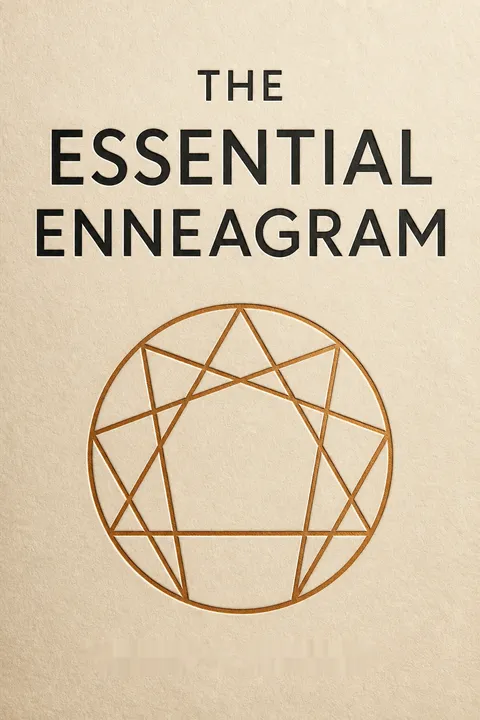
Nine-pattern personality systemA personality system describing nine recurring patterns of attention, emotion, and behavior. In this book, each pattern is understood as an adaptive strategy organized around a core belief about what is needed for security, love, or worth. The system is represented by nine points arranged around a circle.
Adaptive strategy
Learned coping patternA recurring way of directing attention, energy, and behavior in response to a perceived threat. The book proposes that each Enneagram type develops such a strategy to protect a sense of love, security, or worth. The strategy can produce genuine strengths while also creating habitual blind spots and limiting reactions.
Connected Types
Related Enneagram patternsThe four types that Enneagram theory associates with a person’s presumed core type: the two neighboring types called wings, plus a security type and a stress type. The book treats these connections as possible influences on how a person expresses their basic pattern, especially under different circumstances.
Essential Enneagram Test
Nine-paragraph type inventoryA self-assessment in which readers choose and rank the three short descriptions that fit them best. The authors instruct readers to use the first choice as an initial clue, then compare detailed type descriptions and alternatives. They report validation data from 970 volunteers, while emphasizing that the test cannot guarantee a correct type.
Universal Growth Process
Four-part change processA model for personal development built from awareness, acceptance, action, and adherence. It asks people to notice a habitual reaction, meet it without self-condemnation, investigate and choose a response, and return to the process consistently. The model is intended to connect self-understanding with repeated practice.
4As
Awareness, acceptance, action, adherenceThe four components of the Universal Growth Process. Awareness identifies a reaction; acceptance makes room for it without automatically approving it; action uses pausing and inquiry to support deliberate conduct; adherence means continuing the practice. Together, the components describe a repeatable route from noticing a pattern to responding differently.
Three Centers of Intelligence
Head, heart, bodyThe book’s framework for three ways people process experience: mental intelligence in the head, emotional intelligence in the heart, and instinctive or physical intelligence in the body. All people use all three, but the Enneagram groups types by the center each tends to rely on most. The authors encourage cultivating the other centers as well.
Instinctual subtypes
Three survival prioritiesThree recurring areas of survival-related attention that the book says can appear within any Enneagram type: self-preservation, social or group belonging, and one-to-one intimate connection. A person may express all three, while one often receives more attention and energy. The framework is meant to help readers notice imbalances and differences in priorities.
FAQ
What's "The Essential Enneagram" about?
- Comprehensive Guide: "The Essential Enneagram" by David N. Daniels and Virginia A. Price is a comprehensive guide to understanding the Enneagram, a personality system that identifies nine distinct personality types.
- Self-Discovery Focus: The book emphasizes self-discovery and personal development, helping readers identify their Enneagram type and understand their patterns of thinking, feeling, and acting.
- Practical Tools: It provides practical tools, including a validated Enneagram test, to help readers confirm their type and pursue personal, professional, and spiritual growth.
- Integration of Concepts: The book integrates psychological and spiritual aspects, offering insights into how to bring positive change into one's life by understanding and transcending personality habits.
Why should I read "The Essential Enneagram"?
- Self-Understanding: The book offers a pathway to deeper self-understanding by identifying your Enneagram type and exploring your core motivations and behaviors.
- Personal Growth: It provides actionable practices tailored to each personality type, promoting personal growth and development.
- Improved Relationships: Understanding the Enneagram can enhance your relationships by fostering empathy and better communication with others.
- Scientific Validity: The methods in the book are backed by research, ensuring a reliable approach to personality assessment and development.
What is the Enneagram according to "The Essential Enneagram"?
- Nine Personality Types: The Enneagram is a personality system that describes nine distinct patterns of thinking, feeling, and acting, each with its own perceptual filter and emotional energy.
- Diagram Representation: It is represented by a nine-pointed star within a circle, illustrating the interconnectedness of the types.
- Core Beliefs: Each type is based on a core belief about what is needed for survival and satisfaction, developed to protect a specific aspect of the self.
- Dynamic System: The Enneagram is dynamic, showing how types interact under stress and security, offering a rich framework for understanding human behavior.
How does "The Essential Enneagram" help in discovering your type?
- Essential Enneagram Test: The book includes a simple, validated test consisting of nine paragraphs, each describing a personality type, to help readers identify their type.
- Step-by-Step Process: It guides readers through a process of self-discovery, including type determination and description pages, to confirm and verify their type.
- Probability and Validation: The test results are supported by research, providing probabilities for each type to ensure accuracy in self-identification.
- Self-Observation Practices: The book emphasizes self-observation as a key tool in discovering and understanding one's Enneagram type.
What are the key takeaways of "The Essential Enneagram"?
- Self-Discovery and Growth: The book emphasizes the importance of self-discovery as a foundation for personal growth and development.
- Type-Specific Practices: It offers specific practices for each Enneagram type, focusing on awareness, acceptance, action, and adherence to promote change.
- Integration of Life Aspects: The Enneagram helps integrate personal, professional, and spiritual aspects of life, leading to a more balanced and fulfilling existence.
- Understanding and Empathy: By understanding the Enneagram, readers can develop greater empathy and improve their relationships with others.
What is the "Universal Growth Process" in "The Essential Enneagram"?
- Four Components: The Universal Growth Process consists of four components: awareness, acceptance, action, and adherence, essential for effective and lasting change.
- Awareness: Involves self-observation and mindfulness to understand one's patterns and reactions.
- Acceptance: Encourages a compassionate attitude towards oneself and others, fostering personal growth.
- Action and Adherence: Focuses on taking conscious actions and committing to ongoing practice for development.
How does "The Essential Enneagram" validate its test?
- Research-Based Validation: The Essential Enneagram Test is validated through research involving nearly 1,000 individuals unfamiliar with the Enneagram.
- Gold Standard Comparison: Test results are compared to expert interviews and self-assessments after Enneagram courses to ensure accuracy.
- Probability Analysis: The book provides probabilities for each type, helping readers understand the likelihood of their test results being accurate.
- Statistical Significance: The test's validity is supported by statistical analyses, confirming its reliability in identifying personality types.
What are the nine Enneagram types described in "The Essential Enneagram"?
- Type One: The Perfectionist, focused on integrity and improvement.
- Type Two: The Giver, oriented towards helping and nurturing others.
- Type Three: The Performer, driven by success and recognition.
- Type Four: The Romantic, characterized by deep feelings and creativity.
- Type Five: The Observer, valuing knowledge and self-sufficiency.
- Type Six: The Loyal Skeptic, seeking security and trust.
- Type Seven: The Epicure, pursuing pleasure and possibilities.
- Type Eight: The Protector, emphasizing strength and justice.
- Type Nine: The Mediator, seeking harmony and peace.
How does "The Essential Enneagram" address personal development for each type?
- Type-Specific Practices: The book provides tailored practices for each type, focusing on key areas for growth and development.
- Receptive Awareness: Encourages self-observation to understand habitual patterns and reactions.
- Action-Oriented Steps: Offers actionable steps to change behaviors and integrate positive qualities.
- Reflective Practices: Includes reflection exercises to reclaim higher qualities and achieve personal transformation.
What are the "Three Centers of Intelligence" in "The Essential Enneagram"?
- Heart Center: Focuses on emotional intelligence, connection, and the need for love and approval.
- Head Center: Relies on mental faculties for security and certainty, addressing fear and anxiety.
- Body Center: Involves kinesthetic intelligence and gut instincts, emphasizing worth and belonging.
- Triadic Structure: Each Enneagram type is associated with one of these centers, influencing their core motivations and behaviors.
What are the "Three Life Forces" discussed in "The Essential Enneagram"?
- Active Force: Provides energy for action and expression, making things happen in the material world.
- Receptive Force: Involves taking in and processing stimuli, essential for understanding and empathy.
- Reconciling Force: Balances the active and receptive forces, promoting harmony and right action.
- Mastery of Forces: The book emphasizes the importance of balancing these forces for personal growth and development.
What are some of the best quotes from "The Essential Enneagram" and what do they mean?
- "We are all perfect as we are." This quote emphasizes the inherent worth and completeness of each individual, encouraging acceptance and self-love.
- "Love comes from who we are, not what we do." Highlights the importance of being authentic and valuing oneself beyond achievements and external validation.
- "Life is a full spectrum of possibilities to be experienced deeply." Encourages embracing all aspects of life, including both joy and pain, for a richer experience.
- "We all begin with faith in ourselves, in others, and in the universe." Reminds readers of the fundamental trust and connection that can be reclaimed through personal development.
Download PDF
Download EPUB
.epub digital book format is ideal for reading ebooks on phones, tablets, and e-readers.








