

Key Takeaways
Treat meditation as an experiment, not a demand for belief
Test awareness directly. Wilber presents mystical practice as inquiry: meditation is the method, personal awareness the laboratory, and comparison with other practitioners a way to check whether experiences recur. He calls the shared outlook of many spiritual traditions the perennial philosophy. Its central claims are that Spirit exists, is discoverable within, is obscured by separation, and can be realized through a path that culminates in liberation and compassion.
Keep the claim proportionate. This approach asks readers to investigate rather than accept a doctrine on authority. But the book’s assertion that mystics across cultures reach essentially the same truths is a philosophical interpretation, not proof that every tradition teaches an identical worldview.
The experimental metaphor usefully shifts spirituality from inherited belief toward disciplined observation. It also invites a familiar question from philosophy of science: what counts as a replicated result when the instrument is a person’s own attention and the interpretation depends on cultural training? Shared reports can support comparison without proving that their metaphysical explanations are identical. The strongest version of Wilber’s invitation is therefore modest and practical: examine experience carefully, compare interpretations, and distinguish what was observed from what a tradition says it means.
Look for the knower, then notice it cannot be another object
Follow the act of noticing. The Witness Exercise asks a person to observe the body, feelings, desires, and thoughts, and to recognize that each can be noticed. The exercise then asks what is doing the noticing. Wilber calls this witnessing awareness, a stance that can observe mental activity without being identical to any one thought or feeling.
Try a small inquiry. During anxiety, for example, notice the sensations and thoughts that make it up rather than treating them as the whole self. The exercise is not meant to deny distress or erase the personality. It offers a different relationship to experience: awareness can make room for a feeling without immediately obeying, suppressing, or dramatizing it.
This is close to metacognition, the capacity to notice thoughts as mental events rather than facts that require action. That distinction has practical value in contemplative practice and in approaches to emotional regulation. Wilber makes a further metaphysical move, identifying the observer with a timeless Self. The exercise itself can establish that awareness is not identical to a particular thought; it cannot by itself establish that awareness exists independently of the brain or personal history. Keeping those claims separate preserves the exercise’s usefulness without overstating its evidence.
Let the ego function without mistaking it for your whole identity
Transcend without erasing. Wilber rejects the idea that egolessness means losing ordinary capacities, desires, or a usable personality. A person needs a functional self to act in everyday life. His claim is that spiritual development loosens exclusive identification with that self, allowing it to serve wider commitments instead of making every event a threat to personal identity.
Engage life rather than flee it. Wilber points to influential spiritual figures who acted forcefully in public life. Their significance, in his reading, comes not from being devoid of human traits but from putting those traits in service of something larger. The practical distinction is between having an ego and treating the ego as the only center that matters.
This distinction counters a common trap in spiritual culture: confusing detachment with emotional flatness, passivity, or refusal of responsibility. It also fits a broader psychological insight: a stable sense of agency can support care for others rather than compete with it. The caution is that claims of transcending ego can be used to excuse a leader’s behavior or make criticism seem spiritually immature. A credible account of expanded identity should show up not just in self-description, but in accountability and conduct.
Read reality as nested wholes, not isolated parts or one giant whole
Notice whole-parts. Wilber adopts Arthur Koestler’s term “holon” for something that is a whole in one setting and part of a larger whole in another. A word is made of letters, yet becomes part of a sentence. In biological examples, atoms form molecules, which form cells, which form organisms. Each larger organization includes earlier components while adding relationships and capacities.
Beware the totalizing whole. Wilber argues that reality contains nested wholes without a final, all-encompassing whole that can be neatly captured by one theory. He also warns that hierarchy can become domination when a group claims to represent the whole and demands that others submit. A useful hierarchy describes increasing inclusion; it does not automatically justify political or moral superiority.
The holon offers a productive bridge between reductionism and vague holism. Parts matter, but their behavior can change within a larger system, as a cell behaves differently inside an organism than in isolation. This logic appears across systems biology and organizational analysis. The framework’s challenge is deciding which differences count as greater integration rather than merely greater power or complexity. Wilber’s warning against a final, ideological “Whole” helps, but any proposed developmental ranking still needs clear criteria and room for evidence that runs against it.
Map inner experience alongside bodies, cultures, and social systems
Use more than one lens. Wilber’s integral approach says that human life cannot be understood through inner experience alone. It also includes observable behavior and biology, shared cultural meanings, and social structures. These are related but not interchangeable perspectives. A person’s anxiety, for instance, may involve felt experience, bodily processes, ideas about what is happening, and the conditions of the surrounding community.
Track uneven growth. Wilber also describes development as multiple lines, such as cognitive, moral, emotional, and spiritual capacities, moving through broad levels at different rates. Someone may be sophisticated in one area and immature in another. This model resists the tempting assumption that one spiritual insight automatically makes a person wise, emotionally skilled, or physically healthy.
The approach’s enduring strength is methodological pluralism: it asks what a problem looks like from the inside, from observable behavior, and from the cultural and institutional settings that shape both. Contemporary interdisciplinary work often faces the same challenge, since no single method captures lived meaning, physiology, and social context at once. The model becomes less useful if its categories are treated as a complete map rather than a checklist of questions. Its value lies in catching neglected dimensions, not in guaranteeing that every domain fits a single developmental ladder.
Do not confuse childhood's pre-rationality with mature spiritual awareness
Separate before from beyond. The pre/trans fallacy is Wilber’s warning that early, nonrational thought can be mistaken for advanced, transrational awareness because both fall outside ordinary reason. One error reduces mystical experience to infantile regression. The reverse error romanticizes magical or mythic thinking as spiritual wisdom simply because it is not rational.
Look at what a capacity can do. Wilber distinguishes the child’s limited ability to separate self from world from mature awareness that can include rational thought while loosening identification with it. In his account, spirituality at its most developed does not require rejecting reason. It can move beyond reason while retaining its capacities, much as an adult can understand a childhood perspective without being confined to it.
This distinction is a powerful defense against two symmetrical errors: dismissing unusual experiences as pathology without examination, and declaring every intense or irrational experience enlightened. Developmental context matters. At the same time, labeling a view “pre-rational” or “transrational” can become circular if the categories are defined by whether the view agrees with the theory. Careful assessment needs observable criteria, attention to functioning, and humility about the fact that unusual experience alone neither proves spiritual attainment nor establishes disorder.
Practice beyond belief, while building the capacities that support it
Expect a gradual path. Wilber describes four broad phases of spiritual unfolding: belief, faith, direct experience, and lasting adaptation. Belief offers a framework; faith persists when belief no longer satisfies; direct experience can arrive briefly as a peak experience; sustained practice may help make a new capacity more stable. These are not guaranteed steps or a timetable for everyone.
Practice with care. Wilber uses Buddhist training to illustrate different emphases: insight meditation develops observation, compassion practice asks practitioners to imagine taking in another’s suffering and offering relief, and Vajrayana practices work with sacred imagery and awareness. He also argues that meditation alone may leave emotional, physical, or social difficulties untouched, so spiritual practice should be balanced with other forms of care.
The distinction between a striking experience and a durable change is valuable. A temporary state can inspire, but habits, relationships, and judgment reveal whether an insight has become a reliable capacity. Wilber’s emphasis on practice also corrects the idea that spiritual understanding is merely intellectual assent. His staged account should still be read as a proposed map, not a universal sequence: traditions differ, practitioners vary, and intense experiences can be destabilizing. The call for balanced support is especially important when contemplation is used alongside psychological or medical care.
Keep religion's social comfort distinct from its radical demand for change
Notice two functions. Wilber distinguishes religion that gives people meaning and stability from spirituality that seeks a fundamental shift in identity. He calls the first translation: a person reinterprets life through beliefs, stories, and rituals. The second, transformation, challenges the separate self rather than simply giving it a more reassuring worldview.
Do not dismiss comfort. Translation can help people endure hardship and maintain social bonds. Wilber argues that it is an important function, not merely a lesser one. Yet a consoling belief is not the same as a transformed consciousness. In his account, the distinction matters because institutions can offer belonging and moral structure while also claiming, without evidence, that they have produced deep spiritual realization.
The distinction clarifies why religion can be socially powerful without producing the radical experiences described by mystics. Shared stories coordinate communities, transmit moral expectations, and help people interpret suffering. Those functions are not trivial simply because they differ from contemplative transformation. The harder question is how to evaluate transformation without relying on a person’s claim of special insight. Observable humility, ethical consistency, and openness to correction offer useful tests, although none alone proves a metaphysical awakening.
Let physics describe its domain without making it certify mysticism
Respect disciplinary limits. Wilber notes that several pioneers of modern physics expressed mystical views, but argues that their spiritual convictions do not mean physics proves mysticism. Physics investigates physical phenomena; mystical traditions address claims about awareness and ultimate reality. A scientist’s personal worldview and a discipline’s findings are different kinds of evidence.
Avoid a borrowed halo. Wilber compares using physics to certify spirituality with trying to prove an entire animal from one part of it. He argues that a scientific theory can change without deciding whether contemplative claims are true. The physicists’ reported interest in mysticism matters as intellectual history, but it cannot substitute for either scientific evidence or the direct contemplative inquiry that Wilber recommends.
This is a useful boundary against “quantum” language being used as a shortcut to spiritual authority. A scientist’s private beliefs deserve historical interest, but professional expertise in one domain does not settle questions in another. The reverse caution matters too: science’s limits do not validate whatever lies beyond its current reach. Wilber’s distinction is strongest when it blocks both moves, keeping physics from claiming to disprove every spiritual question and mysticism from claiming scientific endorsement it has not earned.
Separate a disease's biology from the meanings society loads onto it
Distinguish illness from sickness. Wilber uses “illness” for the disease process and “sickness” for the cultural meanings attached to it. Gonorrhea, for example, has a medical description, but a society may surround it with shame and moral judgment. Earlier explanations of tuberculosis and gout likewise blamed character before their causes were better understood.
Treat meaning as consequential, not curative. Social interpretations can shape how people understand themselves and seek help. Wilber’s account of cancer describes how patients encounter medical advice alongside public stories about what the disease means. The distinction helps expose stigma and misplaced blame. It does not establish that a person’s beliefs cause disease, nor does it make cultural interpretation a substitute for medical diagnosis or treatment.
Separating biology from social meaning remains valuable because stigma can compound the burden of illness, shaping disclosure, support, and care-seeking. The framework also guards against a common mistake in wellness culture: turning a diagnosis into proof of personal failure. Yet the distinction is not a clean division between two sealed worlds. Social conditions can affect exposure to illness and access to treatment, while medical categories themselves are interpreted within institutions. The most responsible use of the model is to challenge blame without minimizing biological evidence.
Analysis
This reader is an anthology, not a single argument developed from first principles. Its excerpts move between contemplative instruction, developmental psychology, social theory, and spiritual polemic. The connective thesis is that human understanding expands by including more of experience: the body is not discarded for the mind, reason is not discarded for contemplation, and individual identity is not simply replaced by a blank state. Wilber’s preferred movement is transcendence with inclusion.
That ambition gives the work its reach and its vulnerability. The holon model encourages readers to look for relations between levels, while the integral model asks them to examine subjective, behavioral, cultural, and social evidence together. These are useful habits of inquiry. But the book sometimes moves from a compelling metaphor or contemplative report to broad claims about universal stages, ultimate reality, or the shared conclusions of mystics. Those steps need different standards of evidence. A meditation exercise may reveal how attention relates to thought without proving that awareness is timeless; a developmental hierarchy may organize observations without proving that every person follows the same path.
The most valuable reading stance is neither uncritical belief nor dismissal. Treat the practices as invitations to observe, the models as maps to test, and the metaphysical conclusions as interpretations rather than settled findings. This also makes the book’s strongest ethical implication clearer: expanded identity should deepen responsibility toward embodied people and shared institutions, not excuse withdrawal from them. Its lasting contribution is the demand to hold multiple descriptions of human life in view, while remaining alert to the moment a map starts claiming to be the whole territory.
Review Summary
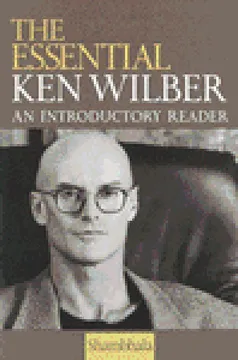
The Essential Ken Wilber receives generally positive reviews, with an overall rating of 3.99 out of 5. Many readers appreciate it as an accessible introduction to Wilber's integral philosophy, praising its coverage of consciousness, spirituality, and the synthesis of Eastern and Western thought. First-time readers find it particularly valuable, while those already familiar with his work consider it redundant. Some critics find the writing inaccessible to laypeople, and a few note it doesn't fully represent his later, more developed ideas.
Glossary
Perennial philosophy
Shared mystical worldviewWilber uses this term for a spiritual outlook he finds recurring across major traditions. It holds that Spirit is real and discoverable within, that ordinary separation obscures this reality, and that disciplined practice can lead to realization and compassionate action. The claim of a shared core is Wilber’s interpretation of diverse traditions, not a statement that their doctrines are identical.
Witness Exercise
Self-inquiry practiceA guided exercise for noticing the body, emotions, desires, and thoughts as experiences that can be observed. By asking what is aware of them, the practitioner investigates a witnessing perspective that is not identical to any particular mental or bodily event. Wilber presents this as a route toward disidentification, not as a method for denying feelings or abandoning ordinary functioning.
holon
Whole that is also partA term Wilber adopts from Arthur Koestler for an entity that functions as a whole in one context and as a part in a larger context. A word, for instance, is composed of letters and also contributes to a sentence. Wilber uses holons to describe nested patterns of organization across domains such as biology, language, and consciousness.
pre/trans fallacy
Confusing early and transcendentWilber’s term for mistaking prerational states for transrational ones, or the reverse. Because both may fall outside ordinary rational thought, early magical or mythic thinking can be romanticized as advanced spirituality, while contemplative awareness can be reduced to regression. The distinction is meant to preserve the difference between what precedes rational development and what may go beyond it while including its capacities.
One Taste
Nondual awarenessWilber’s term for the realization that awareness and the world are not experienced as separate subject and object. Rather than a special state produced by a particular technique, he describes it as the already present condition of experience, recognized when the separate-self perspective relaxes. This is a contemplative and metaphysical claim in the book, not an experimentally established account of consciousness.
translation versus transformation
Meaning versus identity changeWilber’s distinction between religion that helps a person make sense of life within an existing identity and spirituality that seeks to alter or transcend that identity. Translation can provide belonging, consolation, and social meaning. Transformation challenges the separate-self perspective itself. Wilber treats both as important functions, while distinguishing their effects.
Atman project
Searching for Spirit in substitutesWilber’s term for the drive to find ultimate fulfillment through objects, achievements, or experiences in time, even though he argues that Spirit is timeless and cannot be secured that way. The search generates substitute satisfactions and continues because its underlying aim is misdirected. In his account, it loosens when the effort to grasp ultimate reality gives way to recognition of present awareness.
About the Author
Other books by Ken Wilber








Download PDF
Download EPUB
.epub digital book format is ideal for reading ebooks on phones, tablets, and e-readers.








