

Plot Summary
Prologue
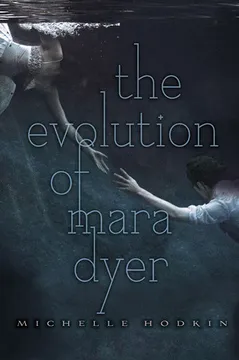
At a carnival, Mara Dyer runs through the crowd in tears while Noah Shaw follows close behind. A fortune teller has warned Mara that loving Noah will destroy him and that she must leave him to prevent it.
Mara cannot bring herself to obey. The warning frames their romance as a choice made under threat, though neither of them yet knows who is shaping that threat or what their strange abilities can do.
The opening gives the romance the shape of a trap before the reader knows its mechanism. Mara’s flight is not from Noah, but from the terrible possibility that staying beside him could hurt him. Her reluctance to leave is emotional and ethical at once: she loves him, yet fears that love makes her dangerous. The fortune teller’s prediction plants uncertainty about fate, but the scene also establishes a central question of agency. Mara must decide whether a frightening claim deserves authority over what she knows and feels.
The Precinct Stranger
Mara wakes in a Miami psychiatric unit with no memory of being brought there. Her parents and Detective Gadsen admitted her after she screamed at the police station, where she claimed Jude Lowe, her supposedly dead ex-boyfriend, was alive.
She also confessed to causing the asylum collapse that killed her best friend Rachel and Jude’s sister Claire, and to other deaths she believes her thoughts caused. Her brother Daniel visits with precinct security footage. Mara identifies the man she saw, but the camera hides his face beneath a baseball cap.
Daniel points out that the stranger has two hands, while authorities recovered only Jude’s hands from the ruins. The evidence convinces her family she is delusional, leaving Mara committed and certain that the only person who believes her is Noah.
Mara’s crisis begins as a collision between what she remembers and what can be publicly verified. The footage is not simply inconclusive; its missing face invites others to treat her certainty as illness. Daniel’s argument about the hands gives grief a material form, while Mara’s insistence that she felt Jude makes bodily memory compete with forensic evidence. The institution offers safety through containment, but it also removes Mara’s freedom to investigate the danger she believes is real. Her predicament is therefore not just whether she is credible. It is whether credibility can survive when the evidence is designed to look ordinary.
A Buried Family History
While visiting Mara, her mother admits that Mara’s grandmother did not die in a car accident, as the family claimed. She killed herself when Mara was three days old. The older woman had been suspicious, isolated, superstitious, and convinced she was responsible for events she could not control.
Mara’s mother recognizes similarities to the symptoms clinicians are watching for in her daughter, but insists that history does not determine Mara’s future. Mara also confirms to her mother that Jude forced himself on her before the asylum collapsed.
She hides the rest of what she believes, then performs calm cooperation for the doctors. If she can persuade them her claims are trauma symptoms rather than delusions, she may avoid residential treatment and get home.
The family revelation gives Mara’s fear a second inheritance: not only the possibility of unusual powers, but also the possibility that her mind will be interpreted through a history she never knew. Her mother’s secrecy was protective in intention, yet it leaves Mara with a family story built on concealment. The parallel between grandmother and granddaughter is emotionally potent precisely because it is not proof of sameness. Mara must distinguish inherited vulnerability from inherited destiny while doctors are already looking for a diagnosis. Her strategic performance shows how quickly care can become surveillance when a patient has reason to distrust the people assessing her.
Noah Believes Her
On Mara’s third day, a young patient slips her a sketch of Noah with a note in his handwriting. Noah has entered the unit, started a small fire with a lighter, and used the alarm and resulting confusion to reach her. He tells Mara he believes Jude is alive and is trying to find him.
Soon afterward, Mara’s mother releases her from the psychiatric ward, choosing an outpatient program at Horizons rather than residential care. Her father, recently discharged after being shot, brings her home, where Noah is waiting with her family.
The reunion is warm but uneasy: Mara’s parents limit her movement, require Daniel to accompany her, and enroll her in weekday treatment. Noah’s presence comforts her, but his offer to protect her also reminds her that danger has followed her home.
Noah’s entrance is both rescue and disruption. He gives Mara the recognition her family cannot yet offer, but he gets access by creating a disturbance in the very institution meant to manage her behavior. Their bond is grounded in mutual belief, not simple reassurance: Noah accepts that Mara may be right even without knowing how her claims can be true. At home, the family’s rules make love tangible as supervision. Their protectiveness is understandable after the shooting and collapse, yet Mara experiences it as a narrowing world. The story makes care morally complicated without making it malicious.
The Cat at the Door
That night Mara sees darkness move beyond the French doors and steps outside rather than retreating from it. She finds a mutilated gray cat and cleans its blood from her feet and the hallway before her parents can discover it.
In the morning, the words on her bathroom mirror connect the killing to Claire’s death. Mara fears her family will believe she staged the scene, so she hides the evidence and goes to Horizons. There she reunites with Jamie Roth, her sharp-witted former school friend, now sent to the program after classmates framed him as a threat.
A girl named Phoebe Reynard slips Mara a photograph of herself sleeping, with the eyes scratched out. The image confirms someone has been inside Mara’s room, but leaves her unable to prove who.
The cat and the photograph make violation intimate rather than spectacular. Jude does not need to attack Mara directly to seize control of her attention; he turns her home, the place meant to restore safety, into a space she must inspect and clean. Mara’s concealment protects her from being institutionalized again, but it also isolates her from the family who might help. Horizons repeats this bind in a new setting: evidence can be interpreted as self-produced because Mara already carries a psychiatric label. Jamie’s presence offers companionship, while Phoebe’s image extends the threat into the treatment environment.
A Truck in the Rain
During Mara’s first session with Horizons director Dr. Kells, Mara denies that she believes Jude is alive and describes his assault as part of her trauma. Kells frames Mara’s fear as a way to regain control over events she cannot command.
Mara faints, then rides home with her father in heavy rain. A white pickup follows them from the parking lot, pulls alongside, and reveals Jude behind the wheel. Her father swerves, but their car stops without crashing. At home, Mara finds her grandmother’s handmade doll on her desk, though she remembers it packed away.
She returns it to its box, only to discover it moved again. When Noah explains that Mara herself carried it back while sleepwalking, she confronts the possibility that her lost time is not all caused by Jude.
This sequence destabilizes the simplest version of Mara’s story without disproving it. Jude is visible during the near-crash, yet the event leaves no corroborating witness; the doll appears to be moved by an episode Mara cannot remember. Her fear is therefore not merely that other people will call her unreliable, but that she cannot fully use herself as a witness. Kells’s interpretation sounds plausible because trauma can distort perception, yet its plausibility makes it especially dangerous if Jude is exploiting that diagnosis. The narrative holds both possibilities in tension, forcing Mara and the reader to resist an easy distinction between symptom and threat.
The Doll’s Silver Secret
Noah arranges for a discreet security guard to watch Mara’s house and helps her burn the doll at his family’s mansion. As its fabric and hair burn, a piece of paper disappears in the flames, but a silver charm survives in the ashes. It matches the pendant Noah inherited from his biological mother, Naomi, although the two are mirror images rather than identical copies.
Mara’s dream of a child in India with a handmade doll begins to feel like a memory. A photograph Noah finds among Naomi’s possessions shows her beside Mara’s grandmother, who appears unchanged from a much later portrait. Mara’s mother supplies few details about her own mother’s past, so the pair are left with a shared symbol, a strange photograph, and no explanation.
The pendant shifts the mystery from Mara’s private symptoms to a connection between families. Its mirrored design suggests relation without sameness, an apt image for the novel’s central problem: two people can share a condition or history without experiencing it identically. Burning the doll gives Mara a brief sense of control, but it destroys the paper that might have clarified its origin. The image of her grandmother beside Naomi also unsettles ordinary chronology. Rather than producing an answer, each discovery widens the scale of the question, moving it from personal memory toward an inherited and possibly organized phenomenon.
The Fortune Teller’s Warning
At a family outing to a carnival, Mara visits a fortune teller who warns that Noah will die if he remains with her. Noah dismisses the prediction, but the fortune teller returns the fee and says a foreign man instructed her what to tell Mara. She cannot identify him, only that he had paid her and warned her not to accept money from Noah.
Mara shares the warning with Noah, who insists that the fortune teller is a fraud but promises to investigate. The episode deepens their conflict: Mara is desperate for explanations, while Noah distrusts supernatural claims and worries that she is too ready to believe them. Still, he stays close, and the two begin approaching intimacy carefully because Mara fears she could hurt him.
The prophecy matters less as a reliable forecast than as a message someone has planted between the lovers. Its source is compromised, but its emotional force is not. Mara’s uncertainty makes her susceptible to fatalistic explanations, while Noah’s skepticism can protect her from manipulation and also risk dismissing genuine evidence. Their opposing habits are psychologically specific: she searches for meaning because events have escaped her control; he resists meaning because he has spent years unable to explain himself. The scene turns romance into a test of epistemic trust. Can they take one another seriously without surrendering judgment to fear?
The Notebook Noah Kept
As Noah searches for the man who used the fortune teller, Mara sleeps badly and becomes increasingly aware of changes in her face and body. She finds a notebook in the guest room and reads Noah’s private observations, including his account of his own past self-harm and his belief that Mara is changing.
The entries also show that he has searched for Jude and studied the way Mara’s emotions may trigger her power. Mara knows she has crossed a boundary, but Daniel takes her to the marina before she can confess.
He has arranged a delayed birthday celebration, complete with a dark blue gown and a sapphire necklace that belonged to Naomi. Noah meets her on a secluded beach, where she admits she read the notebook and he finally tells her about his childhood despair.
The notebook creates a double exposure of intimacy. Noah’s private record makes Mara feel seen, but also reveals how much he has withheld and how carefully he watches her. Her reading is a breach of trust motivated by fear, not curiosity alone; she wants evidence of who she is becoming. The birthday surprise offers tenderness, yet the gift’s connection to Naomi carries the larger mystery into their courtship. Noah’s disclosure reframes his recklessness as a response to numbness rather than mere arrogance. Each lover is drawn to the other partly because the other makes an otherwise unreachable feeling possible.
The Beachside Kiss
On the beach, Noah admits that he once hurt himself because pain was the only sensation that made him feel real, and that he has repeatedly chased danger without lasting injury. Mara recognizes that he may be drawn to her partly because he believes she can harm him. She refuses to become his instrument of self-destruction, but he tells her he wants her to choose him freely.
Mara initiates their first fully mutual, passionate kiss. Noah hears a new quality in her, then stops when she seems to lose awareness. He reassures her that she has not injured him. The next day, Mara agrees to let him travel to Rhode Island to investigate Jude, while she remains at home under the guard’s watch.
The kiss is a breakthrough because it changes the relation between fear and desire, not because it settles the question of power. Mara acts, Noah responds, and then his ability to listen for changes in her becomes a form of consent and protection. His restraint matters: he refuses to treat her fear as something that can be overridden for romantic gratification. At the same time, Mara’s realization that he may welcome injury exposes a dangerous asymmetry. Love cannot simply cure his appetite for oblivion. Their intimacy becomes meaningful when she refuses the role he might unconsciously assign her and chooses contact on her own terms.
The Journal Says Help
Mara’s improved mood fades when she learns that Anna, a former classmate who bullied Jamie, has died in a car accident. At Horizons, Jamie’s grief and anger make Mara consider her own lack of sorrow for people who hurt her. Later, she finds her missing fear journal in Daniel’s room, filled in her handwriting with repeated pleas for help. She calls Noah, who is in Rhode Island.
He reports that Jude’s former address belongs to another family that has owned the house for eighteen years, even though Mara remembers Claire writing that address only months earlier. Noah has also seen a stranger attack a girl, suggesting their unusual experiences may involve others. Before he can return, Mara finds an unmarked disc under her pillow.
Mara’s missing journal turns psychological uncertainty into a physical artifact: her own hand has left a message her waking self cannot recall. This is more frightening than a hallucination because it gives the unknown part of her a voice without explaining its agency. Anna’s death also complicates the moral language around grief. Mara can regret harm without feeling affection for everyone who has harmed her, and the story declines to equate goodness with universal sorrow. Meanwhile, the impossible property record and Noah’s report of another anomalous person suggest that Mara’s experience is not solitary, though neither clue yet forms a coherent explanation.
The Disc from the Asylum
Alone in her room, Mara plays the disc and sees Claire and Rachel exploring the abandoned asylum before it collapsed. The footage captures their joking search for a chalkboard, then the impact and the building’s failure. After the recording cuts out, Mara hears her own laughter. The scene overwhelms her with a flashback, and she loses track of where she is.
When awareness returns, she is bound, blindfolded, and locked in a car trunk. Jude has abducted her from her home despite the security guard. He takes her to a boathouse, threatens her family, and demands that she bring Claire back. His demand makes clear that he knows Mara caused the collapse, but not how her power works or whether it can reverse death.
The disc weaponizes memory by turning Mara’s past into a recording she can watch but cannot interrupt. Seeing Rachel and Claire alive again intensifies grief while the sound of her own laughter links the collapse to an act she still cannot fully understand. The recording also allows Jude to control the transition from evidence to bodily danger: Mara is pulled from the screen’s past into his present. His demand that she resurrect Claire reveals the irrational core of his revenge, but it also gives him leverage. He does not need to know whether resurrection is possible; he needs Mara to believe her family’s safety depends on obeying him.
Jude’s Dockside Trap
Jude tells Mara she must cut her wrists or he will harm her brothers. He makes shallow horizontal cuts, ensuring she bleeds without immediately dying. When an off-duty police officer approaches, Jude stabs himself, and the officer collapses in pain; dead and dying fish gather beneath the dock. Mara reaches for Jude’s dropped blade but loses consciousness before she can use it.
She wakes in a hospital, restrained and badly weakened, while her mother believes she attempted suicide. A detective confirms the officer died of a stroke, but Mara cannot make her family understand that Jude abducted her. Noah has rushed to the hospital and left, and the family’s fear leads them to send Mara to Horizons’ residential center on a remote island.
The dock scene converts Mara’s power from a frightening possibility into a moral emergency. Jude’s threats make her body a tool of coercion, while his injury appears to transmit death outward to the officer and the fish. The event complicates responsibility: Mara’s fear may be dangerous, but Jude is deliberately arranging the conditions under which harm occurs. Once she wakes, the same injuries are read as evidence of self-harm, and the psychiatric system’s interpretation closes around her. Her family acts from love, yet their response separates her from Noah and leaves the abductor’s account of reality largely unchallenged.
No Name Island
After the hospital hold, Mara’s parents take her by ferry to the Horizons residential center, where she must stay for twelve weeks without outside contact during her first month. Staff search her body and luggage before admitting her. Jamie, also attending the retreat, is assigned to share a room with Noah, who has managed to get himself admitted by creating a public disturbance at a marine park.
Noah initially walks past Mara without acknowledging her, then finds her in a corridor and explains that he saw Jude during her abduction. He blames himself for not being there. Their reunion is brief and carefully concealed, since staff might separate them if they know they are together.
The island’s isolation literalizes the gap between Mara’s knowledge and the outside world’s belief. Her admission is presented as treatment, but the search and contact restrictions make it feel like custody. Noah’s arrival restores her sense that someone can confirm what happened, yet his silence in public shows that even intimacy must adapt to institutional rules. His guilt mirrors Mara’s: both interpret failure to prevent harm as personal culpability. The novel does not resolve this through reassurance. Instead, their reunion establishes a more difficult task, learning how to act together when each has been taught that the other’s safety is their private responsibility.
Files Behind the Keypad
During the retreat, Noah and Mara meet at night in a locked music room. Jamie joins them, and the three break into Dr. Kells’s office to read their confidential files. Mara finds a record that describes her as delusional, while Noah’s file labels his defiance and risk-taking as possible disorders.
The records expose how easily unusual experience becomes pathology, but they also reveal a suspicious notation tied to Mara’s family name and sedation.
On Kells’s computer, Noah finds recordings from inside Mara’s home, including Jude entering her bedroom. Phoebe’s notebook bears the name Phoebe Lowe and romantic initials linking her to Jude. When they return to the dormitory, they find Phoebe dead, her wrists cut and a bloody message on the wall.
The files make the institution’s authority visible as a system of observation, not merely diagnosis. Mara and Noah see how their behavior has been translated into clinical language, but the hidden camera footage proves that someone else has been monitoring them outside the clinic as well. Phoebe’s connection to Jude turns her erratic behavior from a side disturbance into evidence of manipulation. Her death is especially destabilizing because the message is staged to implicate the very patient already treated as dangerous. The students’ records, surveillance, and evidence of murder converge, showing how easily a powerful observer can make truth resemble delusion.
The Garden Hostage Game
Mara and Noah find the exits locked and the staff absent. In the Zen garden, Jude has tied Jamie, Stella, Adam, Megan, and other students among the stones, and one girl lies bloodied nearby. He demands that Mara resurrect Claire. Stella can hear Jude’s thoughts and reveals that Dr. Kells promised him Mara could do it if he brought her to the island.
Jude hurts Stella to provoke Noah, then threatens Jamie to force Mara to take his place. Noah attacks Jude, but Jude’s ability to transfer injury threatens the others. Mara realizes Jude’s need for fear is central to his plan. While Noah restrains him, she frees Jamie with a shard of a broken urn. The students begin escaping, but Jude grabs Mara and holds a blade to her throat.
Jude’s demand exposes the difference between power and omnipotence. Mara can cause destruction, but Jude’s belief that she can restore the dead is a delusion created or encouraged by Kells. The captives become instruments in a coercive experiment, each threatened body meant to produce a response from Mara or Noah. Stella’s mind-reading ability changes the group’s understanding, but it cannot provide a safe solution. Mara’s choice to free Jamie rather than simply surrender or attack is a practical assertion of agency. The moment also shows Noah’s vulnerability: his instinct to protect Mara can be exploited as readily as her fear.
The Wall Gives Way
With Jude dragging her toward the hallway, Mara remembers surviving the asylum collapse with only a bruise and realizes she may be able to use her power without killing herself. She slams Jude into a wall, pins him there, and crushes his throat while Noah watches.
Her fury becomes so consuming that she barely hears him call her name. The story then flashes back to a child in India, found beside a human heart and raised by a village family. The child, later called Mara, frees a caged tiger after seeing men torment it; the animal kills its chief tormentor.
Back in the present, Mara wakes in a hospital with Dr. Kells and learns she was part of a secret study of people carrying a gene that produces dangerous abilities. The study lists Noah as deceased, but Mara refuses to accept Kells’s account and silently resolves to resist.
The climax joins personal survival to an origin story without offering an easy moral distinction between protector and destroyer. As a child, Mara frees the tiger in response to cruelty, but the result is lethal; as a teenager, she uses force to escape Jude, again without knowing who else may pay. Her power is linked to perception and emotional pressure, not to a stable heroic identity. Kells’s revelation recasts the treatment setting as a controlled study, while the claim that Noah is dead directly attacks Mara’s deepest attachment. The ending leaves her physically controlled but psychologically altered: she recognizes the institution’s manipulation and chooses resistance over compliance.
Analysis
The novel’s central problem is the struggle to distinguish mental illness, supernatural power, and deliberate manipulation when all three can produce the same outward evidence. Mara’s psychiatric confinement is not a simple error by uncaring adults. Her family sees real danger in her behavior and responds with the tools available to them. The tragedy is that a genuine clinical framework becomes useful to people who are exploiting her, allowing surveillance and coercion to masquerade as care.
Mara’s power turns emotion into consequence, but the story does not equate consequence with moral guilt. Jude deliberately engineers fear, injury, and isolation, while Mara’s capacity to cause harm remains unstable and only partly understood. Her task is not to deny responsibility, nor to accept every accusation, but to separate her choices from the conditions others impose on her. This distinction is especially important in the climax, where violence is both an act of escape and a potentially catastrophic use of force.
Noah offers belief, yet his devotion is not uncomplicated salvation. His healing ability has made him reckless, and his attraction to Mara is entangled with a wish to experience danger. Their relationship develops ethically when Mara refuses to become his weapon and Noah respects her pace. Each must recognize that protecting the other cannot mean taking away the other’s agency.
The story’s recurring records and images expose the politics of proof. A blurry video can discredit Mara; a hidden camera can validate her claims while also revealing a deeper violation. The final study revelation makes diagnosis itself ambivalent: clinical language can describe suffering, but it can also classify people for control. The ending offers no completed escape, only a new form of resolve. Mara can no longer trust the institution to define her reality, so her first act of resistance is internal: she stops agreeing that compliance and recovery are the same thing.
Review Summary
Readers are largely captivated by The Evolution of Mara Dyer, praising its intense, creepy atmosphere and mind-bending plot twists that left many unable to sleep with the lights off. The romance between Mara and Noah is widely celebrated as compelling and emotionally resonant. Many reviewers highlight the book's unreliable narration as a standout element, keeping them constantly questioning reality. While most gave high ratings, a minority criticized pacing issues, stigmatizing portrayals of mental illness, and an overly complex plot. The cliffhanger ending left nearly everyone desperate for the next installment.
People Also Read


Characters
Mara Dyer
The feared witnessMara is a seventeen-year-old with a sharp, dry sense of humor and a fierce need to be believed. She has survived the asylum collapse, the death of her friend Rachel, her father’s shooting, and a sexual assault by Jude. She fears that her thoughts may cause physical harm, yet she also resists being reduced to a diagnosis or a threat. Her habit of hiding distress protects her independence but deepens her isolation. Noah’s trust gives her a rare place to speak plainly, while her family’s concern pulls her toward secrecy. Mara’s defining struggle is not simply controlling power; it is deciding what kind of responsibility she can bear without surrendering her judgment to other people.
Noah Shaw
The dangerous believerNoah is a wealthy, intellectually agile teenager whose charm and irreverence conceal profound detachment. He has an uncanny ability to heal injuries and perceives changes in people as if they were shifts in sound. Because ordinary danger has rarely harmed him, he has pursued sensation and self-destruction in ways that trouble Mara. He is skeptical of supernatural explanations but believes her when others do not, and he protects her without always explaining what he is doing. His history with his mother’s death and his emotionally distant family shapes his hunger for connection. With Mara, his challenge is to offer care without turning himself into a martyr or asking her to become a source of danger.
Jude Lowe
The returning threatJude is Mara’s former boyfriend and a charismatic, physically imposing presence associated with the asylum collapse. He can appear harmless and familiar, which makes his cruelty harder for others to recognize. His attachment to his sister Claire and his grievance against Mara drive his pursuit, while his capacity for manipulation lets him turn other people’s fear into leverage. He knows enough about Mara’s past to exploit her guilt, but he misunderstands the limits of what she can do. Jude represents the danger of confusing intimacy with entitlement: he uses knowledge of Mara’s feelings not to understand her, but to control her.
Indi Dyer
The frightened motherMara’s mother is a psychologist who tries to protect her daughter through treatment, structure, and close observation. Her own mother’s history of paranoia and suicide makes Mara’s symptoms frighteningly personal, though Indi struggles to share that history honestly. She loves Mara deeply but often interprets her claims through clinical explanations, leaving Mara feeling doubted even when the concern is sincere. Indi’s professional knowledge gives her tools to help, yet it can also make her sound like a clinician when Mara needs a mother. Her central tension is the distance between wanting to understand her daughter and fearing what she might discover.
Marcus Dyer
The wounded fatherMara’s father is a lawyer who has recently been shot and is trying to return to family life without showing how much the danger has shaken him. He uses humor and small gestures, such as planning a family movie night, to restore normal routines. He worries about Noah’s influence and Mara’s instability, but remains affectionate and attentive. His instinct is to solve problems through practical safeguards, even when he cannot understand what Mara says is happening. He embodies the family’s effort to resume ordinary life while living with consequences no one can neatly explain.
Daniel Dyer
The brilliant brotherDaniel is Mara’s older brother, a gifted student and her closest sibling confidant. He uses intellectual play, teasing, and elaborate literary references to keep their bond familiar under pressure. His first instinct is to trust evidence he can see, which makes Mara’s claims difficult for him to accept. Still, he tries to help her, listens to her disguised account of a fictional supernatural heroine, and takes pride in her intelligence. Daniel represents the intimacy of being known from childhood, along with the limits of that intimacy when one person’s experience becomes impossible for another to verify.
Joseph Dyer
The youngest brotherJoseph is Mara’s twelve-year-old brother, energetic, affectionate, and unexpectedly firm about his interests. His concern for animals leads him to reject a fishing trip and feel compassion for captive orcas. He tries to reconnect with Mara after her hospital stay, although he remains a child who wants her to respect his clothes and games. Joseph’s ordinary needs give the family’s crisis a tender counterweight. He is both someone Mara wants to protect and a reminder that her brothers deserve a life beyond the dangers she fears.
Jamie Roth
The sardonic allyJamie is Mara’s former school friend, a witty and perceptive teenager who has been sent to Horizons after classmates frame him as dangerous. He uses jokes to expose the absurdity of the program and to resist being defined by adults’ assumptions. His anger is rooted in bullying and racialized suspicion, not in the caricature of a violent boy that others project onto him. Jamie’s humor provides Mara companionship, but his sarcasm can also sharpen conflict. He values loyalty and tends to see people in stark moral categories, making his friendship with Mara both warm and bracingly honest.
Stella Benicia
The guarded observerStella is a Horizons student with a quiet, guarded manner and a strong instinct for self-protection. She speaks sparingly, notices more than she volunteers, and is wary of being drawn into other people’s crises. Her presence gives Mara a possible connection beyond Noah and Jamie, though Stella does not readily offer trust. She is part of a group of teens whose treatment files and behavior suggest that the program’s official explanations may not tell the whole story.
Phoebe Reynard
The unsettling peerPhoebe is Mara’s assigned Horizons buddy, a withdrawn girl whose abrupt behavior unsettles both peers and staff. She can seem disconnected from the people around her, then become sharply focused in ways that are difficult to interpret. Her presence makes Mara question whether the program is helping its students or merely containing them. Phoebe’s interactions with Mara are unpredictable, and her need for connection is obscured by behavior that others dismiss as instability.
Dr. Kells
The polished clinicianDr. Kells directs the Horizons program and presents herself as composed, observant, and clinically sophisticated. She believes careful questioning and structured treatment can help teenagers whose lives have been disrupted by trauma. Her manner is reassuring, but she also carries institutional authority: she can influence diagnoses, medication, and placement. For Mara, Kells becomes a figure onto whom the question of trust is projected. Her calmness can feel like compassion or concealment, depending on what Mara believes and what evidence she can access.
Dr. West
The first evaluatorDr. West is the warm, measured psychiatrist who evaluates Mara after her involuntary admission. She explains the hospital’s procedures and tries to make Mara feel safe, but her professional role limits what she can accept as fact. Her gentle manner contrasts with the coercive reality of the hold.
Rachel
Mara’s lost confidanteRachel was Mara’s best friend before the move to Florida and a central presence in the memories Mara cannot leave behind. She was playful, candid, and close enough to share private fears and plans. Her absence shapes Mara’s grief and guilt, while memories of their friendship preserve a version of Mara’s life before the collapse.
Claire Lowe
Jude’s beloved sisterClaire is Jude’s sister and one of Mara’s companions in the events surrounding the asylum. She is part of the social history that binds Mara, Rachel, and Jude together. Her friendship with Rachel and her connection to Jude make her absence a source of grief and resentment for the people who survive the collapse.
Naomi Shaw
Noah’s absent motherNaomi is Noah’s biological mother, whose belongings and keepsakes remain in the Shaw home. Noah’s attachment to an inherited silver pendant suggests that she matters to him beyond memory alone. Her connection to Mara’s grandmother places her quietly at the center of the story’s family mystery.
Ruth Shaw
Noah’s attentive stepmotherRuth is Noah’s stepmother and a veterinarian who appears more attentive to the young people around her than Noah’s father does. She welcomes Mara’s mother into the Shaw home and helps sustain the appearance of a functioning family. Her kindness coexists with the distance and grief that shape the household.
Stephanie Roth
Jamie’s protective sisterStephanie is Jamie’s older sister, candid and more pragmatic than her brother. She carries a private history involving Noah and chooses to explain it to Mara because she sees that Mara may misunderstand him. Her loyalty to Jamie makes her careful about what she reveals, and her conversation with Mara shows how silence can protect one person while burdening another.
Madam Rose
The hired fortune tellerMadam Rose, whose real name is Roslyn Ferretti, works as a carnival fortune teller. She performs certainty for customers but appears uneasy when Mara asks who directed her prediction. Her encounter with Mara turns her from a theatrical distraction into a possible source of information.
Abel Lukumi
The vanished priestAbel Lukumi is the name Mara remembers for the Santeria priest who helped her recover memories. Noah later discovers that the name refers to the religion rather than the man’s true identity. His brief appearance and disappearance keep Mara searching for someone who might understand what is happening to her.
Adam
The Horizons provocateurAdam is a physically imposing Horizons student who enjoys provoking other students and testing the counselors’ patience. His cruelty toward a snake and his hostility toward Jamie establish him as a source of tension within the group.
Megan
The fearful participantMegan is a Horizons student with intense fears, especially around confined spaces. She takes part in exposure exercises despite her distress, showing a willingness to work through fear that contrasts with the group’s cynicism.
Dr. Vargas
The neuropsychologistDr. Vargas is introduced as a neuropsychologist who works with students facing problems after head trauma or acute illness. His brief presence helps establish Horizons as a clinical program with multiple specialists.
Plot Devices
Mara’s power
Emotion becomes forceMara’s ability appears connected to intense emotional states, especially fear and fury. She causes the asylum collapse and later uses her power in moments when she feels cornered, while animals and bystanders sometimes die nearby. The rules remain uncertain for much of the story, so every surge of emotion carries both immediate danger and moral uncertainty. This device makes Mara’s internal life consequential without making her fully responsible for every event others arrange around her. It also allows the climax to turn on a choice: she can use force to escape, but cannot know exactly who will be harmed.
Noah’s healing
Injury becomes perceptionNoah can heal injuries and sense a person or animal as an individual pattern of sound, which he can sometimes correct. He also experiences certain injuries through the perspective of the person who caused them, giving him a way to locate danger that ordinary observation cannot provide. His ability initially seems like a private mystery, but it becomes essential when Mara is threatened and when he tries to understand her power. Because Noah is difficult to injure, his gift also shapes his psychology: danger often feels like the only route out of numbness.
The paired pendants
A clue across generationsA silver feather-and-dagger charm emerges from Mara’s grandmother’s doll and matches, as a mirror image, the pendant Noah inherited from Naomi. A photograph places the two older women together, raising questions about how they knew one another and why the objects were hidden. The charms do not solve the mystery, but they connect Mara’s memories to Noah’s history and suggest that their abilities may have roots beyond their immediate lives. Their mirrored design makes the object a compact sign of shared origin and distinct identity.
Evidence under suspicion
Truth looks like delusionPrecinct footage, photographs taken while Mara sleeps, Claire’s asylum recording, a missing journal, security video, and private clinical files all act as pieces of evidence. Each arrives incomplete or in a form that can be misread. The camera cannot clearly identify Jude; Mara’s own handwriting records words she cannot remember writing; the clinic’s surveillance proves that her home was watched but also reveals that the institution controls the record. This device makes proof central to the plot while showing how evidence depends on who possesses it and who is allowed to interpret it.
The Horizons study
Treatment conceals an experimentHorizons first appears to be an outpatient and residential treatment program for troubled teenagers. Its files, medication routines, surveillance system, restricted movement, and Dr. Kells’s hidden records gradually suggest a more organized purpose. The final revelation identifies Mara, Noah, Jamie, Stella, and Jude among people connected to a gene study, with abilities and side effects recorded as clinical data. The study turns earlier diagnoses into instruments of control: any participant who reports the truth can be dismissed as unstable. The book ends before Mara can escape or learn the full design.
Mara Dyer Series
About the Author
Other books by Michelle Hodkin
Download PDF
Download EPUB
.epub digital book format is ideal for reading ebooks on phones, tablets, and e-readers.








