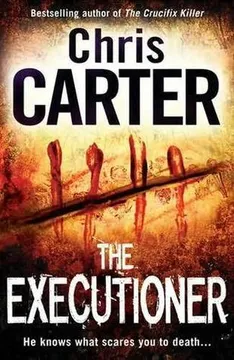


Plot Summary
The Basement Demonstration
In a sealed basement dressed like a dungeon, a composed attacker keeps a naked, chained man conscious while driving nails into his knee and worsening an already broken ankle. The victim begs for his life and invokes his sick daughter, but the attacker has no interest in money or mercy.
Instead, he shows the prisoner a photograph chosen to expose his deepest fear, then promises a demonstration. The scene opens on the killer's method before giving either man a name: pain is carefully prolonged, and terror is part of the punishment. The captive's fear becomes the attacker's private script, a pattern that will shape the murders Robert Hunter is about to investigate.
The opening makes fear more than an emotion that accompanies violence. The attacker studies it, stages it, and treats the victim's helplessness as the real instrument of control. His calmness is important: the brutality appears organized rather than impulsive, making the crime feel like an enacted idea. The daughter mentioned by the victim briefly exposes the life he is being torn away from, but the killer dismisses that bond. In doing so, the scene establishes the novel's central conflict between a person's private vulnerability and another person's determination to exploit it.
A Dog At The Altar
A week before Christmas, LAPD Homicide Special detectives Robert Hunter and Carlos Garcia arrive at Seven Saints Catholic Church. Father Fabian lies decapitated beside the confessional, his head replaced by a stray dog's and his body arranged amid blood. Hunter notices that the blood circling the altar was deliberately applied, not spilled during a struggle, and estimates the killer's height from the spacing of the drips.
The altar boy, fourteen-year-old Hermano Cordobes, identifies the priest by his unremovable ring and recalls that Fabian had been restless at night. A reporter is already pressing for answers outside. Hunter also asks a young officer to photograph the crowd, suspecting the killer may have come to watch the discovery.
The crime scene is designed to make investigators confront the difference between spectacle and evidence. The dog-headed body invites a supernatural reading, while Hunter insists on practical questions: where the blood came from, how it was placed, and what the killer could control. His request to photograph onlookers extends that discipline beyond the church itself. The scene also makes the murder intimate: the open confessional suggests the killer and priest interacted before the killing. Garcia's horror and Hunter's measured attention reveal their contrasting ways of absorbing violence, a partnership that will be tested by increasingly elaborate crimes.
The Number Three
At the altar, Hunter traces the blood circle to a candle dipped repeatedly into a blood-filled chalice. A mouth mark inside the chalice suggests the killer drank from it, while the smooth cut at Fabian's neck points to a powerful, precise blade.
The autopsy confirms that decapitation killed him and that he was conscious, though fear may have frozen him in place. At the morgue, technicians discover the number three painted on his chest in a woman's blood.
Hunter and Garcia search Fabian's room and find decades of handwritten reflections, but the books are undated and disordered. His real name was Brett Stewart Nichols; a clipping celebrates his work with homeless children, while his journals reveal a private man troubled by faith and sleeplessness.
The number shifts the investigation from a possibly generalized attack on religion toward a killing with a specific sequence and a specific victim. Yet its meaning remains unavailable, and the police must resist turning a striking clue into a convenient theory. Fabian's journals complicate his public identity as a selfless priest: he questioned his vocation and suffered privately, but those doubts do not make him culpable for his death. The contrast between the charitable clipping and the unfinished, intimate record of his thoughts foregrounds a recurring problem in the novel: people are not reducible to the roles by which strangers recognize them.
A Viewing Turns Fatal
Amanda Reilly, a struggling West Hollywood real-estate agent, needs a sale to keep her business alive. Her longtime friend and employee, Tania Riggs, prepares a presentation for a luxury Malibu mansion and leaves Amanda to meet the prospective buyer, Ryan Turner. During the viewing, Turner notices Amanda's unease when he asks to light the enormous fireplace.
She admits that as a child her clothes caught fire, badly burning her back and neck. Turner has already learned this history. He incapacitates her with a drugged cloth, binds her naked to a metal chair, seals her lips and eyelids with adhesive, then shows her an old photograph. When she recognizes its significance, she understands that he has chosen the ordeal to fit her fear.
Amanda's professional skill depends on reading clients and making herself persuasive, but the killer turns that practiced hospitality into an opening. She has to enter the house alone because her failing business cannot afford to lose a promising buyer. Her childhood burn is not merely a vulnerability; it is information another person has deliberately collected and converted into a method. The scene also exposes how easily ordinary trust can be weaponized without making Amanda foolish. Turner behaves like a credible customer until the moment he reveals that the meeting was never about the house.
The Malibu Number Four
When Amanda fails to appear at work, Tania reports her missing, and investigators find her at the mansion, tied before its gas fireplace. She has been left close enough to the flames to suffer for hours, and the number four is painted on her back. The fire has continued after her death, while the skin on her face bears the effects of a deliberately prepared mixture.
Forensics also finds Father Fabian's burned head in the hearth. Hunter recognizes that the killer has changed methods without abandoning his purpose: Amanda's prolonged death answers her fear of fire, while the number connects her to the priest. The discovery turns an isolated church murder into a serial investigation.
The second crime denies the investigators the comfort of a stable signature. Fabian's death was swift in its fatal stroke but elaborate in its staging; Amanda's was prolonged and physically different. What joins them is not a repeated technique but the killer's knowledge of the victim. This forces Hunter to treat the numbering as more than decoration and the bodies as entries in an ordered plan. The crime scene also converts an expensive, carefully designed home into a device for torture, showing how the killer's preparation depends on the ordinary features of a victim's life.
Mollie Sees the Murder
Mollie Woods, a frightened young runaway using the name Monica, asks to speak with Hunter and Garcia because she has seen the priest's murder in a vision. She describes the dog head, the sword and the number on the victim, details the police have not released. Her account matches a recurring nightmare in Fabian's journals: as a teenager, he watched friends behead a stray dog, then spent years dreaming that he suffered the same fate.
Mollie also tells Hunter that the next victim was burned because fire terrified her. Her words about Hunter's late mother reopen his childhood guilt: at seven, he gave his terminally ill mother extra pills when she begged for relief, and she died after taking them.
Mollie's visions create an evidentiary problem that is also an ethical one. Hunter cannot verify her ability by ordinary procedure, yet she knows facts the killer and investigators have kept private. His decision to listen is partly professional and partly personal: her account reaches the guilt he has kept outside his public identity as an exceptional detective. Fabian's nightmare adds a further complication. The murder is not an arbitrary ritual but the precise recreation of a memory he believed he had never shared. Both men are trapped by the past, though only one of them is choosing to make another person suffer.
Blood Connects The Dead
After Dan Tyler, the owner of the Malibu house, notices unfamiliar picture frames on the fireplace, Hunter returns to the scene and finds two victim photographs concealed inside them. Blood-painted numbers on their backs identify them as the first and second entries in the sequence.
Garcia recognizes the woman in one picture from an old Gardena High group photograph with Amanda. That woman is Debbie Howard, a prosecutor who died two weeks earlier; her case file shows that she drowned while pregnant.
A blood test links the marking on Father Fabian to blood from a pregnant woman, strengthening the identification. Hunter concludes that the killer is connecting victims through blood, although the photographs leave the first victim's identity unresolved.
The photographs change the investigation from a search for a killer's next move into a reconstruction of relationships the police have not yet understood. The hidden frames are an explicit demand for recognition: the killer wants credit for deaths that had been attributed to separate circumstances. Debbie's pregnancy makes the blood clue emotionally and forensically significant, but it does not by itself explain her connection to Fabian or Amanda. Hunter's willingness to keep those questions open matters. He sees a sequence emerging without pretending that sequence alone supplies motive.
The Needle Chair
A missing black Cadillac leads police to an abandoned construction site, where car salesman Darnell Douglas is found in a chair with hundreds of blood-filled syringes stabbed into his body. The fifth number is painted on his back.
The killer has drained much of Darnell's blood slowly, then used a paralyzing drug and a breathing tube to keep him conscious and alive. Hunter recognizes the method as another attack tailored to a victim's fear, and the team learns Darnell dreaded needles.
Meanwhile, news reports describe a separate killer who has been leaving murdered prostitutes in prayer-like poses with their throats cut. The press names that assailant the Slasher, adding a second, seemingly unrelated danger to an already strained investigation.
Darnell's murder clarifies the logic of the Executioner's violence: the change in method is not a loss of control but evidence of careful adaptation. The victim's fear determines the instrument, while the killer's patience determines the duration. The breathing tube makes this especially stark, because medical care is turned into a means of extending suffering. The Slasher reports introduce a different form of violence, one that initially appears unrelated and draws attention away from the connection between personal histories and victim selection. The novel's parallel crimes make uncertainty itself part of the investigators' workload.
The Old Gang's Ledger
Searching school records and photographs, Hunter and Garcia find that Amanda, Debbie and Father Fabian grew up near one another in Gardena and Compton.
Peter Elder, a former classmate and gang member now held in a maximum-security prison, initially dismisses their theory, then recognizes the unidentified male victim as Gregory Carlson, known on the streets as Strutter. Carlson was badly allergic to wasps and died after an attacker released a nest in his basement.
Elder confirms that Strutter's circle included Amanda, Debbie, Fabian and Darnell, along with two people called JayJay and Lipz. He also points investigators toward James Reed, whose childhood was damaged by the gang. The pattern now looks like revenge for old bullying, but the killer remains at large.
Elder's testimony gives the police a social map rather than a conventional motive. The victims were not connected by their adult professions, religion or neighborhood; they were linked by a violent adolescent group and the people it harmed. That discovery reframes apparently respectable adult lives without erasing their earlier cruelty. At the same time, the evidence risks becoming too persuasive too soon. James Reed has a plausible history of injury, but Hunter's method depends on distinguishing a psychologically coherent suspect from the person who actually planned the murders.
The Face Beneath Tyler
James Reed's evasions and the old story of his mutilated dog make him a compelling suspect, but Hunter sees a different possibility in a school photograph. With a composite artist's help, the team alters the image of a bullied student and recognizes the features of Dan Tyler, the wealthy investor who owns the Malibu mansion.
Tyler had lived as Michael Madden before cosmetic surgery and a new identity. Hunter reconstructs the motive: Tyler and his wife Kate endured years of abuse from Strutter's gang, escaped by faking their deaths and built a new life.
After Strutter recognized and humiliated Kate years later, she miscarried and eventually died by suicide. Tyler turned grief into a plan to kill every member of the gang through their worst fears.
The revelation shifts the case from a detective's search for an abstract predator to a tragedy organized around one person's bereavement. Tyler's wealth made escape and disguise possible, but neither could undo the psychological injury he and Kate carried. His plan transforms a history of humiliation into a system in which he controls each victim's terror. That symmetry may feel like justice to him, yet it repeats the original abuse in a more lethal form. Hunter's recognition also exposes the limits of a clean suspect profile: the truth is hidden behind a face deliberately remade to survive the past.
Seven Faces Underground
Hunter and Garcia break into Tyler's darkened Beverly Hills home after growing suspicious of his role. Garcia discovers a hidden basement containing seven life-sized dummies, victim photographs, plans and a calendar; five faces have been crossed out. Tyler strikes Garcia unconscious and forces Hunter to surrender, then cuffs him and threatens Garcia at gunpoint.
While Tyler explains how years of bullying and Kate's death drove his revenge, Hunter stays still and listens, buying time. Tyler insists that his killings are a consequence the gang deserves and describes consuming victims' blood and flesh as a source of power. When he finally fires at Garcia, the gun clicks: Hunter had secretly engaged its safety before surrendering it.
The basement makes Tyler's inner world material. His victims are not only dead or endangered people but figures arranged within a private plan, reduced to a sequence he can manage. His confession presents revenge as a substitute for a life that ended with Kate, but it also reveals how little the killings can restore. Hunter survives by reading the room as carefully as a crime scene: his hidden safety catch turns patience into action. The moment contrasts Tyler's elaborate control with the small, practical judgment that allows another person to resist him.
The Slasher's Real Target
Hunter disarms Tyler and arrests him, but Mollie calls in terror from an apartment where another man has found her. Hunter follows her phone's last signal to Downey and discovers a blonde woman dead with her throat cut. In the bedroom, he finds Mollie held at gunpoint by John Woods, her abusive father.
Woods has been killing women who resemble his daughter, including reporter Claire Anderson and Mollie's friend Susan, while trying to draw Mollie out through her visions. He believes God tasked him with destroying her supposed demonic gift. Hunter argues that Mollie needs help rather than punishment, buying time as Woods wavers. Mollie takes Hunter's fallen gun and shoots Woods in the hand before police arrive and arrest him.
The second killer's motive is not simply revenge but a warped claim of moral authority. Woods interprets his daughter's extraordinary sensitivity as evidence of evil, then commits violence in the name of cleansing her. His belief turns care into coercion and makes the people who resemble Mollie disposable substitutes. Hunter's response is not to overpower Woods immediately but to enter the language of faith that governs him, redirecting it toward protection. Mollie's final action is crucial: she is not merely rescued by Hunter but uses a skill learned during her earlier work to stop her father herself.
Two Killers, Two Endings
Police secure John Woods after Mollie wounds him, and Hunter identifies him as the Slasher behind the prostitute murders and the later attacks on women near his daughter. Tyler is also in custody, ending his planned execution of the old gang before he can reach the remaining targets, JayJay and Lipz.
The case has exposed two distinct forms of violence: Tyler's calculated punishment of former bullies and Woods's religiously justified persecution of Mollie. The identities of the killers do not erase the damage each left behind. Hunter is wounded, Garcia's nose is broken, and Mollie has lost Susan, but she has survived the night and can decide what comes next without either man controlling her.
The resolution refuses to collapse the two crimes into one explanation. Tyler's sequence grows from deliberate revenge; Woods's murders grow from a delusional attempt to control his daughter. Both men turn personal pain into a license to define other people's lives, but their motives and methods remain distinct. The ending also makes survival materially costly. Hunter and Garcia carry injuries, and Mollie's safety cannot undo the deaths around her. What changes is who has the power to act: Tyler and Woods are contained, while Mollie begins to make choices beyond their plans.
A Birthday At Christmas
On Christmas Day, Hunter visits Mollie in the hospital, where she is recovering and turning eighteen. Garcia has returned home with a broken nose, and his wife Anna and mother have filled the apartment with food despite his lingering distress from the case. Hunter brings Mollie a birthday cake, a laptop for the children's stories she hopes to write, and a meal prepared by Garcia's family.
He has also arranged for her to see a psychiatrist, while leaving her future in her own hands. Mollie thanks him for listening and believing her. Hunter recognizes that she helped save his life too, closing the story not with certainty about her visions but with a first, practical chance to choose her own direction.
The final gift is not a cure for Mollie's trauma or a tidy answer to her visions. It is equipment for a future she had previously imagined only as escape: a laptop, food, medical support and the freedom to decide what help she will accept. Hunter's care becomes concrete rather than merely protective, while Garcia's family offers a domestic counterweight to the violence that has followed the detectives home. The birthday matters because Mollie reaches adulthood at the precise moment she is no longer under her father's control. The ending values agency over revelation.
Analysis
The novel makes victim history function as evidence. Hunter solves the Executioner case not by finding a stable weapon or ritual, but by noticing that each murder translates a private fear into a physical ordeal. This approach makes psychology concrete: the victim's past is not explanatory background but the information that gives the crime its shape. It also exposes the danger of treating a profile as a verdict. James Reed fits the revenge theory, yet resemblance to a plausible motive does not prove responsibility; the photographs and Tyler's remade face force the detectives to revise their account.
The book's two killers represent distinct abuses of grief. Tyler turns bereavement and remembered humiliation into a system of retaliatory punishment. John Woods turns religious certainty into permission to control and harm his daughter. Neither man's pain is denied, but the story rejects pain as moral authorization. Their victims are not restored by understanding the perpetrators; stopping the violence requires evidence, judgment and intervention.
Mollie's visions test the border between rational investigation and knowledge that cannot be summoned or fully explained. Hunter's response is significant because he neither dismisses her nor allows her to become merely an investigative instrument. His own history gives him a reason to recognize suffering, but the story also shows that empathy must be joined to restraint: he protects Mollie's privacy and takes her claims seriously while continuing to seek corroboration.
Finally, the novel treats identity as something both imposed and constructed. The gang's cruelty follows its targets beyond school, while Tyler tries to escape the past through money and a new face. The murders demonstrate that concealment cannot heal an injury, only redirect it. Mollie's ending offers a modest alternative: not instant recovery, but support, a creative tool and the right to choose what kind of future she will attempt.
Review Summary
The Executioner receives largely positive reviews, with readers praising its gripping plot, intense violence, and well-developed characters. Many appreciate the psychological depth and creative murder scenes, though some find them disturbing. Reviewers commend Carter's writing style, pacing, and ability to keep readers guessing. The partnership between detectives Hunter and Garcia is highlighted as a strength. Some criticize the supernatural elements and lack of strong female characters. Overall, fans of dark, gory thrillers find it an engaging and suspenseful read.
People Also Read

Characters
Robert Hunter
The forensic-minded detectiveHunter leads the LAPD's Homicide Special Section with an unusual blend of psychological insight, patience and attention to physical detail. His insomnia and solitary habits make him effective at long investigations but leave little room for a life outside work. He is privately burdened by his mother's death: as a child, he gave her more medication than prescribed when she begged for relief. Mollie's visions force that memory back into the present, and his response to her combines professional skepticism with a rare willingness to listen. Hunter's defining strength is not simply intelligence; it is his capacity to stay observant when fear, grief or institutional pressure tempts others to settle for an easy explanation.
Carlos Garcia
Hunter's steady partnerGarcia is Hunter's younger partner, a capable detective who brings warmth, loyalty and directness to the investigation. His marriage to Anna gives him a life outside the department, and he is aware that the cases he works can follow him home. The sight and smell of the murders affect him physically, especially after the Crucifix Killer case, but he continues to work beside Hunter rather than pretending to be untouched. Garcia often voices the practical questions that keep Hunter's theories accountable. His openness to Mollie's claims develops gradually, through details she could not have learned from the newspapers, not through a sudden abandonment of reason.
Mollie Woods
The unwilling seerMollie is a young runaway from Pennsylvania whose visions expose her to other people's pain. She is cautious about what she tells the detectives and frightened of being found by her father, whose abuse has taught her to expect danger even from people offering help. Her sensitivity is not a power she can summon at will; visions and brief residual flashes arrive unpredictably and leave her distressed. Mollie wants a normal life and writes children's stories, but she also feels responsible when what she sees might help someone. Her relationship with Hunter begins in wary uncertainty, then grows through his willingness to protect her privacy and take her seriously without treating her as an instrument.
Dan Tyler
The grieving property ownerTyler is introduced as a wealthy financial-services executive and the widower of Kate, whose death remains an open wound. His elegant home, disciplined habits and guarded manner suggest a man who has built stability around private grief. He is methodical and highly intelligent, with a particular facility for numbers and planning. His past is concealed beneath an identity he has carefully constructed, but the emotional center of his life remains his marriage and the damage he believes others inflicted on it. Tyler's importance lies in how convincingly he can appear composed while carrying an all-consuming idea of what loss entitles him to do.
John Woods
Mollie's devout fatherJohn Woods is Mollie's father, a deeply religious man whose grief over his wife's death hardened into resentment toward his daughter. He interprets family life through strict ideas of obedience, sin and spiritual duty, leaving little space for a child's fear or independence. His belief that Mollie's visions have a supernatural meaning shapes their relationship and intensifies his controlling behavior. He is also a man carrying unresolved bereavement, though he uses that pain to justify judgments rather than examine them. His presence in Mollie's life makes the difference between protection and control central to her struggle for safety.
Carlos Garcia
Hunter's steady partnerGarcia is Hunter's younger partner, a capable detective who brings warmth, loyalty and directness to the investigation. His marriage to Anna gives him a life outside the department, and he is aware that the cases he works can follow him home. The sight and smell of the murders affect him physically, especially after the Crucifix Killer case, but he continues to work beside Hunter rather than pretending to be untouched. Garcia often voices the practical questions that keep Hunter's theories accountable. His openness to Mollie's claims develops gradually, through details she could not have learned from the newspapers, not through a sudden abandonment of reason.
Captain Barbara Blake
The new division captainBlake takes command of the Robbery-Homicide Division as the killings attract press and political pressure. She is direct, confident and unwilling to let the mayor dictate which detectives handle a case. Her insistence on procedure reflects both institutional responsibility and the need to protect a new command from public embarrassment. She clashes with Hunter when he acts without informing her, but she is not merely an obstacle: she must weigh his instincts against the authority and accountability attached to her office.
Father Fabian
The murdered Compton priestFather Fabian, born Brett Stewart Nichols, serves the Seven Saints community and is remembered by Hermano as generous, private and devoted to helping others. A newspaper clipping records his efforts to bring presents to homeless children, while his journals reveal doubts and recurring nightmares that he shared with no one casually. His life contains a sharp contrast between a troubled youth and a vocation built around service. That contrast complicates the detectives' efforts to understand his past without reducing his adult character to the worst things he once did.
Amanda Reilly
The struggling real-estate agentAmanda owns Reilly's, a Los Angeles real-estate agency weakened by the collapsing property market. She is charismatic, ambitious and skilled at winning clients, qualities that helped her build a business but also made her an object of envy. Her closest friend and employee, Tania Riggs, knows her as a fair boss who tried to protect her staff during layoffs. After a divorce, Amanda avoids serious relationships and keeps her private history to herself. Her childhood burns leave her with a profound fear of fire, a fact she shares only when a buyer's request makes it impossible to hide.
Claire Anderson
The ambitious crime reporterClaire is an LA Times reporter on a trial period, determined to prove she can build a major crime story. Her curiosity and instinct help her make connections before the police release them, but ambition sometimes outruns caution. She studies Hunter's psychology and approaches him both as a source and as a person she hopes to persuade. Claire is not a simple opportunist: she cares about journalism and wants recognition for doing it well. Her decisions expose the tension between a reporter's pursuit of information and the risks created when private sources become public subjects.
Ian Hopkins
The eager research officerHopkins is a young LAPD officer who first assists at the church by photographing the crowd. Hunter brings him into the investigation after noticing his curiosity and computer skills. Hopkins is conscientious and eager to prove himself, sometimes blaming himself for circumstances beyond his control. His database searches, school records and attention to the Lakers commemorative watch provide practical leads the detectives would struggle to assemble while in the field.
Peter Elder
The imprisoned gang memberElder is a former Compton High bully serving a life sentence in a high-security unit. He is guarded, cynical and accustomed to refusing cooperation, but old loyalties and memories still reach him through photographs. Hunter appeals to his knowledge of the street group rather than treating him as a simple source of names. Elder's testimony gives the detectives the nicknames and relationships needed to rebuild a history that its participants have long tried to leave behind.
James Reed
The elusive former studentReed is a computer-science professor and the son of Patricia Reed, a teacher who once disciplined Brett Nichols. As a student, he was quiet, academically gifted and subjected to serious bullying by a local gang. He remembers the cruelty clearly, including the harm done to his small dog, but initially withholds parts of his history from Hunter and Garcia. His intelligence and evasiveness make him difficult to read, while his relationship with his mother gives the detectives a route into the past.
Anna Garcia
Garcia's perceptive wifeAnna is Garcia's high-school sweetheart and wife. She understands the demands of his detective work, yet recognizes that the violence he sees can alter his behavior even when he refuses to explain what happened. Her own memory of a schoolmate who seemed to foresee a fatal accident gives her a thoughtful perspective on Mollie's abilities. Anna offers Garcia steadiness without pretending she can remove the danger or emotional cost of his work.
Doctor Jonathan Winston
The chief medical examinerWinston is Los Angeles's chief medical examiner and a trusted colleague of Hunter and Garcia. His careful autopsies turn disturbing physical evidence into usable facts, from the angle of Fabian's decapitation to the drugs and injuries found on later victims. He is frank about uncertainty and willing to explain complex findings without disguising their human cost. His clinical precision gives the detectives a counterweight to the killer's theatrical staging.
Tania Riggs
Amanda's loyal friendTania has worked beside Amanda for decades and remains loyal when the real-estate business turns against them. She sees past Amanda's beauty and success to the friend who treated her fairly when others were envious. Tania's practical information about the Malibu viewing, the buyer's phone calls and Amanda's fear of fire helps the detectives understand both the victim and the crime. Her grief is sharpened by her regret at leaving Amanda alone that evening.
Gregory Carlson
The gang's former leaderCarlson, known to his old street group as Strutter, was a violent, opportunistic man with a history of assaults and scams. He feared wasps because of a severe allergy. Despite his cruelty toward others, he maintained a relationship with his daughter Beth, who has multiple sclerosis.
Debbie Howard
The prosecutor from GardenaHoward was a former Gardena High student who became a successful Los Angeles prosecutor. Intelligent and ambitious, she built a reputation for taking on difficult cases and later married architect Jonathan Hale. Her school friendship with Amanda Reilly connects her adult life to a much older circle of classmates.
Darnell Douglas
The car salesmanDouglas was a West Hollywood car salesman known to former gangmates by the nickname Double D. He was a husband and a father who remained involved in the life of his daughter Beth. His fear of needles becomes a private vulnerability the investigators learn only after his murder.
Susan Zielinski
Mollie's supportive friendSusan is a young performer who has spent years working and taking classes while pursuing a place on stage. She offers Mollie a room and companionship when the runaway arrives frightened and exhausted. Her generosity reflects the kind of unforced care Mollie has rarely been able to trust.
Plot Devices
The victim numbers
A serial link in bloodNumbers painted on victims and hidden photographs establish that crimes with dramatically different methods belong to one ordered series. The sequence forces Hunter's team to look for earlier victims whose deaths had been treated as unrelated. Blood from one victim is used to mark another, suggesting that the killer is deliberately binding the victims together. The numbers therefore function as both evidence and a demand for recognition. They also conceal a more personal rationale that only becomes clear when the investigators uncover the killer's history.
Fear reenactments
Terror tailored to each victimEach Executioner killing is designed around something the victim fears: wasps, drowning, decapitation, fire or needles. Hunter identifies the pattern by comparing private histories with the methods used at each scene. The changing methods initially make the crimes appear disconnected, but the shared targeting of personal terror provides a more reliable signature than a repeated weapon or ritual. The device turns biography into forensic evidence, while showing how the killer's knowledge gives him control over both the victim's body and the meaning of the death.
Mollie's visions
Hidden evidence through sufferingMollie experiences involuntary visions and brief flashes of other people's pain. Her accounts describe details of the murders that have not reached the press, including the numbering and the way the killer presents fear to his victims. The visions do not provide a complete solution: they are brief, often confusing and emotionally punishing. They help Hunter see connections, but they cannot replace ordinary investigation or tell him everything he needs to know. Their value depends on the detectives' willingness to verify what can be checked and to protect Mollie from being treated as a tool.
The hidden photographs
A killer claims forgotten victimsTwo photographs concealed inside frames at the Malibu house carry blood-painted numbers on their backs. Their discovery alerts the detectives that earlier deaths may have gone unrecognized as part of the same series. School photographs and old records then help identify the people shown and reconstruct the friendships and gang ties that joined them. The frames also reveal the killer's need to control the story of his crimes: he does not want the first victims credited to anyone else. This clue advances the investigation while exposing the difference between public identity and shared history.
The separate Slasher case
A parallel threat obscures the huntWhile Hunter's team investigates the Executioner, a second killer leaves women with their throats cut and bodies arranged in prayer-like poses. The press names him the Slasher, and his crimes seem to have no connection to the numbered murders. The parallel case broadens the danger around Mollie and gives her father a separate path into the story. Its apparent independence matters: Hunter must eventually distinguish two predators whose motives, victims and methods are not the same, even as both exploit fear and vulnerability.

Download PDF
Download EPUB
.epub digital book format is ideal for reading ebooks on phones, tablets, and e-readers.








