

Key Takeaways
Read AI as captured social intelligence, not a machine-born mind
Look behind the machine. The book's central claim is that AI does not originate intelligence inside a machine. It captures patterns of knowledge already expressed in human work and social cooperation, then encodes them in data and algorithms. Driving makes the point: a driver continually interprets road conditions, anticipates others, and makes trained decisions, even when the task is called manual labor.
Autonomy has a workforce. The self-driving car may make those decisions look mechanical, but its development depends on human-generated data and ongoing labor such as content review, safety checks, and system maintenance. This hidden workforce complicates stories of fully autonomous machines. AI can automate parts of a task, but the underlying intelligence and work do not simply vanish.
What's striking is how this account brings ordinary expertise back into the picture. Research on distributed cognition similarly treats thinking as something people do with tools, routines, and other people, not only inside individual minds. That lens helps explain why a machine can appear intelligent while depending on collective human activity. The caution is that identifying social origins does not mean every skill can be captured completely. A model may reproduce selected patterns while missing context, judgment, or responsibility that workers supply.
Treat algorithms as social practices before treating them as abstract code
Rules begin in practice. An algorithm is commonly defined as a finite sequence of instructions that turns inputs into outputs. Pasquinelli pushes beyond this technical definition: rule-based problem-solving has existed in many cultures, embedded in work, rituals, and everyday procedures before computer science named it. The Agnicayana fire-altar ritual in India offers a vivid case. Builders arrange a thousand precisely shaped bricks in five layers, following instructions that produce a falcon-shaped altar while varying each layer's configuration.
Abstraction has a history. The ritual joined geometry, coordinated labor, and transmitted procedural knowledge. The book also traces calculation procedures from Babylonian mathematics and the Hindu-Arabic numeral system to European commerce. Its point is not that an ancient rite was a computer, but that algorithms grow from material practices and social needs, rather than appearing as timeless ideas detached from life.
This perspective usefully unsettles the assumption that computation belongs exclusively to modern Western science. It also connects to studies of embodied knowledge, where skills are learned through doing before they are formalized in rules. The comparison must remain careful: calling a ritual algorithmic can clarify its procedures, but it can also flatten its religious and cultural significance into a technical analogy. The strongest version of the argument recognizes both dimensions, including the social hierarchy governing who holds and transmits knowledge.
Ask whose work a machine copies, and whose labor it makes cheap
Babbage industrialized calculation. In early nineteenth-century England, a computer was often a person, frequently a woman, paid to perform calculations by hand. French mathematician Gaspard de Prony had organized logarithm calculations into a hierarchy: mathematicians designed the method, algebraists prepared operations, and clerks performed repetitive arithmetic. Charles Babbage proposed replacing that final group with his Difference Engine, a machine designed to automate one calculation procedure.
Design also measures labor. The labour theory of automation describes how machines imitate and replace an existing organization of work. Babbage's principle adds that dividing production into small tasks lets an employer buy only the skill and labor needed for each task. The machine therefore does more than produce: it helps define, measure, and cheapen work. This history shifts attention from the lone inventor to workers, workshops, and the labor arrangements embedded in a machine's design.
The account makes a valuable distinction between a machine's technical function and its economic function. A device can speed a calculation while also changing who performs it, what expertise is valued, and how work is priced. That is a useful question for evaluating automation today. Yet the social origin of a design does not mean its later uses are fixed. The same technical capacity can be organized under different ownership and labor arrangements, so historical explanation should not become technological destiny.
Machines reorganize workers before they simply replace them
The Machinery Question was political. During Britain's Industrial Revolution, workers challenged not only job losses but also who owned machines, controlled technological change, and received its gains. Some argued that machinery should reduce exhausting work and expand leisure, rather than enrich a few owners. Mechanics' Institutes and public education campaigns grew amid this conflict, promising practical knowledge while also helping sort workers into supposedly skilled and unskilled ranks.
Automation redistributes skill. Industrial machines often transferred knowledge from workers into equipment and management, while simplifying the worker's remaining tasks. The result was not simply fewer workers. It was a changed division of labor, including a sharper separation between mental planning and manual execution. That history complicates today's question,
This history aligns with a broad insight from labor studies: technological change alters bargaining power and job quality as well as employment totals. The Machinery Question also shows workers making claims about technology's purpose, not merely resisting change. That remains a productive frame for contemporary debate. Still, the nineteenth-century disputes occurred under conditions unlike today's service and platform economies. The analogy is strongest when it focuses on ownership, skill, and control, rather than assuming the same jobs or conflicts recur unchanged.
Track how collective knowledge becomes machinery, then capital's advantage
Knowledge is produced together. William Thompson argued in 1824 that labor includes the knowledge needed to direct it, and warned that machinery could detach knowledge from workers and turn it against them. Marx encountered this account before using the phrase general intellect for the accumulated knowledge and social capacity that become forces of production. In the Grundrisse, he considered whether this accumulation might undermine capitalism's dependence on labor.
Cooperation has a machine form. In Capital, Marx emphasized the collective worker, or Gesamtarbeiter: the combined contribution of specialized workers whose cooperation makes production possible. Machines embody this organized labor, but under capitalist ownership its knowledge appears as the power of capital. The movement from general intellect to collective worker grounds an important tension: shared knowledge can increase society's productive capacity while the machinery that stores it strengthens the owner who controls it.
The distinction between knowledge as a common achievement and knowledge as an asset is central to current disputes over data and intellectual property. It helps explain why access to information alone does not guarantee power: ownership and decision rights matter too. The section also resists a simple prediction that accumulated knowledge automatically ends exploitation. Its more durable insight is that collective capacity and private control can grow together, creating a political question about who governs the systems that embody shared work.
Notice how models of mind can smuggle in models of society
Connectionism pictures learning as relations. Connectionism is the approach that models learning through networks of linked units whose connections can adjust. Its twentieth-century development drew on more than brain research: communication networks, feedback systems, and ideas about self-organizing systems shaped how researchers imagined intelligence. This contrasts with symbolic AI, which represents knowledge as explicit propositions and rules. Neural networks instead learn statistical relationships from examples.
Hayek joined mind and market. In The Sensory Order, economist Friedrich Hayek described the mind as a network that classifies experience, and compared distributed knowledge in the brain with dispersed knowledge in markets. The book argues that this was not a neutral analogy: a theory of cognition helped support Hayek's belief in spontaneous market order. The same concept of self-organization could serve different ends, from explaining adaptation to justifying a political economy.
Models travel. Once a network becomes a persuasive picture of the brain, it can also shape how people describe markets, organizations, and even public policy. This is a useful reminder that technical metaphors carry assumptions about where order comes from and who should steer it. The analogy has limits: brains, markets, and neural networks differ in their mechanisms and accountability. Seeing the link between them should prompt scrutiny, not the conclusion that one system proves how another ought to be organized.
Trace AI's roots through psychometrics, not just neuroscience
The perceptron classified patterns. Frank Rosenblatt's perceptron, developed in the 1950s, was an early adaptive neural network designed to sort visual inputs into categories. The Mark I used a 20-by-20 grid of light sensors, a layer of association units, and adjustable connections to classify simple shapes. Training involved correcting errors by changing connection values until the output improved.
Statistics supplied the key method. Psychometrics, the statistical measurement of mental abilities and personality, helped inspire the perceptron's approach. Rosenblatt had used multidimensional analysis on questionnaire results before adapting similar methods to image data. The book links this lineage to a troubling history: intelligence testing and statistical classification were also used to rank people and support social hierarchies. The perceptron's achievement was not general human thought. It automated a limited form of pattern classification.
This lineage makes the history of AI more revealing than a story of engineers copying the brain. It shows how measurement practices can become computational techniques, and how their categories may inherit the judgments built into earlier uses. A classifier's output depends not only on mathematics but on the labels, examples, and purposes supplied to it. At the same time, psychometrics is one influence among several, not a complete explanation of neural networks. The connection is a reason to inspect assumptions, not to reduce every AI method to testing.
See AI as a manager of labor, not merely a substitute for workers
Automation often shifts the job. The book argues that AI can replace tasks performed by managers while leaving workers in place under tighter algorithmic supervision. Algorithmic management means using software and data to assign, monitor, evaluate, or coordinate work. Digital platforms illustrate the shift: apps can direct drivers and couriers, while other workers supply data, review content, and maintain systems.
The workforce can multiply. Rather than simply eliminating labor, these systems may displace it into precarious and less visible roles. This challenges the familiar image of a robot taking one person's job. The more consequential change can be the reorganization of many people's work by a system that centralizes decisions and measures performance. Turing imagined computers eventually taking over both the roles of masters and servants; the book argues that today's systems have often replaced parts of management while still relying on workers.
This framing helps distinguish automation of a task from automation of authority. A system that assigns shifts or scores performance can reshape a job even when a human still performs every physical action. That makes labor protections, appeal processes, and worker input relevant parts of AI governance. A limitation is that not every application is a platform or management tool, and task replacement remains real in some settings. The wider point is not that jobs never disappear, but that displacement and intensified control deserve equal attention.
Contest AI by changing who owns the data, models, and infrastructure
Ethics alone is too narrow. The book treats AI as an outcome of social relations, labor, data collection, and ownership. Because technical systems can preserve the hierarchies built into their production, simply adding ethical rules to a model may leave its political function intact. The conclusion calls for examining how datasets, labor pipelines, and computing infrastructure are assembled and controlled.
Make the system inspectable. The proposed practice of deconnectionism means carefully unpacking the relationships and materials that compose an AI system, from worker conditions to data sources and correlations. Examples include Turkopticon, which makes workers on Amazon Mechanical Turk more visible, and investigations that expose problematic face-recognition training data. The book favors collective agency, public alternatives, and new forms of social organization over either blind faith in technology or blanket rejection of it.
The strength of this proposal is its shift from polishing outputs to examining the institutions that produce them. Public ownership or cooperative control could change incentives and access, but ownership alone would not settle questions about consent, classification, or whose knowledge counts. Effective alternatives need ongoing participation from affected communities, transparent procedures, and ways to challenge decisions. The book's demand for political change is therefore most useful when treated as a design requirement: governance has to shape the system from the start, not arrive as an afterthought.
Analysis
The book's strongest move is to change the unit of analysis. Instead of asking whether a machine possesses intelligence, it asks which human activities and relationships have been abstracted into its operation, and who benefits from that abstraction. This produces an unusually coherent history across periods usually kept separate: ritual procedure, commercial arithmetic, Babbage's calculating engines, cybernetics, psychometrics, and contemporary machine learning become episodes in the changing organization and measurement of labor.
Its historical narrative also clarifies why AI can be both technically novel and socially familiar. Neural networks do not merely inherit old machines' functions. They inherit older ways of classifying, measuring, and managing people, while expanding those operations across much larger datasets. The book's distinction between explicit symbolic rules and statistical pattern learning is especially valuable because it links computational form to different theories of knowledge, not just different engineering choices.
The argument is most persuasive when it identifies concrete mediations: de Prony's labor hierarchy informing Babbage's engine, or psychometric analysis informing the perceptron. It is less conclusive when it treats social organization as the primary explanation for the inner logic of AI. Mathematical constraints, available hardware, and the behavior of algorithms also shape what systems can do. Social genealogy explains why certain problems are pursued and how results are used, but does not by itself explain every technical property.
That distinction strengthens rather than weakens the book's political claim. If AI is neither an autonomous mind nor a neutral instrument, then evaluating it requires both technical testing and institutional analysis. A system's accuracy cannot settle whether its categories are legitimate, its data were gathered fairly, or its benefits and risks are distributed justly. The lasting contribution is a method: study the machine together with the labor, metrics, and ownership relations that make it possible.
Review Summary
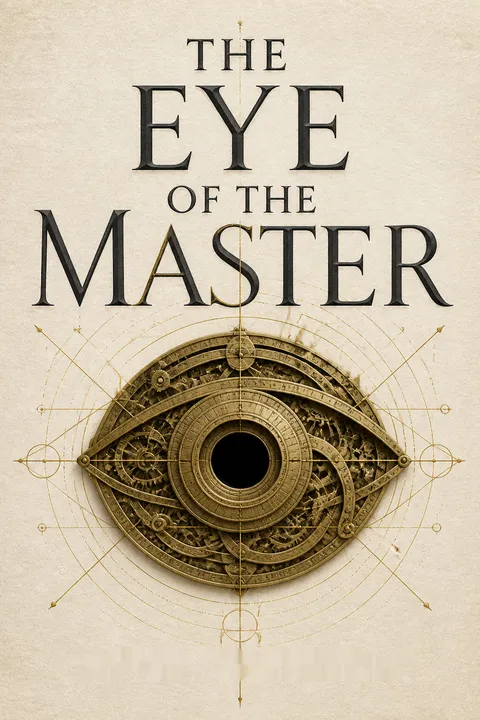
The Eye of the Master by Matteo Pasquinelli offers a critical examination of AI's history, challenging common narratives. The book argues that AI emerges from labor automation and social relations rather than biological imitation. Readers appreciate its thorough research and alternative perspective, though some find it dense and technical. The author's Marxist approach and focus on the political economy of AI receive praise, but critics note the book's limited coverage of recent developments and occasional lack of clear connections between chapters.
Glossary
labour theory of automation
Machines imitate organized workThe thesis that machines are designed by translating an existing organization of labor into a technical system. A machine can embody and replace the task structure, tools, and coordination developed by workers. The idea shifts the history of invention away from lone engineers and toward the collective work and economic relations that shape a machine's design.
Babbage principle
Prices tasks by required skillCharles Babbage's principle that dividing production into distinct tasks lets an employer purchase only the amount of skill and physical effort each task requires. It makes the division of labor a method for calculating labor costs as well as organizing production. In the book, this principle also helps explain how machinery can measure and differentiate workers' contributions.
general intellect
Social knowledge as productive forceA term Marx used in the Grundrisse for accumulated social knowledge that becomes a direct force of production, including knowledge embodied in machinery and shared practices. The book traces the idea to William Thompson's account of knowledge labor. It emphasizes the tension between collective knowledge as a social capacity and its appearance as capital's property when embodied in machines.
Gesamtarbeiter
The cooperating collective workerMarx's term for the collective worker formed through cooperation among specialized workers. Production depends on this combined capacity rather than on any single person's complete skill. Pasquinelli uses the concept to show how machinery can embody collective labor and how the social intelligence of a workforce may be reorganized under capitalist ownership.
connectionism
Learning through adjustable connectionsAn approach to modeling cognition and computation through networks of connected units. In artificial neural networks, the connections can be adjusted so a system learns statistical relationships from examples. The book contrasts connectionism with symbolic AI, which represents knowledge through explicit rules and propositions, and traces connectionism to cybernetics, psychology, statistics, and social models.
self-organisation
Order formed through system interactionThe process by which a system develops or changes its organization through interactions among its components, rather than receiving every detail from an external controller. Cyberneticians applied the idea to organisms, machines, and neural networks. The book emphasizes that theories of self-organization also reflected contemporary communication networks and social arrangements, not only observations of nature.
perceptron
An adaptive pattern classifierFrank Rosenblatt's early artificial neural network for learning to classify inputs, especially visual patterns. Its adjustable connections changed through error correction, allowing it to improve at a limited classification task. The Mark I used a grid of light sensors and layers of processing units. The book presents it as a milestone in machine learning, not a general model of human thought.
psychometrics
Statistical measurement of mental traitsThe use of statistical techniques to measure and compare abilities, personality traits, or other psychological characteristics. Rosenblatt used multidimensional analysis in psychological research before adapting related methods to image classification. The book highlights both psychometrics' technical influence on AI and its history of supporting social rankings, including disputed claims about intelligence.
algorithmic management
Software coordinates and evaluates workThe use of data-driven software to assign tasks, monitor performance, evaluate workers, or coordinate labor. It can automate functions traditionally performed by managers without removing the workers themselves. In platform work, for example, apps can direct and assess drivers or couriers while shaping the pace and conditions of their jobs.
deconnectionism
Unpack AI's social componentsPasquinelli's proposed method for critically examining an AI system by tracing and undoing its connections to labor, data, economic interests, and social relations. Rather than treating a model as an isolated black box, the method follows its components and production pipeline, including datasets, workers, metadata, and ownership, to identify how power is built into the system.
FAQ
What's The Eye of the Master about?
- Social History of AI: The Eye of the Master by Matteo Pasquinelli explores the social history of artificial intelligence, focusing on its implications for labor and society.
- Historical Context: The book is divided into two parts, covering the Industrial Age and the Information Age, tracing the evolution of labor and technology from Charles Babbage to contemporary AI.
- Labor Theory of Automation: Pasquinelli introduces the "labor theory of automation," suggesting that AI systems are designed based on the division of labor and collective knowledge.
Why should I read The Eye of the Master?
- Critical Perspective: The book challenges dominant narratives about AI, encouraging readers to consider the broader social implications of technology.
- Historical Insights: It provides historical context, linking past technological developments to current AI practices and discussions.
- Relevance to Current Issues: Understanding AI's historical roots and social implications is crucial as it continues to impact various sectors.
What are the key takeaways of The Eye of the Master?
- AI as Labor Reflection: AI reflects the intelligence of labor and social relations, not just human cognition.
- Historical Interconnections: The book shows how historical labor practices have influenced modern AI development.
- Critique of Technological Determinism: Pasquinelli argues that social relations and labor dynamics shape technological advancements, not technology alone.
What are the best quotes from The Eye of the Master and what do they mean?
- "All human beings are intellectuals": This Gramsci quote challenges the notion that only certain jobs are intellectual, highlighting the cognitive aspects of manual labor.
- "The eye of the master... constitutes the power of the ‘master’": A Marx quote reflecting the surveillance and control inherent in industrial labor systems.
- "The automation of general intelligence": This phrase explores how AI systems automate tasks traditionally performed by humans, questioning the future of work.
How does The Eye of the Master connect AI to labor?
- Labor Theory of Automation: AI systems are built on the division of labor, reflecting collective worker knowledge.
- Historical Examples: Figures like Charles Babbage illustrate how early computing was rooted in labor practices.
- Contemporary Implications: The book raises questions about job displacement and the need for new labor organization forms.
What is the "labor theory of automation" in The Eye of the Master?
- Definition: It posits that machines and AI systems are designed based on collective labor knowledge and practices.
- Historical Context: The theory traces back to the Industrial Age, where labor division informed machine design.
- Implications for AI: It challenges the notion of technology as a neutral force, emphasizing social impact considerations.
What is the Gestalt controversy discussed in The Eye of the Master?
- Historical Debate: The Gestalt controversy involved debates on perception and cognition between Gestalt psychologists and cyberneticians.
- Holism vs. Mechanism: It contrasted holistic approaches with mechanistic views, influencing AI methodologies.
- Impact on AI Development: The controversy shaped the development of neural networks and inductive reasoning in AI.
How does The Eye of the Master define connectionism?
- Neural Network Framework: Connectionism models cognitive processes through artificial neural networks, simulating brain functions.
- Inductive Reasoning: It focuses on learning from data and recognizing patterns, marking a shift in AI development.
- Self-Organization: Connectionist models adapt based on input data, reflecting a dynamic understanding of intelligence.
What role does Charles Babbage play in The Eye of the Master?
- Pioneer of Computation: Babbage is a key figure whose work laid the foundation for modern computing.
- Labor Analysis Principles: His principles argue that machines replicate the division of labor, central to understanding technology and social organization.
- Influence on Marx: Babbage's ideas influenced Marx's theories on labor and machinery, informing contemporary AI discussions.
How does The Eye of the Master critique technological determinism?
- Challenging Simplistic Views: Pasquinelli argues that social relations and labor dynamics, not technology alone, drive societal change.
- Historical Context: The book uses historical examples to show how technological developments are influenced by social factors.
- Implications for AI: This critique raises questions about automation's ethical implications and the need for social responsibility.
What is the significance of the "Machinery Question" in The Eye of the Master?
- Historical Debate: The Machinery Question involved public debates about machines' impact on labor and society during the Industrial Age.
- Social Implications: It illustrates workers' resistance to alienation and demands for control over technological progress.
- Relevance to AI: The Machinery Question provides a framework for analyzing AI's social implications today.
How does The Eye of the Master address the ethical implications of AI?
- Power Dynamics: The book discusses how AI can reinforce existing power dynamics and social hierarchies.
- Bias and Discrimination: It highlights concerns about bias in AI systems, emphasizing the need for fair technologies.
- Call for Accountability: Pasquinelli advocates for greater accountability in AI development, urging ethical considerations.
Download PDF
Download EPUB
.epub digital book format is ideal for reading ebooks on phones, tablets, and e-readers.








