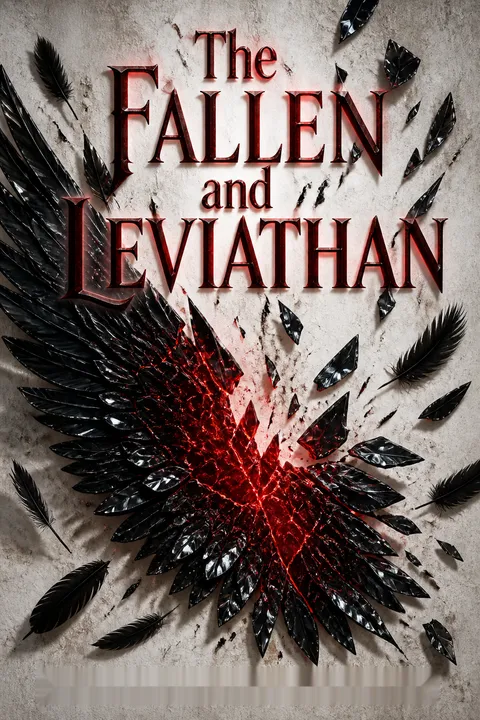


Plot Summary
Prologue
Two prologues frame the story with the Powers’ violence. In 1995, Eric Powell, newly able to hear animals’ warnings, tries to flee a group of pale angels who corner and burn him. Much later, in a Serbian monastery, a penitent fallen angel is seized by Verchiel and his soldiers.
The prisoner offers no fight, even as the Powers destroy the monastery and bind him with enchanted restraints. His calm unsettles Verchiel, whose command now rests on punishment and obedience. One prologue shows the fate awaiting those the Powers call abominations; the other begins with an ancient enemy in chains, carrying a secret that will matter to Aaron’s struggle.
The paired openings establish a world in which supernatural authority is exercised as violence, but they also complicate the idea of who deserves punishment. Eric is killed before he can understand his difference, while the monastery prisoner accepts capture without resisting. The contrast makes restraint look more morally charged than force. Verchiel sees submission as weakness and treats it as permission to dominate; the prisoner’s composure instead suggests an alternative form of power, one grounded in remorse and care for even a frightened mouse. The prologues also turn the reader’s attention toward the vulnerable: those marked for destruction and those whose suffering has been hidden beneath official claims of divine purpose.
Eighteenth Birthday Static
Aaron Corbet, an eighteen-year-old foster child in Lynn, begins his birthday with ordinary worries: a missed alarm, a history exam, and the family that has finally made him feel at home. At school, a crushing headache breaks and he suddenly understands Portuguese spoken by Vilma Santiago and her friends. That evening, at the veterinary clinic, the dogs fall silent when he commands them, as if they understand him.
At home, his Labrador, Gabriel, asks to play ball in clear speech. Aaron turns to his former psychiatrist, Michael Jonas, hoping for a medical explanation, but demonstrates that he can also speak Spanish and understand Latin. A stranger at Lynn Common supplies a more frightening name for the change: Nephilim.
Aaron’s first signs of power arrive as an assault on the assumptions that keep his life manageable. Language, ordinarily a bridge between people, becomes an involuntary flood of information from every living creature. The birthday marker makes the change feel less like an accident than a threshold, but Aaron initially interprets it through familiar categories: illness, neurological damage, or madness. His foster home and school provide a stabilizing routine, not because they solve the mystery, but because they let him postpone it. The episode’s emotional force comes from that mismatch: a young man trying to protect an ordinary future while his senses announce that the world has never been ordinary.
Zeke Names the Hunt
At the library, Aaron discovers that Nephilim are described as offspring of angels and mortal women. He returns to the common and confronts the old man, Ezekiel, who admits he is a fallen angel with only remnants of wings.
Zeke explains that the Powers, an angelic order charged with destroying what they consider offensive to God, hunt Nephilim when their inherited abilities awaken around adulthood. Aaron resists the claim until Zeke describes the divided nature of the angel-blooded and reveals that his own kind once helped create them.
When Zeke throws Gabriel’s ball into traffic, the dog is struck by a car and gravely injured. Aaron follows Zeke’s instructions, accepts a shifting presence within his mind, and channels its energy into Gabriel, restoring him and changing him.
Zeke’s explanation transforms Aaron’s private fear into a history of institutional violence. The Powers do not hunt him because of anything he has chosen; they classify his birth as a moral offense and make that classification lethal. Yet Zeke is not an uncomplicated guide. His deliberate use of Gabriel’s ball forces Aaron into a crisis before the boy has agreed to learn or trust him. The rescue makes the cost of refusal immediate, and the power’s first use is relational rather than martial: Aaron saves someone he loves. Gabriel’s altered intelligence then makes the transformation impossible to treat as a temporary cure. Aaron’s inheritance is not a tool he can put away without consequences.
Camael Offers Shelter
After Aaron’s visit to Zeke, his psychiatrist, Michael Jonas, is killed when angels attack his office. Camael, once a commander among the Powers, reaches Aaron first at school and offers protection, explaining that he abandoned the order after learning of a prophecy about a Nephilim who could reunite fallen angels with God.
Aaron refuses to accept a destiny he did not choose. His attempt to keep his life intact ends when the Powers break into the Stanley home. Tom and Lori try to shield Aaron and Stevie, their autistic son, but the invaders kill them and take Stevie.
Aaron’s changed dog attacks one soldier, while Camael and Zeke arrive to fight the others. With Gabriel’s life again at risk, Aaron finally releases his angelic nature and grows black wings.
Camael’s arrival puts a second interpretation beside Zeke’s warning: Aaron may be more than a hunted child, perhaps even the answer to an ancient religious rupture. Aaron rejects that meaning because it threatens the modest future he has painstakingly assembled. The Powers’ attack destroys the possibility of remaining neutral. Their violence against the Stanleys makes the conflict intimate, while Stevie’s kidnapping turns prophecy into a problem Aaron cannot evade by disbelief. The new wings are therefore not a triumphant self-discovery detached from grief. They emerge under coercion and emergency, as Aaron’s capacity to act catches up with the danger already imposed on his family.
Lynn Becomes a Battlefield
Aaron joins Camael and Zeke against Verchiel, the ruthless leader of the Powers, while Gabriel stays beside the wounded Zeke. In the sky above Lynn, Aaron fights with a weapon of heavenly fire and sees the accumulated terror of the Nephilim Verchiel has killed. Verchiel insists that his own wishes are identical to God’s, but a lightning strike engulfs him and sends him falling from the storm.
Aaron returns to the ruined home and finds that Stevie has been taken. Zeke, dying from Verchiel’s blade, confesses that he regrets everything he has done. Aaron recognizes that his power can answer repentance: he tells Zeke he is forgiven, and the fallen angel is restored to Heaven. The rescue fails, but Aaron now knows what his gift can do.
The battle separates power from moral legitimacy. Verchiel can command soldiers, fire, and storms, yet his claim to speak for God is undermined by the very violence he calls sacred. The lightning does not give Aaron a simple victory so much as interrupt Verchiel’s certainty. Zeke’s final act matters because he does not ask Aaron to excuse his past; he admits responsibility. Aaron’s answer makes forgiveness a response to remorse, not a reward for status. But the scene does not repair the immediate loss: Stevie remains missing, and the home that gave Aaron belonging has been reduced to wreckage. Grace appears, but it does not erase grief or cancel the work ahead.
A Farewell in the Hall
Two days after the attack, Aaron withdraws from Kenneth Curtis High and prepares to leave Lynn with Camael and Gabriel. He cannot explain the danger to Vilma Santiago, the girl he has only just begun to know, so he tries to leave without saying goodbye.
Vilma finds him at his locker, helps gather his books, and gives him her number and email address. Aaron keeps the note but still drives north, following a pull he cannot explain and hoping it will lead to Stevie.
Meanwhile, Verchiel has Stevie transformed by the Powers’ magicians into a physically altered hunter, armor and helmet marking him as a weapon. The boy’s memories are being stripped away. Aaron leaves home to find his brother, unaware that the child he seeks is being remade to hunt him.
Aaron’s departure is both a practical decision and a psychological severing. He leaves school not because education has ceased to matter, but because the Powers have made proximity dangerous for anyone connected to him. Vilma’s note preserves the possibility of ordinary attachment, yet he cannot choose that possibility without risking her safety. The parallel transformation of Stevie makes the separation more painful: Aaron’s journey is motivated by love, while Verchiel’s plan converts a child’s vulnerability into an instrument of pursuit. Both brothers are being shaped by forces beyond their consent, but in opposite directions. The section’s tension comes from the reader knowing that Aaron’s rescue mission begins after its object has already been altered.
Blithe Bites Back
On the drive north, Camael explains that angels draw sustenance from living energy, while Gabriel supplies a steady stream of appetite and complaints. Aaron’s unexplained pull leads them to Blithe, Maine, where Camael senses a hidden presence and then disappears near the town’s funeral home.
In the woods, four small, winged Orishas attack Aaron and Gabriel, hoping to capture them for Verchiel. Their poisoned weapons numb Aaron and Camael; the Orishas net Gabriel. Camael breaks free and kills the attackers, but their shaman escapes after biting Gabriel.
The ambush exposes Aaron’s hesitation to release his full power, and Camael rebukes him for it. Gabriel’s wound forces Aaron to seek a veterinarian, keeping the trio in Blithe even as the town’s unnatural calm begins to feel suspicious.
Blithe presents itself as a destination before Aaron understands what it wants from him. His northward impulse might point toward Stevie, toward the hidden refuge called Aerie, or toward danger; Camael cannot distinguish among these possibilities. The Orishas turn that uncertainty into bodily risk. Aaron’s reluctance to unleash his power is not mere cowardice: he fears the force’s appetite for violence and the possibility that he cannot govern it. Camael treats hesitation as a tactical failure, exposing the difference between his soldier’s pragmatism and Aaron’s human attachments. Gabriel’s injury makes the decision concrete. Aaron cannot simply move on, so the town’s apparent welcome becomes a trap with time to close.
Blithe’s Hidden Specimens
Aaron brings Gabriel to veterinarian Katie McGovern, who is temporarily running the clinic while her former fiancé, Kevin Wessell, is missing. Katie treats the dog’s bite and offers Aaron work, while he rents a room from the sharp-tongued Mrs. Provost.
At the clinic, Katie shows Aaron several frozen animals Kevin collected: each is a grotesque mixture of species, and his journal links them to strange behavior in Blithe’s wildlife. She suspects contamination near the abandoned boat factory and plans to investigate. Aaron agrees to accompany her.
Meanwhile, Camael remains missing after approaching the funeral home, where an old man’s barbed projectiles poison him. The town’s residents behave as if they are keeping a secret, and Aaron’s growing sense that Blithe is connected to his search for Stevie becomes harder to dismiss.
The veterinary clinic gives the book a grounded way to reveal the town’s horror. Katie reads bodies professionally, looking for causes in wounds and specimens rather than accepting the town’s reassuring surface. Her evidence is material: altered limbs, mixed animal traits, and a missing colleague whose notes stop at the point of discovery. Aaron’s supernatural intuition and Katie’s scientific skepticism therefore complement each other without becoming interchangeable. Mrs. Provost’s hospitality adds an uneasy domestic counterpoint, making the menace feel close enough to share a kitchen. Camael’s disappearance also deprives Aaron of the guide who has been urging him toward mastery. With both his mentor and the town’s explanations unavailable, Aaron must decide whom to trust through action.
The Whole Takes Hostages
While Aaron is away, Gabriel discovers that Mrs. Provost is no longer herself: a parasite hidden inside her attacks him with poisoned spines and drags him away. Aaron confronts her at the house, using a brilliant sword from a recurring dream to drive her off, then locks her in the cellar.
He finds Katie’s apartment disturbed and bloodied, and follows the evidence toward the abandoned factory. There he sees townspeople digging into the rock while a captive animal gives birth to a spiderlike creature that enters another animal through its mouth.
Katie appears, but a parasite has taken control of her too. Residents swarm Aaron and strike him with poisoned projectiles. He refuses to use lethal force against people who are not acting freely, and they overwhelm him, carrying him into the tunnels beneath Blithe.
The parasite plot makes complicity difficult to read. The people attacking Aaron are not simply villains; their bodies have been occupied, and their actions serve a larger organism they may not understand. Aaron’s refusal to kill them is ethically consistent with his emerging role as a figure of release, but it also exposes the cost of that ethic in immediate danger. His care for Gabriel and Katie draws him deeper into the town rather than allowing him to retreat. The factory’s laborers, meanwhile, turn ordinary civic life into a collective mechanism for excavation. Blithe is not merely concealing a monster beneath its streets; its residents have become part of the monster’s life cycle.
Leviathan’s False Haven
Inside the tunnels, Aaron is drawn into a comforting beach memory of the Stanley family, but Stevie speaks with knowledge and urgency the real child never possessed. Aaron recognizes the scene as an imitation and sees a colossal creature rise from the sea: Leviathan, an ancient force of chaos that has used false visions of personal paradise to lure prey.
The beast swallows Aaron and begins draining the power within him. Aaron imagines the radiant sword from his dreams, cuts through the living stomach that holds him, and escapes into Leviathan’s cavern.
His first attack wounds the monster, but a tentacle tears the sword from his grasp. He sees Gabriel, Camael, and other captives sealed in hanging digestive sacs. Without his power or weapon, Aaron is dragged toward Leviathan’s mouth, while the beast presses despair into his mind.
Leviathan attacks through consolation before it attacks through force. Its false beach offers Aaron exactly what he longs for: his foster family restored and the pain of loss suspended. The test is not whether he can detect something frightening, but whether he can reject a happiness built from denial. When Aaron escapes, the victory remains incomplete. He can identify the lie and wield the messenger’s sword, yet Leviathan still strips away his advantage and holds his friends captive. The beast’s manipulation resembles Verchiel’s in its confidence that a powerful authority can define reality for others. Aaron’s growing distinction is his willingness to question the offered story, even when the truth is harsher.
The Beast Eats Fire
As Leviathan lifts Aaron toward its jaws, the imprisoned Archangel Gabriel reaches him through a mental barrier and names him a successor, a messenger of God. The archangel restores the luminous blade, Bringer of Light, and Aaron slashes Leviathan’s eye before cutting open the sacs that hold the captives.
Gabriel and Camael survive, but the ancient angel cannot defeat the monster himself. Aaron must reclaim the power he has feared. He stops trying to fight Leviathan on its terms, allows the beast to swallow him, then releases his full angelic nature inside its digestive passage.
The fire burns through Leviathan from within, rupturing its sacs and driving Aaron out through the monster’s body. He emerges winged and armed, then kills the weakened beast with a final strike to its skull.
The climax resolves Aaron’s conflict with his power by changing the question from whether he can control it to what he will use it for. Earlier, restraint meant fear; now restraint becomes strategy. Aaron recognizes that direct combat feeds Leviathan’s confidence, so he chooses a dangerous route that turns the monster’s appetite against it. The archangel’s intervention supplies history and a weapon, but not the decisive choice. Aaron must reclaim his own force and accept the risk of entering the beast. His victory is therefore neither inherited prestige nor simple force. It depends on interpretation, self-command, and a willingness to act without confusing power with permission to dominate.
Blithe Breathe Again
With Leviathan dead, its parasites lose their organizing force, and the infected residents of Blithe expel them. Aaron frees the surviving angelic captives, restoring their strength and allowing the Archangel Gabriel to lead them back to Heaven.
The archangel calls Aaron a fellow messenger and hints that the prophecy concerns his father’s sins; he adds that Aaron has his father’s eyes, but leaves without identifying him. Camael confirms that Aaron is not simply human, sharpening the identity question rather than resolving it.
Katie and Kevin recover, and the town’s people begin to wake from their ordeal. Aaron refuses to stay in Blithe, despite the welcome he has found there. He still needs Stevie, who remains in Verchiel’s hands, and he continues north with Camael and Gabriel.
The aftermath brings relief without closure. The town’s residents are freed from the parasites, and the angels gain a route home, but Aaron’s central loss remains unresolved: Stevie is still missing. The Archangel’s disclosure about Aaron’s father deepens the mystery precisely when Aaron hoped his recent victory might settle something. The uncertainty also reframes his role. He is not only a weapon against monsters or a rescuer of the fallen; he is a messenger whose origin may carry a history of wrongdoing. His decision to leave Blithe marks a shift from reactive survival toward responsibility, though that responsibility is not yet freely chosen. He moves forward with questions, not certainty.
Epilogue
Vilma dreams of the ancient city of Urkish burning while golden-armored angels hunt her and other fugitives. She wakes terrified and glimpses a watcher outside her window. Elsewhere, Verchiel’s red-armored hunter, Malak, searches Leviathan’s cavern, tastes Aaron’s blood, and finds the trail he needs.
The two scenes pull Aaron’s private losses into a wider pursuit: Vilma is beginning to share the past’s terrible visions, while the child Verchiel remade has become a hunter closing in on Aaron.
The ending refuses the comfort of a completed rescue. Aaron has defeated Leviathan, but the story’s two final images show danger spreading through both memory and kinship. Vilma’s dream links her to Urkish, a place associated with the origin of the prophecy, without explaining what her connection means. Malak’s hunt gives the transformed Stevie a terrible agency: he is no longer simply a captive awaiting rescue, but a weapon shaped to find his brother. The paired images echo the book’s central concern with imposed identities. A dream can make the past feel present, while Verchiel’s armor tries to make a child’s future belong to someone else.
Analysis
The paired novels make identity a contested territory. Aaron’s body carries an inheritance he neither requested nor understands, while Verchiel, Leviathan, and the Powers each try to assign that inheritance a fixed meaning. Verchiel calls it contamination; Leviathan treats it as fuel; Camael sees it as prophetic vocation. Aaron’s development depends on resisting all three forms of reduction. He does not become ethical by denying his power, nor does he become free simply by using it. He has to learn when restraint protects the vulnerable and when it becomes a refuge from responsibility.
The stories also distinguish forgiveness from absolution without consequence. Aaron’s gift does not make past harm disappear. Zeke must acknowledge what he has done before Aaron can release him, and that act restores a relationship with Heaven rather than rewriting history. This gives the prophecy a psychological dimension: redemption begins when guilt can be admitted without turning into permanent self-condemnation. Verchiel’s tragedy is the inverse. He cannot tolerate uncertainty about divine will, so he replaces listening with certainty and mistakes his own appetite for authority.
The domestic details matter because they make the cosmic conflict measurable. A birthday card, a family movie night, a dog’s insistence on playing, and Vilma’s handwritten contact information give Aaron a concrete life to lose. Leviathan’s false beach is powerful because it offers those details back without pain. Aaron’s refusal is not a rejection of happiness; it is recognition that comfort built on denial consumes the people it claims to save.
By the end, Aaron has defeated a world-threatening creature and freed captives, but he has not recovered Stevie or learned who fathered him. The unfinished questions prevent destiny from becoming a completed reward. His new role is not a crown but an obligation, one he must continue to negotiate with grief, affection, and the fear that power might shape him into the very thing he opposes.
Review Summary
The Fallen and Leviathan receives mixed reviews with a 3.76 average rating. Readers praise the unique angel mythology, Aaron's realistic character development, and Gabriel the talking dog. Many appreciate the action-packed plot and fresh take on nephilim stories. However, critics cite poor character development, confusing POV shifts, comic-book-like pacing, and heavy religious themes. Several reviewers found the villain Verchiel's motivations illogical and the second book, Leviathan, disappointing with its bizarre plot detours. The writing style divides readers—some find it breathtaking while others consider it dull and repetitive. Gabriel remains the most universally beloved character.
Characters
Aaron Corbet
Reluctant angelic messengerAaron is an eighteen-year-old foster youth who has learned to rely on routine, guarded humor, and the belief that his future belongs to him. His loyalty to the Stanley family and his bond with Gabriel make him protective, but also leave him exposed to grief and manipulation. When he discovers his angelic inheritance, he initially treats it as illness and resists the destiny others assign him. He is not naturally eager for combat; his hesitation comes from a fear that power will erase the ordinary person he has worked to become. His central strength is relational: he acts for people he loves, and he increasingly understands that mercy and self-control can matter as much as force.
Gabriel
Aaron’s altered LabradorGabriel is Aaron’s beloved yellow Labrador, rescued as a puppy and treated as a member of the family. After Aaron’s power changes him, Gabriel can speak, understand human intentions, and share a more complex emotional life, though he remains governed by appetite, play, and fierce loyalty. His blunt observations often puncture the solemnity of angelic affairs, but he is not merely comic relief: he senses danger, stands between Aaron and attackers, and reflects the cost of Aaron’s choices. Gabriel’s attachment is uncomplicated in a way Aaron’s human relationships are not. He stays close without demanding that Aaron explain or justify the strange life overtaking him.
Camael
Exiled warrior turned guardianCamael is a former commander of the Powers who abandoned their campaign of destruction after encountering a prophecy promising reconciliation between Heaven and the fallen. Centuries of isolation have made him proud, disciplined, and impatient with human uncertainty. He sees Aaron as a crucial figure in that prophecy and pushes him to master his abilities quickly. Yet Camael’s authority is not absolute: he has doubts, carries guilt about the violence he once led, and cannot locate the refuge he believes exists for the fallen. His bond with Aaron develops through uneasy mentorship, shaped by the tension between a soldier’s demand for readiness and a young person’s need to choose what kind of power he will become.
Ezekiel
Weathered fallen angelKnown to Aaron as Zeke, Ezekiel is a fallen angel living in poverty and carrying the physical remnants of wings taken from him. His rough habits and sardonic humor conceal a history of shame over the Grigori’s involvement in humanity’s early corruption and the birth of the Nephilim. He recognizes unusual promise in Aaron, but he does not present himself as an innocent victim or a perfect teacher. His care for Aaron emerges through risky intervention, and his own longing for forgiveness gives the prophecy emotional stakes beyond cosmic politics. Zeke embodies the possibility that a being defined by past failure can still take responsibility and seek a different future.
Verchiel
Merciless commander of the PowersVerchiel leads the Powers with absolute conviction that whatever he does serves the Creator. He views Nephilim as an offense to divine order and treats extermination as sacred duty. His contempt for humanity is matched by an inability to tolerate uncertainty, especially the possibility that a prophecy might overturn the role he has given himself. Beneath his certainty lies a need for direct divine approval, though he interprets silence as permission to continue. Verchiel is most dangerous when he mistakes obedience to his own desire for obedience to God. His power is immense, but his moral vision has narrowed until mercy looks like treason and domination looks like order.
Vilma Santiago
Aaron’s first fragile loveVilma is a Brazilian student at Aaron’s school, admired for her intelligence and beauty but not reduced to either. She is direct, warm, and willing to show interest in Aaron even when his awkwardness makes their early encounters uncertain. Her history of loss gives her an emotional resilience that Aaron does not yet know how to receive. She represents the ordinary intimacy he longs for: conversation, shared work, and the possibility of a first real relationship. Her recurring dreams suggest that her connection to the supernatural world may reach beyond her conscious understanding.
Stevie Stanley
Aaron’s vulnerable foster brotherStevie is the seven-year-old biological son of Tom and Lori Stanley, an autistic child whose routines and sensory comforts shape family life. His parents and Aaron care for him patiently, and Gabriel watches over him as part of the household. Stevie often communicates through behavior rather than speech, so the few moments when he connects directly with Aaron carry special weight. He is sensitive to danger in ways the adults around him do not fully understand. His vulnerability makes him a target for beings who exploit that sensitivity, placing Aaron’s protective love at the heart of the search.
Tom Stanley
Aaron’s steadfast foster fatherTom is an affectionate, practical foster father who gives Aaron the consistency and acceptance he has lacked in earlier placements. He shares family routines, takes pride in ordinary pleasures, and treats Aaron as a son rather than a temporary responsibility. His devotion to Lori and Stevie makes their home the first place Aaron can imagine belonging without reservation. Tom’s steadiness helps establish what Aaron stands to lose when supernatural violence reaches the household.
Lori Stanley
Aaron’s caring foster motherLori is the warm center of the Stanley household, devoted to Stevie’s care and attentive to Aaron’s needs. Her affection is practical as well as emotional: she remembers his birthday, keeps supper for him, and offers encouragement without making him earn his place in the family. She gives Aaron an experience of maternal care he has never known from his birth family. Her home routines represent safety, though they cannot shield the family from the supernatural conflict Aaron brings into their lives.
Katie McGovern
Veterinarian who follows evidenceKatie is a veterinarian from Illinois who arrives in Blithe to find her former fiancé, Kevin Wessell. She is capable, independent, and accustomed to trusting observable evidence, which makes the altered specimens in the clinic especially disturbing. Her decision to investigate the abandoned factory comes from loyalty to Kevin and professional concern about the animals, not thrill-seeking. She offers Aaron work and treats Gabriel with skill, becoming an ally because she is willing to act even when the explanation remains unclear.
Kevin Wessell
Missing Blithe veterinarianKevin is the veterinarian who runs the Blithe clinic and Katie’s former fiancé. His journals reveal a careful observer unsettled by abnormal wildlife and determined to document what he finds. He contacts Katie because he trusts her judgment, though he does not fully explain the danger before disappearing. His absence motivates Katie’s investigation and connects the clinic’s strange specimens to the town’s hidden activity.
Leviathan
Ancient engine of chaosLeviathan is an ancient being hidden beneath Blithe, able to influence minds and use parasitic offspring to alter or control other creatures. It presents itself through visions tailored to each victim’s deepest longing, making temptation feel like rescue. Its ambition is not simply to survive but to remake the world according to its own chaotic design. Leviathan’s power depends on feeding, concealment, and the belief that resistance is futile. It serves as a different kind of threat from Verchiel: where the angel imposes a rigid order in God’s name, Leviathan promises a private paradise while consuming the person who accepts it.
Archangel Gabriel
Captive divine messengerThe Archangel Gabriel is an ancient messenger of God whose history is entangled with Leviathan. He is distinct from Aaron’s dog despite sharing the name. When Aaron encounters him, the archangel is weakened by long imprisonment but retains enough purpose to guide the younger messenger. His role links Aaron’s personal struggle to a larger history of conflict between divine order and chaos.
Mufgar
Fearful Orisha chieftainMufgar leads a dwindling clan of Orishas who serve the Powers. He believes obedience is the only path to survival and freedom, even as his followers question whether their masters will ever release them. His authority rests on tradition and fear of punishment.
Shokad
Orisha shaman and seerShokad is an elderly Orisha whose dreams and divinations warn that the clan’s chosen path may lead to disaster. He speaks for the possibility of a different future, but his warnings challenge Mufgar’s authority and the old rules that have kept the clan alive.
Malak
Red-armored supernatural hunterMalak is a newly fashioned hunter in crimson armor, trained and equipped by Verchiel to track a particular quarry. He is presented as relentless, unusually perceptive, and tied to the Powers’ effort to stop the prophecy. His history and personal connection to Aaron remain obscured, giving the hunter an unsettling quality beyond his physical threat.
Michael Jonas
Aaron’s former psychiatristDr. Jonas once helped Aaron cope with the instability of foster care and remains one of the few adults he trusts. Curious and professionally ambitious, he takes Aaron’s impossible language abilities seriously and seeks a rational explanation. His willingness to believe Aaron makes him an important bridge between the boy’s familiar world and the supernatural one.
Mrs. Provost
Blithe’s guarded landladyMrs. Provost is a blunt, lonely widow who rents Aaron a room and feeds him well despite her prickly manner. Her estrangement from her son and her attachment to the routines of Blithe give her a guarded tenderness. She represents the ordinary hospitality that makes the town seem safe before its secrets emerge.
Chief Dexter
Blithe’s watchful police chiefChief Dexter is suspicious of outsiders and protective of Blithe’s quiet reputation. His dealings with Aaron and Katie make him an early sign that local authority is not necessarily a source of safety. He uses politeness as a surface for control.
Plot Devices
Nephilim awakening
Inheritance becomes abilityAaron’s angelic inheritance awakens around adulthood, first as a painful expansion of language and perception, then as a shifting power he can channel. Its manifestations let him understand animals, heal Gabriel, form weapons, fly, and eventually grant forgiveness to repentant fallen beings. The abilities are not simply upgrades: Aaron fears their violence and worries that they may overwhelm his human identity. Each use forces a decision about what kind of person will direct the power. The device links bodily change to moral development, making mastery less a matter of strength than of accepting responsibility without surrendering judgment.
The ancient prophecy
Conflict gains a cosmic stakeA prophecy preserved in the memory of a seer describes a being born from angel and human who can bridge the fallen and Heaven. Camael believes Aaron is that figure, while Verchiel sees the prophecy as a threat to the Powers’ authority and their established mission. The prophecy gives Aaron’s private survival a wider consequence, but it does not erase his agency or answer every question. Its meaning remains partly obscure, particularly the connection between Aaron’s father and the sins that the Archangel Gabriel mentions. The device creates pressure between destiny and choice, and between institutional certainty and the possibility of forgiveness.
Bringer of Light
Dream weapon cuts deceptionThe radiant sword first appears in Aaron’s dreams and later returns when he faces Leviathan’s illusions and physical imprisonment. Unlike Aaron’s fire weapons, which express his own emerging combat power, Bringer of Light is associated with the Archangel Gabriel and with the ability to expose falsehood. It lets Aaron cut through the monster’s living prison, wound Leviathan, and reach the captives held inside its body. The sword does not win the conflict by itself; Aaron still has to reclaim his own power and choose a strategy. Its function is to make truth actionable when despair and manufactured comfort threaten to immobilize him.
Leviathan’s spawn
A town becomes a living trapLeviathan’s offspring enter animals and people through the mouth, altering creatures and commandeering human behavior. The frozen specimens at Kevin Wessell’s clinic provide the first physical evidence, while the parasitized residents reveal how thoroughly the hidden organism has spread through Blithe. The town’s digging at the abandoned factory serves Leviathan’s effort to escape its underground prison. The spawn make the threat intimate and morally complicated: victims can attack Aaron without being willing participants, so he must distinguish the person from the force controlling them. Once Leviathan is destroyed, the parasites lose their coordinating power and the townspeople expel them.
Aerie
Hope for the fallenAerie is a hidden refuge that Camael believes shelters fallen angels awaiting reconciliation with Heaven. He has never found it, but the possibility gives meaning to his long effort to save Nephilim and other outcasts from the Powers. Aaron’s arrival in Blithe may be connected to the refuge, though Camael cannot be certain. Aerie functions as a counter-image to both Verchiel’s rigid celestial hierarchy and Leviathan’s counterfeit paradise: it promises belonging without domination or consumption. Its existence remains unresolved in the story, preserving hope while keeping Aaron’s larger journey open.
Download PDF
Download EPUB
.epub digital book format is ideal for reading ebooks on phones, tablets, and e-readers.








