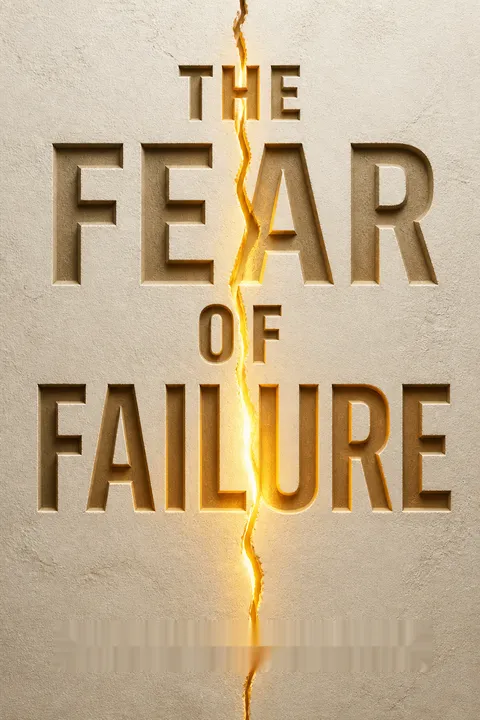


Key Takeaways
Treat fear of failure as a survival alarm, not a verdict on ability
Fear has a job. Fear prepares the body to fight or flee when it senses danger. The book uses Karl Albrecht’s model of five core fears: death, bodily harm, loss of control, separation, and humiliation. Failure can activate these ancient alarms because it seems to threaten a livelihood, relationships, or self-respect. An exam, for instance, may feel like more than a test if the mind links a poor result to future insecurity.
Trace the alarm’s history. Childhood overprotection can deprive someone of practice recovering from mistakes, while ridicule can teach that errors bring shame. Such experiences may help explain adult avoidance, but they do not establish that a person lacks ability. Before treating fear as a command, identify what consequence it predicts and ask whether that prediction fits the situation now.
The survival-alarm metaphor makes avoidance understandable without treating it as destiny. That distinction matters: shame tends to narrow behavior, while curiosity makes it possible to inspect a reaction. The childhood account is plausible as one influence, not a complete explanation for every adult fear. Temperament, current financial pressure, discrimination, and genuine risk also shape what feels dangerous. A useful question is not simply whether fear is rational, but what evidence would distinguish a protective warning from an outdated one.
Replace all-or-nothing failure with feedback you can use on the next attempt
A setback is information. In a study described in the book, dieters ate the same amount of pizza, but those who believed they had eaten a large portion later ate more cookies. Feeling that the diet was already ruined made further choices easier to abandon. The lesson is to treat a lapse as one event, not proof that the whole effort has failed.
Success hides its scaffolding. The book compares visible achievement to an iceberg: audiences see the medal, not years of training or earlier setbacks. Jeff Bezos’s ventures included the Fire Phone, which Amazon reportedly lost $170 million on, as well as other failed products. Their stories show that failure can inform later decisions, not that every failed attempt automatically leads to success. A growth mindset means treating abilities as developable through learning and effort.
The pizza experiment captures a powerful behavioral pattern: a perceived lapse can become permission to give up, even when the original mistake is small. This resembles the logic of abstinence violations, where one broken rule is misread as total collapse. The practical correction is to resume at the next decision rather than wait for a clean slate. The iceberg image is also a useful antidote to social comparison, though visible persistence should not romanticize failure. Feedback only helps when a person can learn from it and adjust.
Put worry on paper, then compare the cost of action with inaction
Separate thinking from looping. Rumination is repetitive thinking that circles a problem without moving toward a decision. Reflection can help when it identifies a cause or next step; replaying an embarrassment or imagining disasters without testing them tends to deepen distress. Cognitive restructuring, the book’s term for reconsidering a negative interpretation, can turn a prediction such as a meeting meaning certain dismissal into a possibility that needs evidence.
Make the risk specific. The book’s five-step worry exercise asks a person to name a concern and worst plausible outcome, consider ways to reduce or repair the harm, assess what inaction will cost, accept what cannot be controlled, and weigh the possible upside. A small next step or a set time for worry can then replace endless analysis. The point is not to guarantee safety, but to make a choice with clearer information.
Writing fears down changes them from a vague atmosphere into claims that can be examined. The comparison with inaction is especially useful because people often scrutinize the risks of change while treating the costs of staying put as zero. The exercise also avoids a common trap in positive thinking: it does not require pretending the worst cannot happen. Its limit is that a personal rating of likelihood is still a judgment, not a forecast. High-stakes decisions benefit from outside expertise and concrete evidence.
Make imperfect progress before perfectionism turns preparation into avoidance
Standards can become a hiding place. The book distinguishes productive striving from maladaptive perfectionism, in which unrealistic expectations, harsh self-criticism, and fear of mistakes encourage delay. A study of 41,000 college students in the United States, Canada, and the United Kingdom found that socially prescribed perfectionism rose 33 percent from 1989 to 2016. The authors suggested social comparison and rising expectations as possible influences.
Practice useful acceptance. Wabi-sabi is a Japanese aesthetic and philosophy that values simplicity and the beauty of imperfection. Kintsugi, the repair of cracked pottery with visible gold-colored seams, offers a vivid image: damage need not be concealed to make something worthwhile. The book also discusses research linking self-compassion with fewer depressive symptoms among people prone to maladaptive perfectionism. Kindness is not an excuse to abandon effort; it can make honest effort sustainable.
This section makes an important distinction between high standards and self-punishment. A person can aim for excellent work while accepting drafts, mistakes, and revision as part of making it. That view aligns with iterative design, where early versions are valuable because they reveal what needs improvement. The social trend data are suggestive, not proof that social media caused perfectionism to rise. The stronger practical point is personal: standards should guide work, not make beginning contingent on producing something flawless.
Act first; motivation often arrives after the first manageable step
Shrink the starting line. The book argues that action can generate motivation, rather than motivation always needing to come first. When a project feels too large, divide it into small tasks and choose one that can begin now. Its suggested tools include planning tomorrow’s tasks the night before, identifying one priority, and using the Pomodoro technique: work in 25-minute intervals with short breaks.
Use structure, not waiting. Parkinson’s law describes how work can expand to fill the time available, so the book recommends realistic but firm deadlines. For moments when hesitation takes over, its 3, 2, 1, Go! method uses a brief countdown to prompt movement before excuses gather. These methods do not make hard work effortless. They reduce the friction of starting and give progress a chance to build momentum.
The shift from waiting for a feeling to taking a small action is a behavioral activation principle: behavior can change mood, rather than mood being a prerequisite for behavior. The tools work best when the first step is genuinely small and the deadline realistic. Overly aggressive timing can create rushed work or deepen burnout, while rigid productivity routines can become another perfectionist standard. The useful test is whether a method gets someone into meaningful work with less negotiation, not whether it maximizes every minute.
Practice rejection instead of rejecting yourself before anyone can answer
An unanswered request is still possible. The author describes Jia Jiang’s Rejection Therapy challenge: he deliberately made requests likely to be refused, including asking strangers for favors. Over time, he found rejection less overwhelming and sometimes learned why someone said no. The book suggests a smaller version: make ten attempts toward a goal or seek ten rejections within 90 days.
Ask before deciding for others. The author recounts delaying a salary conversation for six months, then receiving a raise after finally requesting a performance review. She also cites a survey in which two-thirds of people who felt underpaid had never asked for a raise; among those who did ask, 70 percent reportedly received one. These figures do not promise a yes. They illustrate how self-rejection can close a door before another person has a chance to respond.
Rehearsing rejection in low-stakes situations can make a feared social outcome more familiar and less mysterious. The deeper point is about information: a request produces an answer, while avoidance preserves uncertainty. Still, rejection practice should not become a contest in tolerating disrespect or ignoring clear boundaries. A useful request is specific, proportionate, and open to a no. In that form, courage is not certainty of success; it is willingness to learn what the other person actually thinks.
Build a circle that normalizes the effort your goal requires
Make effort social. The book argues that friends, mentors, and communities influence what feels normal and achievable. Someone trying to become more active might find a group at a gym; a new entrepreneur might seek peers or a mentor who understands the work. These relationships can provide encouragement, practical feedback, and examples of how others handle setbacks.
Choose influence deliberately. The author recommends noticing whether close relationships and media habits support a person’s aims or repeatedly undermine them. The point is not to discard anyone who is struggling, or to surround oneself only with high-status people. It is to seek environments where the desired behavior is visible and where effort is supported. Online groups and interviews with experienced people can extend that circle when local options are limited.
A community changes more than morale. It can provide accountability, useful knowledge, and a shared vocabulary for dealing with setbacks, all of which make persistence less lonely. The advice is strongest when understood as choosing contexts, not ranking people as winners or failures. The claim that a person becomes the average of a fixed number of friends is too neat to function as a law. Relationships are reciprocal, and people often need different kinds of support at different stages.
Guard attention from quick rewards that make meaningful work feel dull
Discipline competes with distraction. The book presents dopamine as part of the brain’s motivation and reward systems. It describes experiments in which rats repeatedly pressed a lever associated with stimulation, and argues that frequent, highly rewarding activities can make effortful tasks seem less appealing by comparison. The author proposes a dopamine detox: setting aside a day with fewer high-stimulation activities, or taking a break from one particular habit.
Change the pattern, not your biology overnight. The author describes deleting Instagram for six months and finding it easier to focus. The practical lesson is to notice which activities consume attention and make deliberate limits, rather than relying only on willpower. The book also recommends using enjoyable activities as rewards after work, while warning against using harmful addictions as incentives.
Reducing notifications or compulsive scrolling can create room for sustained attention, and the author’s personal experiment illustrates how a deliberate break can alter routines. The phrase dopamine detox, however, can suggest that dopamine itself is a toxin to remove. It is not; dopamine serves multiple functions, and a day away from stimulating media should not be mistaken for a literal neurochemical cleanse. A more grounded interpretation is a trial of changing cues and access, then observing whether focus and wellbeing improve.
Use body, nature, and gratitude to interrupt fear’s mental loop
Return attention to the present. The book recommends five stress practices: mindfulness, a daily intention, breathing exercises, time in nature, and gratitude. Mindfulness means attending to present thoughts, feelings, and sensations without immediately judging them. A body scan or a simple inventory of what can be seen, touched, heard, smelled, and tasted can redirect attention from spiraling thoughts.
Make calm repeatable. Slow belly breathing, a short walk outdoors, or choosing one intention for the day offers a practical way to pause. The author also suggests naming three specific things to appreciate, even on an ordinary day, and varying the format so gratitude does not become a chore. These practices are presented as regular supports for balance, not as a way to erase fear or guarantee that difficult circumstances will disappear.
These practices share a useful feature: each gives attention a concrete anchor, whether breath, sensory detail, a chosen intention, or a particular moment worth appreciating. That can interrupt abstract worry long enough for a person to regain perspective. Gratitude is most credible when it makes room for difficulty rather than demanding that people call every hardship a gift. Mindfulness and breathing can support everyday regulation, but severe or persistent distress may require professional care beyond a self-guided routine.
Analysis
The book’s central argument is that fear of failure is less a forecast of incompetence than a learned response to possible loss: status, security, belonging, or self-respect. Its proposed remedy works across several levels. Reinterpret mistakes as information, interrupt repetitive thought, lower the threshold for beginning, practice asking despite possible refusal, and shape the social and sensory environment around sustained effort. The narrative matters because the author’s own pattern of starting ventures and quitting after obstacles supplies a concrete case of the cycle she wants readers to break.
The strongest practical insight is the shift from emotional readiness to observable behavior. A small action, a direct request, or a written appraisal of risks creates information that rumination cannot provide. This is compatible with cognitive behavioral approaches, which distinguish a thought from a fact, and with behavioral activation, which uses action to alter mood and momentum. The book is also right to distinguish a recoverable setback from a global verdict on the self. Its examples make that distinction memorable.
The argument is less reliable when it turns broad claims into near-universal rules. Fear can sometimes track real danger, and not every person has the same ability to absorb financial or social risk. Likewise, intelligence, talent, relationships, and structural opportunity cannot be reduced to mindset or discipline. The discussion of dopamine detox is especially vulnerable to metaphor becoming mechanism: reducing distracting habits may help, but it does not literally cleanse the brain. The book is most valuable when read as a practical invitation to experiment, not a guarantee that courage alone overcomes every constraint. Its durable message is modest and useful: replace imagined certainty with a next step that can teach you something.
Review Summary
The Fear of Failure by Wilda Hale receives mostly positive reviews, with an average rating of 4.09 out of 5. Readers appreciate its practical advice on overcoming fear, procrastination, and perfectionism. Many find it inspiring and motivational, praising the author's writing style and relatable content. Some readers report implementing the strategies in their daily lives with success. However, a few critics find the book simplistic or repetitive, suggesting it could have been more concise. Overall, most readers recommend it as a helpful resource for personal growth and overcoming fear of failure.
People Also Read





Glossary
The five core fears
Basic threats behind fearA model attributed in the book to Karl Albrecht that groups deep fears into five categories: extinction, mutilation, loss of autonomy, separation, and ego death or humiliation. The model helps explain why seemingly ordinary challenges, such as an exam or public presentation, can feel threatening when they seem connected to survival, control, belonging, or personal worth.
Rumination
Repetitive, unproductive thinkingA pattern of repeatedly revisiting distressing events, mistakes, or possible threats without reaching a useful decision. The book distinguishes it from focused reflection, which identifies a specific problem and moves toward a solution. Rumination can intensify worry and leave a person mentally stuck rather than better prepared to act.
Cognitive restructuring
Reframing a negative interpretationA technique for identifying a negative interpretation and considering whether it is the only explanation supported by the facts. For example, a request to meet with a manager may prompt an assumption of impending dismissal, even though the meeting could concern routine work. The technique does not insist on a positive interpretation; it tests the original one.
Growth mindset
Abilities can developA way of thinking in which abilities are treated as capable of development through learning, effort, and practice, rather than as fixed traits. In the book, this outlook encourages people to approach challenges, accept useful feedback, and treat setbacks as information. It contrasts with a fixed mindset, which can interpret failure as proof of permanent inability.
Wabi-sabi
Beauty in imperfectionA Japanese aesthetic and philosophical concept presented in the book as appreciation for simplicity, imperfection, and the passage of time. It offers a counterweight to the demand that people and their work appear flawless. The related craft of kintsugi repairs broken pottery while making the repaired seams visible.
Pomodoro technique
Timed work and breaksA time-management method that divides work into focused intervals, commonly 25 minutes, followed by short breaks. The book recommends it to make intimidating tasks feel more manageable and to build breaks into a work period. After a longer stretch of intervals, a more substantial break can help prevent continuous work from becoming exhausting.
Parkinson’s law
Work expands to available timeThe principle that a task can expand to fill the time allocated for its completion. The book applies it by recommending specific, reasonable deadlines rather than leaving a task open-ended. The principle is a planning prompt, not a guarantee that every task can be completed faster without affecting quality.
Rejection Therapy
Practice facing refusalsA challenge described through Jia Jiang’s deliberate practice of making requests that might be rejected. By repeatedly facing the possibility of hearing no, a participant can become less avoidant and learn that rejection is not always as painful or personal as anticipated. The book adapts the idea into a challenge of making repeated attempts toward a goal.
3, 2, 1, Go!
Countdown to prompt actionA brief self-prompt in which a person counts down and begins a task before extended deliberation produces more excuses. The book presents it for manageable actions that feel uncomfortable but are not genuinely dangerous, such as starting a workout or initiating a conversation. It is a cue to move, not a substitute for judgment about risk.
Dopamine detox
Reduce stimulating habitsThe book’s label for taking a planned break from highly stimulating activities, such as social media, television, or junk food, in order to make sustained effort feel more approachable. The phrase is metaphorical: the practice means changing habits and exposure, not removing dopamine from the brain or medically detoxifying it.
FAQ
1. What’s "The Fear of Failure" by Wilda Hale about?
- Overcoming Fear and Inaction: The book explores how fear of failure holds people back from taking action, achieving goals, and living fulfilling lives.
- Practical Strategies: Wilda Hale provides actionable advice to help readers become action takers, stop worrying, and overcome procrastination and perfectionism.
- Psychological Insights: The book delves into the origins of fear, the impact of childhood experiences, and the role of mindset in personal growth.
- Tools for Change: Readers are guided through techniques to manage their inner critic, reframe failure, and build resilience, with the aim of living life on their own terms.
2. Why should I read "The Fear of Failure" by Wilda Hale?
- Universal Struggle: The fear of failure is a common obstacle that affects people in all areas of life, from careers to relationships.
- Actionable Advice: The book offers step-by-step methods and real-life examples to help readers break free from self-doubt and inaction.
- Mindset Transformation: It teaches how to shift from a fixed to a growth mindset, making setbacks less intimidating and more productive.
- Holistic Approach: The book addresses not just fear, but also related issues like perfectionism, procrastination, and stress, providing a comprehensive toolkit for self-improvement.
3. What are the key takeaways from "The Fear of Failure" by Wilda Hale?
- Fear is Normal, Not Fatal: Fear serves as a survival mechanism, but when it becomes paralyzing, it must be addressed.
- Mindset Matters Most: Adopting a growth mindset and reframing failure as feedback are crucial for progress.
- Action Over Perfection: Taking imperfect action is more valuable than waiting for the perfect moment or outcome.
- Practical Tools: Techniques like the "3,2,1, Go!" method, dopamine detox, and self-compassion are highlighted as effective ways to overcome procrastination and self-criticism.
4. How does Wilda Hale define and explain the fear of failure in "The Fear of Failure"?
- Survival Mechanism: Fear is described as a natural response designed to protect us from threats, but it can become maladaptive.
- Core Fears: The book references Dr. Karl Albrecht’s five core fears—extinction, mutilation, loss of autonomy, separation, and ego death—as underlying sources of the fear of failure.
- Childhood Roots: Early experiences with overprotective or critical caregivers can program individuals to avoid failure and view mistakes negatively.
- Emotional and Biochemical Responses: Fear triggers both universal physical reactions (fight or flight) and individualized emotional responses, influencing behavior and decision-making.
5. What practical strategies does "The Fear of Failure" by Wilda Hale offer to overcome procrastination and perfectionism?
- Break Tasks Down: Use detailed to-do lists and break large tasks into small, manageable steps to reduce overwhelm.
- Embrace Imperfection: Adopt the mindset of "just do it badly" to bypass the paralysis of perfectionism and start taking action.
- Time Management Tools: Apply the Pomodoro technique, set strict deadlines, and use Parkinson’s Law to increase productivity.
- Action Before Motivation: Start with small actions to build momentum, as motivation often follows action rather than precedes it.
6. How does "The Fear of Failure" by Wilda Hale address the role of mindset in overcoming fear and achieving success?
- Growth vs. Fixed Mindset: Drawing on Carol Dweck’s research, the book contrasts the growth mindset (embracing challenges, learning from setbacks) with the fixed mindset (avoiding risks, seeing failure as final).
- Mindset is Malleable: Anyone can develop a growth mindset through continuous learning, perseverance, openness to feedback, and celebrating others’ successes.
- Reframing Failure: The book encourages viewing failure as feedback and a necessary part of the journey toward achievement.
- Visualization and Self-Talk: Techniques like reframing fear as excitement and visualizing positive outcomes help shift mindset from threat to opportunity.
7. What are the "3 secret ingredients for achievement" according to Wilda Hale in "The Fear of Failure"?
- Courage: Taking risks, facing rejection, and acting despite self-doubt are emphasized as more important than intelligence for success.
- The People Around You: Surrounding yourself with positive, growth-oriented individuals and communities is crucial for personal development.
- Self-Discipline: Consistency, delayed gratification, and managing dopamine-driven distractions are key to long-term achievement.
8. How does "The Fear of Failure" by Wilda Hale suggest dealing with overthinking and the inner critic?
- Recognize Rumination: Understand the difference between helpful problem-solving and destructive overthinking.
- Cognitive Techniques: Use cognitive restructuring to challenge negative thoughts and reframe them more realistically.
- Detachment Exercises: Visualize the inner critic as a separate entity (e.g., placing it in your palm or singing its words) to reduce its power.
- Self-Compassion: Practice speaking to yourself with kindness, as you would to a friend, to counteract harsh self-judgment.
9. What is the "dopamine detox" method in "The Fear of Failure" by Wilda Hale, and how does it help with motivation?
- Understanding Dopamine: The book explains how high-dopamine activities (social media, junk food, TV) make less stimulating tasks seem boring.
- Dopamine Detox Practice: Designate one or more days per week to abstain from high-dopamine activities, allowing your brain to reset.
- Increased Motivation: After detoxing, tasks that previously felt tedious become more appealing, making it easier to focus and be productive.
- Use Rewards Wisely: Reserve enjoyable activities as incentives for completing important, less stimulating tasks.
10. What are the main stress management and self-care techniques recommended in "The Fear of Failure" by Wilda Hale?
- Mindfulness: Engage in present-moment awareness through activities like the five senses exercise, focus objects, and body scans.
- Daily Intention: Set a guiding intention each morning to shape your mindset and actions for the day.
- Breathing Exercises: Practice belly breathing, 3-6-9 breathing, and color breathing to reduce anxiety and tension.
- Nature and Gratitude: Spend time outdoors and keep a gratitude journal to boost mood and resilience.
11. What are the most important quotes from "The Fear of Failure" by Wilda Hale, and what do they mean?
- "The only thing we have to fear is fear itself." (FDR): Highlights that fear is often the biggest obstacle, not the actual challenges.
- "It is impossible to live without failing at something unless you live so cautiously that you might as well not have lived at all, in which case you have failed by default." (J.K. Rowling): Emphasizes that avoiding risk is its own form of failure.
- "Action leads to motivation, not the other way around." (Book’s core message): Encourages readers to start with small actions to build momentum.
- "Easy choices, hard life. Hard choices, easy life." (Jerzy Gregorek): Reminds readers that short-term comfort leads to long-term dissatisfaction, while embracing challenges leads to fulfillment.
12. How can readers best apply the advice from "The Fear of Failure" by Wilda Hale to their own lives?
- Start Small and Practice: Implement one technique or mindset shift at a time, rather than trying to overhaul everything at once.
- Track Progress: Regularly review your growth, mistakes, and improvements to stay motivated and accountable.
- Revisit and Reflect: Return to the book’s chapters as needed, since forming new habits and overcoming fear is an ongoing process.
- Celebrate Imperfect Progress: Focus on consistent action and self-compassion, understanding that setbacks are part of the journey toward lasting change.
Download PDF
Download EPUB
.epub digital book format is ideal for reading ebooks on phones, tablets, and e-readers.








