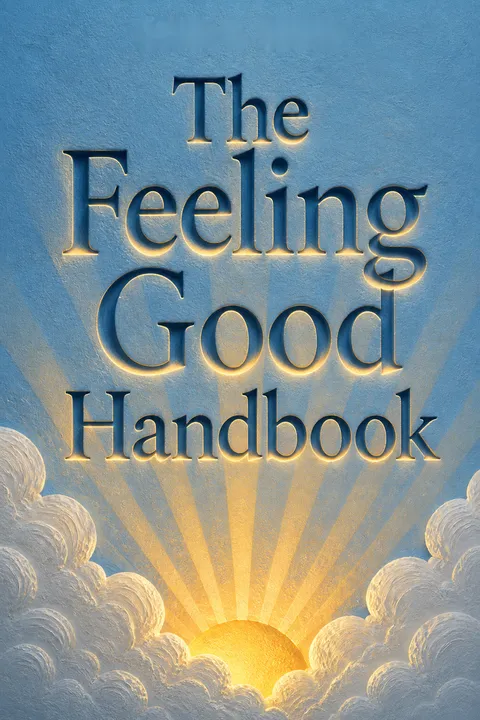


Key Takeaways
Change the interpretation, not the facts, to loosen a mood's grip
Thoughts shape reactions. Burns begins with his newborn son struggling to breathe. He imagined lasting brain damage and felt panic. Writing down the thought that his son’s intelligence might determine his own worth helped him see another possibility: love and closeness did not depend on a child’s future abilities. His fear eased as his interpretation changed, before the medical uncertainty was resolved.
Events still matter. The central claim is that interpretations strongly influence feelings, not that external events are irrelevant. A delayed train, criticism, or rejection can hurt; the mind adds predictions, blame, or judgments that may intensify the hurt. Noticing that added layer creates room to respond differently without pretending the original problem is harmless.
The opening story makes cognitive therapy memorable because the therapist is not exempt from panic. Its useful insight resembles appraisal models in psychology: the meaning assigned to an event helps shape the emotional response. The limit matters just as much. A thought record cannot make a dangerous situation safe or erase grief, discrimination, or material hardship. Reappraisal is most helpful when it widens the picture, not when it is used to talk someone out of an accurate perception.
Measure your mood, but don't mistake distress for disorder
Track the pattern. Burns offers the Burns Depression Checklist, with 15 symptom areas, and the Burns Anxiety Inventory, with 33. Each item is rated from 0 to 3, and the scores can be repeated weekly to show whether mood is improving or worsening. He distinguishes depression, often linked to perceived loss, from anxiety, which centers on anticipated danger. Ordinary sadness or nerves, however, do not by themselves establish a disorder.
Feelings can be useful. The book asks whether a negative feeling is realistic, persistent, impairing, or pointing toward an unresolved problem. Grief after a death and anger at unfair treatment may deserve acceptance and expression, not immediate correction. The checklists are described as mood thermometers, not substitutes for a professional assessment, especially when symptoms are severe or suicidal thoughts appear.
Repeated measurement can correct a common memory bias: people often judge progress by how they feel today, rather than by the pattern across weeks. It also gives a patient and clinician a shared basis for adjusting care. Yet a score compresses a complex life into a number. It cannot distinguish grief from illness, or reveal whether distress comes from a harmful environment. The book is strongest when measurement supports conversation, rather than replacing context and judgment.
Write the thought down before trusting its verdict
Use a written record. The Daily Mood Log is Burns’s structured form for examining an upsetting moment. It asks the reader to describe what happened, name and rate feelings, record the thoughts that accompanied them, and answer those thoughts with more balanced responses. The final step is to reconsider how strongly each thought is believed and whether the mood has shifted.
Specificity exposes assumptions. Marge, a grandmother, accidentally let one grandchild use another’s toothbrush. She feared the child would get sick and that her daughter would blame her. On paper, she could separate the actual mistake from predictions about illness and condemnation. The point is not to prove nothing bad can happen. It is to distinguish known facts from feared outcomes and decide what response is proportionate.
Putting a thought on paper creates psychological distance: an internal verdict becomes a claim that can be examined. This is a practical form of metacognition, the ability to notice one’s own thinking rather than simply obey it. The exercise can also become another perfectionistic chore, or a way to intellectualize feelings that need expression. Its best use is brief and concrete, followed by a real-world step when the problem calls for action.
Test a thought like a claim, not a command
Name the distortion. Burns calls recurring reasoning errors cognitive distortions. They include all-or-nothing judgments, treating one setback as a permanent pattern, mind-reading, predicting disaster, ignoring positive evidence, rigid shoulds, and labeling a person by a mistake. Naming the pattern can reveal why a thought feels convincing without making it accurate.
Choose a test. The book offers several ways to challenge a thought: examine evidence, ask what you would say to a friend, survey other people, define a loaded label, or run a small experiment. Someone convinced that nobody likes her, for instance, might invite friends to lunch and compare the prediction with their actual responses. The goal is neither blind optimism nor self-defense. It is a fairer account of what happened and what remains uncertain.
This toolkit turns emotional reasoning into a kind of everyday hypothesis testing. Behavioral experiments are especially powerful because they generate new evidence instead of merely replacing one sentence with a sunnier one. Still, social experiments are not perfect measurements: one person’s response cannot establish what everyone thinks. The useful habit is intellectual humility. A prediction can be wrong, partly right, or untestable, and each case calls for a different response.
Separate your worth from your latest performance
Follow the fear downward. The Vertical Arrow Technique starts with an upsetting thought and asks what it would mean if it were true. Repeating that question can uncover a deeper rule, such as believing that failure makes a person unlovable. Burns then suggests weighing the costs and benefits of that rule, testing it, and facing the feared outcome in imagination.
A mistake is not an identity. One patient, a teacher who felt defective, began to distinguish having shortcomings from being defective as a person. That distinction helped him consider practical changes without treating every weakness as proof of worthlessness. The book’s aim is both self-acceptance and responsibility: acknowledge a mistake, learn from it, repair harm where possible, and avoid turning one action into a total verdict on the self.
Separating identity from performance has a close connection to self-compassion: people can face errors more honestly when shame is not consuming the whole self. This does not mean every behavior is acceptable or consequences disappear. The stronger position combines stable human worth with clear accountability. That balance avoids both self-condemnation and the defensive move of blaming everyone else.
Begin the task before waiting to feel ready
Action can create motivation. Burns argues that procrastinators often wait for the right mood before beginning, even when the task is predictably unpleasant. He recommends choosing one concrete task, weighing the costs of delay against starting, scheduling a specific time, and breaking the work into small steps or short sessions.
Replace task-blocking thoughts. The TIC-TOC Technique names two kinds of inner speech: Task-Interfering Cognitions, which make a job seem impossible or dreadful, and Task-Oriented Cognitions, which focus on the next workable action. Burns describes stalling for ten days on a book revision because he felt it had to become a bestseller. Reframing the aim as writing a useful book helped him resume. He also warns that procrastination can signal a goal one does not truly want.
The method fits behavioral activation, where doing a manageable activity can precede and generate motivation rather than wait for it. It also usefully separates genuine choice from avoidance: a person may need to revise the goal, not merely force compliance. But chronic fatigue, depression, attention difficulties, caregiving, and structural overload can make tasks hard for reasons beyond distorted thinking. Breaking work down helps, but support and changed conditions may also be needed.
Approach feared situations in steps, and let anxiety crest
Fear feeds on avoidance. Burns describes panic as a loop: a frightening prediction increases bodily arousal, the sensations seem to confirm danger, and escape brings short-term relief that strengthens future avoidance. His tools include writing down the prediction, checking it against evidence, approaching a feared situation gradually or all at once, and allowing anxiety to rise and pass rather than treating it as proof of catastrophe.
Test carefully. A patient afraid that exercise would cause a heart attack had already received reassuring medical evaluations. In a supervised therapy setting, she tested whether she could stand, walk, and jog; the feared collapse did not occur, and her panic eased. That is not a reason to self-test unexplained chest pain. Medical symptoms need appropriate evaluation, and exposure should be planned safely, especially when health conditions may be involved.
Exposure works partly by teaching the nervous system that a feared cue can be tolerated without the predicted disaster. It also interrupts avoidance, which can preserve fear even when the original danger is absent. The important nuance is that exposure targets disproportionate fear, not reasonable caution. A clinician should help distinguish panic sensations from medical emergencies and tailor the pace to the person rather than turning courage into another demand for perfection.
Replace winning the argument with understanding the other person's complaint
Listen before defending. Burns’s Five Secrets of Intimate Communication combines three listening moves with two ways of expressing oneself. The listener finds a true part in criticism, paraphrases what the other person means, names the feelings that may be present, and asks gentle questions. The speaker uses statements about personal feelings rather than accusations, and offers sincere signs of respect even during conflict.
Agreement is not surrender. A spouse who hears that they never listen might acknowledge that the other person feels ignored, ask for a specific example, and say how the complaint lands for them. This is different from agreeing with every accusation or abandoning a boundary. The aim is to move from rival claims about who is right toward clearer information about hurt, anger, and what each person needs.
The approach resembles active listening and conflict de-escalation: people often soften when they feel accurately understood, even before a solution exists. Its distinctive move is to concede a valid detail rather than counterattack. That move should remain voluntary and bounded. In coercive or abusive relationships, safety and firm limits matter more than preserving a symmetrical conversation, and no communication technique makes another person safe or reasonable.
Agree on a concrete therapy target and track whether it changes
Make progress visible. Burns urges therapists and patients to choose a specific problem rather than work toward vague aims such as fixing an identity crisis or feeling better about everything. Weekly mood scores, written exercises, and review of what happened between sessions can show whether the chosen approach is helping. If it is not, the patient and therapist can discuss a different method or seek additional support.
Self-help has evidence, with limits. The book reports studies of Burns’s earlier title, Feeling Good, not this handbook. In one study of 80 people with major depression, 70 percent of those given the earlier book no longer met diagnostic criteria after four weeks; a three-year follow-up reported that 72 percent still did not meet those criteria. These results support guided practice, not a guarantee for every reader.
Specific goals and repeated measures resemble measurement-based care: treatment becomes a testable collaboration rather than an indefinite conversation. The reported bibliotherapy findings are encouraging, but they come from selected studies of an earlier book, and long-term follow-up cannot by itself establish what caused each person’s recovery. A careful reader can take the practical lesson, track change, while avoiding the leap from a promising result to a universal cure.
Treat medication as one tool, not proof of a chemical defect
Avoid a false binary. Burns’s 1999 edition questions the claim that depression and anxiety are simply caused by a known chemical imbalance. It argues that no laboratory test identified such an imbalance as the cause, while acknowledging that medication can help some people. The author generally favors psychotherapy alongside medication when medication is used, rather than treating drugs as the whole answer.
Use clinical guidance. The book surveys antidepressants, mood stabilizers, anti-anxiety drugs, side effects, and interactions. It warns that some tranquilizers can cause dependence, MAO inhibitors require strict food and drug precautions, and lithium requires blood monitoring. This material is a historical guide, not a current prescribing manual. Decisions about starting, changing, or stopping medication belong with a qualified prescriber who knows the patient’s medical history.
The book’s useful corrective is that a biological explanation should not erase relationships, thought patterns, or life circumstances. Its caution also needs updating: the absence of a simple diagnostic test does not mean biology is irrelevant, and medication evidence varies by condition and person. The sound modern stance is plural rather than partisan. Psychological, social, and biological factors can interact, so treatment should be individualized and monitored.
Analysis
The Feeling Good Handbook is a wide-ranging self-help and clinical reference organized around a practical thesis: moods are influenced by interpretations, behavior, and relationships, and these can be examined and changed. Its structure moves from mood assessment to cognitive methods, procrastination, anxiety, communication, medication, and therapist practice. That breadth is both its strength and its summarizing challenge. It is not one argument repeated ten times, but a toolkit whose pieces work best together.
The most useful organizing idea is a feedback loop. A painful event prompts an interpretation; the interpretation shapes emotion; emotion influences avoidance, argument, or withdrawal; those behaviors can then reinforce the original belief. The Daily Mood Log interrupts that loop by making thoughts visible, while behavioral experiments and communication exercises test them in life. This gives the book more practical depth than simple positive thinking. It also explains why Burns insists on writing: the reader needs to observe an actual thought, not merely agree with a theory about thoughts.
The book’s strongest restraint is its recognition that negative feelings can be appropriate. Its strongest risk is that the central cognitive model can be overstated if a reader hears that thoughts alone create suffering. External danger, illness, grief, unequal power, and material hardship matter. Reframing should clarify choices, not invalidate reality. The medication discussion also reflects a 1999 landscape and should be read historically, not as current prescribing advice.
The adaptation therefore preserves the book’s practical spine while distinguishing tools from guarantees. Mood scales are prompts for discussion, not diagnoses. Exposure is not reckless self-testing. Assertive communication is not a substitute for safety. These qualifications do not weaken the core method; they help place it where it is most useful, as structured self-observation combined with appropriate action, professional care, and respect for context.
Review Summary
The Feeling Good Handbook receives mostly positive reviews for its cognitive behavioral therapy approaches to managing depression, anxiety, and other mental health issues. Readers find the exercises and techniques helpful, though some criticize the dated examples and gendered language. The book is praised for its practical advice on changing thought patterns, but some caution it may not be suitable for severe depression. Many readers report significant improvements in their mental health after applying the book's methods.
People Also Read








Glossary
Cognitive behavioral therapy
Thought and behavior treatmentA form of psychotherapy that examines how interpretations and behaviors contribute to emotional distress, then uses structured exercises to change unhelpful patterns. In this book, it includes written thought records, behavioral experiments, exposure to feared situations, and practical communication training. It is presented as a skill-building treatment, not merely a way to think positively.
Automatic Thoughts
Fast, distressing interpretationsImmediate thoughts that arise in response to an event and help shape the resulting emotion. A person criticized at work might instantly conclude that everyone thinks they are incompetent. Burns asks readers to record these thoughts, estimate how strongly they believe them, and examine whether the conclusions are accurate.
Cognitive distortions
Habitual reasoning errorsRecurring patterns of inaccurate or unhelpful thinking that can intensify negative moods. Examples include treating a partial setback as total failure, predicting a bad outcome without evidence, assuming one knows what others think, dismissing positive evidence, and labeling a whole person by one mistake. The categories help identify how a thought may be misleading.
Daily Mood Log
Written mood examinationA structured worksheet for examining a specific upsetting situation. The user records the event, names and rates emotions, writes down associated thoughts, identifies distortions, and develops more balanced responses. Re-rating belief and mood afterward helps show whether the exercise changed anything. It is a self-help tool, not a diagnostic instrument.
Vertical Arrow Technique
Trace a thought to its ruleA questioning method that follows an upsetting thought toward the deeper meaning attached to it. The person asks what it would mean if the thought were true, then repeats the question to uncover assumptions about worth, approval, failure, or safety. Those assumptions can then be evaluated for their costs, benefits, and realism.
Feared Fantasy Technique
Practice facing imagined rejectionA role-play or writing exercise in which a person deliberately imagines a feared criticism or rejection and practices responding to it. The goal is to test whether the feared judgment is truly unbearable and to build self-acceptance. It can be done with a therapist or, when appropriate, as a structured written exercise.
Acceptance Paradox
Accept feelings to reduce their gripBurns’s term for the idea that fighting or condemning a feeling can intensify it, while acknowledging it can make it easier to manage. Acceptance does not mean approving of harmful behavior or giving up on change. It means recognizing what is being felt before deciding how to respond.
TIC-TOC Technique
Replace task-blocking thoughtsA method for procrastination that distinguishes Task-Interfering Cognitions, thoughts that make work seem impossible or intolerable, from Task-Oriented Cognitions, practical thoughts focused on the next action. The user identifies a discouraging thought, notices its distortion, and replaces it with a realistic prompt that supports beginning.
Five Secrets of Intimate Communication
Listening and speaking skillsA communication framework with three listening skills and two self-expression skills. The listener finds a valid part in what is said, reflects the other person’s meaning and feelings, and asks questions. The speaker uses personal feeling statements and expresses genuine respect. The aim is understanding and connection, not winning an argument.
Burns Depression Checklist
Self-rated depression measureA 15-item checklist in which a person rates common symptoms from 0 to 3. It is intended to help monitor changes in mood over time and support discussion with a clinician. Burns presents it as an emotional thermometer, not as a replacement for professional assessment or a stand-alone diagnosis.
Burns Anxiety Inventory
Self-rated anxiety measureA 33-item checklist covering anxious feelings, thoughts, and physical sensations. Each symptom is rated from 0 to 3 to track changes across time or situations. Like the depression checklist, it is a monitoring aid rather than a definitive diagnosis, and severe or persistent symptoms warrant professional evaluation.
FAQ
What's The Feeling Good Handbook about?
- Cognitive Therapy Focus: The book introduces cognitive therapy as a scientifically tested method for overcoming depression and improving mood by emphasizing the connection between thoughts, feelings, and behaviors.
- Self-Help Techniques: It offers practical self-help techniques that readers can use to manage their moods without medication or extensive therapy.
- Empowerment Through Understanding: Author David D. Burns, M.D., aims to empower readers by helping them understand how their thoughts influence their emotions, enabling them to take control of their mental health.
Why should I read The Feeling Good Handbook?
- Proven Methods: The book presents clinically proven methods for treating depression, making it a valuable resource for those struggling with mood issues.
- Accessible Language: Dr. Burns writes in an engaging and accessible manner, simplifying complex psychological concepts for the general reader.
- Practical Applications: It provides exercises and techniques that readers can implement immediately to improve their mental well-being.
What are the key takeaways of The Feeling Good Handbook?
- Thoughts Create Feelings: The book emphasizes that "your moods are created by your cognitions," meaning your thoughts directly affect your emotions.
- Cognitive Distortions: It identifies ten common cognitive distortions that contribute to negative thinking and depression, such as all-or-nothing thinking and overgeneralization.
- Self-Help Techniques: Techniques like the "triple-column technique" and "Daily Record of Dysfunctional Thoughts" help readers challenge and change negative thoughts.
What are the best quotes from The Feeling Good Handbook and what do they mean?
- "You feel the way you think.": This quote encapsulates the book's core message that our thoughts shape our emotions, suggesting that changing thinking patterns can alter emotional responses.
- "Your thoughts create your emotions.": It reinforces the power of cognition in influencing feelings, highlighting the potential for cognitive restructuring to improve mental health.
- "There is no such thing as a worthless human being.": This statement combats feelings of inadequacy and guilt, reminding readers of their inherent value despite mistakes or failures.
What are cognitive distortions in The Feeling Good Handbook?
- Definition: Cognitive distortions are irrational thought patterns that contribute to negative emotions and behaviors, often leading to skewed perceptions of situations.
- Examples: The book lists ten common distortions, including all-or-nothing thinking, overgeneralization, and labeling, which can exacerbate depression and anxiety.
- Impact on Mental Health: Recognizing and challenging these distortions is crucial for improving mental health, as they can lead to a cycle of negative thinking and emotional distress.
How does the "triple-column technique" work in The Feeling Good Handbook?
- Structure: The technique involves drawing three columns: one for automatic thoughts, one for identifying cognitive distortions, and one for rational responses.
- Process: Readers write down negative automatic thoughts, identify distortions, and then formulate rational, positive responses.
- Goal: This method helps individuals gain insight into their thought patterns, challenge negative beliefs, and replace them with more constructive thoughts.
What is the "Daily Record of Dysfunctional Thoughts"?
- Purpose: This tool tracks negative thoughts and emotions throughout the day, helping individuals identify patterns contributing to mood issues.
- Structure: It includes columns for the triggering situation, emotions felt, automatic thoughts, and rational responses.
- Benefits: Regular use increases awareness of cognitive distortions and teaches healthier responses to negative thoughts.
How can I apply the techniques from The Feeling Good Handbook in my daily life?
- Start with Self-Reflection: Identify negative thoughts and feelings you experience regularly and use the book's techniques to challenge and reframe them.
- Practice Daily Exercises: Incorporate exercises like the triple-column technique and Daily Record of Dysfunctional Thoughts into your routine to build awareness and improve mental health.
- Be Patient and Persistent: Change takes time, so be patient as you practice these techniques. Consistent application will lead to gradual improvement in mood and self-esteem.
What is the "But-Rebuttal" method in The Feeling Good Handbook?
- Definition: The But-Rebuttal method counters negative thoughts that begin with "but" by acknowledging the thought and providing a rational rebuttal.
- Example: For instance, counter "I should go for a run, but I'm too tired" with "I can go for a short run, and I might feel more energized afterward."
- Purpose: This technique challenges excuses and encourages action despite initial reluctance or negative feelings.
How does The Feeling Good Handbook address guilt?
- Understanding Guilt: The book explains that guilt arises from the belief of wrongdoing or failing to meet moral standards, often stemming from cognitive distortions.
- Distinction Between Guilt and Remorse: It differentiates between healthy remorse, which can lead to positive change, and unhealthy guilt, which can be paralyzing.
- Techniques for Managing Guilt: Strategies include identifying cognitive distortions, using the Daily Record of Dysfunctional Thoughts, and reframing "should" statements.
How can I reduce my anger using techniques from The Feeling Good Handbook?
- Identify Hot Thoughts: Recognize the "hot thoughts" that trigger anger, write them down, and analyze them for cognitive distortions.
- Use Empathy and Disarming Techniques: Practice empathy by understanding the other person's perspective and use disarming techniques to agree with them, diffusing anger.
- Cognitive Rehearsal: Visualize how you would like to respond to anger-inducing situations, preparing for real-life scenarios more effectively.
How does The Feeling Good Handbook address the issue of hopelessness?
- Illogical Thinking: Burns explains that hopelessness often stems from distorted thinking rather than reality, which can be challenged and reframed.
- Coping Strategies: The book provides strategies like cognitive restructuring and behavioral activation to help regain control over one's life.
- Encouragement to Seek Help: Burns stresses the importance of seeking professional help when hopelessness becomes overwhelming, advocating for therapy and medication when necessary.
About the Author



Download PDF
Download EPUB
.epub digital book format is ideal for reading ebooks on phones, tablets, and e-readers.








