

Key Takeaways
Build worker power by turning private hardship into organized, durable action
A childhood shaped the cause. Cesar Chavez grew up on his family’s Arizona farm, where his parents and grandparents had made a life on their own land. During the Depression, drought and debt forced the family off it. They became migrant workers, moving among California’s crops, facing unstable wages, discrimination, and crowded or makeshift housing. Chavez later described the difference between being poor on land of your own and being poor with no control over where you worked or lived.
The problem was structural. California agriculture depended on workers who had little legal protection and almost no bargaining power. Farmworkers were excluded from the National Labor Relations Act, which protects many other workers’ right to organize. Chavez concluded that individual appeals could not match growers’ concentrated power. Workers needed an organization capable of negotiating for them and lasting beyond any single protest.
The biographical opening makes a political insight tangible: hardship can reveal how power works, but it does not automatically produce collective action. Chavez’s experience gave him credibility with workers, while his later organizing supplied a structure through which shared grievances could become demands. That distinction matters across labor history. Personal testimony can make an injustice legible; organization gives people a way to act on it. The story also resists a simple hero narrative. The movement’s foundation was built by workers, relatives, organizers, and allies, not by biography alone.
Organize one relationship at a time, then turn trust into institutions
Start where people live. In 1952, organizer Fred Ross persuaded a wary Chavez to join the Community Service Organization, a Latino civil-rights group. Its local campaigns registered voters and challenged problems such as police abuse and neglected neighborhoods. Ross taught Chavez to organize through house meetings and patient conversations, rather than arrive with a finished plan and expect people to follow.
Small wins can teach collective power. In Oxnard, Chavez helped local workers contest a system that steered jobs to Mexican braceros while residents were turned away. Workers collected rejected job-referral cards as evidence of the practice. After a prolonged campaign, local workers gained priority for jobs and wages rose from 65 to 90 cents an hour. The victory faded after Chavez left, but it showed how a grievance, documentation, and coordinated pressure could force a response.
This organizing method treats trust as something built through repeated, useful contact, not as a quality a charismatic leader can simply command. The Oxnard campaign also illustrates a practical sequence: learn the rules, gather evidence, and help affected people act together. That sequence resembles community-based problem solving in many fields, where local knowledge often reveals gaps that formal systems overlook. Its limitation is visible too: a victory without a durable organization can be reversed. The lesson is not merely to win a concession, but to leave people with the capacity to defend it.
Make solidarity cross ethnic lines before employers can divide workers
The strike began with Filipino workers. In September 1965, Filipino grape workers in Delano, organized by Larry Itliong and the Agricultural Workers Organizing Committee, walked out over low pay. Chavez’s National Farm Workers Association had planned to build its strength gradually, but chose to support the strike. Mexican and Chicano workers voted to join, expanding the walkout across dozens of ranches. The two groups had often been separated or set against each other in the fields.
Shared action changed the relationship. Workers from different backgrounds ate, marched, and picketed together. Women took visible roles on picket lines and in meetings, while students, clergy, and unionists brought outside support. The coalition was not based on pretending everyone had the same identity or politics. It linked groups around concrete interests, including wages, safe conditions, and a voice in workplace decisions.
The strike’s origin complicates the familiar image of Chavez as a solitary founder. Itliong and Filipino organizers initiated the walkout; the Mexican-led association helped make it a broader movement. That matters because coalitions are often remembered through their most visible spokesperson, while the less celebrated partners disappear from the story. The example also shows why shared interests need active relationship-building. Difference does not dissolve through slogans, but coordinated work can create trust across lines that employers have used to fragment labor.
Use nonviolence as disciplined leverage, not as passive moral display
Restraint was a strategy. During the Delano strike, Chavez urged pickets not to retaliate against growers, police, or strikebreakers. He believed violence would give authorities grounds to suppress the movement and obscure the workers’ demands. When Kern County officials tried to prohibit pickets from shouting the Spanish word for strike, union members deliberately tested the order. Their arrests drew press coverage and student support, and the restriction was later ruled unconstitutional.
A fast confronted the movement itself. In 1968, as frustration led some members toward sabotage and physical retaliation, Chavez stopped eating to press the union to renew its commitment to nonviolence. The twenty-five-day fast drew thousands of workers to the union headquarters and refocused attention on the dispute. It was both a religious act and a public intervention in the movement’s internal crisis.
Nonviolence here is neither passivity nor a promise that conflict will remain peaceful. It is a way of controlling what the movement does, while making opponents’ coercion visible to a broader audience. The distinction helps explain why the strategy could build support beyond the fields. It also carries risks: discipline can demand extraordinary sacrifice from people already under pressure, and leaders cannot assume every participant will accept it. The arrests and the fast show nonviolence working as organizing and communication, not as a substitute for material demands.
Take the conflict to consumers when growers control the local battlefield
A boycott moved the struggle outward. Growers could hire replacements, use local influence, and rely on courts and police in farm towns. The union responded by asking consumers in distant cities not to buy targeted products. The grape campaign relied on volunteers who spoke with shoppers, organized pickets, and persuaded stores to remove California grapes. Farmworkers who had rarely traveled beyond the migrant route became public advocates for their own cause.
Consumer pressure helped bring contracts. After years of striking and boycotting, growers signed contracts in 1970 that included higher wages, hiring halls, health benefits, and joint committees on pesticide use. The book reports that more than 17 million Americans had stopped buying grapes by 1974. The boycott did not replace workplace organizing; it gave workers a way to exert economic and reputational pressure where local power was stacked against them.
The boycott connected a distant consumer choice to conditions hidden in the production chain. Its strength came from turning an abstract labor dispute into a question shoppers could act on, while workers’ own accounts gave the campaign a human face. This is a form of leverage that depends on visibility and public concern, so it is not equally available to every workforce or product. The history suggests a useful rule: outside pressure is most effective when it reinforces workers’ own organization, rather than speaking for them from a distance.
Win laws that give workers a vote, then keep fighting to enforce them
The 1973 violence exposed the limits of protest. After growers turned to the Teamsters and UFW contracts collapsed, strikes brought mass arrests and the deaths of farmworkers Nagi Daifullah and Juan de la Cruz. Chavez concluded that workers needed more than public sympathy and picket lines. California’s Agricultural Labor Relations Act, passed in 1975, gave farmworkers a legal right to organize, vote for a union, and bargain collectively.
A right on paper is not a contract. The new board processed elections, but growers contested results, denied organizers access, and delayed bargaining. When the board ran short of funds, the UFW backed Proposition 14 to protect its resources and worker access. Voters rejected it. The episode showed that legal rights need effective enforcement, stable funding, and public support to make them real.
The law marked a major shift: it recognized farmworkers as people entitled to choose representation, rather than treating their labor as an exception to ordinary workplace rights. Yet the implementation problems make the limits of legislation equally clear. A statute can create procedures and obligations, but it cannot guarantee that agencies will have resources or that powerful employers will comply promptly. The story is a useful corrective to both legal optimism and cynicism. Laws can redistribute power, but only organized constituencies can keep enforcement politically important.
Treat a union contract as infrastructure that must be administered
Winning was only the beginning. UFW contracts established benefits workers had rarely received, including health coverage, paid leave, hiring halls, and seniority rules. A hiring hall is a union-run system that refers workers to jobs according to agreed procedures. But the union had little experience managing thousands of registrations, job dispatches, grievances, and benefit claims. Confusing records and long lines at the hiring hall showed how quickly a hard-won protection could become frustrating if its administration failed.
Workplace rights need practical tools. Organizers had to explain English-language contracts in Spanish, help workers file grievances, and insist that supervisors honor breaks and safety rules. The early difficulties were not proof that contracts were useless. They showed that negotiation must be matched by competent systems and trained representatives who can help workers use the rights they have gained.
This chapter of the story shifts attention from public victories to the quieter labor of implementation. Institutions are judged not only by what they promise, but by whether ordinary people can access them without confusion or delay. That principle applies well beyond unions: a benefit nobody can claim is a benefit in name only. The UFW’s administrative struggles also reveal a familiar asymmetry. Employers may already have professional systems, while a new workers’ organization must build them under pressure and with limited resources.
Protect a movement from becoming too centralized to hear its own members
One organization carried two missions. Chavez wanted the UFW to remain a broad social movement as well as a labor union. Its centralized structure helped serve mobile workers across different regions, but it could also leave local members feeling distant from decisions. After the 1979 lettuce strike, organizers disagreed over whether to prioritize field organizing, boycotts, political work, or stronger local authority. Veteran leaders including Marshall Ganz, Jessica Govea, Jerry Cohen, and Gilbert Padilla eventually left.
Leadership has a cost. Chavez’s interest in Synanon’s group-criticism practice, known as The Game, was meant to settle internal disputes, but some participants found the sessions divisive. These conflicts did not erase the UFW’s gains. They exposed the difficulty of scaling a movement built on personal commitment into a durable institution that shares authority, manages staff, and remains accountable to workers.
The movement’s internal strain is one of its most instructive features because it avoids treating moral purpose as a guarantee of good governance. Centralized leadership can coordinate a dispersed workforce and act quickly; it can also narrow the space for disagreement. The question is not whether a movement should have leaders, but how members can challenge them without being cast as disloyal. A strong cause needs procedures for dissent as much as it needs unity, especially once the organization controls contracts and resources.
Keep farmworker health and housing inside the labor-rights fight
The job’s harms extended beyond wages. The short-handled hoe, called the cortito, forced workers to bend for hours and contributed to chronic back injuries. California banned its use in 1975 after years of organizing and legal pressure. The UFW also pushed employers to restrict dangerous pesticides. In the 1980s, reports of childhood cancer clusters in McFarland intensified concern, although studies described in the book had not established a clear cause.
Housing showed how fragile progress remained. In Monterey County, reporters found workers living in cramped hillside holes and makeshift shelters, sometimes without safe water or toilets. The workers’ conditions revived problems the union had challenged for decades. The book’s point is broader than any single chemical or camp: workplace dignity includes health, housing, and protection from hazards, not just a better hourly rate.
This account broadens labor history from wages and bargaining to the bodily and environmental conditions under which work is done. It also models an important distinction between evidence of serious harm and proof of a specific cause. The cancer reports justified investigation and precaution, but uncertainty should not be converted into a settled scientific conclusion. That caution does not weaken the workers’ case. When people face exposure they cannot control and lack meaningful information, the imbalance itself is a reason for transparency and protection.
Carry the UFW playbook to new workers, but adapt it to their conditions
The workforce changed, the vulnerability persisted. By the 1990s, many California farmworkers were newer immigrants, including Mixtec-speaking workers from Oaxaca. They often relied on labor contractors, lacked information about workplace rights, and faced housing and wage pressures. Arturo Rodriguez, who succeeded Chavez as UFW president, worked with Mexican Indian organizations and supported new organizing campaigns, including efforts among strawberry workers.
The old methods still needed new forms. In 1994, workers at Gallo’s Healdsburg winery voted 81 to 21 for UFW representation, but the company challenged the result and no contract had been reached two years later. The union also pursued contracts through strawberry shipping companies because organizing one farm at a time could leave workers exposed when a grower shut down. Chavez’s legacy was therefore not a finished victory, but an organizing tradition that had to adjust to who worked the fields and how employers structured the business.
The ending is strongest when it treats legacy as a practical question: can new workers use the tools built by earlier campaigns? The shift toward Mixtec organizers and industry-level strawberry strategies reflects a changing labor force and supply chain, not a simple replay of Delano. It also underscores that solidarity depends on language, local leadership, and tactics suited to how work is actually organized. Commemoration has value, but it becomes consequential when it strengthens workers’ ability to bargain and protect one another.
Analysis
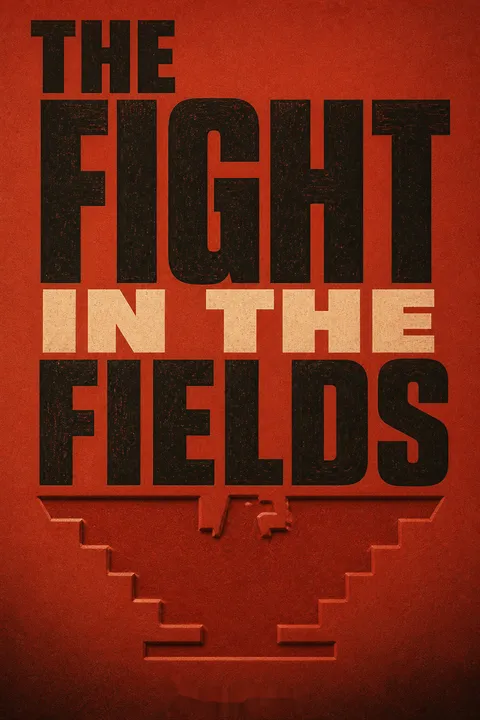
The Fight in the Fields is a history and biography told through an unusually broad cast: workers, organizers, relatives, growers, politicians, journalists, and excerpts from movement-era writing. Its central subject is not simply Cesar Chavez’s life, but the conversion of farmworkers’ isolation into collective power. The narrative moves from the loss of Chavez’s family farm, through community organizing and the Delano strike, to boycotts, legal victories, internal conflict, and renewed campaigns among later immigrant workers.
The book’s strongest insight is that organizing is both a moral claim and a practical craft. Chavez’s credibility came partly from having lived the migrant experience, but the movement depended on patient recruitment, evidence gathering, interethnic alliances, public communication, and sustained negotiation. The grape boycott shows how a local labor dispute could reach consumers; the Agricultural Labor Relations Act shows how protest could reshape law. The later difficulty enforcing that law demonstrates that neither public sympathy nor legislation automatically secures lasting power.
The book also complicates its own heroic subject. Chavez’s commitment to nonviolence helped the union claim moral authority, yet the deaths and injuries in the fields reveal the danger of asking workers to remain disciplined amid coercion. His centralized leadership helped coordinate a dispersed workforce, but the departures of experienced organizers raise questions about dissent and accountability. These tensions are not side stories. They are part of the cost of converting a movement into an institution.
The adaptation’s historical lens is especially useful for readers interested in labor, race, immigration, and political organizing. Its 1997 perspective captures a movement still active, while its extensive oral testimony makes clear that progress was uneven and reversible. The most durable lesson is not that one leader can overcome entrenched power through will alone. It is that workers can build leverage when relationships, shared demands, public pressure, and enforceable rights reinforce one another, and that these elements must be renewed as the workforce and industry change.
Glossary
La Causa
The farmworker causeLa Causa, Spanish for “the cause,” was the name used for the broader farmworkers movement associated with Cesar Chavez and the United Farm Workers. It encompassed more than union membership: workers and supporters sought fair pay, safer conditions, dignity, collective bargaining, and recognition in public life.
bracero
Mexican guest workerA bracero was a Mexican laborer recruited to work temporarily in the United States, especially under the wartime and postwar guest-worker program. Although the program formally regulated recruitment and employment, the book describes growers and officials using it in ways that undercut local workers and left many braceros vulnerable to poor housing, low wages, and retaliation.
cortito
Short-handled field hoeThe cortito, literally “the short one,” was a short-handled hoe used for thinning and weeding crops. Its length forced workers to stoop for prolonged periods, contributing to serious back pain and injury. Farmworkers and allies challenged its use, and California eventually prohibited the tool in 1975.
National Farm Workers Association
Chavez’s early farmworker groupThe National Farm Workers Association, or NFWA, was founded by Cesar Chavez in 1962 as a worker-led organization based in Delano. It initially built membership through house meetings, local services, and gradual organizing rather than presenting itself as a conventional union. During the 1965 grape strike, it joined Filipino workers already on strike.
United Farm Workers
Farmworker labor unionThe United Farm Workers, or UFW, emerged from the union organizing that joined Chavez’s NFWA and the Agricultural Workers Organizing Committee. It organized farmworkers, negotiated contracts, and used strikes, boycotts, and political action to press for wages, benefits, safer conditions, and collective bargaining rights.
perigrinación
Organizing pilgrimage marchA perigrinación is a pilgrimage or long-distance march used in the book as a form of public organizing. The 1966 march from Delano to Sacramento passed through farmworker communities, gathering support and drawing attention to the grape strike. The UFW used later marches to publicize labor demands and build solidarity.
Agricultural Labor Relations Act
California farm labor lawCalifornia’s Agricultural Labor Relations Act, passed in 1975, established farmworkers’ right to organize, vote for union representation, and bargain collectively. It created a state board to oversee elections and labor disputes. The law was a major victory, though contested elections, funding problems, and resistance from employers complicated its enforcement.
El Malcriado
Farmworker movement newspaperEl Malcriado was the NFWA’s newspaper, published in Spanish and designed to reach farmworkers who were often excluded from mainstream coverage. It reported labor abuses, explained organizing efforts, and used cartoons and humor to communicate with readers who might have limited literacy. Its name suggests a child who talks back.
Download PDF
Download EPUB
.epub digital book format is ideal for reading ebooks on phones, tablets, and e-readers.








