

Plot Summary
Prologue
Before dawn in Flanders, a soldier struggles along a narrow duckboard carrying barbed wire and tools for the trenches. The artillery pounds ahead, rain has soaked his uniform, and the mud waits on either side of the planks. When his boot slips, he drops from sight almost at once.
The men behind him call for a rope, but there is no room to gather rescuers and no time to reach him. The mud swallows the soldier before anyone can help. In this landscape, even the path meant to carry men forward can become their grave.
The opening makes the landscape an active instrument of death, not merely a backdrop to combat. The soldier is burdened with the tools of survival and consolidation, yet those practical objects cannot save him once the ground gives way. His disappearance also establishes the story’s moral scale: a single death can vanish into a war that consumes bodies faster than institutions can name them. By withholding his identity, the scene makes the ordinary soldier representative without making him abstract. The mystery that follows will ask who killed a particular man, while this opening warns that the larger war makes countless deaths difficult to distinguish.
Kingsley Refuses the War
At his public trial, Douglas Kingsley argues that he is neither a pacifist nor a coward. A former Metropolitan Police inspector who helped send convicted murderers to the gallows, he refuses conscription because he considers this war unjustifiable, not because he believes killing is always wrong.
His arguments about Belgium and Britain’s own imperial violence enrage the courtroom, and he accepts a prison sentence rather than soften his position. Before sentencing, his wife Agnes visits Brixton Prison and returns her wedding ring.
She cannot accept that he has sacrificed their family for an intellectual principle; Kingsley agrees that their son George may take her family name. Agnes leaves still loving him, but certain she cannot remain his wife.
Kingsley’s refusal is deliberately more complicated than a simple declaration of nonviolence. He believes killing can be justified, which means his resistance depends on judgment rather than an absolute rule. That confidence makes his stand intellectually coherent but emotionally costly: he trusts his own reasoning more than the shared obligations his wife believes hold a family together. Agnes’s anger exposes a social truth his logic cannot repair. His choice may be principled, but she and George bear consequences they did not choose. The trial therefore begins the novel’s central question: whether private conscience can remain morally clean when its exercise transfers pain to others.
A Prisoner Without Allies
At Wormwood Scrubs, Kingsley discovers that his public disgrace has made him hated by prisoners and warders alike. A server refuses him food until Red Sean McAlistair, a jailed trade union leader, serves his stew but rejects his company, accusing the police of protecting the powerful while policing workers. That night, a former criminal and two others beat Kingsley in their shared cell.
A doctor keeps him in the infirmary only because regulations require observation, while senior warder Jenkins plans to return him to his attackers. Kingsley tries to enlist Irish nationalists for protection but will not trade informer names for safety. An unknown orderly finally tells him that a route out will be left open.
The prison strips away Kingsley’s belief that good intentions can be evaluated apart from the systems he has served. McAlistair’s accusation is not simply a political rebuke: it forces Kingsley to recognize that his own career helped sustain coercive institutions even when he personally pursued justice. The doctor and warder reveal another form of moral evasion, where procedure protects officials rather than vulnerable people. Kingsley’s refusal to betray informers preserves a boundary, but it does not make him innocent of earlier complicity. Survival now requires help from people he once investigated, and even their assistance cannot be assumed to come without conditions.
The Dead Man Awakens
Kingsley follows the infirmary escape route, only to find armed warders waiting in the courtyard. They order him to run so they can shoot him as an escaping prisoner; he refuses, and a rubber bullet drops him convincingly without killing him. The Secret Intelligence Service has staged his death and carries him to a safe house in Folkestone.
Captain Alan Shannon, a young officer with a taste for danger and domination, explains that Kingsley is needed because a celebrated officer has been murdered and the army’s suspect may be innocent. Kingsley resists being recruited, but his legal identity is now unusable and his supposed death gives the government a discreet way to employ him. He agrees to hear the case.
The staged execution converts Kingsley’s public punishment into a tool of state secrecy. His new freedom is therefore conditional: he is alive only because powerful officials can use a version of him that no longer officially exists. The rubber bullet echoes the institutions around him, where appearances are engineered to produce a convenient account of events. Shannon’s manner makes clear that the rescue is not kindness; he treats Kingsley’s family and future as expendable collateral. Kingsley nevertheless accepts the assignment because detective work offers a familiar structure of evidence and judgment. The irony is sharp: a man punished for refusing state policy is revived to protect the state from a political scandal.
Violet at Folkestone
On Folkestone’s promenade, Shannon jokes about the war and pursues women with the confidence of a man who believes danger has earned him every pleasure. Kingsley follows him when he grows uneasy about Violet, a sixteen-year-old hotel waitress Shannon has invited onto the beach.
There Shannon pins the frightened girl down and tries to force himself on her. Kingsley orders him away, and Shannon backs off rather than risk a fight that could expose the secret assignment. Violet escapes shaken.
Before Kingsley can recover from the encounter, German Gotha bombers attack Folkestone. A bomb near the library kills a little girl Kingsley had seen reading with her grieving mother. The violence turns his abstract arguments about war into a death he witnesses directly.
Shannon’s assault translates the war’s culture of entitlement into intimate violence. He presents himself as a soldier owed comfort, converting service into a claim over someone else’s body. Kingsley’s intervention is an immediate moral choice, made without institutional authority or confidence that the consequences will be safe. The bombing then prevents the scene from remaining a private contest between two men: civilian children also inhabit the war’s reach. The girl’s death makes the distinction between battlefield and home front feel brutally thin. Kingsley has already argued that mass killing is wrong; now he sees how the machinery of war reaches people who never consented to its terms.
A Home Seen Through Glass
In London, Kingsley walks to his former home disguised by a beard, spectacles, and borrowed clothes. He watches Agnes through the drawing-room window, then climbs into George’s bedroom and tucks his sleeping son beneath the covers. George murmurs that he loves his father, and Kingsley leaves without revealing himself when Agnes enters.
The next morning, a schoolgirl gives the supposedly dead man a white feather, while Bertrand Russell praises him at a pacifist rally as a brave prisoner. Kingsley hears his name received as both an insult and a memorial. He then reports to MI1c, where Sir Mansfield Cumming and Prime Minister David Lloyd George enlist him to investigate Alan Abercrombie’s murder under a new identity.
The visit home makes Kingsley’s loss concrete without giving him the comfort of reunion. He can still perform the intimate gesture of tucking George in, but he must hide while Agnes enters the room. His family remains physically near and socially inaccessible, a consequence of both his convictions and the government’s deception. The white feather and Russell’s praise show how the same act can be read as cowardice or courage, depending on the observer’s moral framework. Lloyd George’s recruitment further complicates the distinction: the state condemns Kingsley in public while privately relying on the integrity it claims to distrust.
A Murder in the Château
Now Captain Christopher Marlowe, a military policeman with a manufactured identity, reaches Château Beaurivage, where shell-shocked soldiers recover before being sent back to the front.
Staff Nurse Kitty Murray tells him that Viscount Alan Abercrombie was found shot in his room and that Private Hopkins was arrested with Abercrombie’s recently fired revolver. She also recalls seeing an officer hurry along the corridor, while socialist soldier McCroon reported seeing another. Abercrombie’s belongings included only one boot, an oddity Kingsley files away.
At the battalion’s rain-soaked concert, he meets Lieutenant Stamford, who performs in women’s clothes and offers Kitty poems. Their strange intensity around Abercrombie suggests a personal history the official account has missed.
The château is a place of supposed recovery that remains governed by the army’s demand for usable bodies. Its patients are assessed not only for their suffering but for how soon they can return to combat. Kingsley’s first inquiries expose how little the official investigation established: no clear account of who entered Abercrombie’s room, why the revolver was present, or what happened to the second boot. Kitty’s observations matter because she is both a caregiver and a critic of military authority, while Stamford’s theatrical performance hints at the roles people adopt to survive social scrutiny. The case begins as a puzzle, but each missing fact is also evidence of institutional haste.
A Bullet Bought in Blood
At the Military Police station, Kingsley finds that officers arrested Hopkins after scarcely examining the scene, then returned Abercrombie’s revolver to service. Captain Edmonds now carries it into a nighttime raid on German trenches. Edmonds refuses to surrender the weapon before the attack, so Kingsley follows the raiding party into no-man’s-land.
When Edmonds is stabbed and the party begins to collapse, Kingsley takes command, throws grenades to cover a withdrawal, and carries the wounded captain back. Searching for the lost revolver, he cuts into a dead German cook Edmonds had shot and retrieves the bullet lodged inside the man’s body. Kingsley has the physical evidence he needs, but he has killed Germans in the process.
Kingsley enters the raid intending to secure evidence, yet the battle forces him into command and lethal action. The distinction between investigator and combatant collapses in the space of a trench, where an officer’s authority matters only if it can keep people alive. His competence saves British soldiers, but it also leaves him with blood on his hands and no easy way to reconcile the result with the choice that destroyed his former life. Recovering the bullet is an act of forensic precision performed inside grotesque violence. The scene refuses to treat courage as moral absolution: Kingsley can do the necessary thing and still be troubled by what necessity has made him do.
The Boot Silenced the Shot
Kingsley returns to Beaurivage with the bullet from the German cook and orders Abercrombie’s body exhumed. Examining the fatal wound, he finds traces of rubber, leather, and wool. He concludes that the killer fired through a boot stuffed with socks, reducing the shot’s force and muffling its sound, then took the boot away.
The bullet removed from Abercrombie does not match the one Kingsley recovered from the German. Because Hopkins was accused on the basis of possessing Abercrombie’s gun, the mismatch clears him. Kingsley orders the military police to release the prisoner. The authorities had rushed to make the case simple, but the dead man’s wound and missing footwear restore the evidence they ignored.
The boot turns an overlooked absence into a physical record of deliberate planning. The killer’s attempt to make the shot quiet leaves residue that can be read after the body has been buried and the scene reused. Kingsley’s method depends on refusing the army’s assumption that a plausible story is sufficient proof. The bullet mismatch also exposes the danger of treating possession as guilt, especially when the accused is politically inconvenient. Yet clearing Hopkins does not repair the system that placed him in danger; it only removes one false accusation. Forensic truth can correct a verdict, but the novel keeps asking whether correction arrives in time to matter.
The Witness Falls at Passchendaele
Kingsley goes into the forward trenches to find McCroon, who can clarify the two sightings. He reaches the soldier just as the British attack begins, and the officers refuse to delay the advance for an interview. McCroon identifies himself and reveals that Hopkins is beside him in the attacking line.
Kingsley sees the man he has just freed from a murder charge blown apart by a mortar shell. Thrown into a water-filled crater with McCroon, Kingsley forces the shaken soldier to explain that he heard an argument in Abercrombie’s room and saw an officer carrying a small leather case leave before Nurse Murray finished her rounds. The new timing proves there were two visitors, not one.
The exoneration of Hopkins produces no reprieve from the army’s larger machinery. Once Kingsley’s evidence establishes that Hopkins is lucid enough to answer questions, the army returns him to combat, where an anonymous shell kills him. This is not a simple irony but a challenge to the usefulness of legal justice amid mass death. Kingsley still pursues McCroon’s account because the investigation matters to him, even as the battle makes his priorities seem absurd. The testimony changes the case by separating two officers and two moments in the corridor. Truth becomes clearer at the exact moment the people capable of speaking it are most disposable.
Stamford Claims the Poems
After the concert, Kingsley learns that Lieutenant Stamford had visited Abercrombie and carried a small music case like the one McCroon described. When Kingsley questions him about poems he has passed off as his own, Stamford panics and runs before collapsing in tears. He admits that Abercrombie gave him the poems to burn and that they quarrelled because Stamford wanted love Abercrombie could not return.
Stamford had hidden beneath the bed during Nurse Murray’s rounds, then left after their argument. His jealousy and presence make him look like a suspect, but he denies killing Abercrombie, and Kingsley sees no sign that he could have carried away the missing boot. Stamford’s confession explains one officer’s visit, not the murder.
Stamford’s plagiarism is not merely a literary offense; it is an attempt to inherit the public identity of a man who could not reciprocate his devotion. He treats Abercrombie’s discarded poems as both artistic treasure and a means of punishing the beloved who rejected him. His false claim briefly turns grief into self-invention, while his collapse reveals how poorly he can sustain that invention under scrutiny. The episode also corrects a tempting detective’s shortcut: motive and opportunity create suspicion, but they do not establish guilt. By distinguishing Stamford’s visit from the later officer’s exit, Kingsley protects the investigation from a satisfying but unsupported solution.
Hilton’s Letter Never Left
During a bombardment, Colonel Hilton tells Kingsley why he visited Abercrombie at the château: he had intercepted a letter in which the celebrated poet intended to resign his commission and publicly condemn the war. Hilton had warned him that the letter would go to Staff if Abercrombie refused to withdraw it.
He confirms that the army had reason to fear a national hero turning against the cause he once celebrated. A shell buries Kingsley and kills Hilton, but Kingsley claws his way out, reports the exposed battalion’s position, and survives. The revelation supplies the motive behind the murder: someone wanted Abercrombie silenced before his change of heart could become public.
Hilton’s testimony reveals how censorship operates not only by blocking information but by making a soldier’s private conviction appear to be a threat to collective morale. Abercrombie’s intended protest would carry unusual force because his earlier patriotic reputation had helped legitimize the war. The army’s response is therefore not only about military discipline; it is about controlling who may interpret sacrifice for the public. Hilton is neither a cartoon villain nor a neutral observer. He believes winning is a duty owed to the dead, and that belief makes suppression feel defensible to him. His death under bombardment leaves Kingsley with a motive, but no certainty about who acted on it.
Shannon Names Himself
Kingsley reconstructs the sequence: Stamford left first with his music case, then another officer emerged from Abercrombie’s room. The officer was Shannon, already in France monitoring Bolshevik unrest.
After seeing Hilton’s intercepted letter, Shannon regarded Abercrombie’s intended protest as a threat to morale. He admits shooting the sleeping poet through a boot, then planting Abercrombie’s own revolver on Hopkins to make the arrest appear convincing. Kitty Murray, who had followed Kingsley, holds Shannon at gunpoint.
When he reaches toward his holster, she shoots him first in the groin, then in the head. Kingsley helps carry Shannon’s body toward the front and leaves it among the unidentified dead. The case is solved, but no public trial will expose the truth.
Shannon’s confession shows how an intelligence officer can turn state concern into private license. He is not acting under a proved order; he interprets the preservation of morale as permission to murder a dissenter and frame a politically vulnerable soldier. The staged evidence is especially corrosive because it borrows the appearance of legitimate investigation to conceal an execution. Kitty’s decision to kill him is shaped by her own experience of his violence, but Kingsley still distinguishes a justifiable motive from a lawful trial. Their disposal of the body repeats the concealment that began the case. The truth is established between them, then deliberately kept from public judgment.
The Brother Comes Home
Before leaving France, Kingsley takes Abercrombie’s poems from Kitty and tells Cumming that Shannon is dead and guilty. To protect Kitty and prevent a scandal that could destroy the intelligence service, he agrees to report that Hopkins was cleared but the killer remains unknown.
In exchange, he asks for Abercrombie’s disillusioned poems to be published and for permission to live as his presumed-dead brother, Robert, who can plausibly have escaped German captivity. Kingsley writes to Agnes, explaining the deception and asking to return as her brother-in-law.
She answers with guarded affection. When he arrives, she embraces him, then strikes him for letting her attend his funeral without knowing he was alive. She accepts his marriage proposal, and he visits George before joining her.
The resolution restores Kingsley’s family through another carefully constructed lie. His return as Robert gives Agnes and George a life with him, but it cannot undo the grief of the funeral or the years of estrangement caused by his earlier choice. The bargain with Cumming is morally compromised: Kingsley protects Kitty and prevents a political crisis, yet agrees to conceal a murder. His demand that Abercrombie’s later poems be published offers a narrower form of justice, allowing the dead poet’s changed beliefs to enter public memory even if the crime remains hidden. Agnes’s slap and embrace hold anger and love together, refusing to make reconciliation painless or complete.
Analysis
The novel places a murder investigation inside a war that has made killing routine, then asks what a legal distinction can mean when the state itself directs mass death. Kingsley’s insistence on evidence is not presented as a complete moral answer. He is right to challenge the charge against Hopkins, yet his intervention cannot keep Hopkins alive once military necessity returns him to the line. The justice he achieves is real and painfully limited.
The story also tracks how institutions turn people into categories. Kingsley becomes a coward, Hopkins a Bolshevik, shell-shocked men patients awaiting redeployment, and Abercrombie a patriotic emblem. Each label makes administration easier while narrowing the person it describes. The murder grows from this process: Shannon treats a dissenter as a threat to morale, then manufactures a plausible culprit from the army’s distrust of a socialist private.
Private conscience is equally complicated. Kingsley’s refusal of combat costs Agnes and George, while his later acts in battle violate the principle that defined him. The novel does not resolve that contradiction by declaring him secretly right all along. Instead, it shows how a person can act courageously, save others, and still feel implicated in the violence he opposed. Agnes’s perspective matters because principles are experienced by families as absence, shame, and grief, not only as arguments.
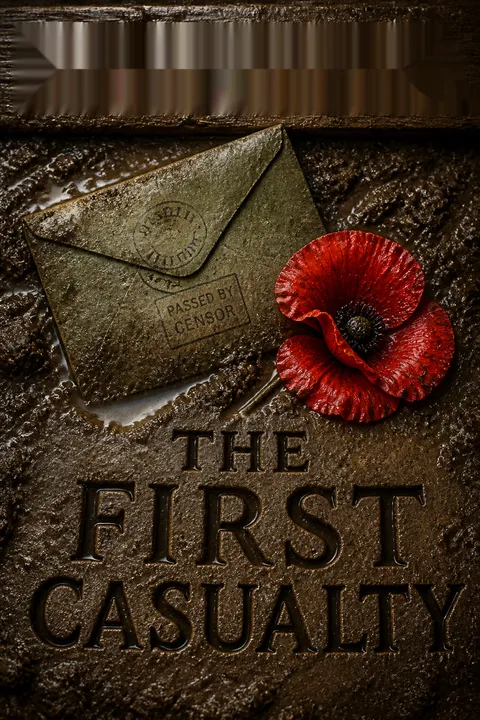
The ending offers neither full public justice nor a clean restoration. Kingsley hides Shannon’s crime to protect Kitty and prevent political rupture, then bargains for Abercrombie’s final poems to reach the public. He returns to Agnes under another man’s name, gaining intimacy through yet another deception. The result is deliberately uneasy: truth matters, but institutions may punish its disclosure; love can survive, but it cannot erase what has been done. The title’s opening image gives this conflict its bleakest measure. In a war that buries people without distinction, the first casualty is not only truth but the confidence that justice can keep pace with death.
Review Summary
The First Casualty receives mixed reviews, with ratings ranging from 1 to 5 stars. Praised for its vivid depiction of World War I trench warfare and intriguing premise of a conscientious objector investigating a murder at the front, some readers found the characters underdeveloped and the plot predictable. Critics appreciated Elton's research and historical accuracy but felt the book struggled to balance its elements of war novel, murder mystery, and social commentary. While some hailed it as Elton's best work, others found it disappointing compared to his comedic writing.
People Also Read
Characters
Douglas Kingsley
The conscience-driven detectiveA former London police inspector, husband to Agnes, and father to George, Kingsley is observant, disciplined, and often more certain of his reasoning than other people find comfortable. His conscientious objection comes not from a blanket rejection of violence but from his conclusion that this war has no adequate justification. That distinction makes him intellectually rigorous and emotionally difficult: he can identify contradictions in public policy more easily than he can recognize how his certainty wounds those close to him. His detective’s attention to small physical details gives him a way to act when larger political questions seem impossible to resolve. He is driven by the belief that evidence and individual responsibility still matter, even when the world around him treats them as luxuries.
Agnes Kingsley
The wounded, steadfast wifeAgnes is Kingsley’s wife and George’s mother, raised in a world where reputation, family loyalty, and social belonging carry practical weight. She loves Douglas, but she cannot make his principled refusal feel separate from the shame and isolation it brings to her and their child. Her anger is not evidence of shallow patriotism; it arises from the intimate costs of a decision made largely in the language of principle. Agnes is emotionally perceptive and more resilient than Kingsley sometimes credits her for being. Her attachment to him persists alongside her disappointment, creating a relationship shaped by genuine affection and genuine injury rather than by simple forgiveness or condemnation.
Kitty Murray
The insurgent nurseA young staff nurse at Château Beaurivage, Kitty cares for shell-shocked soldiers while openly criticizing the army’s eagerness to return them to combat. A Suffragette who has suffered police force-feeding, she distrusts authority from experience rather than fashion. Her intelligence is direct, her humor irreverent, and her independence extends to her sexual choices and professional competence. She refuses the passive role others expect of a woman, whether in conversation, wartime service, or relationships. Kitty’s frankness can conceal vulnerability, but it also allows her to name abuses others prefer to leave unspoken. Her encounters with Kingsley challenge both his assumptions about women and his confidence in keeping emotion outside his work.
Captain Alan Shannon
The predatory intelligence officerShannon is a young officer attached to military intelligence, outwardly charming and socially confident. He treats danger as a reason to seize immediate pleasure, and he often regards other people’s discomfort as entertainment or weakness. His manner blends wit with aggression, making him difficult to dismiss as merely boorish. Shannon has absorbed the war’s brutal hierarchy and applies it beyond the battlefield, where rank and physical power can become tools of intimidation. He serves as Kingsley’s handler and foil: both men are capable of courage, but Shannon sees survival as permission to take what he wants, while Kingsley continues to ask whether an action can be justified.
Alan Abercrombie
The celebrated soldier-poetViscount Alan Abercrombie is a decorated British officer and popular patriotic poet whose public image has grown larger than his private self. Among his fellow officers he can be witty and sociable, but the strain of war has made him quieter and more inward. His poems and reputation place him at the center of public ideas about sacrifice, courage, and England, even as he struggles with what those ideas demand of actual soldiers. Abercrombie’s relationships are complicated by the secrecy required of a gay man in a society that criminalizes his desire. He matters to the story not only as a victim but as a person whose changing convictions challenge the heroic image others have built around him.
Private Thomas Hopkins
The outspoken socialist soldierHopkins is an enlisted soldier and Communist whose anger is directed at both the war and the class structure governing military life. His protest against being forced to wear another soldier’s lice-ridden uniform brings him into conflict with the chain of command. He is not presented as a flawless political symbol: he can be abrasive, and his contempt for authority makes him easy for others to suspect. Yet his objections arise from the lived indignities of a private soldier, not abstract theory alone. Hopkins’s connection to McCroon places him within a wider network of working-class dissent, while his experience of shell shock reveals how military institutions treat mental injury as a temporary obstacle to service.
Lieutenant Stamford
The yearning young officerStamford is a young subaltern, aspiring poet, and former intimate of Abercrombie. His gentleness and artistic ambition sit uneasily beside the rigid codes of rank and masculinity that govern military life. He admires Abercrombie as both a public hero and a private beloved, and he wants an intimacy the older officer cannot offer. Stamford’s longing makes him emotionally exposed, while his wish to be a poet tempts him to borrow another man’s work and identity. He is also a capable performer, finding expressive freedom in the battalion’s theatrical shows. His presence complicates the investigation by showing how grief, desire, and ambition can imitate guilt.
Sir Mansfield Cumming
The calculating spymasterCumming heads the foreign section of British military intelligence and recruits Kingsley for a politically sensitive investigation. He is practical, resourceful, and accustomed to operating with inadequate funds and little public legitimacy. His manner is more genial than Shannon’s, but he understands how to use a person’s pride and sense of duty to secure cooperation. Cumming’s priority is containing a scandal that could split the government, army, and labor movement during wartime. He is not simply a villainous bureaucrat; he recognizes that secrecy may prevent political damage, even as it can also shelter wrongdoing.
David Lloyd George
The improvising prime ministerBritain’s prime minister appears briefly but decisively when he approves Kingsley’s covert assignment. Energetic, sociable, and politically astute, Lloyd George understands that the Abercrombie case could inflame tensions between labor and the political establishment. He prefers action to ceremony and treats the secret operation as one more improvised solution to a dangerous problem. His support gives Kingsley access to France and military authority, but it also places the investigation inside the government’s need to manage public knowledge.
Colonel Hilton
The dutiful battalion commanderHilton commands Abercrombie’s battalion and treats responsibility for his men as a personal obligation. He visits wounded officers and tries to preserve morale, but he also believes the army must continue fighting despite the terrible cost. His role as a censor puts him between a soldier’s private convictions and the army’s demand for discipline. Hilton is neither indifferent to suffering nor free from the assumptions of his institution. His understanding of sacrifice helps explain why he fears public dissent, even as his actions contribute to its suppression.
Private McCroon
The socialist eyewitnessMcCroon is Hopkins’s political comrade and another outspoken socialist serving in the ranks. He is suspicious of the military’s account of events and willing to challenge the idea that working men should die for ruling-class interests. His skepticism makes him a useful but not automatically reliable witness: Kingsley must test the timing and detail of what he remembers. McCroon’s perspective links the murder case to the class tensions surrounding the war, while his experiences at the front show how little control an individual soldier has over the moment he is called to act.
Captain Edmonds
The seasoned trench raiderEdmonds is a veteran officer whose routines have helped him endure years of fighting. He commands a nighttime raid with careful preparation and a close understanding of the men under him. His refusal to exchange his revolver reflects the rituals by which soldiers manage risk when luck seems as important as skill. Edmonds is not immune to fear, but experience has taught him how to proceed despite it. His encounter with Kingsley tests the boundary between a military officer’s authority and a detective’s demand for evidence.
Red Sean McAlistair
The unionist who challenges KingsleyA powerful trade union leader imprisoned at Wormwood Scrubs, McAlistair serves Kingsley food when others refuse but will not offer friendship. He challenges the former inspector to account for his years in a police force that protected property and disciplined workers. McAlistair’s bluntness forces Kingsley to confront forms of injustice he had previously treated as tolerable.
George Kingsley
The child left behindGeorge is Douglas and Agnes’s young son. He adores his father and is too young to understand why Douglas has disappeared from his daily life. His love gives Kingsley’s political decision an intimate consequence, and his ordinary childhood needs stand in sharp contrast to the adult arguments about duty, honor, and war.
Hopkins’s Irish orderly
The unexpected prison helperAn Irish medical orderly in Wormwood Scrubs, he treats Kingsley with unexpected kindness and carries a morphine addiction of his own. Kingsley’s request for help brings him into contact with Irish nationalists inside the prison, though he cannot guarantee their support.
Plot Devices
The fabricated death
A dead identity permits inquiryThe Secret Intelligence Service stages Kingsley’s death during a prison escape, using a rubber bullet to make the event convincing while keeping him alive. It frees him from a prison where he expects to be killed, but the new life is controlled by the people who arranged it. He cannot safely return to Agnes or reclaim his former name without endangering the operation. The false death also lets the government employ a notorious conscientious objector without publicly reversing his sentence. Its eventual use as the basis for Kingsley’s return under his brother’s identity makes secrecy both a practical escape route and a lasting moral compromise.
The green envelope
A private letter evades censorshipA green envelope is a scarce means for a soldier to send a letter home without the usual military censorship. Abercrombie seeks one while recovering at Château Beaurivage, suggesting that he has something urgent to communicate beyond the army’s reach. Its importance becomes clearer when Kingsley learns that Hilton has already intercepted Abercrombie’s attempt to resign his commission. The device connects private speech to military control: what a soldier writes can become a security problem when it challenges the war. It also offers Kingsley a clue that Abercrombie’s death is linked to more than a personal quarrel.
The missing boot
A silencer leaves forensic tracesOnly one of Abercrombie’s boots remains among his effects. Kingsley reads the absence as evidence rather than a trivial loss and finds leather, rubber, and wool residue around the bullet wound. He deduces that the killer fired through a boot packed with socks to muffle the shot and reduce the bullet’s force. The boot’s removal connects the quiet murder to a deliberate effort to conceal both sound and identity. Together with comparison bullets, this physical clue disproves the claim that Hopkins’s revolver killed Abercrombie.
Two corridor sightings
Timing separates two visitorsNurse Murray and McCroon each report seeing an officer leave the corridor near Abercrombie’s room, and the early investigation assumes they saw the same person. Kingsley establishes that McCroon left Hopkins’s ward before Murray finished her rounds, which means the sightings occurred at different times. One officer carried a small leather case, while the other did not. This reconstruction prevents Stamford’s visit from being mistaken for the later exit of the killer and directs Kingsley toward a second officer whose presence had been hidden by a faulty timeline.
The patriotic public story
A hero’s image conceals dissentThe government reports that Abercrombie died in battle, preserving the image of the famous patriotic poet as a heroic casualty. The account hides the murder, keeps Hopkins’s arrest from public scrutiny, and postpones disclosure of Abercrombie’s disillusionment with the war. It satisfies political figures who fear a class conflict between an aristocratic family and a working-class suspect, but it also prevents the public from seeing how a celebrated supporter changed his mind. Kingsley’s investigation tests the distance between a useful national story and the complicated truth it suppresses.
Download PDF
Download EPUB
.epub digital book format is ideal for reading ebooks on phones, tablets, and e-readers.








