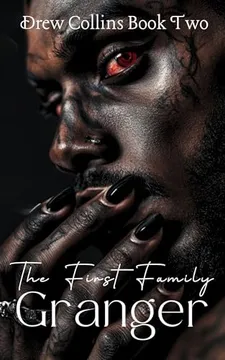


Plot Summary
Hillary on Legacy Row
Before dawn at Drew Collins University, Isis finds Hillary Jenkins dead outside the Legacy Row house where their friends had gathered. Hillary has been drained of blood, and the wound at her neck is brutal enough to point toward a vampire.
Coach Namir, a werewolf and Maggie Grey’s uneasy new ally, was inside with Maggie, so his cousin Koot and Maggie both draw suspicion. Police question the partygoers, but administrators quickly order students away and suppress discussion.
Hillary’s belongings have vanished from her dorm, leaving her roommate Souxie with no way to search for clues. The school cancels the party, not the coming ceremonies. Hillary’s friends are left grieving inside a place already more concerned with its reputation than her death.
The murder is both a mystery and an institutional stress test. Hillary’s body makes supernatural violence impossible to dismiss, but the school’s response turns the students’ first crisis into a lesson in managed silence. The missing belongings deepen the mystery while depriving the friends of ordinary investigative tools. For Maggie, the danger is immediate: her proximity to Namir and the vampire-like wound make her identity a liability before she understands what that identity is.
The School Closes Ranks
Maggie, Souxie, Asha Avery, and Isis compare what they know after the police clear the house. Clementine, a well-connected student, admits that her harmless water hex was meant to cause trouble at the party, not kill anyone, and warns that the First Family will bury bad publicity.
Souxie believes Professor Yasir Akeem’s visit to the house was suspicious, especially after he used her blood during their encounter. Asha and Isis remember that Hillary’s companion Assan blocked Isis after the murder.
Meanwhile, Namir’s brother Tyee and their uncle Randal Hawkins argue that Maggie may be dangerous: she has no detectable scent, and Namir nearly shifted while near her. The family orders Namir to keep his distance, even as he privately insists Maggie did not kill Hillary.
Competing suspicions give the students no stable ground: every clue points toward someone, while every institution with authority discourages inquiry. The family’s fear of Maggie is not based on proof but on the threat she represents to their rules and self-understanding. Namir’s certainty about her innocence is emotional rather than evidentiary, which makes his loyalty both protective and dangerous. The group’s first bond forms through shared distrust of official explanations.
Asha Takes the Water
Isis takes Asha to an abandoned pool and uses her nymph abilities to hold the water back, helping Asha approach the element she fears after childhood abuse. A group of siren students dive in and break Isis’s protection, dragging Asha into deep water while Isis fights to reach her. Asha survives, but the attack turns a lesson into a warning about the campus’s casual cruelty.
She later tracks the students to the Delmar salon and starts a fight; Souxie joins when the girls overwhelm her. Solomon, the siren leader who shares a house with Asha, arrives too late to stop it. A senior student named Ebony apologizes for her sister’s role in the hazing, but Asha refuses to treat a verbal apology as restored trust.
Asha’s fear of water is not a lack of courage but a learned response to coercion. The lesson gives her a brief experience of safety, then the sirens’ attack repeats the original pattern: other people decide what her body must endure. Her retaliation restores agency, though it also sharpens conflict with Solomon’s community. The episode makes solidarity practical rather than sentimental: Isis risks herself to rescue Asha, and Souxie joins the fight when Asha is outnumbered.
Holmes Denies Maggie
After a summons to the Holmes building, Maggie meets Dr. Marvin T. Holmes, the university’s founder and dean. He refuses to discuss her grandmother or explain their connection, but changes Maggie’s status to Legacy student and assigns her housing on Legacy Row.
In the dark lobby, she has already encountered a threatening man with fangs, black nails, and a name connected to the Holmes family: Bellamy. Marvin’s cold rejection leaves Maggie crying blood, a physical reaction she cannot control.
Namir later explains that her white hair resembles a mark associated with the First Family, though he cannot tell her what it means. The school offers her privilege without belonging, placing her in a prominent house while leaving her history deliberately blank.
Marvin’s refusal separates institutional recognition from emotional recognition. Maggie is promoted, housed, and classified, yet denied the basic explanation that might make those privileges intelligible. The blood tears turn distress into evidence, but even this visible change produces no care from the man best positioned to answer her questions. Her new status makes her more exposed, not more secure: the university can claim her as a Legacy while refusing to claim her as family.
A Date Beyond the Door
Namir invites Maggie out, then abandons the expected dinner plan for a concealed doorway that opens onto a moonlit beach. He brings fruit, beer, a small boat, and fishing gear, giving her a rare night that feels chosen rather than assigned by the university. On the water, Namir tells her he is drawn to her but cannot explain why.
When Maggie’s scent reaches him, his eyes darken and his nails gouge the boat; he fights to stay in control and promises he will not hurt her. The intimacy is real, but so is the danger embedded in it. Maggie responds with humor and curiosity instead of retreat, and the two begin to imagine a relationship despite the families and identities that make it risky.
The date’s romance depends on a threshold: the hidden door offers escape from campus surveillance, while the open sea removes the ordinary protections of land. Namir’s sudden physical change makes attraction inseparable from threat, but Maggie does not reduce him to the danger of his body. Their humor lets them negotiate fear without pretending it has disappeared. The scene establishes a central tension of the romance: intimacy may reveal the truth, yet revelation can trigger forces neither person understands.
Hawkins Crosses the Line
Randal Hawkins calls Maggie to a classroom under the pretense of discussing her place at Drew Collins. Instead, he corners her, grabs her, and tries to assault her. Souxie enters before he can continue; desks rise above them and threaten to crash down as her anger takes physical form. Maze arrives, then urges Maggie to keep quiet because exposing Hawkins could start a war between the werewolf pack and the First Family.
Souxie rejects that reasoning and gets Maggie out of the building. The three women leave together as security rushes in, with Hawkins able to hide the truth behind his position. Maze reveals that she, too, has been harmed by her family’s demand for silence, but still pleads for secrecy to protect Namir and the pack.
The assault converts the story’s abstract politics of secrecy into a direct bodily cost. Maze’s plea is not simple complicity: she has learned that family loyalty can make protection conditional and disclosure dangerous. Souxie’s intervention disrupts that inherited logic, insisting that Maggie’s immediate safety matters more than preserving a fragile peace. The scene also reveals the limits of supernatural power. Souxie can stop Hawkins physically, but the institutions around them can still protect him socially.
The Moon Turns Red
During a training exercise, Namir sends Maggie running through the woods so his students can practice tracking her. When one man catches her and grabs her leg, the memory of Hawkins’s assault overwhelms her.
Maggie screams, and daylight abruptly gives way to a red moon, a campus-wide blackout, and reports of violent storms appearing across the world. Namir partly shifts while carrying her from the forest, then collapses as the lights return. The trees around the training ground have vanished. A red-eyed stranger watches Maggie from the field before disappearing.
At a family meeting, Tyee declares her too dangerous to approach. Namir’s father and uncle demand control, while his sister Maze challenges the family’s hypocrisy. Their argument ends with Tyee attacking Maze, who flees in wolf form.
Maggie’s power erupts through a trauma response, not a deliberate act of domination. The world answers her fear before she can name what she is, turning a private memory into a public catastrophe. The pack responds by treating uncertainty as proof of danger, revealing how quickly safety language becomes a justification for control. Maze’s challenge makes the family conflict explicit: the danger is not only Maggie’s unexplained power, but also a leadership structure willing to use force against its own women.
Hawkins Is Exposed
After the red-moon crisis, Namir searches Randal Hawkins’s car for a scent that explains why Maggie acted strangely. He finds a box of Drew Collins uniforms and recognizes one as belonging to Hillary.
The discovery connects Hawkins to the murder and intensifies Namir’s anger, already sharpened by learning that Hawkins had assaulted Maggie. Namir attacks his uncle in front of their family; Tyee confirms that the uniform matches the one recovered from Hillary’s crime scene.
The family tries to contain the confrontation, but the evidence can no longer be dismissed as suspicion alone. At the same time, Namir is told to keep away from Maggie, and he agrees only outwardly. His loyalty shifts from obedience to a quieter determination to protect her.
The uniform gives the mystery its first concrete link between the killer and the institution that has tried to control the narrative. Namir’s violence is understandable but not cleanly heroic: he is acting from rage, family history, and protectiveness all at once. The discovery also collapses the supposed boundary between private misconduct and public crime. Hawkins’s authority at the university and his place in the pack have helped shield him, making evidence itself a threat to the family’s carefully managed order.
Maze Pays for Love
The werewolf pack discovers that Maze is secretly married to Draco Holmes, a member of the First Family. They punish her by dragging her behind a truck across familiar pack territory, then publicly accuse her of betrayal.
Maze’s mother carries her away, while Tyee refuses to disown his sister outright. Their father, Roy, reveals the family’s deeper wound: he failed to protect Maze from Hawkins when she was young, and her mother left the pack over it. Maze’s marriage is therefore not merely a forbidden romance.
It is an escape from a family that demanded her silence and now condemns her for choosing protection elsewhere. Draco tends her injuries in private, while Maze’s brothers remain divided between loyalty to the pack and loyalty to her.
The punishment makes the pack’s ideals of unity visible as coercion. Maze is condemned for crossing into another family, but the more consequential betrayal lies in the pack’s earlier failure to protect her from Hawkins. Her mother’s defense exposes how patriarchal authority can frame a victim’s departure as disloyalty while excusing the people who made departure necessary. Draco’s care offers an alternative model of commitment, though his possessiveness suggests that protection can also become control.
The First Family’s Origin
Maze and Draco take Maggie to meet the Holmes family, where she learns that her older brother is Bellamy, the threatening man she met in the university lobby. He explains that Maggie and Bellamy share a blood trigger: both cry blood when their emotions overwhelm them.
At the Holmes building, Marvin admits that the First Family invented its descent from Gaia, a moon goddess, to protect a violent blood-drinking lineage and preserve its political power.
His sister Willa insists that Maggie’s birth may have made the myth real, calling her the moon returned to earth. Bellamy kills Marvin when the argument turns to the family’s lies. Willa takes control of Drew Collins and prepares to present Maggie as proof of the First Family’s renewed authority.
The revelation destabilizes both family history and religious legitimacy. The First Family’s authority rests on a story manufactured to make predation socially acceptable, yet Maggie’s unexplained birth may have transformed that fiction into something materially true. Bellamy’s killing of Marvin breaks the old order without resolving its moral inheritance; violence remains the family’s most available language of correction. Maggie is caught between being treated as a person and being made into a symbol powerful enough to reorganize everyone else’s claims.
Maggie Loses Her Home
Bellamy takes Maggie to meet her parents, hoping to confirm their shared history. Instead, her mother does not recognize her and insists that her daughter died; her father sits silent, unable to intervene.
Maggie’s grandmother recognizes what has happened: a binding blood contract with Marvin has been triggered, erasing Maggie and Bellamy from the family’s awareness. Bellamy arranges security for the parents and transfers his businesses and wealth to Maggie, making her his next of kin.
He then shows her what the family’s hunger can become by taking her to watch him and relatives feed violently on a woman who accepted money for sex. The woman survives with no visible wounds, but Maggie is horrified. Bellamy warns her to remain herself and stay away from their feeding practices.
Maggie’s loss is not a disappearance but a forced revision of other people’s memory. The contract preserves the family’s secret by making love and recognition unavailable to her, a supernatural version of the institution’s earlier refusal to acknowledge her. Bellamy’s wealth cannot repair that rupture, and his demonstration of feeding replaces explanation with shock. His protective intention is sincere, yet he still dictates what Maggie should do. The scene leaves her with material security and a sharper understanding of the danger her inheritance carries.
Four Friends Choose Family
While Maggie is away, the others keep building lives on campus. Asha rejects Solomon’s attempts to fold her into his siren circle and begins a no-strings sexual relationship with Irvin, Isis’s nymph brother.
Isis and Quan, her cat companion, sleep together after Quan unexpectedly returns to human form, though both struggle to name what it means. Souxie researches vampires, spirits, and the First Family, then uses a spell to contact the ghostly girls seen near the oak tree. Akeem eventually gives her his journal on communicating with the dead before leaving the university.
When Maggie returns, she and her friends make the Second Family their club name in Hillary’s honor. Her painted portrait shows Hillary waiting beneath their tree, giving the friends a way to remember her without accepting the school’s version of closure.
The friends create a form of belonging that differs from the school’s inherited houses and the packs’ strict loyalties. Their club is a chosen structure, built around grief rather than rank. Each woman’s intimacy remains complicated: Asha protects her independence, Isis and Quan avoid defining their bond, and Souxie seeks answers through dangerous forms of knowledge. Hillary’s portrait does not solve the murder, but it gives memory a visible place in the group’s life, resisting the school’s effort to make the dead disappear quietly.
A New Dean Takes Control
Willa addresses the university after Marvin’s death and claims that the red moon was an assertion of First Family power. She announces looser admission rules for vampires and other beings, new student assessments, changes to housing, and an end to the masquerade dress code.
Most dramatically, she presents Maggie as Gaia’s embodiment and Marvin’s great-niece, although Maggie herself is unsure that the family’s divine explanation is true. The announcement turns her into a public figure overnight.
Maggie reunites with Asha, Isis, and Souxie, but the new attention complicates their effort to keep an ordinary friendship. Namir’s family remains hostile, and he and Maggie struggle to communicate while others watch. At a later scrimmage, Namir publicly kisses Maggie, making their relationship impossible to conceal.
Willa’s reforms combine genuine institutional opening with a calculated attempt to preserve power. Admitting previously excluded students may broaden the university, but naming Maggie as a goddess converts inclusion into political spectacle. Maggie’s friends help keep her identity human-scale, while Namir’s public kiss is an emotional refusal to let fear dictate their relationship. Yet the gesture also exposes them to scrutiny. Visibility becomes both a claim to intimacy and an invitation for rival factions to act.
The Next Bodies Appear
On the night of the school festivities, Maggie receives a message directing her to the old stadium bathrooms. Namir says he never sent it, but she and Souxie investigate anyway. Inside, they find two young sirens decapitated, their bodies marked by dried, scale-like skin.
Maggie’s hand lands in the blood as other students enter and see her beside the victims. At nearly the same time, a newly arrived teacher, Aria, is found torn apart nearby, and a blood-covered wolf has been seen leaving another building.
Solomon orders the sirens to gather, while the new dean and security try to control the crowd. The murders reignite suspicion around Maggie and threaten to turn the university’s uneasy alliances into open conflict. Quan warns that Maggie may be taken for questioning.
The false message exploits the very trust Maggie is trying to rebuild: it uses Namir’s name to draw her into a scene where appearance will outweigh evidence. The killings widen the mystery beyond Hillary and place multiple communities at risk. The brutality also reveals how fragile the school’s new openness remains; a few bodies are enough to reactivate old prejudices. Maggie’s position as a public symbol now makes her especially easy to frame, because every faction already has a story ready to tell about her.
Bellamy Finds a Storyteller
Away from Drew Collins, Bellamy visits a small fantasy shop during Dragon Con and finds Celeste Taylor alone at her first book signing. Celeste’s novel describes a magical university, a drained student, a suspected werewolf professor, and a hidden killer who may be the professor’s nephew.
Bellamy presses her about the details, but Celeste says the scenes arrive to her like memories rather than planned fiction. Her account resembles the events unfolding at Drew Collins, including the possibility of another killing and a split within the werewolf pack.
Bellamy offers her a job at his club and housing, then reveals his fangs when she tries to leave and restrains her. The book ends with Celeste in his grasp and Maggie’s murder investigation unresolved.
The ending turns the novel’s own plot into a question of authorship and evidence. Celeste calls her account fiction, yet its uncanny overlap with the events at Drew Collins unsettles the distinction between invention and foreknowledge. Bellamy’s interest shifts from protecting his sister to controlling a stranger whose story may contain information he needs. His recruitment offer becomes an abduction when she refuses, ending the book not with safety restored but with another person placed at the mercy of the supernatural world.
Analysis
The novel makes belonging a contested resource. Drew Collins offers students a community designed around Black supernatural life, but its houses, packs, and family names reproduce familiar systems of rank and exclusion. The murder of Hillary exposes this contradiction: the institution can celebrate its exceptional world while treating an ordinary student’s death as a reputational problem. Maggie’s arrival intensifies the crisis because every faction tries to convert her unexplained power into a claim of ownership. The Holmes family wants her to validate a lineage; the wolves fear what she can provoke; Namir wants intimacy but often expresses it as protection. Against those inherited structures, Maggie’s friends build the Second Family through loyalty, grief, and choice. That chosen bond does not solve their conflicts, but it gives them a way to act without pretending that blood automatically makes someone safe. The novel’s supernatural rules reinforce this psychological terrain. A smell can expose desire, a blood contract can erase recognition, and a scream can alter the sky, yet none of these forces offers simple moral guidance. Power magnifies existing choices rather than replacing them. Bellamy’s protection can become coercive, the school’s reforms can disguise political self-preservation, and romantic attachment can coexist with fear. The story’s unresolved ending preserves that instability: the alleged killer has been identified, new bodies appear, Maggie is again exposed to suspicion, and Bellamy’s encounter with Celeste suggests that the world’s stories may be describing events before they occur. The result is not a closed mystery but a portrait of a community struggling to decide who may tell the truth, who gets believed, and whether family is something inherited or something people do for one another.
People Also Read

Characters
Maggie Grey
The uncertain heirMaggie arrives at Drew Collins University as an older student seeking education and a clearer future, not a place in a powerful family. Her white hair and unusual responses to stress make her conspicuous before she understands their meaning. She uses humor to manage fear, but her instinct to ask direct questions repeatedly brings her into conflict with authority. Maggie values her friends’ loyalty and is drawn to Namir even as his changing body frightens her. Her deepest need is not status or supernatural power but a trustworthy account of her own life. As others try to define her, she keeps insisting on the right to decide what she is.
Namir
The divided wolfNamir is a werewolf, coach, and member of a large family whose rules prize collective safety and obedience. He is protective, physically confident, and often blunt, but his reactions around Maggie unsettle his confidence in his own control. He is attracted to her and believes she is innocent, yet he struggles to explain his feelings without turning them into claims of possession. His work as a teacher gives him authority over young shifters, while his loyalty to his family places him inside the same power structure he sometimes resists. Namir’s tenderness appears most clearly when he makes room for Maggie’s fear rather than dismissing it.
Souxie Lafayette
The dangerous seerSouxie is a perceptive student with a cool manner, a gift for reading people, and an interest in spiritual knowledge. She often speaks softly, which makes her anger more formidable when someone threatens her friends. Her relationship with Professor Akeem entangles desire, coercion, and a search for power she does not fully understand. Souxie wants answers about Hillary and is willing to test spells, spirits, and people to obtain them. Her loyalty to the group is not passive: she intervenes when Maggie is in danger and helps make their friendship into a deliberate alliance. She is also wary of how much any one friend should know.
Asha Avery
The self-reliant sirenAsha is a direct, funny, and fiercely self-reliant student who resists being absorbed into Solomon’s siren hierarchy. Her history with water makes her vulnerable in a setting where others assume she should feel at home in it. She responds to bullying with force, especially when someone targets Isis or tries to control her. Asha values sexual freedom and friendship but dislikes any group that demands she prove her loyalty by surrendering independence. Her relationship with Irvin offers pleasure without an expectation of romance, while her bond with the other women gradually gives her a chosen community she can enter on her own terms.
Isis
The loyal water-healerIsis is a nymph and a student of healing who combines gentleness with a strong sense of responsibility for her friends. She can guide water and uses that ability to help Asha approach a feared element, then risks herself when the lesson becomes an attack. Isis is more socially open than Asha and often tries to build bridges between rival groups. Her attraction to Quan complicates her instinct to treat their relationship lightly. She can be confident in the company of friends yet insecure when a partner withdraws without explanation. Her practical kindness anchors the group, even when she is unsure whether the people around her will return it.
Bellamy Holmes
The dangerous protectorBellamy is a member of the Holmes family whose frightening appearance and controlled manner make him difficult to read. He carries himself with the certainty of someone accustomed to being obeyed, but he shows unexpected tenderness toward Maggie. His instincts pull him toward violence, while his stated wish to protect his sister suggests a desire to become more than his appetite and inheritance. Bellamy’s ideas of protection are forceful and sometimes coercive. He offers money, security, and access to a wider world, yet expects others to follow his decisions. His tension between care and control makes him both a refuge and a source of danger.
Tyee
The orderly pack leaderTyee, usually called Ty, is Namir’s brother and a central figure in their werewolf family. He is meticulous, strategic, and intensely conscious of the responsibilities attached to leadership. His long-term relationship with Clinton remains hidden from the family, and that secrecy sharpens his awareness of how public reputation can govern private life. Tyee often frames difficult decisions as necessary for the pack’s safety, even when those decisions silence or endanger individuals. His intelligence and composure make him an effective leader, but also allow him to rationalize harsh actions. He cares deeply for his siblings, though family loyalty often competes with his own sense of fairness.
Randal Hawkins
The compromised professorRandal Hawkins is an older professor and uncle within Namir’s werewolf family. He is curious about Maggie’s unusual nature and treats that curiosity as a right to test her. His intellectual authority and family standing let him move through spaces where others are expected to obey him. Hawkins represents the danger of a respected mentor whose public role obscures private entitlement. He is also involved in the family’s pursuit of power, making his actions part of a larger political structure rather than an isolated personal failing. His fixation on Maggie shows how easily fascination with the unknown can become a justification for violating another person’s boundaries.
Professor Yasir Akeem
The hungry instructorAkeem teaches spiritual subjects and belongs to the First Family, though his connection to its politics is not always clear. He is charismatic in class and adept at turning personal tension into performance. His appetite and attraction make him volatile around Souxie, whose defiance exposes the gap between his controlled public persona and his impulses. Akeem also studies communication with the dead and has spent years recording what he has learned. He can recognize damage in another person, but his ability to offer insight does not erase the harm he causes. His character complicates the line between knowledge, desire, and ethical restraint.
Maze
The divided sisterMaze is Namir and Tyee’s sister, sharp-witted and skilled at gathering information through personal connections. She pushes against the family’s assumptions about leadership and women’s obedience, but she is also shaped by years of keeping painful secrets. Her hidden marriage to a Holmes family member places her between two communities that demand allegiance. Maze sees the danger of exposing family wrongdoing, yet also knows that silence has protected the wrong people. Her mixture of humor, secrecy, and courage makes her a useful guide for Maggie through unfamiliar politics. She wants both love and belonging, but the families around her make those desires appear incompatible.
Solomon
The possessive sirenSolomon is a prominent siren at Drew Collins and the man whose household becomes Asha’s temporary home. He is socially powerful, accustomed to being listened to, and protective of his community’s reputation. His interest in Asha is genuine but often expressed through pressure to join his circle, which she resists. Solomon can organize his people quickly when they are threatened, though his confidence sometimes shades into entitlement. His rivalry with nymphs and desire to control relationships reflect the divisions that shape the campus. Beneath his swagger is a leader trying to maintain cohesion in a group whose members do not all share his priorities.
Quan
The shifting familiarQuan spends much of the story in the form of a black cat and serves as Souxie’s companion and observer. His sarcasm makes him a source of comic relief, but he is also sharp enough to notice when others are hiding information. His unexpected return to human form changes his relationship with Isis and forces him to confront how much time he has lost. Quan resists emotional dependence and treats sexual attraction as easier to manage than commitment. His transformation gives him a chance to recover a life beyond his animal body, although his uncertainty about who he should become remains.
Hillary Jenkins
The absent roommateHillary is Souxie’s roommate and a student known for curiosity, research, and a habit of encouraging her friends to organize. She is part of the social circle before the murder forces the others to confront the university’s indifference. Her absence becomes a measure of what the school is willing to erase and what her friends refuse to forget. The group’s decision to honor her through its club name reflects the practical influence she had on them, as well as their desire to remember her as a person rather than a case.
Dr. Marvin T. Holmes
The guarded founderMarvin is Drew Collins University’s founder and dean, a powerful elder of the Holmes family. He values control, institutional reputation, and the survival of his family’s influence. When Maggie asks about her history, he gives her status and housing but withholds personal recognition and explanation. His relationship with the family’s mythology is deeply pragmatic: he treats stories as political tools and people as risks to manage. Marvin’s authority is built on age, money, and secrecy, yet his guardedness reveals the strain of maintaining a public legacy that may no longer match the truth.
Draco Holmes
Maze’s devoted husbandDraco is a Holmes family member and Maze’s husband. He is affectionate and patient while caring for her, but can become fiercely possessive when he believes she is threatened. His devotion gives Maze a form of protection her birth family has not reliably offered. Draco is also deeply wary of the werewolf pack and sees its hostility as a danger that cannot be negotiated away. His love is sincere, though his readiness to answer injury with violence complicates the safety he promises. He stands between Maze and the family conflict, often trying to decide which dangers she should face.
Jean
Souxie’s blunt fatherJean is Souxie’s father, a sharp-tongued and protective presence who does not soften his warnings for anyone. He can embarrass his daughter with his manner, yet his care is evident in how quickly he intervenes when he believes she is in danger. Jean treats directness as a form of affection and challenges Souxie to stop carrying pain she cannot control. Their relationship mixes conflict with familiarity: he knows her weaknesses, and she trusts him enough to accept his company even when she resents his advice.
Clinton
Tyee’s hidden partnerClinton has been Tyee’s partner for years and wants to be acknowledged as part of his life rather than kept outside the family. He offers practical support and asks for openness, while Tyee weighs that request against the pressures of leadership and family expectation. Clinton’s presence shows the personal cost of Tyee’s careful public image. He is patient but not willing to remain invisible indefinitely, making their relationship a test of whether Tyee can lead honestly while living honestly.
Irvin
Asha’s no-strings loverIrvin is Isis’s brother, a nymph with a disciplined, military manner. He and Asha agree to a casual arrangement built around sex and honest boundaries rather than promises of romance. His preference for human partners complicates his interest in Asha, who is a siren, but he is willing to make his own choice instead of letting assumptions decide for him.
Clementine
The privileged informantClementine is a Legacy student with access to the university’s social and administrative circles. She is ambitious, image-conscious, and accustomed to using status to influence how other students are treated. Her early involvement in a harmless hex makes her an easy suspect, but she also provides information about the First Family’s efforts to control the school’s reputation. Clementine’s need to belong among the powerful often comes out as cruelty toward those she considers outsiders.
Willa Holmes
The new family authorityWilla is Marvin’s sister and a senior member of the Holmes family. She is politically alert and willing to present institutional change as a way to maintain influence. Unlike Marvin, she favors public communication and visible leadership, but she still treats Maggie’s identity as a strategic asset. Willa’s reformist language contains both possibility and calculation: she can open doors for excluded students while using the same opening to strengthen the family’s claim to authority.
Aria
The ambitious pack rivalAria is a werewolf who wants influence within the pack and hopes to form a future leadership partnership with Namir or Tyee. She is confident, strategic, and skilled at presenting her ambitions as service to the family. Her attraction to Namir and her political goals are tangled together, as she tries to gain access to both him and the authority around him. Aria understands how reputation and alliances work, making her a formidable presence even when others underestimate her.
Celeste Taylor
The uncanny novelistCeleste is a struggling fantasy writer whose first book signing takes place in a small shop during Dragon Con. She describes her stories as arriving in vivid scenes that feel remembered rather than consciously invented. Celeste is skeptical of Bellamy’s persona and does not quickly accept his offer of help. Her imagination may be a source of unusual insight, but she is also a young woman trying to find housing, work, and an audience for her writing.
Plot Devices
The Hidden Grounds
A concealed supernatural societyDrew Collins University and the surrounding Underground give the characters a community hidden in plain sight, with its own schools, travel routes, clubs, markets, and political hierarchies. The setting allows ordinary routines such as classes and parties to coexist with werewolf packs, sirens, nymphs, vampires, and spiritual practices. Its institutions also help powerful groups manage conflict and suppress damaging information. The concealed world is not an escape from social problems; it magnifies them through lineage, species, status, and secrecy. As Maggie learns how to move through it, each new place expands her understanding while making it harder to return to the life she knew.
The Red Moon
A trigger for buried powerMaggie’s scream during Namir’s tracking exercise coincides with daylight turning to night, a red moon appearing, and storms erupting across distant cities. The event is visible to the entire school and beyond, transforming a private moment of panic into evidence that Maggie can affect forces no one understands. Wolves interpret the change through their own relationship to the moon, while the Holmes family sees a chance to reclaim authority. The red moon recurs as a symbol of uncertain inheritance, but the text does not settle whether Maggie is a goddess, a vampire, or something beyond those categories.
Blood Contracts
Secrecy enforced through kinshipA binding agreement between Maggie’s grandmother and Marvin Holmes is tied to blood and family relationships. When Maggie reveals information about the Underground to her parents, the contract causes them to forget her and Bellamy, making them believe their daughter has died. The mechanism turns secrecy into an active force rather than a simple choice: even love cannot overcome the altered memory while the spell remains in effect. It explains why the older generation fears disclosure and why Bellamy arranges protection for Maggie’s parents. The contract also leaves the family’s past unresolved, since Maggie has no clear way to restore her parents’ recognition.
The Oak Tree Portrait
A window onto the departedAn artist in the Black Market paints people who have died, and her portrait of Hillary shows the student beneath the oak tree the friends used as a gathering place. The painter gives Maggie instructions that allow the image to change, showing Hillary waiting or reading. The painting cannot identify the killer, but it gives Souxie and the others a continuing connection to their friend. It also complicates the line between art, memory, and spirit contact: Hillary is not merely recalled by the living but appears to remain present in a place associated with their bond.
The Missing Uniform
A physical link to murderHillary’s belongings disappear from her dorm, frustrating the initial police inquiry. Later, Namir finds a box of school uniforms in Randal Hawkins’s car, and Tyee recognizes one as Hillary’s. The discovery shifts suspicion from Maggie and Koot toward a powerful member of the werewolf family and creates the basis for the school’s eventual official accusation. Because the text ends with further murders and Celeste’s eerily similar fictional account, this evidence does not resolve every question about who acted or whether Hawkins was the sole killer.
Download PDF
Download EPUB
.epub digital book format is ideal for reading ebooks on phones, tablets, and e-readers.








