

Key Takeaways
Let pain become a question, not a verdict about your life.
A painful moment can teach. At twenty-one, Carey Davidson’s father died. An older woman tried to comfort her by suggesting that life gives people only hardships they can bear. Davidson heard the comment as cruel and burst into tears. Years later, she could see the woman’s good intention without denying the pain of how it landed. The shift was not a claim that tragedy is deserved or secretly good. It was a way to choose what to do with a difficult experience.
Choose your next response. Davidson frames three possible reactions: learn and grow through difficulty, set it aside temporarily, or stay caught in reactive patterns that can harm oneself and others. The book invites readers toward the first choice, beginning with curiosity about what a situation reveals.
The distinction between intent and impact is useful far beyond this anecdote. It allows compassion for the person who spoke while preserving the truth that the words hurt. Meaning-making can restore a sense of agency, but it becomes harmful if it pressures people to call trauma a gift or to forgive before they are ready. The stronger lesson is modest: a person cannot always choose what happens, but can sometimes choose how to examine and respond to it.
Use five archetypes as a flexible map, not five personality boxes.
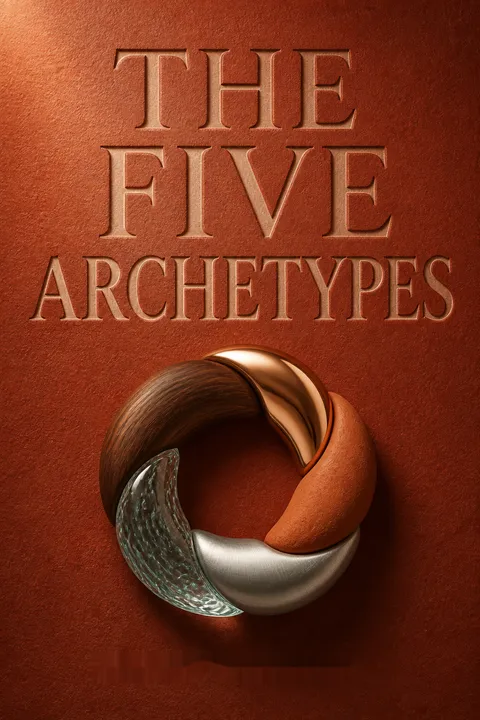
Five recurring patterns. The method adapts the Five Phase model from Traditional Chinese Medicine into a guide to behavior. Wood represents initiative and drive. Fire brings joy, enthusiasm, and emotional connection. Earth seeks care, belonging, and cooperation. Metal values order, precision, and standards. Water favors reflection, privacy, and deep thought.
Everyone contains all five. A person may have a primary archetype, the strongest lens through which they tend to approach life, but the other four also contribute skills. A Wood-led person can still need Water’s patience to think through a choice; an Earth-led person can still benefit from Metal’s boundaries. The model presents character as dynamic: a primary tendency may persist, while its expression shifts between resilient strengths and stressed reactions.
The model’s most humane feature is its refusal to rank one style above another. Action, play, care, order, and reflection each solve different problems, so a strength in one setting can become a liability in another. This resembles a practical toolkit more than a fixed personality label. Its usefulness depends on keeping that distinction alive: a person is not reducible to a test result, and context can explain behavior as much as temperament does.
Preserve each archetype's gift while noticing its stress-shaped excess.
Strengths can overshoot. In this framework, stress does not create an entirely different personality. It distorts a familiar gift. The five common patterns are:
1. Wood’s determination can become impatience, anger, or a need to win.
2. Fire’s optimism can become panic, overexcitement, or avoidance of dull tasks.
3. Earth’s care can become overgiving, worry, and fear of exclusion.
4. Metal’s precision can become rigidity, criticism, and fixation on mistakes.
5. Water’s reflection can become pessimism, isolation, or endless deliberation.
Notice the tipping point. Davidson encourages readers to learn both sides of their dominant style. A decisive colleague may be a powerful advocate when grounded, but bulldoze others when threatened. A careful planner may create reliability, but stall a project by demanding perfection.
This strength-to-excess pairing helps replace shame with a more precise question: when does a useful tendency stop helping? It also keeps the framework from treating traits as purely good or bad. The caution is that the five descriptions are broad enough to fit many people, especially when readers interpret them after the fact. They work best as prompts for observing concrete behavior, not as explanations that automatically settle why someone acted a certain way.
Ask what need your stress reveals before deciding who is to blame.
Feelings can point to needs. The book calls archetype-linked requirements for feeling secure “needs for safety.” Wood may need movement, choice, and challenge. Fire may need connection, affection, and encouragement. Earth may need companionship and inclusion. Metal may need clear expectations and consistency. Water may need quiet, time, and privacy. When these needs feel unmet, the corresponding archetype may shift into stress.
Take responsibility without denying relationships. A Wood employee who feels stalled might first notice frustration, then ask whether they need more autonomy or a clearer path forward. The aim is not to demand that others provide every need, nor to pretend other people do not affect us. It is to identify what is missing and consider what action is within one’s control, including asking for support or setting a boundary.
Naming a need can turn a vague emotional surge into a problem that is easier to address. It also separates a feeling from the story attached to it: feeling ignored is real, while the conclusion that nobody cares may need examination. The emphasis on personal responsibility is empowering when it creates options. It should not be used to excuse neglect or harmful conduct by others; some needs require mutual negotiation, practical support, or firmer limits.
Pause, track your triggers, prepare, then practice a better response.
Build the groundwork first. Before applying the archetype descriptions, Davidson recommends four habits for self-observation:
1. Get quiet enough to notice what is happening.
2. Track bodily stress signs, the surrounding situation, and personal conditions such as sleep or missed meals.
3. Prepare for recurring difficult situations, including setting boundaries in advance.
4. Put what you learn into action until it becomes a more familiar response.
Context changes interpretation. Shallow breathing, a tense body, or racing thoughts may be early cues to pause rather than react. A conflict at work may feel sharper after poor sleep or a skipped breakfast. The point is not to blame every emotion on the body, but to collect enough detail to see patterns and make a more informed choice.
This sequence turns introspection into a practical feedback loop: notice, record, prepare, and test a response. It resembles approaches that use self-monitoring to make behavior more observable rather than relying on vague intentions. Its insistence on context is especially useful because people often explain reactions as character flaws while overlooking fatigue, pressure, or the immediate setting. Tracking should remain brief and nonjudgmental, however, so observation does not become another source of rumination.
Strengthen your primary pattern, then deliberately train your weakest one.
Optimization has three moves. In the Five Archetypes method, optimization means improving self-awareness and self-regulation around a person’s primary archetype. First, recognize that archetype’s strengths and stress signs. Second, identify the needs that help it feel secure. Third, take action to restore balance. For a Fire-led person, that might mean noticing that anxiety rises when connection feels uncertain, then choosing a grounding activity before seeking reassurance.
Add the less familiar skill. Davidson recommends practicing activities associated with the lowest-scoring archetype, not just the habits that feel natural. A driven Wood type might schedule quiet reflection; a reflective Water type might set a concrete deadline and begin. The purpose is not to replace a person’s dominant strengths, but to make more responses available under pressure.
This is a useful corrective to self-improvement plans that simply intensify existing strengths. People often choose the strategy they already prefer, even when the problem calls for a different capacity. Practicing an underused skill can widen the response repertoire. The model does not establish that scores represent stable abilities, however, so the lowest result is better treated as a hypothesis to test through everyday experience than as a permanent deficit.
Let the people who irritate you point toward skills you underuse.
Discomfort can expose a gap. The Five Phase model describes some archetypes as supportive and others as challenging. In the nurturing sequence, Wood supports Fire, Fire supports Earth, Earth supports Metal, Metal supports Water, and Water supports Wood. Davidson also uses opposing archetypes to explain why certain styles can feel especially aggravating. Those clashes may reveal a capacity that is uncomfortable but useful to develop.
Use the right reset. The book suggests that a stressed archetype can borrow a neighboring style for immediate relief: movement and future planning may help an overwhelmed Water type, while steady company and reassurance may help an anxious Fire type. Irritation is not proof that another person is wrong or that the relationship is doomed. It can be a cue to pause and ask what the interaction demands.
This framing turns interpersonal friction into information without pretending that every conflict is productive. A colleague’s meticulousness may feel obstructive to someone who prizes speed, yet may protect the work from avoidable errors. The reciprocal lesson is important: irritation can reflect a genuine mismatch, a personal blind spot, or both. The elemental relationships offer a memorable organizing metaphor, but they should not substitute for discussing specific behavior, power, or boundaries.
Adapt to people's needs without reducing them to types.
Empathy means adjusting your approach. Davidson draws on psychologist Daniel Goleman’s distinctions among understanding another person’s perspective, feeling with them, and acting with concern. In the book’s mapping, Fire is especially associated with sensing emotion, Earth with practical care, and learning all five styles with a broader understanding of different perspectives.
Make the relationship concrete. A Water coworker may need quiet time to think before contributing. A Fire friend may appreciate direct reassurance when plans change. An Earth partner may value shared time and reciprocal attention. These are starting hypotheses, not instructions for managing someone from a label. The aim is to become more observant, communicate about what helps, and avoid expecting every person to feel supported by the same gesture.
The shift from asking what feels caring to asking what the other person experiences as caring is central to good communication. It echoes perspective-taking in conflict resolution, where accurate curiosity can interrupt the assumption that one’s own preferences are universal. Still, empathy is not mind-reading. Archetype-based guesses should be checked with the person, especially because culture, history, and the particulars of a relationship can outweigh any broad temperament pattern.
Use the assessment as a starting snapshot, not a psychological verdict.
Score recent experience. The book’s questionnaire asks readers to rate statements from zero to four based on how often each felt true during the previous three months. The highest total indicates a likely primary archetype; the lowest highlights skills that may be less accessible. Davidson advises answering honestly rather than choosing what seems ideal, and suggests asking trusted people for observations when results feel unclear.
Treat the ranking cautiously. The author describes the primary type as likely to persist while other scores can change with circumstances and practice. Her own results kept the same ranking over time, while the distance between scores narrowed. The assessment is presented as a reflective tool adapted from earlier work, not as a clinical diagnosis. Recheck patterns in daily life rather than treating a small score difference as definitive.
The three-month frame is a sensible reminder that self-description should concern actual recent behavior, not an idealized self-image. Inviting outside observations can also expose blind spots. But a questionnaire’s numerical precision does not by itself establish measurement validity, and people can answer differently as circumstances change. The safest use is exploratory: let a score suggest questions to investigate, then see whether those patterns recur across settings and over time.
Build resilience through repeated care for body, mind, and relationships.
Balance is ongoing practice. Davidson rejects the idea of a permanent cure for emotional difficulty. She compares personal growth to tending a garden: attention and care must continue after early progress. The book recommends choosing a small number of practices suited to one’s needs, while also making room for the least familiar archetypes. Examples include exercise and planning for Wood, play and emotional expression for Fire, community and nourishing meals for Earth, routines and breathing for Metal, and solitude, rest, and reflection for Water.
Connect habits to circumstances. Sleep, food, movement, and social contact can affect how well a person handles strain. The book also offers Ayurvedic and chakra-related practices as complementary options. These traditions may provide personally meaningful rituals, but they should not replace appropriate medical or psychological care.
The durable insight is that self-care is not a reward after life gets easier; it is part of the conditions that make thoughtful responses more accessible. The menu approach also respects individual preference better than a universal routine. The book’s mind-body integration is a useful reminder to consider ordinary physical context, while its traditional medical correspondences should be distinguished from established clinical diagnosis or treatment. Practices are best judged by safety, fit, and observable benefit.
Analysis
The Five Archetypes is a self-help guide built around a personality framework, a self-assessment, and repeated instructions for applying the framework to work, family, friendship, and self-care. Its strongest contribution is not the claim that five elemental patterns exhaust human personality. It is the usable sequence beneath that claim: notice a reaction, identify what might be needed, consider the surrounding conditions, and choose a response that does not merely repeat one’s habitual style. The model gives memorable language to contrasting capacities such as initiative and reflection, or care for others and personal boundaries.
The book’s core tension is between flexibility and categorization. Davidson repeatedly says everyone contains all five archetypes and that stress alters their expression. That makes the model more humane than a rigid type system. Yet the detailed profiles and scoring procedure can still encourage readers to interpret complex behavior through a single preferred label. Self-report scores also reflect memory, mood, and social expectations. The text describes the assessment’s origins but does not provide evidence of reliability, predictive validity, or clinical usefulness. Its archetypes should therefore be treated as interpretive prompts, not scientific diagnoses.
A second tension concerns responsibility. Asking people to meet some of their own needs can reduce helplessness and clarify their choices. But relationships are reciprocal, and circumstances are not always under individual control. Self-regulation cannot repair every harmful environment or substitute for professional support. The framework is most responsible when personal agency is paired with boundaries, shared accountability, and recognition of structural constraints.
Readers can gain value without accepting the metaphysical claims of the Five Phase or chakra systems. The observational practices stand on their own as reflective exercises: track triggers, note physical conditions, test a different response, and review what happened. Used this way, the book offers an accessible vocabulary for self-awareness and empathy. Its value lies less in classifying people accurately than in helping them become curious before reacting.
Review Summary
Readers found The Five Archetypes intriguing but mixed in quality. Many appreciated the personality insights and self-discovery aspects, finding the archetypes accurate and helpful for understanding relationships. However, some felt the book was repetitive, poorly organized, or lacking depth. The personality test was generally well-received. Positive reviews praised the book's actionable advice and holistic approach, while critical reviews noted excessive introductory content and redundancy. Overall, readers interested in personality psychology found value, but others were less impressed.
People Also Read









Glossary
The Five Archetypes
Five patterns of engagementCarey Davidson’s adaptation of the Five Phase model into five recurring patterns of motivation and behavior: Wood, Fire, Earth, Metal, and Water. Each pattern has strengths, stress reactions, and needs associated with feeling secure. The framework treats every person as a mix of all five, with one often serving as the primary lens.
Five Phase model
Traditional Chinese elemental cycleA Traditional Chinese Medicine framework describing Wood, Fire, Earth, Metal, and Water as phases in interacting natural cycles. In the book, the phases help explain how different qualities can support, challenge, and balance one another. Davidson adapts this model to discuss behavior and relationships; the book’s psychological use is distinct from a validated clinical assessment.
Optimization
Self-awareness and self-regulationThe part of the Five Archetypes method focused on working with a person’s primary archetype. It involves recognizing that archetype’s strengths and stress states, identifying its needs for safety, and taking action to restore balance. The aim is to reduce habitual reactivity and make a more considered response possible.
Harmonization
Empathy across differing patternsThe book’s term for developing empathy among the five archetypes within oneself and in relationships. Harmonization does not mean eliminating stress or making every person behave alike. It means recognizing different needs and styles, tolerating friction more skillfully, and drawing on capacities beyond one’s most familiar pattern.
needs for safety
Archetype-linked security needsThe needs Davidson associates with each primary archetype and its sense of security. Examples include challenge and autonomy for Wood, connection for Fire, belonging for Earth, structure for Metal, and quiet or time to think for Water. The method treats stress reactions as possible clues that one or more needs are not being met.
strength-stress spectrum
Range from gifts to reactionsThe changing range in which an archetype’s qualities can appear as either useful strengths or strained excesses. For example, Metal’s attention to detail can support precision, while under stress it may become rigid criticism. The framework describes a person’s expression as responsive to perceived safety, personal conditions, and situational context.
Download PDF
Download EPUB
.epub digital book format is ideal for reading ebooks on phones, tablets, and e-readers.








