

Key Takeaways
Match the apology to the person, not just your own idea of remorse.
Sincerity needs translation. A husband may believe a simple expression of sorrow settles the matter, while his wife waits for him to admit fault and ask forgiveness. The book calls each preferred way of receiving an apology an apology language. Its five forms are expressing regret, accepting responsibility, making restitution, genuinely repenting, and requesting forgiveness. A person may value several, but often one or two matter most. In the authors' survey of couples, 75 percent of partners preferred different apology languages, and some ranked a partner's preferred form last among their own choices.
Ask before guessing. To identify what matters, ask what feels missing from an apology, what hurts most about an offense, or what the person considers essential when apologizing to others. When unsure, address all five forms rather than assuming your preferred style will land.
What's striking is the distinction between sincere intent and successfully communicated repair. Communication theory often separates a message from its reception: good intentions do not guarantee that a listener understands what is being offered. The five-part map can help people ask better questions instead of repeating the same ineffective apology. It should be treated as a conversational tool, not a fixed personality test. People may want different responses in different situations, and no formula can prove sincerity if the conduct itself remains dismissive or dishonest.
Describe the harm clearly before asking the other person to move on.
Regret is about impact. Saying you feel sorry can matter most to someone who needs evidence that the hurt registered. A useful apology names the specific action and its effect, rather than offering a vague admission. For example, someone who missed a friend's event might acknowledge the planning, waiting, and disappointment their absence caused. The point is not to dramatize the offense, but to show that the injured person has been understood.
Keep regret clean. The authors stress that posture and tone should fit the words, and that an apology loses force when followed by a defense or accusation. A consultant who returned a long-delayed order but did not acknowledge her mistake left the recipient feeling that the practical problem had been fixed while the relational one had not. Regret should address the damage without pressuring the other person to comfort the apologizer.
Specific acknowledgment resembles a core practice in mediation: each side needs to see that the other understands what happened from the injured party's perspective. That does not require agreeing with every interpretation of intent. It means showing enough attention to the consequences that the person is not left arguing for the reality of their own pain. There is a useful limit, however. A detailed apology can become a performance or an invitation to relitigate every point. Its purpose is recognition, not a courtroom transcript.
Own your behavior without making the other person responsible for it.
Explanations are not ownership. People often resist admitting fault because they fear that a mistake makes them worthless. The book links this reaction to shame and childhood experiences of harsh punishment. It distinguishes understanding why someone acted badly from declaring the behavior acceptable. Rich, for instance, lashed out at his wife when she criticized his fathering. His history helped explain his sensitivity, but did not excuse his hurtful words.
Separate feeling from action. The authors' agree/disagree approach accepts that anger or hurt may be legitimate while rejecting the idea that those feelings justify attacking someone. A more responsible response describes the feeling and its cause without assigning the other person control over one's conduct. Accepting responsibility can be especially important when harm was unintended: impact still calls for care, even when the offender did not mean to cause it.
This distinction fits a broader psychological separation between emotion and behavior. Feelings arise; actions remain subject to choice, even if that choice is harder under stress. The approach also avoids a false binary: a person can have a valid grievance and still behave wrongly while expressing it. This is more constructive than demanding that someone suppress anger. The challenge is that an admission of fault should not become a way to erase the original grievance or force both people into equal blame when responsibility is unequal.
Repair the damage in a form the injured person can actually recognize.
Words may not restore what was lost. Making restitution means trying to give back, replace, or compensate for what an offense damaged. The repair should fit the harm: replace a broken possession, correct a false statement publicly, or repay an expense. The book also connects relational repair to the recipient's preferred way of feeling loved. One person may value focused time or practical help; another may feel reassured by a gift, affirming words, or appropriate touch.
Ask what would help. A restaurant manager whose employee spilled a drink could apologize, offer to cover cleaning, and explain how the staff would prevent a repeat. The offer cannot undo the inconvenience, but it shows that the business takes the customer's loss seriously. Restitution is not a purchase of forgiveness, nor does it cancel legal or other consequences. It is evidence that the apologizer wants to address more than their own discomfort.
Restitution connects private apologies to restorative justice, which asks how a wrong can be repaired for the person harmed rather than focusing only on punishment. In both settings, repair is strongest when the affected party has a voice in what counts as making amends. A gift or favor chosen unilaterally may miss the point, especially if it substitutes for accountability. The idea also has limits: some losses cannot be restored, and compensation cannot make serious harm equivalent to a debt that has been paid.
Turn promises to improve into a specific plan for different behavior.
Change needs a method. Genuinely repenting means turning away from a harmful pattern, not merely expressing regret. The authors recommend stating an intention to change, developing a practical plan, and following through. A partner who repeatedly speaks harshly might identify a cue to pause, leave the room briefly, or return to the conversation after calming down. A general promise to do better offers little evidence of what will change.
Expect effort, not instant perfection. In one account, a husband who repeatedly criticized his wife began preparing one positive comment before coming home and worked to replace criticism with appreciation. He slipped, acknowledged the relapse, and resumed the plan. The book treats this kind of honest follow-through as meaningful. Repeated harm may require stronger steps, such as counseling or new boundaries. An apology cannot demand that the injured person wait indefinitely while the pattern continues.
Behavior change research distinguishes intention from implementation: goals become more actionable when tied to concrete situations and responses. The book's emphasis on a plan reflects that distinction, and its allowance for setbacks is more realistic than an absolute vow. Still, a plan is only a promise until it produces observable change. In situations involving addiction, coercion, or ongoing danger, a partner should not be made responsible for supervising the offender's recovery. Safety and outside support take priority over preserving the relationship.
Forgiveness can reopen a relationship without instantly restoring trust.
Forgiveness and trust differ. The book describes forgiveness as choosing to release a demand for revenge and allow a relationship to continue. Trust is confidence built through experience, so it may return only after sustained trustworthy behavior. A person may accept an apology yet still need time, transparency, or changed conduct before feeling safe again. Forgiveness also does not erase painful memories, consequences, or the need for boundaries.
Do not confuse mercy with permission. The authors present forgiveness through a Christian framework that links it to confession and repentance. When someone refuses to apologize, they advise confronting the person and, if necessary, leaving justice to God rather than retaliating. When the offense is repeated or severe, the injured person may not be ready to forgive immediately. Their account is clear that saying the words of forgiveness cannot make danger disappear or require reconciliation on the offender's timetable.
Separating forgiveness from trust is valuable because it prevents a moral ideal from being mistaken for an obligation to resume vulnerability. In trauma-informed practice, safety and agency matter: a person can relinquish revenge without restoring access to themselves. The book's Christian account offers a coherent model for its audience, but other ethical traditions define forgiveness differently, including forms that do not depend on an offender's apology. Across these views, one practical point holds: forgiveness should never be used to shield ongoing abuse or evade accountability.
Apologize for your part instead of waiting to see who started the conflict.
Silence compounds the offense. People often defend themselves by pointing to the other person's first mistake. That may explain a conflict, but it rarely repairs it. The authors argue that each person can take responsibility for their own conduct without declaring the other innocent. In one story, two brothers stopped speaking after a dispute about paying for their mother's gravestone. One brother eventually apologized for his angry ultimatum. His brother then admitted his own failure to contribute, and they began repairing the relationship.
Initiative is not surrender. Apologizing first does not mean accepting blame for everything or abandoning a legitimate complaint. It means addressing the part that belongs to you. If the other person will not acknowledge their part, you can still set limits and decide how much contact is healthy. The same principle applies at work: colleagues can address their own sharp words or missed commitments without waiting for a supervisor to decide who won the argument.
This insight counters the logic of tit for tat, where each injury becomes permission for another. Conflict resolution often improves when participants separate the sequence of events from the specific responsibility each person can own. That is different from insisting on symmetry: one person's apology does not establish that both parties caused equal harm. The brother's story also shows that an apology may invite reciprocity, but it cannot guarantee it. Its value lies in restoring one's own integrity, not controlling the other person's response.
Teach apology as a skill by modeling responsibility and making repair concrete.
Children learn from what adults do. The book recommends teaching children that their actions affect other people, that household rules have reasons and consequences, and that apologies can restore damaged friendships. Parents can help a child name what they did, recognize its effect, and make an age-appropriate repair. A child who breaks a sibling's toy might apologize and help replace or mend it, rather than being forced to repeat empty words without understanding.
Model the lesson openly. When parents apologize to children or to one another, they show that accountability does not destroy authority. The same lesson applies in workplaces. The book describes companies that train staff to hear customer complaints, acknowledge the problem, apologize, respond with a remedy, and follow up. These practices make accountability part of the culture rather than a skill reserved for emergencies.
The developmental value here is more than politeness. Children learn moral reasoning by connecting an action to its effects and then practicing repair. Modeling matters because a parent who demands apologies but never offers one teaches hierarchy, not mutual responsibility. Consequences can help clarify rules, but they should not replace explanation or become humiliation. In organizations, a similar distinction separates genuine service recovery from scripted friendliness: a courteous phrase matters less than whether the complaint leads to a fair response.
Apologize to yourself to learn from failure, not to erase its consequences.
Self-forgiveness follows accountability. The book's example is Jordan, an eighteen-year-old who felt devastated after a sexual relationship led to an abortion. He apologized to the people he had hurt and sought God's forgiveness, yet continued punishing himself. With a counselor's help, he named his wrongdoing, acknowledged regret, committed to different choices, and granted himself forgiveness. The process helped him move forward rather than treating shame as proof that he had learned enough.
Keep the lesson, release the self-attack. Self-apology does not mean pretending the event was harmless or avoiding consequences. It means recognizing the gap between one's values and actions, taking responsibility, and deciding what to do differently. The authors suggest writing the apology and reading it aloud as a way to make the decision concrete. If guilt or despair persists, support from a counselor or trusted person can help distinguish constructive remorse from a destructive cycle of self-condemnation.
Self-forgiveness is most defensible when it follows rather than replaces accountability. Moral injury and shame can trap people in repetitive self-judgment, while a concrete commitment to repair helps convert regret into future-oriented action. The book's ritual of speaking to oneself may feel awkward, but structured self-talk can clarify a decision that remains emotionally diffuse. It should not be treated as therapy by itself, especially where depression, trauma, or suicidal thoughts are present. In those circumstances, professional care is essential.
Analysis
The book's central contribution is a practical diagnosis of why apologies fail to repair relationships: the offender may communicate in a form that does not register as remorse to the person harmed. Its five-part map gives people language for needs that are often expressed only as frustration. Instead of arguing over whether an apology happened, partners can identify what remains absent: acknowledgment of pain, acceptance of fault, repair, changed conduct, or a request for forgiveness. The book's examples move this model from couples into parenting, dating, workplaces, and self-forgiveness, making apology a learnable social practice rather than an innate virtue.
The strongest parts are its distinctions. Explanation is not excuse. Forgiveness is not trust. Apology is not a transaction that obliges the injured person to reconcile. These separations reduce common forms of moral pressure, especially in families where the offender may expect a quick return to normal. The advice to make behavioral change concrete is also more useful than a sweeping vow of perfection.
The evidentiary basis is less robust than the confident framework can suggest. The authors describe interviews, counseling cases, and a survey, including a reported 75 percent mismatch in couples' preferred apology styles. Those accounts offer compelling illustrations, but they do not establish that the five categories form a validated psychological taxonomy or that each person has a stable primary type. The model is best used as a heuristic for conversation, not as a diagnostic instrument. Preferences may shift with the offense, relationship, and power difference.
The religious argument about forgiveness is grounded in Christian theology and should be read in that context, not treated as a universal rule. The book is most persuasive when it protects accountability, boundaries, and the gradual rebuilding of trust. Its larger social hope is valuable, though apologies alone cannot repair structural injustice or guarantee safety. They matter because they make responsibility visible, and visible responsibility is often the first condition for meaningful repair.
Review Summary
The Five Languages of Apology received mixed reviews. Many readers found the concept of different apology languages insightful and helpful for improving relationships. Some appreciated the practical advice and examples provided. However, critics pointed out the book's heavy Christian focus and disagreed with certain theological perspectives. Several reviewers expressed discomfort with the handling of sensitive topics like abuse. Despite these criticisms, many still found value in understanding how people receive and express apologies differently, even if they didn't agree with all aspects of the book.
People Also Read









Glossary
The Five Languages of Apology
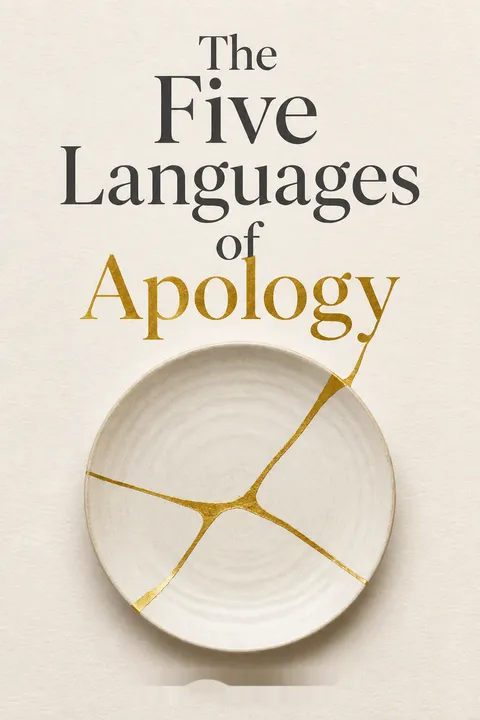
Apology response categoriesA framework for describing five ways people may interpret a sincere apology: expressing regret, accepting responsibility, making restitution, genuinely repenting, and requesting forgiveness. The book argues that people often prioritize one or more forms, so an apology may be sincere in intent yet fail to feel complete to its recipient.
Expressing Regret
Acknowledging pain causedOne of the five apology languages. It communicates sorrow about the harm an action caused, with attention to the other person's feelings and the specific consequences. A clear expression of regret avoids minimizing the offense or attaching blame to the injured person.
Accepting Responsibility
Owning one's wrongdoingOne of the five apology languages. It involves acknowledging that one's conduct was wrong instead of excusing it, shifting blame, or treating another person's provocation as justification. The book presents this admission as an important sign of maturity and a basis for rebuilding a damaged relationship.
Making Restitution
Repairing harm where possibleOne of the five apology languages. It means trying to compensate for or repair what an offense damaged, such as replacing a possession, correcting a public insult, or making a practical amends. In close relationships, the book also connects restitution to actions that reassure the other person of care.
Genuinely Repenting
Planning different behaviorOne of the five apology languages. It expresses a sincere intention to stop a harmful pattern and supports that intention with a specific plan. The book emphasizes follow-through, while recognizing that lasting change may involve effort, setbacks, and renewed accountability rather than instant perfection.
Requesting Forgiveness
Asking for pardonOne of the five apology languages. The offender asks the injured person to forgive them, acknowledging that forgiveness is the other person's choice rather than something to demand. The request signals a desire to restore the relationship, but it does not entitle the offender to immediate forgiveness or restored trust.
Agree/disagree
Separate feeling from actionThe book's approach to conflict separates the validity of an emotion from the behavior chosen in response. A person can agree that they feel hurt, angry, or disappointed while disagreeing that those feelings justify speaking cruelly or acting destructively. It supports honest expression without using emotion as an excuse.
The Five Love Languages
Ways people feel lovedA framework referenced by the authors to explain how people experience expressions of care. Its five categories are words of affirmation, acts of service, receiving gifts, quality time, and physical touch. The apology book applies this model to restitution, suggesting that repair may feel more meaningful when expressed in the recipient's preferred form of care.
FAQ
What is The Five Languages of Apology by Gary Chapman and Jennifer Thomas about?
- Core concept: The book explains that people express and receive apologies in five distinct "languages," and understanding these can transform relationships.
- Purpose: It aims to help readers apologize more effectively by matching their apology to the offended person’s primary apology language.
- Scope: The book covers apologies in marriages, families, dating, workplaces, and even self-forgiveness, using real-life examples and practical advice.
- Goal: The ultimate goal is to foster reconciliation, emotional healing, and restored trust in all types of relationships.
Why should I read The Five Languages of Apology by Gary Chapman and Jennifer Thomas?
- Improves relationships: Learning to apologize in the right way can heal broken relationships and prevent further emotional distance.
- Practical guidance: The book provides actionable steps and examples for making apologies that are truly understood and accepted.
- Emotional healing: It addresses the full cycle of apology and forgiveness, helping readers rebuild trust and move forward.
- Universal relevance: The advice applies to romantic, family, workplace, and even self-relationships, making it widely useful.
What are the five apology languages described in The Five Languages of Apology?
- Expressing regret: Saying "I'm sorry" and showing genuine sorrow for the pain caused, focusing on empathy.
- Accepting responsibility: Admitting "I was wrong" and owning up to the offense without excuses or blame-shifting.
- Making restitution: Asking "What can I do to make it right?" and taking action to repair the damage.
- Genuinely repenting: Saying "I'll try not to do that again" and demonstrating a commitment to change.
- Requesting forgiveness: Asking "Will you please forgive me?" and humbly placing the choice of forgiveness in the offended person’s hands.
How can understanding the five apology languages from The Five Languages of Apology improve forgiveness and reconciliation?
- Speaking the right language: Apologies are more likely to be accepted when expressed in the offended person’s primary apology language.
- Avoiding misunderstandings: Many apologies fail because they don’t match what the other person needs to hear or see.
- Completing the forgiveness cycle: Matching apology languages helps move from offense to apology to forgiveness, allowing relationships to heal.
- Restoring trust: Effective apologies open the door to rebuilding trust and emotional closeness.
How do I discover my own primary apology language according to The Five Languages of Apology?
- Reflect on expectations: Consider what you need to hear or see from someone to feel ready to forgive.
- Identify emotional triggers: Think about which aspect of an offense hurts you most—regret, responsibility, restitution, repentance, or forgiveness requests.
- Analyze your apologies: Notice what you emphasize when you apologize to others; this often reveals your own primary language.
- Self-awareness exercise: The book suggests reflecting on past conflicts and apologies to pinpoint your main apology language.
How can I identify someone else’s primary apology language as suggested by Gary Chapman and Jennifer Thomas?
- Ask about past experiences: Inquire about apologies they found lacking and what was missing for them.
- Direct questions: Ask what they need to hear or see to feel genuinely forgiven.
- Observe reactions: Pay attention to which parts of your apologies they respond to most positively.
- Trial and feedback: Try different apology languages and invite feedback to discover what resonates most.
What challenges might I face when using the apology languages from The Five Languages of Apology?
- Unfamiliarity and discomfort: Some apology languages may feel unnatural due to upbringing or personality, such as admitting fault or requesting forgiveness.
- Fear of vulnerability: Asking for forgiveness can be difficult for those who fear rejection or loss of control.
- Breaking old habits: Many people are used to excusing their behavior or avoiding apologies, requiring conscious effort to change.
- Need for practice: The book recommends practicing difficult phrases and approaches to become more comfortable.
What advice does The Five Languages of Apology give for overcoming difficulties in apologizing?
- Practice and repetition: Write down and rehearse challenging apology phrases to build confidence.
- Understand the value: Recognize that sincere apologies build respect, trust, and self-esteem rather than diminishing them.
- Develop a plan: For genuine repentance, create specific steps for change and communicate them to the offended person.
- Seek support: The authors suggest counseling or self-reflection for those struggling with deep-seated barriers to apologizing.
How does The Five Languages of Apology by Gary Chapman and Jennifer Thomas address situations when no apology is offered?
- Confront lovingly: The offended person should approach the offender with honesty and kindness, seeking an apology.
- Repeat if necessary: Multiple attempts may be needed to give the offender opportunities to apologize.
- Release to a higher power: If no apology is forthcoming, the book advises releasing the offender to God’s judgment and focusing on personal healing.
- Avoid revenge: The emphasis is on forgiveness and letting go, rather than seeking retribution.
What is the difference between forgiveness and trust in The Five Languages of Apology?
- Forgiveness is a decision: It involves consciously choosing to let go of resentment and allow the person back into your life.
- Trust is emotional: Trust is a feeling of confidence that must be rebuilt over time through consistent trustworthy behavior.
- Separate processes: Forgiveness can be granted immediately, but trust may take longer to restore after a betrayal.
- Nurturing trust: The book compares trust to a tender plant that needs care and time to grow again.
How does The Five Languages of Apology apply to family, dating, and workplace relationships?
- Family relationships: Sincere apologies can heal wounds between parents, children, siblings, and in-laws, renewing family ties.
- Dating: Effective apologies are crucial for resolving conflicts and building a strong foundation for marriage.
- Workplace: Apologies improve relationships with coworkers and customers, and companies benefit from training employees in apology languages.
- Real-life examples: The book shares stories from all these contexts to illustrate the power of apology languages.
What is the importance of apologizing to oneself, according to The Five Languages of Apology by Gary Chapman and Jennifer Thomas?
- Restores inner peace: Self-apology helps close the gap between your ideal and real self, reducing guilt and anxiety.
- Facilitates self-forgiveness: Admitting mistakes and forgiving yourself is essential for emotional and spiritual health.
- Promotes growth: Committing to positive change after self-apology leads to personal development.
- Practical method: The book suggests writing and audibly expressing a self-apology and self-forgiveness statement for healing.
About the Author
Other books by Gary Chapman










Download PDF
Download EPUB
.epub digital book format is ideal for reading ebooks on phones, tablets, and e-readers.








