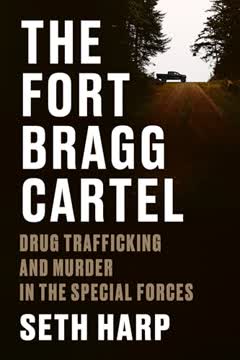
Key Takeaways
1. Fort Bragg: A Nexus of Covert Operations and Criminality
Fayetteville as “a dumping ground for the problems of the American century of war and empire, where the wounds of war have pierced most deeply and are most visible.”
A City Under Siege. Fort Bragg, now Fort Liberty, and its surrounding town of Fayetteville, have become a microcosm of the hidden costs of America's "forever wars." The base, home to elite Special Operations Forces (SOF), has seen a disturbing rise in crime, drug trafficking, and violence, reflecting a profound moral decay within its ranks. This environment, often dubbed "Fatalville" or "Fayettenam," struggles with elevated levels of poverty, racism, and gender violence, with many locals attributing these issues to soldiers returning from deployments with "narcotrafficking knowledge and contacts."
Unseen Infrastructure. Despite billions in taxpayer money, much of Fort Bragg appears dilapidated, contrasting sharply with the secretive, well-maintained Delta Force headquarters, "the Building." This compound, a hub of global mass surveillance, houses around two thousand personnel, 60% civilian, and is equipped with advanced facilities for covert operations. The stark difference highlights the prioritization of clandestine warfare over the welfare of conventional troops and the local community.
A Law Unto Itself. The Special Operations Command (SOCOM) and Joint Special Operations Command (JSOC), with Delta Force at its core, operate with an extraordinary degree of autonomy and secrecy. This "military within the military" is largely shielded from public and congressional scrutiny, allowing a culture of impunity to flourish. This unchecked power contributes to the pervasive sense that elite soldiers "do what they want," often with little to no accountability for their actions, even when those actions involve serious crimes.
2. Delta Force: A Culture of Impunity and Psychological Erosion
Behind a heavy curtain of government secrecy, twenty-plus years at war in Afghanistan, Iraq, Yemen, Libya, Somalia, Syria, the Philippines, and elsewhere has given rise in this ultra-elite unit to a toxic culture of addiction, criminality, madness, violence, and impunity.
The Elite's Dark Side. Delta Force, the U.S. Army's top-secret special mission unit, is portrayed as a "counterterrorism killing machine" operating with extreme secrecy and a direct line to the White House. Its operators, trained in sabotage, espionage, and assassination, are often deployed in civilian clothes under false identities. This constant engagement in "dirty wars" has fostered a deeply troubling internal culture.
Addiction and Mental Strain. The relentless pace of operations, often requiring days without sleep, led to widespread reliance on prescription amphetamines like dextroamphetamine (Adderall) to stay awake, and sedatives like Ambien to sleep. This pharmaceutical cocktail, combined with the psychological toll of combat, contributed to severe addiction issues, including:
- Cocaine, MDMA, crystal meth, and powdered heroin use.
- Dangerous practices like "speedballing" (heroin and cocaine) via suppositories.
- A "toxic culture of addiction, criminality, madness, violence, and impunity."
A Fraternity of Killers. The unit's internal dynamics are described as a "good old boys' club" with a "fraternity-like mentality," where operators boast of kill counts and engage in aggressive, often misogynistic behavior. Despite aspirations of professionalism, the environment is characterized by:
- Flagrant drug use and dealing among active-duty members.
- Disregard for regulations, including wearing fictitious unit patches and out-of-regulation tattoos.
- A "soulless" demeanor in some, tormented by the "things they had inflicted."
3. Afghanistan's Opium Legacy: Fueling a Domestic Drug Epidemic
Under U.S. occupation, Afghanistan had become the world’s leading narco-state, with an economy almost entirely dependent on the drug trade.
The Poppy Boom. The U.S. invasion of Afghanistan in 2001, ostensibly to fight terrorism, inadvertently triggered a massive resurgence in opium production. After the Taliban's initial ban on poppy cultivation, the U.S.-backed client state, led by Hamid Karzai, legalized poppy planting, transforming Afghanistan into the world's primary source of illicit opiates. This led to:
- A 7,514% increase in heroin production by 2005.
- Afghanistan producing nine times more heroin than the rest of the world combined by 2009.
- The Helmand province becoming a "durable drug cartel" under U.S.-allied warlords.
DEA's Dubious Data. Despite the overwhelming evidence of Afghan heroin flooding global markets, the DEA's "heroin signature program" controversially claimed that less than 1% of heroin in the U.S. came from Afghanistan. This assertion was based on:
- Excluding airport seizures and small busts, where Afghan heroin was more likely to be found.
- Classifying 60% of highly purified white powder heroin as "Alleged Mexican White," despite Mexican heroin typically being black and low-quality.
- Independent researchers highlighting "appreciable measurement error" and massive underestimation of non-Latin American heroin.
Complicity and Cover-up. The U.S. government's complicity in the Afghan drug trade was profound. The CIA prioritized relationships with "significant traffickers" over counternarcotics efforts, and the military largely ignored poppy eradication. This willful ignorance in "policy circles" allowed the drug trade to flourish, eroding the legitimacy of the Afghan state and contributing to a global opioid epidemic, including a surge in "China white" heroin in the U.S.
4. The Lavigne-Leshikar Murder: A Symptom of Deeper Corruption
“You know I’m a bad person, right? I kill people for a living.”
A Tragic Escalation. The book opens with the chilling account of Master Sergeant William "Billy" Lavigne II, a Delta Force operator, shooting and killing his best friend, Sergeant First Class Mark Leshikar, a Green Beret, in front of their young daughters. This act was the culmination of a multi-day drug binge involving cocaine, MDMA, prescription pills, and "bath salts," which left Leshikar paranoid and delusional.
The Cover-Up Begins. Despite Leshikar being unarmed and forensic evidence contradicting Lavigne's self-defense claim (no screwdriver found, multiple shots, including a "coup de grâce"), local authorities swiftly closed the case. Key elements of the cover-up included:
- Lavigne's contradictory stories: first claiming suicide, then an unknown intruder, finally self-defense with a screwdriver.
- No drug test administered to Lavigne, despite clear evidence of intoxication.
- Merritt, a senior Delta Force operator, retrieving and later giving Leshikar's phone to his wife, who reset it, erasing data.
- CID's later, contrived theory that Leshikar had a gun, based on disputed child testimony.
A Pattern of Impunity. The immediate exoneration of Lavigne, a Delta Force operator, highlighted a systemic issue of preferential treatment for elite soldiers. This incident, witnessed by children and later revealed to be a drug-fueled homicide, became a stark example of how the "well-oiled machine" of military and civilian authorities worked to protect its own, regardless of the severity of the crime.
5. Law Enforcement Complicity: Shielding the "Fort Bragg Cartel"
“They are a very hush-hush community,” said Diane Ballard, the lone police detective in nearby Vass, the tiny town where many Delta Force operators, active and retired, own homes. “They do what they want.”
A Network of Protection. The book reveals a deep-seated network of complicity between Special Operations Forces and local law enforcement in North Carolina. This network ensures that crimes committed by elite soldiers are often overlooked, dismissed, or covered up. Examples include:
- Delta Force operators receiving "special treatment" at the Cumberland County jail, avoiding booking and formal arrest.
- Felony charges against Lavigne (drug manufacturing, harboring an escapee, assault) repeatedly dropped by the District Attorney.
- Police and courts showing "extraordinary degree of leniency" to Special Forces soldiers, often dismissing charges with a "Thank you for your service."
The Vallejo Case. The alleged rape case against Delta Force operator Cristobal Lopez Vallejo further illustrates this systemic protection. Despite damning evidence and a finding of probable cause, the case was:
- Moved from civilian court to a military court-martial on Fort Bragg.
- Conducted without public transparency, with no transcript and audio recordings destroyed.
- Resulting in an acquittal, despite the victim's credible testimony and DNA evidence, due to alleged prosecutorial incompetence and judicial bias.
The "Well-Oiled Machine." Courtney Williams, a former Delta Force "signature reduction specialist," described a "well-oiled machine" that scrambled to "get to it before it hit the news" whenever an operator was arrested. This included:
- Making phone calls at all hours to quash incidents.
- Liaisoning with local police and judges.
- Ensuring that "higher-ups had cut Billy some kind of deal" in the Leshikar murder.
6. Unsolved Mysteries: The Murders of Dumas and Roman-Martinez
“I believe the military killed my father.”
The Dumas-Lavigne Double Homicide. In December 2020, Billy Lavigne and Timothy Dumas Sr., a former Special Forces quartermaster turned drug dealer, were found murdered on Fort Bragg. Dumas, who had written a "blackmail letter" exposing a "drug-trafficking organization within the military," was found execution-style. Lavigne, stripped and wrapped in a tarp, had been shot multiple times.
- CID's initial theory: Dumas and an unidentified "Third Man" killed Lavigne over a drug debt, then the Third Man killed Dumas to eliminate a witness.
- Dumas's son, T.J., believes his father was murdered by the military for threatening to expose the "Fort Bragg cartel."
- The crime scene was professionally sterilized, and Dumas's truck was firebombed 40 miles away, suggesting a sophisticated operation.
The Beheading of Roman-Martinez. Specialist Enrique Roman-Martinez, a young paratrooper and LSD dealer, disappeared during a camping trip with fellow soldiers in May 2020. His severed head, showing signs of "chop injuries" from a "hand tool," washed ashore days later.
- CID's investigation was extensive but yielded no suspects or motive.
- Despite four medical examiners confirming homicide, CID pushed a "boating accident" theory, which was "legally specious" and "ridiculous."
- The seven other campers, all soldiers, consistently denied wrongdoing, and no physical evidence linked them to the murder.
A Pattern of Unresolved Violence. These high-profile, unsolved murders, coupled with the mysterious disappearance of Dumas's blackmail letter (found blank on a thumb drive), underscore a disturbing pattern of violence and cover-ups at Fort Bragg. The lack of resolution fuels suspicions of deeper, systemic corruption and a deliberate effort to conceal the truth.
7. The Epidemic of Despair: Overdoses, Suicides, and Violence
“Damaged people self-medicate,” she said. “It’s what they do.”
A Crisis of Mortality. Fort Bragg experienced an unprecedented wave of fatalities in 2020-2021, with 109 soldier deaths, mostly stateside. This crisis, far exceeding that of any other U.S. military base, was driven by:
- Suicides: 21 in 2020, a rate triple the national average, and 19 in 2021.
- Overdoses: The second-leading cause of death, with a rate of 36 per 100,000 soldiers, higher than the national average. Fentanyl was the primary culprit.
- Homicides: A sharp increase in soldier-on-soldier violence and unsolved murders.
Substance Abuse Rampant. The book highlights widespread drug use across all ranks, from conventional troops to elite operators:
- LSD was "the main drug" among lower-enlisted soldiers.
- Cocaine, meth, and heroin were prevalent in Special Forces.
- Anabolic steroids were widely used, contributing to "roid rage" and aggressive behavior.
- Military doctors often prescribed amphetamines, opiates, and anxiolytics, creating a pipeline to addiction.
Moral Injury and Neglect. Many soldiers, like Keith Lewis who murdered his pregnant wife and committed suicide, were deeply affected by "moral injury" from combat. Despite repeated warnings from family members about Lewis's escalating violence and drug use, his unit "didn't do anything." This systemic neglect, coupled with the military's policy of denying life insurance for "willful misconduct" in overdose deaths, further compounds the tragedy for grieving families.
8. The Raeford Drop Zone: A Secret History of Drug Smuggling
“Thacker is widely known in the Raeford area for trafficking by air narcotics.”
A Covert Airfield. The Raeford Drop Zone, a privately owned airport near Fort Bragg, has served for decades as a Delta Force training ground for high-altitude, high-opening (HAHO) parachute jumps. However, it also has a long and "checkered history" as a hub for regional and international drug trafficking.
Gene Paul Thacker's Legacy. The airpark's original owner, Gene Paul Thacker, a legendary Special Forces veteran and CIA asset in Laos, used the facility and his fleet of turboprop planes to smuggle "staggering weight of cocaine" into the U.S. He was known for:
- Frequent under-the-radar flights to Florida and the Caribbean, carrying up to a thousand pounds of drugs.
- Evading law enforcement through shrewd cunning and connections, including Golden Knights testifying to his character.
- Being involved with notorious ex-military drug traffickers like Andrew Carter Thornton II ("Cocaine Bear" myth) and Barry Seal.
Tim Thacker and Methamphetamine. Gene's son, Tim Thacker, continued the family business, shifting to methamphetamine. He became a "very committed and very proficient drug trafficker," supplying 95% pure ice to street gangs across North Carolina. Billy Lavigne, a HAHO instructor at the Drop Zone, worked alongside Tim Thacker while both were dealing meth in Fayetteville.
The Crooks Mystery. The bizarre death of Charles Crooks, a Rampart Aviation pilot supporting USASOC, who "fell, jumped, or was thrown" from a plane over Wake County in 2022, further shrouded the Drop Zone in mystery. The NTSB's inconclusive report, implying suicide due to distress over a hard landing, failed to address the site's notorious history of illicit activities.
9. The Illusion of Accountability: Justice Denied for Elite Soldiers
“They are so well trained at diversion and misinformation. They are experts at covering things up. I would not put anything past them. They have no morals. They think they have no accountability, because they don’t.”
Systemic Obstruction. The book argues that the military justice system, particularly for Special Operations Forces, is designed to protect the institution and its elite members from accountability. This is evident in:
- The FBI's abrupt takeover and "sweeping clean" of CID's Lavigne/Dumas investigation, deleting evidence and blocking public access to files.
- The failure to prosecute any of the 15 suspects in the January 2023 Longstreet Gate bust, despite allegations of drug and human trafficking involving Green Berets and a Delta Force operator.
- The dismissal of serious charges against numerous soldiers, including Timothy Dumas and Martin Acevedo III, who were caught trafficking large quantities of drugs.
Propaganda and Misinformation. Delta Force, with its expertise in psychological operations, actively controls media narratives to maintain its "quiet professional" image. Courtney Williams, a former unit employee, states:
- "The news lies all the time. We were trained that way in our signature reduction training. The news is fed false information on purpose."
- This allows the unit to deflect blame and maintain public trust, even amidst mounting scandals.
The New Military Justice System. While recent reforms aim to transfer prosecutorial discretion for serious felonies (rape, murder) to an independent Office of Special Trial Counsel, commanders retain the authority to scuttle drug-smuggling investigations. This "implicit veto power" ensures that the "Fort Bragg cartel" can continue to operate with minimal external oversight.
10. The Enduring Cost of Forever Wars: A Broken Military, A Distrustful Public
“Our soldiers are done fighting wars without end states or clear objectives.”
A Tarnished "Golden Age." Admiral William McRaven's declaration of the "golden age of special operations" stands in stark contrast to the reality depicted in the book. The "forever wars" in Afghanistan, Iraq, and Syria, which made SOCOM a "budgetary and bureaucratic juggernaut," ultimately failed to achieve their objectives, instead causing:
- Millions of deaths and tens of millions displaced.
- Trillions of dollars squandered.
- America becoming "the great villain of the twenty-first century" in the eyes of much of the world.
Decline in Public Trust and Recruitment. The military's ethical crisis and the perceived lack of accountability have severely eroded public trust. For the first time, less than half of Americans express "great deal of faith" in the armed forces, leading to:
- All four service branches missing recruiting targets for multiple years.
- The Army lowering enlistment standards, including age, education, and tattoo policies.
- Veterans like Tyler Grey advising young people, "Don't do it. It's a trap. Run, go live your life, man."
A Cycle of Violence and Despair. The book concludes with a grim outlook, detailing continued murders, drug trafficking, and suicides at Fort Bragg, even as the base is renamed "Fort Liberty." The cycle of violence, addiction, and cover-ups persists, exemplified by:
- The 2025 New Year's Day attacks by two former Fort Bragg soldiers, one a mass murderer, the other a suicide bomber, both disillusioned with "wars without end states or clear objectives."
- The appointment of figures like Michael Waltz (Green Beret, war hawk) and Pete Hegseth (dipsomaniac, war criminal defender) to high office, signaling a continuation of the problematic culture.
Last updated: