

Plot Summary
Six Cards in the Rain
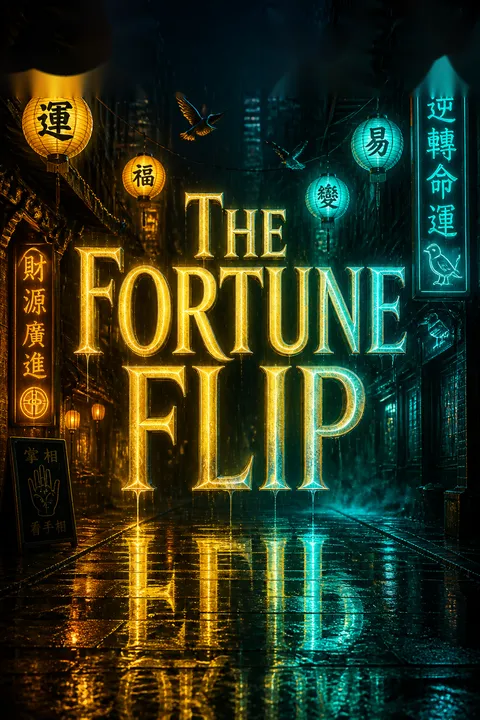
Hazel Yen arrives in Chinatown newly laid off, freshly divorced, and without the charm bracelet that belonged to her late mother. Hoping a fortune reading might make sense of the day, she asks Wendy’s trained sparrows to reveal her future. Before Wendy can finish, Logan Wells rushes into the tent after his borrowed cat, Toffee, and the commotion scatters the cards across the table.
Hazel and Logan try to identify the original selections, but every card bears a beak mark. Wendy assigns the nearest three to Hazel and reads predictions of buried grief, a coming loss, and a painful upheaval. The disrupted reading leaves Hazel with no certainty about whose future she has heard, only the sense that her already unstable life is about to change.
The reading gives Hazel a structure for confronting uncertainty, but its authority is compromised before it can settle her. The scattered cards turn prediction into a shared accident, binding two strangers through an event neither can interpret. Hazel’s skepticism is not simple disbelief: after years of financial and emotional instability, she wants reassurance while fearing what reassurance might demand of her. The missing bracelet sharpens that conflict. Her mother’s keepsake is a tangible link to a past she cannot recover, while the cards promise access to a future she cannot control.
A Ticket Between Them
Logan follows Hazel to a bodega, buys supplies to clean the scratches Toffee left on her arm, and tends to her while she eats cherry gummies to distract herself. He tells her his reading promised financial abundance and an opportunity to pursue a goal.
On impulse, he buys a Powerball ticket and lets Hazel choose its final number, then places the ticket in her bag. The numbers match the draw, and the strangers suddenly share a multimillion-dollar win. Hazel refuses her half, convinced sudden wealth will bring trouble, but accepts Logan’s attention long enough to kiss him.
Then she leaves, saying she needs the night behind her. In the morning, Logan’s number and the winning ticket remain in her bag, tangible evidence that the impossible encounter did not end at the curb.
The lottery win transforms a flirtatious encounter into a practical and ethical bond. Logan’s promise to share is not a seduction tactic alone; it becomes the first test of whether his generosity respects Hazel’s choice. Hazel’s refusal reflects a family history in which money arrives unpredictably and disappears with consequences. The kiss, followed by retreat, mirrors her larger pattern: she can reach for pleasure, but struggles to trust that it can continue safely. The ticket left in her bag preserves the possibility of connection without forcing her to accept either romance or wealth immediately.
The Fortune Flip Theory
Hazel uses Logan’s number to arrange the pizza they postponed, bringing the winning ticket back to him. He admits that his normally smooth theater load-in has become a string of failures, while she describes unexpectedly quick repairs and other small breaks.
They decide the disrupted reading may have switched their fortunes, though neither can prove it. After another reading gives Logan ominous predictions about time, work, and travel, Hazel agrees to help him test the theory.
They choose the lottery annuity rather than a lump sum, balancing Logan’s instinct to invest immediately against Hazel’s need for predictable income. The jackpot is shared with three other winning tickets, leaving each of them a substantial but much smaller annual payment. Their money is not yet in hand, but their new partnership has begun.
Their theory of exchanged luck is less important as supernatural fact than as a negotiated language for mutual care. Logan can admit fear through the idea that his luck has changed; Hazel can help without first confessing how much she wants to stay near him. Their annuity decision offers a contrast to the reckless financial cycles that shaped Hazel’s childhood: they slow down, compare consequences, and choose stability together. The fortune reading also introduces a question that will persist through the novel: whether predictions reveal destiny, or simply give people a story through which to understand choices they already face.
Masks and Lucky Charms
At the lottery’s press event, Hazel and Logan wear elaborate elderly disguises and pose as a married couple to protect their private lives. The cover nearly collapses when another winner is arrested during his interview, but they complete theirs and confirm they chose the annuity.
Hazel receives a promising interview request for a management position, while Logan’s work troubles continue. She decides to help him court good fortune, starting with horseshoes, four-leaf clovers, lucky foods, and other charms.
The search becomes an excuse to spend time together, and Logan tries a rowboat on Central Park Lake despite his growing anxiety about risk. A bird steals their wishbone, Logan loses his balance, and he falls into the water. Hazel reaches toward him, but he swims to the boat and climbs back aboard, turning the mishap into another shared joke.
The disguises let Hazel and Logan rehearse intimacy before they have to name it. In public, they perform decades of marriage; in private, they are still learning how to trust a stranger with money, attention, and vulnerability. Hazel’s luck project gives her a role she understands: research, organize, act. Logan’s willingness to follow her rituals is less belief than reciprocity. Yet the lake fall exposes the limits of their attempts to control events. They can prepare and play, but not prevent every mishap. Their growing attraction rests partly on how quickly each makes room for the other’s imperfect response.
A Wrist, a Warning
After their first rooftop dinner together, Logan trips on a firehouse threshold and breaks his wrist. Hazel takes him to the hospital, then brings him coffee and food while he recovers. At Sweet Escape, the candy shop where she has taken temporary work, she learns the lake house mortgage has ballooned after her father secretly refinanced the property.
The house is at risk of foreclosure, and Hazel’s brother Jerry has also asked her for money after claiming he broke both legs. Overwhelmed, she rushes to Logan’s theater and tries to use sex to escape the fear.
He stops her, asks what is wrong, and takes her to an observation deck instead. There Hazel admits the house may be lost. Logan listens without trying to solve it, and she begins to recognize that she wants closeness, not another temporary distraction.
The crisis reveals how Hazel’s caretaking has become a substitute for security. She measures love through obligations, covering family expenses while suppressing anger at the people who create them. Her impulsive advance toward Logan is not merely desire; it is an attempt to turn distress into sensation and regain control of her body. Logan’s refusal is an act of care because he does not confuse consent with rescue. By taking her somewhere calm and staying present, he offers a different model of intimacy: one in which pain can be witnessed rather than immediately erased.
A Birthday Underwater
Before Hazel’s thirtieth birthday, Logan hires a luck consultant, Maxwell, to challenge the idea that fortune is something people are simply born with. Maxwell argues that persistence, openness, and saying yes create opportunities.
On her birthday, Logan rents the SeaGlass Carousel, cooks longevity noodles, and gives Hazel charms inspired by their growing collection of lucky objects. The attention brings her to tears as she recalls how her mother loved birthdays and how her father’s gambling often made the day after one painful.
Logan listens, then respects her request to slow their physical relationship rather than let the night’s intensity outrun trust. Soon after, Hazel’s candy shop pop-up at Grand Central succeeds, and she discovers how much she enjoys using data to help a small business. When she agrees to accompany Logan to Maine, their connection becomes a deliberate choice.
The birthday scene makes celebration an emotional risk for Hazel. She has learned to expect that good days are brief pauses before disappointment returns, so Logan’s generosity unsettles her even as it comforts her. His willingness to slow down matters as much as the elaborate setting: he demonstrates that affection can be sustained without being consumed by urgency. Maxwell’s advice also reframes the couple’s luck theory. Their achievements arise not only from chance, but from repeated acts of attention, labor, and openness. Hazel’s success at the pop-up hints that she may want a life built around meaningful work, not simply a higher salary.
The Road North
On the drive to Maine, Hazel and Logan stop at a roadside palm reader. Fiona tells Hazel that her lines suggest worry, sacrifice, and coming changes; Logan leaves before receiving his own reading, frightened of hearing more bad predictions.
In the car, he admits he has trouble reading Hazel’s emotions because she hides her reactions. Hazel explains that after her mother died when she was six, she learned to suppress her feelings while managing her father’s gambling and her family’s needs.
Logan asks her to name what feels good, and she starts with small things before admitting she likes being with him and can imagine a future together. He responds with hope rather than pressure, and they stop for Frostys. For Hazel, saying happiness aloud becomes an experiment in trusting the feeling instead of waiting for it to vanish.
Hazel’s emotional restraint is presented as an adaptation, not a personality defect. As a child, she could not stabilize her father’s behavior, but she could make herself useful and quiet. That strategy protected her from volatile highs and lows while also narrowing what she could feel. Logan’s question about happiness gives her a manageable way to practice emotional expression. The road trip’s forward movement supports the shift: she is not cured of fear, but begins to speak from desire rather than only from duty. Logan’s response makes the future imaginable without claiming it is guaranteed.
The Disguises Unravel
At Logan’s mother’s retirement gathering, his relatives discover a social media post that connects the couple’s elderly lottery disguises to security footage from the bodega. Logan’s red woven bracelet appears in both sets of images, confirming their identities.
The family treats the exposure as amusing good fortune, but Hazel feels her privacy disappear. Logan argues with his sister Jane, who resents what she sees as his easy success and his refusal of a family inheritance. He finally pushes back against relatives who reduce his work and choices to luck.
Hazel uses their agreed escape signal, and they leave before the argument can deepen. At a harbor, Logan apologizes and explains that he rejected his wealthy father’s inheritance because it came with pressure to join the family business. Hazel sees that his relationship with money has its own history of strings and control.
The exposure makes privacy a shared vulnerability rather than a problem Hazel alone must manage. Logan’s family has built a role for him as the lucky one, a label that erases the work and refusals behind his life. His conflict with Jane shows how success can become a family story that obscures unequal feelings and unspoken expectations. The harbor conversation complicates Hazel’s assumptions about wealth: Logan has not simply lacked her financial fears, he has resisted money used as leverage. Their growing intimacy depends on recognizing these differences without pretending they are equivalent.
The House Was Mortgaged
When Hazel and Logan visit the lake house, her father welcomes Logan and assumes Hazel has come to share her lottery winnings. He reveals that Jerry’s accident involved sprained ankles, not the broken legs Hazel believed she was financing.
Jerry had used a hospital photograph to support his false story, while their father secretly refinanced the house and spent far more than Jerry needed. Hazel realizes both men concealed the truth while relying on her to keep rescuing them. Her father dismisses her anger and treats the lottery as a family windfall, leaving her emotionally numb.
Outside, Logan examines the neglected dock. Hazel’s childhood refuge has become a damaged property and a financial trap, forcing her to separate her memories of the house from her responsibility for her father’s choices.
The revelation breaks Hazel’s longstanding bargain with her family: she gives money and labor in exchange for the hope that her sacrifices will keep everyone safe. Jerry’s deception and her father’s secrecy show how her rescues have shielded them from consequences while making her responsible for the damage. The house is emotionally charged because it holds real memories of her mother and grandparents, yet those memories cannot make its present condition sustainable. Hazel’s numbness signals the old defense returning. The crucial change is that she now has Logan beside her and can begin to question the bargain rather than simply pay it.
Breaking the Chimney
Back in New York, Hazel and Logan hire a feng shui consultant to assess the troubled theater, then talk about what their work and family crises have exposed. Logan admits he misses building with his hands and worries he is failing as head carpenter.
Hazel tells him the lake house and her father’s choices have left her unsure what to do with her grief. He takes her to a storage unit of retired Broadway sets and gives her a pipe, inviting her to destroy a discarded Mary Poppins chimney rather than keep repairing everyone else’s damage.
Hazel smashes it while naming what she has lost: her mother, her grandparents, the house, her job, and her sense of self. When the structure collapses, she tells Logan she loves him. He returns the confession, and they make love.
The broken chimney externalizes a psychological shift that words alone have not achieved. Hazel has spent years converting pain into maintenance, keeping the family structure standing even when others damage it. Deliberate destruction lets her experience anger as an action she can choose, not a threat she must suppress. The set is already discarded, so breaking it carries no real cost, but its collapse gives physical form to feelings she has treated as forbidden. Logan’s presence does not fix her grief; it makes room for it. Their declaration of love follows emotional honesty rather than fortune or rescue.
Choosing Her Own Work
After an interview process offers Hazel a higher-paying manager role, she turns to Emma and Gloria at Sweet Escape to understand why the opportunity feels wrong. Their friendship gives her room to admit she has spent her life managing her father and brother, and does not want to manage a team simply to earn more.
Hazel chooses to stay at the candy shop, where she can combine customer work with data analysis and help Emma plan expansion. She then calls her father and Jerry with Logan beside her.
Rather than pay the overdue mortgage or cover more of their debts, she tells them the lake house will go into foreclosure unless her father takes responsibility. She also confronts Jerry about his lies and refuses further payments, offering therapy support without surrendering her boundary.
Hazel’s decision marks a shift from externally measurable success to self-authored value. The management role would appear to solve the immediate financial crisis, but it would also repeat the role she has occupied at home: carrying other people while sidelining her own preferences. Choosing Sweet Escape is not a rejection of ambition; it is a more specific ambition shaped by care, analysis, and visible contribution. Her call to her family makes the emotional change concrete. Compassion remains, but it no longer requires financial compliance. The foreclosure is painful, yet refusing to subsidize secrecy allows Hazel to stop confusing responsibility with love.
A Show That Goes On
As opening night approaches, Logan stops treating every setback as proof that his luck has vanished. He accepts that his wrist hurts, his crew is under pressure, and the show is not ready in the way he wanted.
Mrs. Walker reminds him that his place in theater came through persistence as well as chance, and he returns to problem-solving. He replaces the failing canoe with a safer wheeled rowboat, gathers the crew to revise the plan, and finds a way to add the missing moon backdrop.
Hazel, meanwhile, returns to swimming at the YMCA, where moving through the water reconnects her with a self she had set aside. Windfall opens imperfectly: props fall, actors miss lines, and the fan fails, but the audience stays with the story and the production survives its first night.
The opening-night chaos resolves Logan’s arc by refusing the fantasy that emotional growth eliminates practical difficulty. His success is not a flawless production; it is his ability to acknowledge errors, consult his crew, and keep making adjustments. That change answers Maxwell’s claim that luck can be made through action, while preserving room for randomness. Hazel’s return to swimming offers a parallel resolution: she does something for herself that is neither work nor family care. Both characters reclaim agency not through total control, but through participation in a life that remains imperfect.
The Winning Crane
After Windfall’s first performance, Hazel surprises Logan with a life-size crane game filled with plush New York icons, recreating the bodega’s rigged machine on the street. He is lifted over the pit and manages to snag the giant soft pretzel Hazel wanted, then lowers it to her and kisses her.
Their friends from Sweet Escape, the theater, and the pizzeria join the celebration, with the long-delayed milkshakes finally available. As light rain begins, neither Hazel nor Logan treats it as a warning that the good night must end.
They dance together in the street. Logan recognizes that the life they have built includes chance, but also the choices and work that brought them here. Hazel no longer needs a prediction to believe happiness can return.
The crane game revisits the first night’s small contest, but its scale and outcome have changed. Logan once used a machine he could usually beat to test whether his luck had deserted him; now Hazel creates a game where the point is not to prove fate, but to share pleasure. The celebration also gathers the chosen community each has been building, from candy-shop friends to theater colleagues. Rain, once tied to the chaotic first meeting, no longer signals danger. Its presence shows that a good moment can remain good even when circumstances shift.
Epilogue
Eleven months later, Hazel and Logan live together in the East Village. Windfall has become a hit, Hazel works with Emma and Gloria as Sweet Escape prepares a second shop, and Logan is planning a woodworking program for young people recovering from substance abuse.
Hazel’s father and Jerry are slowly rebuilding trust, while the lake house has gone to a family who plans to restore it. At the Good Fortune Fair, Hazel and Logan find a four-leaf clover and leave it for someone else. They approach another fortune-telling booth, but before they can learn what their future holds, Doc and Marty swoop in and carry away the fortune stick.
The epilogue offers resolution without pretending every wound has been repaired. Hazel’s father still resists treatment, Jerry is still rebuilding his finances, and trust remains unfinished work. Yet Hazel has stopped making herself the emergency plan for everyone around her. The lake house passes to a family able to care for it, allowing its memories to survive without requiring Hazel to keep financing its decline. The sparrows’ final theft returns the story to its opening uncertainty, but the couple’s response has changed: they can laugh and continue together without demanding an answer.
Analysis
The Fortune Flip uses luck as a story people tell about uneven control. Hazel and Logan initially treat fortune as something transferable: cards are mixed, a lottery ticket wins, and an apparent streak of bad events seems to move from one person to the other. Yet their lives resist a neat supernatural explanation. Logan’s career advances because he persists, asks for work, and learns his craft. Hazel’s capacity for analysis is real, but she has applied it chiefly to anticipating family crises rather than deciding what she wants. The novel’s central distinction is not between lucky and unlucky people, but between chance and response.
Money gives that distinction material stakes. Hazel’s family history makes sudden wealth feel dangerous because money has repeatedly enabled gambling, secrecy, and broken promises. Logan’s inheritance carries a different threat: obligation to a father who used financial support as leverage. Their choice of an annuity becomes an act of caution, but it cannot rescue them from every consequence. Hazel must eventually let the lake house go, not because its memories are false, but because preserving it has become inseparable from subsidizing her father’s decisions. The new family that restores the property allows the memory to continue without demanding her financial sacrifice.
The romance develops through repeated alternatives to the characters’ defenses. Logan learns that optimism can silence as effectively as pessimism; Hazel learns that caretaking can disguise fear of being unnecessary. Their strongest acts of love are not grand gestures alone, but listening, respecting a request to slow down, admitting anger, and staying through uncertainty. The fortunes and charms give them a playful vocabulary, while swimming, woodworking, data analysis, and building a theater set return them to embodied work and choice. By the end, they do not know what will happen next. They have learned that a meaningful future is not something to receive from a prediction. It is something they can help make, without pretending they can control every outcome.
Review Summary
The Fortune Flip receives an overall rating of 3.86/5, with most readers praising its charming black cat/golden retriever dynamic between Hazel and Logan, meaningful Chinese cultural representation, and thoughtful handling of heavier themes like gambling addiction and family dysfunction. Reviewers consistently highlight the low-angst romance, strong dual audiobook narration by Katharine Chin and Austin Rising, and the creative luck-swapping premise. Some critics noted tonal inconsistencies between slapstick moments and serious topics, and felt certain storylines, like Hazel's divorce, deserved deeper exploration.
Characters
Hazel Yen
The family fixerHazel is a New York data analyst whose competence has become both a strength and a hiding place. After her mother’s death and her father’s gambling losses, she learned to manage money, anticipate problems, and care for her father and older brother. That history makes her wary of luck, sudden wealth, and emotional highs, even as she longs for freedom and connection. Hazel notices patterns in data because she believes chaos can be interpreted, but she has trouble applying that same attention to her own needs. Her dry humor and practical judgment protect her from disappointment. She is most herself around water, candy, and people who let her be more than useful.
Logan Wells
The cheerful carpenterLogan is a Broadway carpenter promoted to head carpenter, a sociable and generous man whose optimism has become a reflex. He likes meeting people, building things, and turning small occasions into celebrations. Beneath his easy warmth sits an old injury: after a reckless teenage decision and a serious accident, people praised his survival while overlooking his fear and shame. Logan has learned to minimize distress so he will not burden others. He is not careless about commitment, however; he keeps promises and respects boundaries. His connection with Hazel challenges him to value honest sadness as much as hopeful energy, while his craft gives him a tangible way to make and remake a life.
Rick Yen
Hazel’s gambling fatherRick is Hazel and Jerry’s father, a sports fan whose gambling addiction has shaped the family’s finances and emotional weather. He can be affectionate and buoyant when he believes a win is near, and evasive when his choices bring consequences. His grief for his late wife remains tangled with his faith in luck and the next recovery. Rick depends on Hazel’s reliability, often treating her help as a resource rather than a sacrifice. He represents the painful difference between loving someone and being able to make them change.
Jerry Yen
Hazel’s restless brotherJerry is Hazel’s older brother, a would-be van-life creator who moves from one plan to the next. He is charming and quick with explanations, but his ambition often outruns his preparation, leaving Hazel to absorb the cost. Their bond carries real affection, yet he has grown accustomed to her help. Jerry reflects Hazel’s fear that family loyalty can become a one-way obligation.
Emma Chen
The candy-shop ownerEmma owns Sweet Escape, a colorful international candy shop she opened after leaving a legal career. She is practical, generous, and willing to notice potential in customers who return often. Her shop offers Hazel a workplace where careful analysis can directly help people and a business she can see growing.
Gloria Van Asten
The shop’s unofficial auntieGloria is a retired purse designer and Emma’s frequent companion, though she initially refuses to be treated as an employee. Witty, curious, and unusually perceptive, she brings herself into the daily life of Sweet Escape by organizing displays and sampling inventory. Gloria’s own impulsive choices have led to meaningful connections, giving her a generous view of other people’s imperfect decisions.
Celine Walker
Logan’s theater mentorCeline Walker is Logan’s landlord and a Broadway producer who once worked as an actress. She gives him practical opportunities and expects him to work hard, but her bluntness is tempered by loyalty and affection. Her late husband’s unfinished musical matters deeply to her, and her own experience in theater helps her distinguish a difficult production from a failed life.
Toffee
The disruptive catToffee is a black-and-white cat owned by Celine Walker and frequently cared for by Logan. Curious, opinionated, and fond of chasing a bird toy, he disrupts Hazel’s first fortune reading and sets her meeting with Logan in motion. Toffee’s ordinary feline mischief becomes the story’s most consequential accident.
Wendy
The sparrow fortune tellerWendy runs a Chinatown fortune-telling booth with two trained sparrows, Doc and Marty. Calm and businesslike, she interprets the cards the birds select, offering Hazel and Logan a framework for thinking about their uncertain futures. Her reading is specific enough to unsettle them, but open-ended enough to invite competing interpretations.
Maxwell
The luck consultantMaxwell is a psychology instructor and self-described luck consultant whom Logan hires to explore whether fortune can be cultivated. He uses conversation and painting to draw out the couple’s assumptions, arguing that effort, openness, and action create opportunities. His advice helps them question the identities they have inherited as lucky or unlucky.
Richie Berrío
Logan’s theater allyRichie leads the theater’s Props department and works beside Logan through Windfall’s chaotic preparation. He is direct, funny, and protective of the crew, willing to challenge Logan when the production needs clearer decisions. His practical loyalty helps keep the show moving.
Logan’s mother
The hopeful parentLogan’s mother is loving and encouraging, but she has a habit of treating painful events as chances to become stronger. Her optimism helped shape Logan’s belief that he should stay upbeat for others. Their relationship is affectionate, even when he begins asking her to acknowledge the feelings their family has avoided.
Fiona Lee
The roadside palmistFiona reads palms from a room attached to her father’s gas station and brings energetic confidence to her work. She offers Hazel an interpretation but reminds her that a reading does not determine the choices she makes.
Bo
The tea-leaf readerBo offers Logan a tea-leaf reading during the Moon Festival. His predictions about a deadline, work changes, and travel deepen Logan’s anxiety, while their vagueness leaves room for interpretation.
An-Ming
The feng shui consultantAn-Ming is a feng shui consultant hired to assess the theater’s energy. She studies the space on her own terms and recommends changes to improve flow, giving Hazel and Logan another way to respond to a situation they cannot fully control.
Plot Devices
The Sparrow Reading
A forecast that bindsWendy’s trained sparrows choose illustrated cards that she interprets as messages about past, present, and future. When Toffee disrupts the reading, the cards become impossible to assign confidently to Hazel or Logan. That uncertainty fuels their belief that their fortunes may have switched, and gives them a shared vocabulary for approaching job trouble, family pressures, and attraction. The cards never conclusively prove supernatural influence. Their function is to turn ambiguous events into questions the characters must answer through their own choices.
The Winning Ticket
A promise made tangibleLogan buys a Powerball ticket after his reading, chooses most of the numbers, and asks Hazel to pick the final one. The winning combination includes numbers linked to Hazel’s birthday and to details from their first meeting. The ticket forces the strangers to decide whether they can trust each other with a sudden fortune. Logan honors his promise to split the proceeds, while Hazel and Logan choose annuity payments to limit risk. Their money helps Hazel address immediate debts but cannot solve the deeper family problems attached to wealth.
Lucky Charms
Care disguised as researchHazel’s Operation Lucky Charms gathers horseshoes, clovers, symbolic foods, goldfish, and other supposed good-luck objects to help Logan recover his fortunate streak before Windfall opens. The rituals create shared outings and give Hazel a practical role when she feels helpless about Logan’s work. They also reveal their limits: the couple cannot prevent a lake fall, a broken wrist, or other misfortunes. The charms matter less as magical protection than as signs that each is paying attention and trying to support the other.
The Elderly Disguises
Privacy through performanceLogan’s Broadway makeup contacts provide silicone masks, wigs, and aged hands so he and Hazel can claim their lottery prize while disguising their real appearances. They invent a story about being an elderly married couple and use the performance to avoid drawing personal attention. The disguise creates comic intimacy by letting them act like spouses before they have defined their relationship. It cannot conceal their identities from every record: a bodega employee later connects security footage to Logan’s distinctive bracelet and posts the images online.
The Lake House
Memory versus obligationHazel’s grandparents’ lake house embodies the childhood ease she associates with her mother and grandparents: swimming, sunsets, and time spent together. Hazel helps pay its mortgage because she hopes to preserve it, but her father’s gambling and secret refinancing turn the property into a mounting financial danger. The house tests whether loving a memory requires protecting the building at any cost. Its role is not only sentimental; the crisis forces Hazel to distinguish her own future from her family’s repeated demands for rescue.
Download PDF
Download EPUB
.epub digital book format is ideal for reading ebooks on phones, tablets, and e-readers.








