

Key Takeaways
See Christian nationalism as a political identity built from a founding myth.
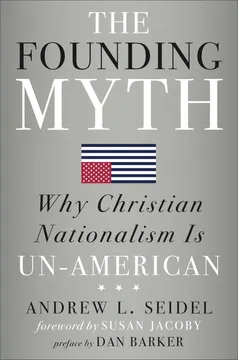
A story of belonging. Seidel defines Christian nationalism as a movement that fuses American identity with Christianity and portrays secular government as a betrayal of the nation’s origins. A study of the 2016 election that he cites found that believing the United States is, and should be, a Christian nation predicted a Trump vote more strongly than the other examined factors, including religion and party affiliation. The founding story does political work: it makes religious identity feel like a requirement for national membership.
History becomes policy. Project Blitz, a legislative campaign, sought to promote Christian heritage claims, normalize religious displays and proclamations, then advance measures that could permit discrimination in religion’s name. More than seventy bills had been proposed nationwide by April 2018. Seidel argues that seemingly symbolic legislation helps make later policy changes appear historically justified.
The book’s strongest opening move is to treat national identity as something politically constructed, not simply inherited. A founding myth can connect personal faith to patriotism, making disagreement feel like disloyalty rather than ordinary democratic debate. That helps explain why disputes over plaques and mottos matter beyond symbolism. The election research supports the claim that Christian nationalism has political force, though prediction is not proof that the belief alone caused votes. The useful question is therefore both historical and civic: who gets included when a religious tradition is treated as the definition of America?
Judge the founding by constitutional choices, not founders’ private faith.
Belief is not design. The founders held varied, sometimes changing views about religion. Seidel argues that those private beliefs cannot establish that the government they created was founded on biblical principles. A popular example shows how easily later piety can be projected backward: preacher Mason Locke Weems invented a story of George Washington praying in the snow at Valley Forge, and generations of schoolbooks and paintings helped make it seem historical.
Institutions show intent. The Constitution contains no reference to a god, and Article VI prohibits religious tests for federal office. The First Amendment limits government’s role in religion and religion’s role in government. Some founders thought religion useful to public morality, but that did not mean they wanted a Christian government. Their constitutional choices, rather than disputed accounts of personal faith, are the more direct evidence of the system they built.
This distinction is a sound historical method: private identity does not automatically explain public decisions. The Constitution is an institutional design, so its text and the debates around it deserve more weight than later legends about a founder’s devotion. The Washington story also shows how repetition can convert a flattering invention into civic memory. Still, constitutional text cannot capture every cultural influence on political life. The case is most persuasive when it argues that Christianity was not the government’s legal foundation, rather than implying that religion had no influence on American society.
Read the Declaration as a case for popular sovereignty, not biblical obedience.
Power comes from people. The Declaration’s central political argument is that government exists by the consent of the governed and may be replaced when it becomes despotic. Seidel contrasts this with biblical passages that urge submission to governing authorities. The Declaration’s logic helped justify rebellion against Britain; the Constitution later located political authority in the people themselves.
Piety is not proof. The Declaration includes references to a creator, providence, and a supreme judge, but its main reasoning rests on natural rights and human judgment. Several of its religious-sounding phrases were added during revision, after Jefferson had drafted the political argument. Seidel reads them as broad persuasive language, not evidence of a specifically Christian foundation. The document’s language could appeal to religious and nonreligious audiences without making the republic a Christian state.
The contrast between popular sovereignty and obedience makes the Declaration’s political innovation unusually clear. A document can use religious language without deriving its governing principles from theology, just as a speaker can use familiar imagery to reach an audience. The distinction between rhetorical appeal and constitutional basis is valuable in debates that treat any mention of a creator as a verdict on national identity. The caution is that a phrase’s origin and purpose can be debated, and broad language may carry more than one meaning. The stronger conclusion rests on the document’s argument as a whole.
Treat colonial theocracies as warnings, not blueprints for American liberty.
Colonies were not the republic. Some settlements, including Plymouth and Massachusetts Bay, sought governments organized around particular Christian beliefs. Their history included banishment, executions for religious dissent, and violence against Native communities. Seidel argues that these were colonial precedents, not evidence that the later United States adopted a Christian constitutional identity.
Freedom is more than escape. The Pilgrims had found greater religious latitude in the Netherlands, but in New England they sought a society where their own faith could shape public life. Seidel distinguishes fleeing persecution from supporting freedom for everyone. He also contrasts New England’s enforced religious uniformity with the diversity of Dutch New Amsterdam. The Continental Congress’s 1774 prayer, often cited as evidence of a Christian founding, occurred while the colonies were still British possessions and was partly a political effort to win Anglican support.
This comparison separates a familiar national origin story from the less comfortable question of what those settlements actually permitted. A group can seek refuge from persecution yet fail to extend the same liberty to others once it has power. That pattern is not unique to religion, but the colonial examples make the danger concrete. The account also avoids treating every early settlement as equivalent. Its broader lesson is that religious diversity is not secured by majority goodwill alone; institutions must prevent any group from converting its preferred faith into compulsory civic identity.
A biblical allusion proves cultural reach, not constitutional influence.
Familiar words travel. Political figures may quote the Bible because its stories and phrases are widely recognized, not because its theology shaped the policy at hand. Abraham Lincoln used the image of a divided house to make his argument about slavery intelligible to listeners. Seidel notes that quoting a text is not the same as treating it as divine authority.
Count the relevant evidence. Political scientist Donald Lutz examined thousands of founding-era publications. When sermons and other nonpolitical writing were included, biblical citations appeared frequently. In the political writings most relevant to constitutional design, the Bible was cited only about 0.3 times per document on average. In the Federalist essays defending the Constitution, it was not cited at all. Seidel also notes that the Golden Rule predates Christianity and appears in many traditions, so it cannot establish uniquely Christian influence.
This section usefully separates cultural literacy from intellectual causation. A familiar phrase can make an argument memorable without supplying its underlying logic, a distinction that applies to political speeches and legal reasoning alike. The citation study is suggestive, especially because it separates sermons from constitutional debate. But frequency is only one measure of influence: ideas can travel indirectly, and an uncited source may still shape assumptions. Seidel’s most defensible point is narrower and stronger: claims of direct biblical authorship need evidence beyond the fact that founders knew biblical language.
Test moral codes by whom they protect, punish, and leave outside.
Which ten commandments? The Bible contains four different sets called or treated as ten commandments, with meaningful differences between them. English translations and religious denominations also disagree about wording and numbering. The familiar list is therefore not a single, uncontested code. Seidel argues that the commandments often prioritize exclusive worship, restrict expression, and preserve distinctions among insiders and outsiders.
Universal rules are not unique. Prohibitions on murder, theft, and false testimony resemble laws found across societies, so resemblance alone does not prove Christian influence. Seidel also challenges the claim that the commandments form a timeless moral code: one version recognizes slavery, another threatens punishment across generations, and some biblical laws treat women and foreigners unequally. His reading of neighbor as an in-group category is disputed, but the broader contrast is clear: constitutional protections aim to apply beyond one faith community.
The question of who counts as a neighbor is a powerful test of any ethical system. A rule may sound universal while its practical protection stops at the boundary of a tribe, religion, or status group. The book also makes textual variation visible, reminding readers that appeals to a fixed sacred code often depend on choices made by interpreters. Its account can overstate the case when it treats one reading as definitive, since the meaning of these passages is contested. That uncertainty strengthens the need to examine how rules are applied, not merely how they are titled.
Build government through evidence, revision, and responsibility, not revelation.
A human experiment. Seidel presents the Constitution as a product of debate, compromise, observation, and political reasoning. The framers did not treat it as perfect or untouchable: Article V created a process for amendment, and the Constitution has been changed repeatedly. Their project looked toward the security and liberty of future generations, rather than only toward salvation in an afterlife.
Different moral premises. The book contrasts constitutional principles such as individual responsibility, the presumption of innocence, and limits on punishment with doctrines such as inherited guilt, vicarious redemption, and eternal punishment. It also contrasts a revisable republic with biblical monarchies and demands for obedience. Seidel’s point is not that the United States has always fulfilled its ideals, but that its governing framework provides mechanisms to correct failures, including its original accommodation of slavery.
The idea of constitutional government as a revisable experiment is an important counterweight to political certainty. A system that admits fallibility can learn from exclusion and failure, while a claim of perfect authority can make correction appear like betrayal. The book connects that institutional humility to responsibility and the presumption of innocence, two principles that place limits on what government may assume about a person. Its comparison is strongest at the level of governing premises, not when it treats every religious believer as committed to the most punitive reading of scripture.
Trace patriotic God-talk to its crisis, sponsor, and political purpose.
These slogans arrived late. The national motto In God We Trust appeared on coins during the Civil War, after a preacher urged officials to place a religious message on currency. The phrase under God entered the Pledge of Allegiance in 1954, amid anti-communist fear and a campaign equating Christianity with American loyalty. Seidel also traces the 1950s surge in official piety to corporate and religious organizers who used faith-based messaging against New Deal policies.
Piety can distract. The presidential habit of ending speeches with God bless America gained prominence when Richard Nixon used it during his 1973 Watergate address. The phrase later became routine political language. Seidel argues that these additions are not evidence of the founding generation’s intentions. Their histories instead show how religious language can be promoted during moments of anxiety, and how later repetition can make a recent political choice feel ancient.
The timeline changes the question from whether these words sound patriotic to how they became patriotic. Looking at sponsors, political pressures, and timing helps distinguish inherited tradition from deliberate persuasion. The examples also show that religious language can serve very different aims, from anticommunist identity-making to a politician’s effort to recover credibility. A historical explanation does not, by itself, settle whether a phrase should remain in public life. It does, however, undercut the claim that modern repetition proves an unbroken founding principle.
Resist small violations before they become precedents for religious privilege.
Precedents accumulate. Seidel warns that government endorsements of religion can be used to justify further endorsements. A prayer at a public meeting or a religious display may seem minor, but once accepted as precedent it can become harder to challenge. The book’s recurring image is a ratchet: each tolerated exception can make the next one easier to defend.
Guard the boundary. The constitutional separation of religion and government protects both religious freedom and freedom from religious coercion. Seidel urges citizens to scrutinize official religious messages, correct false historical claims, and object when public authority favors one faith. This is not an argument against private belief or religious participation in society. It is an argument that government should not use its power to promote a religious identity as the national one.
The warning about precedent captures how constitutional norms can erode through ordinary decisions rather than one dramatic rupture. That is why historical accuracy matters in practical disputes: an appealing story can supply legal cover for a new exception. The argument also makes an important distinction between protecting religion and granting it official advantage. Its challenge is to apply vigilance consistently, including when a preferred religious practice seems harmless or familiar. Equal treatment is tested most clearly when a majority accepts limits on its own access to government power.
Analysis
The book’s central achievement is to shift the debate from founders’ personal beliefs to the political architecture they created. That move makes the argument more durable: religiously mixed founders could still choose a constitution that denies government spiritual authority. Its best evidence is institutional and comparative, including the Constitution’s lack of theological claims, its bar on religious tests, the Declaration’s appeal to popular sovereignty, and the distinct histories of colonial theocracies and the later republic.
The book also shows how a historical claim can become a political instrument. Christian nationalism is not merely an inaccurate account of the past in Seidel’s framing. It binds religious and national belonging, then uses that bond to legitimize present policy. The discussion of Project Blitz and the mid-twentieth-century slogans connects symbolic politics to legislative and electoral aims. That connection helps explain why correcting history is not academic housekeeping.
The argument is less conclusive when it moves from the claim that Christianity did not define the constitutional foundation to the broader declaration that Christianity is un-American. Christianity is internally diverse, and religious actors have supported both liberty and coercion. The book acknowledges some of this complexity, especially around slavery and abolition, but its polemical structure often treats scripture as a unified political program. Likewise, sparse biblical citation in constitutional debate weakens claims of direct influence, but cannot rule out indirect cultural influence. These qualifications do not erase the book’s core case. They clarify its strongest conclusion: the government’s legitimacy rests on citizens and constitutional procedures, not on any one religious tradition. That distinction offers believers and nonbelievers alike a shared standard for judging official power.
Review Summary
Reviews of The Founding Myth are largely positive, with readers praising its thorough research and timely relevance in countering Christian Nationalism. Many appreciate Seidel's meticulous dismantling of the claim that America was founded on Judeo-Christian principles, particularly his comparison of the Ten Commandments with the Constitution. Common criticisms include the author's tendency to attack religion broadly rather than staying focused on his central argument, alienating potential allies among moderate believers. Some find the writing dry, while others consider it an essential, accessible resource for defending the separation of church and state.
Glossary
Christian nationalism
Christianity fused with national identityA political movement that presents the United States as inherently Christian and treats Christian identity as central to being truly American. In Seidel’s account, it uses a revised story of the founding to argue for public preference for Christianity and to challenge the constitutional separation of religion and government.
Strategic piety
Religious language used persuasivelyThe use of religious words, ceremonies, or references to gain political support, reassure an audience, or persuade people who value religion. Seidel applies the idea to episodes such as the Continental Congress’s selection of a chaplain and religious phrasing added to the Declaration. Such gestures do not, by themselves, demonstrate that religious doctrine shaped the government’s principles.
Natural law
Rights grounded beyond enacted lawA theory that moral or legal principles derive from human nature or a higher order, rather than solely from laws enacted by a government. Seidel emphasizes the Enlightenment understanding used in the Declaration: rights can be recognized through human reason and nature, providing grounds to challenge unjust positive law.
Wall of separation between Church & State
Boundary between religion and governmentA metaphor associated with Thomas Jefferson’s description of the First Amendment. It expresses the principle that government should not establish, direct, or privilege religion, and religious institutions should not wield governmental authority. Seidel argues that this separation protects both religious practice and the right not to practice religion.
Decalogue
The biblical ten sayingsA name for the Ten Commandments, derived from Greek words meaning ten and word. Seidel explains that the Bible contains multiple different sets associated with ten commandments, alongside extensive additional laws. The term therefore does not identify one universally agreed list, translation, or numbering system.
Argument by idiom
Slogans used as historical proofSeidel’s label for citing familiar national phrases, such as In God We Trust or under God, as evidence that the United States was founded on Christian principles. His response is to investigate when those phrases entered public use and what political circumstances promoted them, rather than treating their familiarity as proof of founding intent.
Download PDF
Download EPUB
.epub digital book format is ideal for reading ebooks on phones, tablets, and e-readers.








