

Key Takeaways
Understand contingent academia as a labor system, not a merit test
Small exclusions add up. Pryal’s career begins with details that seem petty until they accumulate: a shared office painted pink and yellow, a denied request to repaint it, and a name left off the faculty directory because lecturers might leave. She and her colleagues are excluded from research grants and offered insecure contracts, even while doing demanding teaching work. The message is not simply that a few people behaved badly. The institution’s categories determine who gets resources, recognition, and security.
Effort cannot repair structure. Pryal describes working as many as 80 to 100 hours a week, teaching while squeezing in research and writing that her position did not reward. A promotion brought a new title, but no raise. The book cites an estimate that roughly three quarters of instructional staff were outside the tenure track. Such conditions make a career setback poor evidence of individual failure.
The shift from personal blame to labor analysis is valuable because institutions often describe insecure work as a matter of individual competition, while hiding how roles and rewards are designed. Organizational research similarly distinguishes performance from the conditions that allow performance to matter. Still, recognizing a structural problem does not by itself identify a safe exit. Workers have unequal savings, caregiving duties, health needs, and bargaining power. The book’s frank account of precarious work is most useful when read as diagnosis, not as a claim that every worker can simply leave.
Treat your university as one client, not the gatekeeper to your future
Stop auditioning indefinitely. Pryal describes colleagues taking extra courses, service assignments, and student enrollments without extra pay because they hope the department will reward their effort with a better position. Her own experience taught her that unpaid overwork did not secure entry into the tenure-track “club.” When a department head told her she would never be considered for such a job, the answer hurt, but it clarified where to spend her energy.
Redirect effort outward. The freelance mindset means setting limits on unrecognized labor and building work beyond one institution. Pryal recommends asking directly whether a hoped-for advancement is possible, rather than relying on hints or promises. Then use the time saved to develop skills, clients, and income streams elsewhere. A university may still be part of a career, but it should not be the only party able to decide whether that career continues.
This reframing resembles portfolio risk management: dependence on a single employer leaves a worker exposed to decisions outside their control. It also challenges the moral language of “service” when unpaid labor is expected mainly from people with the least security. Yet an individual client strategy cannot substitute for collective bargaining, better employment standards, or institutional reform. The strongest reading holds both levels together: workers can protect their time now, while departments and universities remain accountable for the labor structures they create.
Turn the skills academia ignores into work you control
A career can cross boundaries. Pryal uses “freelance academic” for a person who carries academic training into independent, paid, or public-facing work. The term does not require staying employed by a university, and it does not mean continuing to publish scholarly research. Pryal’s own work grew to include public writing, editing, speaking, textbooks, and creative books. Her expertise remained useful even after her institutional affiliation ended.
Keep the valuable parts. Contingent jobs often divide a scholar’s working life: teaching duties fill the week, while research, creativity, and intellectual ambition are pushed into evenings and weekends. Pryal argues that leaving or changing a job can help reunite those parts, rather than letting an institution decide which skills count. A career adjacent to academia can also translate research into language and services that reach readers, clients, and learners outside scholarly departments.
The term gives a name to work that conventional career labels often make hard to describe. That matters: professional identity affects whether people can explain their value to clients and to themselves. The idea also treats knowledge as portable rather than as property conferred by a university title. But portability is not automatic. Some expertise needs translation, new credentials, or a different audience, and not every academic skill has an immediate market. The framework is empowering when it invites experimentation, not when it implies that institutions’ failures are easily solved by individual reinvention.
Negotiate the job you need, not only the job offered
Make room for invention. When a law school far from her family contacted Pryal about a position, she assumed she had only two choices: move or decline. Her friend Sara asked why she could not propose a different arrangement. Pryal had not even considered negotiating the job’s location or format. The lesson was that a standard offer is not always the only possible design, especially when a client or employer has a reason to want a particular person.
Name the missing condition. Pryal gives a second example: a medical professor declined a television interview because childcare seemed impossible to arrange. Pryal suggested asking the station to provide childcare during the short interview. The point is not that every request will be granted. It is that people often reject opportunities before testing whether a workable condition can be negotiated. Ask what would make the work feasible, then ask for it.
This advice connects with job-crafting research, which studies how workers reshape tasks and conditions to better fit their needs and strengths. It is especially useful for people whose careers do not follow a standard track, because institutions may not think to offer flexible arrangements without prompting. The approach also has limits: negotiation depends on leverage, and workers facing discrimination or severe precarity may face real costs for asking. Creative requests are most powerful when paired with an honest assessment of the other party’s incentives and the worker’s alternatives.
Build an alternative before you need leverage at work
Know your outside option. BATNA means “best alternative to a negotiated agreement.” It is the strongest option available if a negotiation fails, not the least acceptable deal one might tolerate. Pryal applies the concept to insecure academic employment: if a department refuses better conditions, what could the worker do instead? The answer might be another campus job, reducing unpaid work, or leaving for an independent career.
Create leverage gradually. Pryal’s own alternative developed over years through books, columns, editing, and speaking. Those projects began as side work, but eventually gave her a viable path away from a job that offered a promotion without a raise. A strong BATNA is built before a crisis, not improvised after a contract ends. It need not mean quitting immediately. It can begin with a small income source, a clearer résumé, or time reclaimed from unpaid duties.
BATNA is useful because it replaces vague hope with a practical comparison: does the proposed deal improve on the real alternatives? In negotiation theory, a stronger outside option can increase a party’s ability to reject unfavorable terms. For precarious workers, however, the alternative may initially be weak, and developing it requires time and resources. That makes the idea a planning tool rather than a promise of instant power. Collective action can also improve workers’ alternatives by changing the terms available to a whole group.
Make your expertise findable before the next opportunity arrives
Put work where people can find it. Reporters contacted Pryal about a controversy surrounding a famous novel because they found her earlier research online. She had made her work publicly accessible through her website and research repositories, where search engines could index it. A professional website, a clear description of expertise, and public writing helped reporters see her as a useful expert, even though her article had appeared in a modest venue years earlier.
Translate, do not hide. Pryal recommends turning research into accessible public articles and learning how to pitch editors. She also describes the risk: a Black, contingent professor, Lisa Durden, lost her job after a television appearance, despite separating her views from her college. Public visibility can create opportunity, but insecure employment can make speech dangerous. Researchers should consider both discoverability and the risks of speaking publicly while dependent on an institution.
Online visibility functions as professional infrastructure: it lets expertise travel beyond the institution that paid for the research, and it lowers the effort required for journalists, clients, or readers to verify someone’s work. Open access also addresses a genuine access problem when scholarly articles sit behind paywalls. But visibility is not neutral. Searchability can expose a worker to public hostility or institutional retaliation, and publishers may restrict which versions of research can be posted. The practical goal is deliberate access, with attention to copyright and personal risk.
Build a portfolio of paid skills, not one fragile gig
Let one skill open doors. Pryal’s first university job did not stop her from selling a textbook based on material she had developed for teaching. That book produced royalties, helped her secure later projects, and contributed to speaking work. Over time, she added editing, coaching, journalism, consulting, and other writing. Her example shows how one area of expertise can support several kinds of paid work, rather than relying on a single salary or publication.
Know what each stream is for. Magazine articles brought visibility and some income, but Pryal says they were not a reliable way to support a household by themselves. Books, editing, and speaking offered different returns and timelines. She advises listing strengths without false modesty, then testing which ones people will pay for. Side income can create a safety net, but it should reduce financial strain rather than fund a new lifestyle that requires endless extra work.
A portfolio career resembles diversification in finance: several revenue sources can reduce dependence on any one client or market. It can also let people combine work that is meaningful with work that pays more reliably. The analogy has limits, since income streams are not always independent. A downturn in one sector can affect others, and maintaining many small gigs can create administrative overload. The useful question is not simply how many streams exist, but whether their timing, effort, and risk combine into a sustainable livelihood.
Charge for expertise and budget for the work behind it
Treat the business as real. Freelancing requires more than performing the work clients see. Pryal describes setting rates, quoting projects, invoicing, tracking expenses, paying taxes, and building a business structure suited to the scale and risks of the work. She advises researching market rates and accounting for taxes and unpaid time spent pitching or preparing proposals. Her own experience of charging a university for a professional-development talk showed that institutions may accept a fair fee without negotiation.
Separate money and records. A dedicated business account can make it easier to distinguish earnings and expenses. Pryal discusses sole proprietorships, limited-liability companies, and corporations, but emphasizes that the right structure depends on costs, legal protections, and circumstances. Freelancers also spend substantial time on administration. She estimates that about two thirds of her working life goes to the work she enjoys, with the remainder supporting the business that makes it possible.
This section corrects the romantic picture of self-employment as uninterrupted creative freedom. Administrative work is not a minor inconvenience; it is part of producing and protecting income. Business systems can also reduce cognitive load by making it easier to see what has been paid and what remains outstanding. The legal and tax examples are specific to the author’s context and should not be treated as universal advice. Professional accounting or legal guidance can be worth its cost when complexity begins to exceed the freelancer’s capacity.
Choose work for agency, mastery, and a legacy you actually value
Define success yourself. Pryal draws on a three-part model. Agency means having meaningful choice over projects, colleagues, time, and working conditions. Mastery means developing skills that are both challenging and personally engaging. Legacy means deciding what work or influence one hopes to leave behind. The model helped Pryal question whether a scholarly monograph was truly her goal, or simply what she had been taught a successful academic should want.
Protect the life around work. Pryal chose to stay near her family rather than move for a more prestigious academic job. After leaving university teaching, she later taught a small creative-writing course with control over its curriculum and class size, and rediscovered that she loved teaching under better conditions. These examples show that leaving a role need not mean rejecting every part of it. Work can be selected for fit, not just for status.
The model aligns with research on intrinsic motivation, which finds that autonomy and the chance to build competence can support engagement. Its emphasis on a self-chosen legacy also counters academic prestige systems that mistake a conventional output for a meaningful life. Still, agency is unevenly distributed. Workers cannot always choose location, hours, or clients, especially when income and care obligations are pressing. The framework is most humane when used to clarify priorities while acknowledging constraints, rather than as another standard people are expected to meet.
Stabilize freelance life with cash, recurring work, and colleagues
Build three sources of steadiness. Pryal identifies money, work, and community as supports for a freelance career. She recommends paying oneself a consistent monthly amount from a business account, based on what the business can reliably afford, even when client payments fluctuate. This creates a predictable personal income while leaving higher-earning months in the business as a cushion.
Turn one-offs into relationships. After a successful article, Pryal suggests proposing a recurring column or ongoing service. Testimonials and referrals can help turn a first client into a longer relationship. She also describes creating a small network of freelance colleagues who meet regularly online to share problems and ideas. Self-employment can be lonely, so community is not decoration; it is part of how people maintain momentum and solve practical problems. A conventional résumé remains useful if freelancing needs to pause.
The three-part model joins financial planning with social infrastructure, a combination that individualistic accounts of entrepreneurship often miss. Predictable pay can reduce the stress caused by irregular invoices, while recurring clients lower the repeated cost of finding new work. Colleagues supply feedback and belonging that an office once provided. None of these measures eliminates market volatility, and a fixed paycheck is only safe when reserves support it. The advice is strongest as layered risk management, not as a guarantee that freelance income will become steady.
Analysis
The book’s central move is to reinterpret departure from academia. Leaving is not framed as a clean escape from an unwanted identity, but as a response to a labor system that can extract skilled work while limiting security, recognition, and choice. Pryal’s chronology gives that argument its force: the pink office, denied research support, insecure contracts, and promotion without a raise are small scenes that reveal how institutional status is produced in ordinary decisions. Her later freelance work is not a frictionless success story. Rejection, lost affiliation, changing income, and uncertainty remain part of the account.
The book also refuses a simple opposition between intellectual life and making money. Expertise can be translated into editing, public writing, teaching, consulting, or books, and payment need not corrupt the work. This is a powerful correction to the academic habit of treating unpaid labor as proof of devotion. Yet the entrepreneurial answer carries a tension. Individual diversification helps a worker become less dependent on one employer, but it cannot repair the labor structures that made dependence dangerous. A freelance career can also shift risk from an institution onto a worker, who must now manage taxes, benefits, client acquisition, and income volatility.
That tension makes the book most persuasive as both a practical guide and a labor critique. Its advice is concrete: build an alternative, set limits, make expertise visible, and create systems for money and community. Its deeper argument is that career value cannot be measured solely by tenure, a monograph, or institutional affiliation. The account is strongest when it treats agency as something worth pursuing without pretending everyone has equal room to pursue it. Family responsibilities, discrimination, disability, geography, and financial reserves shape which options are actually available. Readers can take the book’s tools seriously while also recognizing that personal strategy and institutional change are complementary, not competing, responses to precarious work.
Review Summary
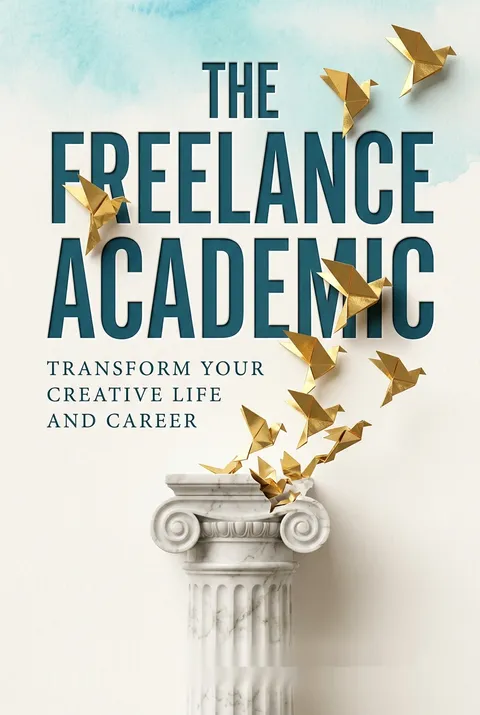
The Freelance Academic receives mostly positive reviews, praised for its practical advice on transitioning from academia to freelancing. Readers appreciate the author's personal stories, humor, and insights into higher education employment issues. The book is seen as valuable not only for academics but also for anyone considering a career change. Some reviewers found it relatable and inspiring, while others noted its American context. Overall, it's recommended for its honest approach to career challenges and opportunities.
Glossary
Freelance Academic
Academic skills used independentlyPryal’s term for a person who applies academic training beyond, alongside, or outside a university job, often through paid writing, editing, teaching, speaking, consulting, or related work. It describes a flexible professional identity, not necessarily an independent researcher. The central idea is to treat expertise as portable and to build work that is not wholly dependent on one academic employer.
BATNA
Best alternative if talks failAn acronym for “best alternative to a negotiated agreement,” a concept from negotiation theory. It means the strongest realistic option available if the parties do not reach a deal. In the book, a worker’s BATNA might be another job, independent income, or reducing unpaid work. Comparing an offer with that alternative helps a person avoid accepting terms that are worse than the available options.
Quit Lit
Writing about leaving academiaA genre of essays and other writing about leaving academic careers, often by people who faced insecure employment or poor labor conditions. Pryal treats it not only as personal testimony, but as a form of labor critique that records how higher education uses and loses contingent workers. Such writing can help others assess the risks of academic careers and can challenge institutions to account for those conditions.
Agency, Mastery, and Legacy
Choice, skill, and lasting contributionA three-part model of work motivation used in the book. Agency concerns meaningful choice over projects and working conditions. Mastery is the ongoing development of skills a person values. Legacy is the contribution or work a person hopes to leave behind. Pryal uses the model to distinguish personally meaningful goals from academic conventions that may reward outputs a worker does not actually want.
Portfolio career
Several kinds of work combinedA career made up of multiple roles or income sources rather than one job title or employer. In Pryal’s example, writing, editing, consulting, speaking, and book royalties coexist. A portfolio career can use several strengths and reduce reliance on one source of work, but each activity brings its own demands, and the combination must remain financially and personally sustainable.
Download PDF
Download EPUB
.epub digital book format is ideal for reading ebooks on phones, tablets, and e-readers.








