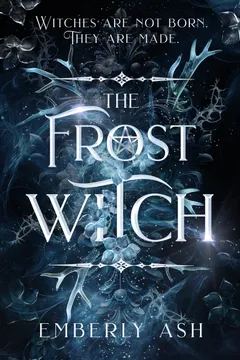


Plot Summary
Prologue
Koryn1 dies alone in a frozen stream after running from a life she cannot bear. Five witches raise her inside a blood-drawn pentagram, stitch her wound, and awaken frost in her veins.
Their leader4 welcomes her as a sister, but Koryn1 remembers her mother’s warning: witches are made, not born. She returns to life as something neither living nor dead, bound to the coven that remade her.
The resurrection makes belonging both gift and condition. Koryn is saved by women who immediately claim her as kin, but the ritual also replaces her former life with an identity she never chose. Her mother’s warning unsettles the coven’s welcome: Koryn has not simply found a family, she has been remade into an instrument of one. The stream where she dies foreshadows a life in which survival and surrender are difficult to separate.
The Last Tavern in Canmar
Nearly four centuries after her resurrection, Koryn1 survives in cursed Velora by selling small spells to people who can barely afford food. Cast out from the Midnight Coven, she hides her mark and saves money to escape the dying continent. In a tavern, she gives a starving mother a spell that restores her milk, though she charges the woman for it and tells herself compassion is dangerous.
A heavily armed stranger2 enters, studies Koryn,1 then turns away. Before she leaves, two desperate men have noticed her magic and the coin at her belt. Her attempt to survive unnoticed has made her a target, while the stranger’s2 attention suggests that her life is about to become less solitary.
Koryn’s spell for the mother exposes the conflict she has tried to bury. She performs an act of care, then insists that it is merely a transaction, as if naming kindness would make her vulnerable to exploitation. Her exile has taught her to confuse emotional restraint with safety. The tavern also compresses Velora’s collapse into a human scene: a mother cannot feed her child, while Koryn can help only briefly. The armed stranger’s arrival changes the scale of the story from local survival to a larger danger she cannot yet read.
Salt Breaks the Silence
Outside the tavern, the two men trap Koryn1 in a ring of salt that blocks her movement and speech. When one reaches for her purse, her frost burns his hand; she melts a gap in the circle and freezes him to death, then lets his accomplice crawl away. Elodie,10 a coven sister disguised as a prostitute, steps from the shadows and says their leader,4 Maura,4 has sent her.
The offer is brutal in its simplicity: Koryn1 may return to the Midnight Coven if she passes through all Seven Gates and lifts Velora’s curse. Koryn1 has spent months planning to flee the continent. Now her only route back to her sisters runs through trials no one has survived.
The salt circle turns Koryn’s hidden power into a practical problem: she can neither cast a spoken spell nor defend herself until she finds a physical flaw in her captors’ trap. Her survival depends on observation, not brute force. Elodie’s arrival then replaces the immediate threat with a more intimate coercion. Maura’s offer sounds like hope, but its impossible terms make it resemble another sentence of exile. Koryn must decide whether belonging is worth entering a system designed to consume those who seek it.
Kyrelle Takes Her Place
Koryn1 finds herself outside the temple, still weighing escape, when she recognizes Kyrelle5 crossing its courtyard. Kyrelle5 is the last living descendant of Koryn’s1 elder sister,18 Rylynn,18 and she has come to attempt the gates because her ill father needs a healer and Velora’s failing land cannot sustain them.
Koryn1 blocks the entrance and offers her accumulated gold, but Kyrelle5 refuses to abandon her father. When Kyrelle5 forces open the temple door, Koryn1 shoves her clear and falls inside instead. Entry binds a supplicant to the Seven Gates. Koryn1 has traded her plan to flee for a mission that might save Kyrelle,5 restore her coven place, and perhaps revive the continent.
Koryn’s choice is not initially an embrace of Maura’s mission. It is an attempt to keep Kyrelle from repeating the self-sacrifice Koryn has watched destroy her family line. Yet Koryn protects Kyrelle by placing herself under the same deadly obligation she hoped to avoid. This is the first time her two loyalties, blood family and coven, appear to point in the same direction. The sacrifice is generous, but it also reveals Koryn’s habit of deciding that her own life is the expendable one.
Seven Supplicants Gather
A young acolyte named Tomin8 administers the temple’s Oath of Atonement, and priestess9 Varian9 warns Koryn1 that revealing her witch mark could make the other supplicants attack her between gates. Koryn1 meets the other six: talkative Nimra,6 frightened Rilk,13 dangerous Nash,12 fae Alize,7 and the silver-haired stranger from the tavern,2 who is Garrick the Red,2 a feared bounty hunter.
He recognizes Koryn’s1 covered mark but agrees to keep her nature secret without accepting her offer of a spell. While she watches the others, memories of her human childhood return: her mother died young, and her father’s obsession with fae treasures helped bring tragedy into the family. Koryn1 enters the Mercy Gate with more to fear than the gods.
The temple offers food, shelter, and ritual protection, but its rules sharpen rather than remove danger. Koryn must hide the very identity that might help her survive, because the other supplicants could interpret witchcraft as a threat. Garrick’s refusal to take payment complicates her usual understanding of power as a bargain between predator and prey. The childhood memories supply a personal source for her hatred of the fae, while the gathered competitors turn that inherited grievance into an immediate risk. Her old pain is already shaping how she reads the people beside her.
The Mercy Wall Falls
Nash12 reaches the top of the Mercy Gate’s ice wall first and cuts the ladder, forcing everyone below to climb bare ice. Nimra6 slows her ascent so a terrified young woman can find handholds, but Rilk13 later throws that woman to her death. Koryn1 uses her frost to carve grips into the wall, then fights Rilk13 off when he grabs her ankle.
Across the collapsing ice field, Garrick2 falls into a crevice. Koryn1 reaches down, builds him steps of ice, and uses her power to form a path to the gate for them both. They survive, but Seraxa brands each wrist with a Lifebind, linking their lives until Garrick2 repays Koryn’s1 merciful rescue.
The first gate refuses to reward simple strength. Nash sabotages the ladder, Nimra chooses to protect a stranger, and Rilk converts another person’s fear into an opportunity for murder. Koryn’s decisive act is not defeating a rival but reaching for Garrick when letting him fall would be safer. The Lifebind makes compassion materially dangerous: her mercy creates a bond she cannot dismiss. Koryn has spent years insisting that kindness weakens her. Seraxa’s mark gives that contested impulse an external form, turning a private choice into an unavoidable relationship.
Nash Hunts in Darkness
After the Mercy Gate, Koryn1 and Garrick2 camp in the frozen woods with the other survivors. Nash12 and Rilk13 attack Koryn1 while she sleeps, hoping to exploit her magic and control her. Her spell freezes their legs, but Nash12 pins her before she can finish another. Garrick2 arrives, kills Rilk,13 and holds Nash12 at knifepoint.
Koryn1 stops him from killing Nash,12 arguing that the gates can judge the man themselves. Garrick2 obeys, then gives Koryn1 his cloak against the cold. When she checks their wrists, the Lifebind remains: saving her for his own survival has not repaid her act of mercy. He insists they keep moving toward the Justice Gate.
The attack makes the danger between gates as serious as the gods’ trials. Nash treats Koryn’s power as something he can seize, while Garrick’s intervention is protective but entangled with his own survival. Koryn’s plea to spare Nash complicates the line between justice and revenge, even after Nash has shown what he intends to do. The Lifebind persists because obligation is not the same as compassion. Garrick can keep Koryn alive, but the bond asks whether he can choose her welfare for reasons beyond his own.
Justice Names the Guilty
At the Justice Gate, the five remaining supplicants judge prisoners accused of crimes that mirror their own. Nash12 votes to hang a rapist; Koryn1 recognizes the next charge, crippling a sister’s betrothed, as her own. Years earlier, after their sister Janessa17 died from a cursed fae diadem, Koryn’s1 uncontrolled frost permanently injured the man Rylynn18 loved.
Koryn1 votes to hang the accused woman, punishing her for the guilt Koryn1 carries. She releases the girl who attempted to kill an infant, while the others condemn a poisoner. When the crowd vanishes, Koryn1 understands the test has exposed her evasion: she has punished a stranger instead of facing what she did to Rylynn.18
The Justice Gate makes moral judgment a mirror that Koryn cannot control. She can distinguish a crime from a person when judging the infant’s attacker, yet she denies that same complexity to the woman whose charge resembles her own past. Her vote is not an impartial verdict but a displaced sentence against herself. That distinction matters: Koryn does not merely regret having hurt Rylynn’s beloved; she has built an identity around being irredeemably guilty. The gate exposes self-punishment disguised as justice, and its emotional injury follows her into the next trial.
The Mountain’s Hidden Bargain
Koryn1 leaves the Justice Gate shaken, refuses food, and resists Garrick’s2 attempts to train her. As they cross the mountains toward the Sacrifice Gate, he secretly meets Alize7 and urges her to leave the trials, showing a concern for her that Koryn1 mistakes for romantic attachment. At the gate, a living presence named Xyta14 asks each supplicant for a sacrifice.
Nimra6 refuses the price and walks away, though Xyta14 warns that the reprieve will not last. While waiting for her own turn, Koryn1 presses Garrick2 about his reason for entering. He reveals that he is half-human and half-fae, born from a violation of his mother, and refuses to explain more. Koryn1 faces Xyta14 with her own motives still divided.
Koryn’s suspicion of Garrick grows from a real asymmetry: she has disclosed her motives, while he keeps his private purpose guarded. His meeting with Alize gives Koryn an emotionally convenient explanation, but his warning to Alize is evidence of concern rather than proof of romance. His parentage also reframes the enemy Koryn thinks she sees. Garrick carries the consequences of fae violence in his own body. The gate’s demand makes each person’s reason for hoping visible, then tests whether they can relinquish the very attachment that brought them there.
Two Prices for Passage
Xyta14 appears to Koryn1 as her dead mother, then shifts into other figures from Koryn’s1 past to unsettle her. The deity14 demands that she choose between returning to the Midnight Coven and protecting Kyrelle,5 whose life depends on lifting Velora’s curse. Koryn1 refuses to sacrifice either and bargains instead: she will owe Xyta14 two future sacrifices, but neither may be her coven nor Kyrelle.5
If she later refuses, Xyta14 may take her life. The deity14 accepts and opens the passage. Garrick2 goes through his own encounter separately and will not reveal what it cost him. Koryn1 has won immediate passage, but her promise gives the gods a claim on her future.
Koryn’s bargain is a form of agency exercised inside a system built to restrict it. She cannot make the demands disappear, but she identifies what she will not surrender and offers herself as the remaining currency. The act is neither a clean victory nor simple recklessness. It protects the two relationships that organize her life while making her own survival conditional. Xyta’s shifting faces also turn memory into pressure: Koryn is made to confront attachments she has tried to bury, even as she refuses to let a deity decide which one matters most.
A Dragon Chooses Koryn
On the route to the Devotion Gate, Koryn1 and Garrick2 encounter a young lavender dragon, Isanara,3 who follows Koryn1 and declares herself her familiar. Isanara3 can speak mind to mind, needs gems and ore to feed on, and insists that she will not abandon her new witch. Koryn1 worries that the bond places an adolescent in danger, but accepts her company.
Varian9 and Tomin8 later camp with them; Tomin8 helps Koryn1 practice grounding her overwhelming senses, and Koryn1 apologizes for having treated him harshly. Alize7 confronts Koryn1 during training, and Koryn’s1 frost nearly kills her before Garrick2 restrains Koryn.1 She has found a fierce companion, but her power remains capable of outrunning her judgment.
Isanara’s choice unsettles Koryn’s conviction that a witch without a coven is nothing. Their bond is not granted by the Midnight Coven or negotiated with a god; it arises from recognition between two beings who have both lost family. Yet Koryn immediately turns that connection into another responsibility she fears she cannot fulfill. Tomin’s grounding practice and her apology offer a different model of care: help can be accepted without surrendering agency. The confrontation with Alize shows that emotional regulation is not abstract self-improvement. It is the difference between defending herself and becoming the danger she fears.
Nash’s Last Night
At a crowded roadside tavern, Koryn1 secretly strengthens the patrons’ drinks so she and her companions can leave without provoking a mob. Nash12 finds her alone and threatens Isanara,3 then later breaks into their room with a sword. Koryn1 uses the fighting techniques Garrick2 has drilled into her, freezes Nash’s12 arm, and cuts his face with an ice blade.
When he threatens to claim Isanara3 after Koryn’s1 death, she drives frost through his lungs and heart until he dies. Garrick2 steadies her through the surge of power that follows. Earlier that evening, Koryn1 kissed him while intoxicated by her own spell; he refused to take advantage and carried her to bed. Now their attraction has become harder to dismiss.
Koryn’s killing of Nash is both a necessary defense and a test of the moral identity she has built around restraint. Unlike the Justice Gate, she does not transfer guilt onto someone else or outsource the decision. She acts to protect herself and Isanara, then feels the full physical and emotional force of her power. Garrick’s response matters because he neither celebrates the death nor treats Koryn as monstrous for it. His refusal to exploit her intoxicated desire similarly distinguishes protection from possession, a distinction the Lifebind alone cannot guarantee.
The Dragon’s Price
Before the Devotion Gate, Koryn1 and Garrick2 finally become lovers, choosing intimacy while both are clear-minded. At the gate, Xyta14 and the god15 Ramkael15 reveal that Koryn’s1 next debt is Isanara.3 Koryn1 refuses to surrender the familiar3 who has become her closest chosen kin. Xyta14 throws Koryn1 against a wall and wounds her at the wrists and ankles; Ramkael15 restrains Garrick2 and Isanara3 as Koryn1 loses consciousness.
He later intervenes, and Garrick2 carries the badly injured witch through the gate. Infection leaves Koryn1 feverish for two weeks. Garrick2 tends her, feeds her, and keeps her alive, while Isanara3 watches over them both. Koryn1 wakes to discover that care has continued even when she could not repay it.
The Devotion Gate exposes the cost hidden inside Koryn’s earlier bargain. Protecting Isanara means risking the life she offered Xyta, but Koryn’s refusal is not a rejection of sacrifice itself. It is a refusal to treat love as proof that another being can be owned or exchanged. Garrick’s devotion becomes legible through action: he carries Koryn for days and tends her through infection. The choice also marks a shift from Koryn’s lifelong pattern of protecting others alone. She remains vulnerable, but her survival now depends on relationships she did not have to earn through usefulness.
A Warning Before Memory
As Koryn1 recovers, she and Garrick2 share the tenderness they had postponed, and she realizes his passage through the Devotion Gate came from devotion to her. On the journey to the Memory Gate, she also learns more about her family’s losses: generations earlier, Kyna19 refused to flee Velora with the money Koryn1 gathered, stayed with her fisherman husband, and died after childbirth, leaving another descendant for Koryn1 to protect.
Near the gate, Koryn1 meets Aurienna,11 whom she learns prefers to be called Auri.11 Bound by Maura’s4 spell, Auri11 can only warn that appearances are deceptive. She insists she remains Koryn’s1 sister, leaving Koryn1 wary of what awaits.
Recovery gives Koryn enough distance from immediate danger to recognize that attachment has become reciprocal. Garrick’s care is not merely a consequence of the Lifebind, though neither can yet escape the bond’s complications. Kyna’s history explains why Koryn’s protection of Kyrelle is more than a duty to a distant descendant: it is an attempt to repair a family pattern of women left to bear Velora’s costs. Auri’s constrained warning complicates Koryn’s distrust of the coven. The past may contain both the source of her harm and the people still trying to reach her.
Memory Demands a Choice
At the Memory Gate, Alize7 relives her attempt to smother her infant sibling, then changes the memory by saving him and passes through. Koryn1 next watches Garrick’s2 memory of her attack in Canmar; his intervention calms her power and releases them from the replay. Her own trial returns to the Midnight Coven, where McKean exposes Koryn’s1 secret aid to Kyrelle5 and Maura4 orders the descendant5 killed.
In the original event, Koryn1 killed McKean to protect Kyrelle5 and was expelled. Now the memory transforms McKean’s victim into Garrick.2 Koryn1 chooses him over the coven and kills the memory’s version of McKean, allowing them to escape. Her choice costs her the hope of returning to her sisters.
The Memory Gate does not ask Koryn to erase the past. It asks whether she can act differently when the past returns with a new demand. Her original crime against the coven was also an act of protection, but she has spent centuries describing it only as proof of her failure. This time she recognizes that loyalty without reciprocity is not the only form of belonging. Choosing Garrick does not make her old actions harmless, nor does it settle her debt to Xyta. It does mean she stops treating her own capacity to love as evidence against herself.
The Coven’s Hidden Plot
Beyond the Memory Gate, Koryn1 and Garrick2 are ambushed by Maura,4 several witches, and the fae king. The king identifies Alize7 as his runaway daughter, while Maura4 reveals that she has been working with him to gain power over all covens. Maura4 and Elodie10 transform Garrick2 into a raven, exposing the shifter abilities and fae blood he had concealed.
Koryn1 realizes that his involvement, their Lifebind, and the route through the gates were part of a plan to make her save him and help him advance. Garrick2 insists his feelings were real, but Koryn1 cannot trust him. The witches sever her bond with Isanara,3 bind Koryn1 and Garrick,2 and make Koryn1 vanish in a blood ritual.
The betrayal attacks Koryn at the exact point where she has begun to believe that chosen relationships can be safer than inherited obligations. Maura interprets Koryn’s compassion as a weakness to exploit, while Garrick’s concealment makes it impossible for Koryn to distinguish strategic intimacy from genuine care. The scene does not prove his feelings false, but it makes sincerity insufficient: trust requires disclosure, not merely emotion. The severed familiar bond is especially cruel because it turns Koryn’s first freely chosen kinship into leverage. Her hard-won agency is once again seized by institutions claiming authority over her.
Epilogue
Garrick2 wakes alone in the gorge after Maura4 has taken Koryn.1 He plans to fly to Balar Shan, confront the fae court, and recover her, accepting that she may never forgive his deception. The Dark God16 appears before he can leave.
He identifies Koryn1 as his own bonded and challenges Garrick2 to explain how he intends to save her. Garrick’s2 rescue mission is no longer only a matter of affection or guilt: he must contend with a god16 whose claim predates the gates.
The epilogue shifts the story’s center from Koryn’s endurance to Garrick’s accountability. His love does not erase the bargain that helped place her in danger, and he understands that forgiveness cannot be demanded as the price of rescue. The Dark God’s appearance enlarges the conflict beyond the witches and fae, while his possessive claim on Koryn raises a new threat to her autonomy. Garrick’s determination is emotionally sincere, but the closing challenge makes clear that sincerity alone will not undo the power structures he helped serve.
Analysis
The novel makes belonging feel like a material need rather than an abstract virtue. Koryn’s1 coven supplies power, identity, and the possibility of survival, but it also demands obedience and treats attachment to her human family as contamination. The gates reproduce that contradiction on a divine scale. Their temples feed supplicants before testing them, while each trial asks whether a person can separate moral action from self-interest. The trials do not offer clean answers. Koryn1 saves a stranger and is bound to Garrick;2 judges a woman and discovers she has used punishment to evade her own guilt; refuses to surrender Isanara3 and is nearly killed. The book’s moral pressure comes from consequences, not from a simple division between good and evil.
Koryn’s1 central psychological wound is her conviction that intense feeling makes her dangerous and therefore unworthy of care. Her uncontrolled magic seems to confirm that belief, as do the harms she has caused. Yet the people who help her, especially Tomin8 and Garrick,2 respond to her distress with concrete practices: grounding, training, food, warmth, and patience. Their care does not erase accountability. It gives Koryn1 conditions in which accountability need not become self-annihilation. Her developing agency lies in learning to distinguish remorse from a sentence of permanent isolation.
The book also treats inherited identity as a trap that can be challenged but not ignored. Koryn1 blames the fae for Velora’s ruin, while Garrick2 embodies the violence of that history in a way that unsettles her categories. Maura,4 meanwhile, turns the language of sisterhood into political control, and the fae king’s alliance with her reveals that old enemies can cooperate when power is at stake. The final betrayal leaves Koryn’s1 trust unresolved. Garrick’s2 affection may be real, but the plot insists that love without honesty can still be used as a weapon. The ending therefore withholds reconciliation and leaves the question of freedom open: who gets to claim Koryn,1 and what would it mean for her to belong without being possessed?
Characters
Koryn
Outcast frost witchKoryn is an immortal witch whose frost power is tied to the manner of her death and whose spellcasting depends on the strength of her coven. She is observant, quick-tongued, and deeply reactive to sensory overload, though she often disguises vulnerability as contempt. Her fierce loyalty to her family line and her longing for the sisterhood she lost pull her in competing directions. Koryn has learned to treat kindness as a liability, partly because she fears the damage her uncontrolled power can cause. Beneath that self-condemnation is a stubborn capacity for care. Her central struggle is not simply mastering magic, but deciding whether she can accept connection without surrendering her judgment or worth.
Garrick the Red
Feared bounty hunterGarrick is a formidable, heavily armed bounty hunter with a reputation built on violence and an unnerving talent for reading danger. He is controlled, observant, and often deliberately provocative, using sarcasm to keep others from seeing what matters to him. His relationship with Koryn1 begins in suspicion and forced proximity, but he repeatedly notices her needs before she admits them. He values competence and survival, which makes him impatient with recklessness, yet his care is more practical than sentimental: he trains, feeds, and protects. Garrick’s guardedness is not mere mystery. It reflects a life shaped by inherited violence and secrets he has not learned how to share.
Isanara
Young dragon familiarIsanara is a young dragon with shimmering lavender scales, sharp spines, a fierce appetite for mineral wealth, and a voice that reaches Koryn’s1 mind. Proud and easily offended, she rejects the idea that youth makes her helpless. Her bond with Koryn1 is immediate and chosen, unlike the institutional ties that have governed the witch’s life. Isanara offers loyalty without asking Koryn1 to hide her nature, but her independence means she cannot simply be treated as a pet or possession. She is both companion and counterweight, giving Koryn1 someone to protect while also insisting on the right to protect herself.
Maura
Midnight Coven leaderMaura leads the remaining Midnight Coven with discipline, strategic patience, and an uncompromising doctrine of loyalty. A fire-bound witch, she expects her sisters to place the coven above personal history and desire. Her authority is reinforced by age and power, but also by her ability to make punishment sound like necessity. Maura regards Koryn’s1 emotional attachments as a threat to collective strength, especially when they lead Koryn1 to break coven rules. Her relationship with Koryn1 is therefore both intimate and hierarchical: she helped shape the witch’s understanding of sisterhood, while demanding obedience as proof of belonging.
Kyrelle
Koryn’s living descendantKyrelle descends from Koryn’s1 eldest sister, Rylynn18, and is the last member of that family line still living in Velora. She is stubborn, practical, and devoted to her ill father, even when that devotion leads her toward grave danger. Kyrelle resents Koryn’s1 interference but understands the witch has helped her family survive through spells and money. Their relationship holds centuries of unspoken care on Koryn’s1 side and a more immediate, complicated distrust on Kyrelle’s. She represents the human future Koryn1 has tried to preserve, as well as the limit of what protection can accomplish without another person’s consent.
Nimra
Courageous supplicantNimra is a warm, talkative supplicant who gathers information about the other competitors and is willing to show mercy even when the gates punish it. She is neither naïve nor fearless; her questions reveal a practical mind, while her choices show that she refuses to let survival erase every obligation to others. Her brief connection with Koryn1 offers the witch a glimpse of friendship, though Koryn’s1 secrecy and danger strain that possibility. Nimra’s family is important enough to shape her choices, but the nature of her sacrifice remains her own.
Alize
Fae competitorAlize is a sharp, self-possessed fae woman whose wind magic gives her speed and control over the air around her. She meets hostility with composure and can be cutting when challenged. Her history with Garrick2 complicates Koryn’s1 first assumptions, while her past reveals a conflict that reaches beyond the gates. Alize is difficult to read because she uses poise as armor, not because she lacks feeling. Her rivalry with Koryn1 is shaped by inherited grievances, competition, and the question of whether people can be judged only by the histories attached to their kind.
Tomin
Kindly temple acolyteTomin is a young acolyte who has spent most of his life serving the temples after his family could not afford to feed another child. He is earnest, compassionate, and more emotionally transparent than his strict training encourages. He welcomes supplicants with practical help and tries to ease Koryn’s1 sensory overwhelm through meditation. Koryn1 initially pushes him away, but his patience gives her a model of care that does not depend on obedience or repayment. His kindness is not naïveté; it is a deliberate way of serving people within a world organized around punishment.
Varian
Seven Gates priestessVarian is a composed priestess who guides the supplicants through the early gates and appears to know more about their trials than she reveals. She rarely changes expression and gives instructions without offering comfort or explanation. Her relationship with Tomin8 is formal and demanding, while her dealings with Koryn1 mix warning with occasional protection. Varian embodies the temple’s unsettling combination of hospitality and coercion: she helps the supplicants prepare, but does not promise to spare them from what awaits.
Elodie
Many-faced coven sisterElodie is a witch whose power lets her alter her appearance, though her voice remains recognizable. She is controlled, difficult to read, and shaped by betrayal in her mortal life. As Maura’s4 messenger, she reconnects Koryn1 to the coven while maintaining the emotional distance demanded by its rules. Elodie’s stillness contrasts with Koryn’s1 turbulent reactions, making her presence feel both familiar and alien. She represents the form of sisterhood Koryn1 has known: a bond of shared power that does not necessarily guarantee tenderness.
Aurienna
Green-bound witchAurienna, who prefers the name Auri, is a witch with power over plants and an ability to foresee what may come. She is more openly compassionate than many of the Midnight Coven, but her loyalty to its leadership has often kept her from acting freely. Her connection to Koryn1 is shaped by shared history and a sisterhood neither has known how to express. Auri’s care tends to appear in brief interventions rather than explanations, leaving Koryn1 to decide whether trust can survive silence.
Nash
Ruthless red-haired rivalNash is a physically capable and predatory supplicant who treats other people’s vulnerability as an opening. He uses threats, alliances, and intimidation to control those around him, especially women. His confidence comes from assuming that force will always secure what he wants. Nash’s presence makes the dangers between gates unmistakable: the gods may set the trials, but human cruelty does not wait for permission.
Rilk
Fearful opportunistRilk is a thin, anxious supplicant who often appears more frightened than dangerous. Under pressure, however, he turns on other competitors and tries to use their vulnerability for his own survival. His behavior shows how fear can become a rationale for cruelty when a person believes that only one life can be saved.
Xyta
Deity of sacrificeXyta is the deity who presides over sacrifice, taking forms chosen to unsettle those who face them. Curious and theatrical, Xyta treats mortal decisions as both moral tests and entertainment. Their demands focus on the attachments a supplicant most wants to protect, forcing each person to define what they will surrender. Xyta’s light manner does not soften the power behind the bargains; it makes the danger harder to predict.
Ramkael
Deity of devotionRamkael is the deity of devotion and Xyta’s14 twin. He is more restrained in manner than his sibling, but he remains an authority whose judgments can alter a supplicant’s fate. His connection to Pava and Xyta14 places devotion beside both peace and sacrifice, suggesting that loyalty can protect as readily as it can demand a price.
The Dark God
Witches’ creatorThe Dark God created the witches and grants them their active powers, including the gifts tied to the ways they died. He is distant, formidable, and bound by bargains that matter even to those who invoke him. Koryn’s1 relationship with him is shaped by dependence, resentment, and a reluctant familiarity built over centuries. He represents a power that can answer prayer without necessarily granting the answer the supplicant wants.
Janessa
Koryn’s lost sisterJanessa is Koryn’s1 middle sister, ambitious and eager to claim recognition in a family dominated by their father’s wealth and Rylynn’s18 beauty. Her ceremonial coming of age becomes a defining trauma in Koryn’s1 memory. As the sibling closest to Koryn1 in age, she remains part of the younger witch’s complicated understanding of family, loss, and blame.
Rylynn
Koryn’s eldest sisterRylynn is Koryn’s1 beautiful, strong-willed elder sister, protective of family heirlooms and resistant to their father’s control. Her choices shape the family line Koryn1 later guards, even as the sisters’ relationship is marked by grief and distance. Rylynn’s independence makes her both a source of admiration and a painful measure against which Koryn1 judges herself.
Kyna
Koryn’s descendantKyna is one of Rylynn’s18 descendants and the mother of a later generation Koryn1 tries to protect. Practical and resolute, she makes her own choices about love and where she will live, even when Koryn1 believes those choices are dangerous. Her history teaches Koryn1 that care cannot become control simply because the person offering it is afraid of loss.
Plot Devices
The Seven Gates
Seven tests of moral survivalEach gate belongs to one of Velora’s seven gods and tests a different form of conduct or attachment. Supplicants receive food and shelter in the temples, but entering binds them to continue; leaving only postpones the gods’ claim. The early gates test mercy, justice, sacrifice, and devotion, while the Memory Gate forces supplicants to confront the past. Koryn’s1 progress through them structures the journey and exposes how her survival strategies conflict with the values the gods demand.
The Lifebind
A life tied to mercyAfter Koryn1 rescues Garrick2 during the Mercy Gate, Seraxa marks them with matching runes that link their lives. The bond is not a simple protective charm: it carries an obligation for Garrick2 to repay Koryn’s1 merciful act, and it keeps them bound while that debt remains. It forces two guarded people into close dependence, makes each person’s danger consequential to the other, and blurs the difference between duty and affection.
Coven Power
Shared strength, personal costWitches receive active powers from the Dark God16, but their ability to cast ordinary spells is strengthened by the shared power of their coven. A witch separated from her sisters risks weakening over time. Koryn’s1 frost remains potent, yet the fear that it may fade drives her toward Maura’s4 offer and makes every use of magic emotionally charged. Her struggles with control show that power is not only a weapon; it is also a relationship to community, discipline, and self-understanding.
The Familiar Bond
Chosen kinship and protectionA familiar chooses a witch and forms a bond that allows communication mind to mind. Isanara3 chooses Koryn1, bringing companionship, protection, and a new responsibility into the journey. The relationship differs from Koryn’s1 coven ties because it begins through mutual recognition rather than ritual membership. Isanara’s3 independence prevents the bond from becoming simple ownership, while her presence gives later trials a direct test of Koryn’s1 willingness to protect chosen family.
Velora’s Curse
A continent slowly dyingAfter the fae overreach their power, the gods curse Velora. Crops fail, cold deepens, trade collapses, and the human population dwindles as the fae retreat behind their mountain refuge. The curse explains Koryn’s1 exile-era poverty, Kyrelle’s5 desperation, and the supplicants’ belief that the gates may restore the land. It also makes escape feel both possible and morally incomplete: leaving can save an individual, but it cannot restore the people and family lines left behind.
Download PDF
Download EPUB
.epub digital book format is ideal for reading ebooks on phones, tablets, and e-readers.








