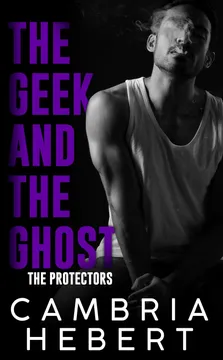


Plot Summary
Chili in the Snow
At eighteen, Garrett Redding, known as Rett,1 is homeless in Buffalo and trying to save enough to leave its winter behind. After a punishing snow-shoveling shift earns him two hundred dollars, he spends a little on a hot meal at a diner. Three men spot his money and chase him into an alley.
Rett1 scrambles up an icy fence, but they drag him down, beat him, and take his cash. Exhausted and bleeding, he stops fighting as they search his pockets. A masked man dressed in black2 has watched from the shadows. When one attacker raises his fist again, the stranger2 steps in, breaks up the assault, and leaves Rett1 alive on the pavement.
Rett's first defining choice is not simply to fight, but to keep attempting ordinary acts of self-preservation: earning wages, buying food, and guarding what little he has. The diner meal briefly restores his sense that kindness exists, while the assault turns money into a danger signal. His exhaustion is as consequential as the attackers' violence; by the end, he has begun to believe resistance only prolongs defeat. The masked stranger interrupts that conclusion through action rather than reassurance. Their first connection is therefore shaped by an imbalance: Rett is barely conscious, while the person who saves him remains unidentifiable.
The Stranger's Small Mercies
The stranger, a covert operative later known as Hiro,2 knocks the three attackers down and takes back the money they stole. He finds Rett's1 library card, learns his name, and carries him to a motel. While Rett1 sleeps, Hiro2 cleans the cut on his cheek, washes his clothes, buys food and coffee, and leaves a note asking him to eat.
He also returns more cash than Rett1 had lost. Rett1 wakes in clean bedding with no clear memory of the rescuer's2 face, but the meal, washed clothes, and familiar smell of leather and tobacco make the kindness feel tangible. Hiro2 has vanished before Rett1 can thank him, leaving the first of several absences Rett1 will struggle to understand.
Hiro's care is practical and anonymous. He supplies what Rett's life has denied him, warmth, food, clean clothing, and the chance to sleep without watching the door, yet he withholds the one thing that would make the exchange mutual: his identity. For Rett, this kindness is destabilizing precisely because it has no visible price. He cannot place it within his usual calculations of debt, danger, or pity. The washed clothes and returned money become evidence that someone paid attention to him as a person, not a problem to be removed. The unremembered face turns that evidence into longing.
The Box in the Alley
Rather than spend the money on a bus out of Buffalo, Rett1 spends a week searching its alleys for the man who saved him.2 Hiro2 follows at a distance, repeatedly driving off threats Rett1 never sees. After Rett1 gives his shelter bed to an older woman, he grows too weak to reach another refuge and curls up in a cardboard box.
Hiro2 finds him feverish and carries him to a motel despite Rett's1 protests about hospital costs. He stays through the night, gives him water and medicine, and holds him when chills shake his body. Once Rett1 is well enough to focus, Hiro2 steps out of the shadows and reveals the face Rett1 has been trying to find.
Rett's search makes his attachment visible before he can name it. He is not pursuing a reliable promise or a practical reward; he is looking for the person whose brief attention made him feel worth protecting. His gift of the shelter bed shows that his generosity survives even when his own reserves are nearly gone. Hiro's secret watching is protective, but it also places him in control of what Rett can know. The cardboard box condenses their unequal circumstances: Rett has learned to make shelter from almost nothing, while Hiro can intervene only by crossing the boundary he had set for himself.
A Name, Then Goodbye
Rett1 learns that his rescuer2 is Hiro,2 a name he had mistaken for the word hero, and the two begin to speak as equals. Their attraction becomes physical, but tenderness keeps surfacing in the practical care Hiro2 gives him: soup, clean clothes, a warm shower, and a place beside him in bed. Hiro2 asks why Rett1 stayed in Buffalo, and Rett1 admits he wanted to see him again.
Before dawn, Hiro2 leaves for a job that may keep him away for weeks or months. Rett1 wakes alone to find a purple backpack holding five thousand dollars, food, and a small ghost plushie. Unsure whether the money is help, pity, or payment, he keeps the gifts and eventually uses the cash to rent a modest apartment.
The intimacy does not resolve the central imbalance between the men. Rett experiences care and desire as evidence of belonging; Hiro experiences the same attachment as a risk he must manage by leaving. The money becomes an ambiguous substitute for an explanation. It gives Rett material means to escape homelessness, but its silence lets his deepest fear interpret it as a transaction. Their first separation is therefore not a simple misunderstanding: it grows from two distinct survival strategies. Rett reaches for connection because he has been abandoned; Hiro retreats because he believes his work and history make him dangerous to love.
A Bullet at Neon Reef
Two years later, Rett1 has a small apartment, a night job answering cable-company calls, and a growing friendship with Haz,3 his neighbor. At Haz's3 aquarium shop, the Neon Reef, gunmen attack, and Hiro2 appears with Kieran,4 his closest friend and fellow operative.
Hiro2 takes a bullet while protecting Rett1 and the others. Haz3 explains that he has discovered he is the son of crime patriarch Matteo Salvatore,8 whose lieutenant Grimaldi tried to seize the family by arranging the attack; Kieran4 killed Grimaldi, and Haz's Salvatore uncles5 arrived afterward.
While Hiro2 recovers at Kieran's4 home, Rett1 recognizes the man who once disappeared with his heart.2 He learns that Hiro's2 five thousand dollars was meant to help him, not buy his affection, but the old hurt remains between them.
The reunion collides Rett's carefully assembled independence with the physical memory of safety he associates with Hiro. His life has improved, but the old wound is not erased by the money that helped make that improvement possible. The shooting also establishes that their private romance sits inside a dangerous network of government operations and organized crime. Haz's sudden inheritance makes family a practical question as well as an emotional one: his friendship with Rett draws him into Kieran and Hiro's orbit. Hiro's willingness to take a bullet is unmistakable, but Rett still needs more than rescue to trust that he will stay.
Tommy Comes to Collect
After taking pills from Tommy,6 a local drug boss, to relieve a severe headache, Rett1 discovers that Tommy6 considers the medicine a debt he can collect through forced drug deliveries. Tommy6 breaks into Rett's1 apartment, ransacks it, ruins his work headset, and threatens him with a gun.
Rett1 refuses to become a dealer, stabs Tommy6 with the only knife he can reach, and tries to escape. Hiro2 arrives before Tommy6 can finish the attack, but the injured drug boss flees through a window.
Hiro2 takes Rett1 to his own loft, where Rett1 finds the notes, cash, hoodie, socks, and ghost plushie he has preserved from their first meeting. Hiro2 understands at last how deeply the gifts mattered, and Rett1 tells him about his rheumatoid arthritis and the abusive home he fled.10
Tommy's coercion echoes the logic Rett has spent years resisting: because he is poor and in pain, someone else assumes ownership of his choices. Yet this time Rett fights back, using the resources at hand rather than surrendering. The attack also exposes the limits of Hiro's protective habits. He can rescue Rett, but he cannot repair the emotional damage caused by leaving without explanation. The preserved gifts make that cost visible. Rett's disclosure of his illness and childhood abuse shifts their relationship from rescue and gratitude toward informed intimacy, where Hiro must respond to the person Rett is, not an idealized figure he wants to save.
The Past Comes Home
Rett1 explains that doctors diagnosed him with juvenile rheumatoid arthritis when he was young, but his parents10 dismissed the diagnosis and denied him treatment. They punished him for being gay, and he ran away when staying became dangerous.
Hiro2 promises to get him medical care and asks him to move in. He also reveals that he and Kieran4 were trained for a secret military unit, sent into an ambush by their own government, and left for dead. Kieran4 found the wounded Hiro2 and carried him to safety; later, the government forced both men into covert work.
Rett1 accepts that life and moves into Hiro's2 loft. When Hiro2 finds that Rett1 kept even a ruined cookie, he apologizes for the hurt he caused and gives him creamer packets to replace the ones he threw away.
The disclosures make care more complicated than rescue. Rett needs treatment, but he also needs to be believed after a childhood in which his pain was treated as deception and his identity as a defect. Hiro's confession similarly reframes his violence: it is not a glamorous secret but the consequence of betrayal, survival, and coerced service. Rett does not mistake understanding for approval; he chooses to remain beside Hiro while seeing the costs clearly. The creamer apology matters because it corrects a small but meaningful failure of attention. Hiro begins learning that protection requires respecting what Rett says is precious, even when it seems trivial to him.
Wyatt's Midnight Bargain
Rett's1 old contact with Tommy6 has left a burner phone among his belongings. When it rings, Tommy6 orders him to make a delivery and threatens Wyatt,7 a wary young man Rett1 has tried to help through the homeless shelter. Enzo Salvatore5 suspects Tommy6 is stealing drugs from the family and wants Rett1 to attend a meeting to identify the next location.
Hiro2 refuses to use Rett1 as bait, but Rett1 insists that Wyatt7 cannot be abandoned. The group equips Rett1 with a connected watch and plans to follow him, while Hiro2 secretly places a tracker inside a plug Rett1 will wear. Tommy's6 men disable the watch with a signal jammer, unaware that the second tracker may still guide Hiro2 once Rett1 is moved.
Rett's impulse to help Wyatt is rooted in recognition: he sees a version of his younger self in someone frightened and newly exposed to homelessness. That empathy risks repeating the self-neglect that once left him without shelter, but it also expresses the values that allowed him to survive without becoming cruel. Enzo views Rett as a useful route to evidence; Hiro sees the plan as an intolerable danger. Their conflict is not over whether Wyatt matters, but over who gets to decide what risks Rett may take. The concealed tracker embodies that unresolved tension, combining Hiro's protective vigilance with a breach of Rett's informed consent.
The Warehouse Trap
At the warehouse, Tommy's6 associate has Rett1 searched, strips away his connected watch, and orders his capture instead of giving him the promised address. The men tie him to a chair and take him to Tommy,6 who explains that Wyatt7 is bait for Enzo5 and that Rett1 will be blamed for the stolen drugs. When Enzo's5 people attack, Hiro2 enters from the rear and cuts Rett1 free, then reaches Wyatt.7
Tommy6 corners Hiro2 at a window and threatens Rett;1 Hiro2 wounds Tommy6 with a throwing star, and the two men struggle until Hiro2 cuts Tommy's6 throat. An attacker aims at Hiro,2 and Rett1 grabs the dropped gun and shoots him. The tracker inside Rett's plug leads Hiro2 and Kieran4 to his location after the jammer no longer blocks its signal.
The warehouse turns Rett's familiar vulnerability into a new kind of agency. He is captured and injured, but he is not merely carried through the action as a helpless object. When a gunman threatens Hiro, Rett makes a choice that permanently alters his relation to violence and to the life Hiro inhabits. The rescue also exposes the limits of possession as protection: Hiro's tracking device helps locate Rett, yet Rett's survival finally depends on his own judgment as well as Hiro's skill. Their bond is no longer founded only on one man saving the other. Each has acted to keep the other alive.
A Home Worth Staying
After the warehouse fight, Enzo5 takes the rescued Wyatt7 to a doctor and promises not to harm him. Hiro2 and Kieran4 arrange medical care for Rett,1 whose head wound and broken fingers need treatment, while the surviving threats are cleared away. Rett1 does not treat killing a man as simple triumph, but Haz3 helps him understand that he acted to protect Hiro.2
The pair settle into life together, with Hiro2 acknowledging his fear of living as well as dying. He buys a home across the hall from Kieran4 and Haz,3 arranges Rett's1 health appointments, and helps him leave the exhausting cable job. Three weeks later, Rett1 enters the new home and finds a library, his plants, and his fish waiting in a room made for him.
The resolution answers the book's opening deprivation through concrete forms of stability: medical appointments, a secure home, chosen family, and space for Rett's books and living things. Yet material provision alone is not the emotional solution. Rett has to be able to accept help without being reduced to a dependent, and Hiro has to understand that staying is a repeated practice rather than a single dramatic rescue. Their shared future accommodates both chronic illness and dangerous work instead of pretending either has disappeared. The home becomes meaningful because Rett participates in shaping it, turning shelter from a gift bestowed by Hiro into a place they make together.
Epilogue
Three weeks after buying their new home, Hiro2 brings Rett1 to the room he has kept secret. Inside, Rett1 finds a library built around his love of books, with shelves for his collection, a comfortable beanbag, his plants, the ghost plushie, and the fish named Ghost Jr. Hiro2 has arranged the room as a place Rett1 can keep growing, not merely recover.
Rett1 thanks him for the safety and love he has given, while Hiro2 admits he once believed he was born only to die. He now understands that he wants to live with Rett.1 After entering their home together, they make the library part of their shared life.
The library completes a chain of spaces that begins with Rett's precarious shelters: an alley, a motel room, a neglected apartment, and Hiro's initially empty loft. Unlike those earlier places, this room is neither temporary nor arranged solely by someone else's judgment. Its books, plants, fish, and soft furniture preserve Rett's particular tastes, including the small objects he had once kept because they were all he owned. Hiro's change is equally spatial. He stops treating home as a place to sleep between assignments and accepts it as a life with roots. The ending does not cure Rett or erase Hiro's work; it gives both men a place where those realities can be shared.
Analysis
The novel makes safety concrete before it makes it romantic. Rett's1 first relief comes through food, warmth, washed clothes, a bed, and a small amount of money. Those gestures matter because his life has trained him to interpret every resource as temporary and every offer as potentially costly. Hiro2 can provide material security, but his first instinct is still to disappear, leaving Rett1 to turn an act of care into evidence of rejection. Their reunion does not erase that injury. It requires Hiro2 to explain himself and Rett1 to risk trusting him without surrendering his independence.
The contrast between the men is not simply softness against violence. Rett1 is gentle because he repeatedly chooses not to let deprivation dictate how he treats others, even when he has little to spare. Hiro2 is violent because institutions trained and betrayed him, then continued to use him as a weapon. The novel asks whether protection can be ethical when it becomes control. Hiro's2 surveillance and possessive instincts may save Rett,1 but the hidden tracker also reveals that love does not automatically make a boundary acceptable. Rett's1 resistance, whether over money, work, or the meaning of a gift, keeps him from becoming merely the object of Hiro's2 rescue fantasy.
Chronic illness deepens this question. Rett's1 body has been disbelieved and punished, so reliable care requires more than medical access; it requires someone to take his account seriously. Hiro's2 willingness to arrange treatment becomes meaningful when paired with his learning to listen. The story's found family offers a counterweight to both Rett's abusive home10 and Hiro's2 coercive professional world. Kieran,4 Haz,3 and eventually Enzo5 create relationships in which loyalty can be argued over and renegotiated. The ending offers no cure for illness, violence, or trauma. Instead, it imagines a shared home where tenderness has practical support, and where both men can choose to live beyond the roles that once kept them alive.
Review Summary
The Geek and the Ghost receives an overall rating of 4.3/5, with most readers praising its humor, heart, and chemistry between Ghost and Rett. Fans love Ghost's snarky, unhinged personality, the hurt/comfort dynamics, chronic illness representation, and the found family elements. Many highlight the extended prologue showing the characters' past connection as a strength. Critics note the compressed timeline, instalove pacing, and occasionally childlike character portrayals as weaknesses. Most readers eagerly anticipate the next book featuring Enzo and Wyatt.
Characters
Garrett Redding, called Rett
The stubborn survivorRett is a young man whose humor, curiosity, and generosity persist despite poverty, chronic pain, and a childhood without reliable care. He is resourceful in practical ways, stretching money, finding shelter, and building a modest life, but he often treats his own needs as less urgent than another person's. His love of books and web comics offers both pleasure and a private imaginative refuge. Because his early experiences taught him that kindness may vanish without warning, he is drawn to protection yet wary of dependence. His strength is not hardness: it is his ability to remain tender without mistaking tenderness for safety, and to keep making choices even when his body and circumstances limit him.
Hiro Maxfield, known as Ghost
The shadowed protectorHiro is a covert operative whose skill at disappearing reflects a life built around secrecy, danger, and emotional withdrawal. His humor and appetite for snacks soften his intimidating manner, but they also help him avoid speaking plainly about fear and guilt. He believes his violence and government service make him unfit for an ordinary life, so he initially treats distance as a form of protection. Rett1 unsettles that logic by seeing a person beneath the weapon and by refusing to be intimidated into silence. Hiro's deepest loyalties are fierce, especially toward Kieran4, and he expresses care through action before he learns to make it mutual, accountable, and lasting.
Hazard, called Haz
The openhearted neighborHaz is Rett's1 neighbor and emerging best friend, a warm, impulsive young man whose honesty often arrives before his discretion. Raised without a stable family, he understands loneliness and quickly recognizes Rett's1 need for companionship. His attachment to fish, plants, and other living things reveals a nurturing instinct that persists even amid danger. Haz's newly discovered connection to the Salvatore family5 complicates his quiet life, but he resists being defined by inherited power and wants to build a future through the aquarium shop. His openness helps draw Rett1 into a found family, while his own optimism can make him underestimate how quickly violence reaches the people he loves.
Kieran Vaughnn
The guarded brother-in-armsKieran is Hiro's2 closest friend and fellow operative, a disciplined, suspicious man whose gruffness masks an unwavering sense of responsibility. He is protective of Haz3 and slow to trust anyone who might endanger the small circle he considers family. Kieran's military history with Hiro2 has forged a loyalty that does not depend on sentiment or ease; he has repeatedly chosen danger rather than abandon his friend. His bluntness can wound, especially when fear turns into judgment, but he is capable of revising his view when presented with the truth. Around Haz3, his control slips into a more domestic tenderness he would rather not advertise.
Enzo Salvatore
The calculating family bossEnzo is a powerful Salvatore family8 figure who approaches conflict through leverage, information, and measured displays of force. He is wary of outsiders and expects loyalty to be demonstrated, not merely claimed. Haz's3 place in his family matters to him, even when their relationship is new and awkward, and he is willing to negotiate when family loyalties require it. Enzo's calm manner can feel more threatening than an outburst because he treats violence as a practical option rather than a loss of control. His interactions with Hiro2 and Kieran4 reveal a man accustomed to command who must sometimes recognize that other people have their own boundaries and allegiances.
Tommy
The neighborhood drug bossTommy is a local drug boss who uses fear and manufactured debts to control people with fewer resources than he has. He treats Rett's1 request for pain relief as an opening to demand obedience, then escalates when Rett1 refuses to become a courier. His threats are not bluster: he damages Rett's1 home and targets people Rett1 cares about. Tommy's ambition is territorial, and he would rather force others into his plans than accept the limits of his standing within Salvatore5 territory. He serves as a direct antagonist to Rett's1 autonomy and as a reminder that exploitation often arrives disguised as an offer of help.
Wyatt
The shelter's wary newcomerWyatt is a young, frightened acquaintance Rett1 meets through the homeless shelter. He appears uncertain of how to trust help and often leaves before anyone can make him feel obligated. Rett1 sees his own earlier vulnerability in Wyatt, which makes him persist in offering food, shelter, and companionship. Wyatt's connection to the larger conflict is initially unclear, but his presence reveals how easily people on the margins become leverage for more powerful figures. His guardedness is not ingratitude; it is a survival response that Rett1 recognizes because he once relied on the same instinct.
Matteo Salvatore
The absent crime patriarchMatteo is the Salvatore patriarch whose family legacy shapes the danger surrounding Haz3. His choices and private relationships reach beyond his lifetime, creating both a claim to inheritance and a struggle for control. Though he does not appear directly in the main action, his influence explains why Haz3 becomes a target and why Enzo's5 family takes an interest in protecting him.
Fletcher
The stranger with a coatFletcher is a stranger Rett1 encounters while homeless in New York City. He responds to Rett's1 distress with a coat, directions to a place offering free food, and money for a bus ticket. His help is brief and unasked for, but it becomes an early model of practical kindness that asks for nothing in return.
Rett's family
The home he escapedRett's1 parents and siblings belong to the family environment that shaped his earliest understanding of pain, secrecy, and belonging. Their expectations form a powerful contrast with the chosen family he later builds. Rett's1 history with them helps explain why he struggles to trust care, even when he longs for it.
The diner waitress
A brief act of kindnessThe diner waitress gives Rett1 an extra grilled-cheese sandwich and treats him with ordinary warmth when he is hungry and frightened. Her small generosity stands out because she asks for no repayment and does not reduce him to his circumstances.
Plot Devices
The Purple Backpack
A life-changing giftHiro's2 purple backpack holds money, food, and a ghost plushie when he leaves Rett1 after their first night together. Its contents let Rett1 leave homelessness for a rented room, but the unexplained gift also becomes a source of emotional uncertainty. Rett1 preserves the bag and its keepsakes because they are his first lasting evidence that someone cared for him. When Hiro2 later discovers this, he understands that the money was not a payment and that leaving without explaining himself caused real harm.
Hazelnut Creamer
A portable kind of comfortRett1 collects free creamer cups as a small reserve against hunger and uncertainty from his years on the street. He dislikes the hazelnut flavor, but keeping them makes him feel slightly less vulnerable to the next emergency. When Hiro2 throws the cups away, Rett1 experiences the gesture as a rejection of the comfort he offered. Hiro's2 later apology and replacement boxes show him learning that care depends on understanding what an object means to the person who holds it.
The Hidden Tracker
A rescue through darknessHiro2 secretly places a tracker inside the plug Rett1 wears before entering the warehouse. Tommy's6 men find and destroy Rett's1 connected watch, and their signal jammer initially blocks the team's location technology. The second tracker provides a way to locate Rett1 once he is moved beyond the jammer's range. It makes the rescue possible, while also underscoring the tension between Hiro's2 protective instincts and Rett's1 right to know what is being done to his body.
The Ghost Plushie
A keepsake that remembersHiro2 leaves Rett1 a small ghost plushie with the money and other practical gifts. Rett1 keeps it through years of living alone, treating it as a stand-in for the rescuer2 whose face he could not initially remember. The plushie turns an anonymous act of care into a physical reminder, then becomes part of the evidence Hiro2 encounters when he returns. Its presence helps reveal the depth of Rett's1 attachment without either man having to explain every year of separation.
The Marked Angel
A life built around deathHiro's2 dark angel tattoo and his reminder that he was born to die make visible the identity he has built around violence and self-erasure. Rett1 reads the image differently, seeing a capacity to protect as well as harm. Their competing interpretations recur as Hiro2 decides whether he can remain in Rett's1 life. The tattoo does not erase his record or excuse his choices; it gives the couple a concrete image through which Rett1 challenges Hiro's2 belief that his future must end in sacrifice.
Download PDF
Download EPUB
.epub digital book format is ideal for reading ebooks on phones, tablets, and e-readers.








