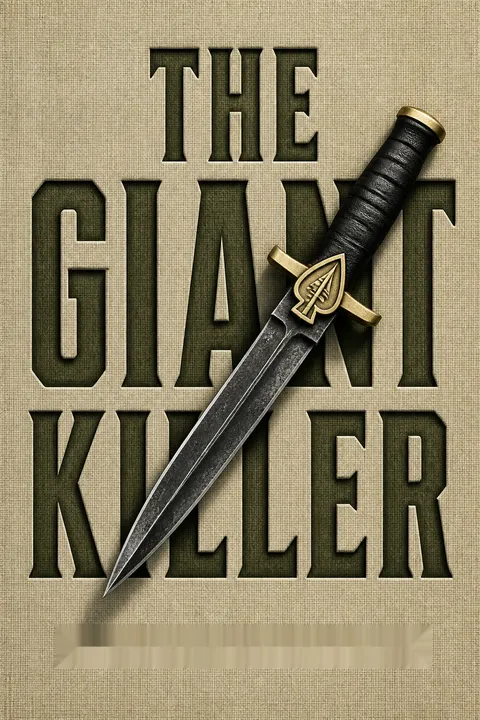


Key Takeaways
See the man, not just the palm tree he sleeps beneath
A hidden biography. In 2015, police officer David Yuzuk learned that Richard Flaherty, a homeless man he had known for years, had been killed in a hit-and-run. Until then, their conversations had revealed little of Flaherty’s past. A search of military records and interviews with his family and fellow soldiers showed that this four-foot-seven-inch man had served in Vietnam, earned a Silver Star, and become a Green Beret captain. The first lesson is a reversal of appearances: a person’s current circumstances do not tell the whole story.
A search becomes a life. David’s investigation, joined by his father Neil, moves from a homicide inquiry into a biography assembled from interviews, journals, letters, medical records, and official documents. Flaherty’s life resists a simple label. He was a decorated soldier, a secretive operator, an alcoholic, a generous neighbor, and a man sleeping on the street.
The opening invites a useful correction to everyday judgment: visible status is not a reliable measure of character or history. Social psychology’s work on attribution errors describes how observers often explain a person’s situation through personality while overlooking circumstance. Flaherty complicates that habit in both directions. His homelessness does not erase his service, but his medals do not explain away his suffering or choices. The book’s strongest humanizing move is not to replace one stereotype with a heroic one, but to insist that a person may exceed every category used to sort him.
A four-foot-seven recruit made the Army measure grit, not height
A waiver, then the work. Army regulations set minimum height and weight requirements, but Flaherty pressed for years to get a waiver. He had been turned away by the rules before he ever reached basic training. After gaining weight through intensive exercise, he entered the Army in 1966 at about one hundred pounds. He endured the same demanding runs, drills, and obstacle courses as his fellow recruits, often finding unconventional ways to complete them.
Ability earned respect. Flaherty later secured another waiver to apply for Officer Candidate School, then served as an officer in Vietnam. Accounts from fellow soldiers describe a small, determined leader who carried his share of the load and did not ask others to face risks he avoided. His size drew attention, but his conduct made him a soldier and commander in the eyes of his unit.
Flaherty’s story illustrates how a rigid selection rule can mistake a proxy for the ability it is meant to predict. Height was used as a stand-in for battlefield effectiveness, yet the book describes a soldier whose performance repeatedly challenged that assumption. Still, an exceptional case cannot prove that every standard is useless. Physical requirements can serve real safety purposes. The more precise lesson is institutional: where a rule is meant to screen for capability, decision-makers should test capability directly when a defensible exception is possible.
Near Hue, leadership meant carrying responsibility beyond the firefight
A unit under siege. The book recounts an April 1968 battle in Thua Thien Province, near Hue. Flaherty’s platoon and another unit were trapped under heavy attack, with wounded men, lost soldiers, and little immediate support. The narrative describes Flaherty organizing a defensive line, steadying a shaken soldier, and disguising himself in an enemy uniform to search for Americans separated from the group. He returned with several men, helping the units hold until artillery and helicopters arrived.
Valor has a human cost. Flaherty received the Silver Star for his actions. The story draws on veteran interviews and military records, though its scene-by-scene presentation is reconstructed from memories recorded decades later. Its focus is not merely on daring. A commander’s job was to keep a group functioning amid confusion, fear, and loss, then live with the consequences of decisions made in seconds.
The episode makes leadership legible as a social act, not a personality trait. Under extreme pressure, a commander must help others regulate fear, coordinate limited resources, and keep the group oriented toward a shared task. That resembles crisis leadership in fields far beyond combat, from emergency medicine to disaster response. Yet battlefield accounts also demand ethical distance: courage does not make every order or tactic right. The narrative’s value lies in showing the burden and ambiguity of command, not in treating military success as a complete moral verdict.
A commander may carry the lost long after the war ends
Memory stayed physical. Flaherty described combat through smells, wounds, and the men he could not bring home. His VA records include accounts of soldiers killed close beside him and of decisions he continued to revisit. Years later, he experienced nightmares severe enough to wake a supermarket manager who heard him screaming beneath his tree. A psychiatric evaluation documented depression, anxiety, heavy drinking, and paranoid beliefs, while also finding his basic cognitive functioning largely intact.
Guilt is not a diagnosis. Fellow veteran Rick Lencioni explained that group counseling helped him recognize distorted threat perceptions and talk through life after combat. Others credited family and close relationships with helping them stay connected. The book suggests that Flaherty had few such supports, but does not establish one cause for his decline. Combat trauma, bereavement, alcohol, injury, and isolation appear together, not as a neat chain with a single link.
The account resists the popular image of trauma as a memory that can simply be put away. Threat learning can persist after danger has passed, shaping sleep, attention, and relationships. The contrast between Flaherty and veterans who found counseling or family support also points to the importance of connection, without implying that support guarantees recovery. A caution is warranted: trauma does not make every suspicious belief true, and a diagnosis cannot summarize a person. Both facts matter if care is to be compassionate without surrendering judgment.
When the Army cut Flaherty loose, it cut away his strongest identity
A career ended abruptly. In 1971, during a military reduction in force, Flaherty’s Army contract was not renewed. He asked about accepting a lower rank, but the decision stood. He had imagined a future in training soldiers; instead, he returned to civilian life after years in a world where his uniform, unit, and experience gave him a clear role.
The transition compounded loss. Flaherty tried business and weapons work, and he fell in love with Jane Cohen. After Jane died in a car crash in 1975, he struggled with grief, drank heavily, and described experiences that today fit the language of post-traumatic stress. The book links his later bitterness and homelessness to being pushed out of the Army, but also records other losses and choices. Institutional rejection mattered, without being the whole explanation.
Organizations provide more than jobs. They supply routines, status, shared language, and a group that recognizes what members have endured. Leaving that structure can therefore involve an identity shock, especially when civilian life offers little translation for military skills or experience. Flaherty’s case also shows why institutional responsibility should not become a total explanation: a career ending can be a rupture, while grief, illness, alcohol, and personal decisions shape what follows. The distinction helps avoid blaming either the individual alone or one institution for every outcome.
Danger made him feel useful, but could not rebuild a life
The pull of the mission. Flaherty’s friend Frank Sosa said that dangerous work gave him a rush and briefly quieted his nightmares. The book describes Flaherty’s involvement in covert and weapons-related activity after Vietnam, including an undercover ATF operation that exposed a plan to sell stolen military explosives and ammunition. He helped agent Fred Gleffe build the case against two soldiers, who were convicted in 1985.
Relief is not repair. Flaherty reportedly called the excitement of missions a way to feel young and focused again. But Sosa’s account suggests that returning to danger did not restore lasting stability. Other claims about Flaherty’s clandestine work, including alleged intelligence and drug operations, come largely from personal recollections and are not confirmed in the book by equivalent documentation. The contrast is revealing: being effective in a crisis is not the same as being well outside it.
High-stakes work can provide structure, competence, and immediate feedback, all of which may feel absent in civilian life. That helps explain why danger could seem regulating to a veteran, rather than merely frightening. But crisis competence is context-specific. A person can function brilliantly when the task is clear and still struggle with ordinary routines, relationships, or long-term care. The account should not romanticize combat as medicine. Temporary relief may be real, while the underlying distress and the costs of returning to risk remain.
Treat refusal as information, not proof that help is unwanted
Freedom and vulnerability coexisted. Flaherty spent decades moving between places and eventually slept beneath a palm tree in Aventura. Family members offered housing, and David asked whether he wanted help leaving the streets. Flaherty often refused. His cousin Donna believed that homelessness had become a kind of freedom for him; others thought nightmares and mistrust made a fixed home difficult. His VA records show that in 2009, after twenty-one years on the streets, he asked for treatment and help getting off them.
Options were limited. David explains that Florida’s Baker Act allowed involuntary evaluation only when a person met specific danger or neglect criteria. Being homeless, eccentric, or mentally ill was not by itself grounds to remove someone’s freedom. The book shows the painful gap between noticing distress and having a service the person will accept. Flaherty’s autonomy mattered, but so did the shortage of sustained, trusted support.
The tension here resembles a central problem in community mental health: how to respect self-determination while responding to impaired judgment, danger, or unmet basic needs. A refusal may express a genuine preference, fear, shame, or an inability to trust the offer. Treating it as a final answer risks abandonment; overriding it too quickly risks coercion. Flaherty’s story supports persistent, relationship-based outreach and practical choices, rather than a single yes-or-no test of deserving help. It also makes clear that individual goodwill cannot substitute for accessible services.
Keep covert-war stories in the category of claims until evidence converges
Some evidence is firm. In the ATF case, agents recorded undercover meetings, recovered a truckload of explosives and weapons, and secured convictions against Keith Anderson and Byron Carlisle. Other parts of Flaherty’s story are less verifiable. Sosa described alleged CIA-linked cocaine trafficking and overseas missions; Flaherty told David that a stolen compact nuclear weapon had been recovered. The book presents these accounts but does not provide public documentation establishing every claim.
The murder remains unresolved. Flaherty was killed by a driver who left the scene. David examined the crash evidence and found the circumstances troubling, but said he found no proof that the collision was an assassination. The driver, a court stenographer at the police department, was not charged. The narrative’s careful distinction between suspicion, testimony, records, and proof is essential when extraordinary claims involve secret operations.
The book is most persuasive when it lets evidence and uncertainty sit side by side. Intelligence work naturally produces gaps, and witnesses may have reasons to conceal, exaggerate, or misremember. That does not make their accounts worthless; it changes how strongly they can support a conclusion. A useful model is to keep separate what documents establish, what witnesses report, and what the narrator infers. David’s refusal to call Flaherty’s death a proven hit is a form of discipline, not a failure to solve the story.
Honor his chosen homecoming, without pretending it healed his pain
A private final choice. Flaherty was eligible for burial at Arlington National Cemetery, an honor many veterans considered a fitting end to military service. Yet records in his storage unit showed that he had bought a plot in West Virginia beside Lisa Davis, a woman he had loved decades earlier and found again near the end of her life. After her death, he chose a resting place close to her rather than the national cemetery.
No tidy redemption. The choice gives the ending a measure of agency, but it does not undo his grief, homelessness, illness, or violent death. David’s research began as a promise to tell Flaherty’s story and ends with unresolved questions. The book resists making the burial a cure or a grand reconciliation. Its final image is an attempt to imagine a veteran going home, while admitting that no narrator can know what Flaherty experienced in his last moments.
A public honor and a private wish represent different kinds of belonging. Arlington would have placed Flaherty within a national story of service; the grave beside Lisa expressed a personal attachment that the official tribute could not replace. Respecting that preference preserves his agency without turning it into proof that he found peace. Biography often reaches for closure because readers want pain to resolve into meaning. This account is stronger when it allows an ending to matter without claiming that it explains or repairs the life that came before.
Analysis
The Giant Killer is narrative nonfiction built around a police investigation that becomes a biography. David Yuzuk begins with a death on an Aventura street, then follows documents, interviews, and memories into Vietnam, the military, covert operations, and the experience of homelessness. That structure gives the book its suspense, but also its central problem: Richard Flaherty is described by many people, yet no single account can contain him.
The book’s most reliable material is not always its most dramatic. Military records, VA notes, the ATF case, and interviews establish important parts of Flaherty’s service and later distress. Claims about intelligence work, drug trafficking, and a missing nuclear device rely more heavily on recollections or on Flaherty’s own explanations. The narrative sometimes stages remembered events as cinematic scenes, while its introduction acknowledges the limits of memory and its ending admits that many questions remain. Readers should therefore distinguish a documented conviction from a reported covert mission, and both from speculation about the hit-and-run.
That uncertainty does not weaken the book’s human purpose. It makes the narrator’s restraint important. David considers the possibility that Flaherty was deliberately killed, then says he found no proof. He records a suspiciously unusual life without turning every unexplained detail into confirmation of a conspiracy. At the same time, the portrait complicates the familiar heroic biography. Flaherty’s combat courage and loyalty coexist with violence, drinking, paranoia, and choices whose consequences were severe.
The broader account is strongest as a study of disrupted belonging. Military service gave Flaherty a role, a team, and a way to use his abilities. The end of his Army career, the death of loved ones, trauma, and an unsympathetic civilian world all appear in the story of his decline, though none alone explains it. The result is not a simple lesson about a hero abandoned by society, but a warning against reducing a person either to his medals or to his most visible hardship.
Review Summary
The Giant Killer is a highly-rated biography of Richard J. Flaherty, the smallest man to serve in the US military. Readers praise the well-researched, engaging story of this Vietnam War hero turned homeless veteran. The book offers insights into PTSD, CIA operations, and the challenges faced by veterans. Many reviewers found the story emotional and thought-provoking, appreciating the author's commitment to telling Flaherty's complex life story. Some noted unanswered questions and a non-linear narrative but still recommended the book.
Glossary
RIF
military force reductionRIF stands for reduction in force, a cut to military personnel or positions. In the book, Flaherty’s Army contract was not renewed during a period of downsizing. He viewed the decision as the end of the career and identity he had built through service, despite his combat record and hope of continuing in military training.
The Baker Act
Florida mental-health lawThe Baker Act is Florida’s legal process for involuntary mental-health examination. As the book describes it, officers and clinicians can initiate an evaluation when a person meets criteria involving danger to self or others, or serious risk from neglect. Homelessness, unusual behavior, or mental illness alone does not automatically justify taking away a person’s liberty.
A-Team
Special Forces operational teamIn Flaherty’s explanation, an A-Team is a twelve-person Special Forces unit trained to operate in enemy territory and organize local forces. Team members cross-train in one another’s specialties, allowing the unit to function with limited support and lead a much larger indigenous force. The book emphasizes shared competence and mutual reliance within the team.
Project Green Light
special nuclear-weapons programProject Green Light is the name Flaherty uses for a program that trained Special Forces teams to deliver compact nuclear demolition devices behind enemy lines. The book presents his account of the program and an alleged stolen weapon, but does not offer public documentation that independently verifies the weapon’s disappearance or recovery.
SADM
portable nuclear demolition deviceSADM means Special Atomic Demolition Munition, a compact nuclear weapon described in the book as small enough for a two-person team to transport and deploy. Flaherty says the teams used a two-person rule so no individual could arm the device alone. The summary treats the book’s account of a stolen SADM as an unverified claim.
FAQ
What's The Giant Killer about?
- True Story of Richard Flaherty: The book tells the incredible life story of Richard J. Flaherty, the smallest man to serve in the U.S. military as a Green Beret captain.
- Themes of Heroism and Struggle: It explores themes of heroism, resilience, and the struggles faced by veterans, particularly focusing on Flaherty's experiences during and after the Vietnam War.
- Personal and Emotional Journey: The narrative delves into Flaherty's personal challenges, including PTSD, homelessness, and his relationships, painting a vivid picture of his life.
Why should I read The Giant Killer?
- Unique Perspective on War: The book offers a unique perspective on the Vietnam War through the eyes of a soldier who defied physical limitations.
- Inspiring and Engaging Story: Flaherty's story is one of inspiration and determination, showcasing how one can overcome adversity.
- Awareness and Advocacy: It raises awareness about the plight of homeless veterans and the systemic issues they face, encouraging readers to reflect on societal treatment of veterans.
What are the key takeaways of The Giant Killer?
- Resilience in Adversity: The book emphasizes the importance of resilience and determination in the face of adversity, illustrating that physical limitations do not dictate potential for greatness.
- Impact of War on Veterans: It highlights the long-lasting effects of war on veterans, including PTSD and societal reintegration challenges.
- Complexity of Heroism: The story challenges traditional notions of heroism, showing that true bravery can come in many forms beyond physical strength.
What are the best quotes from The Giant Killer and what do they mean?
- “Don’t slide down the rabbit hole.”: This metaphor warns against getting lost in one's struggles or conspiracies, reflecting the author's journey of discovery.
- “Sometimes it’s the journey that teaches you a lot about your destination.”: This quote underscores the importance of personal growth through experiences, suggesting that challenges provide valuable lessons.
- “Success, my boy, is going from failure to failure without losing your enthusiasm.”: It reflects Richard's resilience and determination despite challenges, serving as a motivational reminder to persist.
Who is Richard J. Flaherty?
- Smallest Green Beret: Richard J. Flaherty was the smallest man to serve as a Green Beret captain in the U.S. military, showcasing exceptional skills and bravery.
- Vietnam Veteran: He served in Vietnam, facing intense combat and losing fellow soldiers, which contributed to his later struggles with PTSD.
- Life After Service: After his military service, Richard became a mercenary and battled homelessness and mental health issues, leading to his untimely death.
What challenges did Richard Flaherty face during his military service?
- Physical Limitations: Flaherty faced skepticism due to his height, being only four feet seven inches tall, but proved his capabilities as a soldier and leader.
- Combat Experiences: He endured the horrors of war, including being wounded and witnessing the deaths of fellow soldiers, impacting his mental health.
- Post-War Struggles: After returning home, Flaherty struggled with PTSD and societal reintegration, reflecting broader challenges faced by veterans.
How did Richard Flaherty's size impact his military career?
- Overcoming Stereotypes: His small stature initially led to skepticism, but he consistently proved his worth through actions and leadership in combat.
- Unique Tactical Advantages: His size provided unique advantages in stealth and maneuverability during missions, allowing him to execute tactics others might not.
- Symbol of Resilience: Flaherty became a symbol of resilience, showing that determination and skill can outweigh physical limitations.
What role did family play in Richard Flaherty's life?
- Support System: Flaherty's family, particularly his father, played a significant role in shaping his identity and values, providing crucial support.
- Complex Relationships: The book explores the complexities of his family relationships, adding depth to his character and highlighting familial bonds.
- Legacy of Love: Ultimately, his family legacy is one of love and support, influencing his journey and decisions throughout his life.
What challenges did Richard face after the war?
- Struggles with PTSD: Richard experienced severe PTSD, affecting his ability to reintegrate into civilian life, with nightmares and flashbacks haunting him.
- Homelessness: He found himself living on the streets, battling stigma and challenges, highlighting systemic failures in supporting veterans.
- Isolation and Betrayal: Richard felt betrayed by the government and society, contributing to his feelings of isolation and lack of support.
How does The Giant Killer address the issue of homelessness among veterans?
- Flaherty's Experience: The book highlights Flaherty's struggles with homelessness, shedding light on the harsh realities faced by many veterans.
- Societal Indifference: It critiques societal indifference towards veterans, emphasizing the need for greater support and understanding.
- Hope and Resilience: Despite challenges, Flaherty's story conveys a message of hope and resilience, encouraging recognition of veterans' humanity.
What role did love play in Richard's life?
- Relationship with Lisa Davis: Richard's love for Lisa Davis was central, providing hope and motivation, illustrating love's power to heal.
- Impact of Loss: Lisa's loss deeply affected Richard, contributing to his mental health struggles and feelings of isolation.
- Search for Connection: Throughout his life, Richard sought connections, emphasizing the importance of human connection in overcoming adversity.
What can readers learn from The Giant Killer?
- Understanding PTSD: Readers gain a deeper understanding of PTSD and its effects on veterans, serving as an educational tool for mental health awareness.
- Importance of Support: It highlights the need for support systems for veterans, encouraging advocacy for better resources and assistance.
- Resilience and Hope: The book conveys a message of resilience and hope, illustrating potential for healing and redemption even in dark times.
Download PDF
Download EPUB
.epub digital book format is ideal for reading ebooks on phones, tablets, and e-readers.








