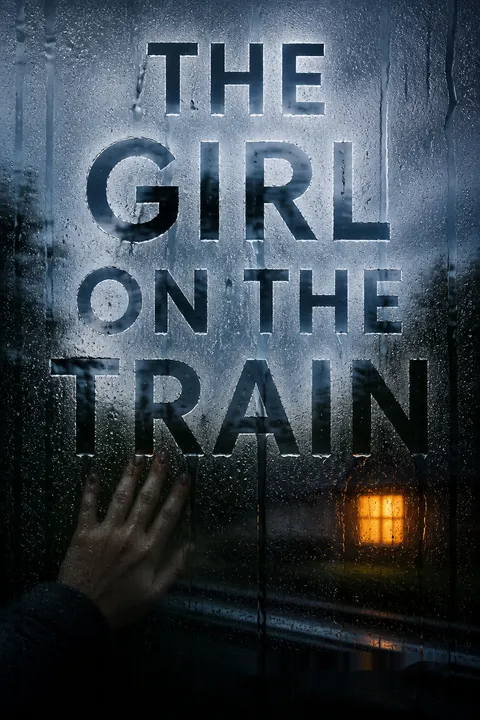


Plot Summary
Prologue
Before the dated entries, a narrator recalls a small grave beneath a birch near the old railway tracks, marked only by gathered stones. A second fragment catches a person injured and disoriented, unable to finish counting, while footsteps approach.
The two images give the story its first shape: an unmarked burial and a witness whose mind cannot hold the moment clearly. Neither the dead person nor the approaching figure is identified yet.
The opening offers consequences before causes. A grave and a broken memory establish the novel’s central problem without naming its victim or culprit: what can a person know when experience has been buried, misremembered, or deliberately obscured? The railway is already more than scenery. It is a route past private lives and, eventually, a boundary beside concealed evidence. The spare images also place the reader in Rachel’s epistemic position, where fragments feel vivid but their meaning remains unstable.
The Commuter's False Home
Rachel Watson rides the same slow train between Ashbury and London, watching the houses beside the tracks. She has privately named the couple at number fifteen Jason and Jess, imagining them as devoted and carefree, though they are Scott and Megan Hipwell and she has never met them. Four doors away stands number twenty-three, the house she shared with her ex-husband, Tom, who now lives there with his wife, Anna, and their baby.
Rachel rents a cramped room from her former university acquaintance Cathy, hides that she has lost her public-relations job, and keeps commuting as if she still works. She drinks alone, clings to the train’s routine, and uses other people’s windows to picture the settled life she believes she has lost.
Rachel’s invented couple reveals how observation can become a substitute for contact. From a moving train she can arrange strangers into a reassuring story, while avoiding the more complicated facts of her own life: unemployment, divorce, infertility, and dependence on Cathy. Her daily commute gives this avoidance a schedule and a plausible cover. Yet the window offers no genuine access to Megan or Scott. It magnifies Rachel’s longing and turns ordinary gestures into evidence of an ideal marriage, setting up the danger of confusing emotional projection with knowledge.
Megan's Borrowed Days
Megan Hipwell once managed a small art gallery, but after it closes she is left restless at home with her husband, Scott, an IT consultant. She tries childminding for Tom and Anna Watson, caring for their infant daughter, Evie, but quickly resents the work and quits without securing another job.
Megan’s past is less settled than her marriage suggests: the death of her brother Ben drove her away from home as a teenager, and years of drifting left her wary of being pinned to one identity. Insomnia and panic attacks prompt Scott to urge her into therapy. She begins seeing Kamal Abdic, a composed therapist whose attention makes her feel understood, even as she withholds the most painful parts of her history.
Megan’s dissatisfaction is not simply boredom with domestic life. The gallery had given her a role chosen for herself; its closure leaves her with a marriage and a neighborhood that other people can read as fulfillment, but that she experiences as confinement. Her rapid exit from the Watsons’ home and her guarded approach to therapy show the same conflict: she wants closeness, yet resists the obligations that closeness brings. The novel makes her restlessness legible without making it harmless. Her private search for intensity will draw several people into overlapping deceptions.
A Therapist Crosses Lines
As Megan discusses her anxiety with Kamal, she becomes increasingly drawn to him. His calm attention gives her a place to speak, but she also treats their sessions as a charged private relationship and tests the professional boundary between them.
When Kamal tries to reassert that boundary, Megan responds with anger and renewed pursuit rather than accepting the separation. Their connection remains difficult to name from her account, which mixes longing, therapy, and fantasy.
The strain leaves her feeling that their story is unfinished, and she continues to return to him with more of her past. Later, Rachel will glimpse Megan kissing a man who is not Scott, an image that makes Kamal’s role in the marriage’s apparent happiness impossible to ignore.
The relationship exposes how care can be mistaken for exclusive intimacy, especially when a patient has few trustworthy places to bring shame. Kamal’s attention gives Megan relief, but the imbalance of a therapist’s role makes her pursuit more than a private romance. Her insistence that the connection must mean something protects her from confronting the limits of his care. The ambiguity is structurally important: Rachel sees a kiss, not its history, and builds a confident explanation from a partial view. In this story, emotional certainty repeatedly outruns available evidence.
The Kiss Through Glass
On the Friday before Megan disappears, Rachel’s train slows opposite number fifteen. She sees Megan in the garden with a tall, dark man and watches them kiss. Because she has made Megan into the wife in her imagined perfect marriage, the sight feels like a personal betrayal. Rachel’s anger reaches back to the discovery that Tom had been having an affair with Anna, the woman who now lives in Rachel’s old home.
Rather than question how little she knows about Megan, Rachel treats the kiss as proof that Megan has carelessly damaged a good husband. The glimpse also gives Rachel a clue that the police do not yet have: Megan had a lover, and Scott may not be the only person with a reason to fear what she might reveal.
The window reverses its usual comfort. Rachel’s distant view had allowed her to idealize Megan and Scott; the kiss shatters that image, but it does not give Rachel reliable knowledge of their marriage. Instead, her own history supplies the interpretation. She recognizes the shape of betrayal because she has lived it, then projects her moral injury onto strangers. The scene makes the novel’s voyeurism psychologically precise: seeing more does not necessarily mean understanding more. Rachel has a potentially useful observation, but her resentment and imagined intimacy distort how she carries it forward.
A Night Goes Missing
On Saturday evening, Rachel drinks heavily and rides the train toward Witney, telling herself she only wants to pass Megan and Scott’s house. She gets off at the station, but the night disappears into a blackout.
The next morning she wakes in Cathy’s flat with blood in her hair, a split lip, bruises, and no clear memory of how she got home. Tom has left an angry message saying Rachel frightened Anna and that he searched for her. Cathy, confronted with vomit and Rachel’s disordered clothes, gives her notice to leave.
Rachel cannot tell whether she fell, fought, or witnessed something. When she later learns that Megan is missing, her blank hours become more than a private source of shame: they may contain the last sighting of a woman who has vanished.
The blackout turns Rachel’s familiar drinking pattern into a narrative crisis. Because she cannot remember her actions, she cannot either defend herself or take responsibility with confidence. Her damaged body supplies physical facts, but not their sequence. The loss of Cathy’s room compounds that uncertainty with material danger: Rachel is now both homeless in prospect and socially discredited. The novel does not treat memory gaps as a convenient mystery alone. They reflect the way addiction fractures agency, leaving a person answerable for consequences that she cannot reconstruct and vulnerable to other people’s versions of events.
Rachel Becomes a Suspect
After Rachel reads that Megan Hipwell is missing, she travels to Witney to retrace the route she took on Saturday. A dark underpass and the station steps trigger fragments of herself bleeding, but she still cannot place them.
When Detective Inspector Gaskill questions her, Rachel lies about still working at her old firm and gives an incomplete account of the evening. Anna has told police that Rachel appeared drunk near the Watson home and once entered it, picked up baby Evie, and carried her into the garden before Anna stopped her.
Rachel admits that she took the child but disputes Anna’s account of her intentions. Her decision to approach the investigation makes her look less like a helpful witness than an unstable former wife, and the detectives warn her away from Blenheim Road.
Rachel’s credibility is not lost through one dramatic accusation but through a chain of small evasions: the fictitious job, the half-truth about the night, and her history with Tom’s family. Her account of taking Evie is especially difficult to assess because Rachel herself cannot fully explain the impulse. The scene asks readers to hold two possibilities at once: Rachel may be trying to help, and her behavior may genuinely frighten others. Police procedure sharpens this tension. They need stable testimony, while Rachel’s addiction has made stability precisely what she cannot easily offer.
The Husband's Unwanted Witness
Rachel tells Gaskill that she saw Megan kissing a man from the train, then goes to Scott’s house after he responds to her email. She falsely presents herself as Megan’s acquaintance from the gallery, hoping he will listen to her observation.
Scott is desperate for news, but the details Rachel gives do not identify the man as one of Megan’s gallery artists. He searches online for her therapist, Kamal Abdic, and Rachel recognizes him as the person she saw.
She has now supplied the police with a name and given Scott a possible explanation for Megan’s disappearance. Yet she has also built her access on a lie, and Scott’s trust rests on a friendship that never existed. The police begin examining Kamal, while Rachel feels newly useful and dangerously involved.
Rachel’s first meaningful act in the investigation is ethically compromised. She offers information that may matter, but disguises the source of her knowledge to gain Scott’s attention. The lie repeats her central strategy of the novel: make herself legible as someone more competent, employed, or connected than she is. It works briefly because Scott needs an explanation, not because Rachel has earned his confidence. The scene also complicates the husband-suspect pattern. Scott’s grief appears genuine, yet Rachel’s idealized vision of him has already proved unreliable, so neither his distress nor her intuition can settle the question.
A Body Breaks the Pattern
Police arrest Kamal after finding evidence connected to Megan, and Rachel believes the investigation has finally found its answer. He is soon released without charge because the evidence is insufficient. Then a body is discovered in floodwater near Corly Wood, close to the railway route Rachel has watched for years.
The identification confirms that Megan is dead, turning Rachel’s fascination with a missing woman into grief for someone she never knew. Scott remains under suspicion, while Kamal denies being responsible and the police investigation stalls.
Rachel had hoped that naming the therapist would make her useful and settle the mystery. Instead, the release leaves her with a dead woman, an uncharged suspect, and the certainty that her own missing hours may still matter.
The discovery of Megan’s body changes the moral status of Rachel’s curiosity. Before, she could treat the case as a compelling interruption to her loneliness; now she must face that the person she turned into a character has suffered a real death. Kamal’s release does not establish innocence, just as his arrest did not establish guilt. This failure of neat resolution keeps the investigation aligned with Rachel’s own state: every apparent answer produces another gap. Her renewed purpose is valuable, but it is also mixed with a desire to remain central to a story that is not hers.
Therapy Turns Inward
With Kamal released, Rachel makes an appointment with him, partly to address her drinking and partly to understand her blackouts. She tells him that the lost hours make her feel detached from her own actions, and admits that her marriage ended after years of drinking and depression.
Kamal encourages her to take responsibility without punishing herself endlessly, but he warns that hypnosis can create unreliable memories rather than recover trustworthy ones.
Rachel is drawn again to his calm manner, even while suspecting him of harming Megan. His reassurance briefly eases her shame, yet it does not restore the night she lost. She leaves without a recovered memory, still unsure whether her instinct about Kamal is insight or another projection.
Rachel’s return to therapy makes the investigation inseparable from her struggle over agency. She wants not merely to know what happened, but to feel that her remembered and forgotten actions belong to the same self. Kamal’s answer resists the fantasy of a simple technical cure: memory cannot be summoned on demand without risk of suggestion. His kindness is also unsettling because it works. Rachel can experience him as a perceptive helper and a possible danger at once. The scene shows how trust is not a verdict; it is an emotional response that can persist even when evidence gives reason for caution.
The Second Buried Child
As Rachel follows the case, news reports reveal that Megan had a daughter years earlier with Craig McKenzie, an older partner she lived with after running away as a teenager. Megan later told Kamal that she fell asleep in a bath while holding the baby, Libby, and woke to find her dead; she and Craig buried her near their Norfolk home before he disappeared.
Police follow new information to the site and recover the child’s remains. Scott also tells Rachel that Megan was pregnant when she died, though tests rule out both him and Kamal as the father. The revelations overturn the easy portrait of a carefree wife and make her private history central to the case, while leaving the identity of her final lover unresolved.
Megan’s past changes the meaning of her secrecy without reducing it to a single explanation. The death of Libby was an accident born of exhaustion and neglect, but Megan’s years of silence allowed guilt to harden into isolation. Her later pregnancy makes the present investigation echo that earlier loss: another child is connected to a truth she could not bring herself to disclose. The forensic exclusions narrow the field without resolving it. In this novel, hidden history does not simply provide motive; it shows how shame can make people protect a false version of themselves until the truth becomes more dangerous.
Andy Remembers the Street
Rachel finds Andy, the red-haired commuter who encountered her on the night Megan vanished, and asks what happened after they left the train. Andy remembers that Rachel was unsteady, that she fell on the station steps, and that he later found her distressed near the underpass after an argument with her husband. He also saw Tom leave the area in a car with a woman.
The account confirms that Rachel’s injuries and the quarrel were not inventions, but it does not identify the woman or explain what happened to Megan. Rachel’s memory now has a reliable witness at its edge, yet the most important piece remains uncertain. She understands that Tom’s version of the night cannot be accepted without question.
Andy does not solve the case; he restores sequence. That distinction matters because Rachel’s memory has repeatedly fused separate scenes into one plausible story. Andy’s ordinary, imperfect recollection anchors her fall, her distress, and Tom’s departure, but leaves room for doubt about the woman in the car. The scene grants Rachel a form of corroboration she has lacked, while preventing it from becoming omniscient proof. It also makes her former marriage newly legible as a site of danger, not just loss. Remembering becomes a collaborative act, though it still depends on what witnesses noticed and chose to retain.
Two Women Find the Lie
Anna searches Tom’s gym bag and finds a second mobile phone. Its voicemail greeting is Megan’s voice, and its messages arrange secret meetings stretching back months. Anna realizes that Tom had concealed an affair while describing Rachel as the source of trouble. Around the same time, Rachel’s fragments settle: the woman Andy saw with Tom was Megan, not Anna, and Tom had struck Rachel in the underpass before leaving her there.
Anna throws the phone over the garden fence, but the truth has already reached both women. Anna now has evidence of Tom’s betrayal, while Rachel has a concrete reason to revisit the night she blacked out. Their separate suspicions converge on the man each once trusted to explain her own life.
The phone turns private deception into an object that can be handled, hidden, and discarded. Its contents do not merely reveal an affair; they expose how Tom has managed both women through selective accounts of their behavior. Anna’s discovery is especially destabilizing because she has treated Rachel as the dangerous, obsessive presence in her home, only to find that Tom’s secret life has been hidden inside the family routine. Rachel’s memory returns through a different route, supported by Andy’s account and her own physical injuries. Neither woman arrives at truth alone, but each must decide what to do with it.
The Corkscrew at Blenheim
Rachel confronts Anna with the affair and her memory of Tom leaving with Megan. When Tom returns, the phone and their questions force him to admit that he met Megan at Corly Wood after she told him she was pregnant. He had rejected responsibility, struck her with a rock, and buried her body. He then attacks Rachel, trying to control the story as he has controlled both women.
Anna does not call for help. Rachel uses a corkscrew from the kitchen to stab Tom in the neck, stopping his attack. Anna later drives the corkscrew farther in, then tells police that Rachel acted in self-defense. The women’s account protects Rachel, but their shared version also binds them to the truth they have chosen to conceal.
The climax makes violence the final instrument in Tom’s management of other people. His confession presents murder as an impulsive way to silence Megan, while his attack on Rachel repeats the same demand for control in the present. Rachel’s survival depends on acting rather than waiting for another witness to validate what she knows. Anna’s decision not to summon help, followed by her intervention, is neither uncomplicated solidarity nor simple self-preservation. Together the women construct a defensible account, but the act that frees Rachel also begins a new shared secret, making justice and survival imperfectly aligned.
Epilogue
After Tom’s death, Anna supports Rachel’s account of self-defense, though Rachel knows Anna also ensured he would not survive. Police accept their story. Reports expose Tom’s invented history, including claims about military service and his estrangement from his parents, and Rachel recognizes how thoroughly he shaped both women’s beliefs.
She leaves the area, visits the Norfolk churchyard where Megan’s ashes lie beside Libby’s, and counts three weeks without alcohol. She apologizes to Scott by email but receives no reply. The final image is not certainty or absolution: Rachel travels onward, carrying grief, guilt, and a fragile decision to remain sober.
The ending refuses to equate escape with repair. Rachel leaves the houses and railway route that organized her obsession, but she cannot leave the consequences of her choices behind. Anna’s corroboration protects her while concealing Anna’s own role in Tom’s death, so the women’s alliance rests on both mutual recognition and mutual risk. The grave gives Megan and Libby a public marker after years of concealment, yet Rachel’s apology to Scott receives no answer. Her sobriety is therefore presented as practice rather than redemption: a sequence of days she must continue to choose, without assurance that anyone will forgive her.
Analysis
The novel makes seeing a problem of power as much as perception. Rachel’s train window gives her a recurring view of domestic life, but the view is partial, framed, and emotionally loaded. She turns Megan and Scott into a reassuring picture, then treats one glimpse of betrayal as if it grants her access to their marriage. The changing narrators deepen that uncertainty: each woman possesses facts the others lack, yet each also edits reality to protect an identity she needs to keep believing in.
Addiction gives the book’s memory puzzle its moral force. Rachel’s blackouts are not merely a mechanism for withholding the killer. They make her vulnerable to shame, disbelief, and manipulation, while raising a hard question about responsibility when recollection fails. The novel neither treats her as innocent because she cannot remember nor equates her instability with guilt. Other witnesses, injuries, messages, and repeated details must be assembled before her account becomes usable.
The women’s relationships with Tom show how narrative control can imitate care. He presents himself as protector and reasonable mediator, encouraging Rachel and Anna to distrust their own interpretations. Megan’s secrets, Anna’s dependence on domestic security, and Rachel’s longing for Tom each give his version room to operate. The final alliance between Rachel and Anna is therefore both necessary and morally compromised: they resist the man who has shaped their understanding, but their account of his death also protects them.
The railway connects these intimate deceptions to public movement. Trains pass homes, witnesses pass one another, and a landscape that seems ordinary holds evidence no one wants to see. The ending offers no clean restoration. Rachel leaves, grieves, and counts sober days; Megan and Libby receive a grave; Anna remains bound to the secret. What the novel calls progress is not perfect knowledge or forgiveness, but the difficult act of accepting what one has seen and what one has done.
Review Summary
The Girl on the Train received mixed reviews. Many readers found it a gripping psychological thriller with unreliable narrators and complex characters, praising its fast-paced plot and exploration of alcoholism. Some compared it favorably to Gone Girl. However, others felt it was slow-paced, predictable, and featured unlikeable characters. The multiple narrative voices were seen as both a strength and weakness. While some hailed it as unputdownable, others found it overrated and disappointing. Overall, it was a polarizing but widely read bestseller that sparked much discussion.
People Also Read










Characters
Rachel Watson
The memory-fractured commuterRachel is a divorced former public-relations worker whose daily train ride becomes the structure around which she organizes her loneliness. She drinks to blunt grief and shame, and her blackouts leave her unable to trust her own account of events. Her habit of watching the houses beside the tracks is both a longing for connection and a way to avoid the risks of actual intimacy. She wants to be useful, but often reaches for that purpose through concealment, fantasy, or dependence on other people’s approval. Rachel’s central struggle is not simply to remember, but to accept responsibility for a self she cannot always recall clearly.
Megan Hipwell
The restless private lifeMegan is an artistically inclined former gallery manager who finds suburban marriage less reassuring than it appears from the outside. Her brother’s early death and an unsettled youth shape her fear of confinement, while her need for novelty makes her capable of impulsive and hurtful choices. She wants to be understood, but hides crucial parts of her past even from the people closest to her. Megan’s outward ease can disguise panic, guilt, and a persistent wish to begin again. She is not the idealized figure Rachel imagines from the train, nor the simple version of herself that she presents to Scott.
Anna Watson
The guarded new wifeAnna has built a family life with Tom after beginning their relationship while he was still married to Rachel. She values the security of her home and the identity of being a devoted mother, but those attachments also make her alert to any threat to the family she has chosen. Her confidence can become dismissive, particularly when she sees Rachel only through Tom’s account of her. Anna is observant and capable of decisive action, yet she is not immune to jealousy or self-protective denial. Her perspective reveals how a person can condemn another woman’s behavior while remaining dependent on the man who frames the story.
Tom Watson
The polished storytellerTom is Rachel’s former husband and Anna’s partner, a socially capable man who knows how to present himself as patient, reasonable, and dependable. He offers care in ways that can make others feel indebted to him, and he is skilled at defining what has happened before anyone else can. His warmth and competence are part of his appeal, but they also help him redirect attention from his own choices. Tom’s relationships depend on other people accepting his version of events. The novel places his charm beside the private costs of that narrative control without making those costs visible to every character at once.
Scott Hipwell
The grieving husbandScott is Megan’s husband, a broad-shouldered IT consultant whose distress becomes visible as soon as she disappears. He is protective and deeply attached to Megan, but their marriage also contains arguments and unresolved differences about the future. His grief makes him vulnerable to suspicion, and his intimidating physical presence can cause others to read him before they know him. Scott wants answers and searches for them in his wife’s belongings and in the testimony of strangers. Rachel’s interest in him initially rests on an invented portrait, while his own need for information makes him susceptible to her false claim of knowing Megan well.
Kamal Abdic
The trusted therapistKamal is Megan’s therapist, a composed and attentive professional whose manner encourages patients to speak about painful experiences. He offers Megan a setting where she can approach memories she has concealed, and his calmness later draws Rachel toward him as well. Yet the closeness created in therapy can blur boundaries, especially when a patient experiences focused attention as personal attachment. Kamal’s background as a refugee gives him a history of loss, but it does not automatically make him trustworthy or dangerous. The novel uses his measured presence to show how readily people mistake poise for proof of character.
Cathy
Rachel's patient flatmateCathy, Rachel’s former university acquaintance, gives her a room when Rachel has nowhere stable to live. She is generous in practical ways but values order and visible good behavior, which makes Rachel’s drinking difficult to ignore. Cathy’s concern is genuine, though her patience has limits; she cannot absorb the consequences of Rachel’s addiction indefinitely. Her home becomes the measure of Rachel’s precarious dependence and the place where the cost of hiding unemployment finally surfaces.
Andy
The fellow train passengerAndy is the red-haired commuter Rachel encounters while both have been drinking. His memory of the night Megan disappeared is incomplete but concrete enough to confirm Rachel’s fall, distress, and argument with Tom. He does not solve the case, and he is not presented as a flawless witness. His value lies in recalling details Rachel cannot hold onto, giving her a partial external anchor for events that have become tangled in her mind.
Detective Inspector Gaskill
The measured investigatorGaskill leads the police inquiry into Megan’s disappearance. He is more patient and personally reassuring than his colleague, which encourages Rachel to keep offering information. His calm manner does not mean he accepts her account uncritically. Gaskill must weigh her potentially useful observations against her lies, blackouts, and history with the Watson family, embodying the investigation’s difficult distinction between a witness’s instability and the possible value of what she has seen.
Detective Sergeant Riley
The skeptical investigatorRiley works alongside Gaskill and approaches Rachel with sharper skepticism. She presses Rachel on her employment, her relationship with Tom, and her conduct around the Watson home. Her questioning frustrates Rachel, who wants to be treated as an ally, but Riley’s caution reflects the real complications in Rachel’s account. She also remains attentive to Anna’s concerns, showing how the police inquiry must consider competing testimony rather than simply follow Rachel’s preferred explanation.
Tara Epstein
Megan's protective friendTara is Megan’s friend and the person Scott believes Megan may have visited on the night she disappeared. She attends Pilates with Megan and becomes part of the police inquiry because their plans and meetings may clarify Megan’s movements. Tara’s loyalty leads her to speak kindly of Megan, but she also knows that Megan asked her to cover for her at times. Her friendship therefore offers affection without complete knowledge, much like the other relationships in the novel.
Craig McKenzie
Megan's former partnerCraig is the older partner with whom Megan lived after leaving home as a teenager. Their isolated life in Norfolk belongs to a period when Megan was trying to escape grief and instability. He shared a consequential part of her past, but their relationship ended without giving her a clean way to leave that history behind. Craig’s importance lies less in his public presence than in the unanswered questions attached to Megan’s early adulthood.
Ben
Megan's adventurous brotherBen is Megan’s older brother and the person with whom she imagined a life of travel and adventure. His death shapes Megan’s break from her family and remains part of the grief she struggles to explain. He represents a version of her youth defined by possibility, before loss made escape feel more urgent than planning.
Evie
Tom and Anna's young daughterEvie is the infant daughter of Tom and Anna, and Megan briefly cares for her as a childminder. She is central to the adults’ anxieties about family, safety, and belonging, even though she is too young to understand the conflicts around her. Her presence also intensifies Rachel’s grief over the family life she once imagined with Tom.
Plot Devices
The commuter train
A moving frame for secretsRachel’s repeated journey carries her past number fifteen and her former home at number twenty-three. Stops at a faulty signal give her brief views of the gardens, where she invents relationships from gestures she can barely see. The train makes observation habitual and gives Rachel a place to retreat from her present life, but it also limits what she can know. Later, its route connects her to the underpass, the station, and the landscape where evidence is found. Its movement offers the illusion of access while keeping the watcher physically outside the lives she studies.
Rachel's blackouts
A missing stretch of evidenceRachel’s heavy drinking prevents her from forming reliable memories during important stretches of time. She wakes with injuries and consequences but cannot initially reconstruct the events that produced them. The blackouts generate suspense, yet they are also grounded in addiction: Rachel knows that memory loss does not erase responsibility, even when it makes accountability emotionally difficult. Other people’s recollections and physical clues gradually restore the sequence, but they do not make Rachel’s own perceptions automatically trustworthy. The device turns memory into evidence that must be checked rather than accepted because it feels vivid.
Dated rotating diaries
Three views of one mysteryRachel, Megan, and Anna narrate dated entries from different points in the timeline. Their accounts supply interior motives and private histories that the police investigation cannot access, while their different degrees of knowledge keep readers from seeing the whole pattern at once. Rachel misreads what she sees, Megan withholds crucial memories, and Anna trusts explanations that protect her family. The changing perspectives do not simply offer multiple versions of one event. They reveal how people make their versions persuasive to themselves, and how facts concealed in one strand can change the meaning of another.
The hidden phone
A private affair becomes evidenceA second mobile phone, concealed among Tom’s belongings, contains a voicemail greeting and messages that expose a secret relationship. Its significance depends on Anna’s willingness to search, and its discovery overturns the account Tom has given her about Rachel and Megan. The phone is a material counterpart to the novel’s unreliable memories: unlike a recollection, it preserves a trace that another person can inspect. Yet evidence can still be concealed or discarded. Anna throws the device over the garden fence, showing how revelation does not guarantee that the truth will be formally secured.
Invented identities
Projection disguises real peopleRachel’s private names for Megan and Scott turn strangers into a couple whose marriage seems to embody everything she misses. The invented roles let her observe them without confronting the distance between appearance and knowledge. When she sees Megan with another man, Rachel first interprets the image through her own experience of infidelity. The device makes mistaken perception psychological rather than magical: Rachel does see something real, but her imagined intimacy distorts what she thinks it means. As the identities collapse into actual names and histories, the novel asks how much of a person can be known from the outside.
FAQ
Synopsis & Basic Details
What is The Girl on the Train about?
- Obsessive Narrator's Perspective: The story follows Rachel, an alcoholic struggling with her recent divorce, who becomes obsessed with a couple she observes from her train window, blurring the lines between reality and fantasy.
- Intertwined Lives: When the woman she idealizes goes missing, Rachel inserts herself into the investigation, uncovering secrets and lies that connect her to the missing woman and her husband.
- Psychological Thriller: The novel explores themes of memory, identity, and the destructive nature of obsession, as Rachel's unreliable narration keeps the reader guessing about the truth.
Why should I read The Girl on the Train?
- Twisty Plot: The novel is a suspenseful psychological thriller with unexpected twists and turns that keep the reader engaged until the very end.
- Complex Characters: The characters are flawed and relatable, each with their own secrets and motivations, making them compelling and unpredictable.
- Exploration of Themes: The book delves into themes of memory, identity, and the destructive nature of obsession, offering a thought-provoking reading experience.
What is the background of The Girl on the Train?
- Commuter Culture: The story is set against the backdrop of London's commuter culture, with the train journey serving as a recurring motif and a window into the lives of others.
- Suburban Setting: The story unfolds in the suburbs of London, where the characters' lives are intertwined by proximity and shared experiences, highlighting the hidden darkness beneath the surface of seemingly ordinary lives.
- Psychological Realism: The novel explores the psychological impact of trauma, addiction, and infidelity, reflecting contemporary anxieties and societal pressures.
What are the most memorable quotes in The Girl on the Train?
- "I have lost control over everything, even the places in my head.": This quote encapsulates Rachel's struggle with her alcoholism and her inability to escape her past, highlighting her loss of agency.
- "Life is not a paragraph, and death is no parenthesis.": This quote, seen as graffiti, reflects the novel's themes of the messy, unpredictable nature of life and the finality of death, contrasting with the neatness of a story.
- "I found out the way everyone seems to find out these days: an electronic slip.": This quote speaks to the modern experience of infidelity and betrayal, highlighting the role of technology in uncovering secrets.
What writing style, narrative choices, and literary techniques does Paula Hawkins use?
- Multiple First-Person Narratives: The story is told from the perspectives of Rachel, Megan, and Anna, creating a fragmented and unreliable narrative that keeps the reader guessing.
- Non-Linear Timeline: The novel jumps between different time periods, gradually revealing the events leading up to Megan's disappearance and adding to the suspense.
- Psychological Realism: Hawkins uses vivid descriptions and internal monologues to explore the characters' inner thoughts and emotions, creating a sense of psychological depth and realism.
Hidden Details & Subtle Connections
What are some minor details that add significant meaning?
- The Pile of Clothes: The recurring image of a pile of clothes by the train tracks foreshadows the discovery of Megan's body and symbolizes the discarded lives of the characters.
- The Red Signal: The train's frequent stops at a red signal provide Rachel with a view into the lives of Jess and Jason, highlighting her voyeuristic tendencies and her desire for connection.
- The Graffiti: The phrase "LIFE IS NOT A PARAGRAPH" painted on a building near the train tracks serves as a reminder of the messy, unpredictable nature of life, contrasting with the neatness of a story.
What are some subtle foreshadowing and callbacks?
- Rachel's Blackouts: Rachel's blackouts foreshadow her potential involvement in Megan's disappearance, creating suspense and making her an unreliable narrator.
- Megan's Past: Megan's past as a runaway and her relationship with an older man foreshadow her tendency to seek escape and her vulnerability to exploitation.
- The Train's Rhythm: The recurring descriptions of the train's rhythm and sounds create a sense of unease and foreshadow the tragic events that unfold along the tracks.
What are some unexpected character connections?
- Rachel and Megan's Shared Space: Rachel's obsession with Megan stems from her own past, as she once lived in the same house, creating a sense of shared history and a distorted mirror image.
- Anna and Megan's Brief Connection: Anna's brief employment of Megan as a nanny creates an unexpected link between the two women, highlighting the interconnectedness of their lives.
- Rachel and Scott's Unlikely Alliance: Rachel and Scott's shared grief and desire for answers lead to an unlikely alliance, blurring the lines between victim and suspect.
Who are the most significant supporting characters?
- Cathy: Rachel's flatmate, Cathy, provides a contrasting perspective on Rachel's life, highlighting her struggles with addiction and her inability to cope with her past.
- Detective Riley: Detective Riley's skepticism towards Rachel's claims and her focus on Scott as a suspect highlight the challenges of uncovering the truth in a complex case.
- Tara: Megan's friend, Tara, provides a seemingly normal perspective on Megan's life, contrasting with the darker secrets that are revealed.
Psychological, Emotional, & Relational Analysis
What are some unspoken motivations of the characters?
- Rachel's Need for Purpose: Rachel's obsession with Megan's disappearance stems from her need to find purpose and meaning in her own life after her divorce and job loss.
- Megan's Desire for Escape: Megan's affair with Kamal is driven by her desire to escape her unsatisfying marriage and her past traumas, seeking a sense of freedom and excitement.
- Tom's Need for Control: Tom's lies and manipulations are driven by his need to control those around him, masking his own insecurities and violent tendencies.
What psychological complexities do the characters exhibit?
- Rachel's Unreliable Memory: Rachel's alcoholism and resulting blackouts create a fragmented and unreliable memory, making her an unreliable narrator and highlighting the psychological impact of addiction.
- Megan's Restlessness: Megan's restlessness and inability to find contentment stem from her past traumas and her struggle with her identity, revealing her inner turmoil.
- Tom's Narcissism: Tom's charm and charisma mask a deeply narcissistic personality, characterized by a need for control and a lack of empathy for others.
What are the major emotional turning points?
- Rachel's Discovery of the Affair: Rachel's discovery of Tom's affair with Anna is a major emotional turning point, leading to her descent into chaos and her obsession with Megan and Scott.
- Megan's Pregnancy: Megan's pregnancy and her decision to tell Tom about it mark a turning point in her life, leading to her tragic end.
- Anna's Discovery of the Phone: Anna's discovery of Tom's secret phone shatters her sense of security and forces her to confront the reality of his deceit.
How do relationship dynamics evolve?
- Rachel and Tom's Toxic Relationship: Rachel and Tom's relationship is characterized by manipulation, control, and a lack of trust, highlighting the destructive nature of their dynamic.
- Megan and Scott's Unequal Partnership: Megan and Scott's relationship is marked by a power imbalance, with Megan seeking escape and Scott clinging to an idealized version of their marriage.
- Anna and Tom's Fragile Union: Anna and Tom's relationship is built on lies and deceit, revealing the fragility of their domestic bliss and the underlying tensions that threaten to tear them apart.
Interpretation & Debate
Which parts of the story remain ambiguous or open-ended?
- Rachel's True Involvement: The extent of Rachel's involvement in the events of the night Megan disappeared remains ambiguous, leaving the reader to question her reliability as a narrator.
- Kamal's Motives: Kamal's true motives and feelings towards Megan remain unclear, leaving the reader to speculate about his role in her disappearance.
- The Nature of Truth: The novel raises questions about the nature of truth and the difficulty of uncovering it when memories are unreliable and perspectives are biased.
What are some debatable, controversial scenes or moments in The Girl on the Train?
- Rachel's Obsessive Behavior: Rachel's obsessive behavior towards Megan and Scott can be interpreted as both a symptom of her mental instability and a driving force behind her quest for truth.
- Megan's Affair: Megan's affair with Kamal can be seen as both a symptom of her unhappiness and a betrayal of her marriage, raising questions about her morality.
- Tom's Violence: Tom's violence towards Rachel and Megan can be interpreted as both a manifestation of his anger and a reflection of his deeply flawed character.
The Girl on the Train Ending Explained: How It Ends & What It Means
- Tom's Death: Tom's death at the hands of Rachel is a culmination of his violent and manipulative behavior, highlighting the destructive consequences of his actions.
- Anna's Choice: Anna's decision to support Rachel and expose Tom's lies reflects her newfound strength and her determination to protect her child from his legacy.
- Rachel's Uncertain Future: Rachel's future remains uncertain, as she grapples with the trauma of her past and the consequences of her actions, leaving the reader to wonder whether she will ever find peace.
About the Author



Download PDF
Download EPUB
.epub digital book format is ideal for reading ebooks on phones, tablets, and e-readers.








