Plot Summary
Ohio Fields, Boston Dreams
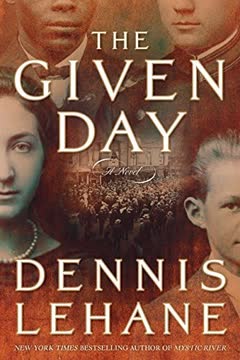
In the waning days of World War I, two men's lives cross paths in the American heartland. Luther Laurence, a gifted Black ballplayer, is cut from his team after a violent confrontation and soon loses his job at a munitions factory. Meanwhile, Danny Coughlin, the son of a powerful Boston police captain, is a rising star in the city's police force, haunted by trauma and searching for purpose. Both men are shaped by the era's turbulence—racial violence, labor unrest, and the looming shadow of the Great War. Their stories, though separate, are propelled by a restless yearning for dignity, belonging, and a place to call home.
Brotherhoods and Betrayals
Danny is drawn into the nascent police union movement, pressured by his father and godfather to spy on his fellow officers. The Boston Social Club, a would-be union, becomes a battleground for loyalty and ambition. Danny's sense of justice is tested as he's asked to betray his brothers-in-arms for a promised detective's shield. Meanwhile, Luther and his new wife Lila seek a better life in Tulsa's Greenwood district, only to find that prosperity is shadowed by criminal entanglements and the ever-present threat of white violence. Both men are forced to navigate the treacherous waters of trust and betrayal, their choices echoing the era's larger struggles.
The Coughlin Family Code
The Coughlin household is a microcosm of Boston's Irish Catholic power structure. Danny's relationship with his father, Captain Thomas Coughlin, is fraught with expectation and manipulation. His brother Connor, an ambitious assistant district attorney, and the enigmatic Nora, the family's Irish housemaid, add layers of tension and forbidden longing. As Danny's undercover work deepens, the family's secrets threaten to unravel, exposing the fragile bonds that hold them together. The personal becomes political, and the cost of loyalty grows ever steeper.
Greenwood's Promise and Peril
Luther and Lila's arrival in Tulsa's Greenwood—"Black Wall Street"—offers a glimpse of Black self-determination and hope. Yet, beneath the surface, the community is divided between respectability and vice. Luther is drawn into the orbit of Deacon Broscious, a ruthless crime boss, and his friendship with the tragic Jessie Tell leads to violence and betrayal. The promise of Greenwood is threatened from within and without, as the specter of white resentment and the lure of easy money test Luther's resolve and morality.
Influenza and Unrest
The Spanish flu sweeps through Boston, exposing the city's vulnerabilities and deepening social divides. Danny, now working undercover among radicals and labor organizers, witnesses the city's suffering firsthand. The pandemic's chaos mirrors the unrest brewing in the streets—strikes, bombings, and the rise of Bolshevik and anarchist movements. The lines between right and wrong blur as Danny's sympathies shift, and Luther, now in Boston after fleeing Tulsa, finds himself caught between survival and conscience in a city on the brink.
Love, Loss, and Loyalty
Danny's doomed romance with Nora, complicated by family expectations and her own haunted past, reaches a breaking point. Betrayals—personal and political—fracture relationships and force reckonings. Luther, mourning the loss of friends and the collapse of his marriage, seeks redemption in hard work and new alliances. Both men are shaped by the women they love and the loyalties they cannot escape, their emotional journeys mirroring the era's upheavals.
The Gathering Storm
As Boston's police push for union recognition, the city's elite maneuver to maintain control. Danny becomes a reluctant leader among the rank-and-file, while his father and the old guard plot to undermine the movement. The threat of violence looms as anarchists and Bolsheviks plot May Day actions, and the city's power brokers prepare for confrontation. Luther, working for the NAACP and the Coughlins, is ensnared by the machinations of Lieutenant McKenna, whose racism and ambition threaten to destroy him. The stage is set for a reckoning that will engulf the city.
May Day Reckonings
May Day brings chaos to Boston as radical demonstrations turn violent and the police respond with brutal force. Danny, torn between duty and conscience, is battered in the street, while Luther is blackmailed into betraying his own. The city's simmering tensions explode into open conflict, leaving bodies and broken dreams in their wake. The cost of justice becomes painfully clear, and the lines between hero and villain, victim and perpetrator, are forever blurred.
The Price of Justice
The aftermath of May Day sees the city's power brokers tighten their grip, using violence and subterfuge to crush dissent. Danny's efforts to reform the police from within are stymied by betrayal and political gamesmanship. Luther, forced to choose between survival and integrity, risks everything to protect those he loves. The city's descent into lawlessness and the rise of vigilante justice reveal the limits of idealism in a world ruled by self-interest and fear.
Riot, Ruin, and Rebirth
The Boston Police Strike plunges the city into chaos. With the police off the job, mobs rampage through the streets, looting, rioting, and settling old scores. The city's elite call in the State Guard, and martial law is imposed. Danny, now a pariah, is blamed for the violence, while Luther witnesses the depths of white mob savagery and the fragility of Black safety. In the crucible of riot and ruin, old alliances are tested, and the possibility of rebirth emerges from the ashes.
The Strike That Shook Boston
As the strike collapses, the city's leaders scapegoat the strikers and rewrite the narrative of blame. Danny is vilified in the press, his heroism forgotten, while the police force is rebuilt with new recruits and the old order reasserts itself. Luther, having survived the city's violence and McKenna's threats, prepares to return home. The dream of justice is deferred, but the seeds of change have been planted. The city, and its people, are forever altered.
Aftermaths and Departures
In the wake of the strike, families are torn apart and friendships tested. Danny, wounded in body and spirit, is exiled from his family and the city he tried to save. Nora, by his side, chooses love over respectability. Luther, after a final confrontation with his enemies, returns to Tulsa to reclaim his family and his future. The survivors of the year's turmoil seek new beginnings, carrying the scars and hard-won wisdom of their trials.
Homecomings and New Beginnings
Luther's return to Tulsa is marked by danger and the possibility of forgiveness. He confronts his past, makes peace with his enemies, and is reunited with Lila and their son, Desmond. Danny and Nora, leaving Boston behind, embark on a new life together, determined to build a home on their own terms. The story closes with the promise of renewal, the enduring power of love, and the hope that, even in a broken world, new beginnings are possible.
Characters
Danny Coughlin
Danny is the eldest son of Captain Thomas Coughlin, raised in the shadow of Boston's Irish Catholic power structure. A talented, principled police officer, he is drawn into the city's labor struggles and radical politics, pressured to betray his fellow officers for a chance at advancement. Danny's journey is marked by trauma, guilt, and a restless search for justice and belonging. His love for Nora, the family's Irish housemaid, is both a source of strength and a catalyst for his exile. Over the course of the novel, Danny evolves from a dutiful son and loyal cop to a disillusioned, wounded leader who ultimately chooses love and integrity over power and tradition.
Luther Laurence
Luther is a gifted Black athlete whose life is shaped by violence, poverty, and the relentless search for respect. After fleeing Ohio and a failed promise in Tulsa's Greenwood, he is forced to navigate the dangers of both Black and white America. Luther's journey is one of survival, compromise, and hard-won wisdom. His relationships—with his wife Lila, his doomed friend Jessie, and the Coughlins—reveal his deep capacity for love and loyalty, even as he is repeatedly betrayed by those in power. Luther's ultimate return to Tulsa and reunion with his family is a testament to his resilience and the enduring hope for a better life.
Thomas Coughlin
Captain Thomas Coughlin is the embodiment of Boston's old guard—tough, cunning, and fiercely protective of his family and his city. He manipulates events behind the scenes, balancing loyalty to his men with the demands of the city's elite. Thomas's love for his sons is complicated by his need for control and his inability to adapt to changing times. His relationship with Danny is marked by both pride and disappointment, and his ultimate inability to prevent the city's descent into chaos reveals the limits of his power. Thomas is a tragic figure, clinging to a vanishing world.
Nora O'Shea
Nora is the Coughlin family's Irish housemaid, haunted by a traumatic past and determined to forge a new life. Her intelligence, wit, and resilience make her both an object of desire and a source of tension within the household. Nora's love affair with Danny is fraught with secrecy and sacrifice, and her eventual marriage to him marks a break with tradition and respectability. Nora's journey is one of self-assertion and survival, her choices challenging the boundaries of class, gender, and family.
Lila Waters Laurence
Lila is Luther's wife, a woman of strength and vision who dreams of a better life in Tulsa's Greenwood. Her faith in Luther is tested by betrayal, poverty, and the violence that follows them. Lila's resilience and capacity for forgiveness are central to Luther's redemption. As a mother, she represents the hope for a new generation, her love providing the foundation for Luther's eventual homecoming.
Eddie McKenna
Lieutenant Eddie McKenna is Danny's godfather and Thomas Coughlin's oldest friend. Outwardly jovial and loyal, he is a master manipulator who uses violence, blackmail, and subterfuge to maintain control. McKenna's racism and ambition make him a formidable antagonist, particularly for Luther. His eventual downfall is both a personal reckoning and a symbol of the old order's collapse.
Connor Coughlin
Connor is Danny's younger brother, an assistant district attorney whose ambition and insecurity drive him to embrace the city's reactionary politics. His rivalry with Danny and his relationship with Nora are sources of tension and tragedy. Connor's eventual blindness, both literal and metaphorical, is a powerful symbol of the costs of loyalty to a corrupt system.
Mark Denton
Mark is a patrolman and the president of the Boston Social Club, later the police union. Intelligent, principled, and pragmatic, he becomes Danny's ally and confidant in the struggle for justice. Mark's leadership is tested by betrayal, political gamesmanship, and the ultimate failure of the strike. His journey reflects the hopes and disillusionments of the working class.
Jessie Tell
Jessie is Luther's friend in Tulsa, a larger-than-life figure whose charm and addiction lead him down a path of self-destruction. His death is a turning point for Luther, forcing him to confront the costs of compromise and the limits of loyalty. Jessie embodies the dangers and allure of the era's underworld.
Babe Ruth
Babe Ruth appears throughout the novel as both a character and a symbol. His rise from orphaned obscurity to baseball superstardom mirrors the era's upheavals and the possibilities of reinvention. Ruth's encounters with both Black and white ballplayers, his struggles with fame and identity, and his eventual move to New York reflect the shifting landscape of American society. He is both a witness to and a participant in the nation's transformation.
Plot Devices
Interwoven Narratives and Historical Backdrop
Lehane structures the novel around the parallel journeys of Danny and Luther, whose lives intersect and diverge against the backdrop of real historical events—the Spanish flu pandemic, the Red Scare, the rise of labor unions, and the Boston Police Strike of 1919. The use of multiple perspectives allows for a rich exploration of race, class, and power, while the inclusion of real figures like Babe Ruth and Calvin Coolidge grounds the story in its era. Foreshadowing, irony, and the slow revelation of secrets build tension and deepen the emotional impact. The novel's structure mirrors the chaos and interconnectedness of the time, with personal choices echoing in the larger world.
Betrayal, Loyalty, and the Cost of Integrity
Central to the novel are the themes of betrayal and loyalty—between friends, family, lovers, and communities. Characters are repeatedly forced to choose between self-interest and solidarity, between survival and principle. The plot is driven by these choices, with betrayals (personal and political) leading to violence, exile, and loss. The cost of integrity is high, and the novel refuses easy answers, instead exploring the gray areas where justice and compromise collide.
The Mob and the Individual
The novel uses the motif of the mob—whether in riots, strikes, or political movements—to explore the tension between collective action and individual agency. Characters are swept up in forces larger than themselves, their fates shaped by the unpredictable tides of history. The narrative structure, with its shifting points of view and interludes featuring Babe Ruth, reinforces the sense of a world in flux, where the boundaries between hero and villain, victim and perpetrator, are constantly shifting.
Foreshadowing and Symbolism
Lehane employs foreshadowing and symbolism throughout the novel—Babe Ruth's white baseballs, the recurring image of broken glass, the motif of home and exile—to underscore the story's themes. The characters' personal struggles are mirrored in the city's upheavals, and the novel's ending, with its focus on homecoming and new beginnings, offers a hard-won hope that is both realistic and redemptive.
Analysis
The Given Day is a sweeping, emotionally charged exploration of a nation at a crossroads. Through the intertwined stories of Danny Coughlin and Luther Laurence, Dennis Lehane dramatizes the seismic shifts of early twentieth-century America—race riots, labor unrest, pandemics, and the struggle for dignity in a world defined by power and prejudice. The novel's brilliance lies in its refusal to offer easy heroes or villains; instead, it presents a world where every choice is fraught, every victory compromised, and every act of loyalty shadowed by betrayal. Lehane's characters are deeply human—flawed, yearning, and resilient—and their journeys reflect the era's complexities and contradictions. The book's lessons are as relevant today as they were a century ago: justice is never given, only fought for; the cost of integrity is high, but the cost of its absence is higher; and the hope for a better world lies not in grand gestures, but in the quiet, persistent acts of love, courage, and solidarity. The Given Day is both a warning and a promise—a testament to the enduring struggle for justice and the possibility of redemption, even in the darkest of times.
Last updated: