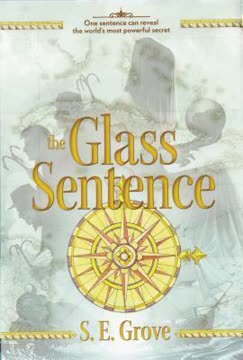
Plot Summary
The World Torn Apart
In 1799, the Great Disruption fractures the world, scattering its regions into different Ages. Time and geography are unmoored; Boston finds itself isolated, its people bewildered as familiar lands become ancient, futuristic, or mythic. The world's fabric is torn, and each place now exists in its own era, separated by invisible temporal borders. This cataclysm births a new reality where explorers, cartologers, and ordinary people must navigate a patchwork of time. The trauma of the Disruption lingers, shaping generations and fueling both fear and curiosity about the unknown. The world's new order is fragile, and the longing for connection and understanding becomes the driving force for those who dare to map its mysteries.
Sophia's Unmoored Time
Thirteen-year-old Sophia Tims lives in Boston with her uncle, Shadrack Elli, the city's foremost cartologer. Sophia's parents vanished on an expedition years ago, leaving her with a fractured sense of time—she cannot feel its passage, often losing hours or days in a blink. This personal dislocation mirrors the world's own temporal chaos. Sophia's life is shaped by longing: for her parents, for belonging, and for mastery over her own internal clock. Her days are filled with drawing, mapping, and learning from Shadrack, who loves her fiercely and tries to prepare her for a world where time and place are never certain. Sophia's vulnerability and resilience set the stage for her coming-of-age journey.
Shadrack's Secret Maps
Shadrack reveals to Sophia a secret map room beneath their home, filled with maps made of glass, metal, clay, and cloth—each holding memories, weather, or the very essence of a place and time. He teaches Sophia to read these memory maps, which require touch, breath, water, or light to awaken. The maps are not just guides but living histories, storing the experiences of many. Shadrack's hope is to one day use these skills to search for Sophia's lost parents. Their bond deepens as Sophia learns to navigate the world's layered realities, and she discovers that maps can be as much about people and memory as about geography.
The Boy in Feathers
At the wharf, Sophia encounters a boy displayed in a circus cage, dressed in feathers and exuding a serene, unbreakable spirit. He is Theo, a captive from the Baldlands, and his presence haunts Sophia. She is drawn to his quiet strength and the injustice of his imprisonment. This meeting plants the seeds of empathy and courage in Sophia, who will soon need both. The boy's calm in the face of spectacle and suffering becomes a touchstone for Sophia as her own world is upended. Their fates are destined to intertwine, each carrying wounds and secrets from their fractured pasts.
The Kidnapping and Aftermath
Political turmoil erupts as Boston's parliament closes its borders, stoking xenophobia and fear. Shadrack is kidnapped by mysterious, scarred men—Sandmen—who ransack the house and destroy his precious maps. Sophia returns to chaos, her uncle gone, her sanctuary violated. In the aftermath, she finds a cryptic note from Shadrack: "Go to Veressa. Take my atlas." The trauma of loss and the urgency of the message propel Sophia into action. She is forced to rely on her own resourcefulness and the help of unexpected allies, setting her on a journey across dangerous, shifting Ages in search of answers and rescue.
Theo's Escape and Alliance
Theo, the boy from the circus, escapes and seeks refuge in Sophia's ruined home. He witnessed Shadrack's abduction and becomes Sophia's reluctant ally. Both are outsiders—Sophia, unmoored in time; Theo, marked by the Baldlands' violence and his own secrets. Their alliance is fraught with mistrust, but necessity binds them. Together, they plan to follow Shadrack's clue to Veressa, a legendary cartologer in the Baldlands. As they evade Sandmen and navigate a city on the brink, their partnership deepens, blending vulnerability, suspicion, and the first stirrings of friendship.
The Hunt for Veressa
Sophia and Theo, joined by their housekeeper Mrs. Clay, set out by train and ship toward the Baldlands, pursued by Sandmen and haunted by the threat of the Lachrima—faceless, weeping beings born at the borders of Ages. Along the way, they encounter pirates, exiles, and the vibrant, perilous cultures of the Triple Eras. Each step brings new dangers and revelations: the shifting borders, the cruelty of prejudice, and the power of memory. Sophia's skills as a map-reader grow, and Theo's past as a raider's orphan and his Mark of Iron are revealed. Their quest for Veressa becomes a search for belonging and truth.
Sandmen and the Tracing Glass
The Sandmen, Nihilismians obsessed with restoring a "true" world, pursue Sophia for the Tracing Glass—a unique memory map that can reveal hidden maps and perhaps the fabled carta mayor, the living map of the world. Shadrack, held captive by the enigmatic Blanca (a Lachrima with a scarred, featureless face), is forced to make maps for her. The Sandmen's methods are brutal, stealing memories and leaving victims hollow. The Tracing Glass becomes the story's central object of desire, its power and danger growing as the borders of the Ages begin to shift and collapse.
Across Shifting Borders
As Sophia and Theo travel deeper into the Baldlands, they witness the catastrophic advance of the Southern Snows—a new Ice Age devouring the land, erasing Ages, and creating waves of Lachrima. The borders between times are no longer stable; entire regions vanish or transform overnight. The refugees' desperation, the pirates' pragmatism, and the scientists' awe all swirl together in a landscape where nothing is fixed. The journey becomes a race against time, not just to save Shadrack but to understand and perhaps halt the world's unraveling.
Pirates, Maps, and Memory
Rescued by the pirate siblings Calixta and Burr, Sophia and Theo find unexpected safety and camaraderie aboard the Swan. The pirates, more merchants than marauders, value maps and stories as much as treasure. Grandmother Pearl, the ship's blind matriarch, teaches Sophia to see her lack of an internal clock as a gift—an openness to possibility. The Tracing Glass reveals its true power: it illuminates hidden maps, including the four maps that together hold the secret of the Great Disruption. The journey by sea is both a respite and a crucible, forging bonds and preparing the travelers for the trials ahead.
The Southern Snows Advance
The Southern Snows, an unstoppable glacier, surge northward, threatening to erase the Baldlands and Nochtland. The phenomenon is not just physical but temporal—a new Age overwriting the old. The royal botanist Martin and his daughter Veressa, now revealed as the legendary cartologer, help Sophia and her friends understand the crisis. The group discovers that the borders of Ages are moving, and that the only hope may lie in the mysterious four maps and the carta mayor. The urgency of their quest intensifies as the world itself begins to collapse.
The Royal Botanist's Secret
In Nochtland's palace, Martin's experiments with soil and plants reveal the deep interconnection of Ages. His own body, part vine and part metal, embodies the union and conflict of the Mark of the Vine and the Mark of Iron—symbols of privilege and outcast in the Baldlands. The group's discoveries in the royal library and laboratory point to a lost Age beneath the city, a labyrinth that may hold the key to survival. The palace, a place of beauty and danger, becomes a crucible for truth, sacrifice, and the forging of new alliances.
The Four Maps' Riddle
The four maps—glass, clay, metal, and cloth—are finally reunited. Together, they reveal a layered memory of the Great Disruption, but their meaning is elusive. Sophia's unique perspective, unbound by time, allows her to see patterns others miss. The maps point to a labyrinth below Nochtland, a lost city, and the carta mayor itself. The group, now fugitives, must solve the riddle of the maps to escape the palace, evade the Sandmen, and confront the advancing glacier. The maps are both a guide and a test, demanding courage, insight, and trust.
The Labyrinth Below Nochtland
Fleeing imprisonment, Sophia, Theo, Shadrack, Veressa, and their allies descend into the labyrinth beneath Nochtland. The tunnels, carved from many Ages, are mapped by living vines and illuminated by Martin's magical seeds. The journey is perilous—floods, dead ends, and the ever-present threat of the Sandmen. In the lost city below the lake, they discover the ruins of a civilization destroyed by its own ambition. The labyrinth is both a physical and psychological trial, forcing each character to confront their fears, regrets, and hopes.
The Lost City and Carta Mayor
At the heart of the lost city lies the carta mayor—a vast, frozen lake that is the living map of the world. Sophia, guided by the memories in the four maps and her own timelessness, realizes she must destroy the carta mayor to halt the glacier's advance. The act is both sacrifice and salvation: the world's greatest knowledge is lost, but the Southern Snows are stopped. Blanca, revealed as the Lachrima who once suffered at the hands of a mad cartologer, helps Sophia in this final act, finding a measure of peace in the end.
The Collapse of Ages
As the carta mayor is destroyed, the Glacine Age collapses, the glacier halts, and the borders of the world are redrawn. The refugees, the Lachrima, and the survivors must find new homes and new meanings. The group escapes the ruins, rescued by the pirates and Grandmother Pearl. The cost is immense—lost Ages, lost knowledge, and lost innocence—but the world is given a chance to begin anew. Sophia, changed by her journey, carries the scars and wisdom of what she has seen.
The End of the Glacine Age
The aftermath is bittersweet. Nochtland is emptied, the Baldlands transformed, and the Lachrima wander the new borders. Sophia, Shadrack, Theo, and their friends return home, each changed by loss and discovery. The world is still fractured, but the threat of annihilation has passed. The carta mayor's secrets are gone, but the possibility of new stories, new maps, and new connections remains. The survivors must learn to live with uncertainty, to cherish memory, and to embrace the unknown.
Homecoming and New Beginnings
Back in Boston, Sophia resumes her studies with Shadrack, Theo becomes part of their family, and the house on East Ending Street is filled with hope and plans for future exploration. Letters from Veressa and others hint at new mysteries and adventures. Sophia, still unbound by time, learns to see her difference as a gift—a way to notice what others miss, to hold on to wonder, and to shape her own story. The world remains a patchwork of Ages, but for Sophia and her friends, the journey is just beginning.
Characters
Sophia Tims
Sophia is the heart of the story—a thirteen-year-old orphan whose inability to sense time's passage mirrors the world's own temporal chaos. Raised by her uncle Shadrack after her parents' disappearance, Sophia is introspective, resourceful, and quietly courageous. Her longing for connection and mastery over her own "broken clock" drives her to become a map-reader and explorer. Sophia's psychological journey is one of self-acceptance: she learns to see her difference as a strength, allowing her to notice patterns and possibilities others miss. Her empathy, determination, and openness to wonder make her both a survivor and a catalyst for change. Through loss, danger, and discovery, Sophia grows from a lonely, uncertain child into a young woman capable of shaping her own destiny and the fate of the world.
Shadrack Elli
Shadrack is Sophia's uncle and the foremost cartologer in Boston. Brilliant, eccentric, and deeply loving, he is both a scholar and an adventurer. Shadrack's devotion to Sophia is unwavering, and he becomes her teacher in the art of reading and making memory maps. His own trauma—losing his sister (Sophia's mother) and being haunted by the world's fragmentation—drives his quest for knowledge and connection. Shadrack's psychological complexity lies in his balance of hope and skepticism, his willingness to trust in both science and myth. His kidnapping and ordeal at the hands of the Sandmen test his resilience and force him to confront the limits of knowledge and the necessity of sacrifice. In the end, Shadrack's faith in Sophia and in the possibility of new beginnings is his greatest legacy.
Theo (Theodore Constantine Thackary)
Theo is a boy from the Baldlands, first seen as a caged "wild boy" in a circus. Scarred, both physically and emotionally, he is marked by the "Mark of Iron"—metal bones that make him both powerful and an outcast. Theo's past is one of abandonment, violence, and self-reliance; he has learned to lie, steal, and trust no one. Yet beneath his bravado lies a deep longing for belonging and acceptance. His alliance with Sophia is uneasy but transformative: he learns to trust, to care, and to risk vulnerability. Theo's psychological arc is one of integration—accepting both his wildness and his capacity for loyalty and love. His relationship with Sophia is a dance of suspicion and affection, culminating in a partnership that is both redemptive and hopeful.
Veressa Metl
Veressa is the legendary cartologer of the Baldlands, once Shadrack's closest friend and now the royal librarian and botanist's daughter. Brilliant, reserved, and haunted by guilt over the fate of the Lachrima, Veressa embodies the tension between knowledge and responsibility. Her decision to hide the three maps, fearing their power, sets much of the plot in motion. Veressa's psychological journey is one of reconciliation—coming to terms with her past, her estrangement from Shadrack, and her role in the world's fate. Her mentorship of Sophia and her willingness to risk everything for the greater good mark her as a figure of wisdom and quiet heroism.
Blanca (The Lachrima)
Blanca is the story's most tragic figure—a Lachrima, once human, now scarred and featureless, her memories stolen by the Great Disruption and a mad cartologer's experiments. She is both victim and antagonist, seeking the carta mayor to restore her lost Age, the Glacine Age. Blanca's psychological complexity lies in her blend of grief, rage, and longing for home. Her actions are ruthless, but her pain is palpable; she is a mirror for Sophia's own losses and fears. In the end, Blanca's willingness to help Sophia destroy the carta mayor is an act of both surrender and redemption, her final cry echoing the story's themes of memory, loss, and the search for belonging.
Martin Metl
Martin is Veressa's father and the royal botanist of Nochtland. Eccentric, passionate, and endlessly curious, he bridges the worlds of science and magic. His experiments with soil and plants reveal the deep interconnections of Ages and the dangers of unchecked ambition. Martin's own body, part vine and part metal, symbolizes the union and conflict of the Baldlands' social divisions. His love for Veressa and his willingness to risk everything for discovery make him both a comic and a tragic figure, embodying the story's fascination with the unknown.
Calixta and Burr Morris
Calixta and Burr are the captains of the Swan, a pirate ship that becomes Sophia and Theo's refuge. Charismatic, resourceful, and fiercely loyal, they defy the stereotypes of piracy, valuing honor, friendship, and the pursuit of knowledge. Their ship is a microcosm of the world's diversity, and their willingness to help Sophia and her friends is both pragmatic and generous. Calixta's flamboyance and Burr's humor provide levity and strength, while their bond with Grandmother Pearl and the crew creates a found family for the story's orphans and exiles.
Grandmother Pearl
Grandmother Pearl is the heart of the Swan, a blind storyteller and dream-reader who helps Sophia see her lack of an internal clock as a gift. Her wisdom, humor, and kindness anchor the group, and her stories provide both guidance and comfort. Pearl's own history, shaped by the Disruption and a lifetime at sea, embodies the resilience and adaptability needed to survive in a fractured world. She is a living link to the past and a beacon for the future.
Mrs. Clay
Mrs. Clay is Sophia's housekeeper, a refugee from the Baldlands who fled the Lachrima's curse. Timid, melancholic, and deeply kind, she is both a caretaker and a figure in need of care. Her story of survival and her faith in the Fates provide a counterpoint to the story's rationalism, reminding Sophia and the others of the power of belief, ritual, and hope. Mrs. Clay's presence is a quiet but essential thread in the tapestry of Sophia's life.
Montaigne
Montaigne is the suave, ruthless leader of the Sandmen, Nihilismians obsessed with restoring a lost world. His pursuit of the Tracing Glass and his manipulation of Shadrack and Sophia make him a formidable antagonist. Montaigne's psychological makeup is one of entitlement, cunning, and a willingness to use violence and deceit to achieve his ends. He is both a product and a perpetuator of the world's divisions, embodying the dangers of nostalgia and fanaticism.
Plot Devices
Memory Maps and Layered Cartology
The novel's central device is the memory map—maps made of glass, metal, clay, and cloth, each storing not just geography but the lived experiences, weather, and history of a place and time. These maps require special actions to "awaken" and can be read only by those with the right skills and mindset. The Tracing Glass, a unique memory map, can reveal hidden maps and is the key to finding the carta mayor, the living map of the world. The four maps together form a puzzle, their memories layered and interdependent, requiring collaboration and insight to unlock. This device blurs the line between history and story, fact and feeling, and makes the act of mapping a metaphor for understanding, empathy, and transformation.
Shifting Borders and Temporal Dislocation
The Great Disruption's aftermath is a world where borders are not just political but temporal—regions exist in different Ages, and the borders between them can shift, collapse, or erase entire civilizations. This instability creates both danger and possibility, forcing characters to adapt, explore, and question the nature of reality. The advance of the Southern Snows, the creation of the Lachrima, and the collapse of the Glacine Age are all manifestations of this device, making the world itself a character in the story.
The Lachrima and the Cost of Memory
The Lachrima—beings created at the borders of Ages, stripped of their faces and memories—embody the trauma of loss and the dangers of unchecked ambition. Their weeping is both a warning and a lament, haunting the characters and the world. The device of the Lachrima raises questions about identity, the ethics of knowledge, and the limits of empathy. Blanca, as the most fully realized Lachrima, becomes both a villain and a victim, her fate intertwined with Sophia's and the world's.
Foreshadowing and Narrative Structure
The novel's structure is cyclical and recursive, with stories within stories, maps within maps, and memories that echo forward and backward in time. Foreshadowing is achieved through dreams, stories, and the layered memories of the maps. The narrative's emotional arc mirrors Sophia's journey from loss and confusion to agency and acceptance, with each revelation building on the last. The use of letters, legends, and nursery rhymes deepens the sense of a world shaped by both history and myth.
Analysis
The Glass Sentence is a richly layered fantasy that uses the language of maps and memory to explore the trauma of a world—and a girl—unmoored in time. At its heart, the novel is about the cost and necessity of letting go: of certainty, of the past, of the illusion of control. Sophia's journey is both literal and psychological, a quest to find her family, her place in the world, and her own sense of self. The story interrogates the dangers of nostalgia (embodied by the Sandmen and Blanca), the ethics of knowledge (the power and peril of the carta mayor), and the resilience required to survive in a world where nothing is fixed. The novel's greatest lesson is that memory is both a gift and a burden, and that true belonging comes not from restoring a lost world but from embracing the present, with all its uncertainty and possibility. In the end, Sophia's acceptance of her own difference—her timelessness—becomes a metaphor for hope: the ability to see what others miss, to hold on to wonder, and to shape new stories from the fragments of the old.
Last updated:





