

Plot Summary
Prologue
At ten, Thayla1 runs to a hot spring near the forbidden border, hoping to cross into the Unclaimed region before her parents18 can leave her. They find her there and explain that danger from their past choices forces them to go.
Their friend Meridamus and his son Mellcom7 will raise her, but they refuse to tell her more. Thayla1 believes the gods hoard power rather than help people, so her parents18 make her promise never to seek them, enter Godsden, or submit to the Veiling. She gives her word while clinging to the hope that they will return.
The prologue gives Thayla’s later defiance a personal origin: the gods are not merely an abstraction she dislikes, but the authority her parents trust least at the moment they leave her. Her impulse to cross the border first is an attempt to reverse abandonment by choosing who leaves whom. Her parents offer affection but withhold the facts that might help her understand their decision. That combination makes the promise both loving and damaging. Thayla inherits a conviction that secrecy is protection, then spends adulthood resisting the very system her parents feared while still waiting for them to come back.
Thayla Defies the Gods
At thirty, Thayla1 trains every morning with nineteen immortal men in Oddian’s arena, where Mellcom,7 her adoptive brother7 and training leader, lets them hit her harder than before. Her former lover8 Jeremiah8 joins the punishment after she publicly denounced the gods at the previous Veiling. She wants the power they withhold, but refuses to beg for it.
She also believes their claimed generosity is a cover for keeping control. While the community prepares to offer blood to the Volreen, Thayla1 stays away from temples and ceremonies. Her only private contact with a god is Derivius,11 the disowned God of Chaos,11 whom she has cursed in her thoughts since childhood.
Thayla’s rebellion is not simple rejection of power. She resents a system that makes people perform submission to regain abilities she believes already belong to them. Her daily punishment turns a public statement into social isolation and physical discipline, sharpening her suspicion that institutions use shame as enforcement. Yet her private contact with Derivius complicates her self-image as wholly separate from the gods: she can reject worship while still seeking connection. The tension between that distinction and her parents’ absolute promise prepares the story’s central question about whether agency can survive inside a system built to manage it.
Chosen Without Consent
On Veiling Day, Mellcom7 orders Thayla1 into a ceremonial gown and admits he entered her without permission. She learns that Jeremiah8 deliberately bumped her while she was cutting vegetables so her bleeding finger could be used to seed the Volreen. At the ceremony, Garish, Thayla’s1 best friend Lambrit,9 Jeremiah,8 and Mellcom7 are named before the Chancellor calls Thayla1 too.
She never offered her blood or attended the ritual voluntarily, yet the sacred bowl has selected her. The crowd celebrates while Thayla1 realizes everyone close to her is leaving. She nearly tries to flee, but stays because she will not bring danger to Lambrit’s9 family or little Laney.19
The Volreen’s selection converts a ritual of consent into a mechanism of coercion. Thayla’s blood is both a literal trace of her body and evidence that other people have decided what her future should be. Mellcom’s breach wounds more than her politics: he violates a promise that had helped make their shared life feel secure. Her choice not to flee is not acceptance of the gods’ authority. It is an ethical calculation made for people with less power than she has, especially Laney. The episode establishes that Thayla’s defiance coexists with fierce responsibility toward others.
Mellcom’s Real Bargain
Back at their house, Thayla1 attacks Mellcom7 and Jeremiah8 before Lambrit9 pulls her off them. Mellcom7 admits that an unidentified god visited him twice and ordered him to enter her. He claims the god promised to choose him too, but Thayla1 recognizes the motive he has concealed: Mellcom7 wants the power and hopes to find his missing father in Godsden.
His decision is therefore both a response to divine pressure and a selfish route out of Oddian. Thayla1 still intends to run, but Lambrit9 warns that the gods may punish the region if she escapes. She packs only necessities, accepts that she must go, and carries her anger onto the carriage.
Mellcom’s confession refuses an easy division between victim and betrayer. He has been pressured by a god, but he also turns Thayla into the means of pursuing his own longing. The distinction matters because his protective history does not erase the harm of his choice. Thayla, meanwhile, meets coercion with a calculation of consequences: she remains not because she trusts the gods, but because she fears collateral damage to people she loves. The departure repeats her childhood abandonment in reverse. This time, she cannot control who leaves, and her closest substitute family is the group responsible for taking her.
Across the Gods Gully
Escort13 Havar13 brings the five Oddian Chosen to Godsden in a carriage pulled by Seismet,12 a winged Veilatara bound by glowing restraints. Thayla1 objects to the creature’s treatment, and Seismet12 meets her bow with a touch of his forehead before communicating with her mind.
Havar13 warns that the gods punish open defiance, but Thayla1 keeps questioning him about the restraints and the hidden geography of the region. The carriage crosses the deadly Gods Gully and climbs the mountain to the secluded Godsdawn. Havar13 explains that new gods are confined there until their powers settle. Thayla1 enters the gate knowing that the only route home has closed behind her.
The crossing makes the cost of Thayla’s choice concrete: she is not simply relocating, but entering a territory whose geography enforces dependence. The restrained Veilatara offers an immediate mirror for her own condition, while its recognition of her suggests that her instincts may be more reliable than the official hierarchy. Havar’s warnings frame silence as survival, but Thayla’s questions are also a way of testing who deserves trust. The spectacular mountain passage is therefore both arrival and containment. Godsden’s beauty cannot conceal that its order is maintained by barriers, restricted knowledge, and controlled movement.
Yemi Becomes Hers
At orientation, High Chancellor Harriseen16 describes the six Designations and presents Attendants as servants responsible to the gods who select them. Thayla1 calls out the degrading arrangement and is mocked for her upbringing in poor, distant Oddian. The Volreen gives her an Attendant, Yemi Andino,6 whose domain cannot be disclosed and whose expression suggests years of mistreatment.
Thayla1 accepts Yemi6 immediately and insists on using her name rather than a title. She also rejects the High Chancellor’s16 attempt to make her selection seem like an honor. By choosing Yemi6 as a person, not a convenience, Thayla1 begins a relationship that challenges the hierarchy she has just entered.
Thayla’s first intervention in Godsden is not a grand revolt but a naming choice. Calling Yemi by her name resists a social grammar that reduces a person to the service she provides. The High Chancellor’s condescension also exposes how education is used to naturalize status: Thayla is treated as ignorant because she questions a system rather than because she lacks intelligence. Yemi’s guardedness shows the psychological cost of being repeatedly assigned value by others. Their connection begins with an asymmetry of power, but Thayla’s attempt to limit her own authority offers a small, practical alternative to domination.
A Soul Bound Four Ways
Inside the Gods Veil, Thayla1 finds herself in the imagined home she has built around the people she misses. Derivius11 appears and denies arranging Mellcom’s7 scheme, then admits the Valories expected Thayla1 to reach Godsden eventually. He explains that the gods copied a power structure from the distant realm Elementra when they created Valtrues, but misunderstood how deeply its members should be connected.
He intends to complete the four brothers’ incomplete group by joining Thayla’s1 soul to theirs. As he carries out his will, she feels unbearable pain. Outside the Veil, the High Chancellor16 takes her parchment, a mark forms on her wrist, and she collapses.
The dream home functions as an emotional map of what Thayla believes has been taken from her: a place where family gathers without fear of separation. Derivius’s revelation destroys the fantasy’s safety by making her private longing part of a political design. His explanation also recasts the Valtrue as a flawed imitation of another realm’s bond, so a supposedly sacred procedure may encode ignorance as well as power. Thayla’s pain is the bodily consequence of a decision made without her consent. Her collapse leaves the most important question unresolved: whether a connection designed to protect her can also become another form of control.
Four Brothers, One House
Thayla1 wakes in a healing villa to find Yemi6 warning her that four gods have stormed the platform demanding explanations. They are Amick,2 the knowledge-driven Rising Chancellor; Creed,3 a guarded Defender; Kyzen,4 the approachable mediator; and Riven,5 the unpredictable brother.
Kyzen4 identifies them as her Valtrue and gives her a Deliverance listing equal standing across all Designations, an unknown domain, and Yemi6 as her Attendant. The brothers take Thayla1 to their shared home, where Riven5 calls her a burden and the group argues over what to do with her. Thayla1 overhears their doubts, runs into the woods, then tells Yemi6 how Mellcom7 forced her selection.
The brothers’ first response to Thayla is shaped by their own history of coercion: they want the bond undone before they know her. Their hostility is not excused by that history, but it makes their fear legible. Thayla’s flight repeats a coping strategy formed in Oddian, where distance protects her from being abandoned again. Her conversation with Yemi changes the pattern. Instead of presenting a polished defense, she shares the facts of her betrayal, giving Yemi a reason to revise her judgment. Trust begins not through instant affection, but through each woman recognizing the other’s vulnerability beneath a defensive surface.
Thayla Holds the Circle
In her first Gods Court trial, Thayla1 learns that inexperienced women are being tested against dominant female Defenders with far more training. She makes the unprepared group stand back-to-back, explains how to hold a formation, and encourages them to defend one another. The better-trained fighters still overwhelm the circle, but Thayla1 knocks several opponents down before Mara15 steps in.
Mara15 praises her skill, then insists she must earn a place in the Court. The confrontation exposes the gap between Thayla’s1 ability and the brutality of the system: she can fight, but she does not want violence treated as the only proof of worth. Her new Valtrue watches from behind a barrier and sees what she can do.
The trial turns Thayla’s practical knowledge into a form of leadership. She does not win by overpowering the group; she briefly makes frightened trainees more capable of acting together. That matters in a Court where strength is measured through individual dominance. The women’s defeat is not evidence that her strategy failed, but proof that the test began with an unfair distribution of skill and preparation. Mara’s challenge personalizes that institutional pressure. Thayla’s reluctance to fight is not weakness; it is resistance to a culture that mistakes endurance of harm for moral or social value.
The Veilatara Choose Thayla
When a Meadow Hand hits a young Veilatara, Seismet12 pins him beneath his hooves while the herd gathers to judge him. Thayla1 approaches despite the danger, and the Prime Veilatara Verlet recognizes her from Seismet’s12 account. The creatures allow Kyzen4 to negotiate a punishment that spares the god’s life but bars him from their meadow.
Thayla1 punches him when he complains about the delay, and the incident confirms that she will not confuse mercy with approval. Verlet also treats the brothers as companions, a status they had not explained to her. His attention shifts the crisis from a simple dispute into another sign that Thayla’s1 place in the realm is unusual.
The meadow scene lets Thayla act on the values she has been defending since arrival: a being’s status does not excuse cruelty, and punishment should protect the vulnerable rather than restore a powerful person’s pride. Her punch after the negotiated reprieve distinguishes accountability from mercy. The Veilatara’s respect for her is particularly significant because it is not granted by a Chancellor or earned through obedience. Their recognition provides a competing source of legitimacy. At the same time, the companions’ unexplained bond hints that Thayla’s relationships are being shaped by structures she does not yet understand.
Creed Names the Soul
As Thayla1 studies her emerging powers, she notices a pull in her chest and draws on it without understanding what it means. Creed3 pins her against a wall and warns her not to pull again, revealing that Derivius11 divided her soul among the four brothers.
Creed3 has hidden this from the others while trying to learn how to gather the pieces, heal her, and return them before her soul becomes attached to theirs. Thayla1 is horrified that he has made a plan about her body without her consent, even if he believes he is protecting her. She keeps his secret too, fearing the brothers may use the connection against her.
The revelation transforms intimacy into a question of bodily autonomy. The brothers are not only linked to Thayla through a ritual mark; pieces of her deepest self are literally housed in them. Creed’s protective motive does not neutralize the ethical problem of his secrecy, because he is still making decisions about her without her participation. Thayla’s choice to conceal what she learns mirrors his choice, but for a different reason: she fears being controlled. The parallel shows how secrecy can be both defense and harm. Their relationship cannot become trustworthy until protection stops substituting for consent.
Riven Frees the Creatures
After noticing Thayla’s1 anger, Riven5 uses his harmony power to calm her and takes her through Godsden’s market. She meets Annalise Akova,20 who feeds them and cares for a group of children, while Riven5 proves he knows each child and watches over them. He then leads Thayla1 to the Molder meadows, where he ties up Ike Molder and releases the animals and magical creatures Molder has kept penned.
Thayla1 eats beside a Venturer as the creatures scatter. Riven’s5 playful punishment delights her, but his care for the children and his affection for the animals reveal a self less easily described as trouble. Their easy companionship makes his changing moods harder, not easier, for her to read.
Riven’s outing complicates the role he has chosen for himself as an agent of chaos. He enjoys disorder, but his actions also target an injustice: creatures are kept confined by someone who should have cared for them. Thayla responds to the released animals with the same instinctive respect she showed Seismet, revealing a shared moral language beneath their teasing. Annalise’s home further shows that Riven maintains attachments beyond his brothers, especially to children who need care. The outing offers Thayla relief without resolving her uncertainty. His warmth is genuine, but unpredictability remains both a defense and a source of strain.
The Abandon Reveals Itself
When Oblirians attack the boundary, Thayla1 joins her Valtrue in the Abandon, where black-mouthed creatures and corrupted gods pour toward the stronghold. Kyzen4 accelerates time around her so she can fight beside him. Thayla1 saves Mara15 from being dragged away, then nearly trusts a childlike Taunter until Creed3 reveals the creature’s disguise and kills it.
The battle awakens memories of the brothers’ past: they were born powerful in the Abandon, shaped as test gods by their father, the God of Obliteration, and rescued by Derivius11 at fifteen. Mellcom7 then uses his new mental power to command Thayla,1 confirming the depth of their rupture. Seismet12 carries her away before she can face the brothers.
The battle makes the brothers’ secrecy understandable without making it harmless. Their childhood was not simply difficult; it was shaped by a system that treated children as instruments and expected them to become weapons. Thayla’s encounter with the Taunter exploits her oldest wound, abandonment, turning compassion into tactical danger. She survives by learning that sympathy must be paired with discernment. Mellcom’s command is a second violation layered over the first: he uses power to override her will after forcing her into Godsden. Seismet’s rescue gives her the distance she needs, but also leaves her unable to avoid confronting what the brothers have withheld.
A Confession Beneath the Stars
After the battle, Thayla1 returns home shaken and confides in Kyzen4 while he stays beside her through the night. She explains that Mellcom’s7 betrayal and command have broken the last of her trust, that she fears the brothers’ power over her, and that she is terrified they will abandon her once they can undo the bond.
She also admits that Yemi6 and the brothers matter to her despite her resistance. Kyzen4 lets her speak without arguing, then holds her as she falls asleep. In the following weeks, he and Creed3 join her morning runs, Amick2 teaches her to summon light, and she gradually grows more comfortable with Yemi,6 Lambrit,9 and Rose.10
Thayla’s confession is a shift from interpreting every relationship through anticipated betrayal to stating the fear directly. The distinction is crucial: she does not ask Kyzen to promise that no one will ever hurt her, but risks letting him witness how much she expects to be left. His silence is a form of care because it does not turn vulnerability into a problem he must solve immediately. The later routines matter as much as the confession. Shared runs and patient lessons create repeated evidence of presence, the slow counterweight to a life organized around sudden departures.
The Question of Dating
After a tour with Kyzen,4 a well-placed god asks Thayla1 out, prompting her to ask the brothers how they would feel if she dated someone. They react with jealousy and refuse to imagine her with another god. Amick2 mistakenly treats their daily time together as proof that he is already her boyfriend, exposing how differently he understands intimacy.
Later, he tells Kyzen4 that he wants a relationship with Thayla1 and proposes that each of them could love her without demanding she choose between them. Thayla1 does not accept or reject the possibility. She leaves with the question unresolved, aware that her growing attraction to all four men makes any simple choice emotionally dangerous.
The dating question exposes the difference between wanting autonomy and knowing how to exercise it. Thayla asks about an outside relationship partly to understand the rules, but the brothers hear a threat to a connection they have not admitted wanting. Amick’s literal misunderstanding is comic, yet it reveals that relational language is not neutral: he has been participating in intimacy without naming it. His proposal to Kyzen offers a structure that avoids making Thayla choose, but it is still their arrangement until she consents. The scene opens a possibility rather than resolving the romance, preserving her agency at the point of greatest emotional pressure.
Mara’s Blow Comes Due
When Mara15 leaves Yemi6 with a black eye after cornering her in the Court, Thayla1 storms in and attacks Mara15 with a training sword and her fists. She then confronts Gladian14 over the Court’s abusive culture, and her unsettled power bursts out against him. Gladian14 orders five lashes. Creed3 arrives after four, but follows Gladian’s14 command and strikes Thayla1 for the fifth.
He immediately turns his power on Gladian,14 disables the whip, and threatens him with worse than death if he harms their Binder1 again. The brothers carry Thayla1 to the healing villa, where her back is repaired but badly scarred. Her anger at Mara15 has become a direct confrontation with the system that made the assault possible.
Thayla’s retaliation is understandable but costly. She defends Yemi in a culture where Attendants are expected to absorb harm quietly, yet her response gives Gladian a pretext to discipline her publicly. The whipping exposes the limits of the brothers’ protection: Creed’s obedience to Gladian’s order makes him an agent of the institution he later threatens. His immediate reversal cannot erase the strike. The scene forces Thayla to distinguish loyalty from trust and protection from control. Her scars make the punishment permanent in the body, while the brothers’ response signals that the old balance of fear may finally be breaking.
The Spring Names V
While Thayla1 recovers, Riven5 sets fire to Gladian’s14 house in a burst of retaliatory chaos, and Derivius11 helps contain the power driving him. Creed3 takes Thayla1 to the Veilatara’s sacred hot spring, where the water heals her back and draws her attention to V,17 a mysterious winged being who says he will guide her.
V17 helps Thayla1 consider her choices without claiming that the Valories have fixed every step of her life. Later, Riven5 finds her in the spring and admits that he uses it to face feelings he cannot comfortably share elsewhere. When Thayla1 asks whether he wants their bond severed, he refuses to lose her, though he hides the answer inside teasing.
Healing in the spring is not a return to the uninjured body; it is an encounter with what the body has endured. V’s arrival expands Thayla’s sense of how many powers are shaping her life, while his insistence on choice pushes against her belief that every outcome has been predetermined. Riven’s honesty comes through an imperfect channel, humor and provocation, but it is still a response to her fear of being discarded. His refusal to lose her matters because it is not spoken as a command. For the first time, Thayla can test attachment by asking directly what another person wants.
Obliteration Comes Knocking
The morning after the spring, Thayla1 asks whether Amick2 and Kyzen4 still want a bond with her. They answer that they do and explain their hope for separate relationships with her, while Creed3 reveals the brothers’ secret: each holds a piece of Thayla’s1 soul. He believes the pieces may be keeping her alive, but no one knows what keeping or removing them will ultimately mean.
Thayla1 asks the group to face the truth together. Before they can resolve the choice, the High Chancellor16 arrives and summons Amick,2 Creed,3 Kyzen,4 and Riven5 to a temple meeting with their father. When the brothers reveal his identity, Thayla1 recognizes the name Kirabaddon: the Beginning God of Obliteration.
The final disclosure binds the intimate plot to the political one. Thayla’s soul is no longer only a symbol of involuntary connection; it may be the condition of her survival, making any decision about it ethically and physically consequential. Her request that the brothers be honest marks a change from guarded self-protection toward collective responsibility. The summons then recasts their family history as an active threat rather than a closed childhood trauma. Identifying their father as the God of Obliteration joins the personal betrayal of Mellcom, the brothers’ origins, and the Abandon’s conflict in one name. The revelation opens a new crisis rather than resolving the existing ones.
Analysis
The novel makes power feel less like a gift than a relationship whose terms have been hidden. The Volreen asks for blood, the Gods Veil assigns roles, and the Chancellors call the result sacred, yet Thayla1 repeatedly discovers that the people affected were never given meaningful consent. Her anger is therefore an interpretive tool: she notices when benevolent language disguises control. At the same time, the story does not treat rebellion as automatically liberating. Thayla’s1 decision to remain in Oddian to protect others, her acceptance of Yemi, and her later need to rely on the brothers show that agency can include obligation and interdependence, not merely escape.
The emotional core is an argument over what protection means. Mellcom7 acts for Thayla1 without asking; Creed3 hides a truth because he fears for her survival; the brothers initially see their bond as a danger; and Thayla1 herself withholds information because she expects power to be used against her. Each form of secrecy can be defended as care, but each also denies someone the chance to choose. The story’s most consequential changes come when characters replace inference with disclosure: Thayla1 tells Yemi6 why she was forced into the Veiling, risks confessing her fears to Kyzen,4 and finally asks the entire Valtrue to face the soul bond together.
Institutions and bodies repeatedly mirror one another. The Attendants are assigned roles that reduce them to service, while Thayla’s1 own body is entered into a ritual, marked, divided, and whipped by people claiming authority. Her insistence on Yemi’s6 name and training is a small counter-practice: respect becomes real only when it changes how a person is treated. The ending’s revelation that the brothers’ father is the God of Obliteration enlarges this conflict beyond a romantic bond or a single corrupt court. Family, history, and political catastrophe now converge, leaving the characters with a more urgent question than whether they can trust each other: what kind of order will they help create?
Review Summary
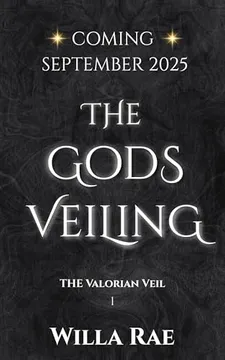
Reviews for The Gods Veiling are largely positive, averaging 4.4 out of 5. Fans praise the rich world-building, distinct characters, and slow-burn reverse harem romance, often comparing it to ACOTAR and Zodiac Academy. Many love the fiery FMC, Thayla, and the four unique MMCs. Critics cite pacing issues, excessive world-building detail, immature character behavior despite older ages, and repetitive dialogue as drawbacks. The lack of spice is divisive but accepted by most. Nearly all readers, positive or negative, acknowledge a compelling overarching plot.
Characters
Thayla Godrun
Reluctant chosen heroineThayla is sharp-tongued, observant, physically disciplined, and wary of anyone who claims authority over her. As a child she loses her parents18 to a danger they will not explain, and she grows up believing the gods hoard power while demanding obedience. Her small circle of chosen family matters intensely, which makes betrayal more painful than she lets others see. She often uses humor and anger to keep people from noticing her fear, but she is also quick to defend those treated as disposable. Her central struggle is not simply whether to accept power, but whether she can accept closeness without surrendering her right to decide what happens to her.
Amick
Knowledge-bound strategistAmick is a precise, intellectually intense god who spends much of his time studying and preserving knowledge. His formal manner can make him seem indifferent, but he notices details others miss and adapts his teaching to the person in front of him. He is least comfortable when situations demand emotional interpretation, so he often treats human needs as problems to analyze. Thayla1 unsettles his orderly habits and draws out a directness he does not usually show. He is also a Rising Chancellor, giving him proximity to the institution whose secrets he is trying to understand. His interest in her grows through shared learning and an unexpected willingness to make room for her.
Creed
Guarded protectorCreed is the quietest and most imposing of the brothers, a Defender whose first response is often to observe rather than explain. He guards his private history closely and dislikes being forced into emotional exposure. Beneath that restraint is a strong sense of responsibility, particularly toward anyone placed in danger by the gods’ decisions. His protective instincts can become controlling, especially when he believes he knows what will keep someone alive. Thayla1 challenges both his silence and his certainty. Their relationship carries the tension between his desire to shield her and her need to be included in choices that concern her body and safety.
Kyzen
Warm mediator among brothersKyzen is a generous, perceptive mediator who habitually lowers the temperature of a conflict before it becomes destructive. His teasing warmth makes him the easiest brother for Thayla1 to approach, though he is not merely agreeable. When his family or the people under his care are threatened, he can make firm decisions and defend them against authority. Kyzen often puts his own preferences aside to keep others comfortable, a skill that can become a form of self-erasure. Thayla’s1 arrival gives him a relationship in which kindness is not enough by itself; he must also be honest about what he wants.
Riven
Unruly dual-natured godRiven is theatrical, mischievous, and volatile, using jokes and pranks to keep both himself and others from sitting too long with pain. His unusual nature contains opposing impulses, so his mood can shift from playful disruption to unexpected calm. He enjoys provoking Thayla1, partly because her sharp retorts meet him on equal ground, but his care for children and creatures reveals a gentler attachment to the vulnerable. He resists being managed and fears having his freedom or identity defined by other people. Thayla’s1 presence draws out feelings he would rather disguise as chaos, making their connection both funny and difficult to trust.
Yemi Andino
Wary attendant turned allyYemi is Havar’s13 cousin and an Attendant who has learned to protect herself by keeping her feelings difficult to read. Her first response to Thayla1 is cautious because she expects another powerful god to treat her as property. Under the guarded exterior, she is observant, capable, and quietly humorous. Thayla’s1 refusal to use her as a servant gives Yemi space to speak and teach, while Yemi offers Thayla1 practical knowledge about Godsden and its rules. Their connection grows through mutual recognition: both know what it is to have other people make decisions about their lives.
Mellcom Bellame
Protective brother, compromisedMellcom raised Thayla1 alongside his father and has long occupied the place of an older brother, teacher, and protector in her life. He is a capable fighter and community leader who is used to taking responsibility for others. His ambition and longing for his missing father, however, complicate that protective identity. He can convince himself that a choice made for his own goals is also necessary for Thayla1. Their bond is intense because it is built from real care as well as dependence, and the possibility of betrayal cuts especially deep. Mellcom’s confidence in his judgment becomes a weakness when he mistakes protection for the right to decide.
Jeremiah Etain
Estranged lover and fighterJeremiah is a skilled fighter, Mellcom’s7 close friend, and Thayla’s1 former lover1. He can be charming in company but becomes possessive and cruel when Thayla1 resists him. His desire to be chosen by the gods has shaped his ambitions and helped fracture his relationship with her. He remains loyal to Mellcom7, which gives Thayla1 reason to tolerate him even after their romance ends. Jeremiah’s confidence often hides a need to control how others see him, and his history with Thayla1 lets him use familiarity as a weapon.
Lambrit Armend
Bookish lifelong confidantLambrit is Thayla’s1 closest friend in Oddian, a thoughtful reader whose intelligence is more striking than his physical strength. He supports Thayla1 without demanding that she agree with him and understands that her hostility toward the gods has a history. His care is often practical: he notices what she needs, shares knowledge, and stays beside her when others withdraw. At Godsden, his scholarly aptitude gives him a path of his own, while his relationship with Rose10 begins to widen his life beyond Thayla1. Their friendship is rooted in mutual adaptation rather than sameness.
Rose Galeen
Gentle attendant and healerRose is Lambrit’s9 Attendant, a gentle woman whose presence helps others relax. She has a soft manner without being passive, and she responds to Lambrit’s9 kindness with growing trust. Rose also helps Thayla1 feel less alone during the first frightening stages of orientation. Her role contrasts with the Godsdawn’s assumption that Attendants exist only to serve: she offers genuine support, while still deserving respect and choice. Her emerging connection with Lambrit9 gives both of them a quiet source of warmth.
Derivius
Disowned chaos godDerivius is the Beginning God of Chaos, estranged from the other gods and deprived of much of the worship that once strengthened him. Thayla1 has spoken to him privately since childhood, usually through irreverent complaints rather than prayer. He enjoys her bluntness and understands more of the realm’s history than he can safely explain. His affection is real but tangled with secrecy and long-range plans, so even his kindness can become a form of manipulation. Derivius embodies the story’s uncertain boundary between guidance and interference: he wants Thayla1 to trust him, yet repeatedly withholds the information she needs to make informed choices.
Seismet
Revered flying guideSeismet is a powerful Veilatara who transports the Chosen to Godsden under restraints that restrict his wings. He communicates mind to mind and has little patience for comforting lies. His respect for Thayla1 grows from her instinctive concern for the creatures’ treatment, and he offers her a steadier kind of companionship than the gods around her. Seismet can be teasing and forceful, but his loyalty is plain in moments of danger. He represents a form of authority grounded in care rather than rank.
Havar
Creature escort and mentorHavar escorts the Oddian Chosen to Godsden and works with the creatures there. He is direct, capable, and more candid with Thayla1 than many gods are, warning her that open disrespect can draw dangerous attention. His relationship with Yemi6 is affectionate and protective, though his concern can become overbearing when she refuses help. Havar’s role gives him a view of both the formal Godsdawn and the creatures who live at its edges.
Gladian
Brutal strength instructorGladian, the God of Strength, directs training in the Gods Court and commands the Defender Designation. He believes pressure and pain reveal who is worthy, a philosophy that makes his methods effective at intimidation and destructive to trust. He expects deference from those beneath him and treats dissent as a challenge to his authority. His conflict with Thayla1 exposes the Court’s reliance on fear as discipline. Gladian is not simply a strong opponent; he is the human face of a system that mistakes obedience for order.
Mara
Dominant defender rivalMara is an accomplished Defender and member of Gladian’s14 Valtrue. She takes pride in the standing she has earned and expects newcomers to prove themselves under the same harsh conditions she endured. Her discipline and confidence make her formidable in the Court, but she also reproduces its hierarchy by treating vulnerability as weakness. Thayla’s1 refusal to accept that ranking threatens Mara’s sense of order. Their conflict is therefore both personal and shaped by the culture that rewards dominance.
High Chancellor Harriseen
Controlling chief chancellorHarriseen leads the Chancellors and controls how much the newly chosen gods are told about their roles and history. He values hierarchy, ceremony, and unquestioned authority, and he interprets Thayla’s1 questions as evidence of ignorance rather than independent judgment. His public manner is polished, but his need to control the narrative makes him wary of knowledge he cannot manage. He represents the institutional power of Godsden and its habit of presenting obedience as gratitude.
V
Cryptic ancient guideV appears to Thayla1 in the sacred spring after her injury and offers guidance about the choices ahead. He speaks with deep knowledge of the Valories and of forces shaping the realm, but refuses to turn that knowledge into a complete set of instructions. His manner is gentle yet unsentimental, pressing Thayla1 to acknowledge her own desires rather than hide behind inevitability. The nature of his connection to her remains part of the mystery surrounding her arrival.
Anylah and Thane
Absent, protective parentsThayla’s parents18 are loving and gentle with her, but they leave when danger from their past catches up with them. They refuse to tell her the full reason, asking instead for promises that keep her away from the gods and the Veiling. Their absence shapes Thayla’s1 fear of abandonment and her distrust of divine authority. Their affection remains real, but their secrecy leaves her to interpret their choices without the knowledge that might have prepared her.
Laney
Affectionate neighbor childLaney is Lambrit’s9 young sister, an enthusiastic child who loves Thayla1 and looks forward to seeing her. Her openness reminds Thayla1 of the childhood she lost when her own parents18 left. Laney’s grief at the Chosen’s departure gives Thayla1 another reason to stay calm and not endanger the people remaining in Oddian.
Annalise Akova
Caretaker of Godsden’s childrenAnnalise is a warm cook and caregiver who looks after the children in Godsden, including the brothers during their early years there. She treats Thayla1 with immediate kindness and offers a glimpse of a domestic life not governed by rank. Her easy humor and generosity make her one of the first gods Thayla1 enjoys meeting.
Plot Devices
The Veiling and Volreen
Blood selects the ChosenThe Veiling is an annual ceremony in which people offer blood to the Volreen, a sacred creation that measures their essence and selects five candidates from each participating region. In Oddian, the ritual is presented as a chance to regain lost power, but the selection is controlled by forces the candidates do not understand. Thayla’s1 blood is planted without her knowledge, turning a ritual that appears voluntary into the mechanism that carries her into Godsden. The device drives the inciting plot and establishes the conflict between public consent and private coercion.
The Gods Veil
Tests and pairs new godsThe Gods Veil places each Chosen person in a subconscious landscape, reveals their Designations and domain, and searches for compatible Valtrue members. A written Deliverance records the result, while a completed group receives matching marks. The process is described as the gods’ orderly method for balancing power, but Thayla’s1 experience reveals that the Veil can conceal important decisions and make connections without informed consent. Its effects set the relationships and mysteries that drive the rest of the story.
The Gods Binding
Stores and governs divine powerThe Gods Binding holds the essence of power taken from the realm’s beings and is connected to sacred creations such as the Volreen and the Gods Veil. It can measure, preserve, release, or alter power, which gives its keepers enormous influence over the gods who depend on it. The Chancellors present that control as protection and balance. Amick’s2 research and Thayla’s1 experiences suggest that the Binding’s history is more complicated, and that its use has become a political instrument as well as a magical one.
The Valtrue Bond
Connects five lives and powersA Valtrue consists of four men and one woman, called the Binder1, whose roles and abilities are meant to balance one another. The members receive matching marks and are expected to work together in Godsden. Thayla’s1 group is unusual because its members are linked more deeply than the official explanation admits. This device drives the novel’s romantic and political tensions: it can create intimacy, force proximity, and make each person’s choices matter to the others. Its deeper consequences remain uncertain even after the characters begin to understand the bond.
Veilatara Companionship
Links gods with revered creaturesThe Veilatara are intelligent, powerful winged creatures whose approval is rare and meaningful. They are used to transport Chosen people even though their wings are restrained, making their treatment a visible sign of the gods’ control over other beings. Thayla’s1 respect for Seismet12 draws his attention, and the creatures’ connection to her Valtrue becomes another guide through the mysteries of Godsden. The companionship device offers care and knowledge outside the Chancellors’ hierarchy, while also tying Thayla1 more closely to the realm’s larger struggle.
Download PDF
Download EPUB
.epub digital book format is ideal for reading ebooks on phones, tablets, and e-readers.








