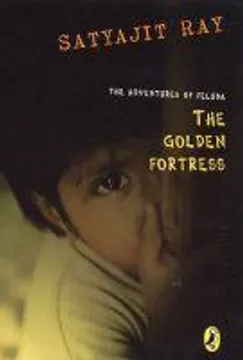


Plot Summary
A Boy Remembers Gold
On a quiet Sunday in Calcutta, detective Pradosh Mitter, known as Feluda, is discussing geometry with his teenage cousin Topshe when bookseller Sudhir Dhar arrives with an unsettling request.
Dhar’s eight-year-old son Mukul has spent weeks describing a life in Rajasthan: a house near a golden fortress, battles, camels, peacocks, and treasure buried underground. A newspaper report has publicized Mukul’s story, and parapsychologist Hemanga Hajra has already taken the boy to Rajasthan to investigate.
Dhar’s alarm grows after his neighbor’s grandson, Neelu, is kidnapped and questioned about Mukul and the treasure. The kidnappers release Neelu when they discover they have seized the wrong child. Fearing they will pursue Mukul instead, Dhar asks Feluda to find the boy and protect him.
The case begins with a conflict between evidence and interpretation. Mukul’s memories may be fantasy, a genuine account of another life, or knowledge acquired by ordinary means; Feluda refuses to settle the question before investigation. Yet the press report has already converted a private family puzzle into public bait. The danger is not generated by belief itself, but by what outsiders think the belief might lead them to: buried wealth. Dhar’s parental fear therefore gives the mystery its urgency, while Feluda’s disciplined uncertainty supplies its method.
Neelu Gives Them Jodhpur
Feluda agrees to go, first checking that Hajra really has left Calcutta and asking Dhar for a photograph of Mukul. At the home of Neelu’s grandfather, solicitor Shivratan Mukherjee, he examines the boy’s account of his abduction.
Neelu remembers two men, a car, a cigar smell, and a heavy dose of sleeping medicine. He also recalls telling them that Mukul had gone to Jodhpur, giving the pursuers a destination. Feluda reads the kidnapping as proof that the treasure story has attracted dangerous attention, not as proof that Mukul’s memories are true.
He asks Dhar to write an introduction to Hajra, then calculates the trains and dates. Before dawn the next day, Feluda and Topshe leave for Rajasthan, carrying the photograph and the warning that Mukul may already be in danger.
Neelu’s testimony changes the case from an anxious search into a race. The most useful clue is not a grand revelation but the child’s imperfect memory of practical details: a cigar, a sedative, a destination. Feluda treats those details as usable evidence while refusing to overread them. This is a story about how vulnerability creates informational asymmetry: adults decide what a child’s words mean, while criminals exploit the fact that children can be frightened, confused, or mistaken. Feluda’s care in questioning Neelu contrasts with the kidnappers’ coercion, establishing the ethical difference between investigation and extraction.
Jatayu Joins the Case
On the train west, Feluda and Topshe meet Lalmohan Ganguli, a modest, sunburned Bengali who writes adventure novels under the name Jatayu. His grand descriptions of danger sit beside an earnest appetite for real experience, and Feluda’s observations quickly persuade him that the trip may become a story of his own.
At Jodhpur’s Circuit House, the visitors’ book confirms that Hajra and Mukul have arrived. There Feluda meets Mandar Bose, a muscular globetrotter who speaks confidently about travel and hunting, and hears his dismissive opinions about Mukul’s claims.
Soon the boy and the man identifying himself as Hajra return from the city. Mukul barely engages with anyone, but has found a strip of golden cigar foil in the garden. Feluda asks to examine it, yet Mukul keeps it.
Jatayu’s arrival introduces comic self-invention without making him merely a joke. He has built an imposing fictional hero to compensate for the limitations he feels in himself, but his wish to witness an adventure is sincere. Bose offers a sharper contrast: his polished confidence gives him social authority before anyone has tested his claims. Mukul’s withdrawal makes him hard to read, and the foil becomes an object whose meaning is not yet clear. Ray places humor, performance, and evidence in the same scene, reminding the reader that a convincing persona can entertain, reassure, or mislead.
The Bikaner Ambush
The group drives to Bikaner, where Mukul rejects the red sandstone fort and recoils from a peacock’s cry. On the road, he recognizes a camp of traveling people, another fragment of his supposed former life.
Feluda also spots a familiar passenger from the train, now wearing blue instead of red, following their party. At Devikund, where Mukul has gone to inspect the memorial canopies, the man traveling as Hajra is found bound and gagged beneath a tree. He says an attacker in local dress overpowered him while Mukul wandered nearby.
Mukul emerges unharmed, unable or unwilling to explain what he saw. Feluda notices an unusual matchbox in the grass and keeps a torn strip of the binding cloth. Back in Jodhpur, Bose delivers an unsigned warning telling Feluda to leave.
The attack converts suspicion into physical peril, but it also complicates the evidence. The apparent victim offers a coherent account, and Mukul’s presence nearby seems to confirm it; nevertheless, Feluda preserves the objects rather than accepting the story at face value. The peacock’s cry links Mukul’s distress to his remembered past, while the attacker’s disguise turns regional clothing into an unreliable signal of identity. Even the warning has a double effect: it threatens Feluda and confirms that someone knows his movements. The scene’s pressure comes from the gap between what appears obvious and what the objects may eventually prove.
The Yellow Stone Bowl
Feluda studies the matchbox and the way the man at Devikund had been tied, then keeps his doubts to himself. At the Jodhpur bazaar, he buys a bowl made from yellow stone found only in Jaisalmer.
Topshe does not yet understand why this purchase matters, but Feluda has begun connecting Mukul’s golden fortress to the region’s distinctive sandstone. Meanwhile, Topshe climbs to the Circuit House terrace and sees a turbaned figure creeping toward Feluda’s window, a watch glinting beneath the man’s shawl.
When Topshe cries out, the intruder flees. The apparent Hajra leaves a note saying he is taking Mukul elsewhere, and the receptionist confirms that he has gone to the station. Feluda books a car for Jaisalmer, choosing to follow rather than accept the unexplained departure.
Feluda’s reasoning advances through material culture rather than a sudden flash of intuition. A bowl’s stone connects a landscape to the boy’s description, turning a commonplace object into a geographic clue. Topshe’s observation adds a different kind of evidence, but his limited view leaves identity uncertain. The note gives the apparent researcher control over the next move, yet its vagueness makes it suspicious rather than reassuring. This section also shows Feluda managing what he reveals: he lets companions act on partial knowledge while he tests a pattern. His caution is not emotional distance; it is a way of preventing an unverified story from dictating their choices.
Nails Across the Desert
Feluda, Topshe, and Jatayu set out toward Jaisalmer with driver Gurbachan Singh. Their taxi hits nails scattered across the road, and farther on they find thousands of drawing pins, which destroy the spare tire as well. With no replacement available and the next useful train already gone, they face a long wait in open country.
Feluda asks passing camel herders to lend them three camels so they can reach Ramdeora and try for a later train. The improvised ride is rough, especially for Jatayu, but carries them across the desert as daylight fades. They reach the small station after the train has left. Their pursuers have not merely followed them; someone has repeatedly altered the route and timing to keep them from reaching Jaisalmer.
The sabotage makes the landscape part of the antagonism. Empty roads, long distances, and scarce transport turn a handful of nails into a serious weapon, while the travelers’ solution depends on local knowledge and cooperation. Feluda responds by adapting rather than treating the failed plan as defeat. Jatayu’s discomfort supplies comedy, but his physical effort also makes him a participant instead of a spectator. The sequence exposes a practical truth about pursuit: control of movement can matter more than superior force. Whoever is obstructing them is trying to win time, which raises the question of what must happen in Jaisalmer before Feluda arrives.
A Code at Ramdeora
At the unfinished Ramdeora station, the three wait for the night train beside two local men with elaborate moustaches. Feluda gives one a light for his cigarette, then questions Jatayu about blisters and the view from above. The questions expose the figure Topshe saw at the Circuit House: Jatayu had borrowed a sheet and towel to disguise himself while spying on Bose, and had dropped a coded note near the window.
He insists he meant to warn Feluda, not harm him. The note reads as a timetable puzzle, linking a person’s arrival at Pokhran to a request involving Feluda’s name. Its final instruction remains unclear. Jatayu’s amateur surveillance has produced a real clue, but his secrecy has also made him look like the intruder.
Jatayu’s disguise turns comedy into a problem of interpretation. Topshe’s accurate observation did not identify the person correctly because he lacked context, and Jatayu’s good intention does not erase the danger created by spying without coordination. The code, meanwhile, compresses a threat into ordinary signs and schedules. Feluda’s questioning models a careful distinction between suspicious behavior and guilt: he tests details before drawing a conclusion. The episode also gives Jatayu a small but meaningful competence. His curiosity leads him into trouble, yet it helps the investigation move forward, complicating the easy division between professional detective and foolish enthusiast.
Bose Boards the Train
After midnight, the train leaves Ramdeora with Feluda, Topshe, and Jatayu in a dark first-class compartment. Mandar Bose climbs aboard with a torch and a revolver, ordering them onto the moving track.
Feluda pulls away the rug beneath Bose’s feet, knocking him down and disarming him, but Topshe bends to retrieve the torch. Bose seizes him as a shield, then throws him toward Feluda and jumps from the train. The escape leaves Bose’s fate uncertain, but his cigar smell and unusually long fingernail match details from Neelu’s kidnapping.
Feluda deciphers Jatayu’s note as a plan to meet at Pokhran and remove Mitter from the route. He now suspects the man traveling as Hajra is involved. At sunrise, the yellow fortress of Jaisalmer appears on its hill.
This confrontation gives the clues a bodily cost. Topshe’s instinct to help creates the opening Bose exploits, and Feluda’s strength cannot protect his cousin without risking a shot. Bose’s escape preserves immediate danger, but the encounter also binds separate observations into a pattern: the cigar, the nail, the timing, and the code. Feluda’s inference is strong but provisional; he knows the supposed Hajra is implicated without yet knowing who is impersonating whom. The sunrise over Jaisalmer offers visual confirmation of the boy’s geography, not proof of reincarnation. The landscape narrows the search even as the human mystery remains unresolved.
The Fortress Guards Its Secret
In Jaisalmer, Feluda follows tire marks and the report that Mukul and his companion have already left the fort. After briefly joining two strangers in a car, the travelers reconnect with Gurbachan and pursue the taxi toward an abandoned settlement.
Near a ruined house, Mukul suddenly runs out and clings to Feluda, while the sound of stones being shifted comes from inside. Feluda finds the man posing as Hajra digging through rubble, apparently searching for the hidden treasure.
A peacock swoops down and attacks him near the nest it has made above the buried cache. Feluda confronts the digger as Inspector Rathor and the real Hajra arrive. The impostor is arrested; the researcher explains that the captive-looking figure at Devikund had staged his own binding.
The climax makes the boy’s remembered world materially legible without resolving its metaphysics. The fort exists, the terrain fits, and a hidden cache is being sought, but the story does not require a final verdict about how Mukul knew these things. The peacock, previously a source of unexplained fear, becomes the defender of an actual nest and the force that interrupts the theft. Its action is both ecological and dramatic: the criminal has mistaken a living creature’s territory for an obstacle he can remove. The arrival of Rathor and the real researcher converts Feluda’s deductions into public accountability.
The Web Comes Clear
With the impostor in custody, the real Hemanga Hajra explains that the man was Bhavananda, a fraudster he had exposed years earlier, and that Mandar Bose was his accomplice. They had followed Hajra and Mukul to seize the treasure and retaliate against the researcher.
Feluda reconstructs the deception from the self-tied restraints, the matchbox unavailable in Rajasthan, the false signature spelling Hajra differently, the cigar foil, and Bose’s distinctive nail.
The real Hajra had tracked them while hiding his identity to keep Mukul safe. Mukul, having finally seen the fortress, wants to return to Calcutta. Jatayu gives back Bose’s revolver, only for Feluda to discover it is a stage prop. The group leaves the treasure beneath the peacock’s nest.
The ending rewards attention to small inconsistencies rather than belief in a single master clue. The false bindings, foreign matchbox, misspelled name, foil, and fingernail become persuasive only when their meanings converge. Feluda’s solution is therefore relational: he reconstructs who could have produced each trace and why. Hajra’s protective secrecy proves costly because it leaves others to interpret his actions without reliable context, while Mukul’s indifference to family and strangers makes him easy to move between adults. The fake revolver gives the resolution a comic release, but also punctures the glamour of performance that has shadowed the case from Jatayu’s novels to the criminal’s disguises.
Analysis
The Golden Fortress builds a detective plot around a question it never needs to settle completely: whether Mukul remembers another life. Feluda’s method is not to ridicule the claim or endorse it, but to test what can be tested. The boy’s descriptions guide the search toward a real landscape, while the criminals’ actions reveal that the more immediate danger comes from people who treat an extraordinary story as a map to money. The book therefore separates mystery from credulity. Wonder can remain unresolved without suspending judgment about evidence.
Ray also makes observation a social skill. Children supply fragments under pressure; adults shape those fragments into theories, and travelers perform versions of themselves through clothes, stories, and confidence. Feluda’s advantage is his willingness to revise an impression. A seemingly helpless researcher, a suspicious traveler, a disguised amateur, and a peculiar object each acquire new meaning as details accumulate. The solution is not a single brilliant guess but a disciplined arrangement of clues.
The Rajasthan journey gives that reasoning a physical rhythm. Trains, punctured tires, scarce roads, and camels make distance consequential. The travelers cannot simply move wherever the plot requires; each delay exposes them to the people trying to control their route. Against that human manipulation, the peacock’s nest offers a striking counterforce. The bird protects a living territory where the criminals see only an obstacle to treasure. Nature does not explain Mukul’s memories, but it interrupts greed in the most literal way.
Jatayu’s comic self-fashioning adds another layer. He invents a larger hero for his books, then discovers that actual courage involves uncertainty, awkwardness, and risk. Topshe, too, learns that seeing accurately is not the same as understanding immediately. Together, their development echoes Feluda’s central discipline: notice closely, act carefully, and let evidence change the story you thought you were seeing.
Review Summary
The Golden Fortress receives high praise for its thrilling adventure, vivid descriptions of Rajasthan, and introduction of beloved character Jatayu. Readers appreciate Ray's masterful storytelling, the blend of mystery and paranormal elements, and the educational aspects woven into the narrative. Many find the book nostalgic, having read it in childhood or seen the film adaptation. Some criticize the translation quality in English versions. Overall, fans consider it a classic Feluda story with engaging characters, clever plot twists, and Ray's signature style.
Characters
Pradosh Mitter, Feluda
The patient investigatorFeluda is a Calcutta detective whose strength lies less in force than in disciplined attention. He watches hands, clothing, objects, and the gaps between a person’s story and the evidence around it. His curiosity is balanced by intellectual restraint: he neither accepts nor rejects Mukul’s memories without proof. He protects Topshe and Mukul while resisting the temptation to announce conclusions too early. Feluda’s confidence can sound teasing, especially with his younger cousin, but it rests on genuine care and a belief that clear thinking is a form of courage. The case tests his ability to work amid incomplete information, where even an apparent victim may be staging what others see.
Topshe
Feluda’s observing cousinTopshe narrates the adventure as Feluda’s teenage cousin and assistant. He is eager for danger and travel, but less practiced than Feluda at separating a vivid impression from a reliable conclusion. His excitement, fear, and occasional mistakes give the investigation a human scale, while his attention often supplies details Feluda can use. Topshe admires his cousin and wants to be more than a passive companion, even as Feluda’s teasing reminds him that experience matters. His perspective makes the mystery feel immediate: the desert is strange, the suspects are intimidating, and each new clue arrives before he knows what it means.
Lalmohan Ganguli, Jatayu
The adventure novelistLalmohan Ganguli writes thrillers as Jatayu, imagining a powerful hero whose physical confidence contrasts with his own modest build. He is boastful about danger, nervous when it becomes real, and genuinely hungry for experience beyond the safety of his fictional plots. His comic exaggerations never entirely conceal his earnestness. Jatayu wants to be useful and to understand the mystery, though enthusiasm sometimes sends him into risky schemes without telling Feluda. His presence brings levity to the Rajasthan journey, but also shows how stories shape a person’s expectations: he arrives primed to see suspicious characters, then must learn that suspicion is not the same as proof.
Mukul Dhar
The boy with memoriesMukul is Sudhir Dhar’s eight-year-old son, a quiet child absorbed by images of a golden fortress and a life in Rajasthan. He seems emotionally distant from the family and readily travels with adults who promise to take him toward the place he remembers. His descriptions include concrete details such as sand, camels, battles, peacocks, and buried wealth, yet he offers little explanation of how he knows them. Mukul is not simply a puzzle to solve. His detachment makes him vulnerable to people who treat his memories as a route to their own aims, while his intense response to certain places and animals suggests that the journey matters deeply to him.
Hemanga Hajra
The parapsychology researcherHemanga Hajra is a respected researcher interested in unusual claims about memory and perception. Mukul’s account draws him into a field investigation, where he hopes careful observation may distinguish an extraordinary case from an ordinary explanation. He is methodical and committed enough to take responsibility for the boy’s journey, though the investigation exposes the risks of working with a sensational story in public. Hajra’s scientific outlook is open but not credulous: he treats Mukul’s memories as a question demanding evidence. His work places him between parental concern, public curiosity, and the danger created when other people decide that research might lead to money.
Sudhir Dhar
Mukul’s anxious fatherSudhir Dhar owns a College Street bookshop and approaches Feluda because he fears for his son. He is an ordinary, worried parent confronting a story he cannot explain and a danger he cannot pursue himself. Dhar trusts Hajra’s promise to care for Mukul, yet publicity about the boy’s memories quickly makes that trust feel precarious. His decision to seek a detective’s help turns private anxiety into the investigation’s practical starting point.
Neelu
The mistaken captiveNeelu is the grandson of solicitor Shivratan Mukherjee and a schoolboy who resembles Mukul. Kidnappers seize him by mistake, then frighten and drug him while trying to learn where Mukul has gone. His recollections are incomplete but valuable, including the men’s cigar and their questions about Jodhpur. Neelu’s account shows how a child can become an unwilling source of evidence.
Mandar Bose
The globetrotting guestMandar Bose presents himself as a worldly traveler with an interest in hunting and a commanding physical presence. He speaks with assurance, enjoys telling stories of distant places, and quickly becomes a point of fascination for Jatayu. His confidence affects how others read him, but Feluda continues to examine the details behind his polished manner. Bose’s presence keeps the travelers alert to the possibility that danger can arrive in the guise of an experienced tourist.
Shivratan Mukherjee
Neelu’s solicitor grandfatherShivratan Mukherjee is Neelu’s grandfather and a solicitor living near the Dhar family. After the kidnapping, he helps Feluda speak with the boy and provides the setting for Neelu’s account. His concern is practical and protective, shaped by the shock of having a child taken from his neighborhood. He represents the local family caught in the consequences of a mystery that began elsewhere.
Uncle Sidhu
The book-loving adviserUncle Sidhu is a longtime family friend, collector of books, and source of well-stocked historical knowledge. Feluda visits him before leaving Calcutta to check what is known about Hajra, and Sidhu’s account helps establish the researcher’s public reputation. His eccentric passions and careful reading make him a useful, if unconventional, resource.
Inspector Rathor
The local investigatorInspector Rathor is the Jaisalmer police officer who joins the final confrontation. His presence gives Feluda’s deductions a lawful route toward action and arrest.
Gurbachan Singh
The resourceful driverGurbachan Singh drives the travelers through the desert and helps them improvise when their taxi is sabotaged. His practical knowledge and willingness to assist keep the journey moving.
The second kidnapper
A partner in pursuitThe second kidnapper works alongside the man who questions Neelu. The boy remembers being handled by more than one adult, but the accomplice remains largely in the background of the investigation.
Plot Devices
Mukul’s past-life memories
A map spoken by a childMukul’s memories provide the mystery’s initial geography and emotional pull. His descriptions point toward sand, a golden fortress, a nearby house, a battle, peacocks, and buried treasure. Hajra treats the claims as material for research, while Feluda keeps open the possibility of ordinary explanations. The memories also make Mukul vulnerable: once publicized, they attract people who believe the boy can lead them to wealth. The story gives the clues increasing physical correspondence with Rajasthan without requiring a definitive explanation of reincarnation. This device sustains uncertainty while driving the characters toward specific places.
The golden fortress
A landmark and a lureThe golden fortress begins as an image in Mukul’s drawings and recollections, then becomes a route toward Jaisalmer. Feluda connects its color to the yellow stone bowl he buys in Jodhpur, using material evidence to identify the likely destination. The fortress also gives the criminals a reason to follow Mukul: they believe his memories may locate hidden treasure. By joining a historical place to a modern crime, the device makes the landscape more than a backdrop. It is both a test of Mukul’s descriptions and the destination around which the pursuit tightens.
The clues in objects
Small evidence, joined togetherFeluda collects details that appear insignificant in isolation: an unusual matchbox, the way a captive is tied, a piece of cigar foil, a distinctive fingernail, and a name written differently from the printed form. Each clue tests a person’s account against material reality. None immediately solves the case; their force comes from accumulation and comparison. The method suits Feluda’s style, which favors careful observation over dramatic accusation. The objects also invite readers to reconsider earlier scenes, showing how ordinary things can change meaning when placed in a new pattern.
The coded timetable note
A threat hidden in transitA short note found by Jatayu combines letters, arithmetic signs, and a train timetable. Feluda interprets it as instructions about meeting at Pokhran and getting Mitter out of the way. The railway schedule turns an abstract code into a practical plan, while its incomplete meaning keeps the threat uncertain until Bose attacks aboard the train. The note links the criminals’ movements to the travelers’ route and explains why road sabotage alone was not enough. It also gives Jatayu’s amateur spying a concrete consequence.
Disguises and false accounts
Appearance becomes evidenceThe story repeatedly complicates what clothing and confident behavior seem to prove. A familiar passenger changes shirts; Jatayu disguises himself to spy; and the man traveling with Mukul presents a convincing account of danger. Feluda therefore treats appearances as clues to test, not facts to accept. The disguises do more than hide identities: they create false explanations that delay recognition and put innocent characters under suspicion. Their eventual exposure depends on contradictions in objects, signatures, and behavior rather than on a sudden confession.
Download PDF
Download EPUB
.epub digital book format is ideal for reading ebooks on phones, tablets, and e-readers.








