

Plot Summary
The Wrong Envelope
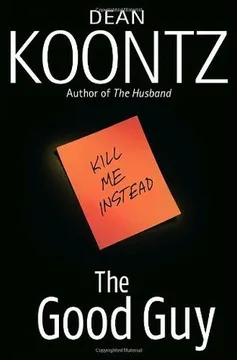
Tim Carrier,1 a solitary bricklayer1 who prefers familiar routines, is nursing a beer at the Lamplighter Tavern when a nervous stranger leaves a thick envelope beside him. It contains ten thousand dollars and a photograph of Linda Paquette, with the balance due when she is dead. Before Tim1 can stop the stranger, a second man3 arrives and assumes Tim1 is the person who arranged the murder.
Tim1 refuses the money and tells the smiling stranger3 he has changed his mind. The man3 takes the envelope, but not the photograph, and calls Tim1 a coward with murderous instincts. Outside, Tim1 sees him drive away with a flashing emergency beacon clipped to his car. The warning has come too late to remain private.
The opening turns a small social mistake into an ethical test. Tim could preserve his carefully cultivated invisibility by letting the envelope disappear into the night, but looking at Linda's photograph makes the cost of indifference concrete. His refusal is not yet a rescue plan; it is a decision to accept responsibility without knowing the scale of the danger. The killer's accusation also unsettles Tim because it names a capacity he has spent years trying to keep dormant. The story's first hinge is therefore double: a woman becomes a target, and Tim is forced to recognize that his own self-image may be incomplete.
Linda's Lantern House
Tim1 first visits Michelle Rooney,8 the tavern owner's wife,8 and tries to leave her out of the danger, though she sees through his evasions. He then reaches Linda2's bungalow with help from a neighbor, Max Jabowski,14 who vouches for him. Linda2 is not frightened into silence. She listens as Tim1 recounts the barroom confusion, recognizes her driver's-license photograph, and accepts that someone intends to kill her.
When Tim1's friend Liam Rooney7 reports that the smiling man3 has returned asking about the big customer, the threat becomes immediate. Linda2 packs quickly, leaving her beloved 1939 Ford behind. Tim1 could still walk away, but he takes her with him, intending to find the killer3's identity through a trusted police detective.4
Linda's composure changes the emotional terms of the rescue. Tim expects to protect a passive stranger, but she evaluates his choices, asks what he has risked, and makes her own decisions. Their bond begins not with instant romance but with mutual recognition: he respects her refusal to be patronized, while she notices the courage beneath his shrinking habits. Michelle's warning about going alone offers another measure of Tim's isolation. He accepts her concern without explaining everything, revealing how deeply he has learned to treat self-containment as safety.
The Shark Finds Them
Tim1 brings Linda2 to Pete Santo,4 a robbery-homicide detective who has known him since their military service. Pete4 uses a restricted DMV search to identify the sedan's registered owner as Richard Lee Kravet,3 then retrieves the driver's photograph. Tim1 and Linda2 break into the listed Anaheim house, but find an elderly couple's home rather than the killer3 's.
A second registration leads only to an empty lot. Meanwhile, Kravet3 obtains Tim1's name from Liam's phone records and calls to taunt them, confirming that he has returned to Linda2's house and taken her parrot-handled mug. Tim1 realizes Kravet3 knows how to find them and that Linda2's home is no longer safe. With no proof strong enough to bring police in, they keep moving.
This section makes institutional knowledge feel compromised before the conspiracy is named. Pete's access to a database offers a brief, practical advantage, yet the false addresses show how easily official-looking information can become a trap. Kravet's call is more than intimidation: he demonstrates access to private data and treats domestic objects as trophies, turning Linda's home into an extension of his reach. Tim and Linda's dependence on Pete creates trust, but it also exposes the danger of asking any institution for help before they know who controls it.
Five Shots in Tustin
At a late-night coffee shop, Tim1 spots a white Chevrolet that may be Kravet3 's. He sends Linda2 through the kitchen and out the back while he draws the killer3 away from the restaurant. When Kravet3 approaches, Tim1 fires at the car's tires rather than at the driver. The Chevrolet crashes through a fence and tears loose a fire hydrant, giving Tim1 time to circle back.
Linda,2 blocked by the manager, must flee down the alley as Kravet3 recovers the wrecked car and chases her. The damaged sedan catches on a Dumpster, allowing Linda2 to escape its path. Tim1 finds her, and they abandon the Explorer after the encounter. He has fired a gun with unsettling ease, a fact he cannot explain away as luck.
The danger here is physical, but the deeper shock is Tim's competence. He acts with tactical precision, then recognizes how naturally the pistol fits his hand. The scene therefore cracks his ordinary-man disguise from within. Linda's escape also refuses the familiar division between male rescuer and helpless woman: Tim creates an opening, but she navigates the kitchen, outmaneuvers the manager, and runs for her life herself. Their survival depends on separate judgments made under pressure, not on one person simply saving the other.
Room 308 Is Empty
Tim1 and Linda2 rent a coastal hotel room under his name, but the signed credit-card receipt gives Kravet3 a way to locate them. Tim1 tests the balcony door, then secretly moves them into vacant Room 300 and hangs a privacy sign on the door. At 3:44 a.m., he sees Kravet3 enter Room 308, kick through the door, and fire into the bathroom and balcony.
Tim1 and Linda2 descend the stairs before the killer3 realizes the room is empty. They escape in the Explorer, but the car's tracking transponder allows Kravet3 to follow their movements. On a ridge road, he is waiting beneath a tree with a machine pistol. Tim1 drives through the park to escape, then abandons the tracked vehicle in the rain.
Tim's room switch converts observation into a small but consequential act of resistance. He cannot overpower the surveillance system, yet he can exploit the killer's confidence in it. The hotel attack makes ordinary safeguards look theatrical: a locked door and a registered room offer no protection when an enemy can access both data and force. Their escape is not a victory so much as a delay, and the transponder teaches Tim that flight alone will keep reproducing the same confrontation. The story's geography begins to shrink around them, turning mobility into a resource that must be used strategically.
Three Bodies, One Warning
After losing Tim1 and Linda2 at the hotel, the killer3 takes refuge in a stranger's house and kills Cynthia Norwood16 when she recognizes that something is wrong. Her husband, Malcolm,17 arrives and is shot when he tries to flee; a neighbor, Nora,18 is killed soon afterward.
The killings show how readily the assassin3 turns inconvenience into murder. At the same time, Pete4 searches public records for Kravet3's many aliases and uncovers signs of the Cream and Sugar murders.
His police chief abruptly orders him away from the inquiry, and three men later arrive at Pete4's home. Pete4 has already fled with his dog, Zoey,24 and watches the intruders enter. The pressure on Tim1 and Linda2 is no longer only one killer;3 someone powerful is closing ranks around him.
The deaths of Cynthia, Malcolm, and Nora expose the killer's defining moral distortion: he regards other lives as clutter to be cleared away, not as claims upon his conscience. His tidy habits and courteous manner do not soften this violence; they make it easier for him to imagine himself as reasonable. Pete's escape, meanwhile, shows the conspiracy operating through procedure as well as force. A warning from a superior and an unexplained visit are enough to make an honest detective abandon his own home. Private violence and institutional intimidation now appear to be parts of the same machinery.
The Cream and Sugar Dead
On a bus to Dana Point, Linda2 tells Tim1 about Molly, the dog she loved as a child and was forced to surrender. The confession opens a rare path toward trust, but their investigation soon takes them to Lily Wen-ching,9 widow of the Cream and Sugar café owner.9
Pete4 has identified Kravet3 under the alias Roy Kutter,3 a suspect briefly questioned after the café burned with four members of Lily9's family inside. Lily9 believes the fire was part of a wider purge.
She names five former regulars who died in suspicious circumstances, including an art dealer's daughter murdered with quarters forced into her throat. Linda2 remembers the café's patio, where the customers gathered. Tim1 realizes that the apparently unrelated deaths may all connect to something witnessed there.
The café joins private memory to public violence. Linda remembers it as an ordinary place of coffee and conversation; Lily remembers it as the last setting shared by people who have since disappeared. That difference makes the investigation depend on a kind of attention the police have dismissed as grief. The bus confession about Molly deepens the intimacy between Tim and Linda because she names a childhood loss that still carries guilt. Their growing trust is not a reprieve from danger. It gives the danger a more specific human cost.
Linda's Buried Verdict
At a coffeehouse patio, Linda2 explains why she once wrote bleak novels under the name Toni Zero. When she was ten, a child's playground injury led her parents,20 Benny20 and Renee Locadio,21 founders of a preschool, to question the child's medication. The child's mother complained to police.
A psychiatrist23 then interviewed pupils and encouraged accounts of satanic rituals and abuse, although searches found no evidence. Linda2 says the psychiatrist23 molested her during a session, but officials treated her accusation as an attempt to protect her parents.20
Benny20 was imprisoned and killed by another inmate; Renee21 died of cancer after prison doctors missed the diagnosis. Linda2 was sent to a relative and lost Molly as well. She tells Tim1 the story because she has chosen to stop letting its pain dictate her life.
Linda's history gives the novel's distrust of institutions a personal foundation. Her parents are not ruined by a single villain acting alone, but by a chain in which professional authority, political ambition, suggestible memory, and public appetite reinforce one another. The damage persists through shame, separation, and the loss of a beloved animal, making innocence something that cannot simply be restored by clearing a name. Linda's decision to speak is not a cure. It is an act of authorship over a past that once belonged to prosecutors and strangers.
A Mother Taken
Krait3 discovers Linda2's novels at Teresa Mendez19's house and recognizes her as the writer Toni Zero. He also searches Tim1's background and learns enough about the Carrier family to use them as leverage. At Tim's parents5 'home, he drugs Mary5 with a dart, handcuffs her to a chair, and waits for Walter6 to return.
He plans to trade Mary's life for Linda's, threatening Tim's brother Zachary,11 Zachary's wife Laura,12 and their daughter Naomi13 if Mary5 refuses to cooperate. Mary5 understands that the bargain is designed to make her son choose who dies. She resists helping the killer,3 but he uses her family's safety to force her into the call. Tim1 learns that his mother5 is in danger and must decide how to answer.
The hostage plot turns family love into the killer's chosen instrument. Krait assumes that affection is a lever: if he names enough loved ones, he can force Tim to behave predictably. Mary resists not because she feels no fear, but because she refuses to make her son carry a choice designed to wound him whichever way he acts. This section also reveals the asymmetry between the assassin and his employers. Krait knows intimate details about his targets, while the people directing him remain hidden behind layers of information and distance.
The Koi Pond Bargain
Krait3 calls Tim1 while he is with Linda2 and Pete4 at a park, putting Mary5 on the line. Mary5 urges her son to act according to his own judgment rather than surrender to the killer3's pressure. Tim1 cannot trade Linda's life for his mother's, so he offers Krait himself instead, proposing a meeting where he will arrive unarmed and exposed.
Krait3 accepts, first sending him to Fashion Island as a test. Tim1 recognizes the shopping center as a diversion and assumes the real confrontation will be at his parents5 'house. He tells Linda2 to wait with Pete,4 but she refuses to abandon him, and Pete4 joins them. They drive toward the house together, carrying Linda2's pistol and Pete4's service weapon.
Tim's offer is not a conventional heroic bargain because he does not believe his life has greater value than Linda's or Mary's. He is trying to prevent the killer from turning care into a forced ranking of loved ones. Linda's refusal to stay behind is equally important: she will not let Tim reduce her to the person being saved. Their choices create a fragile partnership in which courage means neither self-sacrifice alone nor obedience, but the willingness to share risk without pretending it can be made clean.
The Mirror Breaks
Tim1 and Pete4 enter the Carrier home through the kitchen and find Mary5 handcuffed to a chair. They break part of the chair to free her, then send her outside to Linda.2 Krait3 has already escaped through an upstairs window and slips back into the house behind them. When he opens fire with his machine pistol, Tim1 heaves a heavy highboy across the doorway, using it as cover while Pete4 fires from the floor.
A shot wounds Krait,3 and Tim1 charges him before he can aim again. They struggle on the stairs; Krait3 slashes Tim1's palm with a switchblade, but Tim1 shoots him twice in the throat. The killer3 dies, and Tim1 calls Linda2 to say that he and Pete4 are alive. Moments later, black SUVs marked FBI surround the house.
The climax brings Tim's concealed history into action before anyone explains it. His strength, tactical judgment, and capacity to move toward lethal danger are not newly acquired talents; they are parts of himself he has tried to bury beneath routine. The highboy, an ordinary piece of family furniture, becomes both shield and symbol: the domestic world protects him, but it also bears the damage of violence. Krait's death ends the immediate hunt, yet the sudden arrival of federal agents prevents relief. The threat has changed form, from a lone predator to a system capable of controlling the scene.
The Men in Black SUVs
An apparent FBI official named Steve Wentworth10 separates Tim1 and Linda2 for questioning, then admits that his group is not what its badges claim. He says two years earlier a senator's secret liaison met a foreign intelligence operative at the Cream and Sugar.
The café owner photographed his regular customers, and some pictures captured the men in the background. After the images appeared online, the liaison feared exposure, especially as the senator's political prospects rose.
The group decided to kill everyone who might remember the meeting, beginning with the café family and continuing through its regulars. Wentworth10 calls the killings necessary to a managed future and warns that the group can discredit Tim1 if he speaks publicly. Tim1 learns that Linda2 was targeted for an event she barely noticed.
The revelation reframes the novel's central accident: Linda is not being punished for knowledge she knowingly guarded, but for having been present in a photograph. The conspirators treat ordinary memory and ordinary images as threats because they cannot control what witnesses might later say. Wentworth's language of responsible management converts murder into an administrative problem, exposing how abstract ideals can launder concrete cruelty. His respect for Tim is also a containment strategy. He recognizes Tim's moral authority while warning that the state can manufacture a more convenient story about him.
A Small Place of Light
Pete4 shows Linda2 the record Tim1 never discusses: as a Marine sergeant, Tim1 saved hundreds of civilians and his platoon during a siege, earning the Medal of Honor. Mickey McCready15's home video of the FBI men gives Tim1 evidence Wentworth10's group cannot easily erase.
Tim1 first meets the President's mother, then presents the recording to the President privately and asks him to investigate without exposing the source. Months later, conspiracy stories and indictments shake Washington, while two prominent politicians die by suicide.
Tim1 and Linda2 move to a modest 1930s house on the central coast, restore it together, and begin again. Michelle8 brings the lion lamp she made for Tim;1 Linda2 returns to writing with a less bitter voice. Their chosen family gathers around them.
The ending resolves the contrast between public heroism and private obscurity. Tim's medal explains his abilities, but it does not make him eager for recognition; what matters to him is protecting people and repairing what violence has damaged. The video gives him a route into power without turning him into a public crusader, while the President's promise leaves justice possible rather than guaranteed. The final house is not an escape from a broken world. It is a deliberate scale of life in which craft, love, and shared work can resist the larger machinery without pretending to defeat it completely.
Analysis
The Good Guy turns on a question of responsibility: what should a person do when he becomes aware of violence that institutions may prefer to conceal? Tim1's first act is small, a refusal to accept money for a stranger's death, but the decision breaks the anonymity he has built around himself. His later competence reveals that retreat has never erased his capacity for action; it has only kept that capacity untested.
The novel's most disturbing violence is bureaucratic as much as physical. Linda's parents20 are destroyed through a chain of professional authority, political calculation, and public credulity. Years later, a photograph taken at a café makes Linda2 and other ordinary customers potential liabilities to people seeking political power. In both cases, institutions do not merely fail to protect the vulnerable. They create a story that makes the vulnerable easier to discard. Wentworth10's language of responsible management is frightening because it is plausible enough to sound like policy rather than moral collapse.
Krait3 embodies a more private version of the same evasion. He turns murder into routine, cleanliness into virtue, and his own delusions into evidence of superiority. His civility is not a mask hiding a conscience; it is a tool for keeping conscience irrelevant. Against him, Linda2's candor and Tim1's practical courage offer different forms of resistance. She insists on seeing the past clearly without allowing it to dictate every future feeling. He accepts responsibility without claiming that violence makes him righteous.
The ending does not promise that one good man can dismantle a hidden system. Tim1 uses evidence and cautious access to power, while the political consequences remain partial and uncertain. What he and Linda2 can build is smaller but real: a home restored by hand, work done carefully, a family chosen through loyalty, and writing that is no longer governed by bitterness. The book's hope is not that darkness disappears, but that people can refuse to reproduce its logic in the lives they touch.
Review Summary
Reviews of The Good Guy are mixed, averaging 3.87/5. Many praise the gripping premise—a man mistaken for a hitman who works to save the target—and the memorably menacing villain, Krait. Positive reviewers highlight the fast pace, sharp wit, and engaging character dynamics. Critics, however, find the dialogue unrealistic, the romance rushed, the protagonists underdeveloped, and the ending unsatisfying. Several note the story feels like a rehash of familiar Koontz tropes, while others consider it one of his stronger recent efforts.
People Also Read

Characters
Tim Carrier
The reluctant protectorTim is a large, skilled bricklayer who has deliberately shaped his life around routine, quiet pleasures, and low expectations. He jokes to deflect concern and prefers work whose results can be seen in stone and mortar. Beneath that restraint is a disciplined mind and a powerful instinct for danger, qualities he does not like to examine. He is loyal to old friends and unusually alert to the moral consequences of ordinary choices. Tim's defining tension is between the modest life he has chosen and the capacity for decisive action that keeps returning. He does not seek authority or praise; he wants to protect people without becoming the kind of man who mistakes force for virtue.
Linda Paquette
The watchful writerLinda is a self-employed novelist with an incisive gaze, a dry sense of humor, and an independence that resists easy categorization. She keeps a 1939 Ford in her kitchen, avoids television, and values the physical traces of an older world without pretending its past was innocent. Linda is observant, practical, and emotionally guarded; she tests what people do rather than trusting polished claims. Her writing has carried anger and despair, but she is beginning to question whether those feelings should define her work or her life. She wants to remain capable of hope without surrendering her clear view of cruelty. Her connection with Tim1 grows through honesty, shared danger, and mutual respect.
Krait
The smiling assassinKrait is a professional killer whose genial manners conceal an appetite for domination and pain. He prizes cleanliness, familiar routines, and controlled appearances, treating these preferences as proof of his superiority. His belief that he stands apart from ordinary humanity allows him to recast murder as order and other people as disposable obstacles. Krait's competence is real, but so is his dependence on an unseen support network that supplies identities, equipment, and information. He is fascinated by mirrors, homes, and the possibility of a world that reflects his own distorted sense of entitlement. His calm is not compassion; it is a method for keeping other people's reality from disturbing his self-image.
Pete Santo
Tim's stubborn allyPete is a robbery-homicide detective, Tim1's longtime friend, and an instinctive investigator who is willing to risk his career when conscience demands it. His humor is irreverent, but his loyalty is serious. A visible facial scar and an unsuccessful marriage have not made him cynical about people; he continues to believe that a detective's responsibility extends beyond jurisdiction. Pete's investigative curiosity exposes him to powerful enemies, yet he keeps working because retreat would feel like complicity. His shy dog Zoey24 is a quiet measure of his gentleness, which sits comfortably beside his willingness to face danger.
Mary Carrier
Tim's steadfast motherMary is a warm, capable woman whose steadiness comes from knowing her family rather than idealizing it. She recognizes Tim1's character without requiring him to perform heroism for her, and she approaches domestic work with practical confidence. Her care is neither sentimental nor passive: she can comfort her son while still expecting him to make his own choices. Mary represents the intimate history Tim1 rarely discusses, a home where his identity was formed before he learned to hide much of himself.
Walter Carrier
Tim's working fatherWalter is a mason and a model of the honest trade Tim1 hopes might define him completely. His work and family life suggest a man who values reliability over display. The house he shares with Mary5 is a place of long habits and enduring furniture, reflecting the care he puts into things meant to last. Tim1's respect for his father is uncomplicated, a rare source of emotional certainty in a life otherwise governed by avoidance.
Liam Rooney
The tavern keeperLiam owns the Lamplighter Tavern and is Tim1's teasing, affectionate friend. His jokes about Tim1's solitude carry genuine concern, though he rarely abandons humor long enough to make a direct appeal. Liam values family and permanence, and he and Michelle8 are building their future together. When the danger reaches his bar, he tries to help while understanding that his involvement could put Michelle8 at risk.
Michelle Rooney
The artist upstairsMichelle is Liam7's wife, a small, resourceful artist who designs lamps and works with stained glass and metal. She has an artificial left eye and a missing left hand, but the novel presents these facts as part of her everyday life rather than as a definition of her. Michelle reads Tim1's evasions with unusual clarity and cares for him as family. Her artistic attention to courage and character reflects a belief that objects can carry emotional meaning without needing to explain themselves.
Lily Wen-ching
The keeper of memoryLily is the widow of the Cream and Sugar café owner and a former worker in the family business. She remembers customers by their habits and treats hospitality as a serious form of care. Her grief has not made her passive; it has sharpened her insistence that suspicious deaths be connected rather than dismissed as coincidence. Lily remains composed without being detached, and her faith in truth survives the indifference of officials who would prefer her to stop asking questions.
Steve Wentworth
The polished officialWentworth presents himself with the composure and polish of a senior federal official. He speaks in abstractions about security, stability, and the management of public fear, making coercive ideas sound administrative. His confidence rests on access to institutions and influence over what others are allowed to believe. Wentworth is not a simple zealot: he understands the difference between principle and rhetoric, yet uses both when they serve his objectives.
Zachary Carrier
Tim's older brotherZachary is Tim1's older brother and a settled member of the Carrier family. He is married to Laura12 and has a daughter, Naomi13. Although he is not central to the investigation, his place in Tim1's family makes him part of the network of people Tim1 feels responsible for protecting.
Laura Carrier
Zachary's wifeLaura is Zachary11's wife and Naomi13's mother. She belongs to the close family circle whose safety matters deeply to Tim1, even when she remains outside the immediate action.
Naomi Carrier
The next generationNaomi is Tim1's young niece, the daughter of Zachary11 and Laura12. Her presence represents the vulnerable future the adults in her family want to preserve.
Max Jabowski
The helpful neighborMax is a warm, expansive neighbor and neighborhood-watch organizer who knows Linda2's block. He helps Tim1 reach her by vouching for his character, interpreting the visit as a possible romantic introduction.
Mickey McCready
The camera-happy neighborMickey is an eccentric elderly neighbor who has known Tim1 since childhood and treats him like beloved family. He records neighborhood events with a camcorder and has preserved footage from Tim1's younger years. His exuberance and curiosity make him easy to underestimate, though he is attentive to the people around him.
Cynthia Norwood
The gracious neighborCynthia is an elegant, generous woman who worries about her adult daughter and son-in-law. Her kindness makes her willing to welcome an unfamiliar guest into their home, trusting the social warmth of ordinary domestic life.
Malcolm
Cynthia's husbandMalcolm is Cynthia16's husband, a blunt, weathered man whose protective instincts surface when he senses danger. He is direct in manner and deeply attentive to his wife's safety.
Nora
The next-door cookNora lives next door to Bethany and Jim and prepares meals for them during the week. Her familiarity with their home makes her a practical, neighborly presence in their lives.
Teresa Mendez
Linda's absent friendTeresa is Linda2's friend, currently away on vacation, whose Dana Point home provides a temporary refuge. She is a medical assistant and a private, practical person who keeps emergency money and a spare key.
Benny Locadio
Linda's gentle fatherBenny is Linda2's father, a child-development specialist who helped build a network of preschools with his wife21. Linda2 remembers him as gentle, funny, and devoted to children's well-being. His example informs her belief that people can be harmed when authority refuses to listen carefully.
Renee Locadio
Linda's devoted motherRenee is Linda2's mother, an educator who helped establish the family preschools. Linda2 remembers her as kind, witty, and deeply invested in children's care. Her presence remains central to Linda2's understanding of home and family.
Chloe
The preschool childChloe is a young child at Linda's parents20' preschool whose difficulties become the focus of adult concern. She is too young to control the competing interpretations imposed on her by adults.
The psychiatrist
The persuasive expertThe psychiatrist is brought in to interview children connected to the preschool. He possesses professional authority and a persuasive manner, making his interpretations influential to parents, officials, and the public.
Liam's dog Zoey
Pete's watchful companionZoey is Pete4's shy black Labrador, sensitive to danger and affectionate with people she trusts. Her caution often registers a change in the atmosphere before Pete4 can name it.
Plot Devices
The mistaken envelope
Turns chance into obligationThe manila envelope carries cash and Linda2's photograph, but its arrival at the Lamplighter depends on a mistake about Tim1's identity. The cash is meant to purchase a killing, while Tim1's refusal makes him visible to both the intended assassin3 and the unseen person behind the contract. Because he keeps the photograph and acts on what he has learned, the envelope becomes less a clue than a moral trigger. Its central function is to make an abstract murder plot impossible for Tim1 to ignore: the victim has a face, an address, and a life that can still be defended.
The customer photographs
Makes ordinary witnesses dangerousThe Cream and Sugar café owner photographs regular customers for a website gallery. In one set of images, two secret political contacts appear in the background of photographs taken on the patio. The pictures become dangerous not because Linda2 or the other customers understand what they have seen, but because the images could identify people who were meant to remain unconnected. The device transforms a casual habit of hospitality into accidental evidence. It also explains why the conspiracy targets people with no obvious knowledge of the meeting, turning the café's wall of familiar faces into a record of involuntary witnesses.
The digital trail
Makes escape visibleKrait3's access to phone records, payment information, multiple identities, and a vehicle transponder lets him follow Tim1 and Linda2 across jurisdictions. The tracking is not presented as a single magical power. It is a network of practical intrusions, each one closing off a route the fugitives assumed was private. The device forces Tim1 to question every convenience, from a hotel credit card to a car's anti-theft equipment. It also reveals that the killer3 is supported by people with institutional access, preparing the later discovery that the threat extends beyond one rogue assassin.
The mirror motif
Reflects Krait's invented identityKrait3 repeatedly studies mirrors and imagines that they open onto a reversed world where he belongs. His fixation exposes the distance between the person he believes himself to be and the violence visible in his actions. Mirrors also connect his ideas of perfection, cleanliness, and control to his fear of being seen as damaged or ordinary. The motif becomes especially pointed when the glass in the Carrier home reflects him back in fragments. Rather than offering an escape into another reality, the mirror returns him to the consequences of the identity he has constructed.
The hostage bargain
Tests loyalty under coercionKrait3 uses Mary5 to force Tim1 to choose between his mother5 and Linda2, then threatens Tim's brother's family11 to make the pressure absolute. The proposed exchange is deliberately cruel because either answer would burden Tim1 with the feeling that he selected one loved person over another. Tim1 rejects the killer3's framing by offering himself instead, while Mary5 urges him to act from his own judgment. The device draws the emotional stakes into the open and distinguishes care from control: Krait3 treats attachment as a weapon, while the Carriers and Linda2 try to protect one another without surrendering their agency.
Download PDF
Download EPUB
.epub digital book format is ideal for reading ebooks on phones, tablets, and e-readers.








