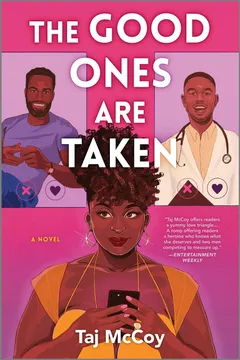


Plot Summary
Maggie Wants What She Sees
At a Santa Monica bar, tax attorney Maggie Jones1 watches a handsome couple cling to each other and aches for that kind of desire. A recently divorced man mistakes her interest for an invitation to sleep with him; she rejects him, still raw from Rob,13 the boyfriend who ended their relationship on their anniversary after becoming interested in someone else.13
Home alone, Maggie1 imagines the couple from the bar, then her pleasure toy dies before she can finish. Even her comfort-show finale seems to leave every character paired off. The evening turns her loneliness into something she cannot brush aside: Rob13 is gone, and waiting passively for love has begun to feel like another way of being rejected.
Maggie's longing is not simply for a partner. She wants the visible evidence of being chosen, the ease of two people turning toward each other without negotiation. The bar's false signal briefly gives her that feeling, then exposes how quickly hope can become embarrassment. Her anger at Rob protects a more tender injury: she had treated their future as shared before learning he had privately moved toward another one. Comedy, from the broken toy to the television finale, lets Maggie narrate her disappointment without yet having to risk changing it.
The Wedding Plus-One
Maggie's1 closest friends, Savvy4 and Joanie,5 are engaged, and both are planning weddings that will take the group to Thailand with their partners, Beth6 and Spencer.7 Tired of hearing Maggie1 repeat that she will wait for Prince Charming, Savvy4 and Joanie5 create her dating profile and enlist Beth6 in the plan.
Maggie1 resists, then publishes it, partly because her parents'8 long marriage taught her that durable love can be built. Garrett Bailey,2 her college best friend,2 helps her screen profiles during their weekly food-and-movie nights.
At Maggie's1 birthday dinner, Beth6 asks why she and Garrett2 never date. Maggie1 remembers their college kiss, their abrupt stop, and the pact they made to protect their friendship. The pact explains her certainty, though not her unease.
The friends' matchmaking is both care and pressure. They know Maggie well enough to see that her refusal of dating has hardened into a defense, but their intervention risks treating her readiness as a group project. The weddings make that pressure concrete: Maggie will travel among couples while carrying a private fear of being the only one without a partner. Her parents' marriage supplies a hopeful template, yet Garrett complicates the template because intimacy already exists between them. The old pact is less proof that romance is impossible than a decision made by younger people who feared losing what they had.
The App's Worst Candidates
Online dating quickly gives Maggie1 reasons to distrust the process. Ian arrives in indoor sunglasses, offers little about his work, describes four children with four mothers, then insults her and grabs her wrist when she challenges his crude advances.
Garrett,2 waiting nearby, steps between them, and the restaurant owner helps Maggie1 leave safely. Another match, Terrance, leers through dinner and turns their conversation toward touching her; Maggie1 signals Garrett,2 who pretends to be a former lover making a dramatic proposal until Terrance storms away.
Their escapes are funny afterward, but Maggie1 is still sorting through men who ignore her discomfort. Garrett2 rejects profiles with her, and she begins to notice how naturally he protects her, even as she insists that this is only friendship.
The dating-app episodes give Maggie's skepticism legitimate evidence. Her fear is not merely perfectionism; some of the men behave in ways that make her safety and dignity uncertain. Garrett's intervention matters because he notices her discomfort and acts, while her friends' encouragement alone cannot make the dates feel safe. Yet the rescues also blur the line Maggie has drawn around him. The comedy of the staged proposal turns care into performance, allowing both friends to avoid naming the deeper intimacy beneath it. Maggie can accept Garrett's help more easily than she can examine what that help means.
Cocoa At Sunset
At the gym, Maggie1 agrees to spot Blake Hamilton,3 a heart surgeon whose confidence and easy smile catch her attention. After they finish exercising, he takes her to breakfast, then meets her that evening for a walk along the Strand. When Blake3 admits he fears flying, Maggie1 teases him rather than losing interest.
At sunset, he produces hot chocolate and whipped cream from his car, turning an unplanned walk into a careful invitation to a proper date. Maggie1 likes the attention, and Blake3 asks for another evening together. Unlike the men from the app, he is direct without pressing her, and his thoughtfulness feels like a fresh possibility. She is intrigued, though the closeness of her routine with Garrett remains unexamined.
Blake first reaches Maggie through a setting where she feels competent and powerful: the gym, where she can assess effort rather than curate an online profile. His cocoa is a small act of anticipation, not merely an expensive display, and it gives her a glimpse of being attended to without needing to ask. The scene also establishes a contrast between Blake's deliberate courtship and Garrett's long familiarity. Maggie reads novelty as possibility because it allows her to imagine a future without disturbing the friendship she has already chosen to protect.
The Perfect Dinner, Almost
Blake's3 first formal dinner with Maggie1 ends early when the hospital calls him into surgery, leaving her with dessert and an apology. He makes up for it with a private dinner at his oceanfront home, hiring a chef and showing Maggie1 the refuge he has built. The food is elegant but meager, and Blake's3 strict habits around eating make Maggie1 feel oddly out of step.
After he kisses her, she leaves rather than explain why the moment has cooled. Later, after another date, Blake3 comes home with her and they sleep together; he is attentive but finishes before she does. In the morning, she learns he is allergic to Penny.12 His polished life impresses Maggie,1 yet comfort and chemistry do not arrive as neatly as the view.
Blake's wealth and careful planning answer Maggie's wish to be cherished, but they cannot substitute for the ordinary ease she associates with being understood. The tiny dinner portions make the mismatch bodily: she enjoys food with appetite and pleasure, while he treats it as something to manage. Her choice to leave his house without confronting the awkwardness repeats her habit of avoiding vulnerability, but her disappointment is also information. The cat allergy adds a practical complication to an already uncertain connection. The novel distinguishes being impressive from being compatible without making Blake a villain.
Saturday Starts To Slip
Blake3 invites Maggie1 to an intimate Marsha Ambrosius concert, arranging front-row balcony seats. Maggie1 dances and sings while Blake3 stays seated, then he walks her home and kisses her until she invites him inside. Their sex is physical but leaves Maggie1 unsatisfied, and she still cannot tell whether their different energies can meet.
Soon Blake3 offers a Palm Springs weekend to relieve her tax-season stress. Maggie1 cancels her standing Saturday with Garrett,2 who had planned food and a show, and hears the hurt he tries to hide. When she tells him Blake3 stayed over, Garrett2 warns her not to rush toward a man he has not met. Maggie1 calls him negative and sends him home. His reaction feels disproportionate, but she cannot yet identify why.
The Saturday ritual has functioned as a relationship without a name: dependable, pleasurable, and protected from the risks of explicit commitment. When Maggie cancels it, the cost becomes visible to Garrett, while her own excitement about Blake is mixed with uncertainty. Blake's concert tickets are generous, but their differing responses to music hint at a gap that money cannot close. Garrett's warning is partly protective and partly possessive, a mixture Maggie rightly resists. The scene marks the moment when friendship's familiar comforts begin to compete with the possibility of romance, even though neither friend is ready to say so plainly.
The Palm Springs Exit
On the drive to Palm Springs, Maggie's1 friends suggest Garrett2 may be jealous because he has feelings for her. At the resort, she tries to relax beside Blake,3 but keeps wondering what Garrett2 is doing and whether their friendship is changing. She cancels her spa appointments, repacks, and tells Blake3 she must return for an emergency. Once home, she asks Garrett2 directly if he has romantic feelings.
He admits he has loved her for years, but says he has been trying to honor the friendship she insisted they preserve. Maggie1 realizes she has been thinking about him all weekend and agrees to try a date. The next evening, he arrives with peonies and takes her to dinner, where nervousness and laughter finally make their first date feel real.
Maggie's early departure is a choice to stop outsourcing certainty to a resort, a date, or her friends' interpretations. Her body has already answered before her reasoning catches up: she cannot be present with Blake because she is preoccupied with Garrett. Garrett's confession is careful rather than coercive; he names his feelings while leaving the decision with her. That restraint matters because Maggie's central fear is not only rejection but the destruction of a friendship she depends on. Their first date begins not with discovery of a stranger, but with permission to see a familiar person differently.
Crabs And Old Memories
Maggie1 and Garrett's2 first date at A.O.C. is so nerve-ridden that they drink too much; afterward, they have sex, then both end up vomiting from the alcohol. The awkward morning does not erase the tenderness, and Maggie1 agrees to see him again.
For their next date, Garrett2 takes her to a pool hall and The Boiling Crab. They revisit college memories, including the day they met and the signs of attraction Maggie1 missed. This time, their physical connection is both confident and generous, making the contrast with her encounter with Blake3 impossible to ignore.
Meanwhile, Garrett2 has been building a sports podcast and preparing for a television opportunity, though the camera frightens him. Maggie's1 belief in his talent becomes another form of intimacy.
The first night strips the romance of its polished fantasy: their nerves produce a ridiculous shared hangover, not a cinematic beginning. What matters is that neither treats awkwardness as evidence of failure. The second date lets them draw on their private history, but its physical ease is new, showing that familiarity need not mean stagnation. Garrett's anxiety about appearing on camera also gives Maggie a chance to support him as he has supported her. Their bond now contains desire, humor, memory, and mutual investment, a richer foundation than the simple label of best friends allowed.
The Doorway Fight
During a day at the pier with Blake,3 Maggie's1 thoughts keep wandering to Garrett.2 At dinner, she admits she is seeing someone else and cannot yet choose. Blake3 accepts this at first, but when he walks her home and she declines to invite him inside, he grips her wrist and presses her to change her mind. Garrett2 appears to retrieve the microphone Maggie1 lent him and steps between them.
Blake3 insults Maggie,1 challenges Garrett,2 then shoves and punches him. Maggie1 refuses to reward either man's behavior with her attention and orders them both away. Alone, she turns off her phone and sleeps beside Penny.12 The fight forces her to separate romantic choice from male competition: neither man gets to decide for her.
The confrontation turns a private love triangle into a test of boundaries. Blake's earlier attentiveness does not excuse his refusal to accept Maggie's no, while Garrett's protective impulse does not automatically make him entitled to her. By rejecting both men in the moment, Maggie refuses the familiar script in which a woman becomes the prize for a contest between rivals. Her choice to withdraw is not indecision alone; it is an assertion that safety and respect must precede romance. Penny's quiet presence offers care without demand, a useful counterpoint to the men who have made her decision about themselves.
The Decision Takes Shape
After Garrett2 apologizes at brunch and admits he has measured other women against Maggie,1 she leaves overwhelmed rather than accept a decision made under pressure. Her friends help her think, and Savvy4 reveals she is pregnant.
Maggie1 also learns she has made partner after winning a major client and resolving a tax case that risked jail for her clients. Garrett2 practices for his first televised sports segment, and Maggie1 sees how badly the camera unnerves him.
Conversations with her father8 and Garrett's mother9 help her recognize both the depth of their bond and the real risk of changing it. She visits Blake,3 acknowledges his accountability for losing his temper, and ends their courtship kindly. Blake3 accepts that her heart is already elsewhere.
Maggie's professional success arrives while her romantic uncertainty is at its height, preventing the story from reducing fulfillment to coupledom. She earns partnership through judgment, persistence, and the ability to defend clients under pressure; those same capacities must now be turned inward. The advice from family does not choose for her. Instead, it helps her distinguish a fear of losing Garrett from evidence that the relationship is wrong. Ending things with Blake is an act of fairness, not punishment. His apology matters, but Maggie no longer confuses a good person with the person she most wants.
Thailand, At Last
When Maggie1 sees Garrett struggling through his first television appearance, she contacts his friend Kenny11 and gets access to the studio. There, she tells Garrett2 she wants a life with him and hands him the Thailand tickets she bought for them.
He has chosen Los Angeles over a New York job before, hoping to remain near her, and Maggie1 now understands the weight of that decision. Months later, in Phuket, she helps Savvy4 and Spencer,7 and Joanie5 and Beth,6 celebrate their joint wedding.
Savvy4 is pregnant, and Maggie1 arranges a yacht outing and a lantern ritual for the couples. During the reception, Garrett2 proposes with the ring he bought years earlier after Maggie1 once admired it. She accepts, surrounded by the friends whose weddings began her search.
Maggie's declaration at the studio answers the story's opening question through an action: she stops waiting to be selected and states what she wants. Garrett's old decision to stay in Los Angeles gains new meaning, but the ending does not treat his patience as a debt Maggie must repay. Her choice is made on her own terms, after she has ended the other relationship and confronted her fear. The Thai wedding gathers the novel's chosen family around her, while the saved ring turns memory into a promise rather than a trap. Love becomes less a fairy tale arriving at the door than a shared future deliberately chosen.
Analysis
The novel treats romance less as the discovery of a perfect stranger than as a problem of recognition. Maggie1 has a vivid model of enduring love in her parents,8 but Rob's13 betrayal teaches her that confidence in a future can be misplaced. She responds by trying to control the conditions of intimacy: she delays dating, judges profiles, keeps Garrett2 inside a protective category, and treats her own vulnerability as something she can schedule. Those defenses are understandable, but they also conceal the relationship already built through meals, rituals, and years of mutual attention.
The contrast between Garrett2 and Blake3 is not simply between the familiar and the glamorous. Blake3 offers deliberate courtship, comfort, and an impressive life, while Garrett2 offers a history of being known. The book allows Blake3 genuine strengths, then makes Maggie1 attend to how she feels around him rather than letting his résumé settle the question. His refusal to accept her boundary at the door makes respect a decisive measure of romance, not a decorative virtue. Garrett,2 too, must learn that caring for Maggie1 does not give him the right to steer her choice. When he judges Blake3 and tries to influence her, Maggie1 names the jealousy beneath his concern.
Maggie's1 professional rise parallels her emotional development without serving as a substitute for it. She earns partnership by trusting her own legal judgment, and she eventually applies that same capacity to her romantic life. Her decision is not a prize for Garrett's2 patience or a reward for the friends' matchmaking. It becomes credible because she takes space, ends things honestly with Blake,3 and chooses in her own voice. The friends' weddings frame love as community as well as coupledom: Maggie's1 future is not secured by romance alone, but supported by the women who challenge, feed, and accompany her. The story's final promise is grounded in that network of care, and in the willingness to risk changing a cherished friendship without treating change as its destruction.
Review Summary
The Good Ones Are Taken receives mixed reviews, averaging 3.55/5. Readers frequently praise the supportive friend group, food descriptions, and friends-to-lovers premise. However, many criticize the main character Maggie for being selfish and unlikable, while others found the pacing slow and the love triangle predictable. Chemistry between Maggie and Garrett felt underdeveloped to some, though others found it charming. Blake's red flags made the choice seem obvious to most readers. Several appreciated the plus-sized representation and older protagonists navigating romance in their late thirties.
Characters
Maggie Jones
Ambitious tax attorneyMaggie is a sharp, funny, plus-size Black woman whose confidence at work and in the gym can conceal how vulnerable she feels about love. A tax attorney in Los Angeles, she prizes competence, loyalty, good food, and the model of lasting affection she saw in her parents8. Her competitive streak can make her difficult to redirect, and she often uses humor or certainty to avoid admitting fear. Her friends and family are close enough to challenge her without abandoning her. Maggie's central tension is between wanting a dependable partnership and protecting herself from the risks of choosing one. She is most at ease when she can speak plainly, indulge her appetites, and trust that she is valued without having to perform.
Garrett Bailey
Best friend and confidantGarrett is Maggie's1 college best friend, a sports journalist with a warm, attentive manner and a long-running habit of showing care through practical gestures. He remembers her food orders, cooks for her, supports her career, and shares a weekly movie night that has become an anchor in both their lives. His easy humor and steadiness coexist with professional insecurity, especially around being seen on camera. Garrett's dating history makes him seem restless, while his bond with Maggie1 reveals unusual patience and emotional investment. He knows her habits and blind spots, but familiarity can also make him overprotective. His deepest challenge is to express what he wants without assuming that loyalty gives him a claim on Maggie1.
Blake Hamilton
Heart surgeon and suitorBlake is a successful heart surgeon Maggie1 meets at the gym. Fit, composed, and financially comfortable, he courts her with thoughtful plans, from sunset cocoa to an oceanfront dinner. His discipline and self-assurance appeal to Maggie1, who wants to feel deliberately chosen after a painful breakup. Blake is not simply a collection of impressive credentials: he can be attentive and generous, but he also has limits in emotional attunement and must confront his temper. He represents the possibility of a promising new relationship, one that Maggie1 can assess on its own merits rather than through the history she shares with Garrett2.
Savvy
Maggie's steadfast best friendSavvy is Maggie's1 warm, direct best friend, an accomplished home cook and cookbook author who takes an active role in keeping their circle connected. She pushes Maggie1 to stop using heartbreak as a reason to avoid dating, but she also knows how to comfort her when the process hurts. Savvy is engaged to Spencer7 and approaches planning with confidence and care. Her own past relationship troubles make her advice more than cheerful optimism: she believes people deserve love without having to shrink themselves.
Joanie Kotter
Blunt ride-or-die friendJoanie, who prefers the surname Kotter, is a loyal friend with a teasing streak and a sharp eye for Maggie's1 evasions. A former police officer's daughter, she brings mock-investigative intensity to conversations and is willing to challenge Maggie1 when she becomes self-protective. Her relationship with Beth6 grew out of friendship and shared support, and their wedding is part of the Thailand trip that pressures Maggie1 to consider what she wants.
Beth
Joanie's grounded fiancéeBeth is Joanie's5 fiancée and a personal trainer whose calm, observant manner balances the sharper energy of Maggie's1 friend group. She is willing to ask the question others hesitate to raise, especially about the closeness between Maggie1 and Garrett2. Beth's patience does not make her passive; she offers practical perspective and encourages Maggie1 to take her own needs seriously. Her relationship with Joanie5 provides another example of trust built through friendship.
Spencer
Savvy's supportive fiancéSpencer is Savvy's4 fiancé, an affectionate and supportive presence in the circle. He shares her delight in cooking, wedding planning, and bringing friends together. His easy warmth gives Maggie1 another close partnership to observe, while his willingness to help with the weddings shows how the couples function as an extended family rather than isolated pairs.
Geoffrey Jones
Maggie's thoughtful fatherGeoffrey Jones is Maggie's1 retired educator father, a loving widower who remains a trusted sounding board. He encourages her career ambitions and helps her notice when anxiety is distorting her judgment. His relationship with Courtney14 shows that grief and new companionship can coexist, while his knowledge of Maggie1 gives his advice a direct, sometimes teasing edge. He values honesty and wants his daughter to make choices for her own happiness.
Mrs. Bailey
Garrett's maternal confidanteGarrett's2 mother has treated Maggie1 like family for years, offering the maternal warmth she misses after her own mother's death. She understands Garrett2 well but avoids making Maggie's1 decision for her. Her perspective helps Maggie1 see that long friendships can change without automatically collapsing, and that Garrett's2 choices have often been shaped by his desire to stay close to her.
June
Savvy's commanding motherJune is Savvy's4 mother and a second maternal figure to Maggie1. Detail-oriented and confident, she takes an active interest in wedding arrangements and is not shy about proposing changes. She also offers Maggie1 candid counsel about the value of a long friendship and the regret of never exploring what it might become.
Kenny
Garrett's longtime friendKenny is Garrett's2 childhood friend, a broker and aspiring thriller writer who approaches life more casually than Garrett2. Their contrast makes Kenny a useful source of support without competition. He helps Maggie1 reach Garrett2 at the sports studio, showing loyalty to his friend while recognizing how much her presence matters to him.
Penny
Maggie's imperious catPenny is Maggie's1 blue-eyed Himalayan cat, adopted from a shelter and treated as a beloved roommate. She is suspicious of newcomers, affectionate on her own terms, and particularly attached to Garrett2. Her domestic presence punctures Maggie's1 romantic imaginings with practical comedy and gives her a steady companion during lonely or unsettled moments.
Rob
Maggie's former boyfriendRob is Maggie's1 ex-boyfriend, a tennis coach introduced to her through Beth6. Maggie1 believed their one-year relationship was moving toward living together, but he ended it on their anniversary after becoming interested in another woman. His departure fuels her embarrassment and makes her wary of trusting an apparent future.
Courtney
Geoffrey's new companionCourtney is Geoffrey's8 companion, whom he met through a support group for people grieving a spouse lost to cancer. Maggie1 welcomes her and respects the boundaries around how she addresses her father's partner14. Courtney represents the possibility of affection continuing after loss.
Stewart
Maggie's managing partnerStewart is a senior attorney at Maggie's1 firm. Exacting and sparing with praise, he assigns her a difficult tax case that tests her judgment and patience. His recognition of her work gives her career ambitions institutional weight.
Terry
Maggie's office allyTerry works at the law firm's front desk and is one of Maggie's1 friendly allies at work. She delivers food, shares office humor, and celebrates Maggie's1 professional progress, helping the workplace feel like a community rather than only a source of pressure.
Plot Devices
The dating app
A forced first stepSavvy4 and Joanie5 create Maggie's1 profile after she refuses to try online dating, using the upcoming weddings as a deadline to get her moving. The app produces a run of awkward or troubling dates, including men who objectify her or disregard her comfort. Garrett2 helps her screen profiles and later intervenes when a date becomes threatening. The app is not a shortcut to love; it makes Maggie1 confront the difference between being technically available and being emotionally open to someone she can trust.
Saturday movie nights
Friendship in plain sightMaggie1 and Garrett's2 weekly food-and-movie routine begins in college and becomes a regular ritual in Los Angeles. Their shared meals, teasing, and comfort with silence give the relationship the texture of a partnership before either of them names it that way. When Maggie1 cancels a Saturday for Blake3, the ritual's emotional importance becomes visible. The routine also demonstrates how intimacy can hide in ordinary repetition, especially when both people have agreed not to risk changing their friendship.
The Thailand weddings
A deadline for choosingSavvy4 and Spencer7 invite Joanie5 and Beth6 to celebrate their weddings in Thailand, creating a shared journey that Maggie1 will attend as maid of honor. Her friends' expectation that she bring a date gives her search a practical deadline, while the couples' happiness intensifies her sense of being left behind. Planning dresses, invitations, travel, and the joint ceremony keeps the weddings present throughout the romance. The trip begins as a source of pressure and ultimately becomes the setting where Maggie's1 relationships with her friends and Garrett2 converge.
Garrett's camera fear
A test of mutual supportGarrett2 has built a career in sports journalism and podcasting, but the prospect of speaking on camera overwhelms him. Maggie1 learns about his stage fright and offers to practice with him, using the confidence he has often lent her in return. His later television appearance makes that fear visible and prompts Maggie1 to go to the studio rather than wait for him to make the next move. The career thread expands their connection beyond romantic longing, showing how they encourage each other's ambitions as well as comfort each other's private selves.
Download PDF
Download EPUB
.epub digital book format is ideal for reading ebooks on phones, tablets, and e-readers.








