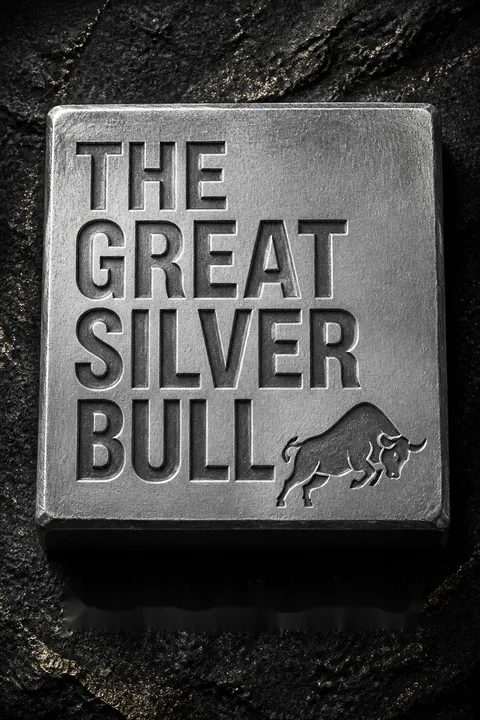


Key Takeaways
Treat silver as both monetary insurance and an industrial input
Two kinds of value. Krauth’s case for silver rests on its unusual double role. For millennia, people used it as money because it is durable, divisible, portable, and difficult to counterfeit. Unlike paper currency, it also has practical uses, from electronics to medical equipment. The book argues that this combination gives silver a monetary role as a potential store of value and an industrial role as a material that manufacturers need.
A concentrated opportunity. The author sees a powerful alignment: expanding government debt and money creation could increase investment demand just as green technology and electronics lift industrial demand. He also argues that the silver market is small enough for new buying to move prices sharply. This is the book’s central investment thesis, not a guarantee that silver must rise.
The dual-use argument is more distinctive than a simple inflation-hedge pitch. Silver demand can come from investors seeking protection and from manufacturers buying a functional input, giving the market two different engines. Yet those engines can pull in opposite directions: a recession could weaken industrial use even as anxiety boosts investment interest. Physical usefulness supports a case for lasting demand, but it does not create a stable price floor. The distinction between an asset’s usefulness and its market price is essential when assessing the thesis.
Watch real rates, not inflation headlines alone
The book’s key gauge. A real interest rate is the stated interest rate minus inflation. If a bond pays 1% while inflation is 4%, its purchasing-power return is about negative 3%. Krauth argues that falling or negative real rates make silver and gold more appealing because bonds then offer less compensation for holding wealth in paper claims.
Why debt matters. The author connects low rates to governments’ difficulty financing large debts. If rates rise sharply, debt service becomes more expensive; if rates stay low while prices rise, savers can lose purchasing power. He presents that tension as a favorable setting for precious metals, and cites the close historical relationship between falling real yields and rising gold and silver prices. The measure is useful to monitor, but it is not a reliable promise of a price move.
Real rates give investors a cleaner comparison than inflation figures alone: the relevant question is not simply whether prices rise, but whether savings earn enough to keep pace. The framework also clarifies why a low-yielding metal can attract buyers when cash and bonds lose ground in real terms. Still, the relationship is a market tendency, not a mechanical law. Silver’s industrial demand, investor sentiment, and market liquidity can all overwhelm the rate signal for stretches. A useful indicator should inform a decision, not substitute for one.
A silver rally cannot quickly summon much new mine supply
Most silver is a co-product. The book reports that only about 27% of mined silver in 2020 came from primary silver mines. The rest arrived as a by-product of mining lead, zinc, copper, or gold. Those operators make production decisions around their main metals, so a higher silver price may not persuade them to mine more silver.
Mines move slowly. Expanding a mine or developing a new one requires exploration, financing, permits, engineering, and construction. Krauth argues that this makes silver supply relatively inelastic: output may respond slowly, even if prices rise. He also points to falling inventories and forecast supply deficits as reasons for optimism. Those forecasts reflect the book’s 2022 outlook, not a permanent condition; recycling, new projects, or reduced demand could change the balance.
The co-product structure gives the supply argument a concrete mechanism. A price signal works differently when most producers are not chiefly responding to that signal. Long development timelines also mean that supply cannot adjust as quickly as demand may shift. But inelastic supply does not mean fixed supply forever. Higher prices can encourage recycling, exploration, and investment, while industrial users can try to reduce silver use. The useful conclusion is not that shortages are certain, but that a rapid supply response should not be assumed.
Use monetary history as a warning, not a calendar
Paper promises can unravel. Krauth traces silver’s monetary history from ancient coinage to its removal from U.S. coins in the 1960s. He uses Rome’s debased currency, John Law’s eighteenth-century French paper-money scheme, and the 1971 end of dollar-gold convertibility to show how monetary systems can change when governments face financial pressure.
A vivid cautionary tale. Law persuaded France’s rulers to issue banknotes and promoted shares in a company tied to colonial trade. As confidence weakened, printing more notes could no longer prop up the scheme, and the system collapsed. The author also recounts the U.S. government’s 1933 restrictions on private gold ownership and its 1934 seizure of privately held silver bullion. His larger lesson is that money rules can shift abruptly, although past episodes cannot precisely predict the next one.
The historical episodes make an abstract monetary argument tangible: money depends partly on rules and public confidence, not just on the material printed on a note. They also reveal a tension in the book’s appeal to history. Repeated currency changes show that monetary arrangements are not permanent, but they do not establish a fixed timetable for the dollar’s decline or silver’s return as money. History is strongest here as a way to imagine risks that can otherwise seem impossible, not as proof that one particular outcome is inevitable.
Green technology expands demand, but substitution still matters
Silver is in everyday infrastructure. Its conductivity and reflectivity make it useful in electronics, solar panels, and vehicles; its antibacterial properties support medical applications. The book reports that solar panels used about 100 million ounces annually, roughly 10% of world supply, and cites a forecast that automotive silver demand would rise from about 60 million ounces to 90 million by 2025. These are figures and projections presented in the 2022 book.
Growth has limits. Manufacturers have already reduced the silver used per solar panel, a practice called thrifting. Krauth argues that silver’s properties make complete substitution difficult, but the possibility of further efficiency gains remains. Industrial demand strengthens the case for silver, yet technology trends do not translate automatically into higher prices: manufacturers may use less metal per product, and investment demand can fluctuate.
The industrial case is anchored in material properties, not just enthusiasm for a green transition. This matters because silver is not interchangeable with every cheaper metal in every application. At the same time, the book’s own discussion of thrifting points to an important counterforce: manufacturers have incentives to economize whenever silver becomes costly. Demand forecasts should therefore be read alongside assumptions about both adoption and metal intensity. A growing market for solar panels or electric vehicles can coexist with slower growth in the silver consumed by each unit.
Silver’s small market amplifies both scarcity and crowd emotion
A small pool, large waves. Krauth estimates that the annual silver market is roughly one-tenth the value of gold’s. Less buying or selling can therefore move silver more sharply. In the book’s account, silver gained about 3,740% from its 1971 low to its 1980 peak, and about 1,080% from 2001 to 2011. It also rose sharply after the 2020 pandemic selloff.
Attention can become demand. In early 2021, a Reddit campaign encouraged investors to buy silver-linked funds. Krauth reports that spot silver rose from about $25 to nearly $30 in three trading days, while dealers faced heavy physical demand and premiums climbed. He calls the emotional pull fear of missing out, or FOMO. The episode showed how online attention can move a thin market, but also how quickly a rally can fade when buying pressure subsides.
The book usefully joins market structure to investor psychology. When a market is small, enthusiasm can have a disproportionate price effect, and visible gains can recruit new buyers who fear arriving late. That feedback can accelerate rallies and reversals alike. The 2021 episode also separates quoted prices from the experience of buying coins: retail premiums and availability can shift even when spot prices move less. The same thinness that creates spectacular upside raises execution risk, so volatility is not merely an inconvenience attached to the opportunity.
Treat $300 silver as a scenario, not a promise
A target built from assumptions. Krauth forecasts a possible silver peak near $300 an ounce. One route assumes gold reaches $5,000 and the gold-silver ratio falls to 15, producing silver near $333. Another uses $10,000 gold and a ratio of 30, again yielding about $333. The ratio measures how many ounces of silver equal one ounce of gold.
Other comparisons point upward. The author also compares silver’s past bull-market gains, inflation-adjusted prices, mining output, and silver’s price relative to housing. These approaches support his bullish scenario, but each depends on choices about future gold prices, ratios, inflation, or historical patterns. The number is best understood as a conditional forecast. It is not a valuation floor, and the calculations do not make the outcome certain.
The value of the target lies less in its headline than in the assumptions it makes visible. A reader can ask what happens if gold rises less, the ratio stops higher, or inflation behaves differently from the author’s premise. Several calculations may appear to corroborate one another while sharing the same bullish assumptions, so they are not necessarily independent evidence. Scenario analysis is more useful than a single-point forecast: the target can clarify what would need to happen without being mistaken for a promise or a reason to ignore downside.
Match silver investments to the risks you can actually hold
Different wrappers, different exposures. Physical coins and bars provide direct ownership without relying on an ETF administrator, but they bring storage concerns and purchase premiums. Silver ETFs are easier to trade, though investors depend on the fund’s structure and custody arrangements. Mining shares add operating, financing, and jurisdiction risks, while also offering greater exposure to changes in silver prices.
Project stage changes the bet. A junior explorer may have only an unproven property; a developer must finance and permit a mine; a producer already operates one. Krauth describes the mining life cycle as a progression from exploration through development, construction, production, and closure. Each stage has different risks and potential returns. Understanding what an investment owns is more useful than choosing solely by a label such as “silver exposure.”
This spectrum prevents a common category error: treating a coin, a fund share, and a mining company as interchangeable ways to own the same thing. They are claims on different assets and carry different failure modes. Physical metal emphasizes control and access, funds emphasize convenience, and miners add business execution to the price exposure. The investor’s time horizon and ability to tolerate losses matter as much as the silver outlook. In particular, a strong metal thesis cannot rescue a poorly financed company or an unsuccessful exploration project.
Diversify miners by stage, then take profits systematically
Krauth’s portfolio map. The Silver M.A.P. System combines physical silver, mining shares, allocation across investments, and deliberate profit-taking. His illustrative portfolio assigns 10% to physical silver, 50% to ETFs, royalty or streaming firms, and large producers, 20% to growing producers and developers, and 20% to junior explorers. This is the author’s template, not a personalized prescription.
Control position risk. The book recommends limiting the size of individual holdings, buying in tranches rather than all at once, using trailing stops, and rebalancing. For volatile junior stocks, Krauth suggests considering a partial sale after a position doubles, recovering the original investment while retaining some exposure. These techniques cannot eliminate losses, but they make it less likely that one company or one badly timed purchase dominates the portfolio.
The portfolio framework recognizes that a high-upside sector needs internal diversification, not just a bullish thesis. Physical metal and established businesses can serve different purposes from speculative exploration bets, while position limits reduce dependence on any single outcome. The suggested percentages remain highly sensitive to an investor’s finances and tolerance for loss. A preset allocation can create discipline, but it can also create false precision. The more useful principle is to decide in advance how much uncertainty each holding is allowed to introduce.
Sell signals come from crowded enthusiasm and multiple ratios
Look for several clues. Krauth’s four proposed peak indicators are FOMO, the gold-silver ratio, the Dow-silver ratio, and the silver-to-real-estate ratio. He argues that widespread excitement about silver, alongside historically low ratios, may signal that a bull market is approaching a peak. For example, he views a gold-silver ratio below 30 as a reason to prepare to sell, while suggesting a silver-to-home-price ratio near 5,000 or lower deserves attention.
Exit in stages. The book does not claim that any one signal can identify the exact top. It recommends selling in portions over time, which can reduce the risk of liquidating everything too early or holding everything through a reversal. These ratios are historical reference points, not universal triggers. Their meaning depends on the broader market and on whether the underlying assumptions still fit.
The exit framework addresses a neglected problem in bullish investing: a good thesis can still produce a poor result if gains are never realized. Sentiment and relative-value measures can impose structure on an emotionally difficult decision. Their weakness is that an extreme can persist, or a ratio can reach a new range without repeating old behavior. Staged selling is therefore a practical compromise rather than a forecasting trick. It makes room for uncertainty by treating exits as a sequence of judgments instead of a single perfect call.
Analysis
The book’s strongest contribution is its joined-up account of silver. Monetary history explains why some investors seek metal outside the banking system; industrial demand gives silver uses beyond investment; the by-product structure of mining complicates supply response; and the small market helps explain sharp price movements. Taken together, these points form a coherent case for considering silver as one component of a diversified portfolio.
The book’s central macroeconomic argument is more debatable than its industrial and mining mechanics. It treats expanding debt, monetary creation, and low real rates as a path toward currency debasement and a major financial reset. Those conditions can support precious metals, but the path from them to a particular silver price is not automatic. The $300 forecast depends on future gold prices, historical ratios, inflation measures, and repeated bull-market behavior. Several calculations can create an impression of confirmation even when they rely on related assumptions.
That distinction matters for readers. The historical episodes and supply details can improve understanding without requiring acceptance of the most dramatic forecasts. The investment guide itself offers a more durable lesson: physical silver, funds, established miners, developers, and explorers are not equivalent exposures. Each adds different risks, from storage and custody to financing, permitting, and geology. Position limits, staged buying, and staged selling are valuable precisely because forecasts are uncertain.
The most balanced reading is neither to dismiss silver as an outdated monetary relic nor to treat it as inevitable protection against every crisis. Its dual use, limited market size, and complex supply make it a distinctive asset, but distinctiveness is not a guarantee of return. The book makes its case most persuasively when it explains the mechanisms and least persuasively when it turns a plausible scenario into certainty. Readers can retain the analytical tools while independently deciding how much exposure their circumstances can support.
People Also Read







Glossary
Silver M.A.P. System
Portfolio planning frameworkKrauth’s framework for organizing silver investments around four actions: own physical silver, add mining investments for potential price leverage, allocate across different types of holdings, and take profits deliberately. The book presents it as an easy-to-remember portfolio guide, then offers example allocations. It is a general template, not individualized financial advice.
Real rates
Interest after inflationThe return on an investment after accounting for inflation. Krauth calculates it by subtracting the inflation rate from the stated interest rate. For example, a 1% interest rate with 4% inflation produces an approximate real rate of negative 3%. The book treats falling or negative real rates as a favorable condition for gold and silver.
Gold/silver ratio
Gold price relative to silverThe gold price divided by the silver price. It indicates how many ounces of silver are required to buy one ounce of gold. Krauth uses historical highs and lows in the ratio to judge whether silver appears relatively inexpensive or expensive, and as one possible signal for changes in silver’s performance. It is a comparison tool, not a guaranteed trading signal.
Silver is Sticky Money
Investors tend to hold silverKrauth’s label for the tendency he observes among physical silver and silver-fund investors to retain their holdings even when prices decline. He argues that this reluctance to sell can keep metal out of active circulation and support prices. The concept describes a pattern in holdings, not a guarantee that investors will never sell or that prices cannot fall.
Modern Monetary Theory
Theory of currency-funded spendingA school of economic thought discussed in the book as supporting substantial government spending by countries that issue their own currency, with inflation treated as the main constraint rather than debt or deficits alone. Krauth strongly criticizes this approach, arguing that sustained money creation can undermine confidence and purchasing power. The glossary definition reflects the book’s discussion, not a complete account of the theory.
Financial repression
Policies that erode saver returnsPolicies that direct funding toward government or reduce its borrowing costs, often through very low interest rates, while savers earn returns below inflation. Krauth uses the term for conditions in which people’s savings lose purchasing power and investors are encouraged to seek riskier assets. In the book, it is closely connected to high debt and central-bank efforts to maintain low rates.
Lassonde Curve
Mining project value cycleA chart associated with mining entrepreneur Pierre Lassonde that depicts the typical share-price path of a mineral company as a project advances from exploration toward production and eventual depletion. Krauth uses it to explain why different project stages carry different risks and market expectations. Actual company performance can diverge substantially from the curve, and many projects never become producing mines.
Royalty and streaming
Alternative mine financingFinancing arrangements in which a specialist company provides upfront capital to a miner in return for future payments or metal. A royalty generally gives the financier a percentage of revenue or production value. A stream gives the right to buy a specified portion of future metal at an agreed, often discounted, price. These firms finance projects without directly operating the mines.
Greenfields Exploration
Search for unknown depositsMineral exploration in an area where the deposit being sought is not already known. It can involve geological mapping, surveys, sampling, and drilling to test whether a target contains an economic resource. Krauth describes this as the highest-risk form of exploration because there is less existing deposit information to guide the search.
Brownfields Exploration
Search near known depositsExploration near an existing or previously operating mine or known mineral deposit. Prior geological and drilling information can help guide new work, and nearby infrastructure may make a discovery easier to develop. Krauth presents it as generally less risky than greenfields exploration, although it still cannot guarantee a discovery or profitable mine.
Download PDF
Download EPUB
.epub digital book format is ideal for reading ebooks on phones, tablets, and e-readers.








