

Key Takeaways
See greatness in ordinary people who turn national crisis into shared work.
A generation shaped by crisis. Tom Brokaw’s reporting began with a visit to Normandy, where veterans’ stories made the scale of their sacrifice personal. Many had grown up during the Depression, then entered a war that demanded action from soldiers, workers, families, and communities. The book’s central claim is that their greatness lay not in celebrity or perfection, but in meeting shared responsibilities with resolve and modesty.
The work continued at home. After the war, veterans returned to farms, schools, businesses, public office, and family life. The GI Bill helped many attend college, while the country rebuilt its economy and former enemies’ institutions. Brokaw presents a generation that helped shape modern America, even as it made serious mistakes, including tolerating racism for too long.
What is striking is that greatness here describes a pattern of collective response, not a special quality possessed by every individual. The book gathers lives that moved from hardship to mobilization, then into rebuilding. That arc helps explain why the generation’s influence extended beyond military victory. Still, a family portrait cannot prove that one generation was objectively greater than another. Its strength is more intimate: it makes large historical claims legible through ordinary lives, while inviting readers to ask what shared work looks like in their own time.
Remember the human cost before celebrating military courage.
Bravery had a physical price. World War II killed more than 292,000 Americans in battle, while over 1.7 million returned with physical effects of the war. Brokaw’s accounts resist turning combat into pageantry. At Omaha Beach, veterans recalled fear, confusion, wounds, and the determination to survive. Army doctor Charles Van Gorder operated for hours under fire, treating young men with injuries for which medicine had few established guides.
Survival was not a clean ending. Tom Broderick lost his sight after a bullet passed through his head. He first resisted rehabilitation, then learned braille, built an insurance business, and helped other blinded veterans imagine a future. Such stories honor courage without pretending that injury, grief, or trauma disappear when the fighting stops.
The book’s strongest corrective to heroic myth is its attention to what survival required afterward. Courage can describe an action in battle, but it does not explain years of disability, flashbacks, or adjustment. The distinction matters because societies often praise sacrifice more readily than they support its consequences. The accounts also resist a simple division between brave people and fearful ones. Fear, rage, calm, and resolve could alternate within the same person, making courage less a fixed trait than a response under pressure.
Carry wartime discipline into civilian service, without mistaking hardship for virtue.
Skills crossed into civilian life. The book shows veterans applying military habits of organization and persistence to work, education, and public service. James Dowling used his experience coordinating people to modernize road work in Smithtown and improve snow removal. Charles Briscoe brought the practical resourcefulness he learned on farms to Boeing’s urgent work on the B-29, helping solve design and production problems.
Opportunity mattered too. The GI Bill opened college to veterans who had not expected to attend. Tom Broderick used training and rehabilitation to build a business despite blindness. Wesley Ko, after his printing company failed, accepted a job and repaid debts rather than declare personal bankruptcy. Their stories show both individual determination and the value of institutions that make a second start possible.
These lives show how experience can transfer across settings: military planning becomes civic management, practical improvisation becomes industrial skill, and recovery becomes a source of guidance for others. Yet hardship itself should not be treated as a credential or moral good. The veterans’ achievements depended not only on discipline but also on opportunities such as education benefits, employment, and supportive families. The more useful lesson is to preserve what adversity can teach while building systems that do not require people to suffer before they can thrive.
Count women’s labor as part of the victory, not a footnote.
The home front was essential. During the war, about 350,000 women served in uniform and an estimated 6.5 million worked in war-related jobs. Women built aircraft, handled technical work, served as nurses, and kept families and communities functioning. Marion Rivers Nittel helped produce military equipment and supported troops passing through her town. Margaret Ringenberg flew military aircraft as a WASP, while Mary Louise Roberts treated wounded soldiers at Anzio under shellfire.
Opportunity did not guarantee equality. Dorothy Haener was laid off when a plant shifted toward hiring returning servicemen, then rehired at lower pay. Women in uniform also faced restrictions on rank and roles. Leaders such as Mary Hallaren and Jeanne Holm pressed institutions to recognize women’s abilities and expand their place in military life.
The home-front stories widen the meaning of military service. They show that victory depended on technical labor, care work, and changes in who could perform jobs once reserved for men. The women’s experiences also expose a recurring contradiction: emergency conditions opened doors, but institutions often tried to close them when the emergency passed. Their contribution is not merely a story of progress. It is evidence that demonstrated ability can challenge convention, while lasting equality requires more than temporary demand.
Judge patriotism by whether a country honors everyone who serves.
Service coexisted with exclusion. During the war, Japanese Americans were forced from their homes under Executive Order 9066. About 120,000 people of Japanese ancestry were interned, including roughly 77,000 American citizens. Nao Takasugi, then a college student, was sent with his family to a camp before the Quakers helped him resume his education. He later served in California public life and supported reparations for those wronged.
Black soldiers faced segregation too. Johnnie Holmes served in the 761st Tank Battalion, fighting in Europe while confronting racial discrimination at home and on U.S. bases. The record of the battalion challenged claims that Black soldiers could not fight effectively. Brokaw’s portraits place these injustices alongside courage, making clear that service did not erase unequal treatment.
The book’s moral force comes partly from refusing a spotless national story. Japanese American citizens lost liberty without individual hearings, while Black servicemen faced segregation even as they fought fascism abroad. These are not side notes to patriotism. They test whether a country applies its declared principles to people it fears or marginalizes. The accounts also show why recognition after the fact cannot fully repair injustice. Remembrance is valuable when it preserves the contradiction rather than polishing it away.
Let shared experience become durable friendship and mutual care.
War ties lasted decades. John “Lefty” Caulfield and his friends from Cambridge’s Irish working-class Kerry Corner stayed connected through a monthly gathering they called the ROMEO Club, short for Retired Old Men Eating Out. They had served in different branches, then returned to work, raise families, and remain neighbors in spirit. In Yankton, the women who supported one another while their husbands were overseas kept meeting after the men returned, eventually forming the Dumbos dinner and bridge group.
Care extended beyond the original circle. Members helped widows, borrowed money for friends’ education, and shared practical support during illness and loss. These relationships were not built on constant agreement or dramatic speeches. They grew from repeated contact, shared history, and small acts of loyalty over many years.
The reunions and clubs reveal a quieter form of social infrastructure. Shared experience made people feel understood, but the bond endured because they kept meeting and helping one another. This is more than nostalgia: regular contact can turn memories into practical care. The stories also suggest a limit. Tight circles can be sustaining, but they may be difficult for outsiders to enter. Their broader lesson is to build durable communities deliberately, while keeping them open to people whose experiences differ.
Treat silence as one way people carry painful memories.
Many veterans kept the war private. Gordon Larsen rarely discussed his Marine service in the Pacific, even though he had fought at Guadalcanal, Bougainville, Guam, and Okinawa. As a teenager, he had once answered a casual question about his youth by saying he had been landing on Guadalcanal. Years later, he told Brokaw that he had spent much of his life trying to forget the war. Other veterans spoke more freely only when asked directly or when they met former comrades.
Stories can reconnect families. Brokaw’s book prompted readers to ask parents questions they had never thought to ask. Some learned about military service, losses, and long-held memories for the first time. The letters in the companion volume show that testimony can arrive late, in fragments, and through relationships rather than formal history.
Silence should not be read automatically as indifference or emotional weakness. For some veterans, not speaking was a way to return to ordinary life; for others, memory surfaced only in trusted company. The book’s response suggests that listening matters, but so does restraint. A family member’s curiosity does not create an obligation to recount trauma on demand. The most respectful approach is to ask, make room for an answer, and accept that some experiences remain difficult to narrate.
Protect love through separation by making commitment a daily practice.
War tested young relationships early. John and Peggy Assenzio married just after Pearl Harbor and were separated while he served as a medical technician in the Pacific. Peggy wrote to him every day, while he moved through five campaigns and saw the destruction of Hiroshima. When he came home, their life resumed through work, children, and shared routines. Other couples had harder endings. Jeanette Gagne’s husband, Camille, died before meeting their son, and she later visited his grave through her son’s journey to the Netherlands.
Commitment was practical as well as emotional. Couples faced illness, money shortages, long absences, and changing expectations. The book presents marriage not as effortless harmony, but as an ongoing choice to care for another person through ordinary responsibilities and extraordinary loss.
The love stories are most persuasive when they avoid turning endurance into a universal rule. Some marriages survived because of shared values and mutual work; other relationships were permanently altered by death or separation. The narratives make commitment concrete: letters, parenting, caregiving, and the willingness to keep faith with a partner across uncertainty. They also invite a useful question: what forms of support make commitment possible? Love is personal, but it is never lived outside material conditions.
Turn gratitude into community service that outlasts the ceremonies.
Service continued after the uniform came off. Charles Van Gorder returned from combat surgery and chose to practice in Andrews, North Carolina, where the community had no doctors. He and a partner built a clinic, then helped secure support for a hospital. Other veterans served on school boards, volunteered, taught, entered public office, or supported neighbors in need. The book presents civic work as part of the generation’s legacy, not an afterthought to its wartime service.
Memory can guide action. Bob Dole and Daniel Inouye carried their wartime experiences into public service, while local volunteers and community organizations honored veterans through ongoing work. Brokaw’s closing image is not a grand monument but two veterans placing small flags on graves in a rural cemetery.
This ending shifts remembrance from admiration to responsibility. A memorial can preserve names, but local service makes values visible in daily life. The hospital in Andrews is a particularly clear example: a physician’s choice to work where care was scarce produced an institution that outlasted his own practice. Still, service should not be romanticized as a substitute for public support. The strongest civic legacy combines personal commitment with structures that let communities meet needs reliably.
Analysis
The book is a reported history told through a mosaic of lives rather than a continuous military narrative. Brokaw moves from the Depression and wartime mobilization to combat, the home front, postwar work, family life, and public service. The companion collection extends that method by letting veterans and relatives speak in letters and recollections. Together, the books argue that a generation’s significance lies in how ordinary people answered an extraordinary crisis and then rebuilt lives and institutions.
The approach works because large events become legible through particular details: a blinded veteran learning to build a business, a nurse operating under fire, a Japanese American student leaving an internment camp for college, or a couple sustaining a marriage across years of separation. These episodes make sacrifice concrete and reveal how military skills, wartime relationships, and public benefits shaped postwar society. The emphasis on modesty is itself meaningful: many subjects resist being singled out and credit their comrades instead.
The narrative is also deliberately admiring, and its title makes a sweeping comparison. The portraits support a case for courage, service, and achievement, but they are selected examples, not a systematic comparison of generations. The text acknowledges racism, internment, gender barriers, and mistakes, yet its celebratory frame can still make collective unity seem more complete than it was. That tension is productive. The book’s most durable lesson is not that one generation was flawless or unsurpassable, but that national purpose can mobilize people while leaving some citizens unjustly excluded. A mature reading honors achievement, records the cost, and keeps both truths visible.
Review Summary
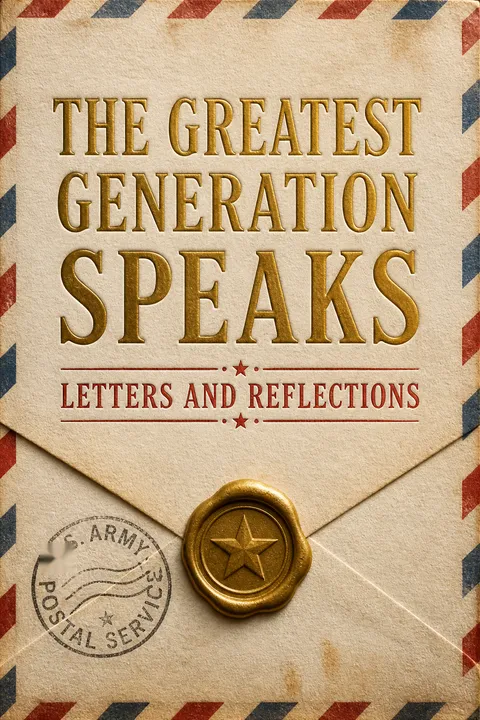
The Greatest Generation Speaks is a well-received companion to Brokaw's earlier work, collecting letters and reflections from WWII veterans and their families. Readers praise its deeply personal, emotional stories and thoughtful organization. Many were moved to tears, finding connections to their own family histories. Some critics note the book can feel repetitive or overly sanitized, lacking alternative perspectives on war. The audiobook format is frequently highlighted as particularly effective. Most agree it serves as a valuable historical record honoring an extraordinary generation's sacrifices.
Glossary
The Greatest Generation
Brokaw’s generational labelTom Brokaw’s term for Americans who came of age during the Great Depression and World War II, then helped shape postwar American life. The label emphasizes shared hardship, military and home-front service, and civic contribution. Brokaw uses it as an admiring portrait of a generation, while also acknowledging its failures and the people whose stories could not all be included.
GI Bill
Veterans’ education and supportA federal program that provided returning veterans with educational assistance and other support. In Brokaw’s accounts, it enabled many former servicemen to attend college for the first time, including people who had left school during the Depression or gone directly into military service. The book presents it as a major public investment in veterans and the country’s postwar future.
Nisei
Second-generation Japanese AmericansA term used for Americans of Japanese ancestry who were born in the United States or were the second generation of their families in America. In the book, Nisei soldiers served in units such as the 442nd Regimental Combat Team even while Japanese American families faced internment and suspicion. Their service exposed the contradiction between military loyalty and racial discrimination.
Women’s Army Corps
Women serving in the ArmyThe U.S. Army organization that gave women a formal role in military service during and after World War II. Women performed clerical, technical, medical, and other support duties, freeing more men for combat. The book follows leaders such as Mary Hallaren and Jeanne Holm as they pushed for permanent status, broader assignments, and fairer treatment for women in uniform.
Women’s Air Force Service Pilots
Women ferrying military aircraftThe women pilots known as WASPs who flew military aircraft in noncombat assignments during World War II. Their work included ferrying planes, towing targets, and performing other demanding flying duties that allowed more male pilots to serve in combat. They were treated as civilians during the war and did not receive veterans’ recognition until decades later.
Executive Order 9066
Order enabling Japanese American internmentThe 1942 presidential order that authorized military exclusion zones and led to the forced relocation and internment of people of Japanese ancestry, including American citizens. Brokaw describes families losing homes and businesses, being sent to temporary sites and camps, and later rebuilding their lives. The order stands as a central example of wartime fear overriding civil liberties.
ROMEO Club
Retired veterans’ social gatheringThe name used by John Caulfield and friends from Cambridge, Massachusetts, for their regular meetings after retirement. The letters stand for Retired Old Men Eating Out. Members had grown up together, served in different branches, and returned to civilian life. Their gatherings preserved friendship through meals, jokes, shared memories, and mutual support.
Download PDF
Download EPUB
.epub digital book format is ideal for reading ebooks on phones, tablets, and e-readers.








