Plot Summary
Collateral Damage Unleashed
Will Robie, a government assassin, executes a high-stakes mission overseas, but the operation goes awry when his bullet kills not only the intended target but also an innocent child. The agency coldly labels the girl "collateral damage," but Robie is haunted by her death. The emotional fallout shakes his confidence and sense of purpose, setting him on a path of self-doubt. As he returns to the U.S., the weight of his actions lingers, and he finds himself unable to simply move on. This trauma becomes the catalyst for everything that follows, fracturing his professional detachment and forcing him to confront the cost of his violent life.
Haunted Trigger, Shattered Psyche
Back in the field, Robie is assigned another mission, but his psychological wounds manifest in a critical moment. He hallucinates a child in his crosshairs and cannot pull the trigger, jeopardizing the operation. His legendary "cold zero" focus is gone, replaced by anxiety and self-doubt. The agency places him on leave, and his only confidant, Jessica Reel, is unavailable. Robie is forced to reckon with his unraveling identity as a killer, realizing he can no longer trust his own mind. The trauma of killing the child has fundamentally changed him, and he is left searching for meaning and redemption.
Return to Mississippi Roots
Robie learns his estranged father, Dan Robie, a judge in their small Mississippi hometown, has been arrested for murder. With nowhere else to turn and desperate for answers, Robie returns to Cantrell, a place he fled decades ago. The journey is fraught with memories of a troubled childhood, a broken family, and a lost love. The town is steeped in tradition, secrets, and simmering resentments. Robie's presence stirs gossip and suspicion, and he is forced to confront the ghosts of his upbringing as he seeks the truth about his father's alleged crime.
Ghosts of the Willows
Robie discovers his father has remarried a much younger woman, Victoria, and has a young son, Tyler, who does not speak. The family now lives in the Willows, a grand estate once owned by the prestigious Barksdale family. Robie's return is met with hostility and suspicion from townsfolk and law enforcement alike. He reconnects with childhood acquaintances, including Deputy Taggert, and is drawn into the tangled web of small-town politics, old rivalries, and buried scandals. The Willows itself is a symbol of both privilege and decay, holding secrets that will soon come to light.
Family Ties and Lies
Robie's relationship with his father is fraught with unresolved anger and guilt. Dan Robie refuses to see his son, and their brief encounters are tense and combative. Robie learns that his father was the judge in a controversial murder trial involving Sherman Clancy, a local power broker, and the Chisum family. The town is divided, and Robie is forced to navigate a minefield of family secrets, racial tensions, and personal vendettas. As he investigates, he uncovers evidence of blackmail, infidelity, and a history of violence that implicates multiple families, including his own.
The Judge Accused
Dan Robie stands accused of murdering Sherman Clancy, a man recently acquitted of killing Janet Chisum, a young woman with a troubled past. The evidence against Dan is circumstantial but damning: motive, opportunity, and forensic traces. The town's prosecutor, Aubrey Davis, is eager to make an example of the judge, while defense attorney Toni Moses fights to expose the flaws in the case. Robie, acting as an unofficial investigator, begins to suspect that his father is being framed, but the deeper he digs, the more dangerous the truth becomes.
Southern Secrets Surface
Robie uncovers a sordid history of blackmail involving Sherman Clancy, the Barksdale family, and a powerful oil magnate, Nelson Wendell. Clancy's fortune was built not on oil, but on extorting Wendell with photographs of child abuse, taken in a shack on Clancy's property. The abuse involved migrant children and was facilitated by the complicity of local elites. As Robie and his ally Jessica Reel dig deeper, they realize the rot runs through generations, implicating the town's most respected families. The past refuses to stay buried, and the cost of silence is measured in blood.
Blackmail and Bloodlines
The investigation reveals that the Barksdale family's downfall was tied to both financial ruin and unspeakable abuse. Laura Barksdale, Robie's teenage love, was the victim of incest by her father, resulting in a child, Jane, who is now institutionalized. Emmitt Barksdale, Laura's brother, lived under an alias and cared for Jane, but is found murdered, his body mutilated in a symbolic act of vengeance. The clues point to a killer motivated by both revenge and a twisted sense of justice, targeting those who enabled or profited from the abuse.
The Chisum Sisters' Fate
Janet and Sara Chisum, daughters of a local preacher, are drawn into the web of exploitation and blackmail. Both engage in transactional sex with Clancy, seeking escape from poverty. When Janet is murdered, suspicion falls on Clancy, but his alibi—provided by Victoria—sets off a chain of events that leads to further violence. Sara, seeking to profit from secrets she barely understands, is also killed. The pattern of older men and young women echoes a serial killer's signature, but the truth is more complex, rooted in the town's collective guilt and complicity.
The Barksdale Disappearance
The Barksdales, once the town's aristocracy, vanished under mysterious circumstances. Robie learns that Laura's brother, Emmitt, has been living under an assumed name, caring for Jane Smith, the institutionalized product of incest. Laura herself is believed dead, but the truth is more complicated. The family's secrets—incest, abuse, and complicity in child exploitation—are at the heart of the town's malaise. The Willows, now home to Robie's father and Victoria, is both a monument to lost grandeur and a crime scene haunted by the past.
The Shack's Dark Legacy
The old shack on Clancy's former property is revealed as the locus of child abuse, blackmail, and murder. It is here that the town's sins were committed and covered up, and it is here that the final confrontation will take place. The shack becomes a symbol of generational trauma, where the abused becomes the abuser, and vengeance is indistinguishable from justice. As Robie and Reel close in on the truth, the lines between victim and perpetrator blur, and the cost of redemption becomes clear.
Serial Patterns, Local Motives
The FBI's investigation into a possible serial killer intersects with Robie's search for the truth. The pattern of older men and young women murdered in pairs is echoed in Cantrell, but the motives are deeply personal. The killer is revealed to be Victoria—Robie's stepmother and former love, Laura Barksdale—driven by a lifetime of abuse, betrayal, and rage. Her crimes are both an act of vengeance against those who hurt her and a desperate attempt to reclaim agency over her shattered life. The revelation is both shocking and tragic, forcing Robie to confront the limits of justice and forgiveness.
The Unraveling of Victoria
Victoria's true identity as Laura Barksdale is exposed. She confesses to the murders, revealing a life warped by incest, abandonment, and the failure of those who should have protected her. Her transformation—from victim to avenger to murderer—is both horrifying and pitiable. The final confrontation takes place at the shack, where she holds Robie, Tyler, and Reel at gunpoint. Her plan is to destroy the last remnants of her past, but Robie's intervention and Tyler's scream disrupt her, leading to a desperate chase and a final, fatal reckoning.
The Final Confrontation
In a harrowing climax, Robie and Tyler are pursued by Victoria through the Mississippi night, with danger from both human and animal predators. Robie's resourcefulness and love for his brother allow him to protect Tyler, but it is Dan Robie—his father—who delivers the final, redemptive act by killing Victoria to save his sons. The cycle of violence is broken, but not without cost. The family is left to reckon with the aftermath, mourning the dead and struggling to rebuild what remains.
Redemption and Reconciliation
In the aftermath, Robie and his father confront their shared history of pain, abuse, and regret. Dan Robie confesses the legacy of trauma passed down from his own father, and the two men begin the slow process of reconciliation. Tyler, once silent, finds his voice, symbolizing hope for healing. Robie's journey through violence and loss leads him to a deeper understanding of himself and his family, and he is finally able to let go of the guilt and anger that have haunted him.
Cold Zero Restored
As Robie and Reel recover from their wounds, they reflect on the meaning of justice, redemption, and the possibility of change. Robie's "cold zero" is restored—not as the numbness of a killer, but as the clarity of a man who has faced his demons and survived. The story ends with the promise of a new chapter, where the past no longer dictates the future, and the bonds of love and loyalty offer a path forward. For Robie, Reel, and the survivors of Cantrell, the journey has been costly, but the possibility of peace remains.
Characters
Will Robie
Will Robie is a government-sanctioned killer whose legendary composure is shattered after he accidentally kills a child during a mission. This trauma triggers a crisis of identity, forcing him to question the morality of his work and his own humanity. Returning to his Mississippi hometown to help his estranged father, Robie is forced to confront the ghosts of his abusive childhood, a lost love, and the legacy of violence that shaped him. His journey is both external—a dangerous investigation into murder and corruption—and internal, as he seeks forgiveness, connection, and a sense of purpose beyond killing. Robie's arc is one of painful self-examination, culminating in a hard-won reconciliation with his father and a renewed commitment to life.
Dan Robie
Dan Robie is a Vietnam veteran, former Marine, and the town's judge, whose stern exterior masks deep wounds. Haunted by his own abusive upbringing, he repeats the cycle with his son, driving Will away. When accused of murder, Dan's stoicism is tested, and he is forced to rely on the son he failed. His journey is one of reckoning—with his past, his failures as a father, and the consequences of silence and pride. Ultimately, Dan's willingness to confront his own demons and act selflessly to save his sons marks his redemption, breaking the generational chain of violence and opening the door to healing.
Victoria/Laura Barksdale
Victoria, revealed to be Laura Barksdale, is the story's most complex and tragic figure. A survivor of incest and abuse, she reinvents herself, marrying Dan Robie and becoming stepmother to Will. Her life is a tapestry of trauma, betrayal, and rage, culminating in a series of calculated murders as both vengeance and desperate assertion of control. Her actions are both monstrous and pitiable, a product of a world that failed to protect her. Victoria's psychological unraveling is the heart of the novel's exploration of trauma, agency, and the blurred line between victim and perpetrator. Her final confrontation with Robie is both a reckoning and a plea for understanding.
Jessica Reel
Jessica Reel is Robie's closest ally and confidante, a fellow assassin with her own history of trauma and resilience. She provides both tactical support and emotional grounding, challenging Robie to confront his pain and seek healing. Reel's presence is a reminder that survival is possible, even after the worst wounds. Her sharp intelligence, dry wit, and unwavering loyalty make her both a formidable operative and a true friend. Reel's own journey—marked by loss, violence, and the search for meaning—mirrors Robie's, and their bond is a testament to the power of chosen family.
Tyler Robie
Tyler is Dan and Victoria's young son, whose muteness is both a mystery and a metaphor for the family's unspoken pain. His vulnerability and innocence stand in stark contrast to the violence around him. Tyler's eventual scream, which saves Robie's life, is a moment of catharsis and transformation, breaking the cycle of silence and trauma. He represents the possibility of healing and the hope that the next generation can be spared the sins of the past.
Sherman Clancy
Clancy is a self-made man whose fortune is built on blackmail, exploitation, and complicity in abuse. His murder is the catalyst for the novel's central mystery, and his legacy is one of corruption and moral decay. Clancy's relationships—with the Barksdales, the Chisums, and the town's elite—expose the rot at the heart of Cantrell. His death is both a crime to be solved and a symbol of the reckoning that awaits those who profit from the suffering of others.
Emmitt Barksdale/Ted Bunson
Emmitt, living under an alias, is Laura's brother and the caretaker of Jane Smith, the institutionalized product of incest. His life is marked by guilt, shame, and a desperate attempt to atone for the family's sins. Emmitt's murder—poisoned and mutilated—reflects the story's themes of vengeance, retribution, and the inescapability of the past. His role as both witness and victim underscores the generational cost of silence and complicity.
Jane Smith
Jane, the institutionalized daughter of Laura and her father, is the embodiment of the story's darkest truths. Her mental and physical disabilities are the result of incest, and her life is one of isolation and neglect. Jane's murder is both an act of mercy and a final erasure of the past, carried out by a mother unable to face what she represents. Jane's brief moments of connection with Robie and Reel are heartbreaking reminders of what might have been.
Deputy Sheila Taggert
Taggert is a childhood acquaintance of Robie's who has become a capable and principled law enforcement officer. She navigates the town's racial and social divides with pragmatism and integrity, often serving as a mediator between Robie and the local authorities. Taggert's loyalty, resourcefulness, and moral clarity make her an essential ally in the search for truth.
Blue Man
Blue Man is Robie's enigmatic superior, a figure of authority and wisdom within the intelligence community. He provides guidance, support, and occasional tough love, pushing Robie to confront his own limitations and responsibilities. Blue Man's presence is a reminder of the larger world beyond Cantrell, and his faith in Robie is both a challenge and a comfort.
Plot Devices
Trauma as Catalyst and Obstacle
The story's engine is Robie's trauma—his accidental killing of a child and subsequent unraveling. This internal conflict shapes every decision, relationship, and investigation, blurring the line between professional detachment and personal reckoning. The motif of "cold zero"—Robie's legendary focus—serves as both a goal and a measure of his recovery. The narrative structure mirrors his psychological journey, moving from action to introspection, from violence to vulnerability.
Generational Cycles and Family Secrets
The novel is structured around the repetition of trauma across generations: abuse, silence, and the failure to protect. The Robie, Barksdale, and Clancy families are all marked by secrets, betrayals, and the consequences of unchecked power. The plot unfolds as a series of revelations, each exposing a deeper layer of complicity and pain. The use of flashbacks, confessions, and parallel investigations allows the reader to piece together the puzzle alongside the characters.
Southern Gothic Atmosphere
The Mississippi setting is more than a backdrop; it is a living, breathing force that shapes the characters' destinies. The decaying grandeur of the Willows, the oppressive heat, the racial and social hierarchies—all contribute to the story's mood of decay, secrecy, and moral ambiguity. The landscape is both beautiful and menacing, a place where the past is never truly past.
Misdirection and Layered Mysteries
The novel employs classic mystery devices: false leads, unreliable witnesses, and the gradual unmasking of the true killer. The initial focus on Dan Robie as the prime suspect gives way to a broader conspiracy involving blackmail, abuse, and generational trauma. The revelation that Victoria is Laura Barksdale—and the killer—is both shocking and inevitable, the result of carefully planted clues and psychological foreshadowing.
Symbolism and Motifs
The shack, the Willows, the Range Rover, and the photograph of Laura all serve as symbols of the characters' hidden lives and unresolved pain. The recurring motif of silence—Tyler's muteness, Jane's institutionalization, the town's refusal to speak the truth—underscores the story's central theme: that what is unspoken can be as deadly as any weapon.
Analysis
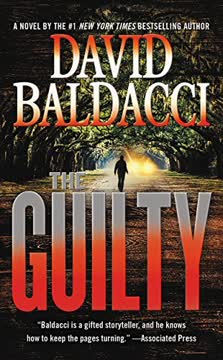
David Baldacci's The Guilty is a masterful exploration of the cost of violence, the legacy of trauma, and the possibility of redemption. At its core, the novel is about the ways in which the past shapes the present, and how the sins of one generation are visited upon the next. Through the character of Will Robie, Baldacci examines the psychological toll of a life spent in the shadows, asking whether it is possible to atone for the unforgivable. The story's Southern Gothic setting amplifies the sense of decay and moral ambiguity, while the intricate plot—woven from threads of murder, blackmail, incest, and revenge—forces the reader to confront uncomfortable truths about family, justice, and the limits of forgiveness. The novel's ultimate message is one of hope: that even in the face of unimaginable pain, it is possible to break the cycle, to speak the truth, and to choose a different path. The journey is neither easy nor clean, but it is necessary—and, in the end, redemptive.
Last updated:
Review Summary
The Guilty receives mixed reviews averaging 4.22 stars. Many readers praise this fourth Will Robie installment for its emotional depth, exploring Robie's troubled past in Mississippi after his father is charged with murder. Fans appreciate the character development, Jessica Reel's partnership with Robie, and surprising plot twists. However, critics find the book formulaic, with some noting overly thick Southern dialect, predictable characters, and an unbelievable ending. Several reviewers mention it differs from typical Baldacci political thrillers, functioning more as a conventional mystery focused on Robie's personal history and family dynamics.