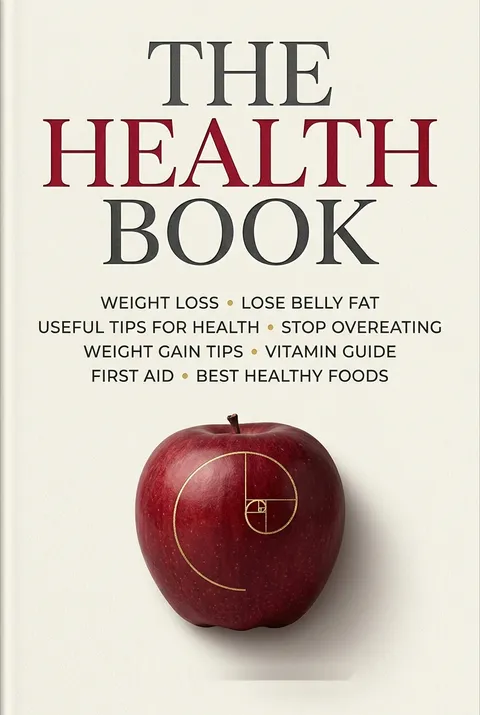


Key Takeaways
Train your whole body; crunches cannot selectively erase belly fat
Fat loss is systemic. The book states that abdominal exercises strengthen the muscles but do not selectively remove the fat covering them. It cites a study in which six weeks of abdominal training did not change participants' waist measurements. Its practical alternative is to pair overall activity, such as walking, running, or swimming, with eating habits that support gradual fat loss.
Aim beyond the mirror. The compilation links abdominal fat with health risks and recommends tracking waist measurements as well as weight. A changing waist or looser clothing may reflect progress even when the scale barely moves, particularly if strength training is building muscle.
The distinction between strengthening a body part and losing fat from it is a useful antidote to an enduring fitness-industry promise. It shifts attention from endless repetitions to the larger pattern of eating, movement, and recovery. Waist measurements can add context that a single scale reading misses, but they are not a complete diagnosis or a universal measure of health. The strongest interpretation is practical rather than cosmetic: train the core for strength, and pursue overall health without expecting one exercise to redraw body-fat distribution.
Choose a food pattern you can keep, not a temporary crash diet
Consistency beats dramatic restriction. Across its many weight-loss tips, the book returns to a basic energy principle: weight loss requires taking in less energy than the body uses. It advises against crash diets and starvation, which can be hard to sustain and may cost muscle as well as fat. Instead, it recommends making gradual changes and choosing an eating pattern that can continue after the initial goal is reached.
Measure before guessing. The book suggests keeping a food record for several days, checking labels, and noticing portions that are easy to underestimate, such as dressings, snacks, and drinks. It also recommends setting achievable goals and treating a lapse as one meal, not proof that the whole effort has failed.
This is the most coherent thread in a collection that otherwise offers many competing rules. A sustainable pattern can absorb ordinary life: meals out, busy weeks, and occasional treats. Brief tracking can help reveal habits without requiring lifelong calorie accounting. The key distinction is between feedback and punishment. Tracking is useful when it informs a choice, but rigid numbers can become counterproductive for some people. The book's strongest advice is therefore not to follow every listed rule, but to find a workable pattern and return to it after disruptions.
Make portions and healthy choices visible before hunger makes the decision
Design the food environment. The book recommends keeping convenient nutritious food ready, planning meals, and removing foods that reliably trigger overeating. At work, it suggests keeping healthy snacks nearby and taking a break from eating at a screen. At home, smaller plates and serving food from the kitchen rather than bringing the whole pot to the table can make portions easier to manage.
Use fullness, not the package, as a guide. The collection cites research suggesting people eat nearly all the food they serve themselves, and describes Volumetrics, an approach that favors foods with more volume and fewer calories per bite, such as vegetables, fruit, and broth-based soup. These choices can make a meal feel ample without relying on tiny portions.
The advice treats eating as a behavior shaped by surroundings, not merely a test of willpower. That is a valuable shift: a prepared lunch or a bowl of fruit changes the choice available at the moment appetite is strongest. Portion cues can help, but they are not precise instruments; plate size, food type, and individual needs all matter. The broader lesson is to make a helpful action the convenient one, while avoiding an environment so restrictive that ordinary eating becomes a constant battle.
Build meals around minimally processed foods, fiber, and satisfying protein
Favor foods that do more. The book's food lists repeatedly recommend vegetables, fruit, beans, whole grains, nuts, seeds, and sources of protein such as eggs, yogurt, fish, and lean meat. It highlights fiber-rich foods, including beans and oats, because they add bulk and can help a person feel satisfied. It also warns that sweetened drinks and highly processed snacks can deliver substantial energy without much fullness.
Choose variety over superfood promises. The book profiles foods such as salmon, kale, tomatoes, mushrooms, and avocados, often emphasizing their nutrients. A practical reading is to use these as options within a varied diet, not as cures. The collection's claims that individual foods prevent or treat serious diseases should not be taken as a substitute for medical care or an overall dietary pattern.
The durable value here lies less in ranking individual foods than in the pattern they collectively suggest: meals built from varied, recognizable ingredients tend to bring fiber, protein, and micronutrients together. That pattern is more useful than chasing a single antioxidant or fashionable ingredient. The book sometimes turns plausible nutrient roles into sweeping disease-prevention claims, a leap readers should resist. A food can contribute to a healthy diet without functioning as medicine, and convenience matters too: frozen vegetables and simple staples can make the pattern realistic.
Slow down enough to tell physical hunger from emotional eating
Notice what drives the bite. The book describes eating prompted by boredom, stress, loneliness, or sadness, and recommends pausing to identify the feeling before reaching for food. A food journal can record not only what was eaten but also the situation and mood around it. If the urge is emotional rather than physical, the book suggests trying another response, such as walking, calling a friend, or relaxing.
Give fullness time to register. Eating slowly, putting utensils down between bites, and pausing before taking seconds are recurring tips. The book notes that fullness signals can take around 20 minutes to register. It also advises against banning every favorite food, since strict prohibition can intensify cravings, and instead suggests choosing a modest portion deliberately.
The useful move is curiosity rather than self-accusation. A pause can reveal whether food is answering hunger, habit, or a difficult emotion, and that distinction creates room for a more fitting response. Yet emotional eating is not the sole explanation for overeating, and shame rarely improves self-understanding. Permission to enjoy a chosen treat can also reduce the all-or-nothing cycle that turns one indulgence into a perceived failure. If eating feels compulsive or distressing, the book's suggestion to seek professional help is important.
Pair aerobic movement with strength work, then keep moving daily
Build more than a workout. The book recommends aerobic activity for general fat loss and cardiovascular fitness, alongside resistance training to build or preserve muscle. It suggests lifting before cardio when both happen in one session, since strength work benefits from being done while relatively fresh. It also promotes intervals, or alternating harder and easier bouts, as one way to make cardio more varied.
Let ordinary movement count. Stairs, walking, active chores, team sports, and brief breaks from sitting all appear as ways to add activity. The book advises beginners to start gradually, use sound technique, and choose activities they enjoy. Its guidance varies on how much daily exercise is necessary, so the practical message is to build a regular amount that can be maintained safely.
This combination gives exercise more than one job: aerobic activity challenges endurance, while strength work supports functional capacity and muscle. Everyday movement also matters because a workout does not erase an otherwise sedentary day. The book's specific prescriptions, including long daily exercise targets and intense intervals, should not be treated as universal starting points. Fitness, health conditions, and recovery differ. A sensible plan begins at a tolerable level, increases gradually, and values long-term participation over a heroic session followed by weeks of avoidance.
Protect sleep and lower stress to make appetite easier to manage
Recovery belongs in the plan. The book repeatedly connects insufficient sleep with stronger cravings, poorer food choices, and less energy for exercise. It recommends a regular sleep routine and dark surroundings, while also proposing simple ways to reduce stress, such as walking, meditation, breathing exercises, or a relaxing hobby.
Use support, not isolation. The collection advises exercising with a friend, spending time with people who support healthy habits, and asking for help when stress or emotional difficulties become hard to manage alone. It cites a study reporting that people who began weight loss with a partner were more likely to stay with it. These are supports for consistent behavior, not substitutes for individualized medical or mental-health care.
Sleep, stress, and social context are often treated as background conditions, but they shape how easy it is to follow a food or activity plan. The book usefully widens the frame beyond discipline: a tired person facing a stressful day and an unattended snack bowl is navigating a different problem from someone who is rested and prepared. Still, sleep targets and stress techniques cannot guarantee weight change. Their value is broader: they can make daily choices more manageable and improve well-being even when the scale does not move.
Gain weight with nourishing surplus and progressive strength, not junk
Add energy with intention. The weight-gain chapter recommends a planned increase in food, using calorie-dense but nutritious choices such as beans, nuts, avocado, whole milk, yogurt, eggs, and smoothies. It pairs this with resistance exercises, especially movements using several muscle groups, and advises allowing muscles time to recover. The goal presented is to gain weight while developing strength, rather than simply increasing body fat.
Investigate unexplained low weight. The book advises a medical checkup when someone is unusually thin, and cautions against miracle pills, forced overeating, and making fried or highly processed food the foundation of a plan. Its advice is not a personalized prescription: the appropriate amount of food and training depends on the person's health, appetite, and circumstances.
Including weight gain makes the book's message more useful than a one-directional focus on shrinking bodies. Energy-dense foods can help someone increase intake without relying entirely on low-nutrient snacks, while resistance training gives the body a reason to build strength. The chapter also contains reckless suggestions, such as eating as fast as possible or consuming very large meals; these should not be followed. Unintentional weight loss or difficulty gaining can have medical causes, so evaluation matters before treating the problem as a simple calorie target.
Treat supplements as targeted tools, not automatic insurance
Food is the starting point. The vitamin guide explains that vitamins and minerals support essential body functions and are obtained through varied foods. It distinguishes fat-soluble vitamins, including A, D, E, and K, which can be stored in the body, from water-soluble vitamins such as C and the B vitamins. It also defines the RDA, or recommended dietary allowance, and AI, or adequate intake, as reference levels for daily nutrient intake.
More is not automatically safer. The guide describes a UL, or tolerable upper intake level, as a daily limit intended to reduce risk from excessive intake. It specifically notes concerns about high-dose supplements, including beta-carotene supplements for smokers and excess vitamin A. The source offers conflicting supplement advice, so doses should not be inferred from its broad claims.
The distinction between nutrient need and supplement need is central. A reference intake is a planning benchmark, not proof that every reader should take a pill, and the upper limit signals that some nutrients can cause harm in excess. The compilation itself contains opposing messages, recommending routine supplements in some entries while warning against high doses in others. That inconsistency is a reason to prioritize food and ask a qualified clinician or pharmacist about supplements, especially when pregnancy, illness, or medication is involved.
Learn first aid basics, call for help, and distrust folk remedies
Start with priorities. The first-aid section uses ABC to mean airway, breathing, and circulation, and stresses calling emergency services for serious problems. It advises keeping a potentially injured crash victim still unless there is immediate danger, applying direct pressure to bleeding, leaning forward during a nosebleed, and never putting an object in the mouth of someone having a seizure. It also rejects butter on burns and popping blisters.
Know the limits of a guide. The book recommends keeping a stocked first-aid kit, checking supplies yearly, and taking CPR or first-aid training. Its instructions are uneven and cannot cover every emergency. For severe symptoms, major injuries, or uncertainty, contact emergency services or a medical professional rather than relying on a brief list of tips.
The strongest first-aid principle is restraint: protect the person, summon appropriate help, and avoid familiar remedies that may cause harm. A prepared kit and practiced skills reduce the scramble that can follow an accident. But printed summaries cannot replace training, and first-aid recommendations can change as standards are updated. The chapter's value is as a prompt to prepare and learn, not as a complete protocol. In an emergency, clear communication with responders is often more useful than improvising beyond one's competence.
Analysis
This is less a unified health argument than a large scrapbook of advice: everyday habits, food profiles, weight-loss lists, weight-gain suggestions, vitamin entries, and first-aid instructions sit beside one another with little editorial reconciliation. Its scale creates an illusion of comprehensiveness, but repetition is not the same as evidence. The most dependable thread is modest and practical: eat mostly recognizable foods, attend to portions, move regularly, sleep, prepare for predictable situations, and seek help when a problem exceeds self-care.
The compilation also contradicts itself. It alternately promotes and dismisses frequent meals, breakfast, low-fat choices, dietary fat, and particular exercise schedules. It recommends both restrictive approaches and flexibility, and some entries make striking claims about single foods or supplements without enough context to assess them. This matters because a reader could mistake a long list for consensus. The safer way to use the material is to prioritize recurring, low-risk advice and treat disease-treatment claims, detoxification claims, and supplement recommendations skeptically.
The weight-loss sections are strongest when they reject abdominal spot reduction and connect progress to whole-body behavior rather than one magic exercise. The overeating material adds an important psychological dimension: attention, stress, boredom, and food visibility can shape intake. The weight-gain section broadens the audience, though some of its suggestions to eat rapidly or consume oversized meals undermine its healthier emphasis on nutritious food and strength training.
The first-aid chapter raises the stakes. Basic preparation and avoiding folk remedies are valuable, but an inconsistent collection cannot serve as a current emergency manual. Readers should learn first aid from recognized training and use emergency services for serious situations. Overall, the book is best treated as an idea bank, not a clinical authority: retain the practical habits, verify specific medical claims, and discard instructions that conflict with current professional guidance.
Glossary
ABC
Airway, breathing, circulationA first-aid mnemonic for three immediate priorities when assessing an unresponsive or seriously injured person: airway, breathing, and circulation. It reminds a responder to attend to basic life functions while getting help. The book invokes ABC as a general priority, but a mnemonic is not a substitute for emergency training or current instructions from emergency services.
HIIT
Intervals of hard effortHigh-intensity interval training alternates brief periods of vigorous exercise with easier activity or rest. The book presents sprint intervals and other short, demanding efforts as alternatives to steady cardio, and advises building intensity gradually. HIIT describes a training format, not a guarantee of fat loss, and it may not suit every fitness level or health condition.
visceral fat
Fat around abdominal organsVisceral fat is fat stored deep within the abdomen around internal organs, as distinct from fat directly beneath the skin. The book discusses abdominal fat as a health concern and recommends overall activity and dietary changes. Its advice rejects the idea that crunches alone can selectively remove fat from the waist.
Volumetrics
Filling foods, fewer caloriesVolumetrics is an eating approach organized around the amount of food provided for its calories. It favors foods with high volume and relatively low energy, such as vegetables, fruit, and broth-based soups, so meals can feel substantial while containing fewer calories. The book presents it as one strategy for managing hunger and portions.
RDA
Recommended daily nutrient intakeRDA means Recommended Dietary Allowance. In the book's vitamin guide, it is a reference for the average daily intake of a nutrient considered sufficient for most healthy people in a defined age and sex group. It is a population-level guide, not an individualized diagnosis or a recommendation that every person use supplements.
AI
Adequate intake estimateAI means Adequate Intake. The book says this reference is used when available evidence is insufficient to establish an RDA. It represents an intake level judged adequate for a group, rather than a precise requirement for every individual. Like other nutrient reference values, it should not be treated as a personalized supplement dose.
UL
Upper safe intake levelUL means Tolerable Upper Intake Level. The book defines it as the highest daily intake likely to pose little risk for most people. It is particularly relevant to supplements because excessive amounts of some vitamins and minerals can be harmful. A UL is not a target to reach, and individual circumstances can require professional guidance.
Download PDF
Download EPUB
.epub digital book format is ideal for reading ebooks on phones, tablets, and e-readers.








