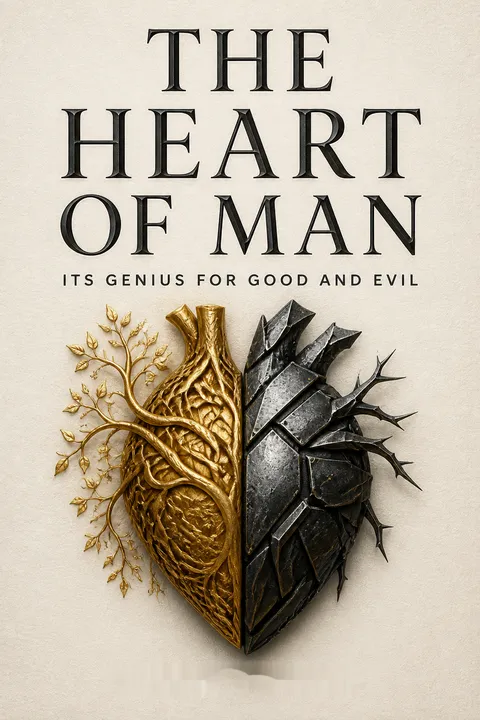


Key Takeaways
Ask what makes people serve life or destruction, not whether they are sheep or wolves.
Human nature holds both. Some people follow leaders readily; others willingly commit cruelty. Neither fact proves that all humans are naturally submissive or secretly violent. Fromm argues that people can move toward good or evil, and that their circumstances and choices help strengthen one direction. He rejects both the claim that people are irredeemably corrupt and the rosy belief that better circumstances automatically make everyone good.
Power changes the stakes. Wars are not simply eruptions of human aggression, Fromm says. Political and military leaders make decisions for strategic, economic, or personal reasons, then use fear and hatred to mobilize others. Ordinary people with extraordinary power can therefore threaten millions, even when they are not sadists. Destructive impulses matter, but they do not make catastrophe inevitable.
What's useful here is the refusal to treat cruelty as destiny. It leaves room to examine how obedience, fear, institutions, and individual choices interact, rather than explaining mass violence as either a few villains' work or an instinct shared by everyone. Modern social psychology likewise finds that group norms and authority can reshape behavior without erasing personal responsibility. The caution is that calling a population sheep can itself become an excuse for paternalistic control. A serious account of human choice must scrutinize both the people who obey and the leaders who make obedience consequential.
Distinguish violence that protects life from violence that substitutes for living.
Motives change the meaning. Fromm separates violence by what it is trying to accomplish. Playful violence, such as a contest of skill, need not aim at injury. Reactive violence seeks to protect life, freedom, or dignity, though leaders can manufacture a sense of threat and make aggression feel defensive. Revenge comes after an injury and cannot undo it; Fromm links its intensity to wounded pride and powerlessness.
Destruction can fill a void. Compensatory violence is an attempt to overcome helplessness by destroying what one cannot create or influence. Fromm describes sadism not simply as enjoying pain, but as seeking total control over another living being. He also discusses archaic bloodthirst, in which killing offers a regressive feeling of vitality. These motives are distinct, even when they appear together.
This framework is valuable because it asks what a violent act does for the person committing it, not just what it looks like. That distinction can improve responses: a real threat calls for protection, while revenge, domination, and despair require different interventions. It also guards against treating all aggression as identical. Still, motives are difficult to observe directly, and one act may mix defense, anger, and status-seeking. Fromm's categories work best as questions for investigation, not as labels that settle a case before evidence is gathered.
Treat blocked creativity as a source of violence, not just a personal defect.
Powerlessness seeks an outlet. Fromm calls violence that compensates for an inability to act constructively compensatory violence. Making, working, and shaping one's world express human agency; when a person feels reduced to passivity, destruction can become a crude substitute. A weapon can offer the illusion of power that productive activity would require effort and opportunity to build. Sadistic control takes the same impulse further, turning another person into an object of command.
Conditions matter. Fromm argues that punishment or entertainment may suppress destructive behavior without addressing the frustrated life beneath it. He connects the danger to societies that organize people as manageable units, reward obedience, and leave little meaningful scope for initiative. His proposed remedy is not simply stronger restraint, but conditions in which people can use their capacities productively and take part in shaping their lives.
The connection between agency and aggression resonates with research on learned helplessness, the pattern in which repeated lack of control can diminish initiative and worsen distress. It suggests that prevention should include meaningful participation, not only surveillance and punishment. Yet deprivation does not mechanically produce violence: many people facing severe constraints respond with mutual aid, patience, or political organizing. Fromm's idea is strongest as a warning about one possible outlet for frustrated agency, not a universal prediction about people who lack power.
Protect living growth from the lure of control, possession, and mechanical order.
Two orientations compete. Fromm uses biophilia for an orientation that values life, growth, and active connection. Necrophilia, in his broader psychological sense, is fascination with what is dead, mechanical, or destructive. He does not mean only sexual attraction to corpses. A person may display this orientation through a preference for rigid control, possession, and lifeless order over living change.
The patterns converge. Fromm calls the combination of necrophilia, malignant narcissism, and symbiotic attachment the syndrome of decay. Its counterpart, the syndrome of growth, joins love of life, love of others, and independence. To illustrate the deathward orientation in politics, he discusses Spanish intellectual Miguel de Unamuno's public confrontation with a general who celebrated death. Fromm's point is that political language can reveal whether power serves life or glorifies destruction.
These terms offer a memorable ethical lens: does a person, institution, or policy support living capacities, or reduce people to controllable objects? That question connects naturally to critiques of dehumanizing bureaucracy and to systems theory, where resilient systems need adaptation rather than rigid control. The limit is that Fromm's language can make ordinary preferences for order sound pathological. Order can protect people, and machinery can serve human purposes. The distinction rests on whether structure remains accountable to life, not on whether structure exists.
Test your self-image against reality, especially when criticism stings.
Narcissism blurs boundaries. For Fromm, narcissism is more than vanity or selfishness. It is a way of experiencing oneself or what belongs to oneself as the central reality, while struggling to recognize other people's separate perspectives. A patient who insists that a doctor should see him because his own trip to the office is short cannot grasp that the doctor's time is a separate constraint. The example shows how self-focus can distort judgment without looking grandiose.
Some pride has a brake. Fromm distinguishes benign narcissism, rooted in work or achievement and checked by contact with reality, from malignant narcissism, grounded in qualities or possessions that require no productive effort. Criticism can then feel like an attack on one's whole existence, prompting rage or collapse. The practical test is whether self-regard can tolerate facts and other people's independence.
The distinction between self-confidence and reality-proof self-inflation is especially useful in leadership, where an uncorrectable self-image can distort decisions for everyone. Research on perspective-taking also supports the basic insight that people often mistake their own access to information for universal access. However, sensitivity to criticism can arise from insecurity, trauma, or unfair treatment, not only narcissism. Fromm's examples are illuminating as patterns of perception, but they are not enough to diagnose a person or explain every defensive reaction.
Redirect group pride toward shared achievements, not inherited superiority.
The group can become the self. Social narcissism is the transfer of personal self-importance to a nation, race, religion, or political movement. Members may feel superior through belonging, especially when their own lives offer few sources of status or accomplishment. The group story divides the world into a virtuous us and a degraded them, while agreement within the group makes prejudice feel like common sense.
Leaders can exploit the transfer. Fromm traces this pattern across religious conflict, racial supremacy, and nationalist movements. A leader who embodies the group's grand image can gain followers' devotion, while criticism of the leader feels like an insult to the group itself. Fromm contrasts this with pride in shared achievements that require cooperation and contact with the wider world. He proposes humanity's common accomplishments as a less exclusionary object of belonging.
Collective identity can provide solidarity, meaning, and the willingness to cooperate, so group pride is not inherently destructive. The danger arises when belonging depends on ranking outsiders as lesser or treating criticism as betrayal. Contemporary research on collective narcissism similarly distinguishes secure group attachment from a belief that one's group is exceptional but insufficiently recognized. That distinction sharpens Fromm's argument: the goal need not be a world without loyalties, but loyalties compatible with honest self-criticism and equal dignity for people outside the group.
Seek care without surrendering the independence that makes love possible.
Dependence can become fusion. Fromm uses incestuous symbiosis for an attachment in which a person experiences the self as inseparable from a mothering figure. The figure may be a literal mother, but it can also be family, nation, race, or another source of unconditional protection. The term describes a psychological bond, not necessarily sexual desire. Fromm argues that the longing for safety can persist in adults who know that life is uncertain and cannot be fully controlled.
Freedom requires separation. In a mild form, the wish to be cared for is ordinary. In a more regressive form, dependence and fear of the protective figure undermine independent judgment, commitment, and the ability to love others as separate people. Fromm revises Freud's emphasis on sexual desire toward a broader need for security and escape from responsibility. Growth means accepting care without making dependence one's entire identity.
The developmental insight that safety can support exploration has a close parallel in attachment theory: a dependable relationship can make independence more possible, rather than less. Fromm adds a political dimension by showing how the search for protection can attach people to collective identities as well as family figures. His language of incestuous fixation, however, risks making normal interdependence sound suspect. The important distinction is not dependence versus total self-sufficiency, but whether a bond permits disagreement, personal development, and recognition of others as distinct people.
Find the real decision early, before desire narrows your options.
Freedom is not a blank slate. Fromm's alternativism rejects both absolute free will and the idea that every action is predetermined. People are shaped by prior causes, yet sometimes have a choice between real alternatives. The range depends on their character, circumstances, and the strength of conflicting motives. Awareness can help a person recognize which options are genuine and what each is likely to bring.
Choices form a chain. A heavy smoker may claim to choose moderation, while Fromm argues that the real options for that person may be continuing to smoke or stopping. The decisive moment may arrive before the next cigarette, not during a later crisis. He compares this to chess: each move changes the chance of winning. Repeated choices can strengthen integrity or make the next constructive choice harder, so the earliest turning point matters.
This account makes freedom practical rather than metaphysical: attention to motives, timing, and available options can change what a person does. It also resembles modern choice architecture, which studies how the order and framing of options influence decisions. Fromm's language of a narrowing path is powerful, but it can overstate how final one bad choice is. People do recover and revise their lives. The useful lesson is to identify high-leverage moments early while preserving the possibility of repair after mistakes.
Secure growth with material safety, justice, and meaningful participation.
Freedom needs conditions. Fromm argues that love of life is shaped by the environments people grow up and work in. Security means having the basic material conditions for a dignified life. Justice means that people are not treated merely as instruments for someone else's benefit. Freedom means more than release from political restraint; it includes the ability to create, contribute, and act responsibly.
Comfort alone is not enough. A well-fed person can still be reduced to a predictable role in a bureaucratic system. Fromm criticizes industrial societies that treat people as numbers, standardize their desires, and encourage passive consumption. In his view, such conditions can produce indifference even amid material comfort. A society that supports growth must protect basic needs while giving people real opportunities to participate in work and collective decisions.
This social framework helps prevent psychological explanations from blaming individuals for harms shaped by their institutions. Material security, fair treatment, and agency are complementary: provision without voice can become paternalism, while formal freedom without basic resources can be hollow. Fromm's critique of industrial society remains a useful prompt for asking whether efficiency serves human purposes. Its limitation is that large organizations are not automatically dehumanizing; public systems can also deliver care and opportunity. The relevant question is whether people retain voice, dignity, and room to develop.
Analysis
Fromm's central achievement is to make moral psychology inseparable from social life. The book begins with a familiar puzzle: human beings obey, cooperate, and nurture, yet also persecute and destroy. Rather than settle the puzzle with a verdict about innate goodness or evil, Fromm asks which orientations are cultivated, which are rewarded, and where a person still has room to choose. His account of violence, narcissism, dependence, and freedom is therefore not a collection of isolated diagnoses. It is a model of how personal character and political organization reinforce one another.
The most memorable organizing contrast is between growth and decay. Biophilia, love, and independence describe a life oriented toward development and relationship; necrophilia, malignant narcissism, and symbiotic fixation describe withdrawal into control, self-enclosure, and dependence. This framework gives readers a compact way to interpret behavior, from an individual's contempt for criticism to a nation's belief in its own superiority. It also makes Fromm's critique of bureaucratic industrial society more than a complaint about technology: systems become dangerous when they convert living people into manageable objects.
The framework should be used as a moral and interpretive map, not a clinical measuring instrument. Fromm often infers deep motives from selected stories and historical figures, and the text supplies no validated method for assigning people to his categories. Some of its psychosexual language also reflects the period's assumptions. More importantly, the focus on character can understate how institutions, material incentives, and political strategy constrain behavior. Fromm partly counters this by insisting that war is not simply a psychological eruption and that social conditions shape human development.
The book's continuing value lies in holding responsibility and context together. People are neither automatically free nor merely programmed. Their choices are conditioned, and repeated choices can strengthen or erode the ability to act differently. The practical question is therefore twofold: what pressures and institutions are shaping behavior, and where can awareness, action, or reform reopen a life-serving alternative?
Review Summary
The Heart of Man receives mixed reviews, with many praising Fromm's deep exploration of human nature, evil, and free will. Readers appreciate his analysis of violence, narcissism, and the struggle between love of life and death. Some find the book thought-provoking and relevant to current events, while others criticize its dated psychoanalytic approach. Many readers note the influence of Freud and Marx on Fromm's ideas. The book's accessible language and use of historical examples are commended, though some find certain sections challenging to understand.
People Also Read

Glossary
biophilia
Love of lifeFromm's term for an orientation that is drawn to living processes, growth, and constructive connection. It includes preserving life, but also actively supporting development in oneself and others. Biophilia is a general way of relating to the world, not a single behavior or a claim that a person never feels aggression.
necrophilia
Love of what is deadFromm uses this term beyond its narrower sexual meaning. It describes an orientation fascinated by death, decay, force, and mechanical control, and uncomfortable with living change. In his account, necrophilia can appear in preferences for possession and rigid order as well as in overt destructiveness.
syndrome of growth
Life-oriented character patternFromm's name for the combination of biophilia, love of other people, and independence. These orientations support development, connection, and the ability to relate without surrendering one's identity. The term describes a general direction of character, not a fixed personality type or a guarantee of perfect conduct.
syndrome of decay
Death-oriented character patternFromm's name for the convergence of necrophilia, malignant narcissism, and symbiotic or incestuous fixation. Together, these tendencies turn a person toward death and control, self-enclosure, and dependence on a protective figure or group. Fromm presents it as a severe pattern of destructiveness, not as a formal clinical diagnosis.
compensatory violence
Destruction replacing agencyFromm's term for violence used as a substitute for productive action by someone who feels unable to shape life constructively. Destruction can create a temporary illusion of power where creative agency feels unavailable. Fromm distinguishes this from reactive violence, which he understands as an attempt to defend life or freedom.
social narcissism
Group-based self-inflationThe transfer of narcissistic investment from an individual to a group such as a nation, race, religion, or political movement. Members experience the group's greatness as their own and may treat outsiders as inferior. Fromm argues that pride in shared achievements can limit this tendency better than pride in inherited status.
incestuous symbiosis
Dependence through psychological fusionFromm's term for a regressive bond in which a person experiences the self as inseparable from a mothering figure. That figure can be a parent or a symbolic source of protection, such as family or nation. The term concerns psychological dependence and loss of independence, not necessarily sexual desire.
alternativism
Choice among real alternativesFromm's position between absolute free will and strict determinism. Human actions have causes, but conflicting motives can leave a person with a choice among alternatives that are actually possible in the situation. Awareness of motives, consequences, and timing can help determine which alternative becomes action.
FAQ
What's "The Heart of Man: Its Genius for Good and Evil" about?
- Exploration of Human Nature: The book delves into the dual nature of humanity, exploring the capacity for both good and evil within individuals.
- Psychological and Philosophical Analysis: Erich Fromm combines psychoanalysis and philosophy to examine the underlying motivations behind human behavior.
- Concepts of Love and Destructiveness: It discusses the contrasting forces of love and destructiveness, and how they shape human actions and societal structures.
- Historical and Cultural Context: Fromm places these psychological concepts within the broader context of historical and cultural developments.
Why should I read "The Heart of Man: Its Genius for Good and Evil"?
- Insight into Human Behavior: The book provides a deep understanding of the psychological forces that drive human actions.
- Relevance to Modern Society: Fromm's analysis of good and evil is applicable to contemporary issues, offering insights into current social and political dynamics.
- Interdisciplinary Approach: It combines elements of psychology, philosophy, and sociology, making it a comprehensive study of human nature.
- Thought-Provoking Concepts: The book challenges readers to reflect on their own behaviors and the societal structures they are part of.
What are the key takeaways of "The Heart of Man: Its Genius for Good and Evil"?
- Dual Nature of Humanity: Humans possess both constructive and destructive tendencies, and understanding this duality is crucial for personal and societal growth.
- Necrophilia vs. Biophilia: Fromm introduces the concepts of necrophilia (love of death) and biophilia (love of life) as fundamental orientations that influence behavior.
- Role of Narcissism: Narcissism is explored as a significant psychological force that can lead to both personal and collective destructiveness.
- Freedom and Determinism: The book discusses the balance between freedom and determinism, emphasizing the importance of awareness and choice in human actions.
What are the best quotes from "The Heart of Man: Its Genius for Good and Evil" and what do they mean?
- "The question whether man is wolf or sheep is only a special formulation of a question which, in its wider and more general aspects, has been one of the most basic problems of Western theological and philosophical thought." This quote highlights the central theme of the book, questioning the inherent nature of humanity.
- "The necrophilous person is driven by the desire to transform the organic into the inorganic, to approach life mechanically, as if all living persons were things." It illustrates Fromm's concept of necrophilia, emphasizing a destructive orientation towards life.
- "Freedom is nothing other than the capacity to follow the voice of reason, of health, of well-being, of conscience, against the voices of irrational passions." This quote encapsulates Fromm's view on freedom, stressing the importance of rational choice over impulsive actions.
How does Erich Fromm define necrophilia and biophilia in the book?
- Necrophilia: Fromm describes necrophilia as an attraction to death and decay, characterized by a fascination with destruction and a mechanical approach to life.
- Biophilia: In contrast, biophilia is defined as a love for life and growth, manifesting in a preference for creativity, structure, and the nurturing of living processes.
- Psychological Orientations: These concepts are presented as fundamental psychological orientations that influence individual and collective behavior.
- Impact on Society: Fromm argues that these orientations have significant implications for societal development and the potential for human progress or regression.
What role does narcissism play in "The Heart of Man: Its Genius for Good and Evil"?
- Central Psychological Force: Narcissism is explored as a central psychological force that can lead to both personal and societal destructiveness.
- Distortion of Reality: Fromm discusses how narcissism distorts reality, leading individuals to overvalue themselves and undervalue others.
- Pathological and Benign Forms: The book distinguishes between pathological narcissism, which is harmful, and benign narcissism, which can be a driving force for creativity.
- Influence on Leadership: Fromm examines how narcissistic leaders can manipulate group narcissism to gain power and control.
How does Fromm address the concept of freedom in the book?
- Freedom vs. Determinism: Fromm explores the tension between freedom and determinism, emphasizing the role of awareness and choice in human actions.
- Awareness as Key: He argues that awareness of one's motivations and the consequences of actions is crucial for exercising true freedom.
- Alternativism: Fromm introduces the concept of alternativism, suggesting that individuals have the capacity to choose between real possibilities.
- Ethical Implications: The book discusses the ethical implications of freedom, highlighting the responsibility that comes with the ability to choose.
What is the "syndrome of decay" according to Erich Fromm?
- Convergence of Negative Orientations: The syndrome of decay is described as the convergence of necrophilia, narcissism, and incestuous symbiosis in their most extreme forms.
- Destructive Potential: Fromm argues that this syndrome represents the quintessence of evil, leading to severe pathology and destructiveness.
- Historical Examples: The book uses historical figures, such as Hitler, to illustrate the manifestation of this syndrome in individuals and its impact on society.
- Counterpart to Growth: It is presented as the opposite of the "syndrome of growth," which is characterized by love of life, independence, and productive orientations.
How does Fromm relate the concepts of good and evil to human nature?
- Inherent Duality: Fromm posits that the duality of good and evil is inherent in human nature, with individuals possessing the potential for both.
- Influence of Society: He emphasizes the role of societal structures and cultural influences in shaping the expression of these tendencies.
- Moral Responsibility: The book discusses the moral responsibility of individuals to choose actions that align with the good, despite the presence of evil inclinations.
- Path to Growth: Fromm suggests that understanding and addressing the dual nature of humanity is essential for personal and societal growth.
What is the significance of incestuous symbiosis in the book?
- Pre-Oedipal Attachment: Fromm explores incestuous symbiosis as a pre-Oedipal attachment to the mother, characterized by a desire for protection and unconditional love.
- Impact on Independence: This orientation is seen as a hindrance to independence and personal growth, leading to dependency and fear.
- Broader Implications: The book extends the concept to include attachments to family, nation, and race, highlighting its impact on group behavior.
- Contrast with Freedom: Incestuous symbiosis is contrasted with the pursuit of freedom and individuality, emphasizing the need to overcome regressive ties.
How does "The Heart of Man" address the issue of violence?
- Different Forms of Violence: Fromm categorizes violence into various forms, including playful, reactive, and compensatory violence, each with distinct motivations.
- Pathological Violence: The book focuses on pathological forms of violence, such as necrophilia, which are driven by a love of death and destruction.
- Societal Influence: Fromm examines how societal structures and cultural norms can perpetuate violence and hinder the development of peaceful orientations.
- Role of Awareness: He emphasizes the importance of awareness and rational choice in overcoming violent tendencies and promoting constructive behavior.
What are the implications of Fromm's ideas for modern society?
- Relevance to Contemporary Issues: Fromm's analysis of good and evil, freedom, and violence offers insights into current social and political dynamics.
- Critique of Industrial Society: The book critiques the mechanization and bureaucratization of modern society, highlighting their impact on human behavior.
- Call for Humanism: Fromm advocates for a renaissance of humanism, emphasizing the need for love, reason, and independence in addressing societal challenges.
- Potential for Change: He suggests that understanding and addressing the psychological forces at play can lead to positive change and the development of a more harmonious society.
Download PDF
Download EPUB
.epub digital book format is ideal for reading ebooks on phones, tablets, and e-readers.








