

Plot Summary
The Prisoner Wakes
At Blackthorn Correctional, Gideon Blackthorn3 forces an inattentive inspector to read the council’s release order before he unlocks Avery Hemlock’s1 cell. Avery1 has spent nearly two centuries under a curse of sleepless nightmares, though her sentence was meant to last five hundred years. She wakes armored and furious, then breaks into tears when the rain touches her skin.
Gideon3 explains that London’s magical crimes are threatening the secrecy between fey and mortals, and offers probation if she investigates them. Avery1 resists until he shows her a photograph of a dead woman whose brain has vanished and been replaced with rotting plants. The council gives her a room above Hudson’s café, a home filled with objects from her lost life.
Avery’s return begins as an exchange of power, not a reconciliation: the council grants her movement because it needs her labor. Her first response to the rain makes the cost of imprisonment bodily and immediate, while her anger toward Gideon keeps intimacy at a distance. The photograph succeeds where political arguments fail because it offers a puzzle she can act upon. Her investigative talent is not simply a job skill; it is one of the few parts of herself the sentence could not extinguish.
A Donut After Two Centuries
Three months after Hugh19 leaves her at the altar, Saga Trygg2 has quit medical training and returned to London, still unsure whether she has abandoned her own ambitions or only other people’s expectations. Her mother,18 Audrey,18 prizes composure; Saga2 instead confides in a statue of Brigid and uses tea and baking to steady herself. She meets Avery1 when the exhausted new tenant comes downstairs for tea.
Saga2 offers a pink-frosted donut, then patiently explains sprinkles to someone who has missed two centuries of ordinary pleasures. Avery1 accepts the kindness with visible emotion. Their first connection is small and practical: Saga2 gives Avery1 a taste of welcome, while Avery’s1 curiosity and sharp attention draw Saga2 out of her own heartbreak.
Saga’s hospitality is a form of attention. She notices Avery’s hunger, fatigue, and ignorance without making any of them humiliating, and the donut’s simple pleasure gives Avery a first foothold in a changed world. For Saga, care is easier to offer than to claim for herself. Her rituals with Brigid and her food work as modest practices of self-recognition, but she has not yet learned to treat her own wishes as equally deserving of care.
A Brain in the Mortuary
At Westminster Public Mortuary, Avery1 examines Valentina LaRosa, a nurse found dead after a car crash. The coroner’s notes show that the bruises came after death, while the missing brain has been replaced by a foul mixture of herbs and straw. Avery1 notices that Valentina’s body bears a recently altered tattoo meaning revenge is sweet.
Saga,2 who studied medicine, recognizes that the plants relate to cognitive health and spots the altered lettering as a possible trace of an ex named Rachel.17 Her observation gives Avery1 a lead she did not have. When Avery1 asks Saga2 to help investigate Valentina’s home, Saga2 accepts, drawn both to the puzzle and to the first work in months that feels like her own choice.
The case gives Saga a way to use medical knowledge without returning to the identity she had built for other people. Her insight comes from combining technical training with an eye for the emotional history recorded in a tattoo. Avery, meanwhile, discovers that collaboration need not weaken her investigative authority. The women do not simply divide tasks; each changes what the other can see. Their partnership begins in evidence, but its emotional force comes from the rare experience of having one’s abilities recognized without being assigned a life in return.
The Bedroom Ritual
In Rachel Walker’s17 apartment, Avery1 learns that Valentina and Rachel17 had recently separated and that Valentina called her in a confused, frightened state on the night she died. While searching the bedroom, Saga2 feels a crushing cold that eases when she grips her Brigid medallion. Avery1 burns a bay leaf and reveals a magical imprint: a ritual circle around the bed, candles, and evidence that something living had been present.
Saga2 is stunned to learn that Avery1 is fey and that the magic is not merely the intention-based practice Saga2 knows. Avery1 admits she assumed Saga2 already understood the hidden world. Their misreading wounds them both, but Saga2 stays to record the scene and consider what the ritual might mean.
The revelation is not a clean passage from ignorance to knowledge. Saga’s family has withheld information, Avery has mistaken familiar religious language for shared magical experience, and both women must revise their assumptions while a crime scene remains active. Their conflict exposes how secrecy can masquerade as protection, leaving the person supposedly safeguarded unable to judge risk for herself. Saga’s medallion links the old practice she trusts to a larger, more dangerous reality, so discovery enlarges her world without invalidating the life she already had.
The Heart Goes Missing
Saga2 confronts her grandmother,6 Saoirse O’Donnell,6 about keeping the fey world and the family’s deeper witchcraft from her. Saoirse6 admits the family planned to tell her before university but kept delaying as Saga2 pursued medicine and stopped practicing.
Their argument turns on whether magic would help Saga2 find herself or overwhelm her. Saoirse6 clutches her chest, and Saga2 recognizes a possible heart attack, calls an ambulance, gives her aspirin, and begins CPR when she collapses.
Saga2 then loses consciousness herself under the same suffocating magical sensation she felt in Valentina’s room. Avery1 arrives as Saoirse6 is taken away, comforts Saga,2 and discovers through divination that Saoirse’s6 heart has been removed. The deaths are now linked by more than coincidence.
The argument makes secrecy personal just as grief becomes irreversible. Saoirse’s fear is protective, but it has also deprived Saga of informed choice; Saga’s anger is therefore inseparable from love. Her immediate medical response shows that the training she left behind remains part of her, even as she questions the profession it was meant to secure. Avery’s discovery of the missing heart turns private bereavement into an urgent investigation, but it does not make the loss feel less intimate.
Riddle’s Poisoned Milk
Leigh5 and Reza4 explain that Saga’s2 family practices a more direct form of magic and that Reza4 is a jinn, while Saga2 begins to understand how much has been hidden from her. Back at Saoirse’s6 house, Avery1 follows Riddle,8 the black cat who served as Saoirse’s6 familiar,8 to the kitchen rubbish. Tests identify foxglove, and Saga2 realizes the poison may have been put in goat milk meant for Riddle8 rather than in Saoirse’s6 tea.
The familiar’s8 illness could have weakened the home’s magical protection before the attack. At Hygge, Esteri,9 Avery’s1 old friend and an ancient fox-fey, explains that a familiar’s bond rests on trust and hospitality. Riddle’s8 inability to protect Saoirse6 is therefore a clue, not a failure of loyalty.
The household details become forensic evidence: milk, dishes, rubbish, and a familiar’s behavior reveal how an attacker might breach a protected home. That shift fits the novel’s domestic imagination, where care routines carry both affection and vulnerability. Saga’s education also arrives through overlapping losses. Her family’s secrecy has made her less prepared, but her practical intelligence lets her contribute immediately. Riddle’s silence is not proof that magic failed; it directs attention toward the intimate contract that someone deliberately violated.
Fetches and Revenge
Avery1 meets Bimo Shinwell,21 a small-time informant, through the council member Fiore10 and learns that the herb-filled substitutes may be partial fetches, magical imitations meant to stand in for living organs. Their failure could explain the victims’ deaths.
Later, at Reprise, Avery1 brings Saga2 to consult Iona,11 an iele who reads grievances and feeds on vengeance. Iona11 draws Saga2 back into the humiliation of Hugh19 leaving her at the altar, then urges her to seek retribution. Avery1 breaks the spell and apologizes for exposing Saga2 to it.
Iona’s11 ideas also raise another possibility: the stolen organs may have been intended to extract information, not simply to punish the victims. Saga2 chooses to continue the investigation without accepting Iona’s11 offer of justice.
Two kinds of influence collide here. Fetch magic attempts to imitate life through technical substitution, while Iona’s power amplifies a real wound until revenge seems like relief. Saga’s response distinguishes pain from motive: she can admit that Hugh hurt her without allowing that hurt to dictate her next action. Avery’s apology matters because she recognizes that protecting an ally includes protecting her agency, not merely keeping her physically safe.
The Empty Funeral Casket
At the funeral of Eira Goff,7 the scientist and philanthropist whose nurse was Valentina, Avery1 and Saga2 meet Eira’s7 son Elis,12 her cousin Carys,16 and Benjamin,15 a young artist once close to her. Their accounts reveal tensions around Eira’s7 family and estate, but no clear killer.
After the service, Avery1 follows the hearse to the crematorium and uses a hagstone to inspect the closed casket. The body inside is not Eira7 but a straw-built fetch dressed in her clothes and hidden by glamour. Eira’s7 actual body has vanished.
The discovery confirms that someone has planned the substitution carefully and makes a simple organ-theft theory inadequate. Avery1 now has to ask what the missing body is for, while the funeral’s mourners become possible witnesses and suspects.
The false corpse turns mourning into an evidentiary problem without making grief itself false. The mourners’ memories and attachments remain genuine, even though the object meant to certify death is an imitation. This unsettling distinction sharpens the story’s concern with what can and cannot be replaced. The funeral also gathers a scattered family and social network into one place, giving Avery and Saga access to conflicting accounts, but the missing body ensures that appearances, even ceremonial ones, cannot be trusted.
Elis Loses His Liver
Saga2 arranges to meet Elis12 at his Knightsbridge penthouse, hoping to question him about Valentina, who had recently traveled with him. He begins answering, revealing that he gave her a protective hawthorn pendant, but suddenly collapses and coughs blood.
Saga2 recognizes acute liver failure and calls for emergency help. Doctors find plant matter and oil where his liver should be; surgery and a transplant keep him alive. Elis’s12 condition proves the attacks are not isolated, and the pendant links him to Valentina’s history.
Saga’s2 medical training, which she had left behind, becomes decisive in the present. She and Avery1 also realize that someone with medical knowledge may be assisting the magical work, drawing suspicion toward Eira’s7 longtime physician, Alistair Campbell.13
Saga’s abandoned training returns not as a command to resume her old career but as a capacity she can choose to use. She recognizes danger quickly and acts without waiting for permission, turning medical knowledge into practical care. Elis’s survival complicates the pattern: the same process that killed others has left him in need of a transplant, making the investigation’s consequences ongoing rather than historical. His pendant also suggests that protection may have existed alongside the danger, though its presence does not explain who controlled either.
The Doctor’s Hidden Study
Avery,1 Saga,2 and Reza4 find Alistair Campbell13 murdered in his kitchen, his body mutilated and stuffed with pages from Eira’s7 will. The violence is unlike the earlier, carefully concealed organ transfers.
Avery1 searches the house and uncovers a warded study filled with notes on fetches, necromancy, and resurrection. Campbell13 had researched ways to restore Eira,7 whose body is still missing, and had received money from her estate for medical work.
The clues suggest he helped create the substitute organs, but someone killed him before the investigators arrived. Saga2 examines the scene despite her distress, recognizing that the damage is not surgical. They now face two questions: who partnered with Campbell,13 and why did that partner turn against him?
The hidden study makes scientific care and magical ambition difficult to separate. Campbell’s research appears to begin with healing, yet its methods have already imposed pain and death on other people. The murder changes the case’s texture: the earlier acts used concealment and procedural precision, while the doctor’s death bears the marks of uncontrolled anger. Saga’s distress at the scene does not disqualify her; it clarifies the moral difference between examining a body and confronting violence done to a person.
A Will and Old Wounds
While Avery1 follows the investigation, Saga2 studies Eira’s7 inherited heart condition and discovers it is associated with a rare genetic syndrome that can leave a second row of eyelashes.
Audrey18 arrives demanding a family photograph, criticizes Saga2 for leaving medicine, and reveals that Hugh19 is engaged to the woman who interrupted their wedding. The news reopens Saga’s2 humiliation, but she refuses to let her mother18 define her choices. Avery1 brings word that Eira’s7 will left Campbell13 a substantial sum and publicly slighted Carys.16
The inheritance offers a possible motive, while Saga’s2 medical research suggests that a hereditary trait may identify someone connected to Eira’s7 family. Grief, old resentment, and biological evidence now converge around the Goff estate.
The case develops alongside Saga’s struggle to distinguish her own desires from inherited judgments. Audrey treats career and romantic status as measures of worth; Saga’s pain is real, but she does not accept that framework as the final account of herself. The rare syndrome makes family history usable evidence, turning a medical detail into a possible investigative tool. At the same time, the will shows how legal distribution can injure relationships as powerfully as affection sustains them.
The Lawyer’s Familiar Face
Carys Varney16 resents being excluded from Eira’s7 will and offers gossip about Benjamin,15 but her unstable account gives Avery1 no firm proof. Saga2 visits Eira’s7 solicitor, Reese Bowen,14 to collect family photographs. His intimate knowledge of Saoirse’s6 tea set, his familiar gesture, and his resemblance to an old Goff photograph expose him as Osian,14 Eira’s7 father, long believed dead.
He locks the office and attacks Saga.2 Separately, Avery1 questions Benjamin15 and learns that Osian14 met frequently with Eira7 and Saoirse6 under the name Bowen. She realizes Saga2 is in danger, calls her, then races toward the office when the call goes to voicemail. Carys’s16 resentment was a distraction; the family’s buried history is now physically holding Saga2 captive.
Recognition comes through small habits rather than a dramatic confession: a gesture, an object, a face preserved differently in a photograph. The details that make a home feel familiar also expose the disguise. Saga’s visit is driven by a practical errand and family obligation, which makes the danger especially unsettling. Avery’s separate interview shows how investigation depends on assembling partial memories, but the delayed warning underscores the limits of analysis when a partner’s safety is already at stake.
A Debt of Hospitality
Avery1 reaches Osian’s14 concealed basement room and finds Saga2 strapped to a table beside Eira’s7 missing body. Osian14 intends to use Saga2 as a young, healthy vessel for Eira,7 arguing that he cannot accept his daughter’s death after losing his wife, Mari, and receiving no help from the Winter Council.
He admits that Campbell’s13 organ transfers were meant to support resurrection, though the donors died; he killed Campbell13 after the doctor urged caution. Avery1 battles Osian14 beneath falling cabinets while Saga2 wakes and reminds him of Eira’s7 farewell.
Osian14 still raises a scalpel, but he cannot move after Saga2 commands him to stop. He violated Saoirse’s6 hospitality, binding him to her bloodline. Saga2 orders him to surrender, and Avery1 secures his wrists.
Osian’s motive is love distorted by entitlement to another person’s life. His grief is understandable, but he turns it into a claim over donors, Saga, and Eira herself. The hospitality bond makes the novel’s domestic ethic literal: accepting food and shelter creates obligations that cannot be discarded when convenient. Saga’s words have force because she is not merely Avery’s assistant or Osian’s intended vessel; she belongs to the household whose protection he betrayed.
A Funeral in September
After the rescue, Osian14 faces trial for murder, conspiracy, and forbidden magic, while Saga2 and Avery1 remain close through the aftermath. At Saoirse’s6 funeral, Saga2 stands with Leigh,5 Reza,4 and her mother18 beneath the rain.
Esteri9 and Fiore10 attend, and Gideon3 tells Avery1 the council will permit her partnership with Saga2 to continue and will pay her soon. He offers only a limited acknowledgment that the council failed to prepare her for the modern world.
When Avery1 asks whether he understands her attachment to people who do not share her lifespan, Gideon3 admits that he feels a similar attachment to her. Avery1 does not resolve the case’s grief with a neat answer; she stays beside the mourners, and her working bond with Saga2 has become something both women choose.
The ending does not confuse justice with restoration. Osian’s capture prevents further harm, but it cannot return Saoirse, Valentina, or the years Avery lost. The final funeral makes community visible through distinct forms of care: Saga and Leigh grieve together, Reza supports his family, and Fiore tends to Esteri. Gideon’s admission revises his earlier reserve without erasing their conflict. Avery’s future is no longer defined solely by council employment; it includes a chosen partnership grounded in mutual recognition.
A Life Still Unfinished
In the final days, Saga’s2 work as an investigator has joined the skills she once thought she had to abandon: medicine, close observation, baking, and the family magic she is only beginning to understand. Avery,1 newly returned to a world that outpaced her, has learned to ask for help and accept comfort.
Their partnership remains active after the case, though neither names it as romance. The story closes with the loss of Saoirse6 still present and the council’s judgment still imperfect, but Saga2 no longer treats uncertainty as proof that she has failed. She and Avery1 can continue asking questions together, while Saga2 decides what kind of work and magical life she wants to build.
This final movement is not a separate epilogue in the book, but its resolution rests on changed choices. Saga has not recovered from grief or settled her career, yet she has stopped outsourcing those decisions to her mother, former fiancé, or family’s silence. Avery’s return likewise remains unfinished: she cannot reclaim her dead friends, but she can form new attachments. Their future is credible because it does not promise cure, only a practice of shared attention and chosen responsibility.
Analysis
The novel’s central question is not whether grief can be defeated, but what people believe grief permits them to do. Osian14 cannot accept Eira’s7 death, so he converts love into entitlement: the right to use other people’s bodies, memories, and futures as material for restoration. The partial fetches literalize a dangerous confusion between resemblance and life. An imitation may look like a heart or brain, but it cannot reproduce the relationships that made the person whole. That distinction gives the murder mystery its ethical force. Resurrection is not presented as a neutral technical achievement; it is a project whose cost falls on people who never consented.
Against this coercive impulse, the book places forms of care that preserve another person’s agency. Saga’s2 food and hospitality do not solve grief, but they make room for someone else inside it. Her medical knowledge matters because she chooses to use it, not because it obliges her to resume a career chosen by others. Avery’s1 development follows the same movement. She begins as a capable investigator who distrusts dependence, then learns that evidence can be shared and comfort accepted without surrendering judgment. Their partnership works because neither woman replaces the other’s expertise.
The hidden magical society also mirrors ordinary institutions. The Winter Council values secrecy and order, sometimes at the expense of vulnerable people; family protection similarly becomes harmful when it withholds the knowledge needed for choice. The novel does not equate all secrecy with evil, but it insists that protective intentions do not erase consequences. Its cozy textures, especially cafés, tea, rain, and domestic rituals, are therefore not an escape from danger. They are the spaces where trust is practiced, tested, and sometimes betrayed. The ending offers no restoration of the dead, only accountability, companionship, and the possibility of making a life that remains unfinished.
Review Summary
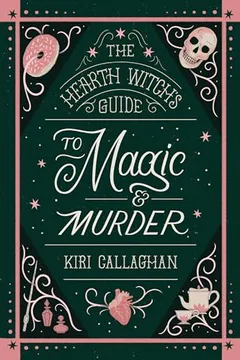
The Hearth Witch's Guide to Magic & Murder receives strong praise for its cozy blend of fantasy, folklore, and murder mystery, with readers particularly loving the dynamic between protagonists Avery and Saga. Standout positives include charming footnotes, rich world-building, and Avery's humorous adjustment to modern London. Common criticisms center on slow pacing and an overabundance of descriptive prose. The audiobook format earns special praise for its full-cast performance. Most readers recommend it as an ideal autumn read, with many eagerly anticipating the next installment in The Hemlock Saga series.
Characters
Avery Hemlock
Time-lost investigatorA changeling investigator and former prisoner, Avery is sharp, observant, and more comfortable with evidence than emotional disclosure. Nearly two centuries of cursed sleep have left her physically and socially out of step with modern London, but her appetite for puzzles survives intact. She distrusts institutions that use law to preserve their own power, while still believing careful inquiry can protect people. Her dry humor and prickly manner often mask grief and a deep fear of attachment, especially to mortals whose lives pass quickly. Avery’s strength lies in noticing what others overlook; her difficulty is allowing other people to matter before she has decided they are safe.
Saga Trygg
Hearth witch in transitionSaga is a returning Londoner, a practiced hearth witch, and a former medical student whose engagement ended publicly and painfully. Warm, curious, and quick to care for others, she has long mistaken compliance with family and romantic expectations for a clear sense of purpose. Her medical education gives her a disciplined way to observe bodies, while baking and devotion to Brigid offer steadier forms of self-knowledge. Saga’s humor helps her survive embarrassment, but it can also conceal hurt. She is neither naïve nor fully trained in the hidden magical world; her defining strength is a willingness to ask questions even when the answers unsettle the identity she thought she knew.
Gideon Blackthorn
Winter Court strategistGideon is Avery’s1 half-brother, an Archfey and a member of the Winter Council. He is controlled, politically capable, and keenly aware that authority is often exercised through implication rather than force. His resemblance to their father troubles Avery1, who reads his reserve as a possible inheritance of cruelty. Gideon’s loyalty to the council is genuine, though not uncomplicated, and his relationship with Avery1 carries the strain of choices made during her punishment. He prefers order and measured language, but his concern for his sister emerges in moments when policy is no longer enough.
Reza Lahiri
Jinn police allyReza is a jinn, a Scotland Yard detective, and Saga’s2 uncle by marriage. He uses little magic in his human work and prizes fairness, professional responsibility, and the wellbeing of his young family. His warmth makes him an easy ally, but he is not uncritical: he worries that Saga’s2 emotional investment and Avery’s1 methods may expose her to danger. Reza’s attempt to balance mortal policing with obligations to the Winter Council reflects his broader hope that the two communities can share a future without forcing children like his daughter to choose between them.
Leigh Hudson
Café keeper and auntLeigh owns Hudson’s café and is Saga’s2 aunt, as well as Reza’s4 wife and River’s mother. Sociable and energetic, she manages people with the same practical ease she brings to the café. Leigh knows the family’s magical history and shares her mother’s6 instinct to protect Saga2, though that protection has also meant withholding important truths. She is more open than Audrey18 to emotional and spiritual life, but grief can still make her retreat into tasks and logistics. Her affection for Saga2 is clear even when she struggles to explain the choices made on Saga’s2 behalf.
Saoirse O’Donnell
Saga’s witch grandmotherSaoirse is Saga’s2 grandmother, a skilled witch, and a longtime friend of Eira Goff7. She is affectionate, independent, and fond of baking, family rituals, and cryptic observations that leave others to find their own meaning. Her care for Saga2 is deep, but so is her fear that magic can overwhelm someone without a stable sense of self. Saoirse values protection and continuity, sometimes at the cost of candor. Her home, treasured objects, and familiar8 reflect a life shaped by hospitality and long friendship.
Eira Goff
Philanthropist and scientistEira is a celebrated medical scientist and philanthropist whose work transformed pharmaceutical research. She is remembered as incisive, generous, and ambitious without being indifferent to the people around her. Her friendship with Saoirse6 reaches back to youth, while her relationships with her son12, physician13, nurse, and younger artistic companion15 reveal different facets of a life lived across family, medicine, and public influence. Eira’s scientific drive is matched by a careful attention to legacy, making her estate and personal history central to those who survive her.
Riddle
Watchful magical familiarRiddle is Saoirse’s6 black cat and magical familiar, an intelligent fey being whose long companionship with the Hudson family predates Saga’s2 understanding of magic. He is watchful, proud, and sparing with affection, though his behavior often directs attention toward what humans have missed. Riddle’s bond with a witch is built on mutual care rather than ownership. His presence links the ordinary rhythms of a household to the protective obligations of the magical world.
Esteri
Avery’s ancient confidanteEsteri is a tulikettu, an old fox-fey who runs Hygge, a café whose interior holds the atmosphere of all four seasons. Bright, affectionate, and mischievous, she welcomes Avery1 without pretending that their long separation has erased its cost. Her knowledge of magical customs gives Avery1 practical help, while her closeness to Fiore10 provides a view of loyalty that Avery1 tends to dismiss as exhausting. Esteri can joke through tense moments, but she is perceptive about grief and willing to press Avery1 toward truths she would rather avoid.
Fiore
Dragon on the councilFiore is a dragon and Winter Council member, known to Avery1 as a formidable political presence. Their manner is economical and intimidating, but their loyalty to Esteri9 reveals a private tenderness that complicates Avery’s1 assumptions. Fiore helps when Esteri9 asks, yet does not soften the terms or conceal their personal dislike of Avery1. They represent a form of power that can act decisively without presenting itself as benevolent.
Iona
Iele of retributionIona is an iele who can perceive a person’s sense of grievance and offer a binding form of justice in return for vengeance. She runs Reprise, a polished business that turns old supernatural customs into a modern service. Seductive and perceptive, she can make a client’s wound feel like the only fact that matters. Iona is not simply malicious; her work responds to genuine wrongs, but it also feeds on the retaliation that follows. Her presence tests whether pain must become punishment.
Elis Goff
Eira’s troubled heirElis is Eira’s7 only son, a wealthy heir whose grief over the deaths of his wife and child has left him reliant on alcohol and casual relationships. He can be entitled and careless with others, yet his bravado often conceals an inability to tolerate helplessness. Elis resents reminders of his mother’s7 illness and has a tense relationship with her physician13. His charm can slide into inappropriate flirtation, but he is also capable of admitting when his coping habits have hurt people.
Alistair Campbell
Goff family physicianCampbell is a longtime physician to the Goff family and a trusted presence in Eira’s7 medical life. His work places him at the intersection of scientific care and the family’s private history. He is knowledgeable, disciplined, and accustomed to managing illness over long periods. His connection to Eira’s7 research and health gives him an important place in the investigation, while his professional judgment is challenged by the impossible demands grief can place on a healer.
Osian Goff
Goff family patriarchOsian is Eira’s7 father and a member of the Goff family’s old, influential line. His history is entwined with the family’s medical ambitions and with losses that shaped Eira’s7 adult life. He appears in family memories and photographs as a man whose private grief contrasts with public standing. Osian’s place in the family helps explain why questions of inheritance, illness, and legacy carry such weight for the people around Eira7.
Benjamin
Artist close to EiraBenjamin is a young artist who shared a close relationship with Eira7 and received her support. He is flamboyant, verbally expansive, and quick to use sexual bravado as a defense against emotional exposure. The tabloids and the Goff family have made assumptions about his motives, but his account reveals genuine admiration for Eira’s7 intellect and work. Benjamin’s candor makes him a useful witness, though not every detail he offers should be mistaken for the whole truth.
Carys Varney
Resentful Goff cousinCarys is Eira’s7 cousin, an aging socialite living in the neglected family manor. She values status and inherited property, and she experiences Eira’s7 judgment as a lasting insult. Carys is suspicious of public opinion and inclined to turn private grievances into elaborate theories. Her vanity and insecurity can make her both a source of information and an unreliable interpreter of it. Beneath her performance of old-world privilege sits a person struggling to maintain a life she cannot easily manage.
Rachel Walker
Valentina’s former partnerRachel is Valentina’s former girlfriend and the co-tenant of their apartment. She ended the relationship after repeated conflicts over work, communication, and emotional needs. Rachel is shaken by Valentina’s death and tries to make sense of their final conversations, though she initially interprets Valentina’s confusion as drunkenness.
Audrey Hudson
Saga’s exacting motherAudrey is Saga’s2 mother, a barrister who values order, professional achievement, and emotional restraint. She has little patience for choices she considers impractical and often invokes Saga’s2 father as the source of traits she dislikes. Audrey’s severity is not simply coldness; it is a worldview in which planning and composure are safeguards against vulnerability. Her relationship with Saga2 is marked by affection that rarely arrives in a form Saga2 can use.
Hugh
Saga’s former fiancéHugh is Saga’s2 former fiancé, a medical student whose past relationship with Lana20 remains important to his life. His decision to leave Saga2 at their wedding becomes a lasting source of humiliation and self-doubt. The public account of his later engagement forces Saga2 to reconsider how others have framed the event.
Lana
Hugh’s old sweetheartLana is Hugh’s19 former school sweetheart, with whom he reconnects after years apart. Her return interrupts Saga’s2 wedding and changes the course of both relationships. She is part of the painful story Saga2 must eventually understand without making herself responsible for Hugh’s19 choices.
Bimo Shinwell
Fey informant and schemerBimo is a babi ngepet and former information source for Avery1, with a talent for small schemes and an ear for rumors. He enjoys presenting himself as a legitimate businessman, though his enterprises invite skepticism. His familiarity with prohibited magical practices gives Avery1 a useful lead when conventional explanations fail.
Magdalena
Saga’s loyal old friendMagdalena is one of Saga’s2 friends from medical training and works hospital shifts. Direct and protective, she offers Saga2 a place to speak honestly about Hugh19 and the shame surrounding the wedding. Her humor helps restore a sense of friendship beyond the family and the investigation.
Plot Devices
The Veil and Glamours
Hide the magical worldGlamours alter what people perceive, allowing fey to move through London without exposing their nonhuman features. The wider veil also supports a political separation between magical beings and mortals. Avery1 relies on glamour to pass unnoticed, while Saga’s2 unusual sight lets her perceive through it. The device therefore does more than conceal bodies: it makes secrecy a public structure, shaping what characters can know and who is trusted. Its limits matter as much as its power, since concealed evidence can remain part of the truth even when a witness cannot see it.
Hagstones
See through deceptionA hagstone is a naturally perforated stone that can reveal glamours and hidden magical forms when someone looks through its hole. Avery1 uses one to check documents, inspect the Goff7 funeral casket, and distinguish an actual body from a fetch. It provides a concrete investigative tool in a world where appearances can be deliberately altered. The stone does not answer every question: it can reveal that something is concealed, but it cannot explain who concealed it or why. Avery1 still needs testimony, inference, and Saga’s2 knowledge to interpret what she sees.
Partial Fetch Organs
Imitate living organsFetches are magical doubles traditionally designed to imitate a living person. In this case, herb-and-straw constructions are fashioned to resemble specific organs and infused with properties connected to those organs. The substitutions temporarily deceive the body, but the artificial parts cannot sustain life indefinitely. Their failure creates the victims’ illnesses and deaths while obscuring the original ritual. The technique also allows the mystery to pivot from ordinary organ theft toward resurrection, revealing how a supposedly healing effort can become dangerous when its makers mistake resemblance for life.
Hospitality Geas
Turn welcome into obligationIn magical custom, hospitality is a binding contract rather than a social nicety. A host must protect a guest, and a guest must not knowingly harm the host. Breaking that bond carries a consequence that can place the offender under the power of the host or their bloodline. The rule is established through discussion of familiars and household protection, then becomes decisive when Saga2 invokes it against someone who accepted Saoirse’s6 welcome and violated her home. The device connects the story’s domestic setting to its moral law: an invitation carries responsibility on both sides.
Hearth Magic and Familiar
Make care an active forceSaga’s2 witchcraft begins with intention, herbs, food, and devotion to Brigid, while the deeper magic of her family can produce immediate physical effects. A familiar such as Riddle8 shares a protective bond with a witch and helps navigate magical dangers. The story refuses to treat these practices as separate from ordinary life: tea, baking, household wards, and animal care all carry practical and emotional meaning. Saga’s2 education in magic grows through the same habits that already anchor her, allowing her old beliefs to expand rather than be discarded.
Download PDF
Download EPUB
.epub digital book format is ideal for reading ebooks on phones, tablets, and e-readers.








