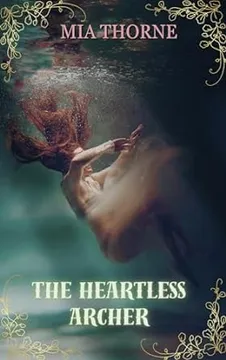


Plot Summary
Prologue
A black-clad woman meets a Sosye chief in a dangerous alley and offers him a red stone as payment. She directs him to the river at dawn, where he will find a white-haired, green-eyed adolescent witch, and demands that he kill her.
The chief agrees, convinced witches are abominations. The woman presses him to act, though she shares the very mixed heritage she teaches him to despise.
The opening makes persecution an instrument of power rather than a simple clash between enemies. The woman recruits a hunter by feeding his prejudice, then uses a stone to make the bargain tangible and difficult to refuse. Her own mixed heritage exposes the hypocrisy beneath her appeal to ethnic purity: she does not believe the categories she weaponizes, but knows others will kill in their name. By identifying the target through Noora’s striking appearance, the prologue casts her visibility as both a threat and a narrative fuse. The planned violence is not yet explained, leaving the story’s first question pointed at the people who benefit from hatred.
A Crown, A Missing Girl
In the northern kingdom of Oy Frossen, King Nikolai avoids proposing to Princess Aileen-Akamu, though her southern kingdom’s fleet could help defend his country from the growing Sosye clans. His sister Tyra and mother, Queen Euphemia, press him to secure the alliance. Nikolai keeps turning an aventurine ring, still hoping his missing childhood companion Amalie might be alive.
Far from the palace, seventeen-year-old Noora slips between the orphanage and a nearby farm to see Lukas, then returns to protect ten-year-old Lulva from the cruel matron. Noora plans to save enough money to take them both away. When the matron punishes her, Noora accepts the blows rather than let Lulva become the target.
The opening places political duty beside intimate survival, but neither character begins with the freedom to choose what they want. Nikolai’s crown makes marriage a tool of statecraft; Noora’s orphan status makes safety dependent on money she cannot reliably keep. Their different forms of captivity are already linked by the same threatened landscape and the Sosye presence. Amalie’s absence turns Nikolai’s ring into a private refusal to accept finality, while Noora’s care for Lulva gives her a future-facing purpose. Her willingness to take punishment is protective, but also reveals the cost of making herself the only shield between a child and institutional cruelty.
The Wolf She Spares
While hunting in the increasingly lifeless forest, Noora finds a wounded white wolf facing an attacking pack. She shoots the pack’s scarred alpha, then leaves the injured animal food rather than killing it for its hide. At the market, she sells the alpha’s body and argues down a trader who tries to cheat her.
Isak Pedersen steals her earnings and taunts her witch ancestry, then threatens Lulva. Noora pins him to a wall with an arrow and holds a knife at his throat until he backs down. The wolf’s survival has brought no reward, but Noora’s confrontation with Isak makes her boundary unmistakable: he may target her, but he must leave the child alone.
Noora’s mercy is not a conversion from toughness to softness. She first calculates the wolf’s value, then chooses not to profit from its helplessness, a decision that shows her ethics operating inside scarcity rather than outside it. Her violence toward Isak follows a different rule: she tolerates attacks on herself until they threaten Lulva. That distinction gives her anger a protective logic, even when the threat of gutting him edges toward the cruelty she despises. The forest’s failing life adds pressure to every choice. Hunting, selling, and surviving are becoming harder just as the prejudice around Noora makes ordinary work less secure.
The Last Gold Goes
Lukas asks Noora to marry him and settle at his family’s farm. She refuses because she intends to leave Oy Frossen with Lulva, and his suggestion that a healer could remove her witch heritage makes clear how little he understands her. Noora breaks his nose and leaves. Soon afterward, the matron’s servant Elise helps steal Noora’s savings, and the matron beats her when she discovers the theft.
Without enough money to escape, Noora goes to the river to think. Meanwhile, Nikolai rides out with his guard Raphael to inspect reports that the kingdom’s land is dying. Their separate problems converge when a panicked stranger runs toward Noora, pursued by a grizzly.
This section strips away two fragile routes to safety. Lukas offers domestic security only if Noora can accept a life defined by someone else’s assumptions, while the stolen savings erase the independence she has been building herself. His suggestion to alter her blood turns affection into conditional acceptance, so her refusal is also a defense of identity. Elise’s betrayal makes the orphanage’s power structure harder to escape, and the matron’s violence confirms that endurance alone will not protect Lulva indefinitely. Nikolai’s decision to inspect the dying land is the first concrete effort to confront the kingdom’s crisis, though his journey will bring him into Noora’s far more immediate danger.
The Bear and the King
Noora and the stranger flee the grizzly together. She throws a machete into the beast, and the white wolf she spared earlier joins the fight, driving the bear away. The stranger calls himself Kai and claims to serve the royal family, but collapses from a poisoned-looking wound. Noora takes him to an abandoned barn, stitches his side, and disinfects it.
When he wakes, she finds royal Kronen in his coat and steals the coins and his jade-set ring. Kai catches her and takes the money back, then tells her that the king will award a hundred thousand Gulls to the winner of an upcoming tournament. Noora leaves with the ring still in her possession and a possible way to rescue Lulva.
The encounter reverses the expected balance between ruler and subject before either character understands it. Noora saves Kai through practical knowledge and physical nerve; he survives because she acts, not because his status protects him. His false impression of authority and her theft make trust impossible, yet the ring she keeps becomes a small unresolved connection. The tournament enters her life as a material solution, not a dream of glory. Its enormous prize could buy escape, but the information comes from a man who has already concealed his identity. Noora’s instinct to secure resources is rational, while her willingness to keep the ring suggests that calculation does not explain every choice she makes.
Noora Enters the Draw
Before Noora submits her name, Nikolai kneels to propose an alliance marriage to Aileen, promising she may refuse without political retaliation. Tyra’s love for Aileen complicates the arrangement. Noora enters the tournament because its prize could finance a new life for her and Lulva. When the queen draws Noora’s name, the crowd protests her participation.
At the palace, Noora recognizes Kai as Nikolai, the king, and accuses him of deceiving her. He admits he selected her name deliberately and offers to bring Lulva to the palace and make Noora her guardian if she competes. Noora accepts. She meets fellow contestants Pika, Kekoa, and Sören, then begins training while wary of Kekoa’s open hatred of witches.
The tournament turns a private survival strategy into a public test of who is permitted to belong. Noora’s name is not merely drawn by chance: Nikolai’s intervention grants her access while also manipulating her into a role he needs. Their bargain gives her leverage, but it is leverage within the king’s system, and she knows it. Aileen’s proposal scene exposes a parallel compromise, as her marriage is framed as an alliance even while Nikolai tries to preserve her choice. Tyra’s love for Aileen makes the political arrangement emotionally consequential. For Noora, Lulva’s arrival is the decisive cost-benefit shift: she can now risk the tournament without abandoning the person she protects.
The Wolves’ Amethyst Tooth
The first task sends each contestant against a wolf fitted with an artificial amethyst tooth. Noora waits until she sees the gem, then wrestles her wolf down and removes it, despite a severe bite to her hand. Pika knocks his wolf unconscious, while Kekoa kills his and mutilates its body. The judges score Noora unevenly, with Nikolai giving her more credit than the queen and Sosye chief do.
Noora refuses to accept the animals’ deaths as entertainment and demands that the surviving wolves be released. After she collapses from her untreated wound, Nikolai stitches it himself. She and Raphael later bury the dead wolf beneath a sacred world ash, where Noora senses the tree’s life and learns that the kingdom’s land is dying.
The token makes the first task a contest not only of skill but of what each contestant will do to a living creature under pressure. Noora’s victory depends on reading the wolf’s distress and identifying the artificial tooth, not on killing more efficiently. Her wound reveals the cost of remaining within her moral limits when the spectacle rewards violence. The judges’ split scores show that the crown’s standards are not unified, and the Sosye chief’s presence makes that division politically charged. Burial beneath the world ash turns Noora’s private grief into information: her relationship with nature is not merely practical, and the kingdom’s failing land is a crisis with roots deeper than poor harvests.
A Palace That Bites
As Noora recovers, Tyra and Princess Aileen draw her into the palace’s safer corners, while Lulva befriends Nikolai’s younger sister Josephine. Queen Euphemia threatens to cut Josephine’s hair after the girl cuts it herself; Noora intervenes, and the queen slaps her. Nikolai returns and stops the confrontation.
Later, he spars with Noora while drunk, injuring her ribs and giving her a concussion before passing out himself. He apologizes after waking, and Noora forgives him. Their uneasy intimacy grows alongside her training with Pika. Nikolai’s mother also appoints a Sosye high chief to the judging panel, sharpening Noora’s distrust of the palace and the danger surrounding her place in the tournament.
The palace offers Noora food, warmth, and companionship, but its safety is conditional and visibly enforced by rank. Her intervention for Josephine repeats the role she has played for Lulva: she steps between a powerful adult and a vulnerable child, even when that choice puts her in danger. Nikolai’s apology matters because he acknowledges harm rather than hiding behind kingship, although his drunken spar shows that his access to power does not make him emotionally reliable. The growing connection between Noora and the royal sisters complicates her plan to leave. The high chief’s appointment, meanwhile, confirms that the tournament is not a neutral arena; its judges embody the same prejudices the contestants must survive.
Kekoa in the Roots
For the second task, Noora races through the forest toward a frozen lake, but Kekoa ambushes her and cuts her face and arm. She answers with magic, summoning roots that bind him, then leaves him alive and continues. At the lake, she finds a bow, arrows, and skates, but the skate blades loosen as she crosses the ice.
She crashes through the marked opening and is dragged underwater by Tang, a chained Margygr. Noora realizes the sea creature has been forced into the trial and frees her by directing seaweed to break its shackle. Tang carries the injured Noora into an underwater cave, binds her shattered knee with seaweed, and leaves her alive at the entrance to the mountain tunnels.
The task’s apparent natural hazards conceal human interference: Kekoa attacks Noora, the skates fail, and Tang has been chained beneath the lake. Noora’s magic emerges not as a polished weapon but as a response to imminent harm, and she still distinguishes an animal’s defense from a person’s malice. Freeing Tang costs her precious breath and strength, yet it changes the creature from an obstacle into an ally. This is a decisive shift in her relationship to her power. She has spent much of her life suppressing it because it brings hatred, but in the lake she uses it to undo captivity rather than impose it. The trial’s cruelty increasingly reflects its organizers and saboteurs, not nature.
Dainslief and the Dragon
Noora climbs into the mountain and discovers a cave littered with human bones, treasure, and a dragon guarding a sword. The creature wounds her leg, but she distracts it with the amethyst tooth she won in the first trial, then shoots an arrow into its eye. Sören reaches her as she slips from a bone bridge and hauls her up.
Noora takes Dainslief from the stone and uses it to kill the dragon. She and Sören return battered, and Noora brings the dragon’s head to the arena. The crowd cheers, but she is carried away for treatment. Nikolai delays the final task so she can recover, while Noora begins to suspect that someone deliberately engineered the trials’ hazards.
The second trial gathers the book’s earlier objects and choices into one survival sequence. The amethyst tooth, initially won by sparing a wolf, becomes a distraction against a dragon; the prize is useful precisely because Noora understood its origin. Sören’s rescue complicates the suspicion directed at him, making his apparent vulnerability persuasive to both Noora and the reader. Dainslief grants Noora the means to fight beyond her ordinary strength, but its legend also makes victory feel larger than a contest. Carrying the dragon’s head back turns survival into public proof, while her injuries expose the cost. Nikolai’s delay is a practical concession that also reveals how personally invested he has become in her continuing presence.
The Queen Under Suspicion
While recovering, Noora accuses Queen Euphemia of arranging the dangerous trials, citing the sabotaged skates, Tang’s chain, and the attacks on Pika and Kekoa. She notices black residue on the queen’s hands, but Nikolai refuses to accept her conclusion and promises to investigate. Noora asks Raphael to help free Tang, then returns to training as her injuries heal.
Kekoa, who had attacked her while poisoned, offers a truce; Noora accepts it cautiously. The contestants draw their final opponents: Kekoa will fight Sören, and Noora will face Pika. Pika tells Noora he will give her a genuine fight, even though he expects her to win. She enters the arena determined to claim the prize and leave with Lulva.
Noora’s accusation is understandable but incomplete: she recognizes a pattern of harm and follows visible evidence, yet cannot establish who benefits from each attack. The black residue makes suspicion concrete without proving guilt, preserving uncertainty rather than resolving it prematurely. Nikolai’s refusal frustrates her, though his promise to investigate leaves the conflict open. Kekoa’s truce offers a limited change in conduct without erasing his prejudice; Noora accepts the practical peace, not a sudden reconciliation. Pika’s willingness to fight fairly gives their bond a different shape from alliance or rivalry. As the final pairing is drawn, Noora’s ambition remains inseparable from Lulva’s safety, while the tournament’s violence has made victory less like escape and more like a last gamble.
The Archer’s Final Fight
Noora defeats Pika after he breaks her armor and she uses her speed to disarm him, then wins the final bout against Kekoa in a brutal exchange of sword strikes. As the crowd celebrates, Sören seizes Lulva and holds a knife to her. He admits sabotaging the skates, poisoning Kekoa with wolfsbane, and sending a shadow singer after Pika.
He wanted Noora and the Sosye contestants dead because he despised both witches and witch hunters. Lulva stamps on his foot, giving Noora a clear shot; Noora wounds his hand with an arrow. Sören still manages to stab Lulva in the heart. Noora catches her sister, but her healing blood cannot close the wound.
The final contest turns victory into a false finish. Noora has survived the trials and beaten the fighters placed in front of her, yet Sören’s betrayal reveals that the deepest danger was not the official competition but the quiet access granted to someone everyone underestimated. His plan weaponizes prejudice against both witches and Sosye, making hatred a tool for destabilization rather than a coherent ideology. Lulva’s quick action briefly restores Noora’s agency, but it cannot undo the fatal consequence. The emotional reversal is severe: the tournament promised Noora a way to protect her sister, and its final violence takes that sister from her at the moment the promise appears fulfilled.
A Heart for Revenge
Noora heals Sören from the wolfsbane long enough to confront him, then raises her knife to cut out his heart. Guards pull her away in a state of grief and fury. In a disoriented encounter with Nikolai, she threatens to take his heart too, but he tells her it is already failing.
Black veins spread across his body because a witch cursed him years earlier, and his health is magically bound to Oy Frossen’s land, explaining the dying harvests. Nikolai says he organized the tournament to find a hunter who could accompany him to the witch and break the curse. He offers Noora not only the promised reward but revenge, making her next choice a hunt beyond the tournament.
Noora’s response to Lulva’s death is not a clean passage from grief into justice. She turns toward bodily vengeance, first against Sören and then toward Nikolai, treating the heart as both the seat of life and a possible object of retribution. Nikolai’s confession reframes the tournament: its ostensible prize concealed a search for a companion who could help preserve the king and the land bound to him. The reveal joins Noora’s private losses to the kingdom’s ecological crisis, but it does not make her responsible for saving either. His offer of revenge is psychologically precise because it speaks to the only force that has kept her moving. The book ends with a mission offered, not a wound repaired.
Epilogue
While the tournament occupies the palace and town, Tyra returns to Nikolai’s office to retrieve Josephine’s toy sword. She finds Aileen alone at the king’s desk, cleaning a spilled cup of tea. Aileen takes blue powder from a hidden pouch and stirs it into the drink.
Tyra understands the gesture as a possible attempt to poison Nikolai, though she has no time to ask what the powder is or why Aileen is there. She steps into the office and demands an explanation.
The epilogue converts a political alliance into immediate personal danger. Tyra’s love for Aileen has made her inclined to trust the princess, but what she sees forces intimacy and suspicion into the same moment. The cup is an ordinary object made threatening by secrecy, echoing the book’s repeated use of hidden weapons, stolen gold, and concealed motives. Because the scene ends before Aileen explains herself, the reader cannot tell whether Tyra has witnessed treachery, a misunderstood act, or another layer of the conspiracy. This unresolved image also shifts the next danger away from Noora’s visible enemies and into Nikolai’s closest relationships.
Analysis
The novel’s central conflict is not simply between witches and witch hunters, but over who gets to define another person as dangerous. Noora is called a threat because of her ancestry, while the tournament’s royal organizers turn animals and contestants into instruments of spectacle. Yet the story repeatedly distinguishes inherited identity from chosen conduct: Noora frees Tang and refuses to kill the wolf for convenience, Pika treats her with respect despite his Sosye lineage, and Kekoa’s code of honor does not erase his prejudice. Sören’s attack sharpens the point. He uses hatred against both witches and witch hunters, showing how a grievance can become an excuse to reproduce the same violence it condemns.
Noora’s protective love for Lulva is her moral center, but it also places unbearable pressure on her. She treats survival as a duty to someone else, accepting injuries and risk because she believes she must be the shield. When Lulva dies, that organizing purpose collapses, and Noora reaches for revenge as a substitute for the future she had promised them. Nikolai’s offer is therefore not a tidy rescue. He understands that revenge can move Noora, but the same desire may deepen her isolation if it becomes the only reason she continues.
The dying land binds private and public stakes together. Nikolai’s curse makes the king’s body a political vulnerability and the kingdom’s sickness more than a failed harvest. His concealed motive for the tournament mirrors his habit of governing through partial truths, while Noora’s knowledge of the forest comes from direct attention rather than royal authority. The novel ends without resolving whether she will serve the crown, pursue vengeance, or make a different choice. That uncertainty is fitting: the story’s strongest challenge to power is its insistence that survival does not automatically create an obligation to obey.
Review Summary
The Heartless Archer receives mixed reviews, with an average rating of 3.17 out of 5. Readers praise the intriguing plot and potential but criticize the poor editing, grammatical errors, and underdeveloped characters. Many find the pacing inconsistent and the world-building lacking. Some enjoy the banter and tension between characters, while others find the protagonist unlikable. The ending is controversial, leaving some readers eager for a sequel and others frustrated. Despite its flaws, some readers still find the book engaging and are willing to continue the series.
Characters
Noora
The guarded huntressA seventeen-year-old orphan with white hair, a hunter’s eye, and a fierce bond with Lulva. Noora survives by reading tracks, bargaining hard, and refusing to let other people define her worth. Her witch heritage makes her a target in Oy Frossen, so she has learned to conceal both her vulnerability and her magic. She can be merciless when protecting someone, but her respect for animals and the land complicates her own survival instincts. Noora’s sharpness is not a lack of feeling; it is a defense built around an unusually strong capacity for loyalty. She wants a life beyond the kingdom’s prejudice, though she has not yet learned what she might want once she is free.
Nikolai
The burdened young kingKing of Oy Frossen, Nikolai is caught between the duties of protecting his kingdom and the grief he has never resolved over Amalie, his missing childhood companion. He is educated in diplomacy and accustomed to having the final word, but his confidence falters when choices demand emotional honesty. His jade ring and habit of turning it give his private anxieties a visible outlet. At first he treats Noora as a useful answer to a political problem, yet her defiance unsettles the distance he maintains from his subjects. Nikolai wants to be a better ruler than his parents, though he still relies on secrecy and manipulation when he fears losing control.
Lulva
Noora’s chosen sisterA ten-year-old girl from the Southern Isles, Lulva is Noora’s closest family and the clearest source of tenderness in her life. She is curious, affectionate, and hopeful even in an orphanage that gives her little reason to trust adults. Lulva notices Noora’s injuries and tries to help rather than accepting that protection must flow only one way. Her imagination gives shape to a shared future of travel, candy, and a safer home. Her bond with Noora is chosen rather than inherited, and she brings out the gentleness Noora usually keeps hidden behind vigilance.
Tyra
The defiant royal sisterNikolai’s sixteen-year-old sister, Tyra is blunt, politically perceptive, and impatient with the obedience expected of a princess. She challenges her brother when he hesitates over Aileen and recognizes that his private grief shapes his public decisions. Her affection for Aileen gives her a personal stake in the proposed alliance, while her loyalty to Nikolai remains strong enough to confront him rather than flatter him. Tyra respects Noora’s strength and tries to make the palace less hostile to her. Beneath her confidence, she is navigating the narrow space between what her family expects and whom she wants to choose.
Aileen-Akamu
The southern princessPrincess of Ka-Hema and a possible bride to Nikolai, Aileen is gentle without being passive. Her parents have sent her north to secure a political alliance, but Nikolai gives her room to refuse the match. She is attentive to Noora and shares knowledge of healing plants, offering kindness without demanding trust in return. Her closeness with Tyra hints at a bond that exceeds political convenience. Aileen moves through courtly expectations with tact, yet the epilogue places a question around what she may be doing beyond the image she presents.
Queen Euphemia
The iron-willed queenNikolai’s mother rules through discipline, polished appearances, and a sharp understanding of political leverage. She expects him to marry Aileen for the alliance and treats the tournament as a public instrument of royal authority. Her treatment of Noora and her children reveals how readily she confuses control with care. Euphemia is not merely a stern traditionalist; she is calculating, alert to weakness, and accustomed to shaping events before others see her hand. Her values place order and dynastic survival above individual freedom, bringing her into recurring conflict with her children.
Raphael
The king’s watchful guardNikolai’s trusted guard and closest companion, Raphael is disciplined, capable, and unusually willing to challenge the king when he sees him mistreating someone. He serves the crown loyally but has a human sympathy that Noora slowly recognizes. His exchanges with her begin in suspicion and friction, then shift toward cooperation as he sees how much she has endured. Raphael’s feelings for Nikolai remain largely unspoken, constrained by his role and by the rules governing palace guards. He is often the practical presence between royal plans and their consequences.
Pika Iosua
The gentle Sosye fighterA large Sosye contestant whose imposing build contrasts with his patience and kindness. Pika refuses Noora’s assumption that his ancestry makes him her enemy, and he helps train her in sword work and strength. He is not eager to hurt people, but he takes the tournament seriously and insists that Noora deserves a real contest rather than pity. His relationship with her demonstrates how personal conduct can resist inherited hostility without erasing its history. Pika’s gentleness is not weakness; he has courage enough to enter a contest designed to test it.
Kekoa Nakamura
The feared Sosye rivalA skilled Sosye fighter and descendant of witch hunters, Kekoa is physically formidable and openly hostile toward Noora. He sees the tournament as a chance to prove his strength and protect his clan’s standing. His instincts favor direct action, and his contempt for witches makes every encounter with Noora volatile. Yet he understands honor within his own code and is capable of offering a truce when he believes it is warranted. Kekoa embodies the danger of prejudice backed by trained skill, while his conduct remains distinct from the broader political uses others make of hatred.
Sören Eriksen
The unlikely contestantA small, pale boy from Oy Frossen, Sören looks out of place beside the stronger contestants. He struggles with the training obstacles and seems to rely on courage where physical strength fails him. His father publicly encourages him, giving him a connection to the ordinary people watching the royal spectacle. Sören’s mild manner makes it easy for others to underestimate him, and his eagerness to prove himself shapes how he approaches the tournament. He is a reminder that appearing harmless and being harmless are not the same thing.
Amalie Winter
Nikolai’s absent companionAmalie is the girl Nikolai was expected to marry when they were children, and her disappearance remains a powerful absence in his life. She was connected to both the royal family and the lands of the Sosye, making her a possible bridge between communities that distrust each other. Nikolai’s ring and persistent hope keep her memory present even when others insist he must move on. Through her absence, the story shows how unresolved loss can shape a ruler’s choices long after the person is gone.
Marid Winter
The grieving royal friendAn old friend of the royal family and Amalie’s mother, Marid is warm, perceptive, and unafraid of emotion. She comforts Nikolai without pretending his grief is a weakness, and she recognizes his attachment to Noora before he admits it to himself. Her gentleness contrasts with Euphemia’s severity, though Marid carries grief of her own. She represents a form of adult care that makes room for vulnerability rather than using it to control others.
Spike
The white forest wolfThe injured wolf Noora first spares in the forest, Spike is a wild animal rather than a trained pet. He follows Noora and later becomes attached to the people who show him care, especially Lulva. His presence blurs the line between danger and companionship: he can be playful, but his instincts remain those of a predator. Spike’s loyalty grows through repeated acts of food and protection, not ownership.
Lukas
Noora’s farm-side loverA young farmer who offers Noora marriage and a settled life at his family’s farm. He cares for her, but he imagines security through a conventional future that would keep her in Oy Frossen. His inability to accept her heritage without trying to change it exposes the limits of his affection and the different futures they want.
The Matron
The orphanage’s abuserThe severe head of Noora and Lulva’s orphanage uses arbitrary punishment to keep the girls afraid and obedient. She singles out Noora for her witch heritage and relies on Noora’s willingness to take pain in Lulva’s place. Her authority makes the orphanage a trap rather than a refuge.
Elise
The compromised servantA young servant at the orphanage who shows concern for the girls but helps the matron take Noora’s savings. Her betrayal reveals how fear and proximity to authority can lead even a sympathetic person to participate in harm. Noora’s anger is directed at the consequence of Elise’s choice, not simply at her remorse.
Koa-Ailani
The Sosye high chiefA powerful chief of the Sosye clans, Koa-Ailani sits on the tournament jury as a representative of the witch hunters. His presence makes the political tensions around Noora visible in the arena. He is imposing and difficult to read, embodying the clan authority that both the crown and contestants must reckon with.
Tang
The chained lake creatureA Margygr, or sea creature, chained beneath the frozen lake for the second tournament task. Tang is frightened and defensive when Noora encounters her, but responds when Noora frees her. Their brief connection reveals that the supposedly monstrous beings of the world may be victims of human cruelty.
Josephine
The fearless young princessNikolai and Tyra’s younger sister, Josephine is mischievous, resourceful, and determined to make choices about her own appearance. She cuts her hair despite her mother’s expectations and quickly befriends Lulva. Noora’s defense of her creates a bond between the orphan and the royal family. Josephine’s openness gives the palace a glimpse of childhood not wholly governed by rank.
Plot Devices
The royal tournament
A prize with hidden stakesNikolai’s contest promises one hundred thousand Gulls to the winner, drawing Noora in because she needs money to free herself and Lulva from the orphanage. Its three tasks test combat, judgment, and survival, while the royal jury turns each performance into public spectacle. The tournament also provides the king with a way to identify a capable hunter, though Noora does not learn that purpose until late. Its rules and prizes conceal the deeper danger that contestants are being exposed to sabotage and deliberate cruelty.
The aventurine ring
A grief made visibleNikolai repeatedly turns the silver ring set with aventurine, a private habit that links his present duties to his unresolved attachment to Amalie. Noora steals it after she treats him in the barn, but later cannot bring herself to sell it. Its return marks a shift in their uneasy relationship: it is at once a valuable object, a clue to Nikolai’s hidden past, and a reminder that his public role does not contain all of his grief.
The world ash
The land’s living pulseThe Yggdrasil, or world ash, is sacred to witches and connects Noora to the life of the forest. After she and Raphael bury a wolf beneath its branches, Noora senses that the tree and the surrounding land are failing. That perception links the kingdom’s shrinking harvests to a deeper magical crisis, and later connects the king’s physical condition to the health of Oy Frossen. The tree makes the landscape an active presence rather than a backdrop.
Dainslief
A legendary blade’s testThe sword Dainslief lies in the dragon’s treasure cave, embedded in stone and surrounded by human bones. Noora draws it while trying to protect herself and Sören, then uses it to kill the dragon. Its legend says it cannot be sheathed until its enemy is slain, tying its power to the violence of the trial. The sword provides Noora with the means to defeat a creature her ordinary weapons cannot harm, but it also makes her victory part of an older, more dangerous history.
Nikolai’s black veins
A curse beneath the crownBlack veins spread through Nikolai’s body as the curse placed on him by a witch advances. His health is bound to the land of Oy Frossen, so the kingdom’s failing harvests mirror the rot overtaking him. He arranged the tournament to find a hunter capable of accompanying him to seek the witch and break the curse. This revelation changes the contest from a public prize event into a concealed search for a cure, while Nikolai’s offer of revenge gives Noora a reason to consider helping him after Lulva’s death.
Download PDF
Download EPUB
.epub digital book format is ideal for reading ebooks on phones, tablets, and e-readers.








