

Key Takeaways
The “Heavenly Man” learned that faithfulness mattered more than earthly safety
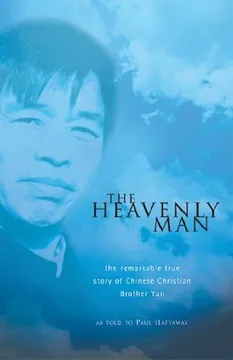
A name became a warning. Brother Yun was born Liu Zhenying in a poor farming village in Henan Province. After becoming a Christian as a teenager, he preached in places where unregistered churches faced arrest. During one arrest, he refused to identify himself because doing so could endanger other believers. Instead, he called himself a man whose home was in heaven, alerting Christians nearby to flee. They escaped, and the name “Heavenly Man” stayed with him.
Not a claim of perfection. Yun presents the name as shorthand for his allegiance, not proof that he was fearless or flawless. His story repeatedly returns to dependence on Jesus, while also showing fear, exhaustion, and mistakes. The central conviction is that faithfulness means serving Christ even when safety, status, and comfort are uncertain.
What's striking is how the nickname works as both identity and communication. In a surveillance environment, an improvised phrase protects a community while expressing the speaker's deepest allegiance. Social identity can help people endure danger when it connects personal risk to a shared purpose. Yet the story also benefits from distinguishing courage from invulnerability. A powerful identity can sustain action, but it should not become a demand that believers suppress fear or ignore danger.
When Scripture was scarce, hunger turned memorization into a lifeline
A Bible became precious. In 1974, Yun's father was gravely ill, and his mother, who had once believed, returned to Christian faith. The family prayed for his recovery, which Yun describes as miraculous. Their renewed belief led Yun, then sixteen, to seek a Bible, but copies were nearly impossible to find and dangerous to possess. He prayed and fasted for one for months. According to his account, an evangelist received a vision directing him to deliver a hidden Bible to Yun.
He learned it by heart. With little schooling and a Bible printed in a script he struggled to read, Yun studied character by character. He says he memorized the Gospel of Matthew in 28 days, then learned other passages to share with villages that had few Scriptures. The book links this discipline to his first year of preaching, when he says thousands came to faith.
Scarcity changes the perceived value of information. When a text is difficult to obtain, memorization becomes not just study but a form of storage, mobility, and communal access. Cognitive science distinguishes rote recall from deeper understanding, but repeated recitation can also strengthen retrieval and make ideas available under pressure. The memoir frames the Bible as divine provision; readers outside that faith can still see how a scarce shared text can organize a community's attention and give its members a common vocabulary.
Protect a church's freedom without mistaking every official believer for an enemy
Control was the dividing line. The Three-Self Patriotic Movement was the state-sanctioned Protestant structure, organized around self-governance, self-support, and self-propagation. Yun feared government oversight would restrict preaching and church life, so he joined the unregistered house churches. He describes the official structure as limiting evangelism and forbidding some teachings, while arguing that Jesus, not the state, should lead the church.
The distinction matters. Yun also says many sincere Christians worshipped in Three-Self churches and that his objection was to political control and leadership, not to those believers. The conflict shaped his ministry: house church leaders met clandestinely, moved between villages, and risked arrest. His account presents religious freedom not simply as permission to worship, but as the ability to teach and organize without state direction.
The tension here is institutional, not merely personal. Communities need structures to coordinate worship, resources, and leadership, but dependence on a powerful sponsor can narrow what they are allowed to say or do. That insight applies well beyond religion. Still, resistance can harden into its own boundary-making, especially when a movement treats all official institutions as compromised. Yun's distinction between ordinary believers and controlling authorities is therefore essential, and it offers a more careful model than simple us-versus-them thinking.
Persecution scattered leaders, but prison also became a place of witness
The crackdown did not silence him. Yun recounts repeated arrests, beatings, and pressure to name fellow Christians. In 1984, while imprisoned in Nanyang, he began a fast that he says lasted 74 days without food or water. He describes refusing to inform on colleagues and relying on Scripture he had memorized. His family and church prayed for him, while rumors outside the prison ranged from a death sentence to life imprisonment.
The cell became a congregation. After the fast, Yun says he spoke to fellow prisoners about his faith, and several asked to become Christians. He was eventually sentenced to four years of hard labor and released in 1988. The memoir portrays prison both as state punishment and as a place where prisoners could support one another and hear the gospel, even as their families faced poverty and social pressure.
The account shows how repression can unintentionally create dense bonds among people who share risk. In sociology, costly commitment can signal trust and deepen group solidarity. But that mechanism should not be mistaken for proof that persecution is beneficial or desirable. Repression injures bodies, separates families, and can kill; the book's account of growth describes one community's response, not a general law. The reported 74-day fast is especially important to treat as testimony, not as a safe practice to imitate.
Treat even the condemned as people capable of becoming brothers
Mercy began with a meal. In prison, Yun was assigned to care for Huang, a violent young murderer who had repeatedly tried to harm himself. Other prisoners feared and despised him. Yun persuaded them to welcome Huang, washed his wounds, shared food, and tended to him. When Yun gave him the bread he had saved, Huang asked why anyone would care for a man whom even his family had rejected.
Dignity changed the cell. Yun explained that his care came from Christian belief. Huang became a Christian, took the name Enguang, and wrote his parents a final letter before his execution. Yun later visited them and says they also became believers. Huang's conversion did not undo his crimes or prevent his execution. The story instead emphasizes how practical care can restore a person's sense of worth, even when there is little time left.
The episode makes compassion concrete: it costs food, attention, and effort, rather than remaining a sentiment. In restorative approaches to justice, recognizing a person's humanity does not erase accountability; it changes how the person is treated while consequences remain. That distinction gives the story moral force. The prison's looming execution also limits any easy redemption narrative. Huang's life is not repaired in worldly terms, but he is no longer reduced to the worst things he has done.
Put spiritual intimacy and family care ahead of ministry's endless demands
Work can become an escape. Yun and Deling married knowing that his preaching brought danger and instability. He spent long stretches on the run or in prison, while Deling raised their children amid poverty, confiscations, and official pressure. After a period of intense ministry, Yun ignored warnings to leave and was arrested again in 1991. Looking back, he says he had become exhausted and had let ministry crowd out his relationship with God.
Deling's costs belong in the story. During his imprisonment, their children faced hardship, and Yun later recognized that his family had borne consequences for his choices. After his release in 1993, he declined immediate ministry invitations and sought direction with Deling. He came to place love for God first, family second, and ministry third, arguing that service should not make spouses and children invisible.
Deling's perspective complicates the familiar portrait of the heroic missionary. A calling may be sincere while its costs are distributed unevenly, often landing on a spouse or children with less public recognition. Work psychology calls one risk burnout: prolonged demands without adequate recovery can impair judgment as well as health. The memoir's strongest corrective is not simply to work harder with better balance, but to ask who pays for a mission's intensity and whether those people have real voice in the decision.
Train local workers before revival outruns the people who sustain it
The Oil Station equipped new leaders. After his 1993 release, Yun and Deling prayed about the church's needs and settled on training young Christians. Their “Oil Station” was a spiritual training centre, not a business. Its first course gathered 30 students for two months in a mountain cave. Participants studied Scripture, memorized passages, prayed, and learned to work together before being sent to underserved areas.
Growth needed follow-through. The book also describes “Gospel Month,” a campaign encouraging church members to bring others to faith. It reports 13,000 baptisms after the first campaign and 123,000 within two years. Yun's experience shifted the emphasis from gathering converts to preparing workers who could teach and care for them. He also criticizes Western churches that invest in buildings and equipment while neglecting evangelism and missions.
The useful organizational lesson is that rapid recruitment without formation creates fragile growth. Training builds shared practices, distributes leadership, and helps a movement survive when prominent figures are absent. The reported baptism numbers show the scale claimed by the movement, but a count alone cannot establish long-term participation or depth of belief. That is why the training centre matters more than the statistic: it represents an attempt to connect expansion with education, responsibility, and ongoing community.
Replace theological suspicion with humble acts that make trust possible
Division had many causes. Yun says house churches that once cooperated split as imported books, money, and denominational teachings arrived. Some leaders came to regard other networks as false or dangerous. He does not blame foreign Christians alone: local leaders, he says, were also tempted by status, funding, and the feeling that their own doctrines were the only true ones.
Foot-washing reopened the relationship. In 1994, Yun helped bring rival leaders Xu Yongze and Zhang Rongliang together after years of distrust. When discussion stalled, Xu knelt and washed Zhang's feet, an act of service drawn from Christian practice. The men embraced and wept, and their groups began cooperating. The resulting Sinim Fellowship brought several networks together. The book reports that their leaders estimated a combined 58 million believers in 2000.
This reconciliation is a case of symbolic action doing work that argument cannot. Foot-washing made humility visible and gave opponents a reason to revise their expectations of one another. In network theory, bridging ties connect groups that otherwise circulate rumors internally. Yet unity need not mean pretending disagreements are trivial. The more durable achievement is a process for meeting, sharing resources, and cooperating without demanding total uniformity. Yun's warning about aid bypassing local leadership also speaks to how generosity can distort authority.
Carry the gospel outward through partnership, not institutional competition
A vision reached beyond China. Yun describes “Back to Jerusalem” as a mission to carry Christianity from China toward Jerusalem by serving communities along the Silk Road and other routes through Asia. Its inspiration included Simon Zhao, an older Chinese Christian who said he had spent 31 years in prison after an earlier missionary effort was blocked. Yun says the goal was not a symbolic event in Jerusalem, but work among unreached communities along the way.
Ambition required preparation. Chinese church leaders committed to train and send 100,000 missionaries. The book reports that 36 of the first 39 sent out in 2000 were arrested, while more than 400 workers were serving in over ten countries by 2001. Yun asked Western Christians for partnership, Bibles, and support, while criticizing churches that prioritize buildings over mission. He also stresses language and cultural training for workers.
The vision turns a national church's story from survival toward outward responsibility. That reversal is compelling: a community once shaped by foreign missionaries imagines itself sending workers across borders. But cross-cultural mission carries risks of misunderstanding, cultural imposition, and treating people as targets rather than partners. The book's emphasis on training and cooperation is therefore crucial. A sound mission ethic requires local knowledge, reciprocal relationships, and the humility to let host communities shape the work.
A calling still requires humility, discernment, and permission to rest
Escape did not make him invulnerable. In 1997, after Yun's legs were badly injured in custody, he says he walked out of a maximum-security prison through gates that happened to be open and found that he could use his legs again. He later left China using another man's passport. In 2001, while trying to leave Myanmar, he ignored a warning about his identity papers and was arrested. He describes this as a failure of judgment, not simply persecution.
Prison became service again. Myanmar sentenced him to seven years, but he was released after seven months and seven days. During detention, he sang, shared his faith despite a language barrier, and says he led prisoners to Christianity. The memoir also recounts slander against him by Christian critics in the West. Across these episodes, Yun argues that a calling does not excuse pride, overwork, or carelessness.
The most useful tension is between conviction and certainty. A strong sense of calling can sustain action under severe pressure, but it can also make ordinary safeguards seem like a lack of faith. Yun's account of ignoring warnings gives the narrative an important counterweight to its miracle stories. In high-stakes work, discernment is not only an inward feeling; it also includes listening to trusted people, assessing consequences, and accepting limits. Humility makes commitment more responsible, not less serious.
Analysis
The Heavenly Man is a memoir of religious conviction told through episodes of scarcity, clandestine organizing, imprisonment, family separation, reconciliation, and mission. Its central claim is not simply that faith produces miracles. It is that an individual life becomes meaningful through allegiance to Jesus, expressed in preaching, refusing to betray others, serving prisoners, and building a church network. The repeated returns to Scripture make the narrative legible to its intended Christian audience: remembered passages are not ornament but a practical resource for interpreting fear and choosing action.
The story also has an unusually collective shape. Yun is its named protagonist, yet the people around him make the work possible: his illiterate mother begins a village church; Deling bears years of instability; prisoners protect and teach one another; rival leaders reconcile; overseas Christians supply Bibles and support. This is a valuable corrective to the lone-hero structure common in inspirational biography. The memoir's own material sometimes resists that structure, especially Deling's accounts of exhaustion, poverty, and the costs to their children.
Its treatment of suffering is powerful and ethically difficult. Yun interprets imprisonment as a setting for spiritual formation and witness, but that meaning is not evidence that persecution is good, deserved, or safe to imitate. The reported fast, supernatural escapes, and healings are presented as testimony and interpreted through faith. Readers can respect the testimony's role in shaping a community without confusing theological interpretation with independently established explanation. The same care applies to claims about church growth and mission numbers, which are reported estimates rather than a full demographic account.
The memoir's most transferable lessons are therefore less about reproducing its extraordinary events than about its practices: memorize what matters, protect vulnerable people, form leaders, serve those others reject, reconcile through concrete humility, and make room for family and rest. Its strongest moments occur when zeal is disciplined by relationship and self-criticism. Its hardest questions concern how to honor costly conviction without romanticizing coercion, burnout, or preventable harm.
Review Summary
The Heavenly Man receives an overall rating of 4.3/5, with most readers finding it profoundly challenging and spiritually inspiring. Many praise Brother Yun's humility, joy amid suffering, and Christ-centered focus. Positive reviewers highlight how the book deepened their faith and revealed the reality of Christian persecution. Critics, however, express skepticism about the miraculous accounts, noting parallels to biblical stories and concerns about credibility. Some find the writing style simplistic, while others appreciate its frank sincerity. The book consistently challenges Western Christians to examine their own faith and commitment.
Glossary
Heavenly Man
Yun's protective identityThe nickname given to Brother Yun after he called himself a man from heaven while under arrest. He used the phrase to avoid revealing his identity and to warn nearby Christians that authorities were present. For Yun, the name expresses allegiance to Jesus and a sense of belonging to God's kingdom, not a claim to be divine or free from human weakness.
Three-Self Patriotic Movement
State-sanctioned Protestant structureThe officially recognized Protestant church movement in China described in the memoir. Its name refers to self-governance, self-support, and self-propagation. Yun objects to what he sees as political control over church leadership, teaching, and evangelism, while acknowledging that many sincere Christians worship within its churches.
Oil Station
House church training centreYun's metaphor for a centre that spiritually equips Christian workers before they are sent to serve elsewhere. The first Oil Station gathered 30 young believers for two months of study, prayer, Scripture memorization, and shared life in a mountain cave. Its purpose was to prepare leaders to strengthen churches and carry the gospel into underserved areas.
Sinim Fellowship
House church unity networkA fellowship formed by leaders from several Chinese house church networks who sought greater cooperation after years of mistrust and division. Its members shared leadership, teaching, Bibles, and other resources while retaining differences. The memoir says the group later dropped its formal title and continued meeting as brothers and sisters in Christ.
Back to Jerusalem
Chinese outward mission visionA Chinese Christian mission vision to carry the gospel from China toward Jerusalem by serving communities along the historic routes across Asia. In Yun's account, the destination is not merely the city of Jerusalem; the focus is on people and regions between China and Jerusalem. The vision includes training workers for language, cultural, and practical demands.
Download PDF
Download EPUB
.epub digital book format is ideal for reading ebooks on phones, tablets, and e-readers.








