

Plot Summary
Prologue
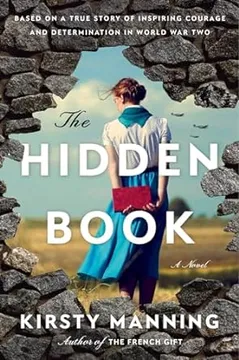
In May 1945, as the SS abandon Mauthausen, a starving boy slips through the camp gates carrying a parcel beneath his clothes. He crosses the village under the cover of departing trucks, finds a hollow in a stone garden wall, and hides the package inside.
Before leaving, he counts the stones carefully, just as his fellow prisoners instructed. The book begins with an act of concealment: a child risking his life to keep evidence of the camp from disappearing with its guards.
The prologue makes preservation a physical risk before the reader knows what is being preserved. The boy moves through a landscape where guards, gates, and stone walls control who can live and what can be remembered. His careful counting turns a garden wall into a fragile archive. That he stops praying because he believes God has abandoned the prisoners gives the hiding place a human purpose rather than a supernatural one: the boy cannot rely on rescue, so he entrusts the truth to other people. The scene also plants a question that will govern both timelines: who will protect the evidence, and who will eventually learn how to read it?
The Calico-Wrapped Album
At thirteen, Hannah is still grieving her father, Gus, and watching her mother, Roza, fill every hour with farm work. Her grandfather Nico arrives from Yugoslavia, frail and coughing, carrying a flour-sack parcel that makes Roza visibly distressed. After the adults leave it hidden in the sewing room, Hannah unwraps it and finds a leather album of Mauthausen photographs.
She recognizes the shaved young prisoner in one image as Nico, and sees a striped uniform patch bearing a red triangle and the letter J. The pictures of emaciated prisoners and SS officers leave her sick with questions. Roza refuses to explain the camp, while Nico tells Hannah that the album may make sense to her when she is older.
Hannah's discovery joins two kinds of bereavement: her father's recent absence and the older, unnamed violence inside her grandfather's past. The album is not merely a mystery object. It exposes the limits of the family's preferred method of survival, in which Roza keeps working and refuses to give grief a language. Hannah's curiosity is partly historical, but it is also an attachment strategy: learning what Nico endured feels like a way to keep him near. Her first look is incomplete and frightening, which mirrors the family's own fragmented knowledge. The parcel begins as something adults hide from a child, then becomes a claim Hannah believes belongs to her too.
A Rescue in the Garden
In Mauthausen village, twenty-one-year-old Lena Lang lives with her parents, Felix and Marie, and her younger sister Greta, whose seizures and learning difficulties the family conceals from the Nazis.
During a prisoner march, a car crashes through the Langs' garden wall, killing and injuring people on both sides. Lena helps a Yugoslav prisoner named Nico treat a badly injured SS officer. When the officer cannot breathe, Nico cuts into his throat and uses a pen tube to open an airway, risking execution if the attempt fails.
The Kommandant, Paul Weber, allows him to continue, and medics arrive to find the officer alive. Lena's family has already had a dangerous encounter with Weber, so her help brings her closer to the prisoners and deeper into risk.
The rescue makes moral action difficult to simplify. Nico saves a man who belongs to the machinery imprisoning him, not because he forgives the officer but because refusal could bring reprisals on everyone nearby. Lena, meanwhile, cannot treat compassion as a private feeling: she must weigh it against the danger to Greta, whose disability could make her a target. Weber's presence transforms a medical emergency into a test of power. The scene establishes that courage in this village often looks like careful improvisation, and that even a successful act of mercy can leave its witnesses more exposed than before.
Six Copies, One Secret
Inside Mauthausen, Spanish photographer Mateo Baca is ordered by Weber to make albums glorifying the camp. Mateo secretly produces an extra set of photographs, including the starving prisoners and the officials who oversee them.
Nico's close-up portrait becomes a private emblem of hope for Mateo and the youngest prisoner, Santiago, a Spanish boy who assists in the photography department. Nico asks Lena to shelter the forbidden images.
Santiago carries a parcel to her at the village bus stop, and she trades him food before hiding the negatives in the hollow built into her garden wall. From then on, Lena risks repeated visits and exchanges to protect the evidence. A family garden becomes an underground route between prisoners and the outside world.
The photographs carry a contradiction: the camp's administrators make images to advertise their authority, while the prisoners use the same tools to preserve proof of what that authority does. Mateo's extra copy changes photography from bureaucratic record-keeping into resistance. Santiago's role matters because the delivery network depends on people the regime treats as disposable. Lena's decision to hide the negatives does not make her safe or erase her complicity as a civilian living beside the camp. It gives her a concrete responsibility. The wall's concealed cavity turns private property into a temporary public archive, protected by trust rather than force.
The Wall Becomes Dangerous
Lena and Nico grow close through brief meetings and food passed across the camp fence, while Lena continues to hide the photographs. Her supervisor, Herr Janz, takes her to the quarry, where she sees prisoners staggering up the Stairs of Death with granite on their backs.
Weber shoots a prisoner who falters, and Lena returns home knowing how easily the same violence could reach her family. Weber later pressures her to dine with him and threatens Greta's safety. When he comes to their garden with Janz, Greta finds the loose stone hiding the negatives and suffers a seizure.
Lena shields her sister, expecting Janz to expose the cavity. Instead, he replaces the stone and invokes official procedure to make Weber leave. The evidence survives, but Lena's family remains in danger.
The quarry scene strips away any comforting distance between the village and the camp: Lena sees exactly what her family's survival has required them to tolerate. Weber's threat against Greta then turns private vulnerability into a weapon, while Greta's seizure disrupts the officer's attempt to control the encounter. Janz's intervention is compromised and limited, but materially important; he does not become a resister in any grand sense, yet he chooses not to reveal the hidden evidence. The episode asks how much moral courage can be demanded from people who are also protecting dependents. Lena's loyalty is not abstract. It is measured in the risks she accepts for both the prisoners and her sister.
A Past Across Borders
After Nico dies, sixteen-year-old Hannah fights with Roza over the album and feels more determined to learn what her grandfather endured. At a school disco, her friendship with Yumi deepens through an unexpected first kiss, and Hannah begins imagining a life beyond the farm.
At university she studies history, falls in love with veterinary student Ari, and plans a research trip. When she suffers a miscarriage, she and Ari separate because they want different futures. In 1996, Hannah visits Mauthausen, sees Nico's name in the memorial's floor, and descends into the quarry.
Meeting local volunteers who preserve the stories of prisoners and their families helps her shape a thesis about memory, museums, and whose lives are made visible. She returns to Australia convinced that Roza should let her see the album.
Hannah's education grows out of an intimate need, but the novel complicates the idea that research can repair loss. Her friendship with Yumi offers a first experience of choosing desire and identity for herself; her relationship with Ari forces her to distinguish love from a shared life plan. The miscarriage makes that choice painful rather than triumphant. At Mauthausen, the memorial's names and the quarry guide's family story move Hannah beyond treating the camp as an inherited puzzle. She begins to understand historical work as an ethical practice: attention to real people, not simply an answer that will settle her family's grief.
The Last Night at Mauthausen
As the Allies approach in May 1945, the boy from the opening, Santiago, carries the secret album through the village and hides it in the Langs' wall. He returns toward the camp but is shot at the gate before he can rejoin Nico, Jakub, and Mateo.
The next day, US forces liberate Mauthausen. Lena reaches the camp with her family, but the crush of freed prisoners and soldiers prevents her from finding Nico. After he later visits her home, he asks her to pass the hidden photographs to the war-crimes investigators.
Lena gives them the evidence; the images are used at the Nuremberg trials, and the album is eventually returned to her. Nico leaves for Mostar, while Lena stays to care for Greta and her parents. Their brief intimacy cannot undo the lives war has separated.
Santiago's death gives the prologue's hiding act its full cost: the album survives because a child carries out a task he knows may not lead to safety. Liberation ends the camp's regime but does not restore the people it has damaged or reunite every family. Lena and Nico's separation is therefore not a failure of feeling. Her decision to stay reflects the practical care her family requires, while Nico's return home is an obligation to a life interrupted. The photographs pass from clandestine evidence to legal testimony, yet their preservation cannot compensate for the people killed to save them. The section refuses to confuse justice with repair.
A Book Finds Nico
Five years later, Lena has resumed her education and is studying mathematics in Vienna. During a visit to Mostar, she carries the album to the address Nico once gave her, hoping to return what she has kept. She sees children playing in the garden and mistakes a woman who answers the door for Nico's wife.
Lena leaves the book on the doorstep and slips away before she can face the family. Nico comes to her lodging after the woman calls him inside. He explains that the woman is his sister, Ana, and that the children belong to her and her husband.
He has no wife of his own. Lena admits she preserved his identity badge and kept the album because his portrait was inside. Their reunion does not resolve the lost years, but it opens a possibility neither had dared assume.
The album's return is also Lena's attempt to relinquish a private relic she has carried since the war. Her first interpretation of Nico's household reveals how completely she has prepared herself for a closed door. The clarification does not erase the past or promise an easy shared life; it simply corrects a conclusion she made from a distance. Nico's badge and portrait have served different emotional purposes: one proves a prisoner's administrative identity, the other preserves Lena's personal attachment. Their reunion brings those meanings together, while leaving both characters free to choose what comes next.
The Promise Roza Breaks
In 1997, Hannah returns to the farm after earning top marks for her thesis and asks Roza for the album. Roza says she burned it, and Hannah leaves in anger, abandoning the doctoral work she had hoped to build from it. In Sydney, Hannah meets Peter, a bank lawyer, on a ferry; they marry and have Ava and Arlo.
Years later, she resumes her PhD, but the demands of childcare and Peter's career widen the distance between them. Their marriage ends, and Hannah struggles to write while raising the children. The album remains the wound she has chosen not to reopen. When Roza falls in 2016, Hannah drives back to the farm to care for her, bringing her children and an unfinished academic life into the house where her questions began.
Roza's claim that she destroyed the album becomes a rupture not only because Hannah loses a source, but because it confirms her fear that family history can be withheld without negotiation. Hannah responds by turning away from research, then builds a life that looks stable from outside but leaves her work and needs continually deferred. Her marriage is not presented as a simple mistake; its gradual failure grows from unequal care and a persistent inability to hear one another. Returning to the farm reverses the earlier movement away from home. This time Hannah comes not as a frustrated child seeking permission, but as an adult responsible for care.
The Book Wasn't Burned
While Hannah helps Roza recover, she rebuilds the farmhouse with Joe, a local builder, and finds room to think again about her PhD. Research from the Mauthausen museum confirms that prisoners made a secret sixth album.
Hannah shows Roza the evidence, and Roza finally brings out the book she had claimed to destroy. Its photographs and Nico's identity badge make the family history tangible at last. Hannah and Roza cry together, then begin speaking more honestly about the past.
Hannah returns to her research and decides the album belongs in the care of the Jewish Museum, where survivors' histories can be preserved and studied. Joe's interest in her work and her friends' support help Hannah imagine a future that includes both scholarship and personal connection.
The revelation corrects a factual lie, but it does not reduce Roza to a villain or make the years of silence harmless. Her grief and fear have shaped how she guarded the album, just as Hannah's need for evidence has shaped her insistence on seeing it. The reconciliation begins when Hannah brings external documentation rather than another demand, creating a shared object they can face together. Giving the album to the museum changes its role once more: it is no longer only a family inheritance or a source for one scholar, but an artifact entrusted to public memory. Hannah's renewed work depends on relationships, not solitary mastery.
Epilogue
By 2018, Hannah and Joe have made a home on the farm, where Roza lives nearby and helps care for the children. Hannah nurses her newborn son, Nico, beneath one of the embroidered cloths sent from Mostar, while her older children play outside. She is finishing research on the album and beginning to study Lena's later work in mathematics.
The family that once guarded its grief in silence now shares its history across generations. Hannah has not erased what happened at Mauthausen; she has made room for that inheritance beside the ordinary work of raising children, tending a home, and choosing what comes next.
The epilogue returns to domestic life without pretending that domestic happiness cancels historical violence. The embroidered linen, once treated as a precious but unusable heirloom, now cradles a baby, joining craft, care, and continuity in one image. Naming the child Nico makes memory an active part of the next generation rather than a burden sealed away from it. Hannah's research continues, but it sits beside feeding a newborn and watching her other children play. The novel's resolution is therefore not perfect knowledge or a repaired past. It is the ability to carry painful history without allowing it to consume every form of life that follows.
Analysis
The Hidden Book is structured around the difference between keeping a past and knowing how to share it. Lena and Hannah both inherit responsibilities they did not choose, but they encounter them under radically different conditions. Lena's choices are constrained by an occupying regime that can punish her family immediately. Hannah's conflict unfolds decades later, through grief, family silence, academic ambition, and the unequal demands of adult life. The novel keeps these situations distinct while showing how the consequences of violence can cross generations without arriving as a complete story.
The photographs are the hinge between private memory and public evidence. The SS commission images to display authority, while Mateo, Santiago, Nico, and Lena turn the same visual record toward accountability. Yet the book does not treat preservation as a clean victory. Santiago's courage cannot save him, the Nuremberg evidence cannot restore the dead, and the album's existence does not automatically give Hannah access to it. Historical truth requires people to protect, interpret, and responsibly share material that may also wound the living.
Roza's silence and Hannah's pursuit are opposing strategies for surviving inheritance. Roza looks forward because she has learned to function by containing grief. Hannah looks backward because uncertainty has made the past feel like the missing piece of her identity. Neither strategy is sufficient alone. Their eventual conversation becomes possible when Hannah brings research into the relationship without demanding that it erase pain. The book's deepest resolution is not that every family secret is exposed or every loss repaired. It is that memory can move beyond possession: the album becomes public testimony, while the family makes room for ordinary affection, work, and new life alongside what cannot be undone.
Review Summary
Reviews for The Hidden Book are mostly positive, averaging 3.82 out of 5. Readers praise the dual timeline structure, meticulous research, and the emotional weight of the Mauthausen concentration camp storyline. The historical thread featuring Mateo, Nico, Lena, and Santiago is widely celebrated for its courage and authenticity. However, several reviewers criticize the modern storyline centered on Hannah, finding her unlikable, self-absorbed, and her romantic relationships unnecessary. Despite mixed feelings about Hannah's character, most agree the book is a compelling, well-written tribute to real events.
Characters
Hannah Campbell
The family historianHannah is the curious daughter of Roza and granddaughter of Nico, raised on an Australian farm after the death of her father, Gus. She is imaginative, emotionally perceptive, and inclined to pursue questions long after others have decided silence is safer. Her interest in history begins as a way to understand the grandfather she loves, then develops into a serious concern with how museums represent people and trauma. Hannah can mistake independence for refusing help, and her desire to find answers sometimes intensifies conflict with Roza. Her central struggle is how to build a life of her own without treating family obligations or inherited history as things she must either obey or abandon.
Nico Antonov
The guarded survivorNico is Roza's father and Hannah's beloved grandfather, a Yugoslav prisoner at Mauthausen whose former work as a pilot and translator has been overtaken by imprisonment. He is gentle with children, quick to comfort others, and capable of humor even when hunger and danger have narrowed his world. His instinct to help does not depend on whether someone deserves his kindness, a quality visible in his risky medical aid to an SS officer. Nico carries the past in his scarred hands and in the stories he withholds. He wants his family to remember him as more than what the camp did to him, yet he also hopes the truth will survive him.
Lena Lang
The village archivistLena is a young Austrian woman whose interrupted ambition is to study mathematics. She lives with her parents and sister Greta in a village shadowed by Mauthausen, where ordinary routines coexist with visible persecution. Her disciplined mind seeks order in numbers, while her compassion repeatedly draws her into morally dangerous choices. Lena is protective of Greta and initially cautious about challenging the system that threatens her family. Her relationships with Nico and the prisoners complicate the boundary between private survival and public responsibility. She is neither untouched by fear nor defined by it; her strength lies in making practical decisions despite knowing their cost.
Roza Campbell
The stoic matriarchRoza is Nico's daughter, Hannah's mother, and an immigrant who has made a life on the Liverpool Plains. She expresses love through work, food, and practical help more readily than through emotional conversation. After losing her husband, Gus, she keeps the farm running and raises Hannah with high expectations, partly because stillness would leave too much room for grief. Roza's silence about Yugoslavia and Nico's past is a form of self-protection, but it also leaves Hannah feeling excluded from her own inheritance. Her bluntness can wound, yet her devotion is unmistakable in the care she gives her family.
Santiago
The youngest prisonerSantiago is a Spanish boy imprisoned at Mauthausen, where his small size and quickness make him useful to older prisoners. He assists Mateo in the photographic department and forms a close bond with Nico and Jakub. He remains alert, hungry, and resourceful, using memories of family meals and home to preserve a sense of himself beyond the camp. Santiago's courage is not born from fearlessness; he understands danger and still accepts tasks that may help others. His youth gives the prisoners' resistance a particularly urgent dimension.
Mateo Baca
The witness with a cameraMateo is a Spanish prisoner and photographer assigned to Mauthausen's identification department. The SS rely on his technical skill, allowing him to work with cameras rather than in the quarry, but his access also exposes him to the camp's official record of abuse. He treats the people he photographs with care and tries to see them as individuals rather than cases or images. Mateo's cheerful manner is a form of endurance, not evidence that the work leaves him untouched. He uses his position to preserve a record the camp's rulers intend to control.
Greta Lang
Lena's spirited sisterGreta is Lena's younger sister, lively and affectionate, with a neurological condition that affects her speech, numbers, and behavior. Her family keeps her medical needs secret because Nazi policy makes disability dangerous. Greta is not merely someone to be protected: she notices details, enjoys jokes, loves flowers, and makes connections with people in her own direct way. Her unpredictability can frighten Lena, especially when an encounter with the authorities could expose her. The Langs' care for Greta is central to the risks they take and to the intimate rhythms of their household.
Jakub
Nico's blunt allyJakub is a Polish prisoner and Nico's close friend. He meets danger with sharp humor and a practical understanding of what the guards may do next. His banter helps protect the younger Santiago from despair, while his loyalty to Nico makes him a steady presence in the camp's daily brutality. Jakub is less inclined than Nico to trust civilians or risk interventions, but his caution is rooted in keeping others alive, not indifference.
Paul Weber
The predatory commandantWeber is the SS commandant at Mauthausen, a man who treats the camp's violence as both policy and personal entitlement. He stages photographs to celebrate the institution he controls and uses his authority to intimidate prisoners and village families. His attention to Lena and Greta reveals how power reaches beyond the camp fences into civilian homes. Weber's polished manners and public ceremony do not soften his cruelty; they help him make domination appear ordinary.
Felix Lang
The cautious fatherFelix is Lena and Greta's father, an engineer and town planner whose job gives the family a measure of security under Nazi rule. He despises the regime but knows that open defiance could expose Greta and endanger them all. Felix tries to protect his family through caution, routine, and careful management of appearances. His position illustrates the compromises forced on people whose work keeps them near the machinery of power.
Marie Lang
The exhausted protectorMarie is Lena and Greta's mother, a careful homemaker whose energy is consumed by caring for Greta and hiding her condition. She is loving, vigilant, and increasingly worn down by years of fear and scarcity. Marie's instinct is to keep the family inside familiar routines, even when Lena begins to question the moral price of staying quiet. Her strength is less visible than Lena's, but it is built from daily attention to what will keep Greta safe.
Gustav
The generous cafe ownerGustav is Marie's brother and the owner of a popular village cafe. He is warm, theatrical, and generous with food, using hospitality to preserve small pleasures amid wartime scarcity. His business gives him access to supplies and influence with local officials, which he uses to help the Lang family. Gustav's humor is a form of defiance: he keeps creating moments of delight in a town organized around fear.
Yumi
Hannah's candid confidanteYumi is Hannah's school friend, a Japanese Australian girl who feels conspicuous in their rural town and dreams of a creative life elsewhere. Confident about style and frank about desire, she helps Hannah see that identity can be explored rather than inherited whole. Yumi's humor is edged with a clear awareness of racism and the assumptions other people make about her. She remains one of Hannah's most perceptive friends, offering candor without demanding that Hannah become someone else.
Tabitha
Hannah's longtime friendTabitha has been Hannah's friend since childhood and is ambitious, organized, and comfortable taking responsibility. Her directness balances Yumi's irreverence, and she remains part of Hannah's close circle even as their lives diverge. Tabitha's dependable presence gives Hannah a sense of continuity across school, university, and adulthood.
Ari
The country-minded vetAri is a veterinary student from a rural family who values practical care, animals, and returning to a life outside the city. He is kind and attentive, and his straightforward belief in building a life together contrasts with Hannah's need to pursue her own education and direction. Their relationship is loving, but their differing hopes reveal how affection cannot by itself settle questions about work, parenthood, and place.
Peter Royston
Hannah's ambitious husbandPeter is a lawyer working in banking who meets Hannah in Sydney. He is organized, charming, and confident about the future he imagines, qualities that initially appeal to Hannah after years of uncertainty. As work and family responsibilities accumulate, his ambitions and habits can leave too little room for her needs. Peter is not presented as a caricature of cruelty; the strain grows from the unequal distribution of attention and care inside their shared life.
Joe
The thoughtful local builderJoe is a builder hired to repair the Campbell farmhouse. He is courteous, practical, and attentive to the people around him, including Hannah's children. His willingness to ask about her research distinguishes him from people who treat her work as an indulgence. Joe also carries his own family history, including the consequences of the forced removal of his mother from her family. He approaches Hannah without requiring her to set aside either her scholarship or her responsibilities.
Herr Janz
The compromised supervisorJanz supervises Lena at the tool factory and has connections to Weber's operations. He is cautious and compromised by the system around him, yet his actions suggest that fear does not eliminate every choice. His intervention at the Lang home offers a limited but consequential form of protection.
Thema Jones
Hannah's history mentorThema is Hannah's university lecturer and later research supervisor. She treats history as the study of real people's lives and encourages Hannah's intellectual ambition. Her own reflections on work and family help Hannah see the unequal demands placed on women scholars.
Gus Campbell
The lost pilot fatherGus is Hannah's father and Roza's husband, a pilot whose jokes and practical affection shape Hannah's memories of childhood. His death leaves Roza responsible for the farm and Hannah searching for ways to understand grief. His absence remains a quiet measure of what both women have lost.
Plot Devices
The hidden photo album
Evidence carried through generationsThe album links the timelines and gives Hannah's family history a concrete object to pursue. Its photographs were made inside Mauthausen, first as part of the camp's record-keeping and then copied secretly by prisoners who wanted the atrocities documented. For Hannah, it is both historical evidence and a personal connection to Nico. For Lena, it becomes something she must protect and eventually return. The album's changing custody raises the question of whether private inheritance or public preservation best serves the people represented in its pages.
The garden wall cavity
A hiding place in plain sightA hollow behind a loose stone lets Lena conceal photographic negatives in a place that seems ordinary from the street. The wall is built into the Lang family's garden, so protecting the evidence repeatedly puts Lena's home and loved ones at risk. The cavity also gives the plot a physical route between the camp and village: Santiago can carry parcels out, and Lena can preserve them until the SS can no longer control the camp. Its stone cover embodies the thin boundary between domestic life and organized violence.
Photographs and identity badge
Faces resist erasureThe photographs record prisoners, camp conditions, and SS officials, while the identity patch in the album connects an image to an individual prisoner. Hannah first sees the badge without understanding it; later research and her visit to the memorial help her recognize the value of names and records. The photographs can serve the regime's propaganda, the prisoners' resistance, legal investigations, family memory, and museum study. Their meaning changes with who holds them and whether the people pictured are treated as evidence, victims, or human beings.
The Mauthausen memorial
A place turns research into witnessHannah's visit to the camp and its memorial gives physical scale to the photographs she saw as a child. The quarry, barracks, and room of engraved names redirect her attention from shocking images toward the people and families behind them. Encounters with local guides also show that memory belongs to survivors, relatives, and nearby communities, not only to visiting scholars. The memorial helps Hannah develop a research question about how institutions can represent atrocity without turning it into spectacle.
Download PDF
Download EPUB
.epub digital book format is ideal for reading ebooks on phones, tablets, and e-readers.








