

Plot Summary
Prologue
At eleven, Leah Thompson1 carries eggs to Megan,19 the village healer,19 and is startled when the old woman19 invites her inside. After giving Leah1 dandelion tea, Megan19 studies her face and warns that the beauty growing in her may bring danger.
She senses evil and predicts a man will return to find Leah on the moors, where Leah will come back of her own will. Leah1 flees, tells her mother10 nothing, and refuses to visit Megan19 again. Six months later, Megan19 dies, leaving Leah1 with a warning she cannot understand.
The prophecy gives Leah’s coming of age the shape of a trap: beauty is noticed before Leah has any language for desire, danger, or consent. Megan’s warning links the moors to both freedom and peril, while Leah’s silence shows how easily a child’s alarm can be dismissed as childish fear. The prediction is not simply supernatural decoration. It becomes a pattern Leah carries into adulthood, a private story that helps her interpret danger but can also make victimization feel inevitable. The book leaves room for both readings: fate may be real, but belief in fate can also conceal choices made by people around her.
The Farmhouse Gamble
In June 1976, painter Rose Delancey3 is living above her means in a damp Yorkshire farmhouse, counting on a London exhibition to rescue her from debt. Her wealthy brother4 David4 sends his grieving sixteen-year-old son,2 Brett,2 to stay for the summer, though Rose3 and David4 have been estranged for years. Leah Thompson,1 the housekeeper10 Doreen’s10 fifteen-year-old daughter, is hired to help with meals and cleaning.
She admires Rose’s3 independence and envies the ease with which Rose’s daughter5 Miranda5 commands attention. Rose3 worries that Miranda5 will turn Brett’s2 arrival into an opportunity, while she keeps the real reason for her long silence from all of them. On the moors, Rose’s son6 Miles6 watches Leah1 from a distance.
The farmhouse sets wealth and deprivation beside each other without making either one a reliable measure of safety. Rose has once been celebrated, but now depends on paid work and a risky exhibition; Leah’s family has little money, yet offers the steadier affection Rose’s household lacks. Brett’s arrival brings the Cooper fortune into this strained domestic world, but his grief makes him less a glamorous visitor than another person sent away by an adult’s decision. Miles’s silent attention introduces a threat that the family’s ordinary routines do not recognize. The story begins not with a single catastrophe, but with several people mistaking appearances for the truth.
The Breakfast Tray
After arriving alone in a limousine, Brett2 spends his first night crying in a cold, leaking bedroom, still grieving his mother and resenting his absent father.4 Leah1 brings breakfast the next morning, but Miranda5 barges in, knocks the tray to the floor, and orders Leah1 to clean it.
Brett2 helps her instead, noticing both Miranda’s5 cruelty and Leah’s1 quiet composure. Miranda5 then claims him as her summer project and takes him riding. At dinner, Brett2 meets Miles,6 whose gaze fixes on Leah,1 and learns that Rose3 is the once-famous painter whose work he admires.
Rose3 shows him her new canvases. When Brett2 admits that David4 expects him to inherit the family business, Rose3 urges him to keep painting, giving him a reason to return to the work he had abandoned.
The breakfast incident makes character visible through conduct rather than status. Miranda treats Leah’s labor as invisible, while Brett’s impulse to help marks his first departure from the insulated world his father has arranged for him. His recognition of Rose’s art creates a rare bond across generations: both know the difference between making work for approval and making it because silence has become impossible. Leah, meanwhile, is still someone Brett can misread as Miranda, a mistake that underlines how quickly beauty is categorized before the person is known. The new household offers him artistic kinship, but Miles’s attention suggests that not every gaze is innocent.
Haworth on Foot
Brett2 asks Leah1 to show him the Brontë Parsonage, and the two travel by train to Haworth. Among the books and family objects, Leah’s1 knowledge of the Brontës draws Brett2 out of his shyness. They share lunch, walk onto the moors, and kiss for the first time. Back at the farmhouse, Brett2 asks to sketch her, then begins meeting her secretly each afternoon.
He paints while Leah1 sits for him; afterward they talk about his dead mother, his wish to become an artist, and the summer’s approaching end. Leah’s father,11 Harry,11 learns about the romance and warns her gently that Brett2 belongs to a different world. Leah1 promises herself they will write when he returns to school, unable to imagine the distance between them.
The Brontë setting gives the young couple a ready-made language for passion, but their actual intimacy grows through shared attention: Leah explains what she loves, Brett watches how she moves, and the sketch becomes a record of seeing rather than possessing. Their secret meetings also create a private world sharply different from the social roles assigned to them. Brett is an heir being directed toward business; Leah is a working-class girl expected to return home and help her parents. Harry’s warning is protective, not cynical. He recognizes that love can be sincere and still be shaped by unequal resources, a tension the lovers are too young to measure.
Miranda’s Birthday Barn
At Miranda’s5 sixteenth-birthday party, Brett2 gives her a gold locket, then lets her kiss and touch him after months of resisting her advances. He regrets the encounter almost immediately, but keeps it from Leah.1 Miranda5 discovers his charcoal portrait of Leah and understands why he chose her instead.
Later, Leah1 enters a dark barn expecting Brett2 and is grabbed by Miles,6 who has been watching her; she escapes when Brett2 arrives. Miranda5 confronts them and falsely presents Brett’s2 encounter with her as sex.
Brett’s2 guilt makes Leah1 believe the accusation. Doreen10 takes her home, ends Leah’s1 work at the farmhouse, and refuses Brett’s2 pleas. He leaves Yorkshire without repairing the damage, while Leah1 is left with fear, heartbreak, and uncertainty about what happened in the barn.
The party turns desire into leverage. Brett’s physical mistake matters less than his concealment: by hiding it, he gives Miranda control over the meaning of what happened and leaves Leah to read guilt as proof. Miranda’s lie weaponizes a real betrayal, making it harder for Leah to separate fact from humiliation. Miles’s assault adds a more fundamental danger, one that the crowded celebration and its adult supervision fail to prevent. Doreen’s decision to withdraw Leah protects her, but it also closes off the one place where she might have confronted Brett. A brief summer romance is broken by unequal knowledge, not by a cleanly understood choice.
A Daughter Left Behind
Months after Brett2 returns to Eton, Miranda5 tells Rose3 she is pregnant. She has delayed seeking help until she is too far along for a safe termination, and she refuses to identify the father. In April, she gives birth to Chloe9 but feels no attachment to the newborn, so Rose3 and Doreen10 shoulder much of the care. Leah1 hears the news at school and believes Brett2 fathered the child, though she has no proof.
Her heartbreak hardens into silence, while Harry11 quietly supports her. After Chloe’s9 birth, builders clearing a barn find Brett’s framed charcoal portrait of Leah. Rose3 recognizes the love in its workmanship and takes it to London. There, a photographer sees the drawing and recommends Leah1 to a leading modelling agent.
Chloe’s arrival magnifies the cost of what no one is willing to explain. Miranda’s silence protects her from questioning but leaves Leah to build a painful conclusion from incomplete evidence. Rose responds to the baby’s needs where Miranda cannot yet respond emotionally, repeating the care work Doreen has long performed for the household. Brett’s portrait survives as a more trustworthy account of his feelings than his conduct was: the drawing records devotion, but cannot undo the lie or restore Leah’s trust. Its journey to London changes Leah’s prospects, turning private grief into the doorway to a public career.
The Milan Catwalk
Leah’s mother10 accompanies her to London, where Madelaine Winter20 signs her to a modelling agency and sets her up with experienced model Jenny Amory.7 On Leah’s1 first Milan assignment, designer Carlo Porselli15 takes a special interest in her and selects her to wear his wedding dress.
His former star, Maria Malgasa, gives Leah1 laxatives disguised as aspirin, leaving her ill and unable to finish the show. Maria takes the dress instead, but Leah’s1 absence and the press’s curiosity turn the apparent humiliation into publicity.
Carlo15 visits Leah,1 apologizes for his own part in the danger, and persuades her not to quit. He promises to protect her, and she stays in modelling. The girl who left Yorkshire homesick begins to attract photographers who want to know her name.
Leah’s rise begins with a decision made under pressure, not with uncomplicated ambition. The modelling world offers money and escape, but immediately tests her ability to defend her body and judgment against people who treat her as a marketable image. Maria’s sabotage is deliberate, while Carlo’s protection is both useful and self-interested: he opens doors but increasingly imagines himself as the author of Leah’s success. The press rewards Leah precisely because she is absent from the expected party, turning restraint into mystique. Her career thus depends on a public story that is not quite her own, a tension that follows her into adulthood.
Warsaw Under Siege
In 1938, David4 and Rosa Delanski3 live with their parents, Adele16 and Jacob,17 a British woman and a Jewish Polish painter who have built a loving household in Warsaw. Jacob17 teaches young Rosa3 to paint; David4 studies music and plays a rare Stradivarius. After Germany invades Poland, the family is forced into the Warsaw ghetto with Jacob’s parents.17
Hunger and disease take the grandparents, and grief drives Jacob17 into withdrawal. David4 begins risking trips through the sewers to bring food back to the apartment. When deportations start in 1942, Adele16 gives David4 her British passport and a locket bearing her parents’ London address. During a raid, Adele16 and Jacob17 are taken, but Rosa3 survives because her mother16 hides her behind a wardrobe.
The family’s gifts become forms of inheritance under conditions designed to erase inheritance altogether. Jacob teaches Rosa to paint; Adele gives David documents that may preserve a route out; David’s music will soon become a means of survival. The ghetto steadily converts ordinary acts of care into dangerous work: feeding a family requires sewer journeys, and protecting a child means hiding her in a cramped space while parents are taken away. David is still young, yet he becomes the person who must act because the adults around him have been killed or broken by terror. The past that shapes the later family begins as a struggle to keep one another alive.
The Violin at Treblinka
David4 takes Rosa3 out to search for food, carrying his violin and Adele’s passport hidden in its case. A German officer recognizes Rosa’s3 drawing talent and sends the siblings to Treblinka, where the violin saves David4 from immediate death by placing him in the prisoners’ orchestra.
He discovers that Jacob17 is alive, but the reunion ends when the sadistic officer Kurt Franzen12 forces David4 to choose which of his father’s17 or Rosa’s3 paintings should be spared. Jacob17 signals David4 to choose his sister,3 then is shot. Anya,13 a Ukrainian kitchen worker abused by Franzen,12 helps David4 and Rosa3 escape by setting fire to the camp fence and hiding them on a train. After the war, David4 brings Rosa3 and Anya’s infant,18 Tonia,18 to England.
Treblinka distorts the moral meaning of talent: David’s music keeps him alive only by forcing him to soundtrack other prisoners’ deaths, while Rosa’s art attracts both reward and danger. Franzen’s demand that David choose between his father and sister makes survival inseparable from guilt. David obeys Jacob’s signal, choosing the future rather than the person he loves most, and carries that choice with him. Anya’s escape plan is an act of solidarity across the brutal divisions of the camp, but freedom does not restore what was lost. The survivors reach postwar Europe carrying children, documents, art, and promises they cannot yet fulfill.
Names Made Anew
In London, David4 and Rosa3 are rejected by their English grandfather, so David4 sells the Stradivarius to secure food and shelter. He adopts the surname Cooper and uses the money to begin a property business; Rose3 studies art and becomes a celebrated painter. Franzen12 later finds Rose,3 disguises his identity, and convinces her that he had secretly protected her at Treblinka.
She believes him, becomes involved with him, and falls out with David4 when she reveals the relationship. Rose3 leaves London and raises Miles6 in Yorkshire. In 1960, a letter from Tonia,18 now gravely ill, leads Rose3 to a hospital. Tonia18 asks her to raise her infant daughter, Miranda.5 After years of legal struggle, Rose3 adopts Miranda5 and brings her home.
The new names are practical shields, but they also divide people from their histories. David’s Cooper identity enables survival and later success; Rose’s changed surname marks a life built away from her brother. Franzen exploits her childhood dependence by rewriting his role in the camp as protection, converting trauma into a bond that looks like love from inside it. Rose’s estrangement from David is therefore more than a family quarrel: it is the consequence of a predator’s ability to make the victim distrust the person who might challenge the story. Her later adoption of Miranda begins a second attempt at family, shaped by a promise made beside a dying mother.
The Birthday Reunion
At Leah’s1 twenty-first-birthday party in 1981, Brett2 sees her for the first time since Yorkshire and they resume a cautious connection. He has finished Cambridge and begun working for David,4 despite still longing to paint.
Leah1 moves to New York, where the two meet privately and rekindle their love. Brett2 asks about Chloe,9 and Leah1 tells him she believes Miranda’s daughter9 is his; he insists their encounter never went that far. In Milan, Carlo15 proposes to Leah1 at his palazzo.
She refuses, but he has already told the press they are engaged. Brett2 sees the reports and, hurt and drunk, rejects her explanation. Leah1 returns to New York to find Jenny7 unconscious after an overdose, leaving her with a second crisis and no chance to repair things with Brett.2
The reunion offers the lovers a chance to replace a childhood misunderstanding with adult honesty, but they are still vulnerable to the same mechanism: a damaging story reaches Brett before Leah can explain it. Carlo’s unilateral announcement makes intimacy into publicity and presses Leah into a role she has never chosen. Brett’s reaction repeats his earlier failure to trust her, though this time the stakes are greater because both have built lives apart. Meanwhile, Jenny’s overdose exposes the cost of a world that praises women’s faces while punishing their bodies. Leah is pulled between romantic hope and the responsibility of caring for a friend in crisis.
Jenny’s Last Chance
Jenny7 survives her first overdose but returns from hospital deeply depressed, convinced that her career is over and that Ranu will not come back to her. Leah1 tries to keep her eating and asks her to seek help.
Jenny7 later begins a relationship with Miles,6 who moves into the apartment and becomes physically abusive. Leah1 confronts him and makes him leave, but Jenny7 remains emotionally fragile. The next morning, Leah1 finds her dead after a further overdose of alcohol and Valium.
At the funeral, she watches the fashion industry discuss its next rising model as if Jenny7 never mattered. She tells Madelaine20 she will quit once her existing bookings end, then accepts Anthony Van Schiele’s8 proposal, seeking a life outside the relentless scrutiny that helped break her friend.
Leah’s care for Jenny is intimate and practical, but friendship cannot substitute for sustained professional help or a system that treats a person as more than a contract. Jenny’s return to Miles shows how isolation can make danger feel like attachment, especially when a person believes nobody else will choose her. Leah does intervene, yet the loss exposes the limits of her control and leaves her with guilt that cannot be resolved by being a better friend. Her decision to quit modelling is partly grief and partly refusal: she no longer wants to participate in a culture that can erase Jenny immediately after profiting from her image.
Miranda’s Captive Life
After the 1981 party, Miranda5 leaves Chloe9 with Rose3 and goes with the wealthy Frank Santos, who supplies her with luxury but confines her and forbids contact with her daughter.9 Santos’s employee Ian14 becomes her only confidant and falls in love with her.
They plan to escape, but Ian14 is killed before their flight, and Santos’s staff locks Miranda5 inside and threatens Chloe.9 David4 has meanwhile spent years working with Nazi hunters, posing as Santos’s business partner so they can arrest him.
In 1984, David4 reaches Santos’s villa in France and learns the truth: Santos is Kurt Franzen,12 the Treblinka officer he has pursued. Franzen12 recognizes David,4 empties his gun, and nearly kills him. Miranda5 strikes Franzen,12 sending him over the cliff before he can murder David.4
Miranda’s apparent escape from Yorkshire becomes another form of captivity because she mistakes wealth for agency and is then treated as property. Ian’s tenderness offers a human alternative, but the power imbalance around them makes even an escape plan lethal. David’s undercover work is also driven by a desire to convert private grief into public accountability, yet Franzen’s recognition destroys the legal operation at its decisive moment. Miranda’s intervention is not a rescue performed by a powerful man; it is the action of a woman who has already endured coercion and chooses to stop it. Her freedom arrives with the cost of Ian’s death and unresolved trauma.
The Road Back North
By 1984, Leah1 and Anthony’s8 marriage has been strained by her repeated miscarriages and her retreat from the life they built together. A third pregnancy ends after Leah1 receives a slashed photograph of herself in Carlo’s15 clothes.
Soon afterward, news arrives that model Maria Malgasa has been murdered in Milan. Police charge Carlo,15 whose prints are in Maria’s room, and Leah’s1 earlier photographs become part of the investigation. Leah1 feels detached from the inquiry and from Anthony,8 who wants to help but cannot reach her.
When her father11 suffers a heart attack after hip surgery, Leah1 flies from New York to Yorkshire. She sits beside Harry11 in hospital, then arranges a convalescent stay for both parents so Doreen10 can rest. With the bungalow empty, Leah1 visits Haworth and encounters Brett.2
Leah’s private losses and the public mystery around Carlo converge without initially making her feel more powerful. The slashed images intrude into a body already made the site of repeated disappointment, while the murder investigation threatens to turn her into evidence rather than a person. Her father’s illness interrupts that inward spiral by giving her an urgent, concrete task: travel, sit at his bedside, and arrange care for both parents. Yorkshire restores familiar responsibilities and places her back in the landscape where her first love began. The encounter with Brett follows from that return, but it does not erase the marriage, grief, or choices she must now face.
Choosing the Living
Brett,2 now painting in Rose’s3 farmhouse, asks Leah1 to dinner and apologizes for believing the false engagement story. She confirms that Carlo15 proposed without consent and that she refused him. When Brett’s2 car will not start after their meeting, Leah1 lets him stay at the bungalow.
They make love, then spend the remaining days before her flight revisiting Haworth and the moors. At Heathrow, Brett2 asks her not to leave; Leah1 admits she still loves him and boards a flight with him to Paris instead of returning to Anthony.8
She tells her parents what she has chosen, then stays at Rose’s3 farmhouse while Brett2 searches for an apartment. Their renewed love brings joy, but Leah1 has left a kind husband8 and has not yet decided what kind of life she wants.
Leah’s choice is an act of desire, but it is not presented as a clean solution. She returns to Brett because the love between them remains alive, yet the decision also requires her to leave Anthony without resolving all the hurt her departure will cause. The airport makes the choice unmistakable: she can continue on the path already arranged or turn toward the life she wants. Brett’s apology matters because it names his earlier failure to trust her, but a single apology cannot guarantee future security. Leah’s own uncertainty is essential. The novel gives her agency not by making every consequence easy, but by letting her choose before certainty arrives.
The Moors at Night
As Leah1 stays alone at Rose’s3 farmhouse, FBI investigators tell Anthony8 that Miles6 is suspected of killing women in New York, Milan, and London, and may be heading for Leah.1 With the farmhouse phone out of order, no warning reaches her.
Miles6 enters using a key and attacks the dark-haired woman he believes is Leah.1 It is Miranda,5 returned from America; she dies before Leah1 can reach her. Leah1 leads Chloe9 out the back door and runs across the moors as Miles6 follows in a car.
She throws Chloe9 clear, breaks her ankle jumping a wall, and is caught as Miles6 tries to strangle her. Police lights appear, but he drags Leah1 toward his car. A shot wounds him; he drives toward the reservoir, and Leah1 escapes before the car crashes and explodes in the water.
The prophecy’s geography is fulfilled through a brutal confusion of identity: Miles sees Leah as the object of his obsession, while Miranda is the person in front of him. His fixation turns the familiar farmhouse into a hunting ground, and the broken telephone makes ordinary infrastructure part of the danger. Leah’s decision to send Chloe away at personal risk is the climax’s clearest act of love, a reversal of the child’s earlier abandonment by Miranda. The police arrive in time to interrupt the strangling but not to save Miranda. The chase ends Miles’s immediate threat, yet it cannot restore the family member his delusion has killed.
The Truth at Miranda’s Grave
At Miranda’s5 burial, Rose3 explains that Franzen12 had manipulated her after the war and that Miles6 was the child of their relationship. She had hidden this history even from herself, then watched Miles’s6 coldness without understanding its source.
David4 arrives after decades of estrangement and takes Rose3 away from the grave, beginning their reconciliation. Leah1 survives the attack, recovers with Brett,2 and eventually builds a life with him rather than returning to Anthony.8
Their plans include adoption, while Rose3 and David4 leave Yorkshire for New York with Chloe.9 The family cannot undo the deaths or the years lost to secrecy, but the truth ends Rose’s3 isolation and lets Leah’s1 chosen future take shape beyond the moors where her childhood fear began.
Rose’s confession refuses the easy comfort of inherited evil. Miles’s parentage helps explain the family history, but Rose does not claim it excuses his actions; she accepts responsibility for how she concealed the past and failed to understand her son. David’s return answers an earlier rupture with presence rather than argument. Leah’s recovery, meanwhile, depends on more than surviving Miles: she must build a life that includes work, love, and choices beyond the roles others have assigned her. The ending offers repair without pretending that repair cancels harm. Its strongest movement is from private silence toward shared knowledge.
Epilogue
In 1992, Leah1 leads a Paris benefit for the Delanski Foundation and the Holocaust Foundation, with Brett,2 Rose,3 David,4 and Chloe9 beside her. A delayed flight brings Anya,13 now an elderly woman from Moscow,13 to the gathering. David4 recognizes the woman who helped him and Rosa escape Treblinka13 and embraces her; Rose3 joins them.
Brett2 gives Leah1 a painting based on his teenage portrait of her, now titled The Hidden Girl. As the family celebrates its reunion, Rose3 notices a cold, distant look in sixteen-year-old Chloe9 that recalls Miles,6 leaving the future touched by both reconciliation and unease.
The reunion with Anya closes a promise first made in the aftermath of Treblinka, but it does not turn history into a neat circle. David and Rose can finally meet the person who helped save them, while Leah uses her public position to support survivors and their families. Brett’s painting joins youthful love to mature artistic purpose, transforming an image once kept in a barn into a gift freely given. Yet Rose’s reaction to Chloe prevents the ending from declaring that trauma has vanished. The family has gained truth and connection, not immunity from what the past can pass onward.
Analysis
The novel connects three forms of captivity: the literal imprisonment of Jews in Treblinka, Miranda’s5 confinement within a wealthy man’s household, and the quieter restrictions imposed by family expectations and public image. These forms are not equivalent, and the book’s strongest moral distinction is between structural violence and private suffering. Yet the narrative shows how the language of protection can blur that distinction. Franzen12 recasts domination as care, Carlo15 treats professional gratitude as romantic entitlement, and Brett2 initially lets jealousy decide what Leah1 must have done. Each man’s story about his own motives risks overruling a woman’s account of her experience.
Art and appearance repeatedly hold competing truths. Leah’s1 face earns her access to money and fame, but the industry reduces her to a surface; Brett’s portrait sees her as a particular person, though it cannot prevent his betrayal. Rose’s3 paintings let trauma enter public view before she can explain its source. David’s violin preserves beauty in a camp organized to destroy it, then must be sold so he and Rosa3 can live. Objects and images survive when memory is distorted, but survival alone does not bring understanding.
The family plot is built from secrets passed down as both protection and injury. David4 withholds his history from Brett2 because he wants to spare him; Rose3 hides Miles’s6 parentage because she cannot face what it means; Miranda5 conceals Chloe’s9 father because shame and fear close around her. Silence does not keep danger in the past. It leaves later characters to mistake fragments for facts. By contrast, the ending’s tentative repair begins when people tell the truth and remain present for one another. The book does not claim that love cancels trauma, or that ancestry determines character. It argues more carefully that responsibility lies in what people do with the histories they inherit, and whether they allow those histories to become another instrument of control.
Review Summary
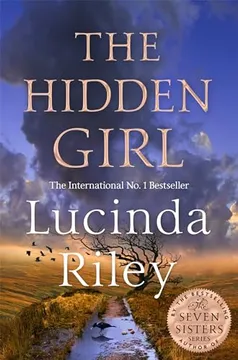
Reviews for The Hidden Girl are mixed. Many fans praise it as an engrossing, emotionally rich generational saga spanning WWII Poland, Yorkshire, and New York's modelling world, commending its complex characters and masterful storytelling. However, critics cite an overwhelming number of plotlines, predictability, and excessively dark themes including abuse, murder, and incest. Some felt characters were underdeveloped and love stories unconvincing. Several note the book was originally written by Lucinda Riley and adapted by her son, Harry Whittaker, with opinions divided on whether the collaboration successfully honours her legacy.
Characters
Leah Thompson
The Yorkshire-born modelLeah is the daughter of Doreen10 and Harry Thompson11, raised in a modest Yorkshire home where she helps care for her disabled father. Tall, striking, and initially shy, she is more interested in books, art, and family than in the attention her beauty brings. Her romance with Brett2 begins when she is fifteen, but betrayal and fear complicate her understanding of trust. Modelling carries her from the moors into a world that prizes her appearance while often overlooking her judgment and interior life. Leah’s central struggle is not whether she is beautiful, but whether she can define herself beyond the roles that beauty, love, and other people’s needs impose on her.
Brett Cooper
The reluctant heirBrett is David Cooper’s4 son, a gifted young painter educated among people who expect him to inherit a business empire. His mother’s death leaves him bereft, while his father’s plans make him feel that his future has already been decided. Rose’s3 encouragement and Leah’s1 attention reconnect him with the art he has tried to abandon. Brett is affectionate and imaginative, but his fear of losing Leah1 can make him impulsive and unfair. His development depends on learning that love is not secured by longing alone: it requires honesty, responsibility, and the willingness to trust another person’s account.
Rose Delancey
The painter in hidingRose is a gifted painter whose early success was followed by a long retreat from public life. She raises Miles6 and Miranda5 in a remote Yorkshire farmhouse while trying to revive her career and keep her family together. Generous and capable, she can also be secretive, especially when shame makes the truth feel impossible to face. Rose’s protective instincts are genuine, but they do not always help her see what is happening around her. Her life is shaped by the tension between art as self-expression and art as a way of surviving experiences she has not yet been able to name.
David Cooper
The self-made patriarchDavid is a powerful businessman, Brett’s father2, and Rose’s estranged brother3. Reserved and commanding, he has built an enormous company through discipline and a talent for seeing opportunity, but success has also given him a way to keep painful memories at a distance. His relationship with Brett2 is shaped by care he rarely knows how to express and by expectations he assumes his son will accept. David’s deepest loyalties are to family and to a past he has tried to contain. His challenge is to recognize that protection through silence can become another form of abandonment.
Miranda Delancey
Rose’s restless daughterMiranda is Rose’s adopted daughter3, raised alongside Miles6 in the Yorkshire farmhouse. She is striking, ambitious, and impatient with the poverty and limits of village life. Her early confidence in her ability to charm men conceals a fear of powerlessness and a hunger for material security. Miranda can be sharp with Leah1 and resistant to the demands of motherhood, yet her need for love and belonging is stronger than she knows how to admit. The character is driven by the gap between the life she imagines and the emotional consequences of trying to obtain it at any cost.
Miles Delancey
The brooding photographerMiles is Rose’s son3, a handsome and gifted photographer who keeps to himself and spends long hours on the Yorkshire moors. His quietness can seem thoughtful, but it also makes him difficult for his family to read. He is intensely observant and drawn to images, especially photographs that let him frame the people around him at a distance. Miles’s relationships with Rose3, Miranda5, and Leah1 are shaped by possessiveness, secrecy, and an unsettling need to control how others are seen. He represents the danger of mistaking attention for affection and observation for intimacy.
Jenny Amory
Leah’s model mentorJenny is an experienced model who becomes Leah’s1 friend and guide when Leah1 first arrives in London. Witty and generous, she teaches Leah1 the practical rules of the fashion world and offers the companionship that Madelaine’s20 agency cannot provide. Jenny’s confidence is complicated by pressure over her weight, alcohol, and career prospects. She longs for a dependable love but repeatedly invests in people who offer attention without security. Her friendship with Leah1 reveals both the genuine solidarity models can create and the limits of support in an industry that treats vulnerability as a professional defect.
Anthony Van Schiele
The patient benefactorAnthony is the wealthy owner of Chaval Cosmetics and Leah’s1 employer in New York. A widower with a grown son, he is thoughtful, courteous, and unusually attentive to the person behind Leah’s1 public image. He offers her calm company, cultural experiences, and a home life far removed from the modelling circuit. Anthony’s kindness is real, but his age and position cannot guarantee that he and Leah1 want the same future. His character tests the difference between being cared for and being fully understood, and he approaches love with patience rather than possession.
Chloe
Miranda’s daughterChloe is Miranda’s young daughter5, raised with substantial help from Rose3 and Doreen10. She is trusting and affectionate, with a close bond to the adults who provide steadiness in her early life. Her dependence on others exposes the cost of Miranda’s5 uncertainty about motherhood, but Chloe is not simply a symbol of that conflict. She is a child with her own attachments and fears, whose safety becomes urgent when the adults around her are drawn into danger.
Doreen Thompson
Leah’s steadfast motherDoreen is Leah’s mother1 and Rose’s housekeeper3, a practical woman who works hard to support her family and care for her disabled husband. She is protective of Leah1 and skeptical of the Delanceys’ privileges, but she does not try to extinguish her daughter’s ambitions. Doreen’s sewing, cooking, and household labor provide a quiet measure of love. She also helps care for Chloe9, showing how responsibility often falls to women who are already carrying more than their share.
Harry Thompson
Leah’s gentle fatherHarry is Leah’s father1, confined to a wheelchair by severe rheumatoid arthritis. Though dependent on Doreen10 for much of his care, he remains warm, humorous, and attentive to his daughter’s feelings. He listens when Leah1 tells him about Brett2 and warns her about the difference in their worlds without dismissing her first love. Harry’s dignity does not depend on physical independence; his steady presence gives Leah1 a model of affection that is neither controlling nor conditional.
Kurt Franzen
The camp commandantKurt Franzen is a Nazi officer at Treblinka, where he exercises power over prisoners and treats cruelty as a demonstration of authority. He is capable of manipulating those around him as readily as he uses force, and he turns his own self-interest into a story of necessity. Franzen’s defining psychological trait is his refusal to accept responsibility: he recasts violence as duty and control as care. His presence connects wartime brutality with the private abuses and silences that echo through later generations.
Anya Rosstoff
The camp kitchen workerAnya works in Treblinka’s kitchen and is subjected to coercion by the officers who control the camp. Despite her danger, she forms a protective bond with Rosa3 and helps David4 and the children find a chance to escape. Anya’s courage is practical rather than grand: she watches for openings, shares what she knows, and acts when delay would be worse. She represents the possibility of solidarity among people trapped in a system designed to divide and exploit them.
Ian Devonshire
Miranda’s quiet allyIan is an employee of Frank Santos who becomes Miranda’s5 trusted confidant. Plain in manner and observant, he understands the danger surrounding her before she can fully accept it. His loyalty to his employer conflicts with his concern for Miranda5, and his affection makes him consider a future beyond the life he has always known. Ian’s restraint and kindness contrast with the transactional relationships that have shaped Miranda’s5 expectations.
Carlo Porselli
The possessive designerCarlo is a celebrated Italian designer who discovers Leah1 and helps establish her modelling career. He is charismatic, theatrical, and generous when his ambitions align with hers, but he also tends to confuse gratitude with obligation. Carlo’s affection for Leah1 becomes possessive, and he assumes that their public image gives him a claim on her private choices. His character exposes how patronage can open doors while quietly creating a debt the recipient never agreed to owe.
Adele Delanski
The English motherAdele is David4 and Rosa’s mother3, an Englishwoman who elopes with Polish painter Jacob17 and joins his Jewish family in Warsaw. She chooses love over the future arranged by her aristocratic parents and raises her children in both British and Jewish traditions. When danger closes around the family, Adele’s courage takes the form of preparing her children to survive without her.
Jacob Delanski
The painter fatherJacob is a Polish Jewish painter, Adele’s husband16, and the father of David4 and Rosa3. His work and optimism help create a lively family life before war destroys its security. In the ghetto, grief gradually overwhelms him, but his love for his children remains, expressed in the choices he makes when their lives are threatened.
Tonia Rosstoff
Miranda’s birth motherTonia is Anya’s daughter13, raised in an orphanage after her mother leaves her in David4 and Rosa’s3 care. As an adult, she searches for the Delanskis and asks Rose3 to protect her infant daughter. Her plea grows from a determination to spare her child the loneliness and deprivation she endured.
Megan
The village seerMegan is an elderly village woman who shelters injured birds and is regarded by children as a witch. She recognizes Leah’s1 emerging beauty and senses that danger may follow it. Her warning gives Leah1 a fearful story about the moors long before Leah1 can understand its meaning.
Madelaine Winter
The modelling agency queenMadelaine runs Femmes, a powerful modelling agency, and selects Leah1 after seeing her potential. She is shrewd, polished, and skilled at persuading young women to accept the risks of a glamorous career. Her care for her models is real but limited by the commercial logic of her business.
Roddy Dawes
Rose’s gallery allyRoddy is Rose’s3 old art-school friend and the London gallery owner who helps stage her return to painting. Sociable, flamboyant, and well connected, he understands how the art market turns both rarity and personal history into value. His affection for Rose3 is loyal, though his enthusiasm for publicity can unsettle her.
Plot Devices
Megan’s prophecy
Foreshadowing on the moorsMegan’s childhood warning tells Leah1 that beauty may bring danger and that a man will return to find her on the moors. The prophecy gives the landscape a charged emotional presence and creates anticipation whenever Leah1 returns to Yorkshire. Its eventual fulfillment is complicated by the fact that Miles6 attacks the wrong woman before pursuing Leah1, so the prediction does not explain the violence or excuse it. Instead, it links Leah’s1 private childhood fear to adult danger while leaving open whether fate is real or whether the warning shaped how she understood her life.
Brett’s charcoal portrait
Love preserved in artBrett2 sketches Leah1 during their secret summer meetings on the moors. The drawing captures his affection more honestly than he can express it, survives the rupture caused by Miranda’s5 claims, and is later found in a barn. Rose3 takes it to London, where it helps bring Leah1 to the attention of photographers and modelling agents. The portrait then becomes a physical link between Leah’s1 Yorkshire past and her public career. In the epilogue, Brett2 transforms the early image into a new painting, giving their shared history a different meaning.
Adele’s locket and passport
Identity carried through dangerWhen deportations begin in Warsaw, Adele16 gives David4 a locket containing her parents’ London address and her British passport. Hidden with the Stradivarius, these objects preserve the family’s possible route to safety and later help David4 and Rosa3 establish their identity after the war. The documents cannot guarantee welcome: their grandfather rejects them, forcing David4 to invent a new surname and make a living. Their function is therefore both practical and symbolic. They carry proof of family belonging into a world where institutions and relatives may refuse to recognize it.
The Stradivarius violin
Music as survivalJacob17 and Adele16 give David4 a rare Stradivarius, an instrument that first marks his talent and family life. At Treblinka, playing it earns him a place in the forced orchestra and keeps him alive, though he must perform amid the camp’s violence. After the war, he sells the violin to feed himself and Rosa3 and establish a home in London. Its changing role tracks the difference between beauty as a family inheritance, beauty exploited by power, and beauty sacrificed for survival.
The borrowed identity
A past disguised as successAfter David4 and Rosa3 are rejected by their English grandfather, David4 uses the surname Cooper and builds a new life through property and business. Years later, Kurt Franzen12 also lives under another name, presenting himself as the respectable businessman Frank Santos. These changed identities let the characters move through society while obscuring the history that shaped them. The device creates suspense around who can be trusted and shows how reputation can conceal violence. Unlike David’s4 name change, which protects two displaced children, Franzen’s12 false identity allows him to continue exercising power.
Download PDF
Download EPUB
.epub digital book format is ideal for reading ebooks on phones, tablets, and e-readers.








