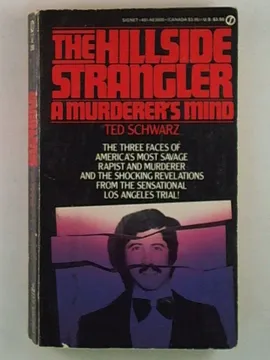


Key Takeaways
Treat a disappearance as a pattern break, not a routine absence
Routine became evidence. In January 1979, students Karen Mandic and Diane Wilder vanished in Bellingham after saying they would house-sit. At first, the police had no proof a crime had occurred. Chief Terry Mangan took the report seriously because the women were dependable, their plans were known, and their behavior was out of character. A small clue sharpened the concern: Diane's cat had been left without care, something she would not normally do. A note with the house-sitting address confirmed where the women were expected to be. Their bodies were found later that day in Karen's car.
Patterns guided the search. The case shows how familiar knowledge of people's routines can make a vague missing-person report urgent. It did not prove murder, but it helped police decide where to look before physical evidence appeared.
What's striking is how ordinary knowledge became an investigative instrument. The cat mattered not as a cute detail, but because it contradicted a well-established routine. This resembles anomaly detection in other fields: a deviation becomes meaningful when there is a reliable baseline. The approach also has limits. People change plans, miss calls, and act unpredictably, so a pattern break is a reason to check, not a verdict. Mangan's judgment was strongest because he combined personal context with routine police procedure rather than treating intuition alone as proof.
Treat every trace as potentially decisive until the scene is documented
Small traces connected places. Bellingham investigators documented the car and the house carefully, photographing footprints, collecting hairs and fibers, and recording a fresh dent beneath the car's gas tank. They compared the dent with a rock and damaged heather at the house, evidence consistent with the car having been driven there with an additional passenger. Fibers from the victims' clothing and shoes matched carpet in the house. Hair evidence also linked the crime scene to Bianchi. Such details helped turn a set of suspicious circumstances into a case supported by physical traces.
Care preserved options. Investigators sealed off areas, photographed before moving objects, and bagged even ordinary-looking debris. Their thoroughness mattered because nobody could know in advance which trace would later answer a question.
The method is a lesson in disciplined uncertainty. Investigators do not need to know which fragment matters before preserving it; they need procedures that keep future comparisons possible. Forensic evidence is powerful precisely because it can constrain a story, but it is not self-interpreting. A fiber match, for instance, supports contact with a place, not by itself the circumstances or timing of that contact. The book's account is strongest where several different traces converge, and where scene handling reduces the risk that investigators will destroy evidence while trying to find it.
A familiar family man can conceal acts his loved ones cannot imagine
Respectability hid risk. In Bellingham, Ken Bianchi seemed to be a devoted father, a loving partner to Kelli Boyd, a reliable security worker, and a man interested in police work. His employer trusted him. He had joined the Sheriff's Reserve and was known for being gentle and helpful. When the police arrested him, people who knew him struggled to reconcile that portrait with the murders. Yet the investigation found links between Bianchi and the crime scenes, and he eventually gave detailed confessions.
The contrast is central. The book describes a public-facing Ken, a violent persona he called Steve, and another persona called Billy. These labels emerged during psychiatric interviews, not as independently verified people. They capture the gulf between his ordinary relationships and the brutality attributed to him, while leaving open what that gulf meant psychologically.
The contrast warns against treating social warmth as a reliable screening test for violence. People are known through selective slices of behavior, and a loving role in one setting cannot certify conduct in another. At the same time, the reverse error matters: oddness, charm, or emotional restraint should not be treated as evidence of guilt. The case's public drama comes from the collision between reputation and forensic findings. That makes corroboration essential, especially when a community's trust in a familiar person competes with evidence gathered at a crime scene.
Link evidence across jurisdictions before fear turns suspects into headlines
A shared case took shape. The Los Angeles killings crossed the boundaries of city police and county sheriff departments. As bodies accumulated, investigators formed a task force, centralized calls, shared reports, and mapped links among victims, locations, and evidence. The chart was not a magical computer solution. It was a practical way to see connections without rereading thousands of separate reports.
Public pressure complicated the work. Residents armed themselves, politicians demanded an arrest, and media attention amplified fear. False confessions and weak leads drew headlines, including an actor's unsupported confession and accusations against people who were later cleared. Investigators also had to consider fake police officers, since the killer's approach made some victims believe they were dealing with authority. The scale of the panic made disciplined verification harder, not less necessary.
The task force illustrates the value of shared information in fragmented systems. A clue that seems trivial in one jurisdiction can become significant beside a report from another. The chart also functions as a check against memory and duplicated effort. Yet coordination cannot compensate for poor-quality input. Under public pressure, a highly visible arrest can be mistaken for progress, even when the underlying evidence is thin. The book's strongest institutional insight is that effective collaboration requires both information flow and the willingness to say that a promising lead has failed.
A victim's social status can determine whether a murder becomes news
Some deaths drew less notice. Yolanda Washington, a sex worker, was found strangled in October 1977, but the press initially gave her murder little attention. Her work and social position led investigators and reporters to view her as part of a marginal subculture. Later victims included students, a dancer, an art student, and two schoolgirls. Their different backgrounds did not make them less deserving of attention, but they changed how the public understood the killings.
Trust was exploited. Bianchi and his cousin Angelo Buono used a police-officer ruse to gain compliance from some victims. They presented themselves as authority figures, sometimes inventing a reason to question or detain a woman. Others were approached through different pretexts. The victims' apparent willingness to go with the men was not consent to what followed; it reflected deception and the unequal power of a false badge.
What's striking is the gap between a victim's human worth and the attention her social category receives. When a person is labeled disposable or risky, institutions may treat her death as less urgent, while the same pattern becomes alarming when victims are seen as respectable or familiar. That is a structural blind spot, not merely an individual failure of empathy. The police ruse also shows how authority can be weaponized: trust in legitimate institutions becomes a vulnerability when the badge is counterfeit. Careful investigation must resist letting a victim's occupation stand in for an explanation of her murder.
Separate psychiatric explanation from the evidence needed to prove responsibility
Experts disagreed sharply. Psychologist John Watkins and psychiatrist Ralph Allison believed Bianchi showed multiple personalities, with the violent Steve state separated from the more conventional Ken. Other experts rejected that diagnosis or offered alternatives. Martin Orne thought Bianchi was simulating hypnosis and did not have multiple personality. Charles Moffett described him as psychotic, while other evaluations identified personality and sexual disorders. The book presents no settled clinical consensus.
The interviews changed the picture. Hypnosis and age regression brought out accounts of childhood and violence, but clinicians differed in how they interpreted them. Some interventions were therapeutic, intended to help Bianchi understand himself. That purpose could complicate later evaluations of what his memories meant. Whatever the diagnosis, it did not erase the need to establish what he did through evidence and testimony.
The case exposes a difficult boundary between clinical care and forensic evaluation. A treatment technique may help a person articulate distress, yet an interview that uses suggestion can also shape how memories are organized and reported. That does not make the resulting account false, but it makes independent corroboration and transparent methods especially important. The older label multiple personality is now generally associated with dissociative identity disorder, but the book's experts plainly do not agree about Bianchi. A diagnosis can explain some behavior without automatically resolving legal responsibility, credibility, or the facts of a particular crime.
Trust a confession only when independent evidence confirms its hidden details
Details met the physical record. Bianchi's accounts of the Bellingham murders included information about the victims' restraint, the house, the car, and objects removed from the scene. Investigators compared those statements with evidence they had already collected, including hairs, carpet fibers, and the car's damage. His descriptions added to a case that did not depend on a confession alone. He also gave accounts of the Los Angeles killings, some of which aligned with investigative findings.
Corroboration matters most. A confession can be compelling, but the book shows why details unavailable to the public and independently supported by physical evidence carry more weight than a bare admission. The distinction is particularly important here because some interviews used hypnosis and because Bianchi later changed or denied parts of his story.
A confession is not a transparent window into the past. It is testimony, and testimony can be mistaken, shaped by questioning, or strategically offered. The strongest safeguard is to ask whether the account predicts or explains evidence that was not supplied to the speaker. Even then, investigators must track what the suspect could have learned from reports, conversations, or earlier interviews. This case makes corroboration more than a courtroom technicality. It is the difference between accepting a dramatic narrative and testing whether that narrative survives contact with independent facts.
A witness who changes his story can destabilize even a strong case
Bianchi became unreliable. He pleaded guilty to the Bellingham murders and was sentenced to life terms. In California, he received additional life sentences and was expected to testify against Buono. But under pressure, he began denying responsibility, proposing other killers, and changing details. At one point, he claimed a second man committed the Bellingham murders; investigation found that account unsupported. His inconsistent statements raised doubts about whether prosecutors could use him credibly against his cousin.
The case shifted hands. In 1981, Los Angeles County prosecutor Roger Kelly sought to drop the murder charges against Buono, citing Bianchi's unreliable testimony. The California attorney general's office then decided to pursue the prosecution. As presented in the book, Buono's murder trial remained unresolved. Bianchi's own conviction and the question of his cousin's guilt were separate legal questions, even though the prosecution linked them.
The episode demonstrates how a witness can be both a source of crucial information and a structural weakness in a prosecution. A detailed account does not become dependable simply because it once matched evidence; later contradictions affect how a jury should assess it. The best legal strategy would distinguish claims that are independently corroborated from claims that depend entirely on the witness's changing memory. This is also a reminder that procedural outcomes can diverge: Bianchi's guilt could be established while the evidence against Buono remained contested. One conviction does not automatically prove another person's role.
Bianchi's admissions left Buono's guilt and Rochester's child murders unresolved
The record had open ends. At the time covered by the book, Buono's responsibility for the Los Angeles murders remained under trial, and Bianchi's shifting testimony made the case difficult. Investigators also considered whether Bianchi might have been involved in three unsolved Rochester murders of children, known as the Double Alphabet murders because the victims' initials were CC, WW, and MM. Bianchi had not been a suspect during the original investigation. His car and background later attracted attention, but the evidence described in the book did not establish his guilt.
Possibility is not proof. The author discusses a wrist print found on one victim and other circumstantial similarities, while acknowledging the uncertainty around them. The Rochester cases therefore remain a line of inquiry, not a solved extension of the Hillside Strangler crimes.
Unresolved cases are vulnerable to narrative gravity. Once a suspect is known, investigators and readers may reinterpret old similarities as proof, especially when the suspect's other crimes are horrific. The book is careful to distinguish suspicion from a conviction, and that distinction deserves emphasis. A wrist impression, a similar car, or a compatible profile may generate leads, but each requires a reliable comparison and context. The same restraint applies to Buono: Bianchi's accusations are relevant evidence, not a substitute for evaluating the rest of the case.
Turn a child's documented distress into support, not a prophecy of violence
Concern was recorded, not resolved. As a child, Bianchi was repeatedly seen by doctors and social workers for problems including bed-wetting, anxiety, isolation, and frequent medical complaints. Records described conflict in the family and recommended psychiatric attention, but the book documents no sustained intervention that clarified or treated the difficulties. The author argues that reaching a troubled child might have prevented later deaths. That is a powerful moral question, but it remains a counterfactual, not something the records can prove.
Early help should reduce harm. Childhood observations can prompt care, family support, and assessment. They cannot reliably forecast who will become violent. Bianchi's history may help explain the book's account of his development, but it does not make the murders inevitable or excuse his adult choices.
The case invites a serious public-health question: what happens when professionals document distress but no one coordinates meaningful help? Records have value only if someone can act on them, while families need support rather than stigma. At the same time, retrospective storytelling can make childhood details look like a clear road to adult violence. That is a dangerous illusion. Most troubled children do not become murderers, and a risk marker is not destiny. The defensible lesson is to make compassionate assessment accessible, not to treat a child's symptoms as a forecast of criminality.
Analysis
The book's narrative moves between two investigations: the fast, local search for Karen Mandic and Diane Wilder in Bellingham, and the sprawling Los Angeles hunt for a killer targeting women across several jurisdictions. That structure gives the story its central reversal. Bianchi first appears to be a respectable family man caught by circumstantial evidence, then becomes a confessed murderer, then a contested psychiatric case, and finally an unstable witness whose changing accounts threaten the prosecution of Buono.
The most durable contribution is procedural rather than diagnostic. The Bellingham investigators notice deviations in the victims' routines, preserve minute traces, and compare physical evidence with testimony. In Los Angeles, shared charts and coordinated work help investigators see connections that individual agencies might miss. Against these methods, the book sets the vulnerabilities of public fear: sensational coverage, political pressure, false leads, and premature suspects. The contrast makes clear that a large investigation needs patience as much as manpower.
The book's psychological portrait is more uncertain. It reports extensive childhood records and several expert interpretations, including sharply different views of dissociation, hypnosis, and Bianchi's credibility. Those disagreements are not a side issue. The interviews were partly therapeutic, yet the information was also intended for criminal proceedings. That makes it difficult to treat every recalled scene as an untouched memory or to regard a diagnosis as settled fact. Physical evidence and corroborated details are therefore more dependable anchors than a single psychiatric theory.
The final tension is ethical. The author asks whether adults failed a troubled child, while also insisting that adult conduct carries responsibility. Both questions matter, but neither can be answered by hindsight alone. Bianchi's early difficulties justify concern and support, not a claim that violence was inevitable. Nor does a conviction of Bianchi resolve whether Buono participated or whether Bianchi committed the earlier Rochester murders. The book is strongest when it preserves those uncertainties instead of making an incomplete case feel complete.
Glossary
Hillside Strangler
Media name for the killerThe label used for the series of murders in Los Angeles in which victims were sexually assaulted, strangled, and left in hillside locations. The name initially suggested a single killer, but the investigation described in the book implicated Ken Bianchi and his cousin Angelo Buono. The label is a media shorthand, not a precise account of who committed each crime.
Dissociative Reaction
Separated awareness and memoryA term used by clinicians in the book for episodes in which a person appears to act without later awareness or memory of the actions. Some experts applied it to Bianchi's claimed memory gaps and distinct personality states. The book presents disagreement about whether this description accurately fits him, and whether his symptoms reflected illness, deception, or another condition.
Multiple personality
Distinct identity statesThe clinical term used in the book for a condition in which markedly separate identity states appear within one person, with differences in memory, behavior, or awareness. Watkins and Allison believed Bianchi showed this pattern, particularly through the contrasting Ken and Steve states. Other experts disputed that diagnosis. The term is now generally associated with dissociative identity disorder.
Age regression
Hypnotic focus on earlier agesA technique described by psychiatrist Ralph Allison in which hypnosis is used to direct a subject's attention to an earlier period of life. Allison asked Bianchi to recall experiences as if he were specific ages, including age nine. The resulting statements were used to explore his history, but they were part of a clinical interview and should not be treated as independently verified records of childhood events.
poly-clue
Withheld investigative detailA piece of crime information deliberately kept from public release so investigators can test whether a suspect knows details that have not appeared in news reports. In the book, the phrase refers to a possible way of distinguishing a genuine connection to a crime from a claim based on public information. Such a clue is useful only if its secrecy and handling are carefully documented.
Download PDF
Download EPUB
.epub digital book format is ideal for reading ebooks on phones, tablets, and e-readers.








