

Plot Summary
The Dragon in Amsterdam
In 1972, sixteen-year-old narrator finds a leather book bearing a dragon and a packet of old letters on a high shelf in her father Paul's Amsterdam library. The letters warn an unknown reader of a dangerous inheritance. When Paul returns from a trip, she insists on joining his next journey, and he takes her to Emona in Slovenia.
At a rainy teahouse there, he finally begins to explain the name on the book: Drakula, the historical Vlad Tepes. His restraint unsettles her more than any ghost story. She has grown up protected by a father who never discusses her dead mother, but now she sees fear in him and understands that the book has opened a door he has spent decades trying to keep shut.
The inciting object is also a breach of family etiquette: the daughter reaches into a private archive before she understands that the archive contains more than scholarship. Paul's hesitation makes his silence active rather than merely paternal. He has protected his daughter by withholding history, yet that protection has left her without the knowledge needed to interpret the danger already approaching them. Their travel begins as a small act of rebellion, but the book turns it into an apprenticeship in evidence, inheritance, and fear.
The Librarian's Last Night
While Paul delays the rest of his account, his daughter searches Amsterdam libraries for information about Vlad. Librarian Johan Binnerts helps her find accounts of the Impaler's atrocities and legends surrounding his supposed grave at Snagov.
She returns to the university after dark and discovers Binnerts's shattered body in his workroom, with blood marked on the wall. She hides the Romanian church book he had been consulting, then reads about the reputed tomb at Snagov from her hospital bed.
Paul insists she study at home, but she has already crossed the line from curiosity to investigation. His later stories about a wounded-necked librarian and a vanished mentor now sound less like madness than an explanation for the violence she has witnessed herself.
Binnerts's murder converts historical reading into immediate responsibility. The daughter has not chosen a life of danger, but the discovery that a scholar can be attacked for handling the wrong source changes what research means to her. Her decision to conceal the book is small, frightened, and consequential: she begins to act like the historians whose records she is reading. Paul's attempt to confine her at home cannot restore the earlier innocence, because the library has already taught her that the past can intrude physically into the present.
Rossi's Impossible Book
Paul recounts how his Oxford mentor, Professor Rossi, found a blank antique book with the same dragon image while researching Dutch trade. Its only printed word named Dracula, the Wallachian ruler whose reputation for cruelty had survived centuries.
Rossi followed the clue through historical sources until he found Ottoman maps that seemed to mark an unknown tomb. In Istanbul, a threatening official confiscated the map and denied that the encounter had happened, while Rossi's copied notes vanished from his hotel room.
The dragon in the book later proved to match the map's outline. Rossi concluded that Vlad had not been buried where tradition claimed, and that the tyrant might still exist. He gave Paul the book and a packet of evidence, then forbade him to continue.
Rossi's discovery tests the historian's faith in classification. A book with no text should be an object without argument, yet its single image behaves like a compressed map and an invitation to inquiry. The Ottoman official's denial attacks not only Rossi's safety but his confidence in memory and method. Rossi's conclusion is supernatural, but his route to it is rigorously evidentiary. The tension lies in the mismatch: scholarship can establish patterns, while the meaning of those patterns may exceed the scholar's accepted categories.
A Warning in Blood
Back in England, Rossi compares his map copies with the dragon in his book and realizes that its tail points toward the tomb. That same night, his friend Hedges is found in the corridor with a torn throat and a warning attributed to an unseen attacker. Hedges later dies after suffering a stroke.
Rossi moves to America, hoping distance will quiet the danger, but a Smithsonian conservator studying the book begins to look unnaturally ill and knows details Rossi never shared. A tracing appears inside the volume, naming Rossi at the tomb. He stops investigating. Years later, when Paul brings him a matching dragon book, Rossi is visibly shaken. Soon afterward he disappears from his office, where police find blood on the desk and ceiling.
The sequence turns private inquiry into a chain of collateral damage. Hedges is not a rival or a hunter; he is punished because he stands near Rossi, making the cost of knowledge relational rather than abstract. Rossi's retreat is therefore not simple cowardice. He weighs intellectual duty against the lives of other people and chooses silence, only to find that the danger has not forgotten him. His disappearance shows the limits of renunciation: refusing to pursue a subject does not necessarily free the subject from pursuing him.
Paul Opens the Packet
After police search Rossi's office, Paul opens the packet his mentor left for a future reader. Its letters describe the Istanbul map, Hedges's attack, and the research Rossi abandoned. Paul begins to investigate, first believing he may be pursuing an elaborate delusion.
At the university library he meets Helen, a Romanian anthropologist already studying Dracula and carrying a book Paul urgently needs. She says she is Professor Rossi's daughter, born after her mother met him in Romania.
Helen has never confronted her father and plans to surpass him academically. When Paul tells her Rossi has vanished, she recognizes the danger in his letters and agrees to help him. Their shared work replaces Paul's solitary pursuit with a tense partnership.
The packet functions as both evidence and a succession ritual. Rossi has trained Paul to preserve the sequence of documents, and Paul responds by treating the papers as a responsibility rather than a curiosity. Helen complicates that inheritance: she approaches Rossi not as a beloved mentor but as the absent father who wounded her mother. Their alliance begins from incompatible motives, his loyalty and her resentment, yet both are redirected by the practical question of how to locate him.
Turgut's Ottoman Archive
Paul and Helen travel to Istanbul and meet Turgut Bora, a Shakespeare scholar whose private passion is vampire history. He guides them to documents collected under Sultan Mehmed II, including the maps Rossi copied and a list of works about torture, heresy, and the damned. The dragon-shaped map is real, but its place-names remain coded.
Turgut reveals that the archive was intended to counter an evil associated with Dracula and connects old plague accounts to the Wallachian prince. He also tells them that a mysterious visitor once appeared there with blood on his mouth. Before the clues can settle into a clear theory, the group realizes that someone has recently searched the archive and may be following their research.
Turgut expands the investigation from a private academic puzzle into a history shared by rival civilizations. The archive embodies the Ottoman response to Dracula, preserving evidence as a form of defense rather than neutral collection. Turgut's hospitality makes scholarship collaborative, but his caution reminds Paul and Helen that access itself can be dangerous. Their differing inheritances also become legible: Helen reads the archive through Romania's wounds, while Paul learns to see that Istanbul's records are not merely background to the Carpathians.
Budapest's Other Historians
Turgut's clues send Paul and Helen to Budapest, where Helen's aunt Éva arranges visas and a cover story built around a history conference. Paul delivers an improvised lecture on Ottoman rule while Helen reconnects with former colleagues, including the suspicious Géza József.
There he meets Hugh James, an English historian who also found a dragon book. Hugh discovered that Dracula's grave at Snagov was reportedly empty and that an old inscription used wording resembling the map's command.
A medieval text also mentions a ghost in an amphora and fear of vampires. Hugh tells Paul that the book's appearance preceded an accident that left his fiancée Elspeth gravely disabled. The links persuade Hugh to help, though his grief makes him wary of another pursuit.
The Budapest conference converts a private pattern into a network. Each scholar has received a similar book, but each has paid a different price for following it. Hugh's account makes the dragon volumes less like isolated supernatural curiosities and more like instruments that recruit people through their existing intellectual appetites. Meanwhile, the conference's official performance contrasts with the hidden investigation: Paul speaks confidently about a field he barely knows because political access depends on scholarly theater.
The Mother Who Waited
Éva brings Paul and Helen to Helen's mother, who lives simply in a village outside Budapest. She tells them that Rossi arrived in her Transylvanian village in 1930, seeking Dracula's castle. They fell in love, and Rossi promised to return after a short trip to Greece. He never came. After Helen was born, he answered her mother's letter by denying that he had met her or visited Romania.
The mother kept Rossi's letters and ring, choosing not to send them because they were among the few traces of him she could preserve. Paul recognizes the name of Rossi's friend Hedges on the packet and understands that the letters had been entrusted to Helen's mother by accident. Her story makes Rossi's apparent betrayal more mysterious than deliberate.
The mother's testimony reframes abandonment as a failure of memory rather than a simple moral choice. Her account does not excuse Rossi's denial, but it prevents the family from reducing him to a villain. The preserved letters become an intimate archive, kept not to prosecute him but to protect the emotional reality of a brief love. Helen must confront a history her mother carried alone, while Paul sees that the search for Rossi has always involved people harmed by his silences.
The Guard of the Sultan
Back in Istanbul, the American librarian who pursued Paul and Helen appears inside the archive and attacks them. Helen fires silver bullets, but the creature escapes after knocking down Selim Aksoy. They find archivist Mr. Erozan bitten and near death. Turgut explains that repeated attacks will turn him into one of the undead, then drives a silver stake through his heart when Erozan asks him to prevent that fate.
Before this, Turgut has disclosed that he belongs to the Crescent Guard, a secret lineage founded under Mehmed II to oppose the Order of the Dragon. The Guard's papers connect the year 1477 to monks from Snagov traveling toward Bulgaria, giving the search a new destination.
The attack forces the story's protective folklore into the realm of irreversible action. Turgut cannot save Erozan by scholarship alone; he must decide whether mercy means allowing a friend to die or preventing his transformation by killing him. The Crescent Guard also reveals institutional memory at its most literal: descendants inherit a duty that has outlasted the empire that created it. Against Dracula's predatory continuity, the Guard offers a counter-tradition built on vigilance and chosen sacrifice.
Stoichev's Hidden Letters
Turgut sends Paul and Helen to Bulgaria with the scholar Anton Stoichev named as a guide. Their government-assigned escort, Krassimir Ranov, watches them closely and appears eager to control their access.
At Stoichev's home, the retired historian produces a second letter from Brother Kiril, a monk involved in the 1477 journey. Together with Turgut's letter, it describes a group leaving Wallachia, passing through Constantinople, and entering Bulgaria while protecting a secret cargo.
Stoichev admits that an earlier dragon book appeared in his own locked apartment beside his blood and his name. He abandoned his research after authorities blamed him for staging the scene. His warning confirms that the books are linked to a real, dangerous history.
Stoichev's home offers a fragile alternative to state-controlled knowledge: a private archive maintained by a scholar pushed out of public life. The second Kiril letter matters because it supplies movement, not merely rumor. Yet Ranov's presence makes even conversation a negotiated risk. Stoichev's story also reveals how institutions can discredit inconvenient evidence by attributing it to the investigator, a political version of the supernatural violence already threatening the other scholars.
The Dragon's Old Song
At Rila Monastery, Stoichev identifies the Kiril letters as part of a larger chronicle describing Dracula's headless body being carried from Snagov into Bulgaria. The monks sought a place to reunite it with the head, but the destination, Sveti Georgi, had vanished from maps. Brother Angel, a former historian now mentally confused, associates the name with a dragon and a song.
At the village of Dimovo, singer Baba Yanka performs that song, which says the dragon once protected the valley and later became its threat. During the Saint Petko festival, she walks barefoot through coals carrying an icon of Saint George fighting a dragon. The image matches the mark on Paul's books, directing them toward the lost monastery's site.
The folk song preserves what official archives cannot: a community's changing relationship with the same violent figure. The dragon is remembered first as protector against Ottoman power, then as a danger requiring the saint's intervention. The ritual makes that contradiction bodily. Baba Yanka carries the image through fire without injury, while Paul and Helen must interpret the symbol without reducing it to either superstition or a simple historical emblem.
Rossi Beneath the Altar
The icon and a dragon carved into the crypt steps identify the Saint Petko church as the rebuilt site of Sveti Georgi. Paul and Helen return after dark and break into the crypt, where they find a hidden chamber containing a library and Dracula's empty sarcophagus. The tomb above holds Paul Rossi, bruised, bitten, and still barely alive.
He recognizes Helen as his daughter and remembers her mother, then warns Paul that Dracula is nearby and asks him to retrieve a hidden book about Saint George. As Rossi begins to change, Paul drives Turgut's dagger through his heart with a stone. Helen and Paul escape with the book, but Dracula has already fled through the underground passage.
The rescue is also an act of mourning before death is complete. Paul must kill the mentor who taught him to interpret evidence, because the alternative is to let that mentor become an instrument of the same evil. Helen's recognition of Rossi occurs in the narrow interval between captivity and transformation, offering a fragile correction to the family's long estrangement. Their victory is incomplete: the chamber yields Rossi and a book, but Dracula's escape prevents grief from becoming triumph.
A Family Split by Silence
Paul and Helen return to America, marry, and build a scholarly life together. Their daughter is born after two difficult pregnancies, and Helen becomes a devoted mother. Yet the bite on her neck and her fear of passing Dracula's blood to the child never leave her. During a family visit to Saint-Matthieu, Helen recognizes the monastery as the place where Dracula's power began.
She leaves their room before dawn, enters the crypt, and then disappears from the cloister. Paul finds blood on the rocks below and assumes she has fallen to her death. Their nine-month-old daughter grows up believing her mother is gone, while Paul guards his grief with the same silence he once used to shield her from the past.
The family reunion does not erase inherited fear. Helen's love for her child intensifies her suspicion that she carries contamination, turning maternal protection into self-exile. Paul's earlier secrecy repeats itself in a new form: he cannot tell his daughter what happened because he does not know whether Helen is dead. The monastery binds the generations through architecture and memory, but it does not offer easy healing. Its sacred setting becomes the site where love and terror make incompatible demands.
The Daughter Takes the Train
In Oxford in 1972, Paul's daughter finds a note saying he has left to search for her mother, along with garlic and a crucifix. Instead of returning safely to Amsterdam with Barley, the undergraduate assigned to escort her, she takes the train south. Barley catches up and stays with her after she admits that she is following her father's trail.
A dark-suited stranger on the train asks where Paul is, forcing them to escape at a rural stop and continue by slower routes. At Les Bains, the hotel confirms that Paul has been there, but his room has been searched. Inside, the daughter finds postcards from Helen, written years after her presumed death, and realizes her mother may still be alive.
The daughter inherits not only her father's documents but his habit of pursuing incomplete evidence. Her journey becomes a choice against passive obedience, while Barley's decision to accompany her turns protection into partnership rather than control. The postcards are emotionally destabilizing because they provide proof of life without explanation. Their dates undo the story the daughter has been told, but they cannot yet tell her whether Helen has been hiding, watching, or waiting.
The Crypt's Final Visitor
The daughter and Barley reach Saint-Matthieu at dusk and descend into the crypt, where they find Paul beside the empty tomb he had hoped would lead him to Helen. Dracula emerges from the shadows and offers Paul vast historical knowledge in exchange for joining him, then threatens to take the daughter if Paul refuses. Paul cannot understand the creature's words, but recognizes the danger in his presence.
Hugh James, now an Oxford master and Barley's former supervisor, rushes in with a silver weapon. Dracula throws him against the wall, but the distraction lets Hugh fire into the vampire's heart. Dracula collapses into dust. Hugh dies from his injuries, sacrificing himself to create the opening that saves Paul and the young woman.
The confrontation compresses the novel's central temptations into one choice: the historian is offered impossible access to the past at the cost of his moral agency and his child. Paul refuses before he can fully understand the offer, relying on the same human attachments that have repeatedly complicated his scholarship. Hugh's return completes a long, quiet pursuit and gives his earlier loss a final purpose. The vampire's defeat is real, but it is purchased through another death.
Helen Comes Home
After the crypt, Helen appears at the hotel in Les Bains and tells Paul and their daughter what happened. Under Dracula's influence, she had jumped from the cloister, but a ledge and grass below broke her fall.
Ashamed and afraid that she had endangered her child, she left rather than return, then spent years tracing Dracula through European archives. She secretly watched Paul and their daughter, sent postcards, and followed the danger toward Saint-Matthieu. Her wound never received a third bite, and she remains alive.
Paul and Helen reunite, while their daughter discovers a mother she knew only through absence. Barley grieves Hugh, and the family begins to imagine a shared life, though Helen's long illness and death will later reopen the loss.
Helen's return resolves the factual mystery but not the emotional damage. Her disappearance came from shame and fear, not indifference, yet those motives still deprived her daughter of a mother and Paul of a partner. The reunion offers no clean restoration; it begins a new relationship among people who have accumulated different versions of the same history. The family's future is described as hopeful but finite, allowing relief and anticipated grief to occupy the same space.
Epilogue
Years later, after her father has died, the narrator visits a Philadelphia library to study Stoker's notes and a rare medieval pamphlet about Dracula. Outside, the librarian returns a velvet-bound dragon book and the narrator's notebook, though she cannot explain how either left her possession.
She opens the familiar blank volume, then looks toward the city and its recent destruction. The book's return leaves the family history unresolved: Dracula may be gone, but the archive he used to recruit scholars may still be in circulation.
The epilogue refuses to let Dracula's destruction become a simple ending. The returned book reactivates the very mechanism that began the story, while the bomb damage outside links old violence to modern history without claiming they are identical. The narrator is now a historian with professional distance, yet the artifact bypasses that distance and makes her a participant again. Her father's death also means the family can no longer rely on his guarded memory. What remains is both inheritance and warning: records preserve truth, but they can also carry danger forward.
Analysis
The Historian makes archival work both its narrative engine and its moral problem. Records are never neutral here: Rossi's letters preserve evidence he fears to publish, Helen's mother keeps correspondence because it is all she has of a lost love, and the Ottoman Guard protects documents as part of an inherited defense against Dracula. The novel repeatedly asks what a historian owes the dead, but it sharpens that question by showing the living harmed by research. Hedges, Erozan, and Rossi are not abstractions in a case file; their bodies bear the cost of pursuing evidence. The supernatural premise intensifies a recognizable scholarly hazard: the desire to make the past fully accessible can become a desire to possess it.
The dragon books literalize that temptation. They offer knowledge while recruiting their readers into Dracula's world, so expertise is not automatically a defense against manipulation. Indeed, the most disciplined scholars are attractive targets because they are willing to follow a clue beyond accepted limits. The characters survive not through skepticism alone or belief alone, but through relationships that correct individual blind spots. Paul needs Helen's cultural knowledge; Helen needs the records Paul inherits; Turgut and Stoichev supply institutional and local memory; Barley offers practical loyalty when scholarship has become dangerous.
The novel's historical breadth also refuses a simple opposition between civilized West and barbarous East. Ottoman, Christian, Hungarian, Romanian, and Bulgarian institutions each preserve beauty and enact violence. Dracula's cruelty is not excused by the empires he fought, and those empires are not cleansed by their patronage of libraries or monasteries. The recurring movement between archive and landscape insists that history lives in both written documents and embodied customs. The ending gives the family a reunion, not an uncomplicated restoration. Helen's absence has changed them, and the returned book in the epilogue suggests that knowledge, once encountered, cannot be sealed away permanently.
Review Summary
The Historian receives mixed reviews. Some praise its atmospheric writing, historical detail, and complex narrative structure spanning multiple timelines. Others criticize its slow pacing, excessive length, and underdeveloped characters. Many compare it to The Da Vinci Code but find it more literary. Readers appreciate the Eastern European settings and vampire lore but are divided on the ending. Some find it a masterful blend of history and fiction, while others see it as overwritten and convoluted. Overall, it's a polarizing novel that appeals to fans of historical mysteries and gothic literature.
People Also Read






Characters
The daughter
The restless young historianPaul and Helen's unnamed daughter narrates the story from adulthood, reconstructing the events from her father's accounts, letters, and her own memories. At sixteen, she has been raised in a carefully protected world of schoolwork, travel, and paternal affection. Her curiosity about history is genuine, but so is her loneliness; she wants not only facts about the past but access to the parts of her father he withholds. She is observant, stubborn, and increasingly capable of acting without permission. Her perspective lets the novel connect archival investigation to family memory, while her limitations preserve uncertainty about what others experienced.
Paul Rossi
The guarded historianPaul Rossi is an American historian, a former student of Bartholomew Rossi, and the daughter's devoted father. Thoughtful and disciplined, he prefers trains, books, and careful observation to spectacle. His impulse to protect those he loves often becomes silence, especially when grief or fear makes explanation seem impossible. He is neither a natural adventurer nor a credulous believer; he follows the Dracula trail because his mentor has vanished and because scholarship has made the danger impossible to ignore. His tenderness appears in small habits, while his resolve emerges when the people he loves face immediate danger.
Helen
The Romanian anthropologistHelen is a Romanian-born anthropologist whose knowledge of Balkan history and folklore rivals her fierce independence. She is intellectually quick, skeptical of easy explanations, and accustomed to navigating political systems that punish candor. Her sharp manner protects a more vulnerable self, visible in her loyalty to family and her response to suffering. She approaches Dracula through both scholarship and personal history, and her practical courage makes her indispensable to Paul's investigation. She is also attentive to physical symbols, local customs, and the differences between what people claim to believe and what their actions reveal.
Bartholomew Rossi
The mentor with a secret pastBartholomew Rossi is an admired Oxford historian whose warmth toward Paul is matched by immense intellectual range. He is methodical, generous with students, and committed to treating historical evidence seriously, even when it leads toward conclusions he cannot publish. His personal discipline conceals old guilt and a fear that his research has endangered people around him. Rossi's life illustrates the cost of separating professional inquiry from private responsibility. To Paul, he is both a mentor and an example of scholarly rigor; to his family, he is a source of unanswered questions.
Vlad Dracula
The tyrant behind the legendVlad Tepes, known as Dracula, is a fifteenth-century Wallachian ruler remembered for defending his territory from Ottoman power and for extraordinary cruelty toward enemies and subjects alike. In the novel, historical accounts, local legends, and vampire lore gather around his uncertain death and burial. He represents a form of power that treats people as material for political display and treats history as a tool to be mastered. His fascination with books and archives makes him more than a monster in a tomb: he seeks to direct how the past will be preserved and used.
Barley
The loyal Oxford companionStephen Barley, who prefers to be called Barley, is an Oxford undergraduate assigned to escort the daughter home. His humor and appetite make him seem unserious until danger gives his loyalty a harder shape. He follows her when she slips away, believes her increasingly strange account, and uses practical judgment when they are pursued. His kindness does not depend on understanding every detail. Barley offers the daughter companionship at the moment her father's protection is unavailable, and his connection to Master James links the young travelers to an older history of vampire hunting.
Turgut Bora
The Ottoman scholar-guardianTurgut Bora teaches Shakespeare at Istanbul University and studies vampire traditions in his spare time. His hospitality is generous, his curiosity tireless, and his scholarship unexpectedly broad. He collects images and objects connected to Dracula, partly to understand the strange book that entered his own life. Beneath his genial manner lies disciplined loyalty to an inherited duty. Turgut's home, marriage, and research show how a serious life can hold scholarship, affection, and vigilance together without collapsing into paranoia.
Hugh James
The wounded English scholarHugh James is an English historian of Eastern Europe, an Oxford-educated scholar with a warm manner and a lasting interest in vampire folklore. He found one of the dragon books while studying and later pursued evidence about Dracula's burial. His account reveals how private grief can interrupt a researcher's work for years without extinguishing his curiosity. Hugh is cautious about claims that sound supernatural, yet he is willing to help once he recognizes that several independent investigations converge. His earlier experience makes him a bridge between Paul's academic world and the danger surrounding it.
Anton Stoichev
Bulgaria's exiled historianStoichev is a respected Bulgarian medievalist whose religious convictions and scholarship have made his position precarious under the government. He preserves rare manuscripts at home and has spent years investigating the vanished monastery of Sveti Georgi. His courtesy does not conceal his caution, but he takes real risks to help Paul and Helen interpret the Kiril letters. His knowledge is valuable precisely because he has continued to work outside official institutions.
Helen's mother
The village keeper of memoryHelen's unnamed mother grew up in a poor Transylvanian village, where family legends and everyday hardship shaped her understanding of the world. She is practical, warm, and reserved, with a strong attachment to the man she met briefly in her youth. She keeps his letters because they preserve a private truth that public denial cannot erase. Her testimony gives Helen and Paul an intimate account of Rossi's early journey and reveals how ordinary people carry historical violence into family life.
Éva Orbán
The resourceful Hungarian auntÉva is Helen's politically powerful aunt, a government official who has survived shifting regimes through intelligence and careful speech. She helped Helen and her mother build a life in Hungary and uses her connections to secure access for Paul and Helen. Her reserve is strategic rather than cold. She understands that assistance in a police state carries risks, yet she offers it because family loyalty matters more than institutional convenience.
Selim Aksoy
The Istanbul booksellerSelim Aksoy is a young bookseller with a deep knowledge of Istanbul's literary and historical collections. He helps Turgut locate rare documents and provides access to the archive's deeper layers. Quiet and observant, he is less theatrical than Turgut but equally committed to preserving evidence. His work demonstrates that important scholarship often depends on unofficial networks of collectors, librarians, and readers.
Master James
The protective Oxford masterMaster James is a kind Oxford college leader who arranges safe travel for the daughter and trusts Barley with her care. He is respected by students and maintains the practical, benevolent authority of an old academic institution. His concern for the daughter extends beyond routine supervision, and his past is connected to the vampire research that Paul recounts. He embodies a quieter kind of courage, built from long memory and responsibility.
Baba Yanka
The singer of forbidden songsBaba Yanka is a village singer whose powerful voice carries songs inherited through generations. She is wary of the dragon song and believes it should be sung only at a particular festival, when its danger can be contained by ritual. Her humor and hospitality sit beside genuine fear of inherited stories. She gives Paul and Helen access to a local memory that no formal archive has preserved.
Johan Binnerts
The generous Dutch librarianBinnerts is an elderly Amsterdam librarian who encourages the daughter's historical interests and helps her locate difficult sources. His patient kindness offers her a brief model of the scholarly mentorship she lacks at home.
Hedges
Rossi's literary confidantHedges is a gentle Oxford literary scholar whose modest manner hides a precise wit. He is Rossi's trusted friend and gives him editorial help, representing the ordinary intellectual friendship endangered by Rossi's investigation.
Brother Kiril
The monk who records a missionBrother Kiril is a fifteenth-century monk whose surviving letters record the movements of a group traveling from Wallachia through Constantinople and Bulgaria. His careful, anxious reports become crucial evidence for modern researchers.
Krassimir Ranov
The state-assigned guideRanov is a Bulgarian government official assigned to accompany Paul and Helen. He is watchful, politically ambitious, and suspicious of independent scholarship. His polished assistance often feels like surveillance, leaving the travelers uncertain whether he is protecting them or monitoring what they discover.
Géza József
The charming interrogatorJózsef is a handsome Hungarian historian whose charm masks political power and a taste for coercion. He has a complicated past with Helen and uses official channels to investigate the Americans. His polished academic presence demonstrates how authority can hide behind collegial manners.
Mr. Erozan
The threatened archivistErozan is the careful librarian responsible for Sultan Mehmed's collection. His devotion to the documents makes him a target when outsiders seek access to the archive.
Irina Hristova
Stoichev's watchful nieceIrina is Stoichev's niece and caretaker. Energetic, hospitable, and perceptive, she recognizes Ranov's interest in her and helps her uncle preserve a measure of privacy.
Massimo and Giulia
The Tuscan family friendsMassimo and Giulia are warm Italian friends of Paul who welcome his daughter into their home. Their affectionate hospitality offers a glimpse of the stable family life she longs for.
Plot Devices
The dragon books
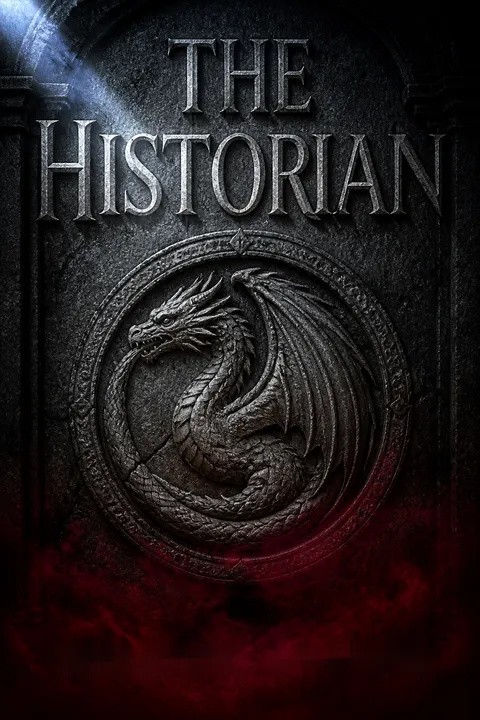
A printed invitation to dangerSeveral scholars independently find old, nearly blank books marked by the same dragon woodcut and the name Drakula. The books direct attention toward a map-like landscape and appear at moments when a researcher becomes absorbed in Dracula's history. Their function is double: they provide a material clue that can be compared across archives, and they lure scholars toward the vampire's hidden collection. Their blankness makes them feel less like ordinary texts than instruments designed to recruit readers. The exact number and origin of the volumes remain uncertain, while the repeated image gives the investigation its most recognizable anchor.
The layered archive
Evidence carried across generationsRossi's letters, Sultan Mehmed's maps, Helen's mother's preserved correspondence, Brother Kiril's reports, and Stoichev's manuscripts form a distributed archive. No single document explains the mystery. Instead, each source supplies a fragment that changes the meaning of earlier evidence: the map acquires a landscape, the letters acquire a route, and the folk song gives the route a local memory. The records also keep private relationships inside the historical investigation. Their order matters, because scholars can misread a fragment when they ignore who preserved it, why it survived, or what fear shaped its omissions.
The dragon map
A landscape disguised as a creatureThe outlines on the Ottoman maps resemble the dragon printed in the mysterious books. Mountains form the body and wings, while a winding valley suggests the tail. This visual correspondence encourages Paul and Helen to compare geographic features with legends and manuscripts rather than relying on Dracula's traditional burial site at Snagov. The map's labels use riddles and several languages, so interpretation requires collaboration among historians, linguists, and local informants. Its eventual use to identify the hidden Bulgarian church is a major revelation, so this device contains a plot spoiler.
Folk songs and ritual
Local memory hides a mapRomanian and Bulgarian songs preserve the changing image of Dracula as enemy, protector, and threat. Their age and wording cannot be established with certainty, which prevents them from serving as straightforward historical proof. Yet their recurring references to monks, a dragon, a great city, and a dangerous valley guide the researchers toward evidence hidden in official collections. The Saint Petko festival, where Baba Yanka carries an icon through fire, makes the old conflict visible in living practice. The songs matter because communities remember what states and archives may suppress, but the memories arrive through performance rather than stable text.
Vampire protections
Tradition becomes practical defenseGarlic, crucifixes, silver weapons, stakes, and religious blessings recur as folk protections against the undead. At first the educated investigators treat them as superstition or theatrical accessories. Repeated attacks force them to test these objects under pressure: a crucifix repels the corrupted librarian, silver bullets interrupt his attacks, and a stake prevents an injured victim from becoming undead. These devices do not guarantee safety, and belief alone does not solve the threat. Their importance lies in making characters act on inherited knowledge before they can fully reconcile it with rational explanation.
FAQ
Synopsis & Basic Details
What is The Historian about?
- A Multi-Generational Quest: The Historian follows a young woman's journey in 1972 to uncover the truth behind her diplomat father's mysterious past and the disappearance of his academic mentor, Professor Rossi, both linked to the legend of Vlad the Impaler, or Dracula. The narrative weaves through three timelines: the narrator's present, her father's 1950s quest, and Rossi's 1930s investigation, all converging on the enduring, terrifying reality of Dracula.
- Blending History and Horror: The novel masterfully intertwines meticulous historical research with gothic horror, exploring the origins of the Dracula myth beyond Bram Stoker's fiction. It delves into the real Vlad Tepes, the Ottoman Empire, Byzantine history, and Eastern European folklore, suggesting that the vampire legend is not merely superstition but a persistent, living evil.
- The Price of Knowledge: At its core, the story is a meditation on the dangers and allure of delving into forgotten histories. Characters are drawn into a perilous academic pursuit that exacts a heavy personal toll, forcing them to confront not only ancient evils but also the sacrifices made in the name of truth and survival.
Why should I read The Historian?
- Immersive Historical Atmosphere: Elizabeth Kostova crafts a deeply atmospheric journey through mid-20th century Europe, from the quiet canals of Amsterdam to the bustling bazaars of Istanbul and the ancient monasteries of Bulgaria. The vivid descriptions of landscapes, architecture, and cultural nuances transport readers directly into the heart of the story's diverse settings.
- Intellectual Thriller with Depth: Beyond the suspenseful hunt for Dracula, the novel offers a rich intellectual exploration of history, academia, and the nature of evil. It challenges readers to question the boundaries between fact and legend, and to consider how historical narratives are shaped, preserved, and sometimes suppressed.
- Complex Character Journeys: The story features compelling characters driven by a mix of scholarly ambition, familial loyalty, and personal vendetta. Their emotional arcs, particularly the narrator's coming-of-age amidst danger and her father's poignant sacrifices, provide a powerful human core to the supernatural mystery, making their struggles deeply resonant.
What is the background of The Historian?
- Epistolary Narrative Structure: The novel employs a layered epistolary style, primarily through the narrator recounting her father's story, which itself is often told through Professor Rossi's letters. This structure creates a sense of authenticity and immediacy, as if the reader is piecing together a real historical puzzle from primary sources.
- Author's Personal Inspiration: Elizabeth Kostova's dedication "For my father, who first told me some of these stories" hints at a personal connection to the themes of inherited history and storytelling. The author's note further reveals her intention to explore how "history itself reaches inexorably forward for us with its shadowy claw," grounding the fantastical elements in a profound sense of historical consequence.
- Intertextual Dialogue with Dracula Lore: The book explicitly engages with Bram Stoker's Dracula, acknowledging its influence while simultaneously seeking to uncover a "real" Dracula. This meta-narrative approach invites readers familiar with vampire fiction to reconsider the genre's foundations and the historical figures that inspired it, adding layers of literary and historical context.
What are the most memorable quotes in The Historian?
- "Not everyone who reaches back into history can survive it.": This opening line from the narrator's note (Document 1, A Note to the Reader) immediately establishes the novel's central theme: the perilous nature of historical inquiry. It foreshadows the personal costs and dangers faced by those who delve too deeply into the past, setting a somber tone for the entire narrative.
- "History has taught us that the nature of man is evil, sublimely so. Good is not perfectible, but evil is.": Uttered by Dracula himself to Professor Rossi (Document 1, Chapter 72), this chilling quote encapsulates the antagonist's nihilistic philosophy and his belief in the enduring, perfectible nature of evil. It serves as a stark counterpoint to the human characters' pursuit of truth and goodness, highlighting the profound ideological conflict at the story's heart.
- "I would die for him.": The narrator's father, Paul, declares this to Helen Rossi (Document 1, Chapter 43) when asked if he loves Professor Rossi. This powerful statement reveals the depth of his loyalty and affection for his mentor, underscoring the profound personal bonds that drive the characters' dangerous quest, transcending mere academic interest.
What writing style, narrative choices, and literary techniques does Elizabeth Kostova use?
- Layered Epistolary Structure: Kostova employs a complex narrative framework where the primary narrator (the daughter) recounts her father's story, which itself is often told through his mentor Rossi's letters. This creates a sense of historical excavation, with each layer revealing more of the past, enhancing the mystery and the feeling of piecing together fragmented truths.
- Atmospheric and Sensory Prose: The author uses rich, evocative language to build a palpable sense of place and mood. Descriptions often appeal to multiple senses, such as "the smell of age that rose from it" (the mysterious book, Chapter 1) or the "dank smell that could have been coal smoke or diesel fuel" (Istanbul, Chapter 29), immersing the reader in the historical settings and heightening the gothic atmosphere.
- Subtle Foreshadowing and Symbolism: Kostova masterfully weaves in subtle clues and recurring symbols, like the dragon motif, the recurring image of the unholy tomb, and the motif of "amnesia." These elements often appear innocuously before gaining sinister significance, creating a pervasive sense of dread and hinting at deeper connections that reward careful reading.
Hidden Details & Subtle Connections
What are some minor details that add significant meaning?
- The Librarian's Worn Fingerprints: The Amsterdam police note that the librarian's handprint "had too few lines" (Chapter 60), a subtle detail that hints at his ancient, non-human nature. This seemingly forensic observation subtly reinforces the supernatural elements, suggesting a being whose physical form has been altered or worn down by centuries of existence, rather than a mere human.
- The "Amnesia" Drink in Crete: Rossi recounts being given a local drink called "amnesia" in Crete (Chapter 9), after which he forgot his Romanian experiences. This seemingly whimsical detail later becomes a crucial explanation for his denial of Helen's mother and his past in Romania, revealing a deliberate, supernatural intervention rather than a simple lapse of memory or callous abandonment.
- The Dragon's Tail as a River: Rossi's realization that the dragon woodcut's tail on the mysterious book corresponds to a river on the maps (Chapter 12) is a pivotal moment. This detail transforms a decorative element into a functional cartographic clue, symbolizing how ancient symbols hold hidden, practical knowledge for those initiated into the deeper mysteries of Dracula's world.
What are some subtle foreshadowing and callbacks?
- The "Next One" Envelope: Rossi labels his final packet of letters "SAVE FOR NEXT ONE" (Chapter 6). This phrase subtly foreshadows the narrator's father becoming the next in line to pursue the dangerous research, and later, the narrator herself. It implies a predetermined, almost fated succession in the hunt for Dracula, linking generations of scholars to the same perilous quest.
- Hugh James's "Ghost in the Amphora": Hugh James's research on "The Ghost in the Amphora" (Chapter 40), initially a seemingly unrelated academic pursuit, directly connects to the ancient Greek belief in vampires and the idea of a spirit trapped within a vessel. This callback to classical antiquity broadens the scope of vampire lore beyond Eastern Europe, suggesting a universal, ancient evil.
- The Monastery's "Monster Equal to the Saint": Brother Kiril's letter mentions a monastery where "the monster equal to the saint" is a sign (Chapter 61). This cryptic phrase foreshadows the discovery of the icon depicting Saint George and the Dragon, where the dragon is presented with an almost equal, if not superior, dramatic presence, hinting at a heretical veneration of Dracula himself within a sacred space.
What are some unexpected character connections?
- The Librarian's Shared Affliction: The librarian in Amsterdam, who attacks the narrator's father and later Helen, is revealed to have the same neck wounds as the Turkish bureaucrat Rossi encountered (Chapter 16). This unexpected connection confirms the existence of a network of Dracula's corrupted servants, extending across time and geography, and highlights the pervasive reach of the vampire's influence.
- Turgut Bora's Crescent Guard Lineage: Turgut Bora, the Istanbul scholar, is not just an academic but a hereditary member of the Crescent Guard, a secret society founded by Sultan Mehmed II to hunt Dracula (Chapter 51). This reveals a deep, ancestral connection to the very entity they are pursuing, transforming a seemingly coincidental alliance into a fated, centuries-old struggle.
- Helen Rossi's Ancestral Mark: Helen's mother reveals that a small dragon mark is imprinted on one child in every generation of her father's family (Chapter 44). This detail unexpectedly links Helen directly to the Order of the Dragon, and by extension, to Vlad Dracula himself, suggesting a genetic inheritance of the "dragon's blood" that makes her both a target and a formidable adversary.
Who are the most significant supporting characters?
- Velior Georgescu, the Gypsy Archaeologist: Georgescu (Chapter 45) is crucial for his unique blend of academic rigor and Romany folklore. His Scottish-Gypsy heritage allows him to bridge the gap between scientific archaeology and local superstitions, providing invaluable insights into Dracula's historical sites and the cultural beliefs surrounding them, which pure academics might dismiss.
- Anton Stoichev, the Exiled Scholar: Stoichev (Chapter 55) is a Bulgarian historian whose personal exile and deep knowledge of medieval Balkan monasteries prove vital. His possession of Brother Kiril's letters and his ability to interpret their hidden meanings, despite political suppression, make him a key figure in unraveling Dracula's final resting place and the heretical beliefs surrounding it.
- Éva Orbán, the Political Strategist: Helen's aunt, Éva (Chapter 39), is a powerful figure in the Hungarian Ministry of the Interior. Her political savvy and network of contacts are instrumental in securing visas and navigating the bureaucratic obstacles of the Iron Curtain, demonstrating how even in a supernatural quest, real-world political power and influence are indispensable.
Psychological, Emotional, & Relational Analysis
What are some unspoken motivations of the characters?
- Paul's Atonement for Rossi: Paul's relentless pursuit of Dracula is driven not just by loyalty to Rossi, but by a profound sense of guilt and responsibility. He feels culpable for having brought the mysterious book to Rossi, triggering his disappearance, and views the quest as a form of atonement, a desperate attempt to "rescue" his mentor from a fate he inadvertently initiated (Chapter 73).
- Helen's Quest for Identity and Validation: Beyond academic ambition and revenge, Helen's pursuit of Dracula and her father is a deep-seated search for her own identity and validation. Her "personal vendetta against Rossi" (Chapter 28) stems from his abandonment of her mother, making her quest a way to reclaim her heritage and force her father to acknowledge her existence and worth.
- Dracula's Desire for a Successor: Dracula's motivation to keep Rossi alive and later to capture him is not merely sadistic, but a desire for an intellectual heir. He seeks a scholar of "unparalleled sense and imagination" (Chapter 72) to catalogue his vast library and continue his work, revealing a profound loneliness and a need for intellectual companionship in his eternal existence.
What psychological complexities do the characters exhibit?
- Paul's Suppressed Trauma and Fear: Paul, despite his outward composure as a diplomat, carries deep psychological scars from his past encounters with the supernatural. His "pattern of fear" (Chapter 2) and his reluctance to share the full story with his daughter reveal a man grappling with trauma, trying to protect his loved ones by shielding them from horrors that have profoundly affected his own sanity and peace of mind.
- Helen's Cynicism as a Defense Mechanism: Helen's "guarded and cynical face" (Chapter 25) and her "bitter smile" are not merely personality traits but a psychological defense mechanism forged by a life of abandonment and political oppression. Her sharp wit and intellectual detachment serve to protect her from emotional vulnerability, especially concerning her father and the painful truths of her heritage.
- Rossi's Intellectual Hubris and Despair: Professor Rossi, initially driven by scholarly bravado, descends into a complex state of intellectual hubris and eventual despair. His belief that he could "look history in the eye and say, 'I know who you are'" (Chapter 2) leads him to underestimate the supernatural, culminating in his capture and the agonizing realization that his pursuit of knowledge has led to his own undoing and the endangerment of others.
What are the major emotional turning points?
- The Narrator's Discovery of Rossi's Letters: The moment the narrator reads Rossi's opening line, "My dear and unfortunate successor" (Chapter 6), marks a profound emotional shift. It transforms her from a sheltered teenager into an active participant in a dangerous, inherited quest, igniting a mix of fear, curiosity, and a burgeoning sense of responsibility.
- Paul's Realization of Helen's Identity: When Paul discovers Helen Rossi is his daughter (Chapter 17), it's a deeply emotional turning point. His initial shock and guilt over his past actions, followed by his growing affection and protective instincts towards her, reshape his motivations and deepen the personal stakes of the entire journey.
- Helen's Acceptance of Paul's Love: Helen's decision to marry Paul (Chapter 62), despite her initial cynicism and the dangers they face, signifies a powerful emotional breakthrough. It represents her acceptance of love and connection, moving beyond her past resentments and finding a new purpose in shared vulnerability and mutual protection.
How do relationship dynamics evolve?
- Father-Daughter Bond Forged in Crisis: The relationship between the narrator and her father evolves from a somewhat distant, protective dynamic to one of deep mutual trust and shared purpose. The father's initial reluctance to involve his daughter gives way to a reliance on her intelligence and courage, while the daughter's youthful obedience transforms into fierce loyalty and active participation in his perilous quest.
- Helen and Paul's Unlikely Partnership: Helen and Paul's relationship begins with antagonism and suspicion, fueled by Helen's resentment over her father's abandonment. However, their shared danger and common goal gradually forge an unbreakable bond of love and partnership, transcending their initial familial and academic conflicts. Their journey together is a testament to healing and forgiveness.
- The Shifting Alliances of Scholars: The relationships between the scholars—Rossi, Paul, Helen, Hugh James, Turgut Bora, Anton Stoichev—evolve from academic rivalry and cautious collaboration to deep trust and mutual reliance. Initially driven by individual research, they form a collective front against a common, supernatural enemy, demonstrating the power of shared knowledge and human connection against overwhelming evil.
Interpretation & Debate
Which parts of the story remain ambiguous or open-ended?
- Dracula's Ultimate Fate and Location: While the protagonists believe they destroy Dracula at Sveti Georgi, the narrative leaves his ultimate fate ambiguous. The empty sarcophagus and the "trickling of dry earth" (Chapter 72) suggest an escape, and Turgut later admits he "cannot guess" where Dracula went (Chapter 75). This open ending implies that Dracula, as an embodiment of evil, may be unkillable, merely relocating to continue his influence.
- The Nature of Helen's "Contamination": Helen is bitten twice by Dracula's minions, and the narrative frequently alludes to her "contamination" and the possibility of her becoming undead. While she claims to be "alive, not undead" (Chapter 79) at the end, her later wasting illness and Paul's fear of her "drifting from us at times" (Epilogue) leave her long-term fate and the true extent of Dracula's mark on her open to interpretation.
- The Role of Divine vs. Supernatural Intervention: The story often blurs the lines between religious belief, superstition, and actual supernatural events. Characters like the monks and Baba Yanka attribute events to God or saints, while the scholars seek rational or occult explanations. The efficacy of crucifixes and holy water is shown, but the ultimate source of Dracula's power and the means of his destruction remain somewhat mysterious, leaving readers to ponder the interplay of faith and the fantastic.
What are some debatable, controversial scenes or moments in The Historian?
- Rossi's Abandonment of Helen's Mother: Professor Rossi's denial of his relationship with Helen's mother and his subsequent abandonment of her and their child (Chapter 44) is a morally controversial act. While later explained by the "amnesia" drink, it raises questions about his character and the ethical implications of his scholarly pursuits, prompting debate about whether his actions were truly involuntary or a convenient excuse.
- The Justification of Violence Against Dracula's Minions: The protagonists engage in violent acts, such as Helen shooting the librarian and Paul staking Rossi, to combat Dracula and his minions. These scenes spark debate about the morality of their actions, particularly when the "minions" are depicted as corrupted humans rather than pure monsters, forcing readers to confront the difficult choices made in the face of extreme evil.
- The Narrator's Father's Decision to Conceal Helen's Existence: The narrator's father deliberately withholds the truth about Helen's existence from his daughter for years, even after discovering her. This paternalistic decision, driven by a desire to protect his daughter from pain, is debatable. It raises questions about the right to know one's heritage versus the perceived need for protection, and whether such secrets ultimately cause more harm than good.
The Historian Ending Explained: How It Ends & What It Means
- Dracula's Apparent Demise and Rossi's Sacrifice: The climax sees Paul and Helen confront Dracula in his hidden library beneath Sveti Georgi. Dracula, revealed to be Rossi's captor and tormentor, is seemingly destroyed by Helen's silver bullet and Paul's stake, a sacrifice made possible by Master James's intervention. Rossi, already deeply corrupted, begs Paul to kill him, finding peace in death. This ending signifies the immediate triumph over a specific manifestation of evil and the tragic liberation of a beloved mentor.
- The Enduring Nature of Evil and Loss: Despite Dracula's destruction, the ending is bittersweet. Helen's subsequent wasting illness and eventual death, attributed to her "contamination," suggest that the fight against evil leaves permanent scars. Paul's later disappearance with the silver dagger after Helen's funeral implies a continued, solitary vigil against the lingering threat, highlighting the novel's theme that evil is never truly vanquished, only temporarily contained.
- The Legacy of History and Storytelling: The Epilogue, set decades later, reveals the narrator's continued work as a historian, visiting the literary museum that houses the Nuremberg pamphlet. Her father's final letter to Helen, a poignant love poem, and Helen's unsent postcards to her daughter, underscore the enduring power of personal history and storytelling. The ending suggests that while individuals may fall, the human spirit's quest for knowledge, love, and the courage to confront darkness continues, passed down through generations, ensuring that these stories, and the lessons they hold, are never truly lost.
Download PDF
Download EPUB
.epub digital book format is ideal for reading ebooks on phones, tablets, and e-readers.








