

Key Takeaways
A market bet is a bodily event with consequences that outlast the trade

Risk reaches beyond thought. Coates argues that financial decisions are not detached calculations. Money represents security, status, and opportunity, so gains and losses can mobilize the body’s ancient threat and reward systems. In the book’s trading-floor story, a Federal Reserve rumor sends traders’ attention, breathing, heart rate, and hormones shifting before they can explain what they have noticed.
The storm can linger. Physical danger usually demands a short burst of action; financial uncertainty can last months. A winning run may bring euphoria and growing confidence, while sustained losses can bring anxiety and withdrawal. The book’s central claim is that body and brain jointly shape risk-taking, sometimes helping people react quickly, sometimes amplifying a market’s rise or fall.
What's striking is the shift in scale: a decision that looks individual on a trading screen can become a population-level event when thousands of people respond to the same incentives and price movements. This resembles feedback in engineering systems, where an output loops back to strengthen the input. The model is useful because it links subjective experience to market instability without reducing traders to automatons. Hormones influence the pressure to act, but institutions and individual choices still matter.
Trust a trading hunch only where practice yields repeatable patterns and feedback

Intuition is trained recognition. A hunch is not a mysterious gift. It is rapid pattern matching built from repeated experience. Firefighters and paramedics often work in settings where familiar cues recur and outcomes arrive quickly, allowing useful instincts to develop. A forecaster facing a changing political landscape may receive neither stable patterns nor timely feedback, making confidence less trustworthy.
Markets can teach, imperfectly. Coates and statistician Lionel Page compared traders’ risk-adjusted returns, measured by the Sharpe ratio, which relates profit to the risk taken. The S&P 500’s long-term Sharpe ratio was about 0.4, while experienced traders in their sample exceeded 1.0. Traders whose ratios improved with experience appeared to be learning. That evidence supports skill, not a guarantee that any confident market call is sound.
The distinction between skill and confidence is the section’s most practical contribution. Expertise research similarly finds that intuition improves when environments contain learnable regularities and practitioners receive clear feedback. Financial markets offer repeated decisions, but the rules can change, and a profitable result may reflect luck rather than a sound process. A rising risk-adjusted record is more informative than a winning streak alone, though even that measure cannot fully separate skill from favorable market conditions or survivorship.
Use bodily unease to narrow choices, then test the story it suggests

Feelings can organize thought. The somatic marker hypothesis proposes that remembered experiences carry bodily signals that help flag options as promising or dangerous. These signals do not dictate a decision. They help the mind reduce a vast field of possibilities to a manageable shortlist. Coates calls the perception of the body’s internal state interoception.
The Iowa Gambling Task illustrates the idea. Participants chose from four decks of cards, two offering tempting wins but eventual losses, and two offering smaller gains that accumulated into profit. Players began favoring the safer decks before they could explain the pattern. Their skin conductance, a measure of changes linked to sweating, rose as they approached the losing decks. The body appeared to register risk before conscious reasoning could describe it.
This account offers a middle ground between blind faith in instinct and the fantasy that good decisions can be made by calculation alone. Emotions can prioritize information, much as attention does, while deliberate reasoning checks whether the signal fits the facts. The practical caution is important: bodily arousal often indicates significance, not whether something is truly dangerous or beneficial. Anxiety, excitement, and anticipation can feel similar. A useful hunch deserves investigation, not automatic obedience.
Reward the search, but beware when uncertainty itself becomes addictive
The chase can be rewarding. Coates describes dopamine as a driver of wanting and seeking, especially when rewards are uncertain or surprising. Its activity shifts toward cues that predict a reward, so anticipation can become more compelling than enjoyment of the reward itself. That helps explain why traders may crave the search for an opportunity, not just the money it brings.
Uncertainty has a cost. In the book’s account, the effort of hunting, experimenting, or trading can itself feel satisfying. But repeated variable rewards can encourage escalating risk, much as gambling can keep people engaged despite losses. Coates also discusses Rat Park, an experiment in which rats in a richer social and physical environment showed less preference for morphine water than rats in bare cages. It suggests that meaningful alternatives may matter, though animal findings do not prove a human remedy.
The distinction between wanting and liking helps explain why rewarding work can become compulsive. Behavioral science finds that unpredictable rewards can sustain attention, a feature exploited by gambling products and many digital interfaces. The implication is not that excitement should be eliminated, since exploration is valuable, but that systems should offer rewards for good process rather than sheer exposure to risk. Rat Park is a suggestive example, not a direct blueprint for human policy; social conditions, choice, and access to alternatives all complicate the comparison.
A winning streak can widen risk appetite before judgment catches up
Success changes the winner. The winner effect is a feedback loop in which victory raises testosterone, increasing confidence and readiness to compete, which can make further victories more likely. In animals, repeated wins can eventually lead to reckless exposure to danger. Coates proposes that a similar loop may help turn a market rally into a bubble.
Trading-floor evidence is suggestive. In a two-week study of high-frequency traders in London, above-average profits coincided with higher testosterone, and higher morning levels predicted better afternoon profits. Further analysis suggested testosterone increased the risk taken, rather than the traders’ risk-adjusted skill. A separate study linked a physical marker associated with prenatal androgen exposure to trading performance and longevity. These findings are preliminary, and they do not show that hormones alone cause trading success or market bubbles.
The idea is compelling because it treats overconfidence as more than a character flaw: success can alter the state in which the next decision is made. Yet the evidence calls for restraint. Field studies can reveal associations but cannot fully isolate hormones from sleep, workload, market conditions, or selection into trading. Nor does a group average predict an individual’s behavior. The strongest implication is institutional: a winning trader’s rising appetite for risk should trigger scrutiny, not automatic increases in authority and exposure.
Chronic uncertainty can turn a confident trader into a fearful seller
Stress changes with duration. A brief stress response can sharpen attention and mobilize energy. Prolonged exposure to cortisol, the body’s longer-lasting stress hormone, can instead distort memory, heighten anxiety, and make threats seem more likely. Coates identifies novelty, uncertainty, and lack of control as especially potent stressors.
Scott’s losses show the reversal. During the mortgage-market collapse in the book’s trading-floor narrative, Scott loses $24 million on a large position. His stress response intensifies as prices become difficult to predict and he struggles to exit. In Coates and colleagues’ studies, traders’ cortisol tracked market volatility and variation in their profits; on highly volatile days, some traders’ levels rose dramatically. The proposed result is a feedback loop: losses and uncertainty promote risk aversion, which can deepen a sell-off.
The account helps explain why a crisis may not respond neatly to lower interest rates: frightened decision-makers may stop taking risks even when prices look attractive. It also connects workplace design to public health, since prolonged low-control stress is associated with worse health outcomes in other occupations. The biological mechanism is plausible, but market movements also reflect leverage, liquidity, regulation, and changing beliefs. Cortisol is one part of a complex system, not a complete explanation of financial crashes.
Stop bonuses and risk limits from swelling with the boom
Pay can reward fragility. Coates contrasts two traders. One steadily earns a bank $10 million a year for five years and receives $1 million annually. The other earns $100 million for four years, collects $20 million bonuses each year, then loses $500 million in year five. The second trader still keeps past bonuses, despite leaving the bank down $100 million overall.
Leverage magnifies the danger. A hedge can appear market-neutral because it pairs a purchase with a short sale, yet the relationship between the assets can break during a crisis. When it does, losses can grow quickly, especially if borrowed money has inflated the position. If risk limits expand during a boom and bonuses reward short-term gains, both the trader and manager may benefit from taking risks whose costs arrive after their pay is secured.
This is a principal-agent problem with a physiological amplifier. The compensation structure rewards visible short-term gains, while the costs are delayed and shared by the firm or public. Deferring compensation over a full business cycle would better align reward with durable performance, although it cannot remove uncertainty or prevent every bad bet. Governance matters as much as pay design: risk officers need authority to limit exposure even when a star trader’s recent results make restraint unpopular.
Train recovery and control, not just the ability to endure stress
Resilience needs recovery. Coates draws on sports science to argue that brief, manageable challenges followed by rest can build capacity. A toughened person may mount a strong initial response, then return to baseline; an overwhelmed person may experience a weaker start but prolonged stress. He calls the balance between rebuilding hormones and stress hormones the growth index.
Control reduces the load. Exercise and breathing practices may support recovery, while social support, familiar surroundings, and meaningful control can reduce stress. At work, managers can offer employees more say over tasks and avoid needless uncertainty, especially during crises. Coates presents cold exposure as a possible training approach, but stresses that research is early. The essential principle is not to make people tougher at any cost: sustained stress without downtime can damage health and judgment.
The training analogy is powerful because it makes resilience a capacity that depends on cycles, not a heroic refusal to stop. It also prevents a common managerial mistake: treating stress as an individual attitude problem when workload and control may be the cause. Exercise and slow breathing have broader support as useful practices, but no technique can compensate indefinitely for an unsafe work design. The soundest reading is to combine personal recovery habits with changes that reduce avoidable uncertainty and give people real agency.
Build trading teams with varied ages, genders, and decision horizons
Diversity may stabilize risk. Coates argues that teams need different biological and experiential perspectives, not simply more rapid-fire traders. He notes that women made up about 5 percent of bank traders, while some asset-management firms had far higher proportions of women among risk-takers. In one study of personal investors, single women outperformed single men by 1.44 percent, largely because they traded less often.
Technology changes the job. Automated systems can execute orders at speeds humans cannot match, leaving people to contribute judgment and longer-term analysis. This could widen the range of people suited to financial decision-making. Coates also suggests judging performance over a full business cycle rather than a single year. These are plausible reforms, not proof that gender or age reliably predicts an individual’s decisions.
The strongest case for diversity here is not that one demographic is naturally prudent, but that varied experience and decision styles can counteract correlated mistakes. Research on teams generally supports the value of different perspectives when members can contribute meaningfully and debate is not punished. The book’s biological explanation should be handled cautiously: average hormonal differences do not determine individual ability, and structural exclusion can shape who enters each role. Broader recruitment is most defensible when paired with fair evaluation and long-term performance measures.
Analysis
Coates’s most useful move is to connect scales that are usually kept apart: hormone changes inside a trader, the informal culture of a trading desk, compensation rules, and the volatility of markets. The book’s narrative gives this chain a human shape. Martin’s trained intuition and Scott’s escalating position make clear that expertise, confidence, and biological arousal are not interchangeable. Risk is performed by a whole person, but its consequences are organized by institutions.
The argument is strongest as a mechanism-generating hypothesis, not as a settled causal account of bubbles. The field studies described are valuable because they observe professionals in real workplaces, where stakes and incentives are real. But observational hormone data cannot by themselves establish whether testosterone produces better trading, whether success raises testosterone, or whether a third factor influences both. The small number of sampled traders and the difficulty of generalizing from a high-frequency desk also limit broad conclusions. Animal studies illuminate possible mechanisms, but should not be treated as direct models of human financial behavior.
This qualification sharpens rather than weakens the book’s institutional lesson. If physiology can bias decisions, then market design should not assume that more information or a change in interest rates will always restore deliberation. A useful policy approach would monitor behavior as well as quantitative exposure, defer rewards long enough to register reversals, and ensure that risk managers can intervene before successful traders accumulate dangerous positions. During downturns, reducing managerial uncertainty and preserving employee control may help prevent avoidable stress from worsening risk aversion.
The proposal to include more women and older traders is best understood as a call for heterogeneity, not as a claim that identity predicts prudence. Different training, time horizons, and career experience may challenge a desk’s shared assumptions. Overall, the book offers a persuasive corrective to economics without bodies, while its most dramatic hormonal explanations deserve cautious testing alongside the financial structures that make booms and busts profitable for some and costly for many.
Review Summary
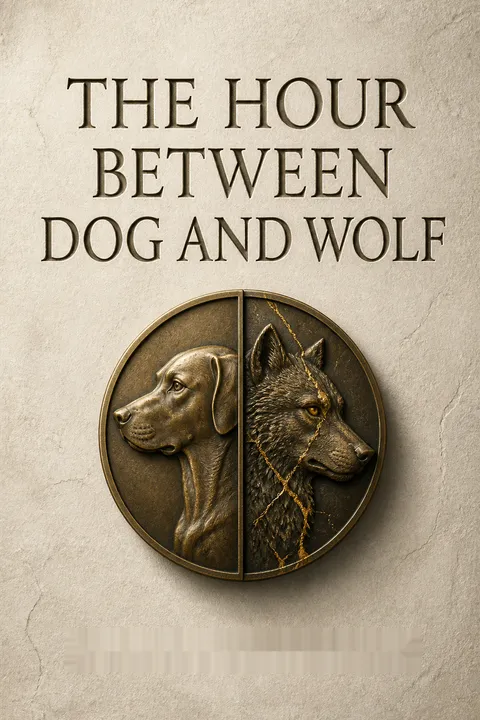
The Hour Between Dog and Wolf explores the physiological and neurological aspects of risk-taking in financial markets. Coates argues that hormones like testosterone and cortisol significantly influence traders' decisions, leading to irrational exuberance or pessimism. While some readers found the book insightful and well-researched, others criticized its deterministic approach and lack of practical solutions. The book's integration of finance, psychology, and neuroscience was generally appreciated, though some found it overly complex or repetitive. Overall, it offers a unique perspective on the biology behind boom-and-bust cycles in financial markets.
People Also Read






Glossary
Interoception
Sensing the body's internal stateInteroception is the perception of signals from inside the body, including information about heart rate, breathing, temperature, pain, and digestion. Much of this information remains outside conscious awareness, but it can influence emotion, attention, and decisions. Coates treats these signals as part of the ongoing exchange between body and brain.
Somatic Marker Hypothesis
Bodily signals guide choicesThe Somatic Marker Hypothesis, associated with neuroscientists Antonio Damasio and Antoine Bechara, proposes that experiences become linked with bodily responses that later help evaluate similar choices. These signals can flag options as promising or risky before a person can explain why. They help narrow the decision space, but do not guarantee a correct judgment.
Sharpe Ratio
Return relative to riskThe Sharpe Ratio is a financial measure of return in relation to the variability or risk taken to earn it. A higher ratio indicates that returns have been more consistent relative to risk. Coates uses it to distinguish a trader’s steady performance from results that may owe more to unusually large swings or luck.
Winner effect
Wins can reinforce future winsThe winner effect is a pattern observed in animals and studied in human competition: winning can increase the likelihood of winning again. Coates describes testosterone as a possible mechanism, since competition and victory can raise the hormone, which may increase confidence and willingness to compete. Repeated wins may eventually produce excessive risk-taking rather than better judgment.
Vagal brake
Vagus nerve restrains arousalThe vagal brake is the slowing influence of the vagus nerve on heart rate and related bodily activity. When it eases, the body can move quickly from a calm state toward action. Coates describes this mechanism as a way to regulate arousal without immediately triggering the full, energetically costly fight-or-flight response.
Growth index
Anabolic hormones relative to cortisolThe growth index refers to the balance between anabolic processes that rebuild or store bodily resources and catabolic processes that break them down for immediate use. Coates uses it to describe recovery capacity after stress. A healthier balance supports restoration, while prolonged stress and high cortisol can tilt the body toward depletion.
Learned helplessness
Giving up after uncontrollable stressLearned helplessness is a state in which repeated exposure to events a person cannot control weakens the expectation that actions can change outcomes. Coates applies the concept to traders who, after sustained losses and uncertainty, may stop acting even when opportunities arise. It describes a behavioral and psychological response, not simple laziness.
FAQ
What's The Hour Between Dog and Wolf about?
- Exploration of Risk and Emotion: The book examines the connection between biology, decision-making, and financial markets, focusing on how physiological responses influence risk-taking.
- Mind-Body Connection: It argues that financial risk involves both rational calculations and visceral experiences, with emotions and bodily reactions playing crucial roles.
- Traders' Experiences: Through stories of traders like Martin and Gwen, it illustrates how gut feelings and physiological states impact trading decisions and outcomes.
Why should I read The Hour Between Dog and Wolf?
- Unique Perspective: John Coates integrates neuroscience and physiology into understanding financial markets, offering a fresh viewpoint beyond traditional economic theories.
- Real-Life Applications: Insights can help readers understand their decision-making processes in high-stakes environments, making it relevant beyond finance.
- Engaging Narratives: The book combines scientific research with compelling Wall Street stories, making complex concepts accessible and engaging.
What are the key takeaways of The Hour Between Dog and Wolf?
- Biological Basis of Decision-Making: Decisions, especially in finance, are deeply influenced by biological states, including hormones like testosterone and cortisol.
- Impact of Stress and Emotion: Stress responses can lead to irrational behavior in traders, affecting market stability and personal well-being.
- Gut Feelings Matter: Gut feelings are informed by bodily states and past experiences, making them valuable in decision-making.
What are the best quotes from The Hour Between Dog and Wolf and what do they mean?
- “When you take risks, you are reminded in the most insistent manner that you have a body.”: Highlights the physicality of risk-taking and its influence on decisions.
- “Financial risk-taking is as much a biological activity... as facing down a grizzly bear.”: Compares financial risk to physical danger, emphasizing strong physiological responses.
- “Intuition cannot be trusted in the absence of stable regularities in the environment.”: Stresses the importance of context in decision-making, suggesting gut feelings are more reliable in predictable environments.
How does John Coates explain the biology of a market bubble in The Hour Between Dog and Wolf?
- Physiological Responses: Traders experience heightened emotions and physiological changes during market bubbles, leading to overconfidence and risk-taking.
- Hormonal Influence: Hormones like testosterone increase during winning streaks, contributing to irrational exuberance and risky behavior.
- Cycle of Euphoria and Fear: Traders oscillate between euphoria during bull markets and fear during crashes, driven by biological responses to financial outcomes.
What role do gut feelings play in trading according to The Hour Between Dog and Wolf?
- Pre-Conscious Processing: Gut feelings arise from pre-conscious processing of information, allowing quick decisions without fully articulated reasoning.
- Somatic Marker Hypothesis: Bodily sensations inform decision-making, suggesting gut feelings are essential for navigating complex financial environments.
- Experience-Based Intuition: Experienced traders develop patterns and bodily responses that guide gut feelings, valuable in high-pressure situations.
How does The Hour Between Dog and Wolf relate to behavioral economics?
- Integration of Biology and Economics: Coates advocates for a holistic approach to economics, including biological and psychological factors, challenging traditional theories.
- Critique of Efficient Market Hypothesis: Questions the idea that markets are always rational and efficient, suggesting emotions and biological responses can lead to irrational behavior.
- Real-World Implications: Blending neuroscience with economics provides insights to improve decision-making in finance and other fields involving risk.
What physiological changes do traders experience during high-stress situations in The Hour Between Dog and Wolf?
- Fight-or-Flight Response: Traders' bodies prepare for action during stressful events, with increased heart rate, blood pressure, and adrenaline release.
- Cortisol and Stress: Cortisol levels rise during prolonged stress, potentially leading to chronic health issues and negatively affecting decision-making.
- Impact on Performance: Short-term performance may improve, but unmanaged stress can lead to burnout and irrational behavior.
What is the "winner effect" discussed in The Hour Between Dog and Wolf?
- Biological Phenomenon: The winner effect describes increased confidence and risk-taking after victories, driven by hormonal changes, especially elevated testosterone.
- Implications for Traders: Successful trades can lead to overconfidence and reckless decision-making due to increased testosterone.
- Research Basis: Studies show winning increases testosterone, enhancing future victory likelihood, creating a feedback loop.
How does stress impact traders according to The Hour Between Dog and Wolf?
- Physiological Stress Response: Stress triggers a fight-or-flight response, increasing cortisol levels, which can impair judgment and decision-making.
- Chronic Stress Effects: Prolonged stress exposure can lead to learned helplessness, where traders feel they lack control, worsening decision-making.
- Management Strategies: Recognizing and managing stress responses can help maintain better performance and decision-making.
What role does testosterone play in financial decision-making in The Hour Between Dog and Wolf?
- Increased Risk Appetite: Testosterone is linked to increased confidence and risk-taking, leading to aggressive trading strategies.
- Feedback Effects: Successful trades elevate testosterone levels, encouraging further risk-taking, potentially leading to market bubbles.
- Long-Term Implications: While testosterone can enhance performance, it can also lead to overconfidence and poor decision-making if unmanaged.
What is the significance of the "2D:4D ratio" mentioned in The Hour Between Dog and Wolf?
- Indicator of Prenatal Testosterone Exposure: The 2D:4D ratio reflects levels of testosterone exposure in the womb, indicated by finger length comparison.
- Predictive of Trading Success: Research shows traders with certain 2D:4D ratios may exhibit different risk-taking behaviors and success levels.
- Biological Marker: This ratio exemplifies how biological factors can influence behavior and performance in high-stakes environments like finance.
Download PDF
Download EPUB
.epub digital book format is ideal for reading ebooks on phones, tablets, and e-readers.








