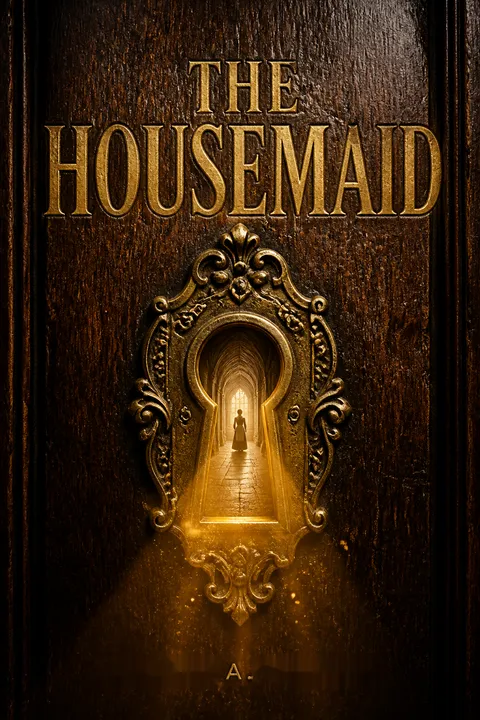


Plot Summary
Prologue
Before Ruby’s story begins, her older self looks back on the music room where Alex’s piano once made her feel noticed. She understands now that the attention had its price: a maid could be treated as confidante or companion and still be made invisible when it mattered. The room holds both her longing and her shame, while the image of a ghost moving through a house points toward the danger she has not yet explained.
The opening gives the romance its double meaning before the reader knows its events. Music seems to offer Ruby a private room beyond class and service, but the retrospective voice warns that intimacy does not cancel the hierarchy between a wealthy heir and a maid. Calling herself a ghost also frames the novel’s central struggle over who gets remembered. Ruby’s history is not simply hidden from her; the powerful people around her have the means to erase it, and her narration begins as an attempt to reclaim it.
The Job at Highwood
Twenty-one-year-old Ruby Dean reaches Highwood Hall with little money, no stable home, and a year of sobriety behind her. The live-in maid’s job offers safety she cannot afford elsewhere. At the interview, housekeeper Mrs Huxley makes clear that the work will be exacting and that she would rather not hire Ruby; Lord Bertie Howard overrides her and offers Ruby a room.
Ruby has another reason for choosing this particular estate: her mother worked there shortly before leaving her as an infant. She hopes the staff might tell her what happened. The welcome is hardly warm, but Ruby returns the next morning with her few belongings, determined to keep the job and learn what Highwood remembers.
Ruby’s need for shelter makes her vulnerable, but it does not make her passive. She accepts a job under a hostile housekeeper because the room gives her a foothold, then withholds her family connection to protect her chance of finding answers. Bertie’s hiring appears generous, especially because he recruits through a recovery program, yet the power to define Ruby as a worthy charity case belongs to him. Highwood’s first imbalance is practical: the family owns the rooms, the rules, and the decision to let Ruby stay. Her investigation begins inside that dependency.
The Staircase Doll
On Ruby’s first day, her new roommate Roisin Byrne welcomes her before Mrs Huxley can silence their conversation. Then Lottie Howard, the family’s younger daughter, brings Ruby a parcel addressed to her.
Inside, a carefully built miniature shows a maid resembling Ruby lying dead at the foot of the servants’ spiral staircase. Roisin recognizes the staircase, making the scene more than a random threat. Lottie takes the box to her father, and the family treats it as a bad prank; Ruby is left with no explanation and little control over the evidence.
Soon afterward, Mrs Huxley makes her climb the real stairs. Ruby does it despite her fear, then gets lost among the hidden corridors and stumbles on a mural that seems to contain a woman who resembles her.
The miniature converts the house’s architecture into a forecast, making an ordinary work route feel dangerous. Its precision suggests access to Highwood, while the family’s quick dismissal leaves Ruby to manage the fear herself. That imbalance repeats the social arrangement of the estate: the Howards decide what counts as serious, and staff are expected to resume work. Ruby’s response is revealing. She is frightened, but she climbs the staircase rather than surrender the job. The mural’s resemblance to her mother adds a second kind of unease, tying the threat to her private history before she can explain the connection.
A Door in the Mural
While Ruby studies the mural, a painted panel swings open and Alex Howard steps out of a concealed passage. He explains that Highwood’s hidden routes let him avoid his father, then shows Ruby how one passage returns to the servants’ corridor. He identifies his dead mother in the mural and acknowledges the miniature sent to Ruby, promising that the family will address it.
Before she leaves, he asks her to turn pages for his piano practice each Friday. In the first music session, Ruby sits beside him and watches him play. The closeness and the attention make her feel briefly distinct from the staff role she has just begun. She tells herself the room offers escape from the threat, the job, and her unanswered questions.
The secret door introduces Highwood as a house built to hide movement, but Alex uses that design as charm rather than warning. His invitation gives Ruby a privileged-seeming role, a page-turner seated close to the heir, and the music creates an emotionally persuasive contrast with Mrs Huxley’s rules. Yet the arrangement remains controlled by Alex: he chooses the room, the schedule, and the distance between them. Ruby’s sense of being seen is genuine, but it grows inside a relationship shaped by his access and her dependence. The mural’s painted mother also links private grief to the estate’s public decor.
The House Remembers
A second miniature arrives, this time showing a child in Highwood’s library among torn book pages. Lottie’s fear breaks through her usual playful manner. While Ruby helps organize her wardrobe, Lottie explains that at ten she destroyed her tutor’s treasured first edition and blamed a maid who had been kind to her. Bertie dismissed both the maid and the tutor.
The scene gives the miniature a personal history and makes Ruby wonder whether the maker knows the estate’s old staff. Roisin adds another possible thread: Chloe, the maid Ruby replaced, had an affair with Alex and left abruptly after conflict with Mrs Huxley. At dinner, Margot Pemberton, the family’s sharp-tongued matriarch, warns Ruby to protect herself around the Howards.
Lottie’s confession makes the miniature an instrument of memory rather than a generic threat. Her childhood lie cost a worker her livelihood, while the child who caused the harm kept her place in the house. Ruby recognizes the class difference in that consequence, even as she listens compassionately to Lottie. Chloe’s story extends the pattern into adult life: a maid’s closeness to an heir may leave her exposed when the relationship ends. Margot’s warning is blunt but not yet explanatory. Together, these disclosures teach Ruby to treat Highwood’s personal stories as evidence, especially when the people with power prefer to call them private.
The Heir's Private Games
Alex gives Ruby a private tour, shows her a peephole concealed behind a portrait, and speaks of the thrill of watching unseen. Later, he tests her willingness to enter a priest hole, shuts her inside, and releases her only after making her wait in the dark. Their Friday sessions grow more intimate and less equal: he corrects her sharply, pinches her when she misses a page turn, then softens the moment with music and attention.
Ruby knows his conduct crosses a line, but the intensity draws her in. Roisin warns her that Alex treated Chloe badly. Ruby also learns that Alex’s mother, Lady Laura, died after falling down the main stairs, and that Alex was found hiding in the peephole cupboard.
The physical spaces Alex chooses reveal the psychology of his courtship. A peephole and priest hole offer him control over who sees, who waits, and who can leave. Ruby’s willingness to enter them reflects both attraction and a learned habit of accepting risk when security seems scarce. The music does not erase the coercion; it makes the shifts between punishment and tenderness harder to interpret. Learning that Alex hid near his mother’s fatal fall gives his fixation on concealed observation a disturbing personal history, but it does not excuse his treatment of Ruby. Her attraction and her judgment now pull in opposite directions.
Roisin Beneath the Trees
Roisin and Ruby grow close to Ade Bello, Highwood’s gardener, and the staff share evenings away from Mrs Huxley’s scrutiny. After Roisin sings in the garden and breaks down, she confides that she has been sleeping with Bertie while Pawel, the cook, wants a committed relationship with her. Ruby urges her to end the affair but promises not to expose it.
The next day Roisin fails to return to their room. Her phone remains beneath her pillow, so Ruby wakes Mrs Huxley and joins the search. Carrying a torch past the rose garden and over the boundary wall, Ruby finds Roisin hanging from a tree at the edge of the woods. Her friend’s private conflict has become a death the household cannot ignore.
Roisin’s confession complicates Ruby’s idea of the Howard men before the death makes that danger immediate. The affair is not just gossip: Bertie is her employer, far older and more powerful, while Roisin is trying to choose between a precarious attachment and a possible future with Pawel. Ruby sees the imbalance but cannot make the decision for her. The later search turns the estate’s wooded boundary into a literal threshold between service and catastrophe. Ruby’s act of finding Roisin also binds her to the case through grief, not merely curiosity, and turns suspicion into a moral obligation.
The Suicide Story
Police find a note beside Roisin’s belongings and initially classify her death as suicide. Ruby cannot reconcile the brief message with the friend she knew, though she cannot prove anything else. Pawel returns from Ireland after Roisin’s funeral, and grief makes their exchanges strained.
Ruby works through the jobs Roisin left behind, rereads the letters her mother sent to Ruby’s father, and returns to the dining-room mural, where painted women seem to preserve lives the Howards have reduced to decoration.
Another miniature arrives, showing Mrs Huxley outside the hall while pale women watch from its windows. Huxley is visibly shaken and retreats with it. For Ruby, the scene undermines her belief that the housekeeper is directing every threat, and makes Highwood’s secrets feel larger than one suspect.
The official suicide finding offers closure in administrative form, but Ruby experiences it as a refusal to investigate what she can see: Roisin’s death does not fit her knowledge of her friend. The contrast between a sparse note and the elaborate miniatures sharpens the question of whose account will be believed. Meanwhile, Ruby’s reading of her mother’s letters and her attention to the dining-room women connect present grief with a longer history of overlooked lives. Huxley’s fear complicates Ruby’s suspicions. A person who has enforced silence may also be frightened by the system she serves.
The Passage Behind Wine
Ruby searches Highwood while Huxley is away and discovers that a wine-cellar shelf opens onto a steep passage. The route connects Huxley’s office to Bertie’s, explaining how the housekeeper can appear in rooms before anyone hears her.
In the office, Ruby finds records of former maids, a bill from the care home Huxley visits, and evidence that one employment file is missing from the period when her mother worked at Highwood. She hides the folder. Later, a miniature depicts Ruby beside Alex at the piano, reproducing details no public photograph could reveal.
When she confronts him, he suggests that his own family is a more plausible source than Huxley. Ruby finally seeks the housekeeper, convinced that the missing file and the carefully staged gifts are connected.
The passage gives physical form to Highwood’s hidden power: private rooms connect the people who manage the estate, while the staff’s official map leaves those routes out. Ruby’s discovery of the missing record makes her mother’s absence concrete rather than merely emotional. The piano miniature also changes the threat’s scale; someone has observed Ruby in a private setting, and her increasing closeness to Alex is now part of the message. Alex’s dismissal of Huxley does not settle the question. Instead, Ruby chooses direct confrontation because every available explanation now leads back to the house’s hidden arrangements.
The Staircase Was a Feint
The first half leaves Ruby apparently strangled and thrown down the stairs; the second rewinds to show that this was not what happened. One week earlier, Ruby confronts Mrs Huxley, who admits that Lord Bertie has killed maids for years and that she helped return Ruby’s mother to him when she tried to flee. Bertie then killed her on the spiral staircase.
Huxley explains that she sent the first miniature to scare Ruby away and later used her son Charlie’s craft skills to make scenes that exposed the family’s crimes. She also reveals that she has a son with Bertie and fears losing the money that keeps him at Heather Grove. Ruby promises to secure help for Charlie and joins Huxley and Ade in a plan to expose the Howards.
The apparent death is a structural trap for the reader, mirroring the trap Ruby believes she is entering. The rewind changes fear into strategy without pretending that Ruby’s danger was imaginary. Huxley’s confession also refuses a clean division between victim and accomplice: she once helped Bertie, then used the miniatures to frighten Ruby away and finally chose to testify. Her care for Charlie helps explain her silence, but does not erase its cost. Ruby’s promise gives the rescue plan a human stake beyond punishment: exposing the family must not simply transfer the burden to another vulnerable person.
The Red Room Broadcast
Ruby follows the plan by letting Alex take her into the north wing, where he locks her in a red room and secures her in a harness. A miniature of the room, planted beneath the bed, reveals that Alex’s pleasure in watching has become part of the evidence. Hidden cameras and microphones send the scene live online.
Ade arrives with a shotgun and forces Bertie into the room, while Huxley goes to the police with photographs and her testimony. Bertie tries to regain control, but Ade shoots him in the knee when they fight for the weapon. Ruby is freed; the room, stream, and witness accounts expose the family’s system. Alex escapes before officers arrive, leaving the first victory incomplete.
The room reverses the power arrangement Alex has relied on. Ruby is physically restrained, but the hidden cameras make his private control visible to thousands. The miniature under the bed turns the family’s own method of representing people into evidence against them. Still, the public broadcast cannot guarantee immediate justice: Bertie remains alive, Alex gets away, and Ade is treated as a suspect when police arrive. The sequence distinguishes exposure from accountability. Ruby has made the violence legible, but the people who can stop it must still decide whether they will believe the evidence.
The House Turns to Fire
After Alex evades police, he lures Ade back to Highwood with a false report of his own sighting in Spain. Pawel helps capture Ade and guards Ruby when she comes to the burning estate. He admits that he strangled Roisin in a jealous struggle and that Bertie helped stage her body as a suicide. Ruby knocks Pawel down with the wooden panel bearing her mother’s portrait, but fire spreads through the house.
Alex attacks her outside; during their struggle, he reveals that the murdered women’s remains are beneath the stables. Ade regains consciousness and strikes Alex with the panel, stopping him. Firefighters and police arrive as the house burns, ending the Howards’ control and giving Ruby a location that can guide the investigation.
The final confrontation makes Roisin’s death neither an inexplicable tragedy nor the work of a single distant monster. Pawel’s possessiveness becomes violence, and Bertie’s influence helps turn that violence into a false suicide. The fire is an attempt to destroy evidence, but it also consumes the estate that concealed the crimes. Ruby’s mother appears here as both a portrait and a weapon: the image used to preserve her becomes part of the act that stops Alex. The revelation beneath the stables finally gives the dead a place in the investigation, even though it cannot restore them.
Charlie's New Portrait
Police take Bertie for treatment and investigate the hidden room, while Huxley is arrested for her part in the crimes. Ruby visits Charlie at Heather Grove and sees the miniature scenes he has made; he begins crafting a figure of her, this time in a nurse’s uniform. Margot pays for his care, honoring the promise Ruby extracted from her.
Ruby and Ade leave Highwood behind and begin building a relationship without pretending their ordeal has healed them. Offers to sell her story make Ruby uneasy. Instead, she asks a nurse how to train for the work and arranges to meet after a shift. The ending gives Ruby a practical next step: she can make a life by caring for people, not by turning terror into a public commodity.
The last miniature transforms the device that once carried threats into an act of attention without coercion. Charlie makes Ruby’s image at her invitation, and the nurse’s uniform marks a future she has chosen rather than one assigned by Highwood. Her promise to visit him carries Huxley’s care forward without absolving the housekeeper. Ruby also refuses the easy conversion of trauma into a marketable story, even as public attention and donations surround her. The novel’s ending is modest by design: recovery appears as a question asked, a meeting arranged, and work considered, not as instant freedom from grief.
Analysis
The novel makes class power tangible through rooms, wages, and access. Ruby accepts Highwood because she needs a bed as much as a paycheck; that need narrows the choices she can safely make when Alex tests her boundaries or Huxley disciplines her. The house’s secret passages literalize this imbalance. The family moves unseen through its own history, while maids cross the same corridors carrying food, laundry, and the consequences of decisions made above them.
The story also examines how attention can imitate care. Alex’s piano playing gives Ruby a rare sense of recognition, but the same private setting becomes a place where he dictates closeness and tests obedience. Ruby’s attraction does not invalidate her perception of danger. Rather, the book shows how scarcity, loneliness, and the hope of security can make coercive attention feel compelling before it becomes unmistakable. Her recovery from addiction gives this pattern additional force: she recognizes that the thrill of Alex’s control is another form of dependency, even as she struggles to leave it.
The miniatures connect representation to power. Highwood’s portraits preserve the faces of the family’s ancestors, while the lives of workers are absent from its official history. The dioramas interrupt that arrangement by recreating rooms and incidents the Howards would rather define as jokes or private matters. Yet the images are not automatically truthful; Ruby must discover who made them and why. The final miniature, made with Charlie’s participation, changes the object from a threat into a chosen act of attention.
Roisin’s death exposes the cost of interpreting women’s suffering too quickly. A short note allows the household and authorities to name her death before Ruby can reconcile it with what she knows. The later revelation of Pawel’s violence and Bertie’s assistance shows how power can manufacture a plausible story. Ruby’s answer is not solitary heroism but a fragile alliance with Ade, Huxley, and eventually Margot. The ending does not undo complicity or grief. It gives Ruby a future defined by care, practical promises, and work she chooses for herself.
Review Summary
The Housemaid receives mixed reviews, averaging 3.57 out of 5. Many readers appreciate its gothic atmosphere, suspenseful plot, and the mystery surrounding Ruby's search for answers about her mother at Highwood Hall. Positive reviews praise the vivid setting, compelling characters, and surprising twists. However, critics find the plot predictable, characters one-dimensional, and the ending's twists far-fetched or poorly explained. Several readers humorously note they accidentally read this book instead of the similarly titled novel by Freda McFadden.
Characters
Ruby Dean
The searching new maidRuby is a young woman in recovery who has spent years moving between insecure homes and cleaning jobs. She is resourceful, observant, and wary of gratitude because past dependence has often come with shame. Highwood gives her a room, but her decision to work there is also shaped by her mother’s history at the estate. Ruby is drawn to beauty, books, and music, yet she is not easily reassured by charm; she watches how people use their power. Her central tension is between wanting to be chosen and wanting to remain self-protective. She learns to trust her own perceptions while building relationships that do not depend on wealth or status.
Alex Howard
The charming heirAlex is Bertie’s son, an accomplished pianist and the expected successor to the family’s financial world. He moves comfortably through Highwood’s secret corridors and uses playfulness to invite others into his private orbit. His interest in music offers Ruby an apparent escape from her work, while his tests of trust and control unsettle the boundaries between invitation and pressure. Alex is shaped by a family tradition that prizes male authority and treats creative pursuits as secondary to business. His charm is most persuasive when he reveals frustration or vulnerability, which makes it difficult for Ruby to separate genuine feeling from a performance designed to draw her closer.
Lord Bertie Howard
The benevolent patriarchBertie owns Highwood Hall and presents himself as a relaxed, generous employer who gives people in recovery a second chance. He is socially connected, financially powerful, and accustomed to having others carry out his wishes. His public warmth sits beside a private insistence on control, and he treats the estate’s staff as part of its machinery. Bertie’s influence reaches into the household’s routines, relationships, and access to information. His position lets him appear reasonable even when he dismisses other people’s fear. He is most dangerous when his authority looks ordinary, because employees have to weigh every objection against the possibility of losing their home and livelihood.
Mrs Huxley
The house's severe keeperMrs Huxley has managed Highwood’s staff and routines for more than two decades. She is precise, private, and sparing with warmth, enforcing rules as if order itself could keep the estate from collapsing. Her authority over the maids is real, but her position is also bound to the Howard family’s needs. Ruby initially reads her severity as personal hostility; later, small inconsistencies suggest that the housekeeper carries more than she reveals. Huxley’s self-control functions both as armor and as a tool for maintaining the household. She embodies the moral difficulty of living close to power: survival may require obedience, but obedience can make a person responsible for harm.
Roisin Byrne
Ruby's bright roommateRoisin is the second maid at Highwood, a young woman from Sligo who has left home to support herself. Her laughter loosens the household’s stiffness, and she quickly offers Ruby the companionship that neither has found easily elsewhere. Beneath her buoyant manner, Roisin feels divided between her family, her hopes for independence, and the complicated relationships she forms at the estate. She notices danger in the Howard household and tries to protect Ruby without claiming to understand every secret. Roisin’s warmth is not naïveté; it is a way of creating closeness in a place where staff are expected to remain quiet and useful.
Ade Bello
The steady gardenerAde is Highwood’s gardener, a Londoner who prefers the quiet of Yorkshire and finds purpose in tending living things. He is observant without being intrusive, and his dry humor makes it easier for Ruby to relax around him. Unlike Alex, Ade does not turn intimacy into a test; he offers help and accepts that Ruby may need time before trusting him. His practical knowledge and steadiness become important to the people around him, but he is not a trained investigator or fighter. Ade’s role is to show Ruby a form of closeness grounded in consent, patience, and mutual effort rather than status or spectacle.
Lottie Howard
The restless younger HowardLottie is Bertie’s younger daughter, accustomed to comfort but dissatisfied with the inherited collection and rules surrounding her. She is sociable, impulsive, and often performs a childlike air that makes others underestimate her. Her relationships with the household staff are curious but uneven: she can be friendly while remaining unaware of the consequences her family’s power creates. Lottie’s dislike of the estate’s hoarded antiques suggests a conscience that has not yet become action. Her uncertain sense of purpose sets her apart from Alex, whose future has been mapped out, while leaving her vulnerable to the family’s influence.
Margot Pemberton
The theatrical matriarchMargot is Bertie’s mother-in-law and the mother of his late wife, Laura. She is flamboyant, sardonic, and frequently intoxicated, using theatrical confidence to keep people at a distance. Her sharp remarks can sound cruel, but grief and long dependence sit beneath the performance. Margot remembers a life beyond Highwood, including an earlier career in entertainment, and she understands that the estate’s comfort has a cost. She is protective of Lottie, though protection does not always mean courage or truth. Her presence makes the family’s private history visible in fragments, especially when her composure briefly gives way.
Pawel
The inventive cookPawel is a kitchen worker whose cooking brings pleasure to the staff, and whose interest in making chocolates hints at ambitions beyond Highwood. He is sociable, teasing, and closely connected to Roisin, though their relationship is not simple. His humor helps the staff endure Huxley’s rigid schedules and the family’s demands. Pawel’s position gives him access to the household’s daily rhythms, but not the authority enjoyed by the Howards. He is part of the warm, communal life Ruby finds among the workers, a life that exists alongside the estate’s secrets rather than outside their reach.
Emily Ferguson
Ruby's absent motherEmily is Ruby’s mother and a former maid at Highwood Hall. She left her infant daughter with her sister while trying to earn enough money to build a stable home. The letters she sent to Ruby’s father reveal a young woman who loved her child, struggled with isolation, and hoped to return. Emily’s story reaches Ruby through scraps of writing and the estate’s artwork, making her both a family memory and a worker whose perspective was easily ignored. Her absence shapes Ruby’s caution around promises, her longing to be noticed, and her determination to learn what the house has concealed.
Charlie Huxley
The care-home artistCharlie is an adult resident at Heather Grove who enjoys arts and crafts and communicates at his own pace. He takes careful pleasure in reproducing rooms and people as miniature scenes. His attention to detail makes his art meaningful to Ruby, who recognizes that a model can hold both affection and difficult history. Charlie should not be reduced to what other people ask him to make; his own delight in the work is clear. His bright room and social world at Heather Grove also contrast with Highwood’s closed corridors, offering Ruby a glimpse of care built around a person’s particular needs.
Aunt Josephine
Ruby's reluctant guardianJosephine is Ruby’s aunt, who raised her after Emily left. She gives Ruby books and a home, but the burden of caring for a child while grieving her own husband leaves affection mixed with resentment and distance. Her relationship with Ruby is shaped by practical survival more than easy tenderness. Josephine’s past choices help explain why Ruby struggles to express gratitude and why she leaves without first telling her aunt about Highwood. Their later contact opens a chance to speak honestly about the family’s silences.
David
Ruby's estranged fatherDavid is Ruby’s father, a man whose long struggle with addiction left him unable to offer stability when Emily became pregnant. He eventually gives Ruby her mother’s letters and photographs, allowing her to know Emily through her own words. David’s later efforts to rebuild his life do not undo his absence, but his account helps Ruby distinguish abandonment from the desperate choices that preceded it.
Chloe
The former second maidChloe is the maid Ruby replaces, a young woman who worked at Highwood through the Providence program. Roisin remembers her as independent, difficult to contain, and entangled with Alex. Her abrupt departure leaves unanswered questions that lead Ruby to suspect the household’s treatment of its staff is not an isolated problem.
Plot Devices
The dioramas
Miniature threats and testimonyThe carefully constructed boxes reproduce scenes from Highwood’s rooms, turning private memories and threats into objects the recipients can inspect. The first shows a maid resembling Ruby dead at the servants’ staircase; later scenes depict Lottie’s childhood wrongdoing, Margot’s family history, Huxley outside the hall, and Ruby with Alex at the piano. Their exact craftsmanship implies intimate knowledge of the estate. They initially misdirect Ruby toward possible enemies, then become part of Huxley’s attempt to warn her and expose the family. Charlie’s skill gives the miniatures a human maker, while Huxley’s choices give them a purpose. This device includes revelations about who commissioned and used the boxes.
Highwood's hidden passages
Architecture conceals controlThe passages behind wood panels, the peephole cupboard, the priest hole, and the concealed route from the wine cellar make the mansion difficult to navigate and easy to surveil. They first appear as Alex’s childhood playground and a shortcut for staff, then reveal the private connections among important rooms. Ruby’s discovery of a route between Huxley’s office and Bertie’s office explains how people can move without being seen. The passages also lead toward the north wing, where a locked room has been kept apart from ordinary household life. This device converts the estate’s history and class structure into physical space: some people move unseen, while others are kept out.
The music room
Intimacy becomes leverageAlex’s piano sessions begin as an unusual favor that makes Ruby feel included in a world otherwise closed to her. The room’s recurring music creates a private atmosphere, and the shared task of turning pages gives Ruby a reason to sit close to him. As Alex’s conduct becomes more coercive, the sessions blur attention with control. The music is not simply romantic decoration: it helps Ruby suspend her doubts, and later its recognizable pieces become part of the threat and the bait. The contrast between the room’s beauty and the power imbalance inside it is central to how Ruby understands her attraction to Alex.
Emily's letters
A mother's surviving accountThe letters Emily wrote to Ruby’s father preserve the feelings and fears that the family and Highwood’s records have obscured. Ruby already knows them by heart before taking the job, and their fragments guide her suspicions as she reads the house. They describe Emily’s longing for her baby, her effort to save money, and her growing unease at Highwood. When Ruby finds her employment file missing, the letters become a way to check dates and challenge the estate’s official silence. They shift the search from whether her mother chose to abandon her toward what pressures shaped her choices.
The live cameras
Private violence made publicRuby and Ade hide cameras and microphones in the north wing’s red room before Alex brings Ruby there. The equipment captures her confinement and the Howard men’s behavior, then streams the scene online through Ade’s gardening platform. It counters Bertie’s confidence that his wealth and connections can contain any accusation. The broadcast does not itself guarantee justice: police initially restrain Ade, and Alex escapes. Still, the recording supports Huxley’s testimony and photographs, makes the room’s existence public, and prevents the family from controlling every account of what happened. This device turns observation, previously used by Alex to dominate others, against him.

Download PDF
Download EPUB
.epub digital book format is ideal for reading ebooks on phones, tablets, and e-readers.








