

Plot Summary
Bailiffs at the Door
In Melbourne, nearly thirteen-year-old Jamie Ross and his nineteen-year-old sister Ellen watch bailiffs carry away their dead father’s remaining possessions to settle his debts. Before they arrive, Ellen has hidden their father’s special camera with a family friend, Uncle Will. The siblings leave with a few belongings, their dog Lorna, and little money.
Ellen says she has secured work as a governess at a wealthy Wangaratta property, and Jamie hopes the job will give them a home. Their aunt, Julia, doubts the plan and urges them to sell the camera, but Ellen refuses. She and Jamie set out in a borrowed buggy, carrying the equipment that may be their only chance to earn a living.
The False Rochester Promise
On the journey north, a buggy wheel sinks into a muddy track, leaving the siblings stranded until two riders help free it. Jamie knows them as Mr Thompson and Mr Cook. Their talk of the Kelly gang sharpens his fascination with the outlaws, while Ellen keeps her thoughts to herself. Once they reach Wangaratta, she admits that the Rochesters and the governess position exist only in a novel.
She invented the job to get them out of Melbourne, then explains that she intends to make a living with their father’s camera. Instead of finding a studio or taking ordinary portraits, she hopes to discover a more valuable subject. She leads Jamie to Beechworth, where they must find work and a way to make her plan possible.
Beechworth's Wanted Image
In Beechworth, Ellen and Jamie earn room and board from the stern but fair Mrs Pickett, while Jamie finds refuge in bookseller James Ingram’s reading room. He hears competing accounts of Ned Kelly: Ingram remembers a courteous young reader, while wanted posters turn him into a monster.
American reporter Elijah Turner arrives seeking stories about the gang, and Jamie is drawn to his roaming life. Ellen’s first photographs, made with honey when she cannot afford proper chemicals, persuade Mrs Pickett to finance supplies.
She begins a portrait business. During a picnic, Mr Thompson jokes that a photograph of the Kelly gang would attract buyers. Ellen takes the idea seriously: the outlaws are famous, but no trustworthy recent picture exists. Jamie agrees to help her find a way to them.
Greta's Closed Door
Through Emma Crawford, a friend of Kate Kelly, Ellen arranges a visit to the Kelly homestead at Eleven Mile Creek. She and Jamie travel to Greta with the camera, pretending their purpose is simply to take family portraits.
Tom Lloyd, the Kellys’ cousin, first suspects they are reporters, but Ellen shows him her work and wins entry. Maggie Kelly Skillion, Kate, and the younger Grace receive the siblings cautiously, then warm as they share pictures of familiar Beechworth faces.
Maggie describes the strain of caring for children while police search the family home. Ellen photographs the women, but the outlaw brothers are absent. Later, Tom sends word that the family no longer wants the pictures. Ellen destroys the developed prints, furious that their effort has come to nothing.
Ned Behind the Brim
While travelling toward Melbourne, Ellen and Jamie stop to photograph a landscape. Three armed riders arrive, including Mr Thompson, who accepts Ellen’s offer to include them in one picture. Only after the exposure does one rider reveal that Thompson is Ned Kelly.
The others are Ned’s brother Dan and Steve Hart; Jamie realizes their earlier helper, Mr Cook, was Joe Byrne. Ned’s courteous manner gives way when Jamie asks about the suffering behind the outlaw’s life.
He blames police persecution for the violence at Stringybark Creek and insists the killings were self-defence, yet his anger frightens the siblings. Afterward, Ellen and Jamie decide not to report where they found the gang. They keep the undeveloped negative, unable to turn their encounter into a police lead or a public spectacle.
A Secret in Melbourne
Back in Melbourne, Ellen finds work in a photographic studio, and Jamie becomes an errand-boy at The Age, where reporter Sam Ratcliff encourages his writing ambitions. Elijah Turner later admits that he ignored the Kelly family’s request to keep reporters away, making them suspect Ellen and Jamie had helped a journalist reach them.
Ellen forgives him, though the family’s trust is lost. Jamie and Sam grow close, and Sam and Ellen become engaged. In September, Ellen tells Sam about meeting Ned and taking the photograph; he accepts their reasons for keeping quiet.
Their private lives begin to settle, but the negative remains a dangerous secret. Jamie is learning how news is gathered and printed, while Ellen continues to build a career that does not depend on the Kellys.
The Stolen Negative
In May, Elijah Turner learns that Ellen and Jamie still possess the gang photograph. He urges them to sell it anonymously, arguing that the money could rescue his failing career. Ellen refuses to decide quickly, unwilling to make the image public.
Turner returns while both siblings are away, searches Ellen’s room, and takes the box of negatives, leaving a note that says he needs the money more than they do. Ellen feels pity for his desperation, but Jamie experiences the theft as the destruction of a friendship.
They do not go to the police, since proving ownership would expose their connection to Ned Kelly. Jamie keeps working at The Age and publishes his first short piece, yet his new confidence as a writer cannot quiet his fear about the missing photograph.
Glenrowan's Burning Hotel
On June 26, Joe Byrne shoots Aaron Sherritt in front of the policemen assigned to protect him. The killing brings the Kelly gang out of hiding and sends a special police train north. Ned, Dan, Joe, and Steve tear up the railway line and gather hostages at Jones’s Hotel in Glenrowan, hoping to derail the train and confront the police.
A warning stops the train short of the damaged track, and a siege begins. Superintendent Hare is wounded. At dawn, Ned emerges wearing homemade armour, but police bring him down with shots to his unprotected legs and capture him.
Joe is killed by a stray bullet inside the hotel. Police set the wooden building alight; Dan and Steve die there, while hostages and bystanders are also killed or injured. Jamie follows each report as it races into the Melbourne newsroom.
Postcard and Verdict
At Ned’s August committal hearing, Constable McIntyre describes the deaths at Stringybark Creek as deliberate murders, while cross-examination exposes uncertainty about who fired some shots. In September, Jamie finds a postcard in a Melbourne shop showing three armed men on horseback.
The photograph is unmistakably Ellen’s, though the men are misidentified. Sam writes to the Sydney printer to trace its source. Ned’s murder trial opens in October, with his family and supporters crowding the court.
The defence calls no witnesses, and the jury finds him guilty. Ned remains composed as the judge sentences him to death. For Jamie, the verdict sharpens an old conflict: the man he met in the bush and the killer described in court cannot be neatly separated.
No Profit from the Dead
As thousands sign petitions asking for mercy, the Sydney postcard company replies to Sam. A red-haired American calling himself Henry Johnson had left Ellen’s photograph; after he failed to return, the company set it aside, then later printed it.
The company reports that Johnson died in a street accident on the day he delivered it. Jamie and Ellen understand that Turner was the man behind the assumed name, but refuse the company’s offer of compensation. They will not claim money by exposing the photograph or their connection to the gang.
The government rejects further pleas, and Ned is hanged on November 11. Jamie cannot settle whether Ned was hero or villain. He keeps the memory of the reader, the angry outlaw, and the doomed prisoner together, rather than choosing one version.
Analysis
The novel makes the act of seeing its central moral problem. Jamie begins by treating Ned Kelly as a figure from adventure books, an outlaw whose freedom seems brighter than the rules that have reduced the Ross family to poverty. Each encounter corrects that fantasy without replacing it with a simpler one. The Mansfield memorial makes Jamie consider the policemen’s orphaned children; the Kelly homestead shows him the burdens carried by sisters and cousins; Ned’s sudden anger exposes the danger that politeness cannot conceal. The story asks readers to hold these facts together rather than allowing one to cancel another.
Photography gives this conflict a physical form. Ellen’s camera promises income and independence, but a picture can also remove people from their context and sell their likeness to strangers. Her hesitation over the gang image is not merely fear of arrest. She understands that publishing it would transform a moment of human contact into a marketable spectacle. Turner’s theft makes that ethical question personal, while the later postcard demonstrates how easily an image can circulate after its subjects have lost control of it.
Jamie’s diary and his early work in journalism offer two competing ways to preserve events. The newspaper must produce a decisive account quickly; the diary has room for doubt, grief, and revision. Jamie learns that reporting requires more than collecting vivid details. It also requires responsibility toward those who cannot correct the story told about them. His silence about the photograph may protect the Kellys, but it leaves him carrying knowledge that neither public debate nor the courts can settle.
The ending refuses a clean verdict on Ned, but it does not confuse complexity with innocence. Jamie remembers the reader and the violent man as the same person, while the deaths at Glenrowan and the policemen’s families remain part of the moral record. The book’s final demand is not that readers admire Ned or excuse him. It is that they resist turning people into symbols so completely that their actions, relationships, and victims disappear.
Review Summary
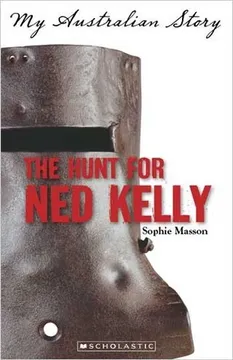
The Hunt for Ned Kelly is praised by most readers for its clever diary-style narrative, authentic historical detail, and balanced portrayal of Ned Kelly's story through the eyes of fictional characters Jamie and Ellen Ross. Reviewers appreciate the integration of photographs and newspaper clippings, the evocative depiction of rural Victoria, and the book's suitability for younger readers and classrooms. A small number of readers found it boring or slow-paced, but the overall reception is enthusiastic, with many highlighting its educational value and engaging storyline.
Characters
Jamie Ross
The observant young diaristJamie is nearly thirteen when debt strips him and his sister Ellen of their home. A devoted reader with a sharp memory, he notices the gap between what people say about the Kelly gang and how they behave in person. His admiration for adventure initially makes outlaw life seem romantic, but his encounters with bereaved families, hunted supporters, and Ned himself complicate that view. Jamie is sensitive to other people’s suffering and cautious about betraying confidences, even when silence costs him peace of mind. His work at a newspaper gives him a first step toward becoming a reporter, while his diary lets him preserve what public accounts leave out: uncertainty, attachment, and the difficulty of judging a person at a distance.
Ellen Ross
The determined photographerEllen is Jamie’s nineteen-year-old sister, practical enough to invent a governess position when she needs to get them out of Melbourne, and ambitious enough to risk a career with a camera. She protects Jamie but does not always explain her plans, treating uncertainty as something to be managed rather than shared. Her photographic skill becomes a way to earn independence in a world that doubts a young woman’s professional ability. Ellen is also wary of easy sentiment: she weighs the danger of approaching the Kelly family against the chance to build a future for herself and Jamie. Her changing relationships with fellow photographers and journalists test her judgment about trust, work, and the difference between telling a story and exploiting its subjects.
Ned Kelly
The outlaw in two lightsNed Kelly is the hunted leader whose deeds dominate the newspapers, conversations, and imaginations of north-eastern Victoria. To some, he is a dangerous murderer; to others, a man resisting a police force they believe has abused its power. Jamie encounters a figure capable of courtesy, literary feeling, and sudden, frightening anger. Ned’s own account of the conflict insists that the killings at Stringybark Creek arose from self-defence, while the deaths of the policemen remain a lasting wound in the public story. His family ties and his desire to be heard sit beside his capacity for violence. The novel presents him through clashing testimony rather than a single verdict, leaving readers to confront how sympathy and accountability can occupy the same judgment.
Joe Byrne
Ned's trusted companionJoe Byrne is Ned Kelly’s close friend and one of the gang’s most capable members. Before Jamie knows his identity, Joe appears under the name Mr Cook, helping the Ross siblings on the road and speaking with warmth about books and bereavement. Other characters describe his intelligence, his literary interests, and his skill at moving through local networks. His friendship with Aaron Sherritt is strained by the loyalties created by outlaw life. Joe’s presence helps Jamie understand that the gang’s members cannot be reduced to the crude figures on wanted posters.
Elijah Turner
The restless American reporterTurner is a freelance American journalist who follows the Kelly story in search of a career-making account. He is sociable, energetic, and skilled at drawing people into conversation, qualities that make him appealing to Jamie and Ellen. His ambition is also precarious: he has to find paying papers and keep moving, while his hopes often outrun his resources. Turner’s work places him between the public’s appetite for outlaw stories and the privacy of the people those stories touch. His relationship with the Ross siblings tests how far friendship can withstand professional hunger.
Sam Ratcliff
Jamie's newsroom mentorSam is a young reporter at The Age who recognizes Jamie’s interest in writing and gives him practical encouragement. He approaches journalism with curiosity but respects the people behind a story, offering a contrast to reporters who treat access as something to seize. His growing affection for Ellen develops alongside his professional regard for Jamie. Sam’s steadiness makes him a trusted presence as the siblings try to protect a private history from becoming public property.
Lorna
The loyal travelling dogLorna is the small dog Jamie refuses to leave behind after their father’s death. She travels with the siblings through inns, camps, and country roads, offering comfort when their lives are unsettled. Her sharp hearing and instinctive reactions often register danger before Jamie and Ellen do. Jamie treats her as family, not as luggage, and her presence makes their precarious journey feel less solitary.
Uncle Will
The siblings' quiet allyWill is a longtime friend of the Ross siblings’ late father, and the closest thing they have to a dependable relative. He offers practical help without demanding control over their choices, even when he worries about them travelling alone. His kindness is tempered by a household in which Aunt Julia has the stronger voice. Will’s support gives Jamie a model of adult care that does not depend on authority or grand promises.
Aunt Julia
The strict household keeperJulia is Uncle Will’s frugal, forceful wife. She doubts the siblings’ plans and believes they should accept practical limits rather than chase uncertain opportunities. Her sharp judgments can make Jamie and Ellen feel unwelcome, but she is not simply cruel; illness and family change reveal a more complicated capacity for care. She represents the security the siblings resist and, at times, need.
Mrs Pickett
The stern Beechworth landladyMrs Pickett takes Ellen and Jamie in as lodgers in Beechworth, exchanging room and board for work. She is thrifty and initially difficult to read, shaped by a life that has taught her not to waste money or trust fortune. When Ellen proves her photographic ability, Mrs Pickett becomes a practical supporter of the business. Her care comes through food, work, and resources more than tenderness.
James Ingram
The bookseller and witnessIngram owns the Beechworth bookshop where Jamie reads and later works. He remembers Ned Kelly and Joe Byrne from before their outlaw years, and resists turning acquaintances into monsters simply because the newspapers do. His measured account gives Jamie an early example of how firsthand knowledge can complicate public judgment. Ingram also encourages Jamie’s love of books and offers him honest employment.
Maggie Kelly Skillion
The family's fierce protectorMaggie is Ned and Dan Kelly’s married sister, caring for children and helping hold the family together amid police pressure. She speaks fiercely for her brothers and resents the way the authorities’ actions burden relatives who have committed no crime. Her loyalty is not abstract: it is expressed through daily care, guarded hospitality, and insistence that the family be treated as people rather than extensions of the wanted men.
Kate Kelly
The watched younger sisterKate is Ned and Dan Kelly’s younger sister, seen by Jamie in Beechworth and later among the family at Greta. Her friendship with Emma Crawford helps Ellen reach the Kelly household. Kate moves through ordinary social settings under the weight of public suspicion, illustrating how the outlaw story reaches beyond the men being hunted.
Tom Lloyd
The guarded family cousinTom Lloyd is a Kelly cousin who helps protect the family’s privacy and is wary of outsiders, especially journalists. He decides whether Ellen and Jamie can enter the homestead, and his suspicions reflect the family’s repeated exposure to hostile attention. Tom’s loyalty is practical and vigilant, shaped by the responsibility of keeping relatives safe.
Aaron Sherritt
The uneasy local go-betweenAaron is a Beechworth local, Joe Byrne’s childhood friend, and a man whose loyalties are questioned by both the gang’s supporters and the police. His swagger and temper make him difficult to trust, while his relationships tie him to several sides of the Kelly conflict. Through Jamie’s observations, Aaron becomes a reminder that living between rival camps can make every friendship politically charged.
Dan Kelly
Ned's younger brotherDan is Ned’s younger brother and one of the four men at the centre of the police hunt. Family accounts describe him as loyal to Ned, while public accounts place him among the armed outlaws. He appears in the story mainly through the danger surrounding the Kelly family and the uncertainty of his whereabouts.
Steve Hart
A member of the gangSteve Hart is the fourth member of the Kelly gang, a young man with roots in the Beechworth district. Rumours about the gang reach Jamie through locals who remember where Steve grew up, connecting the distant outlaw chase to a familiar community.
Detective Ward
The persistent Kelly hunterWard is a carefully dressed detective who questions people and follows leads in the hunt for the Kelly gang. Jamie notices how closely he studies strangers, making the police search feel present even during ordinary errands.
Emma Crawford
The family introductionEmma is Kate Kelly’s friend and the daughter of a wealthy local coach owner. She gives Ellen a respectful way to propose portraits to the Kelly family, opening a door that the siblings could not approach directly.
Grace Kelly
The younger family memberGrace is a younger member of the Kelly household who appears among the sisters and children at Greta. Jamie notices her sadness and recognizes a fellow young person living under adult burdens.
Plot Devices
Jamie’s diary
A private counter-recordJamie records events as he understands them, preserving both newspaper reports and his own uncertain reactions. The diary lets the reader move between public spectacle and private memory: a printed account may call the Kellys monsters, while Jamie remembers a helpful stranger, a worried family, or a frightened witness. His entries also register how grief and experience change his judgments. Because Jamie is a young observer rather than an all-knowing narrator, the diary makes uncertainty part of the story’s evidence instead of smoothing it away.
The gang photograph
A dangerous piece of evidenceEllen’s camera gives the siblings a possible livelihood and a reason to approach people who would otherwise keep them at a distance. The photograph they make on the road records the gang at an unguarded moment, but it also carries risks: exposure could endanger the siblings, damage the Kelly family’s trust, and turn a personal encounter into a commodity. The lost negative keeps this conflict alive after the siblings leave the bush. Its eventual appearance as a postcard forces Jamie and Ellen to decide whether truth, money, and remembrance can be separated.
Aliases and disguises
Ordinary faces conceal dangerNed Kelly and Joe Byrne travel under the names Mr Thompson and Mr Cook, allowing them to meet the Ross siblings without immediately revealing their identities. Their courteous assistance on the road is genuine, yet it also demonstrates how the gang moves through a landscape crowded with police and informers. The assumed names make Jamie reconsider what it means to recognize a criminal: the people beneath the aliases do not match the crude images on posters, but neither does their civility erase the violence attached to their lives.
Newspapers and wanted posters
Public opinion in motionPosters, pamphlets, songs, telegraph reports, and newspaper stories carry the Kelly chase into towns far from the gang’s hiding places. They offer Jamie information, but each account has limits: rumours become news, eyewitnesses disagree, and publicity reshapes outlaws into either villains or heroes. As Jamie begins work at The Age, he sees how quickly readers hunger for fresh details and how easily that hunger can overwhelm the people caught inside the story. The press is therefore both a source of knowledge and a machine that distorts it.
Lorna’s instincts
An animal warning bellLorna travels with Jamie and Ellen from their abandoned home through the roads and towns of Victoria. Her growling and watchfulness announce approaching strangers before the siblings can judge whether they are safe. This practical role gives the dog a place in the action, but her presence also anchors Jamie emotionally: she is one of the few constants he can protect after losing his parents and home. Her reactions connect the ordinary journey to the danger that keeps intruding upon it.
Download PDF
Download EPUB
.epub digital book format is ideal for reading ebooks on phones, tablets, and e-readers.








