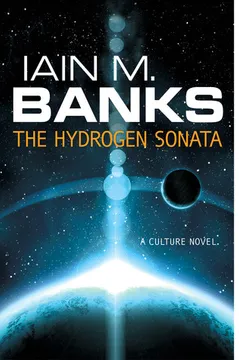


Plot Summary
Ablate's Last Guest
Twenty-four days before the Gzilt civilization plans to Sublime, a Zihdren-Remnanter ship arrives at Ablate carrying a ceremonial guest and a sealed message. The Gzilt warship Churkun distrusts the visitor, demands access to its hidden cargo, then destroys both the ship and the empty ceremonial facility after receiving the message.
The surviving record reveals a confession intended for the Gzilt leadership, but not its contents. The Culture ship Mistake Not…3 detects the distant flash of the attack and alerts other Culture Minds. The Gzilt are preparing to leave material existence, yet their farewell has already been marked by a killing they intend to conceal.
The first attack turns a planned religious culmination into a political emergency. The Gzilt claim to be guarding their legacy, but the Churkun's destruction of a diplomatic vessel makes that defense indistinguishable from coercion. By withholding the message's contents, the opening also creates an epistemic problem: the characters must decide not only what happened, but who has the right to know. The Subliming is introduced as both a collective aspiration and a deadline that narrows the space for evidence, accountability, and reconsideration.
The Elevenstring's Last Rehearsal
On Xown, Vyr Cossont1 practices the Hydrogen Sonata on an elevenstring, a huge instrument that demands all four of her arms. She hopes to complete the punishing piece before the Subliming, though the looming departure makes her ambition feel almost absurd. A walk through the empty Girdlecity brings her face to face with a young couple who have chosen to stay behind and are raising a small daughter, Chuje.
Their decision exposes the loneliness waiting for those who remain. Soon after, Commissar-Colonel Etalde arrives with armed guards and reactivates Vyr's1 reserve commission for a secret emergency. He takes her, her sentient fabric familiar5 Pyan,5 and the cumbersome instrument away from her quiet practice terrace.
Vyr begins with a self-chosen task that is difficult but safely private. The encounter with Chuje's parents complicates the easy assumption that everyone will make the same final choice: their child represents a future that the majority has decided to surrender. Vyr's four arms and unwieldy instrument make difference visible, while her mother's disapproval has taught her to treat difference as both a source of shame and a stubborn form of self-definition. The sudden recall gives that private identity public consequences, forcing her to act before she feels prepared.
The Cousins' Uneasy Watch
The Culture ship Mistake Not…3 meets the Liseiden, a technologically less advanced species hoping to negotiate access to Gzilt property after the Subliming. The Culture has been invited to keep rival scavengers from exploiting the transition, but its Minds notice the unexplained attack at Ablate and begin investigating.
The Caconym20 joins an informal group of Culture ships, while the old ship Zoologist19 offers only uncertain hints about contact with the Sublime. The investigation focuses on the Gzilt's Book of Truth, whose remarkable scientific predictions have helped convince them that they are destined for a special place beyond reality. A message from the Zihdren-Remnanters suggests that the book's origins may be less honorable than the Gzilt believe.
The Culture's intervention is not simple benevolence. Its Minds are curious, concerned about violence, and aware that their reputation as ethical actors is itself a kind of institutional self-interest. The Liseiden's scavenging plans make the material aftermath of Subliming concrete, while the Book of Truth supplies a more intimate inheritance: a story the Gzilt use to understand their worth. The Culture can model fleets and political options, but the Sublime remains resistant to prediction. Its first response to uncertainty is not omniscience, but a coalition of powerful observers arguing over what responsibility requires.
Banstegeyn Chooses Force
Septame Banstegeyn,4 an influential Gzilt politician determined to ensure the Subliming happens on schedule, learns that the Churkun carried an ancient spy program in its systems. The program has revealed the intercepted message to the Fourteenth Regiment, whose leaders may question the official account. Marshal Chekwri6 offers a covert strike against the regiment's headquarters on Eshri.
Banstegeyn4 considers appealing to the Fourteenth, but recognizes that doing so would warn them and close off the military option. He lets the attack proceed, framing it as necessary to protect the Subliming. Meanwhile, the Culture ship Mistake Not…3 races toward the same crisis, still uncertain whether it is arriving in time to prevent a wider conflict.
Banstegeyn's danger lies in the way he converts a plausible security concern into a blank cheque. The ancient spy program is real, but the response he chooses kills the possibility of testing whether the Fourteenth would act responsibly. His conviction that the Subliming must happen becomes more than faith in a future: it becomes a reason to suspend ordinary consent in the present. The chapter exposes how a leader can sincerely call himself a caretaker while treating every competing judgment as a threat to the people he claims to serve.
A Musician's Unlikely Assignment
At the Fourteenth Regiment's headquarters, General Reikl7 questions Vyr1 about her student exchange aboard the Culture ship Anything Legal Considered. Vyr1 recalls meeting Ngaroe QiRia,2 an unusually old man2 who claimed to have known the composer T. C. Vilabier and to have helped negotiate the Culture's founding.
Reikl7 explains that the destroyed Remnanter ship carried a confession: a small faction of the Zihdren had deliberately shaped the Book of Truth as an experiment. The message names QiRia2 as a possible witness. Since Vyr1 once received a copy of his mind-state and later deposited it at the Incast collection on Bokri, Reikl7 orders her to retrieve it and ask what he remembers.
Vyr's value is accidental, which is psychologically important. She is not a covert operative, and her music, journal, and past curiosity have become consequential without her choosing a grand role. Reikl offers her a way to serve a larger cause, but also pressures her by implying that her life-task is trivial beside the truth. Vyr agrees partly from loyalty and partly from relief at being given a reason to stop pursuing an ambition that has begun to feel like hiding. The assignment converts an old, intimate encounter into political evidence.
Fzan-Juym Breaks Apart
Before Reikl7 can finish preparing Vyr's1 mission, alarms erupt across Fzan-Juym, the Fourteenth's mobile headquarters buried in orbit beneath Eshri's surface. Reikl7 sends Vyr1 away with Eglyle Parinherm,8 a newly activated combat android,8 and a small shuttle. The Gzilt assault destroys the headquarters and pursues its survivors, including Reikl's7 forces at a nearby research station.
Parinherm8 guides the damaged shuttle to the ground after its systems are attacked, but a trooper dies and Vyr1 is left trapped in the cold with the android8 and Pyan.5 The Culture ship Mistake Not…3 finds them while hunting a hostile munition and rescues Vyr,1 Parinherm,8 and her familiar.5
The attack makes the secret political conflict physical and irreversible. Vyr, who expected a modest retrieval mission, loses her regiment's command structure and sees how little protection her reserve status provides. Parinherm's insistence that events are a simulation creates an unsettling contrast: he treats danger as a scenario, while Vyr has no backup and knows that her body can die only once. Her survival depends on cooperation with a machine she does not fully trust. The episode shifts her from reluctant participant to witness whose next choices may determine whether the Fourteenth's sacrifice has meaning.
The Culture's Narrow Rescue
Aboard the Mistake Not…,3 Vyr1 learns that the attack on Fzan-Juym was followed by attempts to kill anyone who escaped. The Culture ship cannot tell which Gzilt faction it can safely trust, but it agrees to take Vyr1 to Bokri after she explains that she left something connected to QiRia2 there.
Vyr's familiarity,5 Pyan,5 stays close as she recovers from exposure and shock, while Parinherm8 remains difficult to manage because he believes he is inside a simulation. The Culture Minds track the ship that attacked the Fourteenth and suspect the same Gzilt power structure may be responsible for Ablate. Vyr1 continues toward the archive rather than retreating to safety.
Vyr's decision is modest in form but decisive in character. She has no certainty that the cube will help, yet she accepts the danger because she promised Reikl she would try. Her commitment is neither heroic confidence nor obedience without thought; it is an attempt to remain answerable to her own choices. The Mistake Not… also embodies a Culture tension: it can rescue her and outthink most opponents, but its intervention risks making it a participant in a conflict whose factions remain opaque. Pyan's anxious attachment gives Vyr a small, familiar bond amid the larger machinery of war.
Tefwe Rides Toward QiRia
While Vyr1 travels toward Bokri, the Culture wakes Scoaliera Tefwe,12 an old friend and former lover of QiRia,2 to find him in person. Tefwe12 dislikes being copied into remote bodies, but agrees after learning that the Zihdren message may affect the Gzilt's imminent Subliming.
She visits Hassipura Plyn-Frie,13 an eccentric drone who has spent centuries polishing sand into smooth spheres and building dry, flowing sandstreams on an Orbital. Hassipura13 remembers QiRia's2 plan to visit the Mountains of the Sound on Cethyd. Tefwe12 sets out on an old-fashioned animal mount, then travels onward to the Uwanui hearkenry where the immense wind-carved caverns produce a continuous, overwhelming musical roar.
Tefwe's journey mirrors Vyr's in an older register. Vyr moves because of a fresh promise; Tefwe moves because decades of intimacy have left her wary of QiRia's evasions, yet still willing to be drawn back into his orbit. Hassipura's meticulous sand work gives the search a material counterpoint to the Culture's speed and data systems. Tefwe chooses a slow ride and a difficult audience because the person she seeks values ceremony and place. The route suggests that information is not always retrieved by superior technology; sometimes it depends on respecting the habits of the one who holds it.
The Cube Beneath Siege
The Mistake Not…3 slips Vyr,1 Parinherm,8 and its avatar Berdle3 into the Incast facility on Bokri, where Gzilt archives preserve discarded theories and stored personalities. Vyr1 formally reclaims the small silver-grey cube containing QiRia's mind-state. Before they can leave, an unseen opponent seizes control of the elevator and attacks the facility.
Berdle3 and Parinherm8 fight their way through the shaft and corridors while Vyr's1 suit protects her from the blasts. The elevator falls, the avatar3 is repeatedly damaged, and Parinherm8 is left wrecked at the bottom. The Mistake Not…3 eventually extracts Vyr1 and Berdle,3 but the Gzilt ship retrieves Parinherm8 first and destroys the android's memory systems.
The archive's bureaucratic calm collapses into violence as soon as Vyr's private property becomes strategically valuable. The cube is not merely a container; it represents the possibility that personal memory can outlast a body, a friendship, or an entire political order. Yet retrieving it exacts a cost from the people and machines around Vyr. Parinherm's damage shows that his simulation belief does not make him invulnerable, while Berdle's willingness to suffer damage for Vyr makes the Culture's care tangible rather than abstract. The rescue secures the clue, but not the knowledge it contains.
The Eyes Were Memory
On Cethyd, Tefwe12 reaches QiRia2 in a cell at the Ahen'tayawa hearkenry, where he spends long periods listening to the wind thundering through ancient caverns. He tells her that he deliberately removed the memories from his earliest years and placed them in two bodily locations, then had those locations removed. His eye sockets now hold extra ears, an extreme commitment to the sound that has become his refuge.
QiRia2 cannot confirm what the missing memories contained because he no longer possesses them. Tefwe12 returns without proof, and the Culture's investigators must decide whether to accept his account. Meanwhile, Vyr's1 retrieved mind-state cube proves to contain no memories from the era when the Culture was founded.
QiRia's mutilation is not a puzzle-box flourish but a form of self-authorship: he has reshaped his body around the sensory world he prefers and cut away the past he fears. His response frustrates the Culture's desire for a clean witness, while Tefwe has to accept that intimacy does not guarantee access. The missing memories turn knowledge into something embodied and vulnerable, not a file that a clever machine can simply recover. The two searches now converge on absence: Vyr has a copy that cannot reach far enough back, and Tefwe has found the original after he has deliberately made himself unable to answer.
The President's Poisoned Bed
President Sefoy Geljemyn10 and her aide Orpe11 are found dead after a toxin delivered by a concealed device. Banstegeyn4 had given Orpe11 a paired intimate ornament, claiming it would heighten pleasure between them and the president;10 the device instead kills both women, and the physician general discovers that Orpe11 was pregnant.
Banstegeyn4 urges the marshal6 to suppress the evidence and later directs her to blame the Ronte for the assassination and the destruction of Fzan-Juym. He also uses the Ronte's recently won preferred-partner status as leverage, despite the lack of credible evidence against them. The aging Trime Int'yom becomes acting president, while the killings deepen public uncertainty about whether the Subliming should proceed.
Banstegeyn's private appetite and public ambition become inseparable. He uses sexual trust as an instrument of surveillance and control, then treats the deaths that follow as material for political management. Orpe's pregnancy sharpens the cruelty: the future she may have intended to choose is erased along with her, and Banstegeyn considers erasing the evidence too. Yet his scheme is not fully sovereign. The death of the president activates formal succession rules and gives the population another reason to doubt the leadership's claim that the Subliming is inevitable.
A Fleet Turns on Friends
Banstegeyn's4 government publicly blames the Ronte for the violence and has their diplomatic delegation seized. The Liseiden, who had expected to receive preferred scavenger status, accept the Gzilt's reversal and move their fleet toward the Ronte. Culture ships try to prevent the two groups from fighting, but the Ronte fleet is divided and the Culture ship Beats Working has carried one squadron ahead.
When the Liseiden flagship attacks, Beats Working sends its human crew to safety and engages the larger force alone. The Liseiden destroy the Culture ship and twelve Ronte vessels, including the flagship. The loss turns a managed scavenging arrangement into a massacre and leaves the Gzilt's allies scattered.
This battle shows how a political lie gains force through logistics. The Ronte are not destroyed because their guilt has been established; they are exposed because their fleet is out of position and the Liseiden have a plausible pretext to act. Beats Working's choice to intervene is morally legible but strategically costly. Its earlier assistance helped deliver the Ronte into danger, and its attempt to repair that mistake cannot undo the imbalance. The Culture's ethical ideals do not exempt its ships from misjudgment, nor do good intentions guarantee that weaker societies will survive the consequences.
The Last Party's Watery Heaven
The Mistake Not…3 returns Vyr1 and Berdle3 to the Girdlecity, where Ximenyr's14 airship, Equatorial 353, carries the five-year Last Party toward its final destination. The Gzilt battleship Churkun is waiting nearby, and Colonel Agansu15 has been sent ahead to stop them. Vyr1 and Berdle3 enter the airship through its waste system, disguise themselves in altered suits, and discover that Ximenyr14 has rebuilt the interior around a huge water tank.
Party-goers can swim through its maze to a sealed gathering space above, intended as a last private paradise before the Subliming. Ximenyr14 has removed his many bodily modifications, but the necklace holding his collection of personal objects is missing from his former quarters.
The airship concentrates the novel's competing attitudes toward departure. The Gzilt majority plans an orderly, civilization-wide crossing, while the Last Party turns the same event into an unruly, sensual spectacle. Ximenyr's water-filled maze is both sincere preparation for a final gathering and an elaborate performance designed to make the end feel chosen. Vyr enters this space as an outsider and a soldier, but the search depends on understanding the party's theatrical customs. The absent necklace raises the stakes: the needed evidence may be nearby, yet it is now inside a sealed environment designed to control who can leave.
A Battleship Enters the Tank
Agansu15 boards the airship with combat arbites as the Churkun and Mistake Not…3 face off above the Girdlecity. Vyr1 and Berdle3 enter the tank, hoping to reach Ximenyr's14 personal effects before the Gzilt force finds them. Agansu's15 soldiers attack inside the ship, destroying the tank's supports and releasing its immense volume of water.
The flood tears through the airship, killing party-goers and breaking open the routes between decks. Berdle3 rescues a swimmer and fights to reach Vyr,1 while Agansu15 pursues them through the wreckage. The Mistake Not…3 arrives in the tunnel and begins cutting through the airship's shielding. In the chaos, Vyr1 reaches Ximenyr's14 cabinet and finds the small container holding QiRia's sea-green eyes.
The climax turns an argument over historical truth into a literal failure of containment. Agansu's attack destroys the elaborate boundary between the party's private heaven and the vulnerable ship beneath it. Vyr's search succeeds only because she keeps moving through a disaster that has become larger than her mission. The water is simultaneously party, maze, weapon, and wrecking force. The Culture ship's late arrival can intervene at scale, but its power cannot prevent the deaths already caused inside the airship. Evidence is recovered amid loss, not in a clean victory.
The Secret in QiRia's Eyes
The Mistake Not…3 defeats the remaining Gzilt forces in the airship, but Berdle3 dies protecting Vyr1 from Agansu's15 android body. Vyr1 is gravely wounded; the ship recovers her and the eye-container before departing, while Agansu's15 original self later Sublimes with the Uagren.
QiRia's restored memories reveal that, during negotiations to establish the Culture, he and other representatives learned the Book of Truth had been engineered by a rogue Zihdren research faction. The negotiators agreed to erase the evidence from their own memories after hearing it, and QiRia's2 illicit memory treatments later preserved his copy. The Culture Minds debate whether to inform the Gzilt, then conclude that the truth is not theirs to impose.
The revelation is less a simple debunking than an account of how truth was managed by people who believed they were protecting others. The Zihdren's experiment, the negotiators' memory erasure, and QiRia's accidental retention all complicate the idea that knowledge naturally liberates. The Culture faces a parallel choice: disclosure might restore informed choice, but it might also create panic hours before an irreversible collective transition. The decision to remain silent is ethically uneasy precisely because the Minds have enough power to broadcast the truth. Their restraint can be read as respect, or as another paternal decision made on the Gzilt's behalf.
The Gzilt Go, Vyr Stays
At the appointed hour, more than 99.9 percent of the Gzilt Sublime. Banstegeyn4 goes with them, as do Chekwri6 and the crew of the Uagren; Warib9 also leaves after Vyr1 tells her she can go without her daughter.1 Vyr1 remains in the Real, still recovering and unwilling to make the same choice simply because everyone else has.
The Culture keeps the Book's secret from the departing population, judging that the risk of a last-minute schism outweighs any likely benefit. With the Girdlecity nearly empty and scavengers beginning to claim abandoned assets, Vyr1 must decide how to live among the few who stayed. She is no longer pursuing the Sonata as a private countdown, but she has not yet let it go.
The mass departure resolves the novel's central pressure without resolving its moral ambiguity. The Gzilt act together, but the unanimity is not absolute, and Vyr's refusal preserves the possibility of a life not defined by consensus. Her decision to let Warib go is painful and unsentimental: love does not require identical destinations. Banstegeyn enters the Sublime carrying no public reckoning for his actions, while the Culture's silence leaves the departing Gzilt with the choice they had already made. Vyr's survival is therefore neither a triumph over the Sublime nor a rejection of it, but a commitment to continue in an uncertain world.
Epilogue
Twenty-four days later, Vyr1 returns to the terrace where she first practiced. The Girdlecity is empty, its winds moving through the abandoned structure like breath through a vast instrument. She plays the Hydrogen Sonata all the way through, then leaves the elevenstring standing open beside its case.
A Culture ship has invited her to travel to Perytch IV and seek the living QiRia,2 but she first plans to go home. Pyan5 sleeps against her neck as her flier lifts into the dusk. Vyr1 has survived the crisis, but she has not mistaken survival for a plan; the next life she makes will have to be chosen one day at a time.
The final performance changes the meaning of Vyr's life-task. She completes the Sonata not as a bid to prove herself before a civilization-wide departure, but in the silence left by that departure. Leaving the instrument behind suggests release, though not contempt: she has learned it, carried it, and can now choose not to carry it further. The abandoned Girdlecity gives her solitude without the comforting illusion that solitude is simple. Her possible journey to QiRia remains open, as does the ordinary question of what to do next. The ending favors chosen continuance over a grand answer.
Analysis
The Hydrogen Sonata stages a conflict between collective certainty and individual consent. The Gzilt have spent generations making Subliming appear inevitable, then organize their entire society around a deadline that makes dissent seem not merely inconvenient but dangerous. Banstegeyn4 exploits this structure: he does not need to invent the public's desire to leave, only to insist that any obstacle to departure threatens everyone. His political violence is especially effective because it dresses coercion as protection of a shared destiny.
The Book of Truth gives that destiny a historical foundation, but its deception does not automatically invalidate the Gzilt's choice. The revelation is ethically difficult precisely because belief is not a machine that can be switched off by supplying new information. The Culture's Minds understand this, yet their decision to remain silent repeats the novel's central problem: powerful actors decide what others are ready to know. Their restraint may prevent panic, but it also denies the Gzilt a final chance to reconsider with full knowledge.
Vyr1 offers a different model of agency. She is neither a grand skeptic nor a heroic savior; she is a musician1 who follows through on a promise, even as she doubts that she is the right person for the task. Her eventual decision to stay behind is not presented as proof that the Sublime is false or that the Gzilt were foolish. It is an insistence that a collective future cannot erase the legitimacy of individual timing. The elevenstring's final performance completes a task she once used to measure herself, then she leaves the instrument behind. Achievement becomes meaningful not because it secures immortality, but because she can choose what to carry forward.
Across the story, memory is fragile, embodied, and politically managed. QiRia's eyes hold a history he feared to retain; the Gzilt's official story is built from a book whose origins were concealed; Culture ships debate whether disclosure is responsible. The novel's answer is deliberately incomplete. Truth matters, but no institution can claim that knowing the truth grants it ownership over another people's decision.
Review Summary
The Hydrogen Sonata, the final installment in Banks' Culture series, receives generally positive reviews, averaging 4.21/5. Readers praise its imaginative world-building, witty AI ship characters, and philosophical exploration of mortality, meaning, and civilization. The novel follows the Gzilt civilization's impending "Subliming" alongside protagonist Vyr Cossont's quest to master an impossibly difficult musical piece. Critics note some structural looseness and loose plot threads, while admirers highlight its humor, inventive concepts, and poignant themes. Many reflect on the book's resonance given Banks' subsequent cancer diagnosis and death.
People Also Read



Characters
Vyr Cossont
Four-armed musicianA Gzilt reserve officer, gifted musician, and determined student of the nearly impossible elevenstring, Vyr has built her life around a personal challenge rather than public distinction. Her four arms make her visibly unusual, and her mother's9 discomfort has taught her to anticipate judgment without surrendering her choices. Vyr is not naturally fearless or trained for espionage; she thinks carefully, doubts herself, and often acts because she has promised someone she will. Her loyalty is practical rather than ideological. As the Subliming approaches, she must decide whether inherited expectations, family attachment, and her own curiosity can coexist with a future she chooses for herself.
Ngaroe QiRia
The long-lived witnessQiRia is an ancient Culture citizen who has lived through many bodies, species, and sensory worlds while maintaining a continuing self. He is clever, guarded, and often caustic, using irony to manage the emotional strain of outliving generations of companions. His interest in sound has led him to seek immersion rather than control, and his friendships are complicated by his reluctance to explain himself. He is connected to Vyr1 through a brief but memorable meeting, and to Tefwe12 through a far older intimacy. QiRia's longevity gives him perspective, but not uncomplicated wisdom; he remains capable of fear, attachment, and decisions he later cannot fully explain.
Mistake Not…
Culture ship and investigatorAn eccentric Culture ship seconded to Contact, the Mistake Not… is intelligent, curious, and more capable in combat than its modestly civilian reputation suggests. Its avatar, Berdle, allows it to speak with people directly, but the ship's real personality is distributed across vast systems and many simultaneous calculations. It wants to help the Gzilt and protect its own ethical standing, while recognizing that intervention can distort the situation it means to improve. Its dealings with Vyr1 bring abstract debates about responsibility into personal focus. The ship's humor and self-regard do not prevent it from making consequential mistakes.
Septame Banstegeyn
Architect of the departureBanstegeyn is a powerful Gzilt politician who has spent much of his career preparing his civilization for Subliming. He believes the transition is necessary and sees himself as the person capable of keeping it on course. His political skill depends on reading other people's desires and arranging incentives around them; he is also vain, sexually manipulative, and hungry for a lasting place in history. He understands that institutions can become fragile near a deadline, but treats that fragility as permission to act without consent. His self-image as a responsible leader coexists with a readiness to use secrecy and force.
Pyan
Vyr's fabric familiarPyan is a sentient, cape-like familiar who can fly, communicate, and fasten around Vyr's1 neck. Playful, theatrical, and often hungry, it can irritate Vyr1 by demanding attention at the wrong moment. Beneath the comic performance is a companion with its own preferences and fears. Pyan's attachment offers Vyr1 a small continuity of affection while political events separate her from family, home, and familiar routines.
Marshal Chekwri
Commander of the FirstChekwri commands the Gzilt Home System Regiment and manages military responses during the final days before Subliming. She is disciplined, pragmatic, and frank about the machinery of power, but her professionalism can shade into moral detachment. She is willing to execute Banstegeyn's4 orders and to manage the stories that make those orders politically survivable. Her calmness is partly a military skill and partly a way of avoiding responsibility for the consequences of decisions made above her.
General Reikl
Fourteenth's clear-eyed leaderReikl is a senior officer of the Fourteenth Regiment, sharp, direct, and unusually alert to what the approaching Subliming may conceal. She trusts Vyr1 enough to give her a dangerous task, but does not disguise its importance. Reikl's impatience with compromised leadership is balanced by an ability to make fast decisions under pressure. She represents a strand of Gzilt service culture that values duty without assuming that obedience and wisdom are identical.
Eglyle Parinherm
Simulation-minded androidParinherm is an advanced combat android whose default assumption is that he is operating inside a training simulation. His cheerful procedural manner persists even when Vyr1 insists that her life is real and unrepeatable. The mismatch makes him unsettling, but he is also resourceful, observant, and capable of protecting Vyr1 when systems fail. His behavior raises the question of how identity and responsibility work when a being's own account of reality differs from everyone else's.
Warib Cossont
Vyr's image-conscious motherWarib is Vyr's mother1, a socially polished woman who cares deeply about appearance, status, and the impression her daughter1 makes. Her criticism of Vyr's1 extra arms exposes her own anxiety about public judgment, while her tenderness remains tangled with possessiveness. Warib and Vyr1 are close enough to hurt each other with precision, yet their bond survives disagreement. She wants her daughter1 safe and admired, but does not always understand that Vyr1 needs room to define herself.
President Sefoy Geljemyn
Ceremonial Gzilt presidentGeljemyn holds a largely ceremonial presidency in a political system where practical power rests elsewhere. She is sociable and personable, and her insistence on keeping an inexpensive time-to device reflects a preference for public symbolism over elite display. Her office becomes a focal point for Gzilt succession and legitimacy as the Subliming nears. She is not a military strategist, but her position gives her choices symbolic weight.
Orpe
President's aide and confidanteOrpe is Geljemyn's10 aide-de-camp and Banstegeyn's4 lover. Her position gives her access to the president's10 private world, which Banstegeyn4 exploits for political and personal ends. She is intelligent and assertive, not merely a channel through which powerful people communicate. The gap between her private trust and public role makes her vulnerable to the assumptions others place on her.
Scoaliera Tefwe
QiRia's old companionTefwe is an old Culture citizen who has shared a long, complicated intimacy with QiRia2. She dislikes being copied into remote bodies and dislikes being summoned without full information, yet she agrees to search when she believes the Gzilt's choice may be affected. Practical and unsentimental, she prefers direct experience to abstract speculation. Her return to QiRia's2 orbit shows that old attachment can survive without becoming simple forgiveness.
Hassipura Plyn-Frie
Keeper of sandstreamsHassipura is an old drone living on an Orbital, where it has spent centuries polishing sand grains and moving them through elaborate dry channels. Meticulous and prickly, it dislikes visitors but has preserved its own quiet project with devotion. Its knowledge of QiRia2 gives Tefwe12 a route to Cethyd.
Ximenyr
Master of the Last PartyXimenyr is the flamboyant organizer and public face of the Last Party, an extended celebration aboard the airship Equatorial 353. A body-modification artist, he treats excess as both pleasure and performance, but is capable of planning a communal final ritual with real care. He knows QiRia2 from earlier generations and guards his friend's privacy. His theatricality makes it difficult to tell where spectacle ends and sincerity begins.
Colonel Cagad Agansu
Banstegeyn's field commanderAgansu is a disciplined officer of the Home System Regiment, tasked with pursuing the Fourteenth's survivors and then tracking Vyr1. He takes pride in duty and in the protective systems of his ship, but is privately afraid of death and uncertain about Subliming. His reliance on a virtual command environment lets him think at greater speed, while his embodied missions force him to confront the vulnerability he prefers to keep at a distance.
Ny-Xandabo Tyun
Liseiden fleet commanderTyun commands the Liseiden fleet sent to negotiate for the Gzilt's abandoned assets. He is ambitious and attentive to reputation, presenting scavenging as a respectable civilizational process rather than a scramble for loot. When the political agreement changes, he must decide whether to accept a setback or use the fleet's force to preserve Liseiden standing.
Ossebri 17 Haldesib
Ronte swarmprinceThe Ronte Swarmprince commands a fleet whose ceremonial ship dances express both beauty and collective identity. He takes protocol seriously, but is capable of reconsidering decisions when circumstances change. His interactions with the Culture ship Beats Working show a leader balancing pride, caution, and responsibility to the swarm.
Jelwilin Keril
Iwenick diplomatic intermediaryKeril is an Iwenick mission director hired to represent Liseiden interests in negotiations with the Gzilt. He uses careful language to keep his clients from turning disappointment into open conflict, though his influence is limited when fleet commanders choose a harder course.
The Zoologist
Returned Sublime explorerThe Zoologist is an ancient Culture ship Mind that once Sublimed alone and later returned to the Real in a radically altered state. It is difficult for other Minds to understand and gives few direct answers about the Sublime. Its presence makes the Culture's uncertainty about the realm personal, not merely theoretical.
The Caconym
Culture warship analystThe Caconym is an old Culture warship Mind with experience from the Idiran war and a taste for independent judgment. It joins the investigation despite disliking the prospect of involvement, then challenges its colleagues when caution begins to resemble self-protection. Its relationship with the Zoologist19 reflects a Mind's curiosity about the Sublime and its limits.
Plot Devices
The Book of Truth
A faith built on predictionThe Gzilt holy book contains strikingly accurate accounts of scientific and technological discoveries, helping generations believe their civilization has a special destiny. The Zihdren-Remnanter message claims that a small Zihdren faction planted those truths as part of an experiment. The book therefore drives both the Gzilt's confidence in Subliming and the Culture's investigation into whether that confidence rests on deception.
QiRia's mind-state and eyes
Memory split across bodiesVyr1 keeps a copy of QiRia's2 mind-state in a small cube, but it lacks the memories from the era when the Culture was founded. QiRia2 had stored his earliest recollections in his eyes and later had them removed. Recovering those eyes gives the characters access to the missing history, making memory a physical object that can be hidden, damaged, or reclaimed.
Subliming
A civilization's final deadlineThe Gzilt plan to leave the Real collectively for the Sublime, a realm believed to offer vast continuity beyond ordinary matter. The countdown shapes political choices, family decisions, and scavenger negotiations. It also limits opportunities to investigate crimes or reconsider the decision. The approaching Instigation gives Banstegeyn4 leverage, while Vyr's1 eventual refusal shows that the collective timetable does not determine every individual's choice.
The Hydrogen Sonata
A task that tests VyrVilabier's notoriously difficult composition, written for the bodily acoustic elevenstring, gives Vyr1 a personal goal to pursue as the Gzilt prepare to Sublime. Its demanding performance mirrors the discipline and frustration of her life, but the piece also carries an ironic history: its composer intended it partly as a critique of the kind of music it represents. Vyr's1 relationship with the instrument shifts as the story strips away the need to prove herself before a deadline.
Equatorial 353
A party becomes a battlefieldThe Last Party's airship is a five-year celebration moving through the Girdlecity toward the Subliming. Ximenyr's14 new water maze promises a final gathering above the ship, while the airship's shielding makes it difficult to surveil or enter by ordinary means. That design gives Vyr1 a route to Ximenyr's14 possessions and turns the rescue attempt into a catastrophe when military forces attack inside the vessel.
Download PDF
Download EPUB
.epub digital book format is ideal for reading ebooks on phones, tablets, and e-readers.








